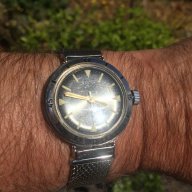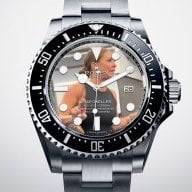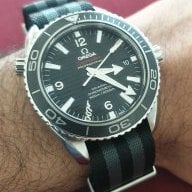
Water leak issues with PO600

Posts
80
Likes
36
well, wat i have notices is, the deeper the watch has water resistance, the more problem it has with leaks, compared to seamaster 300, it is better than po 600 when comes to depth resistance
 
Posts
29,810
Likes
77,150
well, wat i have notices is, the deeper the watch has water resistance, the more problem it has with leaks, compared to seamaster 300, it is better than po 600 when comes to depth resistance

Can I ask where you "noticed" this?
 
Posts
148
Likes
122
Sorry you had water get into your favorite watch that sucks!
Big thank you for sharing this info guys! I had no idea the gasket should be serviced every other year. Good to know that.
 
Posts
2,477
Likes
3,862
well, wat i have notices is, the deeper the watch has water resistance, the more problem it has with leaks, compared to seamaster 300, it is better than po 600 when comes to depth resistance
Maybe because the more water resistance it has, the more likely people are exposing their watches to water. You could easily make a linear graph to show this. Not many people will go swimming with their DeVille.

 
Posts
29,810
Likes
77,150
Maybe because the more water resistance it has, the more likely people are exposing their watches to water. You could easily make a linear graph to show this. Not many people will go swimming with their DeVille.

This seems quite logical. However I'll just add that out of all the watches I've had in my shop that had water intrusion, only one that I can think of actually had that happen while swimming. Ironically that was a Speedmaster that someone had jumped into the ocean with, not realizing that a pusher cap had come off.

All the others I have had were from people doing everyday chores, so hand washing, doing the dishes, etc. so from splashes rather than from swimming in water with total submersion.
 
Posts
897
Likes
2,821
This seems quite logical. However I'll just add that out of all the watches I've had in my shop that had water intrusion, only one that I can think of actually had that happen while swimming. Ironically that was a Speedmaster that someone had jumped into the ocean with, not realizing that a pusher cap had come off.

All the others I have had were from people doing everyday chores, so hand washing, doing the dishes, etc. so from splashes rather than from swimming in water with total submersion.

Al, in your experience what are the likely causes of gasket degradation/failure?

For sake of argument let’s say I purchase a new PO600 and get it tested today, passes as expected. I then store the watch for 2 years in a drawer. Would it be reasonable to expect it to maintain its water resistance after 2 years or are there common issues?

I’ve heard avoiding soaps and detergents, but interested to hear about other factors.
 
Posts
80
Likes
36
Maybe because the more water resistance it has, the more likely people are exposing their watches to water. You could easily make a linear graph to show this. Not many people will go swimming with their DeVille.


this what i meant
 
Posts
29,810
Likes
77,150
Al, in your experience what are the likely causes of gasket degradation/failure?

Wear - this is why most watches fail at the crown, because the gasket wears as you wind and set the watch.

Time - natural vulcanization of the seal material will cause it to harden and lose it's elasticity, and it will eventually crack.

There could be other issues such as an impact that might contribute, but wear and time would be the two most common things.

Cheers, Al
 
Posts
246
Likes
374
Crap happens. At least you're under warranty.
Why would they warranty when it's recommended to check water resistent once a year, and he just passed 2 years without doing it?
 
Posts
2,808
Likes
8,339
I’m sorry your 600M Planet Ocean didn’t stay sealed and WR for much longer than 2 years. But we are told b6 all brands to test the seals at least once a year or before every dive.

I bought my Ti Planet Ocean 9300 600M chronograph from Jim at Continental in March 2016. I wear it 70% of the time, and I got it pressure tested every summer in 2017, 2018, and 2019; although have not gone anywhere this year due to COVID and forgot to have it tested. I haven’t done a gasket replacement at 2 years, unless a watch fails the vacuum test (twice in 6 years out of dozens and dozens of watches).

Prior to now I’ve always folllowed the recommenced once a year WR test, but it can pass the test one week and then leak the next, especially if the watch is over a year old.

I usually get it tested in mid-springtime each year, as we prepare for water activities (kayaking, standup paddle board, swimming, rafting). In 2017 I took it on an Alaskan Cruise and got it wet many times (pool, rafting, rain). I just never take it in the shower or a hot tub which can degrade gaskets faster. In 2018 I took it on a Florida Vacation with us and it got wet a lot. In 2019 I took it on another Florida and Bahamas vacation/cruise and kayaked and snorkeled in the ocean with it. It’s always dry inside. I guess I’m lucky.

I’m currently keeping it out of water until I get it tested again, but at over 4 years old it can pass a test one week and then leak next. I’m due for service in 6 months, if I take the “five year” recommendation as a rule, so I can get other watches wet until then. But I think I’ll start getting gaskets replaced every 2 years now.

As I have thinned my herd of watches by trading little used Omegas or others for newer Rolex watches, I might be able to afford to take the money I’ll save from needing fewer 5-year services and use it for new gaskets every 2 years instead.

To buy my 4 modern Rolex (SS ceramic Pepsi GMT II, Hulk, SD43, and Deep Blue) I’ve given up 2 Rolex, 1 Tudor, and 8 Omega watches, and still have 10 Omegas with about 33 mechanical watches and over 50 total watches. That would be a lot of gaskets to replace, and as it is I already have 5 to 7 watches every year that will need a service. I could always take those watches that are more than two years old and take them out of the rotation until it’s time for a service - that would leave me 10 to 14 watches that are within two years of service to wear. LOL
 
Posts
536
Likes
763
Sorry nobody will convince me that the owner should check / replace seals every year / month/ week.
My PO failed miserably after just half a year. There are numerous stories on the same issue. This watch is everything except a "diver", it's just a BAD choice for anyone close to water.

Depending on your budget, go Seiko / Rolex / Blancpain. These are the real diver watches. In my book Omega = chronograph c'est tout.

 
Posts
408
Likes
355
Sorry nobody will convince me that the owner should check / replace seals every year / month/ week.
My PO failed miserably after just half a year. There are numerous stories on the same issue. This watch is everything except a "diver", it's just a BAD choice for anyone close to water.

Depending on your budget, go Seiko / Rolex / Blancpain. These are the real diver watches. In my book Omega = chronograph c'est tout.

You can find stories and photos about watches leaking from any brand, even when brand new. It sucks, it shouldn't happen if they're new but it does.

From Rolex Forums on quick search:

"I just bought a brand new sub date green, went swimming the same day and water got inside fogging up the sapphire and making little bubbles inside of the magnifying glass. The crown was screwed in the way it is supposed to and water still got in. I am so pissed right now because they found one of the gaskets faulty and I'm going on 2 weeks while they decide to send me a brand new one or repair my brand new one. You pay $9000 for a brand new watch and it leaks the first day. The sub is supposedly a divers watch which can handle 300 meters but 2 feet in a pool. I'll keep everyone posted."


After 9 pages and some abuse from the forum members calling him a liar he responded detailing that the merchant sent him a new one instead of having it replaced.

My Citizen Eco-Drive Chronograph (no screw down anything) was leak free for 17+ years (although only worn regularly for maybe 6-7 of those years). Worn when I was a cleaner back in University, subjected to chemicals, showered and swam with it. Never had it tested but this doesn't mean this is the norm though. It was simply cheap enough that I didn't care if it leaked and broke.
 
Posts
897
Likes
2,821
Sorry nobody will convince me that the owner should check / replace seals every year / month/ week.
My PO failed miserably after just half a year. There are numerous stories on the same issue. This watch is everything except a "diver", it's just a BAD choice for anyone close to water.

Depending on your budget, go Seiko / Rolex / Blancpain. These are the real diver watches. In my book Omega = chronograph c'est tout.

Truth be told, no convincing is needed. I will simply refer you to the Special Instructions section of the Omega operating instructions, which will recommend that you have your water resistance checked once a year by an authorized Omega service center.
 
Posts
1,144
Likes
3,112
I have a couple dive watches, a 300 pro and some cheapo Vostoks. I'd prefer even the cheapos stay dry inside but I don't have a lot of options locally for watch repair and testing.

What's a dry pressure test cost? Is dry pressure test equipment generally safe for non-pros to use? There's a bunch of them on amazon but are any worth spending a few hundred on?
 
Posts
29,810
Likes
77,150
What's a dry pressure test cost? Is dry pressure test equipment generally safe for non-pros to use? There's a bunch of them on amazon but are any worth spending a few hundred on?

Can you provide a link to these machines? These are typically many thousands of dollars...
 
Posts
18
Likes
11
So my pride and joy "was" my planet ocean 600 45.5mm Chrono. I absolutely loved this watch and it was my daily wearer. I wore this watch literally everywhere. I am not a diver but I always liked the durability and water tightness of a diver watch. As again I like to wear them everyday. I was told from day one to never shower with it and followed that instruction.

I did swim in it though quite often in the summer months. I live in Canada so that's really like 2 months. Well the watch is now 2 years and 2 months old. And I noticed this week that when I wear it it gets all cloudy. And when I take it off it eventually clears up. So turns out there is water in there. I have not swim for over a month as it's cold now here. So it must have got in while washing my lands recently as that would have been it's only water exposure. My helium valve and crown were locked down nice and tight. Hell I even chew up my finger nail digging in everytime I tighten it to make sure it's super tight.

Any how I went to the mall yesterday where the AD was that I bought the watch as we don't have a boutique here. And a buddy came with me, and as we were walking through the mall he wanted to stop at a IWC store. We looked at some watches and the girl caught the cloudiness of my watch and immediately asked about the moisture and literally told me exactly what I was experiencing. I was shocked how much she knew from a 1/2 second glance of my wrist. She apparently was the service manager at Omega Toronto and recently left to work for IWC. She told me that it's a known issue. And to prevent it. "especially with swimming. I need to change the gaskets every 2 years". I literally lost my mind. Why would you buy a watch that is designed for diving to 2000 ft. If I can't even swim in my 6' pool without risking water damage. How often do the actual divers who take these watches to depth have to replace there gaskets? Every year? So you send your watch away for 2 months every year? That sounds ridiculous. I thought for sure she was just a sour ex employee and wanted to sell me a IWC.

So I went to the AD now to prepare my warranty. I explained my frustrations with a watch designed to go to the bottom of the ocean, leaking while washing hands. He immediately gave me the same damn advice about changing gaskets every 2 years!!!!! What are the odds they both said this to be true??

So my question is for all of the Omega owners. I personally don't see gaskets as a consumable, especially with how I use this watch. If I buy a Porsche the dealer doesn't tell me, oh don't drive the car fast it's not good for the car. To me this is ludicrous. This is a watch marketed as being able to go in any salt water any depth (2000ft). And apparently swimming in my pool is bad for a vital part that prevents potential life ending damage to the product? Or something I need to spend up to $1000 per every 2 years to replace?

Please someone tell me this isn't true? If not I am 100% getting the watch repaired, cleaned and off to the used sales forum. Never to own another Omega again.
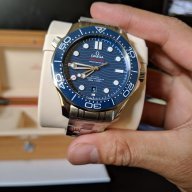

Hey Chago,

Unfortunately even with pieces as specific to diving as the PO Seamaster, there is still a possibility of leaking and subsequent water damage. Regardless, I still think the Planet Ocean is a timeless and reliable watch. A good practice is changing your gaskets every 1 or 2 years to ensure that water does not get inside the watch.

I found this article that was really helpful to me in considering whether to get it or a different diving watch: https://www.bobswatches.com/rolex-b...et-ocean-seamaster-complete-buying-guide.html

"It’s hard to believe that the Planet Ocean has only been in production for about 15 years. It has already become a celebrated dive watch among the community, both for its functionality and design. Join us as we break down the history of the series, its feature options, and review notable references within the Omega Planet Ocean collection."
 
Posts
234
Likes
153
I am curious to know if any watch brand has come up with alternative materials in their gaskets that would avoid the need for yearly checks. Perhaps synthetic materials that are more durable and less prone to cracking, etc.
 
Posts
212
Likes
205
I have owned 20 to 30 different Dive watches over the years from Rolex to Seiko and I have always had gaskets changed on them every 2 years ( if I dive with them )

Swim nearly every day with a watch on, living in the tropics. Swim with a Luminox that gets gaskets changed every time the battery gets replaced. Every 4 years but don’t mind risking a $300 watch.

Pay probably $135 to $180 for a gasket change and pressure test on my 1000m dive watch. Send my 1000m away every two years with a Quartz to get both done and a battery change and costs under $300 for two gaskets changed and a new battery and is done in less that 3 weeks with shipping interstate.

Even Rolex states gaskets changed every year or so.

There is no watch that will say you don’t have to change the gaskets at all between the 5 years service.

I have several Rolex dive watches and dive with them, and have for 40 years. With something like a Submariner (I have a 2013 LV) I got it serviced after 5 years. That's my standard for modern watches I dive with (I have a Pelagos that is nearly 6 years old so I will service it soon). I think 2 is a bit over the top, as to do a proper seal job they overhaul the watch as they might as well while it's being done (and Rolex won't just do a seal change). Your situation is ridiculous, and I really believe they should overhaul it for free when a seal fails after 2 years. I'd talk to Omega about it. A Rolex Datejust's seals would last longer than that.