Water leak issues with PO600

Posts
12
Likes
19
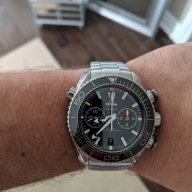
So my pride and joy "was" my planet ocean 600 45.5mm Chrono. I absolutely loved this watch and it was my daily wearer. I wore this watch literally everywhere. I am not a diver but I always liked the durability and water tightness of a diver watch. As again I like to wear them everyday. I was told from day one to never shower with it and followed that instruction.

I did swim in it though quite often in the summer months. I live in Canada so that's really like 2 months. Well the watch is now 2 years and 2 months old. And I noticed this week that when I wear it it gets all cloudy. And when I take it off it eventually clears up. So turns out there is water in there. I have not swim for over a month as it's cold now here. So it must have got in while washing my lands recently as that would have been it's only water exposure. My helium valve and crown were locked down nice and tight. Hell I even chew up my finger nail digging in everytime I tighten it to make sure it's super tight.

Any how I went to the mall yesterday where the AD was that I bought the watch as we don't have a boutique here. And a buddy came with me, and as we were walking through the mall he wanted to stop at a IWC store. We looked at some watches and the girl caught the cloudiness of my watch and immediately asked about the moisture and literally told me exactly what I was experiencing. I was shocked how much she knew from a 1/2 second glance of my wrist. She apparently was the service manager at Omega Toronto and recently left to work for IWC. She told me that it's a known issue. And to prevent it. "especially with swimming. I need to change the gaskets every 2 years". I literally lost my mind. Why would you buy a watch that is designed for diving to 2000 ft. If I can't even swim in my 6' pool without risking water damage. How often do the actual divers who take these watches to depth have to replace there gaskets? Every year? So you send your watch away for 2 months every year? That sounds ridiculous. I thought for sure she was just a sour ex employee and wanted to sell me a IWC.

So I went to the AD now to prepare my warranty. I explained my frustrations with a watch designed to go to the bottom of the ocean, leaking while washing hands. He immediately gave me the same damn advice about changing gaskets every 2 years!!!!! What are the odds they both said this to be true??

So my question is for all of the Omega owners. I personally don't see gaskets as a consumable, especially with how I use this watch. If I buy a Porsche the dealer doesn't tell me, oh don't drive the car fast it's not good for the car. To me this is ludicrous. This is a watch marketed as being able to go in any salt water any depth (2000ft). And apparently swimming in my pool is bad for a vital part that prevents potential life ending damage to the product? Or something I need to spend up to $1000 per every 2 years to replace?

Please someone tell me this isn't true? If not I am 100% getting the watch repaired, cleaned and off to the used sales forum. Never to own another Omega again.

 
Posts
16,866
Likes
47,914
I have owned 20 to 30 different Dive watches over the years from Rolex to Seiko and I have always had gaskets changed on them every 2 years ( if I dive with them )

Swim nearly every day with a watch on, living in the tropics. Swim with a Luminox that gets gaskets changed every time the battery gets replaced. Every 4 years but don’t mind risking a $300 watch.

Pay probably $135 to $180 for a gasket change and pressure test on my 1000m dive watch. Send my 1000m away every two years with a Quartz to get both done and a battery change and costs under $300 for two gaskets changed and a new battery and is done in less that 3 weeks with shipping interstate.

Even Rolex states gaskets changed every year or so.

There is no watch that will say you don’t have to change the gaskets at all between the 5 years service.
 
Posts
3,404
Likes
8,998
I have several dive watches, from $300 Glycine Combat Sub, to a Rolex Submariner. Use them all for swimming (I don't dive) and have never had an issue. I'm with the OP on this one.
 
Posts
12
Likes
19
I have owned 20 to 30 different Dive watches over the years from Rolex to Seiko and I have always had gaskets changed on them every 2 years ( if I dive with them )

Swim nearly every day with a watch on, living in the tropics. Swim with a Luminox that gets gaskets changed every time the battery gets replaced. Every 4 years but don’t mind risking a $300 watch.

Pay probably $135 to $180 for a gasket change and pressure test on my 1000m dive watch. Send my 1000m away every two years with a Quartz to get both done and a battery change and costs under $300 for two gaskets changed and a new battery and is done in less that 3 weeks with shipping interstate.

Even Rolex states gaskets changed every year or so.

There is no watch that will say you don’t have to change the gaskets at all between the 5 years service.

I understand if you are diving. You are putting a heavy amount of strain on those gaskets at pressure. Like owning a Porsche. If you are constantly racing it. Your gonna chew up your brakes and tires quickly. But if you drive your sports car 2kmh (which would be the equivalent of swimming in a pool) your brakes and tires would last many years.
 
Posts
18
Likes
19
Remember to thoroughly rinse the watch in tap water after it has spent some time in seawater or pool water to remove the salt and chlorine.
 
Posts
16,866
Likes
47,914
As said no dive watch will guarantee to be waterproof.

Hey I swim with a watch that is 200m and get 4-5 years no issue.

I would probably be annoyed like you a 2 year watch has leaked.

But in reality all brands recommend pressure test yearly if swimming or diving even in a pool

A 1000m watch is no better than a 600m watch or a 30m watch if the seals are shot. And the seals don’t last longer just because it’s a 1000m watch.


Is your Rolex watch water-resistant?
Whether your Rolex watch is water-resistant or not depends on a lot of factors.

The first thing you want to consider is age.

Ideally, you should have your watch pressure tested every year in order to ensure full water-resistance. This is especially if you plan on going swimming or diving with it.
As such, if you have an old Rolex watch, in particular vintage, and you have not had it pressure tested the last year, you should always have the assumption that it is no longer water-resistant and may leak in water if you come in contact with water.

But Rolex watches are water-resistant, right? How does this make sense?

Well, the fact is that all Rolex watches have seals and a crown. Over time, the seals will dry out, and this means that they may no longer offer a complete water-resistance. Furthermore, the crown of your watch is a sensitive spot of your Rolex watch, as it is a spot where water has a, in theory, direct channel to the movement. And water is the greatest enemy of a watch’s movement.

The Gaskets form seals around the stem of the crown, pushers, and correctors and sit inside the case and the crystal. The gaskets lose elasticity and the ability to form a proper seal over time.


The bottom line is that over time, these deteriorate and become less effective in keeping moisture out, and this means that while your Rolex watch is on paper water-resistant, it may not be. To ensure complete water-resistance, you, therefore, want to do yearly pressure-tests of your watch, and if you want to take it one step further, regularly service your watch. On each service, the seals are replaced to new, fresh seals, which of course increases the reliability of the watch’s water-resistance. There are many external factors that can make the gaskets and seals less effective over time, and thus risk compromising your Rolex’s water-resistance, but more on that later.

The bottom line? if the seals and gaskets are old, even the most serious Rolex dive watch such as the Deepsea Sea-Dweller that should be water-resistant to 3,900 meters, may start leaking at just a few meters in the water.

Furthermore, if you have dropped your watch or put it under stress of some sort, this might also compromise your Rolex’s water-resistance.

In other words, just because your watch is water-resistant to X meters, doesn’t necessarily and always mean that it is in practice.

More of the info
https://millenarywatches.com/rolex-watch-resistance/
 
Posts
2,725
Likes
3,630
The 2 year rule (and a pressure test every year) is pretty a pretty standard recommendation on all dive watches - it’s generally buried in the manual that we all read from cover to cover. 😀

This is included to cover the manufacturer’s butts because gaskets are a wear item. Rubber rots and cracks over time, even if the watch is not exposed to excess moisture. I don’t change the gaskets in my watches every 2 years, but I also don’t take my $4000 watches into water. That’s what my quartz beater is for, or no watch at all.

Hopefully they will repair this under warranty to do the right thing, but from the way they have written the warranty and requirements to keep the warranty valid, they don’t have to.
 
Posts
16,866
Likes
47,914
I have several dive watches, from $300 Glycine Combat Sub, to a Rolex Submariner. Use them all for swimming (I don't dive) and have never had an issue. I'm with the OP on this one.

I will admit just unlucky for the OP. But don’t think it’s just a Omega thing as have seen brand new watches of all brands leak over the years.

As mentioned on another thread I have seen more dive computers leak over the years than watches and the big thing is everyone says buy a dive computer. Dive computers straight out of the box worth $1500 haven’t lasted 15 minutes.
 
Posts
12
Likes
19
Regardless I am going to take it in. I suppose the other possibility is being a 45.5mm not a lot of guys can wear watches that big. So I assume it sat for probably some time. So although I have owned it for 2 years, it could already be a year or 2 on the shelf.

Appreciate the info boys. The vent was needed hahaha. Tomorrow I'm heading to swatch group service center directly to drop it off. Hopefully they take care of me.
 
Posts
15,582
Likes
46,401
Among the things in this life that are certain is death, taxes, and water resistant (not water PROOF) watches that are guaranteed to eventually leak! Good luck finding a watch that won’t eventually leak!
 
Posts
29,810
Likes
77,150
Omega recommends pressure testing every year. Often people buy a dive watch thinking that it is going to give them some extra long protection against water getting in, but the fact is that gaskets used on the watches rated for 600m are not really different from those used in watches rated for 50m. So when those fail, water can get in...
 
Posts
1,530
Likes
3,593
Omega recommends pressure testing every year. Often people buy a dive watch thinking that it is going to give them some extra long protection against water getting in, but the fact is that gaskets used on the watches rated for 600m are not really different from those used in watches rated for 50m. So when those fail, water can get in...

Can I ask what additional parts are added to give the additional 550m WR?
 
Posts
2,477
Likes
3,862
probably just thicker so the metal won't start flexing from all the pressure (usually the caseback) and thicker crystals so they won't crack
 
Posts
29,810
Likes
77,150
Can I ask what additional parts are added to give the additional 550m WR?

It depends what you mean by additional parts. This watch has an HEV, so those are additional parts added for the higher depth rating, but they are not really involved in the other seals. In terms of the case back seal and crown seal that would be on a typical 50m rated watch, those are not substantially different on the 600m rated watch. For erxample:

This is the case back seal for a Speedmaster Pro, rated for 50m:

088NS5140 | SEAL O-RING D34.5 D36.5 Ø1

This is the case back seal for a 42 mm Planet Ocean, rated for 600m:

088NS5139 | SEAL O-RING D34 D36 Ø1

Other than the overall diameter of the seal for the Speedmaster being slightly larger by 1/2 a mm, they are the same. I can do a reverse search on the Omega Extranet, so I can take that seal from the Speedmaster, and see what watches is used on. That seal is used on 407 different watches, everything from Speedmasters rated for 50m, to the current Railmasters rated for 150m, to SMP's and the Trilogy Seamasters rated for 300m - I didn't go through all 23 pages of watches, but it's safe to say it's used on a wide variety of watches Omega makes, with varying degrees of water resistance.

Water resistance ratings aren't necessarily about gaskets - they are often more about the structure of the case. I recall years ago pressure testing a watch with an acrylic crystal, that was from a well known brand, and it was rated to 100m. I put it in the dry tester, and tested it using the +10 bar pressure. It passed the test (didn't leak) but the crystal was pushed down onto the seconds hand of the watch, forcing it down onto the minute hand - this stopped the watch.

In another instance, I was high pressure wet testing a dive watch, and the case didn't leak, but the pressure flexed the case back enough that is pressed on the movement, stopping it. When I let the pressure off, the watch started running again.

The thickness of parts is involved certainly. For example the crystal of an older Seamaster that is rated for 120m is 2.5 mm thick, and the one for the 600m PO is 3.8 mm thick.

Cheers, Al
 
Posts
152
Likes
411
I agree with the OP that a 2 year old PO shouldn’t leak while swimming, but that’s how I feel—not reality. I have a PO Chrono and I am aware that being a Chrono, there are two additional holes in the case for water to get in. And neither of those pushers is screw-down.

Still, I have several Seikos with nominal submersion ratings that I have never serviced, that have had batteries replaced several times and that I wear with zero concern for keeping them away from the water, and I have only had one get wet inside in 35 years.

Getting a watch pressure tested every two years isn’t an easy process for a lot of us. Qualified watch makers are not on every corner, and the risk of a hack damaging a multi-thousand Dollar watch while testing it or servicing it is often greater than the risk of water intrusion through day-to-day activity.
 
Posts
29,810
Likes
77,150
I agree with the OP that a 2 year old PO shouldn’t leak while swimming, but that’s how I feel—not reality. I have a PO Chrono and I am aware that being a Chrono, there are two additional holes in the case for water to get in. And neither of those pushers is screw-down.

PO Chronograph pushers can be used under water, so they don't need to screw down. They have a different sealing system to say those of a regular Speedmaster.

Getting a watch pressure tested every two years isn’t an easy process for a lot of us. Qualified watch makers are not on every corner, and the risk of a hack damaging a multi-thousand Dollar watch while testing it or servicing it is often greater than the risk of water intrusion through day-to-day activity.

A pressure test in a dry tester on a watch like this has zero risk.

Cheers, Al
 
Posts
152
Likes
411
PO Chronograph pushers can be used under water, so they don't need to screw down. They have a different sealing system to say those of a regular Speedmaster.

A pressure test in a dry tester on a watch like this has zero risk.

So Omega tells us, but two more holes in the case is two more opportunities for leaks. And if we can’t trust the seal on the screw-down crown after two years, why would we trust that the seals on the pushers have any better reliability?

Regarding the pressure test, I remember the dry test from your very informative thread on pressure testing. I should have been more clear about the risk of damage I was referring to when handing a watch over to an unknown watchmaker. I didn’t mean just water damage. Forums are full of stories about damage caused by clumsy people during service—even Omega personnel at service centers. Scratches, gauges, dings, poorly-running movements, watches lost or stolen during shipping... . It’s enough to make an anal person never want to send a watch away for testing.
 
Posts
29,810
Likes
77,150
So Omega tells us, but two more holes in the case is two more opportunities for leaks. And if we can’t trust the seal on the screw-down crown after two years, why would we trust that the seals on the pushers have any better reliability?.

This is why Omega recommends pressure testing every year. In any case a chronograph without pushers isn’t much good...

Regarding the pressure test, I remember the dry test from your very informative thread on pressure testing. I should have been more clear about the risk of damage I was referring to when handing a watch over to an unknown watchmaker. I didn’t mean just water damage. Forums are full of stories about damage caused by clumsy people during service—even Omega personnel at service centers. Scratches, gauges, dings, poorly-running movements, watches lost or stolen during shipping... . It’s enough to make an anal person never want to send a watch away for testing.

This why you need to do some due diligence before handing a watch over...or, take your chances and risk a leak. Your choice, just pointing out that the test itself is not risky.
 
Posts
408
Likes
355
I was told from day one to never shower with it and followed that instruction.

I've read this in various places over time. Curious, why wouldn't you wear it in the shower? I shower with any watch that I've used for sport so I can get all the nasty sweat off. This ranges from my cheap, nasty free promotional watches to my Citizen's and even my Omega X-33. The only time I've had issues is when the glass fell out from my freebie watch and I didn't realise before jumping into the shower.

My helium valve and crown were locked down nice and tight. Hell I even chew up my finger nail digging in everytime I tighten it to make sure it's super tight.

Could this have accelerated the wear to an extent? There isn't a need to "crush" a gasket for it to be effective, likely the opposite. You want it tight enough for a good seal but really wrenching it might increase the wear? Just comparing to the gaskets in taps, they suffer increased wear if you wrench the tap closed every time versus just enough to stop the water.
 
Posts
389
Likes
569
Just been into my local AD for more info on this.
Every 12 months ideally but can risk 2 years!
Omega will happily do this under the warranty as it is a dive watch.
Still, what a pain in the ass!