Water leak issues with PO600

Posts
16,866
Likes
47,914
I have several Rolex dive watches and dive with them, and have for 40 years. With something like a Submariner (I have a 2013 LV) I got it serviced after 5 years. That's my standard for modern watches I dive with (I have a Pelagos that is nearly 6 years old so I will service it soon). I think 2 is a bit over the top, as to do a proper seal job they overhaul the watch as they might as well while it's being done (and Rolex won't just do a seal change). Your situation is ridiculous, and I really believe they should overhaul it for free when a seal fails after 2 years. I'd talk to Omega about it. A Rolex Datejust's seals would last longer than that.

House across the road from beach, live tropical and am in water 365 days a year, fishing, crabbing, swimming and rain season.
Humidity is a killer on rubber where I live, I bought a kitchen tool with a rubber coated handle less than 6 months ago and it’s ready for bin as rubber degradation has the handle sticky.

 
Posts
29,810
Likes
77,150
I am curious to know if any watch brand has come up with alternative materials in their gaskets that would avoid the need for yearly checks. Perhaps synthetic materials that are more durable and less prone to cracking, etc.

Some brands (Sinn for example) use Viton for the seals, rather than the typical nitrile material. Does it really make a difference? Not sure but I’ve seen Viton seals that are deformed just like the typical seals are...
 
Posts
984
Likes
1,122
Some brands (Sinn for example) use Viton for the seals, rather than the typical nitrile material. Does it really make a difference? Not sure but I’ve seen Viton seals that are deformed just like the typical seals are...

Don't some Sinn's have some kind of a capsule inside the case that takes in the humidity from any water damage?
 
Posts
478
Likes
490
Humidity is a killer on rubber where I live
Australia does not count, everythig is a killer where you live 😁

@ScubaPro except It is not because it did not happen to you that it did not happen to others. As we are close to Snoppy celebration: A8, 100% success. A11, 100% success. A13 0% success. So if you ask Buzz, they never encountered an issue with the spacecraft. But Lovell will tell you the service module failed half of the time.
 
Posts
29,810
Likes
77,150
Don't some Sinn's have some kind of a capsule inside the case that takes in the humidity from any water damage?

Some do - copper sulfate capsules. They can either be a capsule in the side of the case, like on this 756:


Sorry - don't have a better photo of it, but you can see it near the lug on the case.

Others have is as part of the movement spacer, and there's a small hole in the dial to see the stratus of it - at 6 o'clock on this U2:


The capsule is located in the movement spacer - note the green Viton seal:


The design having it in the spacer means that you don't have to have another hole in the case (and another potential point for a leak) so IMO it is the better design. However, these things will only protect you from humidity, not an actual leak. There's simply not enough capacity in these capsules to soak up any real liquid water, so really what they are more than anything is a leak detector. If you see it turning more blue, then you know wet air is getting inside and you likely need to get it checked and seals replaced.

If it has a proper leak and water is inside, this isn't going to be of any help.

Sinn uses some technology that is sort of gimmicky. The "Argon fill" is another one - first off it's not Argon anymore, it's just nitrogen. Secondly, there's really no difference in service intervals with this gas fill, and the manner that they use to "fill: the case is pretty low tech, so I pretty much discount this from having any real world benefit. It would also require you to send the watch back to Germany or to a place that has the fill technology, and I think the only other place is RGM in the US.

They do have some good things - Diapal for example, but some of it doesn't have much practical benefit.

Cheers, Al
 
Posts
234
Likes
153
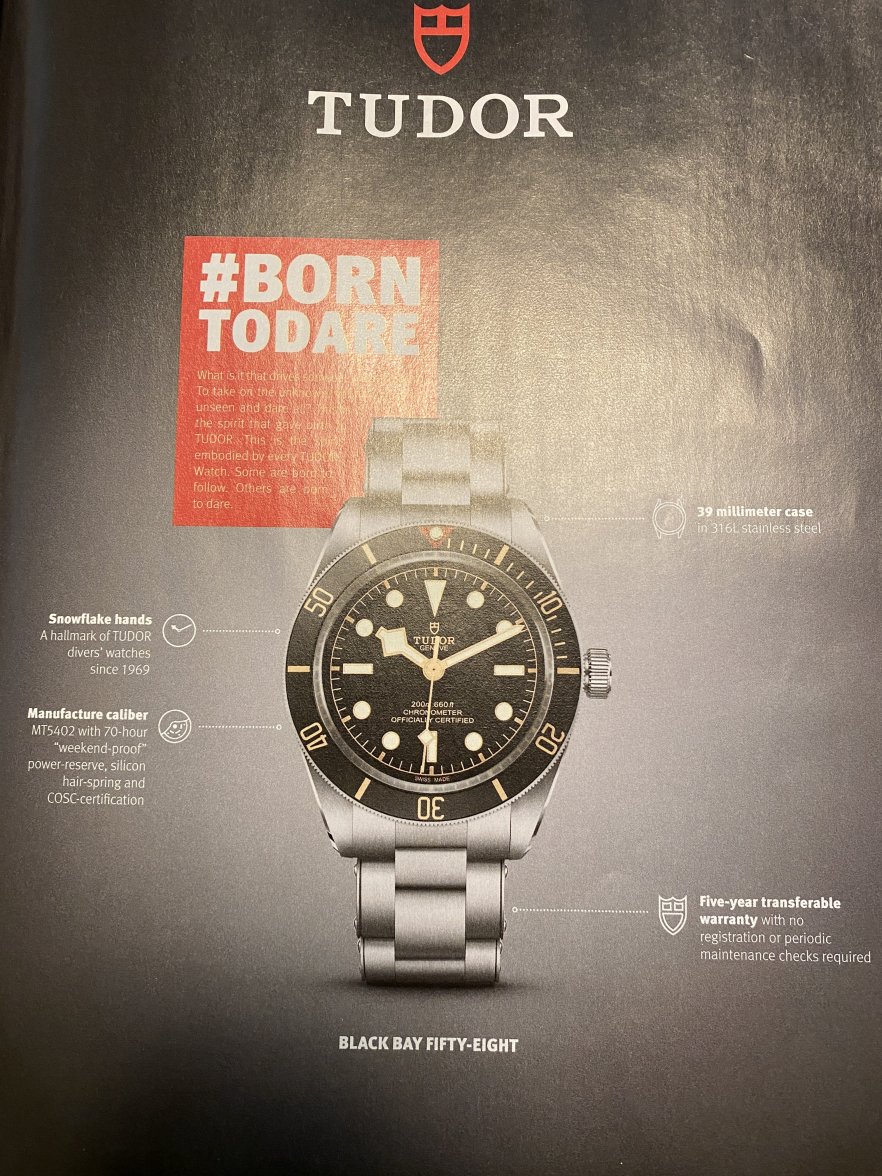
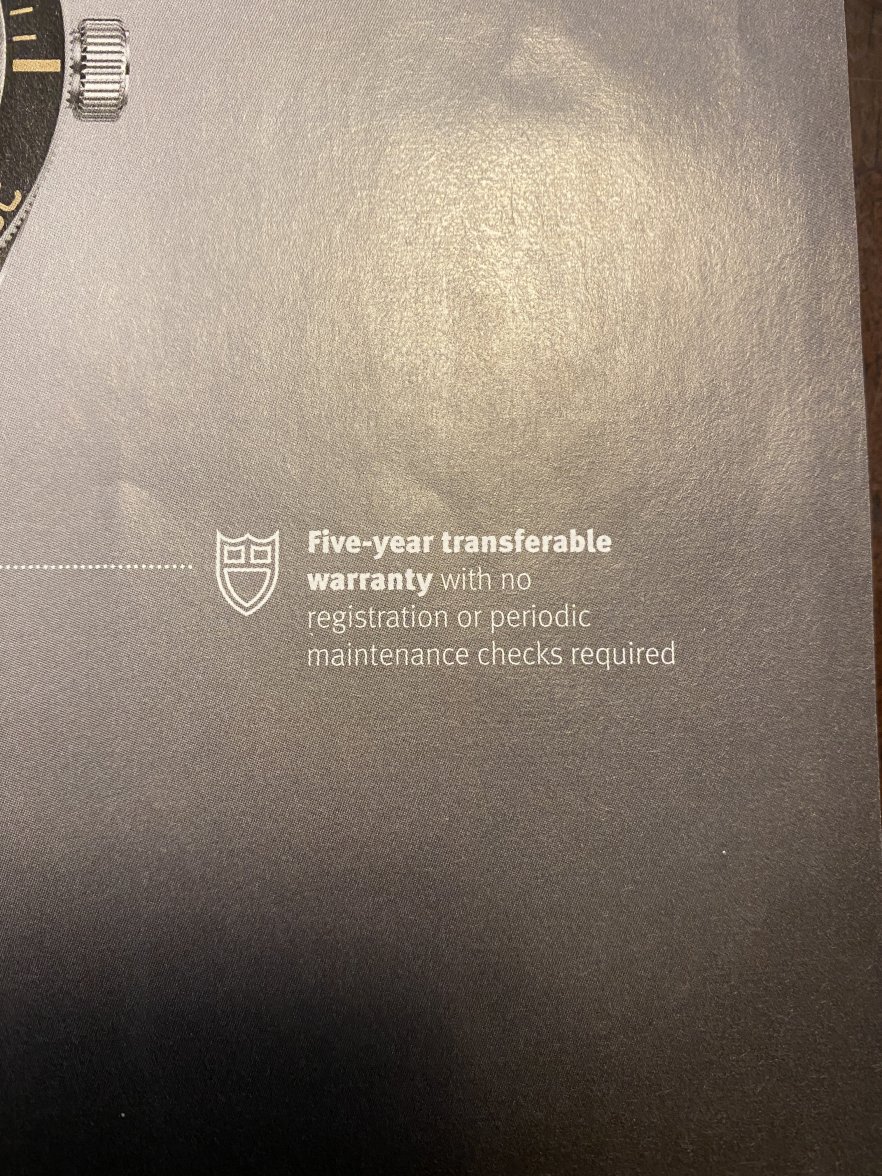
So I recently saw an ad for the Tudor Black Bay saying it has a 5 year warranty with no periodic checks required. Are they just taking a gamble or do they have some secret sauce?
 
Posts
5,525
Likes
9,444
So I recently saw an ad for the Tudor Black Bay saying it has a 5 year warranty with no periodic checks required. Are they just taking a gamble or do they have some secret sauce?
They are probably banking on the fact that 99.9% of the buyers will never go into the water while wearing the watch.
 
Posts
29,810
Likes
77,150
So I recently saw an ad for the Tudor Black Bay saying it has a 5 year warranty with no periodic checks required. Are they just taking a gamble or do they have some secret sauce?

No one has a secret sauce...and when you say it says it has a 5 year warranty with no periodic checks required, do you mean it doesn't mention checks, or explicitly says that "no checks for water resistance are required"?

I would be very surprised if it's the second...and this is explicitly stated. If you could provide a link to it that would be good.

But if they just don't mention it, this is no different than any other manufacturer - watch manufacturer's do not typically say anything about checks or maintenance in their advertising, because they do not want the customer to be reminded in any way that there will be ongoing costs with owning their watches.
 
Posts
234
Likes
153
The ad is specifically giving the impression that you don’t need to worry about checks. At least that’s my take away.
 
Posts
1,438
Likes
2,213
The ad is specifically giving the impression that you don’t need to worry about checks. At least that’s my take away.

I was told the same thing when I bough my Pelagos. I still had it tested before my last diving break, and all was good, but I would not dive without having a pressure test first, and that goes for Tudors, Omegas, Doxas and Seikos, and several of those have a "multiple seal" setup that are claimed to be all but leakproof -- though all recommend a regular or annual test.

I know Damasko use Viton gaskets also, and I still had a leak with any DSub (though not my DA-series watches). My AD doesn't charge for a pressure test on a watch bought there, but I think it was around $30/40 a while back when I had a dry/wet test done while on locum placement. Not a bad price for the peace of mind, IMO.
 
Posts
408
Likes
355
It very likely varies by country and it may have changed since I studied Contract Law at university (decades ago) but in Australia and fairly sure the UK as well (where the former derives a lot of its law from) any conditions, implied or explicit in advertising is not contractually binding, i.e. Not assumed to be part of the terms of conditions unless explicitly stated on the appropriate section of web site (in the general sales section would still be "advertising") or at point of sale.

The Tudor advertisement at best implies there are no regular pressure tests required. Unless it's explicitly stated in the warranty booklet of the watch that water ingress is covered for the full warranty period without the need for any regular pressure tests then it's safe to assume that it's just marketing or a misinterpretation of the advertising.
 
Posts
897
Likes
2,821
I am curious to know if any watch brand has come up with alternative materials in their gaskets that would avoid the need for yearly checks. Perhaps synthetic materials that are more durable and less prone to cracking, etc.

Not sure if Omega has any plans to utilize this technology in mass produced models, but interesting nonetheless. From Hodinkee:

“I’ve often thought that even on a conventional dive watch, you're trusting a lot of expense to a relatively cheap rubber o-ring. Omega in this case seems to agree, and took no chances here. The gasket of the Ultra-Deep is made from LiquidMetal. The case, sapphire and LiquidMetal are heated to 280 degrees Centigrade (540 Fahrenheit) and the molten gasket material poured into its machined channel. Then the crystal is put into place and compressed with five tons of pressure until the LiquidMetal cools and forms a seal.”

https://www.hodinkee.com/articles/omega-seamaster-planet-ocean-ultra-deep-professional-in-depth
 
Posts
408
Likes
355
Not sure if Omega has any plans to utilize this technology in mass produced models, but interesting nonetheless.

Would be cool but guessing it might be a pain to service then? For a concept watch built for a very specific purpose it makes sense but on a mass production and service scale, I think it would pose issues.
 
Posts
29,810
Likes
77,150
Not sure if Omega has any plans to utilize this technology in mass produced models, but interesting nonetheless. From Hodinkee:

“I’ve often thought that even on a conventional dive watch, you're trusting a lot of expense to a relatively cheap rubber o-ring. Omega in this case seems to agree, and took no chances here. The gasket of the Ultra-Deep is made from LiquidMetal. The case, sapphire and LiquidMetal are heated to 280 degrees Centigrade (540 Fahrenheit) and the molten gasket material poured into its machined channel. Then the crystal is put into place and compressed with five tons of pressure until the LiquidMetal cools and forms a seal.”

https://www.hodinkee.com/articles/omega-seamaster-planet-ocean-ultra-deep-professional-in-depth

The crystal on any modern Omega dive watch is not held in place with a "cheap rubber O-ring" and in fact only a few watches from Omega ever used this design. The Mk. II Speedmaster and one of the Flightmaster variants are the only 2 that I can think of off the top of my head, and neither of them are dive watches.

Sapphire crystals in dive watches are held in place my hard plastic gaskets that use an interference fit, and are compressed as the crystal is pressed in place. So this other process seems impressive, but that's for the crystal...what is the seal on the case back? Interesting that it is not mentioned, but this is the area that typically uses a rubber gasket.
 
Posts
5,525
Likes
9,444
LiquidMetal... They make it sound so high-tech. It's actually very old tech. Molten lead was used for many decades to seal plumbing fittings, such as roof drains to the storm drain leaders. And of course solder for sealing pipe connections has been around a long time as well. I guess if you call a technology LiquidMetal you can charge 100x the actual cost of it.
 
Posts
18,229
Likes
27,556
Re the Tudor warranty....

the number of watches that actually dive must be minor. The ability to make that claim sells more watches then will need to get serviced lol.
 
Posts
29,810
Likes
77,150
Re the Tudor warranty....

the number of watches that actually dive must be minor. The ability to make that claim sells more watches then will need to get serviced lol.

Warranties are more about marketing than anything else.
 
Posts
897
Likes
2,821
The crystal on any modern Omega dive watch is not held in place with a "cheap rubber O-ring" and in fact only a few watches from Omega ever used this design. The Mk. II Speedmaster and one of the Flightmaster variants are the only 2 that I can think of off the top of my head, and neither of them are dive watches.

Sapphire crystals in dive watches are held in place my hard plastic gaskets that use an interference fit, and are compressed as the crystal is pressed in place. So this other process seems impressive, but that's for the crystal...what is the seal on the case back? Interesting that it is not mentioned, but this is the area that typically uses a rubber gasket.

You piqued my interest, and thus far my research has yet to come across any article or video addressing the seal on the caseback. I’m sure Omega would have loved to answer any of those questions when they were marketing the watch, had any of the journalists thought to ask.
 
Posts
2,808
Likes
8,339
Warranties are more about marketing than anything else.

Well yeah.

My understanding is that a warranty isn't a guarantee that it will function perfectly, or for a set amount of time - it's an offer to fix it at no extra charge when it fails during a certain time frame, after which you are on the hook.
 
Posts
1,402
Likes
2,751
Well yeah.

My understanding is that a warranty isn't a guarantee that it will function perfectly, or for a set amount of time - it's an offer to fix it at no extra charge when it fails during a certain time frame, after which you are on the hook.

Its also a confidence thing, if your product isn't that good a one year guarantee is all you are likely to be given, this doesn't mean that the product will fail it is just that the maker doesn't have the confidence that the product is worthy of a longer warranty.

As the makers confidence in the product improves so the guarantee period grows, therefore 5 years and above would suggest that the maker has a lot of faith in their product, doesn't expect many failures and doesn't expect to get too many claims. The five year guarantee is fairly common now amongst watch brands and some are expanding this further, Richemont for example.

Buy a Rolex from any Watches of Switzerland store (or subsidiary) and you get a 10 year guarantee on the watch as WOS extend the Rolex warranty by a further 5 years. So WOS have confidence that the watches they sell are reliable and don't break very often, it gives the buyer confidence that the watch is going to be reliable.