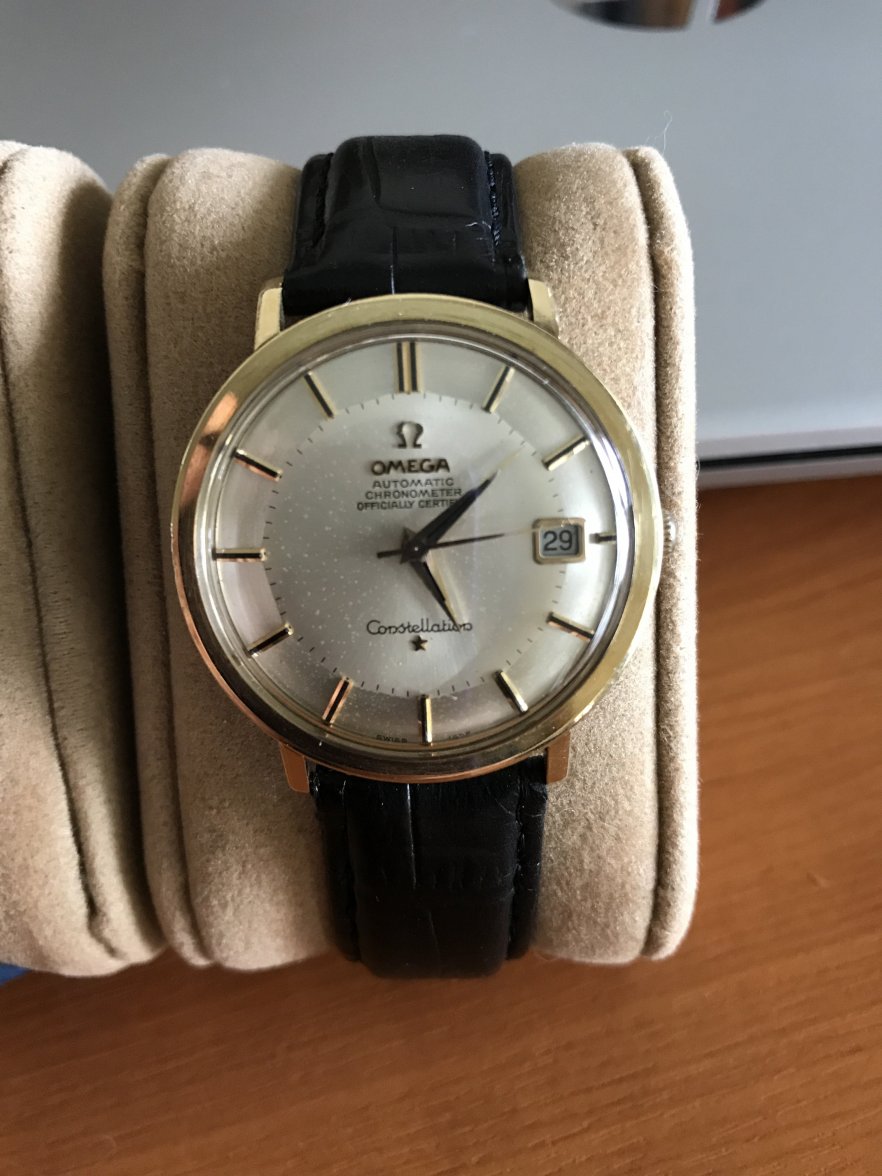
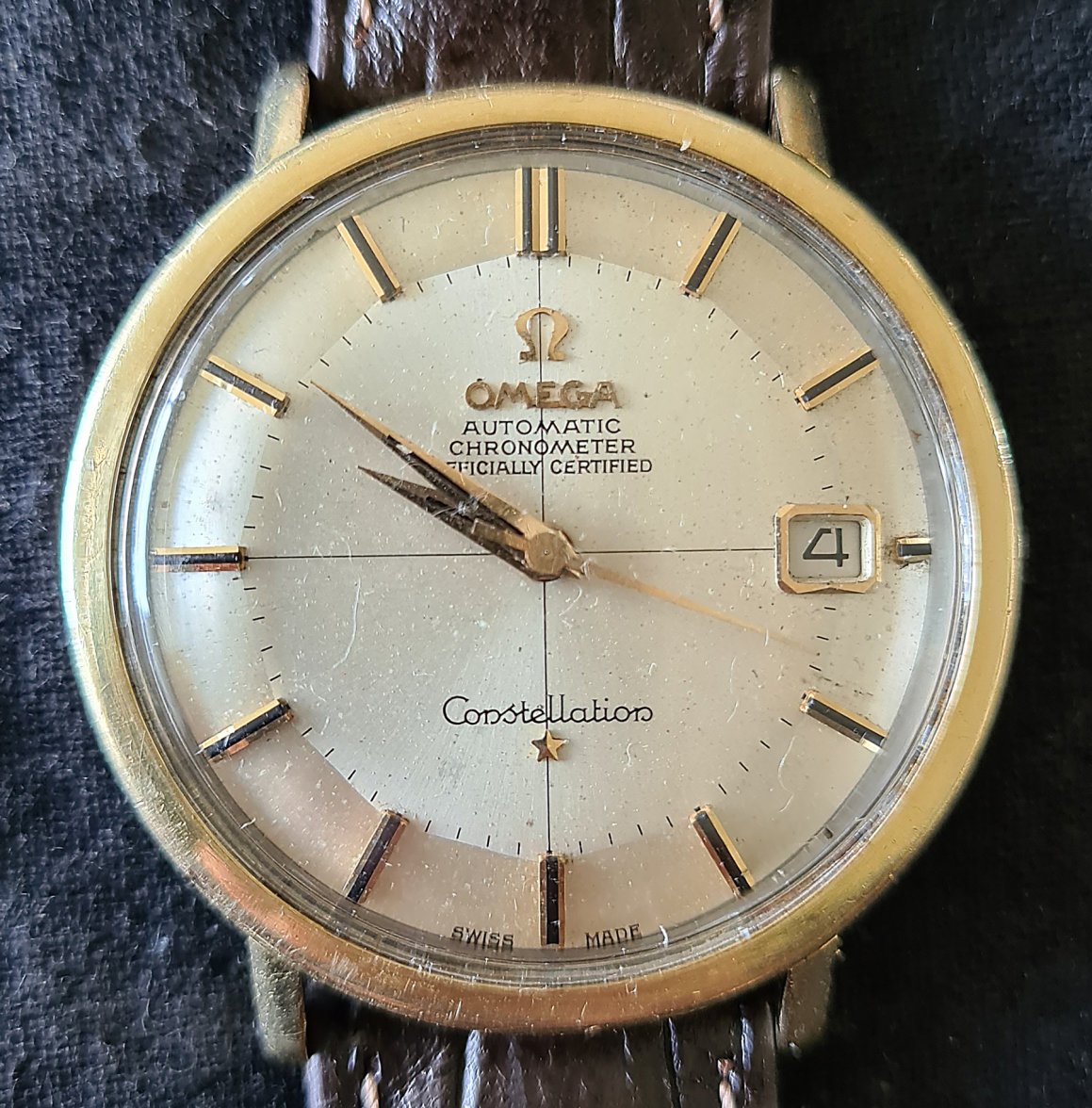
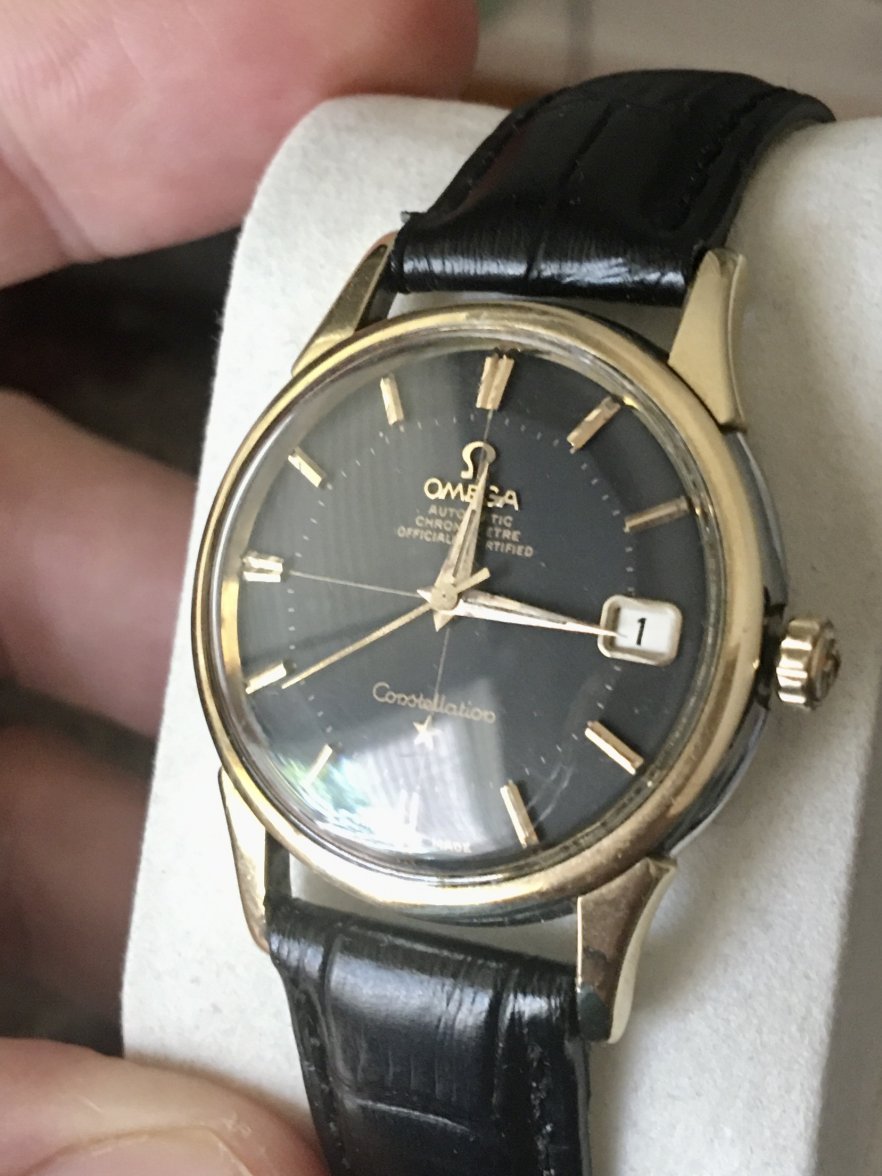
Little confusion on my new Pie Pan crosshair

Posts
24,330
Likes
54,154
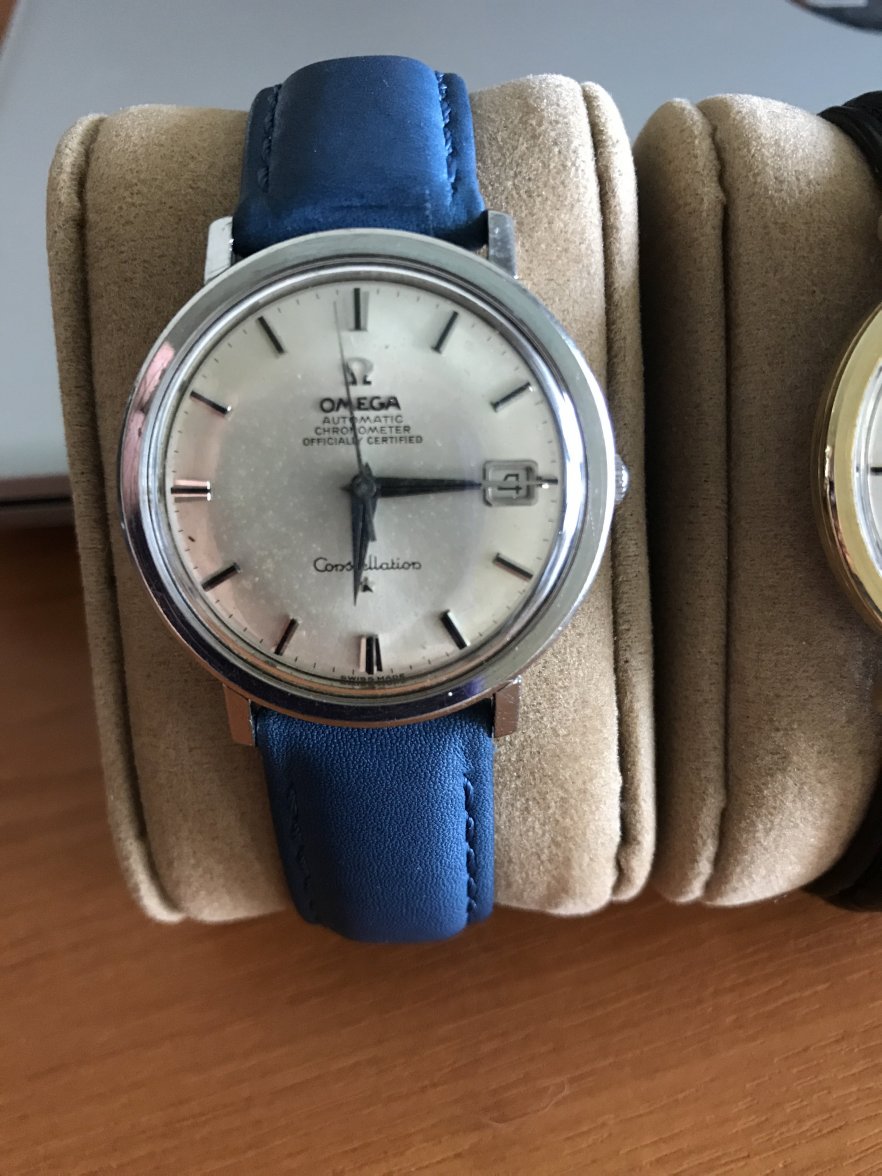
It’s genuine and it’s a pie pan pan. Certainly not a dome dial. Stars on the medallion are a bit worn, but that’s the only fault I see. Otherwise, nice watch.

I would say it is a pie pan. As @ConElPueblo states the facets are not as well defined on the 168.004 as other references.

I have never owned one of these, so I'm only going by photos, but when I look closely at photos of this reference, I can never see any edge at all, just a line of paint. I guess I'd need macro shots at an angle to really be convinced. 😉

 
Posts
9,750
Likes
54,606
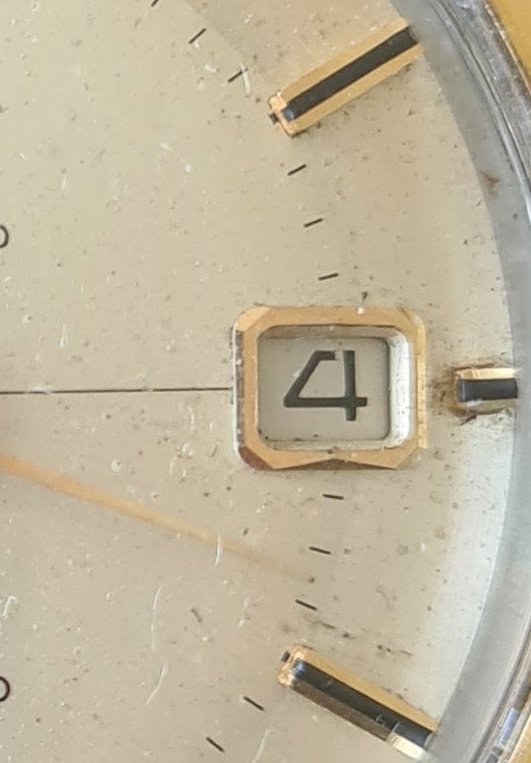
Dan, the pie pan is definitely not as well defined as it is for some other references like a 167.005, but it’s clearly not a dome dial which has a very gradual unbroken slope. Even the macro shots that you refer to show a line of demarcation where the dial slopes down. Look below and to the right of the date window. The line is there. Pie pan.
 
Posts
1,325
Likes
1,870
OP

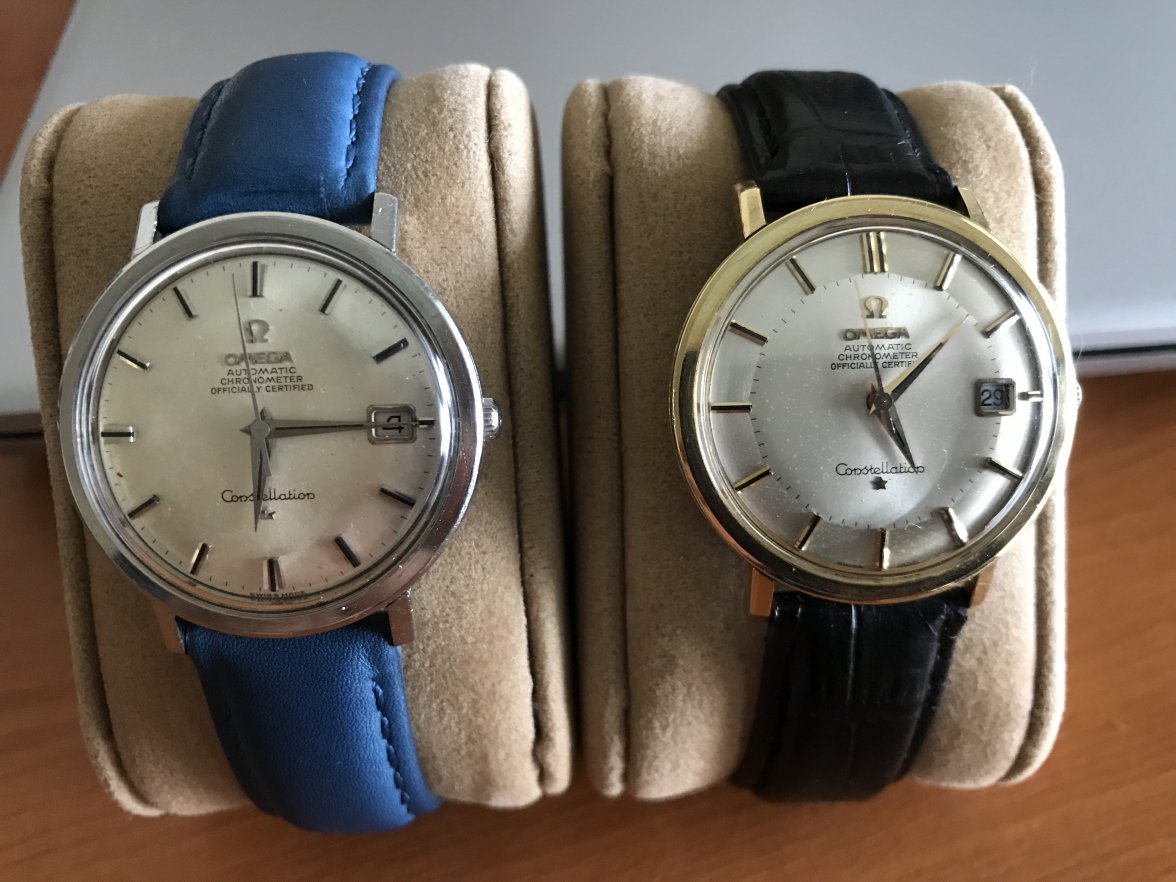
Both these are .004 references, from 1966, 35.5 mm across

the SS on the left is a dome dial, the gold cap on the right is a pie pan

 
Posts
54
Likes
12
OP

Both these are .004 references, from 1966, 35.5 mm across

the SS on the left is a dome dial, the gold cap on the right is a pie pan

Thank you Sherbie, great watches! But how come that my watch is 36 in diameter with the same reference number?
 
Posts
1,325
Likes
1,870
Maybe its because you are measuring the crown, and i dont ( infact, when most people talk about size, the dont measure the crown)
 
Posts
9,596
Likes
27,706
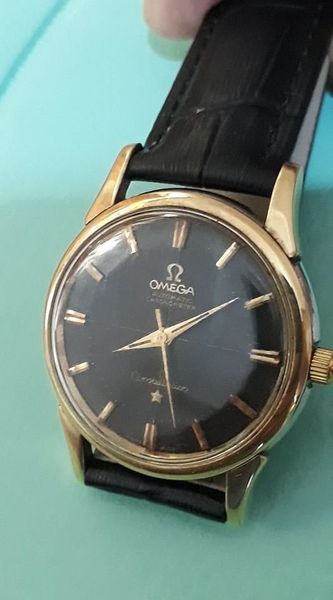
I own a black dialed .004 and it is nearly impossible to tell that it is a pie pan. The characteristic that shows it is a such - apart from the facets on the dial which are close to invisible - is the minute hashes which are on the inside of the hour markers and are positioned in a straight line between the hour markers and not in a curved fashion as on the dome dial.
 
Posts
54
Likes
12
Maybe its because you are measuring the crown, and i dont ( infact, when most people talk about size, the dont measure the crown)
I didn't measure with crown, but you are right, I wasn't very accurate. The actual size across is 35,65. Thank you for making me measure again more accurately 👍
 
Posts
54
Likes
12
I own a black dialed .004 and it is nearly impossible to tell that it is a pie pan. The characteristic that shows it is a such - apart from the facets on the dial which are close to invisible - is the minute hashes which are on the inside of the hour markers and are positioned in a straight line between the hour markers and not in a curved fashion as on the dome dial.
Thank you for clarification, I would love to see a picture of the same model with black dial 😉
 
Posts
9,596
Likes
27,706
Thank you for clarification, I would love to see a picture of the same model with black dial 😉

I posted it recently here. One of my favourite Omegas 😀
 
Posts
365
Likes
453
Dear fellow members, beware that different illumination can make a dial appear very differently. Look at OPs Piepan. The left side of the dial is sharp and the right side looks much smoother. The (daylight) comes from the left side and gradually fades, getting smoother.

Enhanced picture.

Edited:
 
Posts
1,325
Likes
1,870
Note also, that the pie pans are 2-tone dials, and the dome dials are not.
 
Posts
1,325
Likes
1,870
I own a black dialed .004 and it is nearly impossible to tell that it is a pie pan. The characteristic that shows it is a such - apart from the facets on the dial which are close to invisible - is the minute hashes which are on the inside of the hour markers and are positioned in a straight line between the hour markers and not in a curved fashion as on the dome dial.
Again, its clearly a 2 tone dial, also indicating that its a pie pan, and not a dome dial
 
Posts
24,330
Likes
54,154
I own a black dialed .004 and it is nearly impossible to tell that it is a pie pan. The characteristic that shows it is a such - apart from the facets on the dial which are close to invisible - is the minute hashes which are on the inside of the hour markers and are positioned in a straight line between the hour markers and not in a curved fashion as on the dome dial.

Dan, the pie pan is definitely not as well defined as it is for some other references like a 167.005, but it’s clearly not a dome dial which has a very gradual unbroken slope. Even the macro shots that you refer to show a line of demarcation where the dial slopes down. Look below and to the right of the date window. The line is there. Pie pan.

Note also, that the pie pans are 2-tone dials, and the dome dials are not.

I don't want to be argumentative here, since it really doesn't matter very much, but people are simply repeating over and over again that this reference is a pie-pan, without showing evidence of it. I was absolutely prepared to be convinced by some good photos, but when evidence is not forthcoming, and people just repeat claims as facts, it just tends to make me increasingly skeptical. I also know that nobody is obligated to prove anything to me, and that taking photos like this is hard to do. 😀

Just to clarify my point. I see that it is two-tone, and I see a line in the paint color, but I already know that there is a line in the paint, and I realize that the ability to see the line depends on the lighting. But these dogmatic statements don't demonstrate to me that there is a discontinuous change of slope, as opposed to a gradual continuous one. I focused on the right side of the dial, since the paint line was not as visible there, since I believe that the two-tone paint job (and the position of the hash marks) is intended to give the illusion of a pie-pan shape, and I'd like to separate the two issues.

If you want to define a pie-pan dial as a two-tone dial, I guess that's ok, but that's not my definition. I'm not disbelieving anyone, since as I already mentioned I haven't owned one of these. But if someone is really interested in illustrating that the dial is truly a pie-pan shape that has a discontinuous change of slope (i.e. sharp edges), then a macro shot at an angle showing the break in slope would be more empirically convincing than just continuing to repeat that it is a pie-pan.

Of course, @ConElPueblo has already indicated that the break in slope is nearly impossible to see, which perhaps means that it doesn't exist. So perhaps this is really a semantic argument, i.e. there is no observable break in slope, but the dial is still conventionally called pie-pan because of the paint job, and perhaps because experts have historically listed this reference within the pie-pan category.

P.S. Apologies to the OP for highjacking this thread.

Edited:
 
Posts
4,593
Likes
10,810
I'm not so sure that all pie pans are two-toned. I just think the angles of the surfaces give that impression.
 
Posts
9,596
Likes
27,706
I'm not so sure that all pie pans are two-toned. I just think the angles of the surfaces give that impression.

And the direction of the brushing. Nearly always sunburst in the middle and vertical/horisontal on the flat parts. That might be the two-tone part @Dan S mentions which could well be the truth. A most convincing trompe l'oeil on Omegas part if it is the case 😀
 
Posts
2,057
Likes
22,195
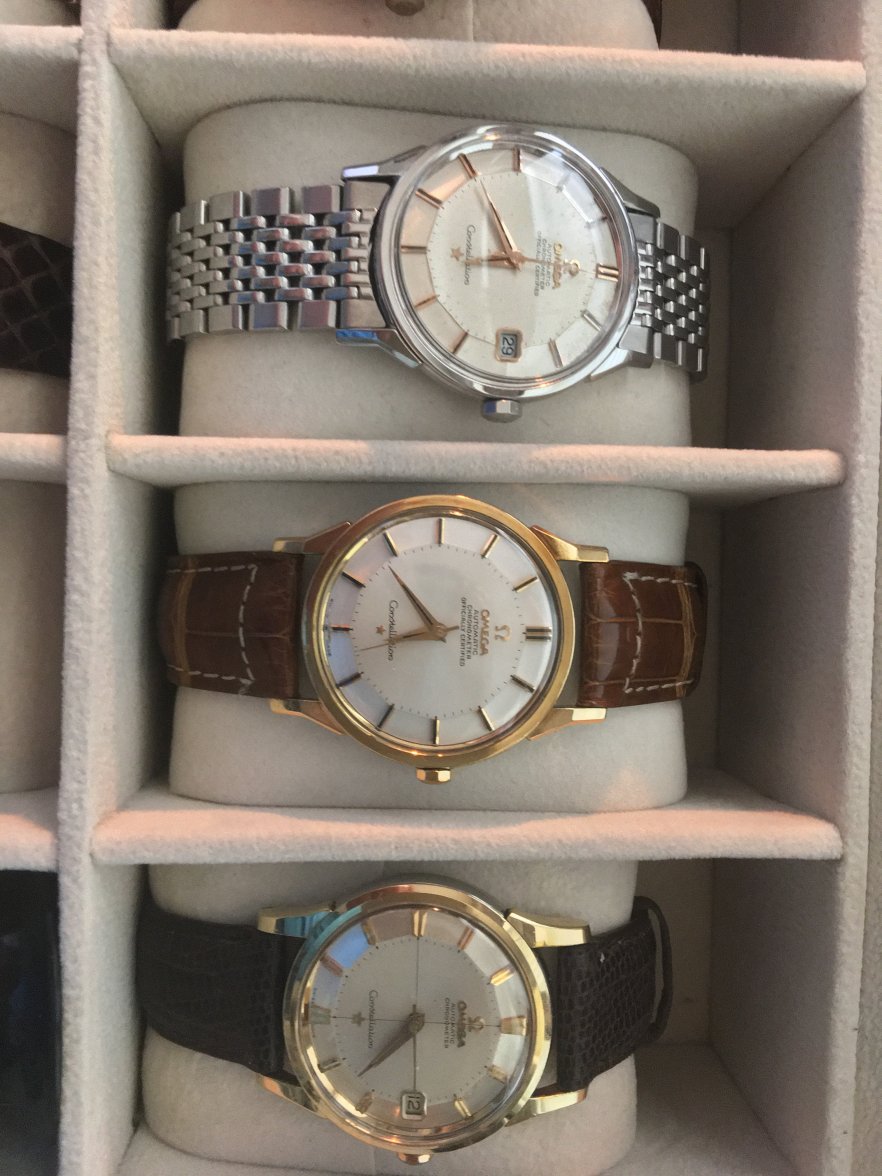
Fred’s right. Some are brushed but most are single paint finish and angle gives impression of difference. Here’s a quick pic taken now of some of mine. These have same dial finish but differing angles of pie edge.
 
Posts
2,057
Likes
22,195
And this black one you can barely see it’s a pie pan at all...
 
Posts
54
Likes
12
And this black one you can barely see it’s a pie pan at all...
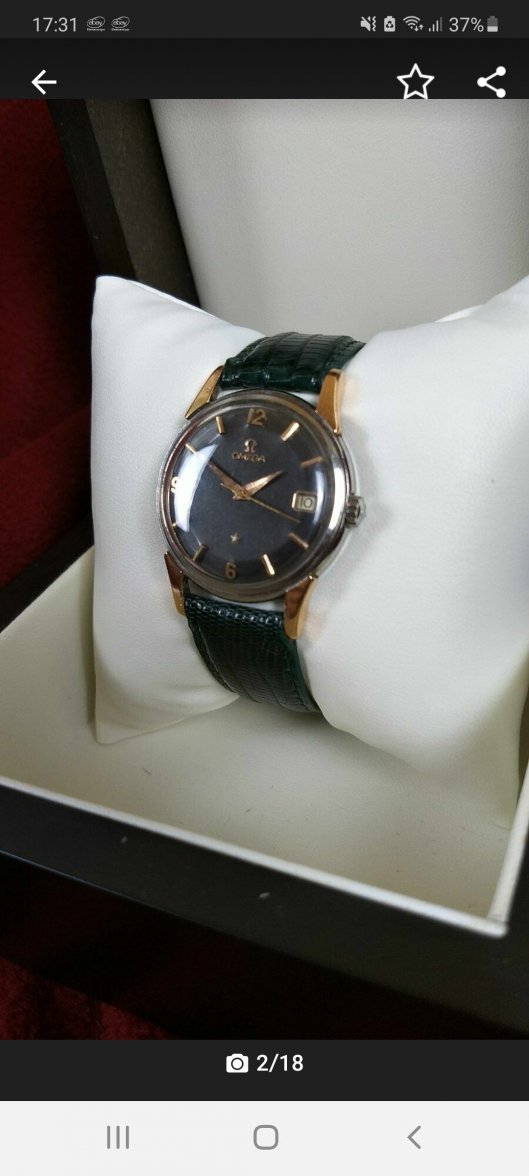
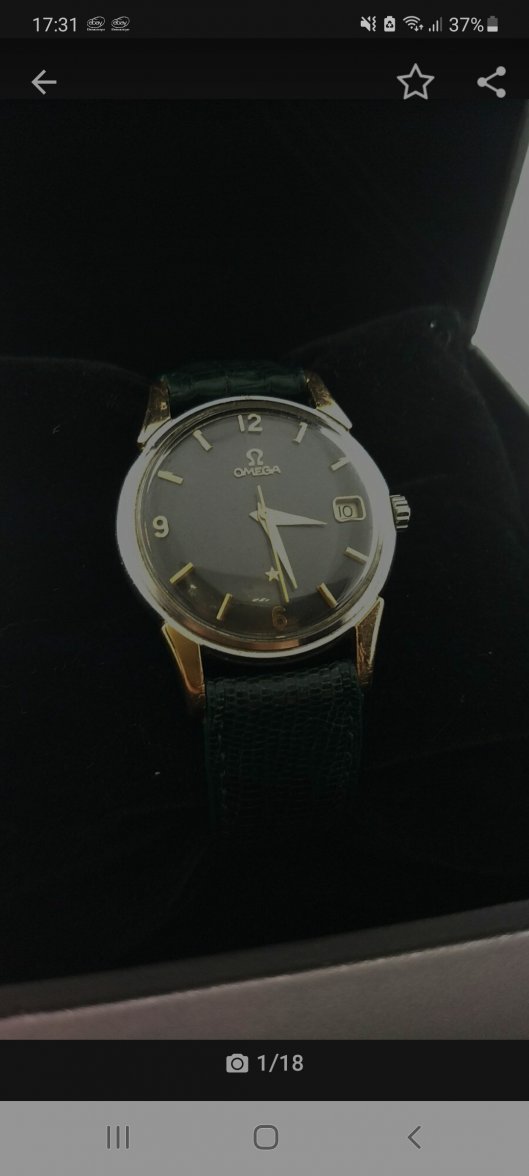
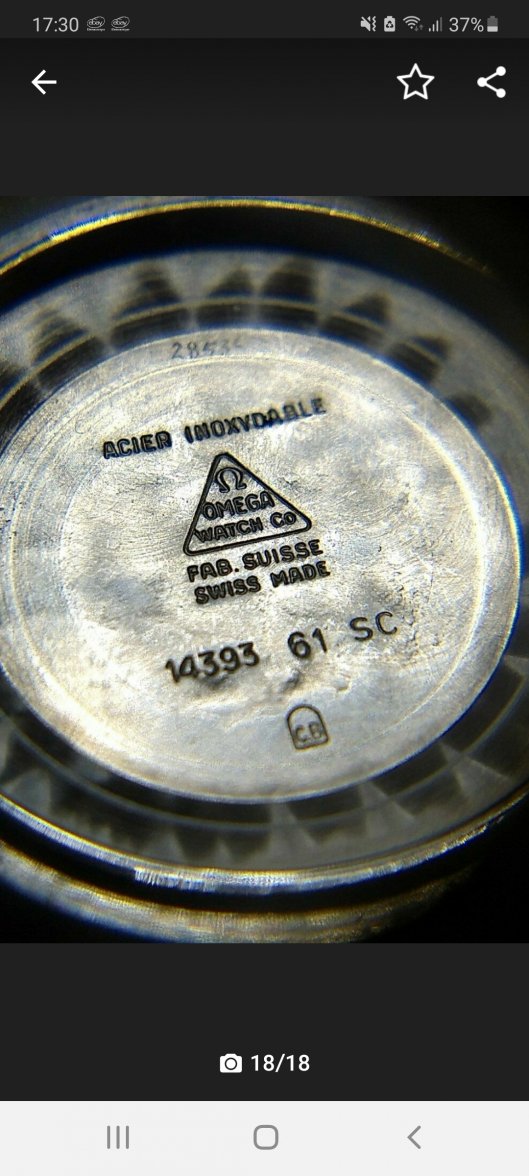
Very nice watches, congrats! Reminds me of this watch I am thinking of to buy. What do you think and what would be a fair price? Thank you!