- Posts
- 50
- Likes
- 85
Please consider donating to help offset our high running costs.

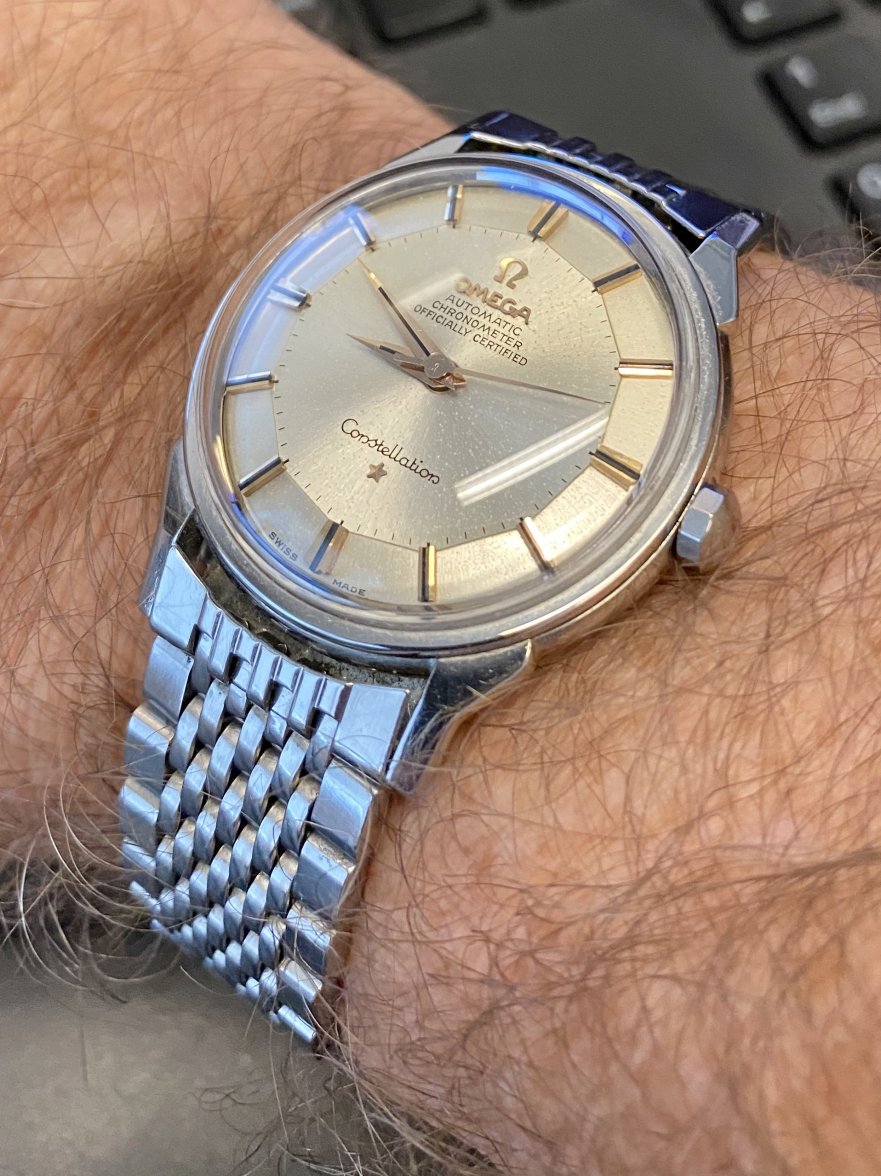
I would need to see better photos, but I think that the Connie on the right is a true PP, but the one on the left is not. Are you sure there is actually a step? It has been established, I believe, that some of these dials have a polygon-shaped paint job that tricks the eye into seeing a step. But if you look very closely using a loupe, even at an angle, one cannot actually see any abrupt change of slope. It can be an illusion due to the change of paint color and the angle of the brush strokes.
One must be willing to look with an open mind and to challenge long-held assumptions. In this thread, and the previous one where we discussed this, a few people have claimed that some of the dials actually have a very slight step/kink that is hard to see. I have asked them to show good photos illustrating this feature, but nobody has done so. Perhaps @padders will take on this challenge with a macro shot taken at the appropriate angle.

I'll post some better pics later showing hopefully that there is no defined step as you call it but there is a defined change of plane leading to the 12 scalloped sides, this is not just a brush Trompe-l'œil.
I do wish you would concentrate less on the presence or otherwise of supposed step and more on whether the plane of the dial changes at the edge. Any step is irrelevant. This is what defines a pie pan, the 12 straight folds leading to the scalloped sides. AFAIK there is no faux PP Connie with the polygonal 12 sided pattern, though there are certainly dome dials with brush effects that do look to have a plane change. These in my experience have a circular ring in the middle, not one made up of straight lines.

You are welcome to show me a convincing photo, and then I will believe. Until then, I can just be the crazy OF pie-pan skeptic. 😉

the last photo he posted clearly showed both watches have the folded, kinked or whatever pie pan dial. 👍

You are welcome to show me a convincing photo, and then I will believe. Until then, I can just be the crazy OF pie-pan skeptic. 😉
The funny thing is that Omega (on their online database at least) calls the dials we normally define as dome dials pie-pans as well.
If push came to shove, I'd rather call the dials with painted, angular transitions pie-pans than the ones with no angular edge, painted or not.
I didn't expect my post would make another discussion and i've also learned a lot. My watch buying wise, I decide to cancel this order due to the missing screw and my suspicion of repaint of dial.. I'm not a collector but i would definitely avoid if it is redial because i personally think originality(especially dial) is one of the most important thing of vintage.. Anyway, Thanks for helping guys!
The funny thing is that Omega (on their online database at least) calls the dials we normally define as dome dials pie-pans as well.
If push came to shove, I'd rather call the dials with painted, angular transitions pie-pans than the ones with no angular edge, painted or not.

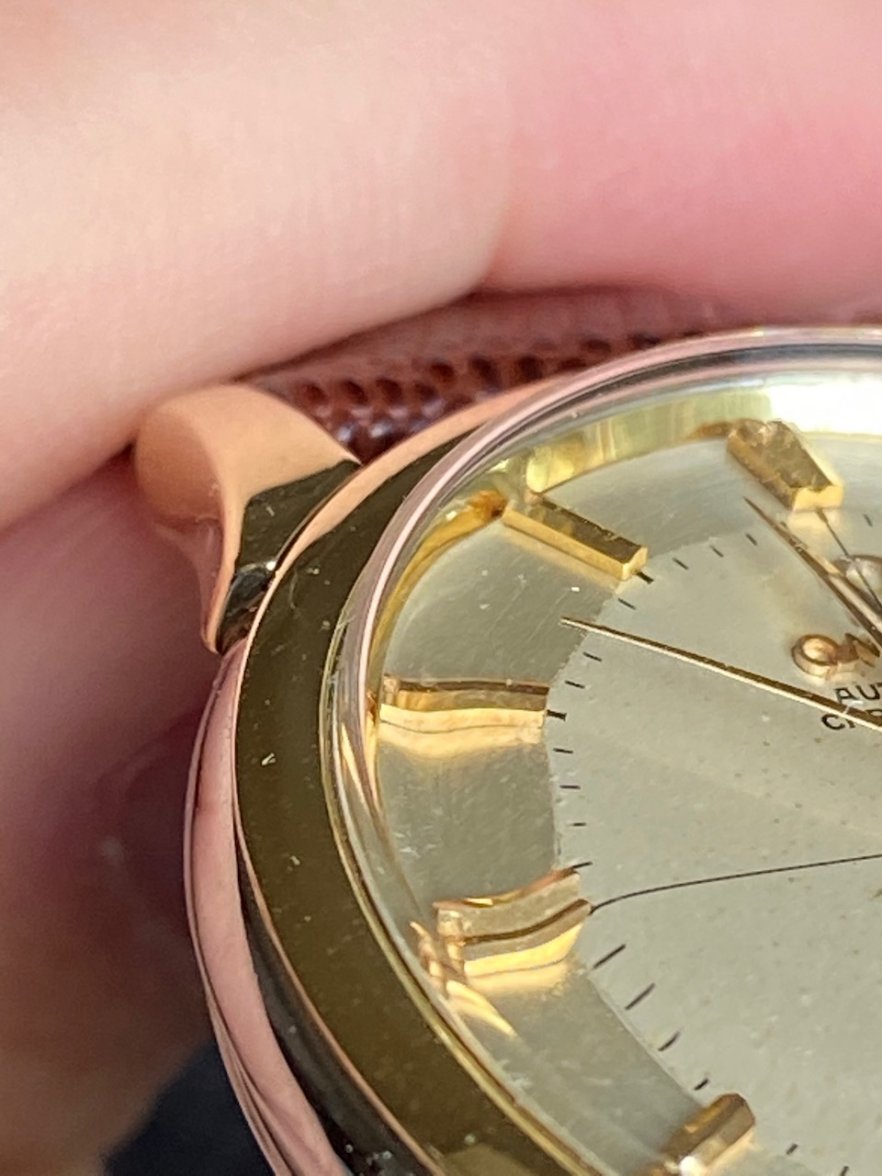
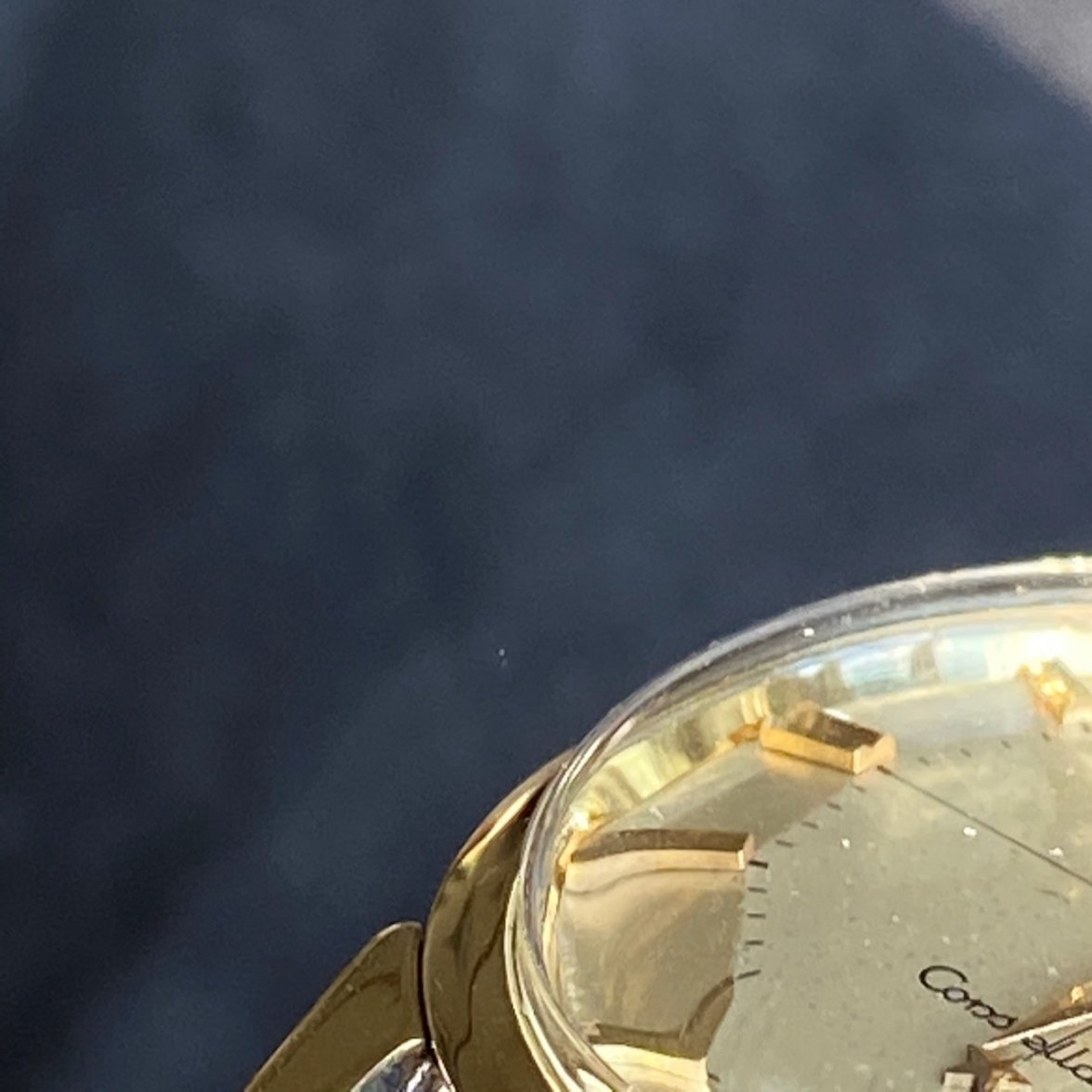
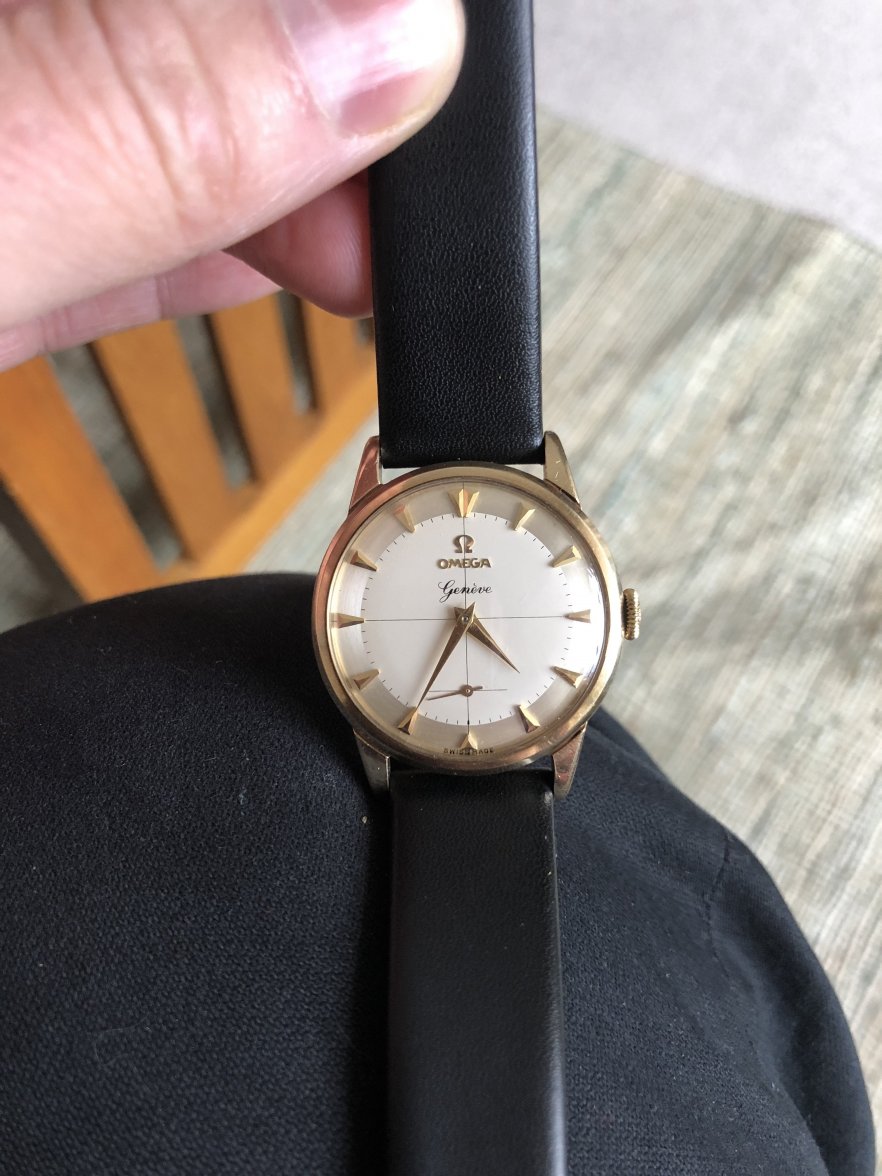
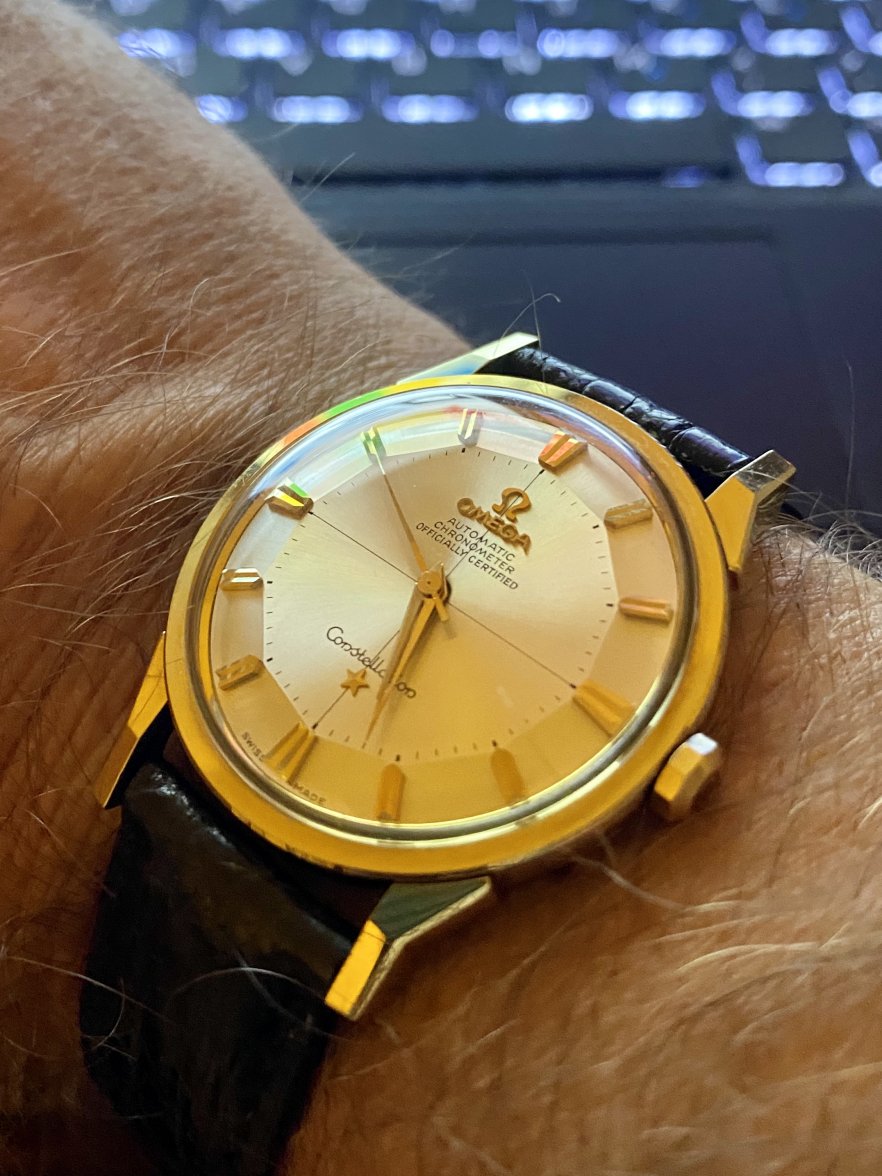
@Dan S As you asked I did take a couple of pics of my less steppy PP, the one on the LHS earlier which is model 14381. While I am 100% there is a kink, I realise that it isn't proven by these pics so I don't think you will necessarily agree. The problem is to really show it you need a very low angle, something that is prevented by the crystal in a cased dial. Anyhoo you asked and I deliver. I would be genuinely curious to see the opposite, a 12 sided middle section with a non kinked rim ie a faux pp done by brushing, if you can find me a verifiable one: