Hi all,
Yesterday I have come back late from a short journey to Germany (visited a terrific exhibition of Vermeer paintings in Dresden) and so I was too tired to read through all the long thread.
This morning I took the time to do so and I was a bit amused that it took that long that somebody came across these older threads where we already discussed similar watches.
Well to make it short:
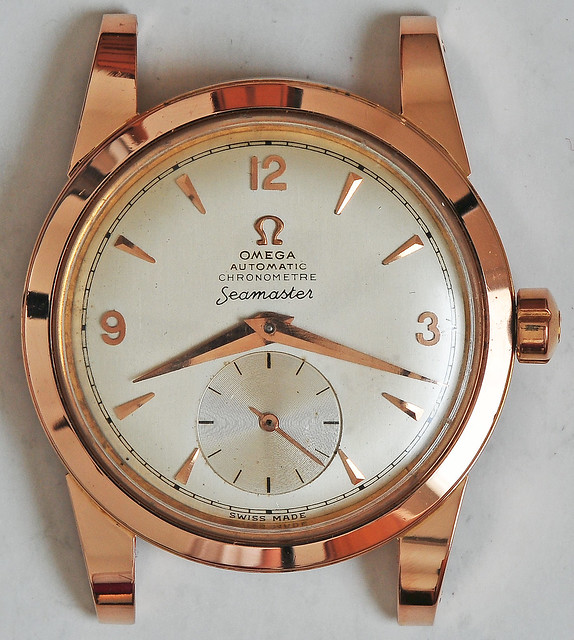
There have appeared 4-5 watches (if I recon correctly) after the release of my book which show the same "pattern" - cal. 283 and chronometre on the dial. All of them were found in England and those which were looked up in the microfiche of Omega archive share serials in a small range of numbers but cannot be found in the archives due to damage/loss of a part of the microfiche film. I wanted to research these watches more closely in the Omega Museum but due to the pandemic situation I have to postpone this for some time...
Meanwhile I tend to set up a new category of chronometres the "UK chronometres". All share "late" three line dials and of similar style (not much variation found) and all but one have Dennison cases of the same shape. The movements don´t show special finish like the Rg-chronometres but this is not necessary to make a watch a chronometre as we all know. IMO it is possible that a small batch of movements were chronometre rated and sold to UK to be cased and sold as chronometres. There have been special chronometres for France, Spain and Italy - so why not for the UK?
I hope to find proof for this theory in the Omega archives once I get the chance to go there once again.
OP´s watch could well be one of these UK chronometres but - what a pity - has a restored dial. So we don´t know if it started out with a chronometre labeled dial or if a "regular" 283 Dennison cased watch was pimped up to make it a chronometre.