Hello, and please tell me about my watch!

Posts
349
Likes
228
By the way, I want to emphasize something others have hinted at. If that movement went to Omega for a service, they would send back a bag of replaced worn parts. At some independent watchmakers, those same parts are often re-used to cut service cost. Whether the owner is consulted or not may depend, for example, Archer's point could well be a factor here.

With all parts in tolerance, any 283 can be adjusted within cosc without much fuss by a good watchmaker. The reason they were not originally was about marketing (price point) and labor costs. It takes time and effort to adjust a watch in multiple positions such that it will pass certification testing. Not all customers cared to pay for that. Then or now, same question.

In your watch's case, if you are using a reliable timegrapher correctly, I would suggest the watch either needs some parts replaced, needs better cleaning, needs more adjustment, or possibly all three things.

If you otherwise like the watch, you could have it serviced by someone reputable with an omega parts account. Of course, how you work that out with the shop that sold it to you is another question.

 
Posts
6,832
Likes
13,797
There’s also another pragmatic reason ( to me) to return. You stated a few posts back that you don’t really care that much wether to return it or not. I would return it then and look for something that you care more for.

just me.
 
Posts
214
Likes
197
I have also reached the age where I need to look really smart, and although I've also become "patinated", it doesn't really show 😉.
.

I'd have to agree, but the bloke in the suit standing with you looks decidedly rough. 😉
Edited:
 
Posts
214
Likes
197
There’s also another pragmatic reason ( to me) to return. You stated a few posts back that you don’t really care that much wether to return it or not. I would return it then and look for something that you care more for.

just me.

I have learned not to fall in love with stuff. Particularly watches.

I had a really lovely watch from a Swiss maker, whose name sounds a bit like the Italian cheese that one grates onto pasta. I bought it new and it was, probably, the only one in the UK. I really was into that watch and everyone who saw it commented how nice it was. I was overly invested in it emotionally, if that makes sense.

The date wheel became out of sync, so it went back to the manufacturer. When it returned, the setting mechanism had a huge amount of backlash. The manufacturer said basically "nah mate, they all do that. Its a characteristic, not a fault", despite it being fine when it was sent off. After much to-and-fro I was getting nowhere, so I rejected it and ended up claiming the money from my card company.

Nowadays, I just like stuff but try not to become overly attached. Possibly a good MO for life too, some might argue.
 
Posts
6,832
Likes
13,797
I have learned not to fall in love with stuff. Particularly watches.

I had a really lovely watch from a Swiss maker, whose name sounds a bit like the Italian cheese that one grates onto pasta. I bought it new and it was, probably, the only one in the UK. I really was into that watch and everyone who saw it commented how nice it was. I was overly invested in it emotionally, if that makes sense.

The date wheel became out of sync, so it went back to the manufacturer. When it returned, the setting mechanism had a huge amount of backlash. The manufacturer said basically "nah mate, they all do that. Its a characteristic, not a fault", despite it being fine when it was sent off. After much to-and-fro I was getting nowhere, so I rejected it and ended up claiming the money from my card company.

Nowadays, I just like stuff but try not to become overly attached. Possibly a good MO for life too, some might argue.
for sure
 
Posts
5,636
Likes
5,810
I am surprised that it is keeping such good time on the wrist, despite looking so grim on the timegrapher.
I'm not. I have had (and still do) watches that were awful on the timing machine and fabulous on the wrist. The two situations are very different.
 
Posts
214
Likes
197
I'm not. I have had (and still do) watches that were awful on the timing machine and fabulous on the wrist. The two situations are very different.

It's become worse, though.

I wonder whether someone regulated it otherwise than with a timegrapher. I.e. just kept an eye on it and advanced or retarded it as necessary, creating an average of some quite large positional errors.
 
Posts
5,636
Likes
5,810
It's become worse, though.

I wonder whether someone regulated it otherwise than with a timegrapher. I.e. just kept an eye on it and advanced or retarded it as necessary, creating an average of some quite large positional errors.
That's possible. Tne average rate is generally a fairly good predictor of on-the-wrist performance.

But if the performance is degrading, and multiples of the resident watchmakers tell you to return it... you'd be wise to pay attention and consider well.
 
Posts
214
Likes
197
That's possible. Tne average rate is generally a fairly good predictor of on-the-wrist performance.

But if the performance is degrading, and multiples of the resident watchmakers tell you to return it... you'd be wise to pay attention and consider well.

I am going to call the vendor tomorrow with a view to doing that.
 
Posts
29,671
Likes
76,828
I'm not. I have had (and still do) watches that were awful on the timing machine and fabulous on the wrist. The two situations are very different.

Not really. It’s just luck if the average rate happens to fall close to zero based on your wearing habits. If someone else wears the exact same watch, it may run like crap on them.

Taking the variation out also takes the luck out of good timekeeping.
 
Posts
5,636
Likes
5,810
Not really. It’s just luck if the average rate happens to fall close to zero based on your wearing habits. If someone else wears the exact same watch, it may run like crap on them.

Taking the variation out also takes the luck out of good timekeeping.
Indeed, and the one I'm thinking of, I turned the screw until it ran right for me. I did the same for the Ingersoll dollar watch.

My point is, yes, adjusted is better, clearly, but that the watch keeps time better than expected is not unusual.
 
Posts
29,671
Likes
76,828
Indeed, and the one I'm thinking of, I turned the screw until it ran right for me. I did the same for the Ingersoll dollar watch.

My point is, yes, adjusted is better, clearly, but that the watch keeps time better than expected is not unusual.

Indeed, it happens more than people likely think. But part of this is determined by what “good” means to the individual. I have customers who are after rates very close to zero, but others have handed me watches than they said ran good, but then said it was within a couple of minutes a day...
 
Posts
5,636
Likes
5,810
Indeed, it happens more than people likely think. But part of this is determined by what “good” means to the individual. I have customers who are after rates very close to zero, but others have handed me watches than they said ran good, but then said it was within a couple of minutes a day...
My local watchmaker tries to get me to accept "it runs to spec" when the spec is 40 seconds a day. I pay extra for more adjusting... but I've also relaxed my own obsession. As long as I can set the watch -15 on Monday, and it's less than +15 next Monday, I'm happy.
 
Posts
15,477
Likes
45,828
If I recall, the person who sold you the watch said it had been serviced. Has your local guy (the one who says it runs within spec) serviced the watch? Minus 20, minus 32, and minus 90 hardly sounds like it is within spec, whether it is a chronometer, or a non-chronometer!
 
Posts
5,598
Likes
9,421
Hi all,

Yesterday I have come back late from a short journey to Germany (visited a terrific exhibition of Vermeer paintings in Dresden) and so I was too tired to read through all the long thread.
This morning I took the time to do so and I was a bit amused that it took that long that somebody came across these older threads where we already discussed similar watches.
Well to make it short:
There have appeared 4-5 watches (if I recon correctly) after the release of my book which show the same "pattern" - cal. 283 and chronometre on the dial. All of them were found in England and those which were looked up in the microfiche of Omega archive share serials in a small range of numbers but cannot be found in the archives due to damage/loss of a part of the microfiche film. I wanted to research these watches more closely in the Omega Museum but due to the pandemic situation I have to postpone this for some time...

Meanwhile I tend to set up a new category of chronometres the "UK chronometres". All share "late" three line dials and of similar style (not much variation found) and all but one have Dennison cases of the same shape. The movements don´t show special finish like the Rg-chronometres but this is not necessary to make a watch a chronometre as we all know. IMO it is possible that a small batch of movements were chronometre rated and sold to UK to be cased and sold as chronometres. There have been special chronometres for France, Spain and Italy - so why not for the UK?
I hope to find proof for this theory in the Omega archives once I get the chance to go there once again.

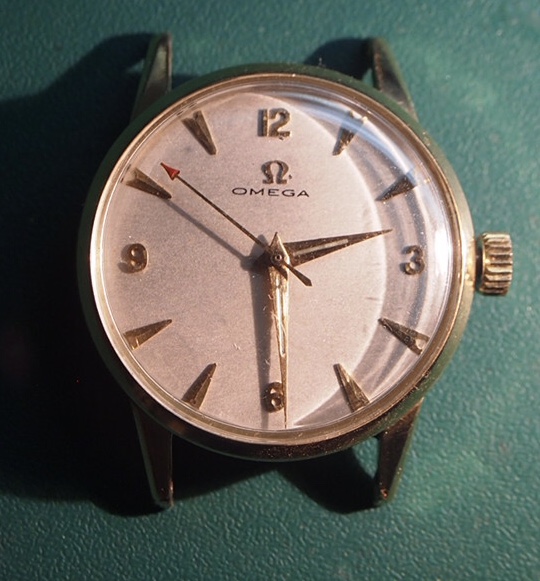
OP´s watch could well be one of these UK chronometres but - what a pity - has a restored dial. So we don´t know if it started out with a chronometre labeled dial or if a "regular" 283 Dennison cased watch was pimped up to make it a chronometre.

The OP `s watch does not fall into that, yet to be proven, Theory. Until Erich and the Omega Factory confirms that strange marketing behavior ( which i doubt ) , it is and remains a theory. to my knowledge , the factory always sold movement, hands and dial in one paket to be recased abroad. to avoid certain taxes. whatever the situation after WW2 was, i doubt, that the strict swiss Chronometre` requirements were thrown out of the window for a few extra sales . using normal non chronometre standard movements and pair them with chronometre rated dials. would be a violation of swiss rules as well. sure you can regulate base movements into chronometre` specs. the special regulated competition movements in their big, V shaped alloy cases tell that story. but were not designed or marked for sale then . so far the only factory attempt to improve a Caliber 283 for better regulation, are some Prototypes for the Early Railmasters sent to Canada. with the swan neck regulator. even here not more than maybe 20 movement examples have surfaced so far . and the dials were not marked Chronometre`. So, in my opinion the OP has a cobbled together watch. I have 3x caliber 283 spare movements for repairs here. and find somebody to repaint a dial with "that" font is a no brainer for a dial refinisher. This theory seems more plausible for me. but with vintage watches ...... who knows ? kind regards. Achim
 
Posts
214
Likes
197
Return agreed with the dealer.

They wanted to sort out the problem, but I didn't feel confident that the watch would receive the proper treatment that it needs.

Also, I didn't buy it in order to immediately return it for an indeterminate period, whilst it has the repairs that should already have been done.
 
Posts
3,401
Likes
13,196
“You have chosen… wisely!”

I haven’t used that quote in a long time. 😁
 
Posts
15,477
Likes
45,828
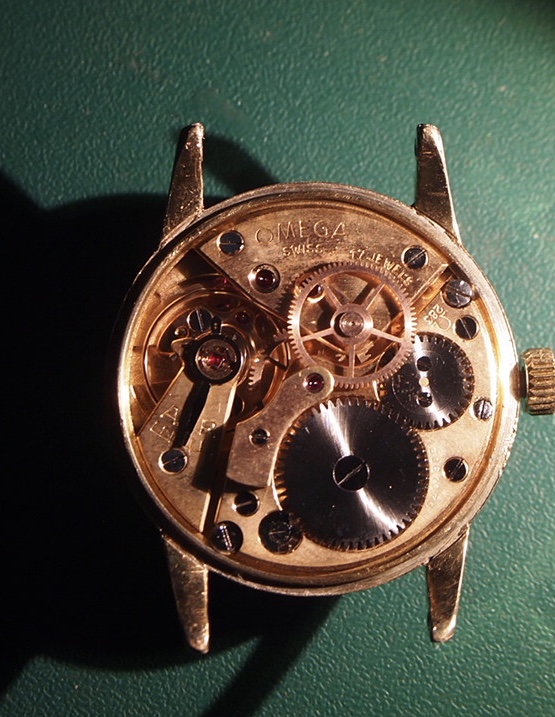
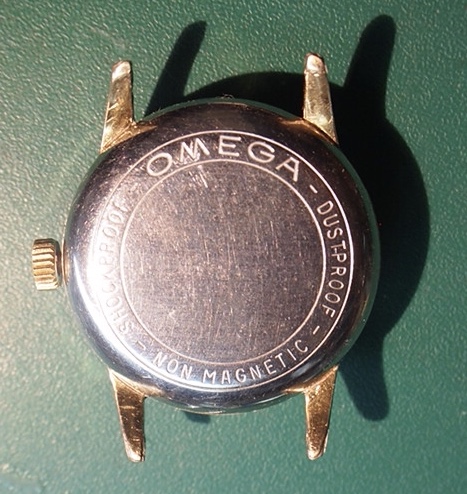
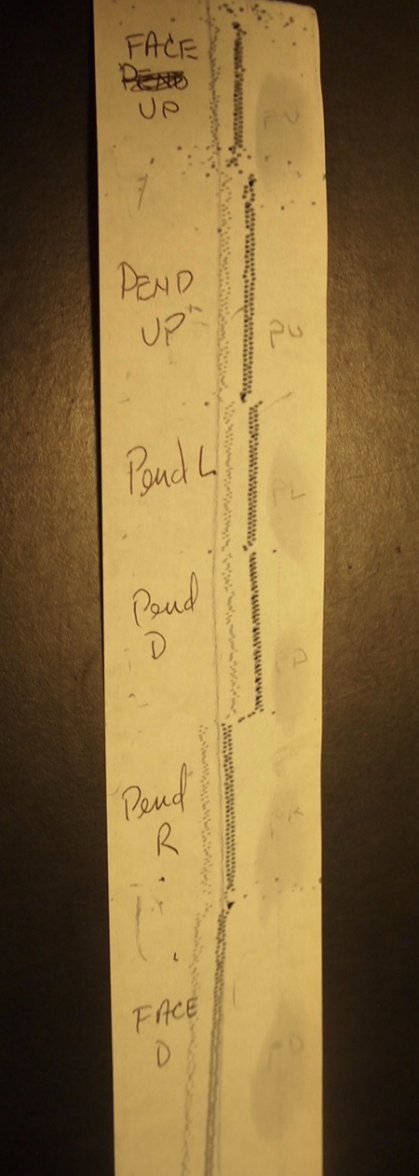
This thread caused me to wonder how well one might expect an Omega calibre 283 that is in good shape and has been thoroughly serviced, might perform. To this end, I dug out my Omega with the calibre 283 movement, and serviced it. I also replaced the mainspring. After minor beat adjustments, and adjustments to the regulator, testing it on my Timegrapher, and here are the results.

-face down. - 2 sec.
-pend right - 6 sec.
-pend down. -15 sec
-pend left - 15 sec
-pend up. - 5 sec
-face up. - 9 sec

Amplitude range a few digits either side of 260° in all positions. Then, for a more graphic representation of its performance, I put the watch on the B200 Vibrograph, and photographed the detail tape in each of 6 positions. This all sort of indicates there was something seriously wrong with the Omega 283 which is the subject of this thread. With a bit more fussing, I would be able to average out the gains and losses for better average performance. But these figure point out that there is only a 13-second delta between the two extremes rates. Not bad for a 65 year old watch!

 
Posts
214
Likes
197
This thread caused me to wonder how well one might expect an Omega calibre 283 that is in good shape and has been thoroughly serviced, might perform. To this end, I dug out my Omega with the calibre 283 movement, and serviced it. I also replaced the mainspring. After minor beat adjustments, and adjustments to the regulator, testing it on my Timegrapher, and here are the results.

-face down. - 2 sec.
-pend right - 6 sec.
-pend down. -15 sec
-pend left - 15 sec
-pend up. - 5 sec
-face up. - 9 sec

Amplitude range a few digits either side of 260° in all positions. Then, for a more graphic representation of its performance, I put the watch on the B200 Vibrograph, and photographed the detail tape in each of 6 positions. This all sort of indicates there was something seriously wrong with the Omega 283 which is the subject of this thread. With a bit more fussing, I would be able to average out the gains and losses for better average performance. But these figure point out that there is only a 13-second delta between the two extremes rates. Not bad for a 65 year old watch!


That's the sort of thing I was expecting to see, honestly.

Out of interest, why would you not advance it slightly so that it gains, rather than loses?

I have returned the watch and told the seller that I might buy it back if they can demonstrate that it's been attended to properly.