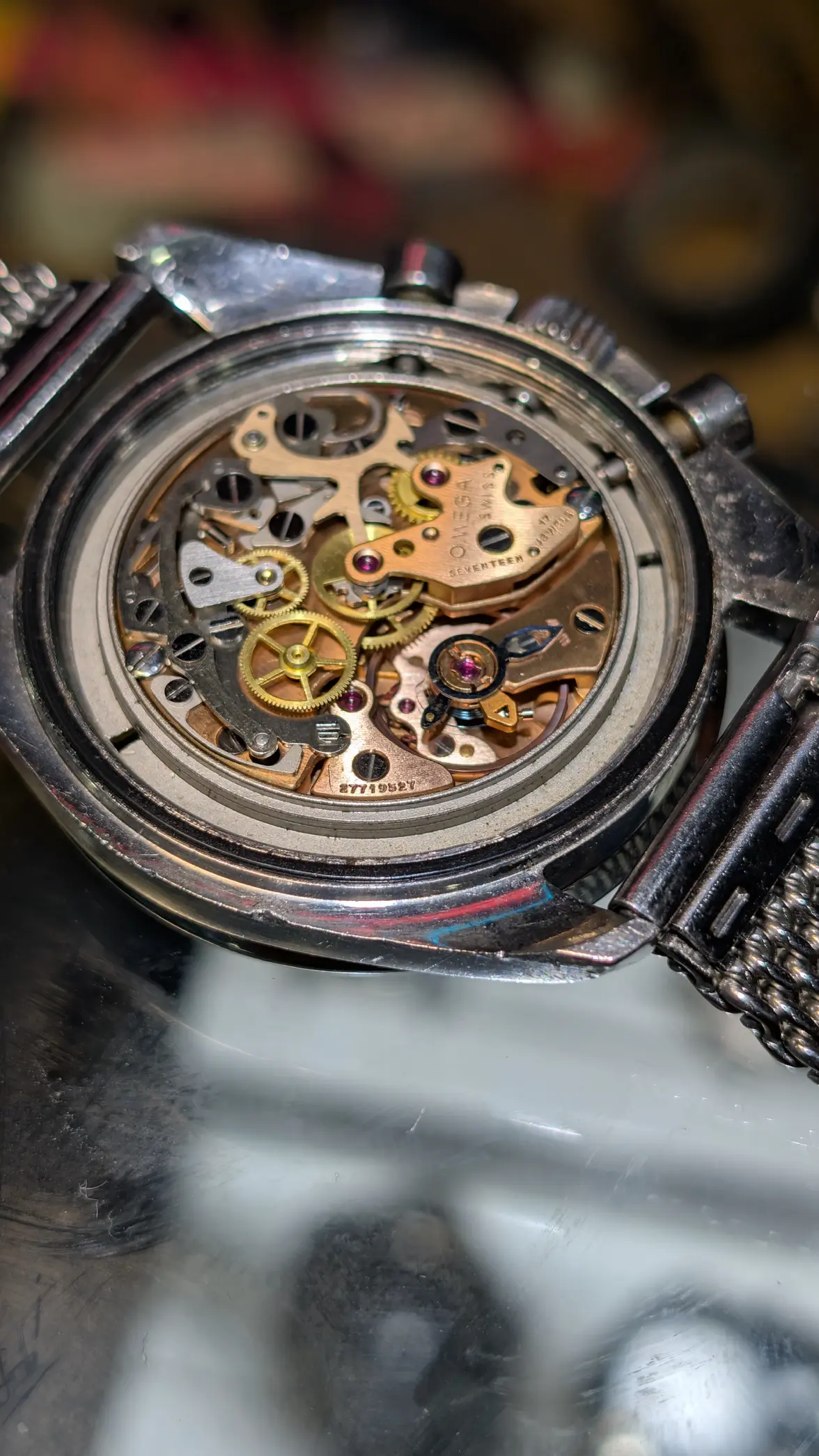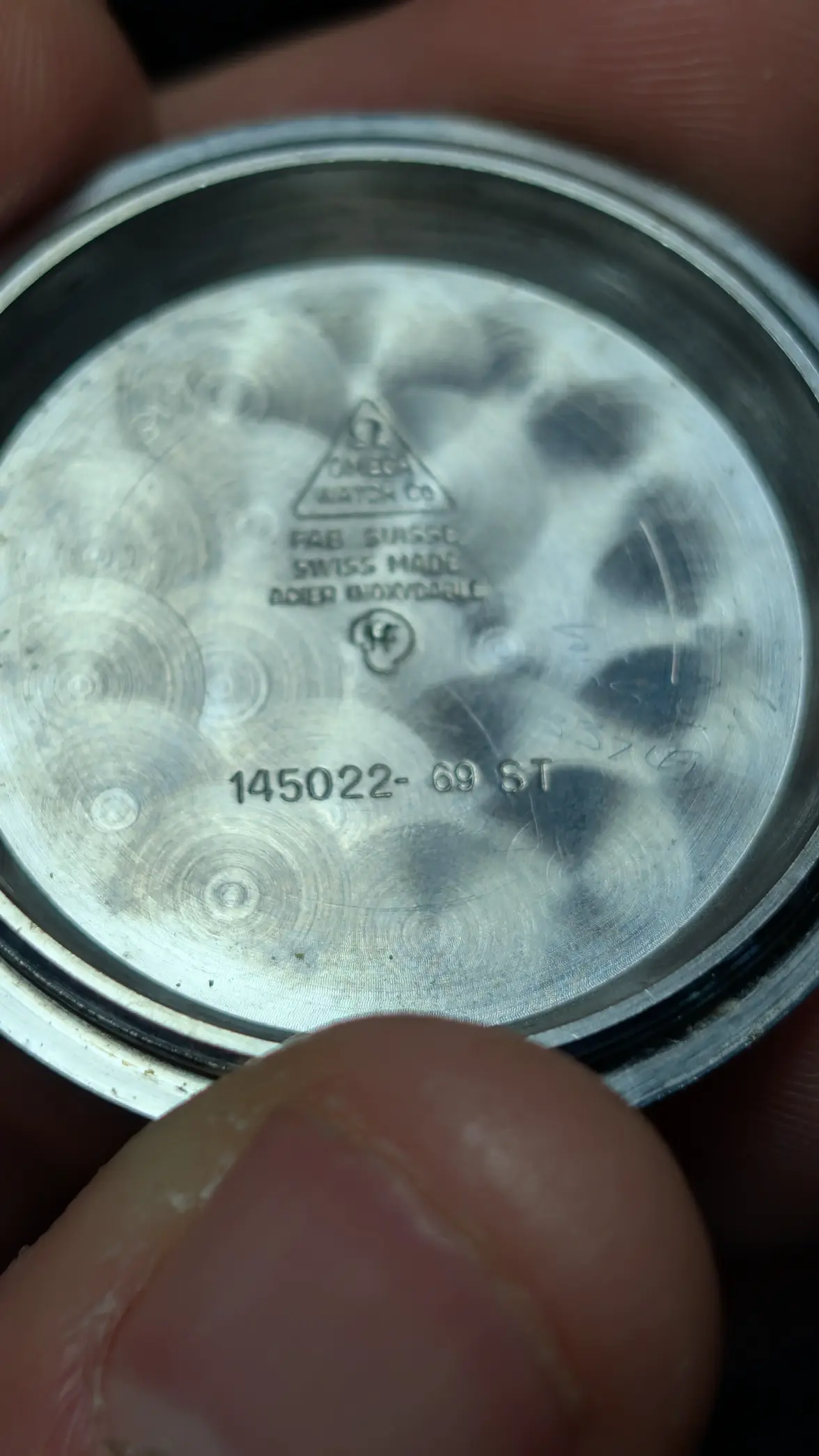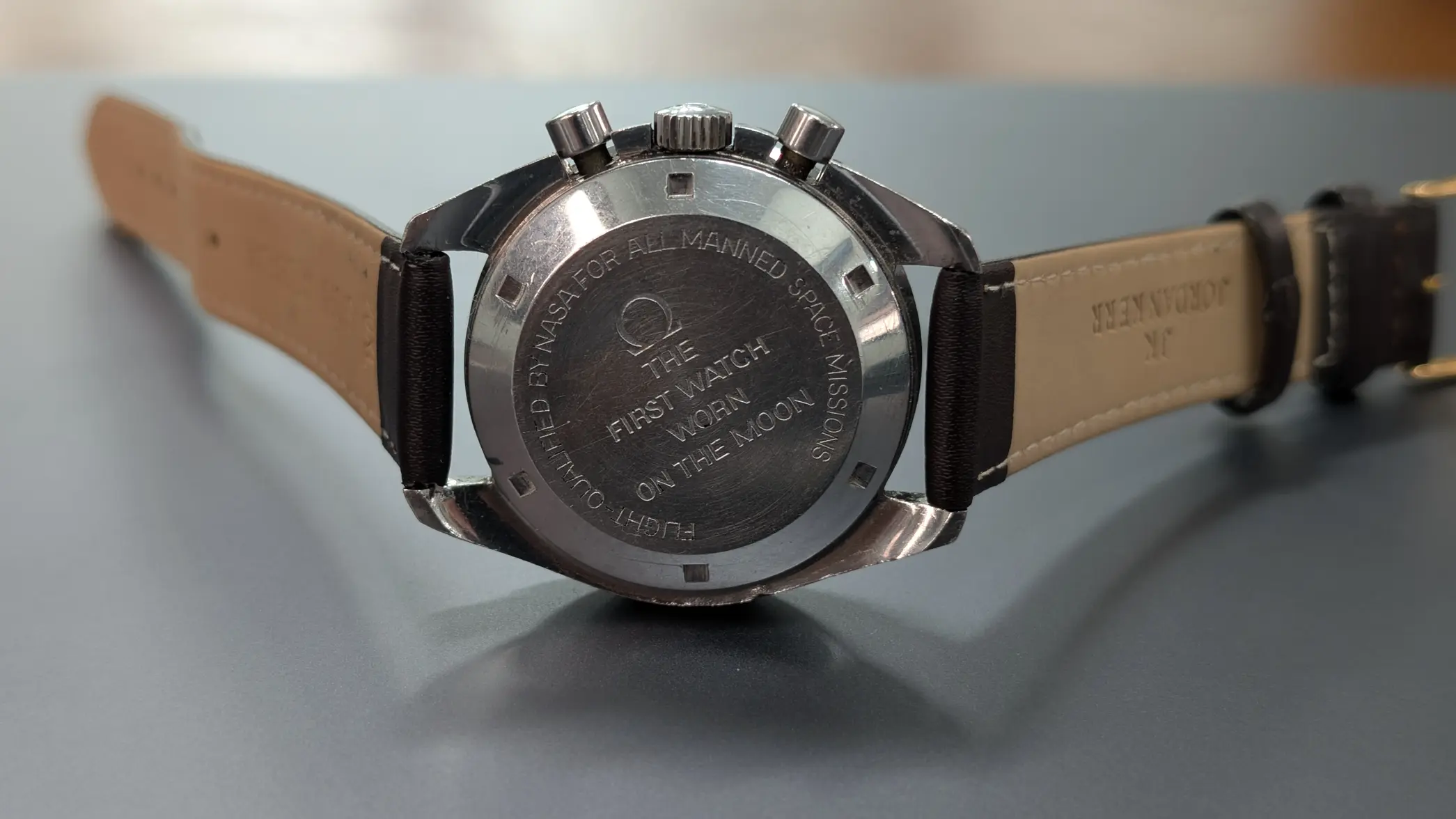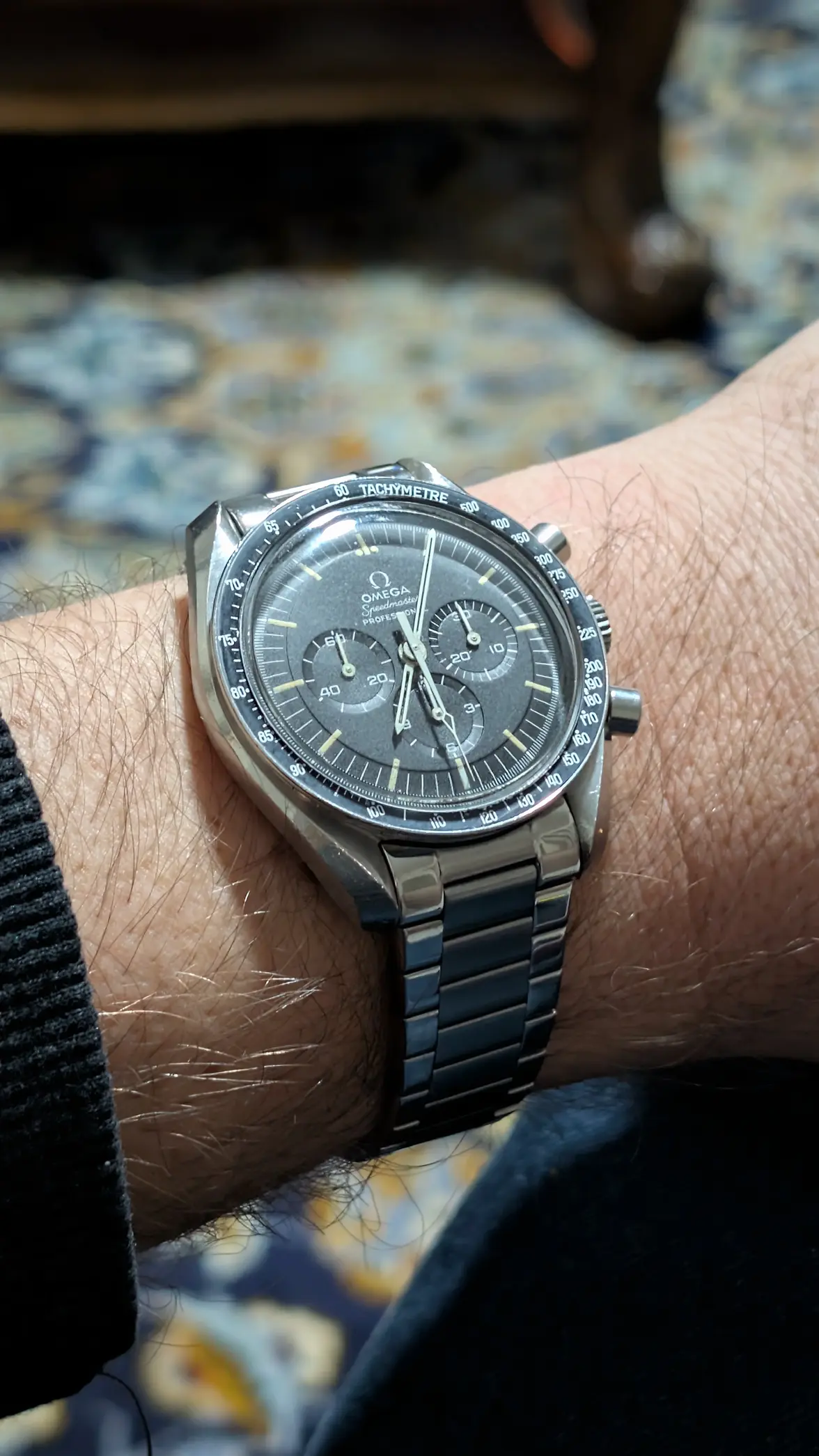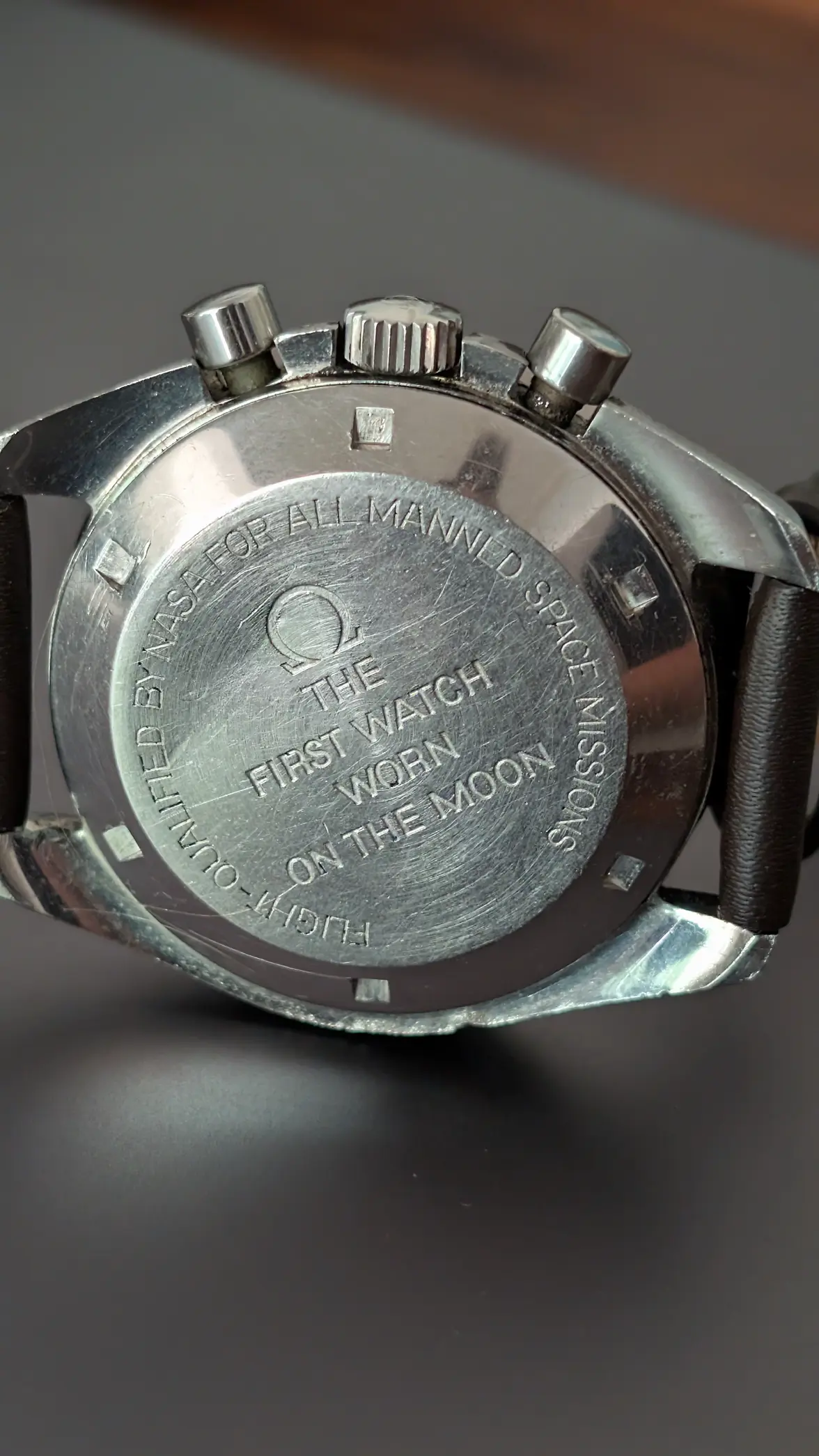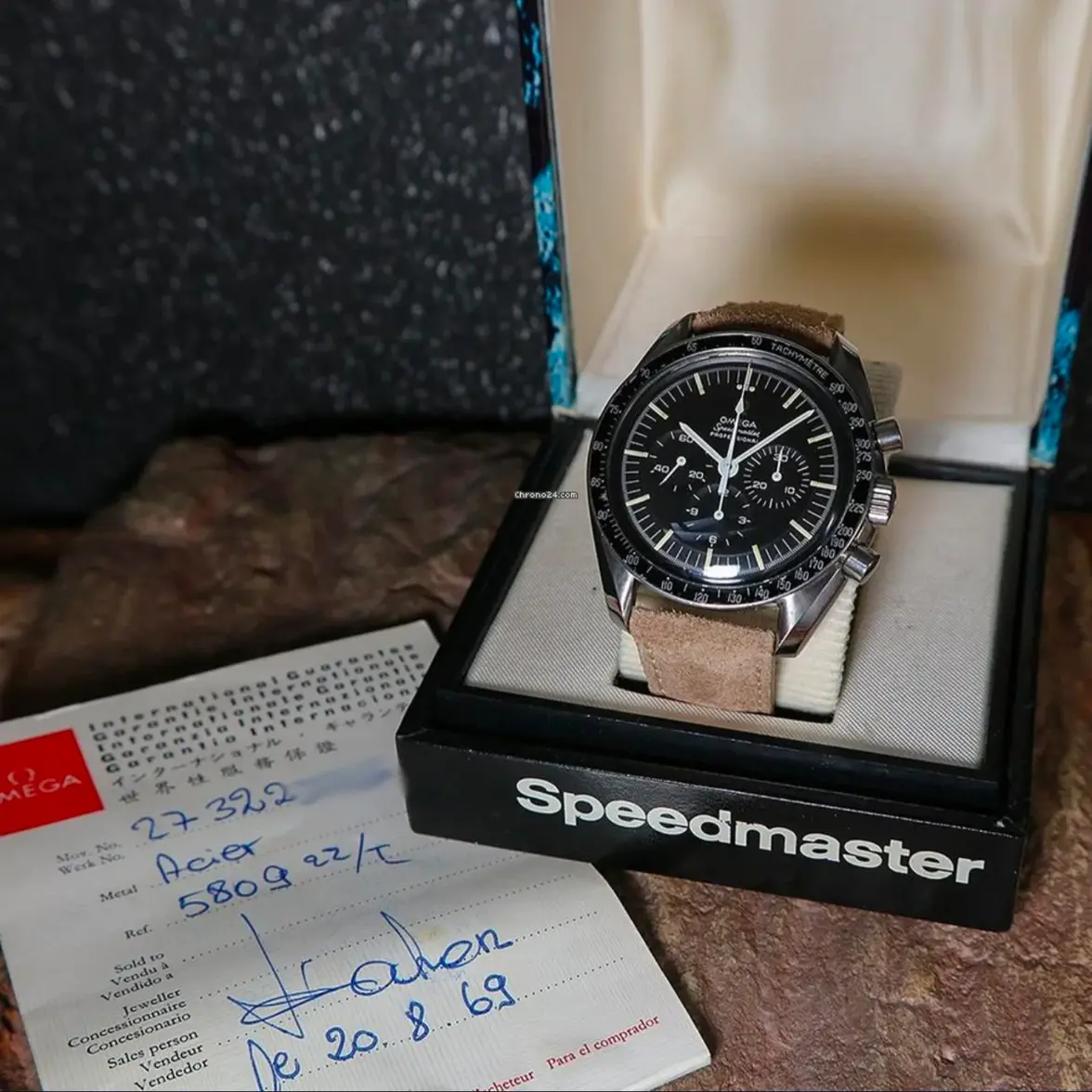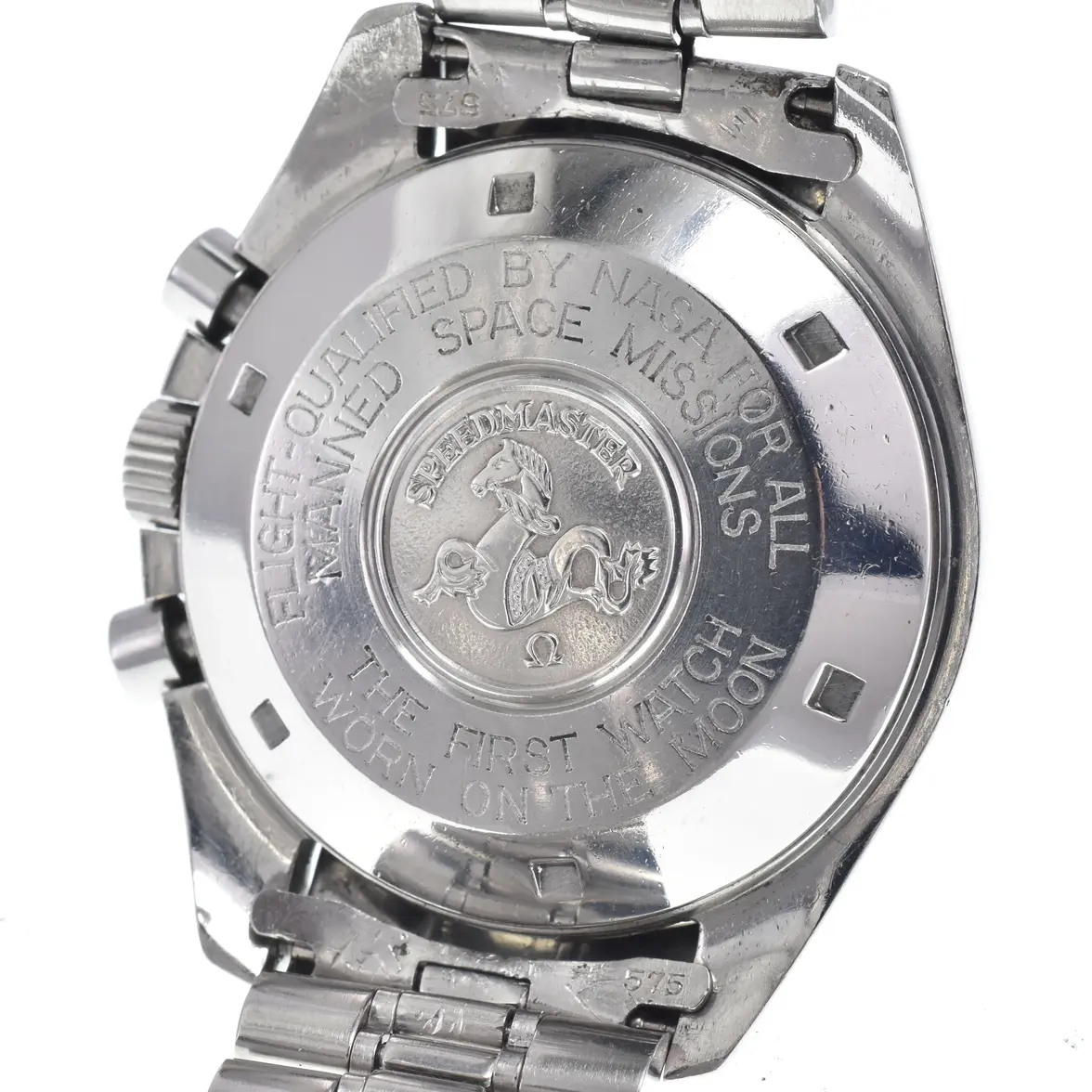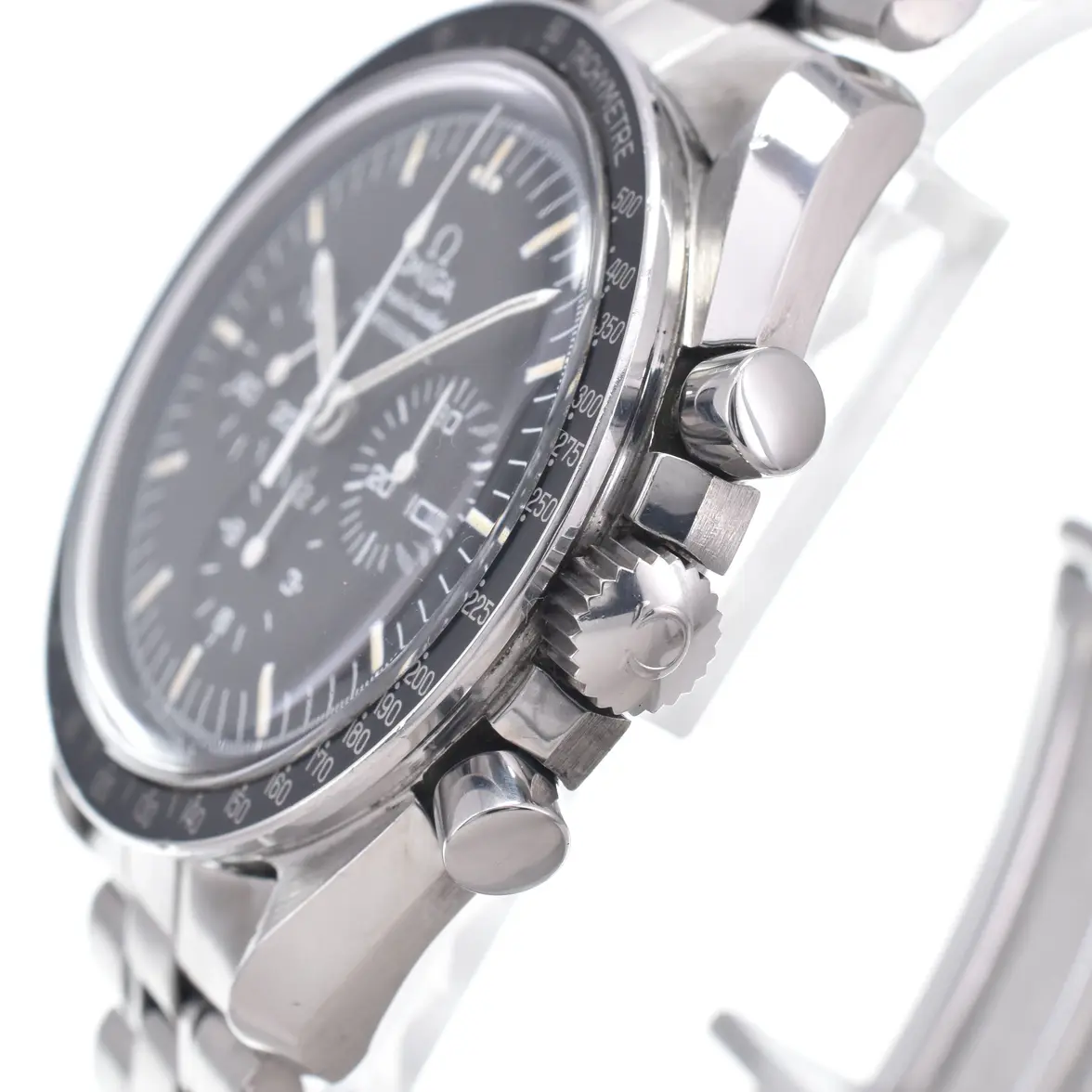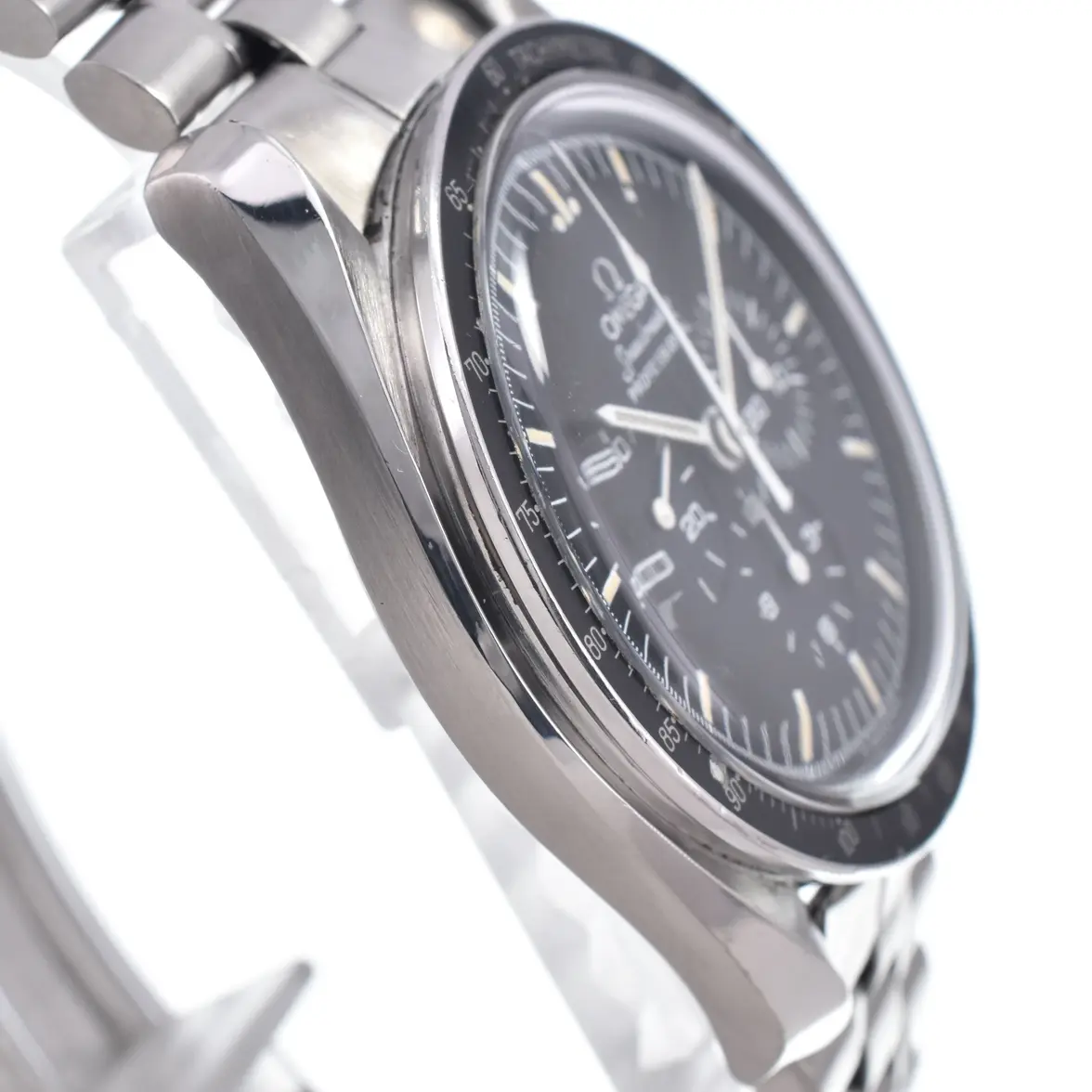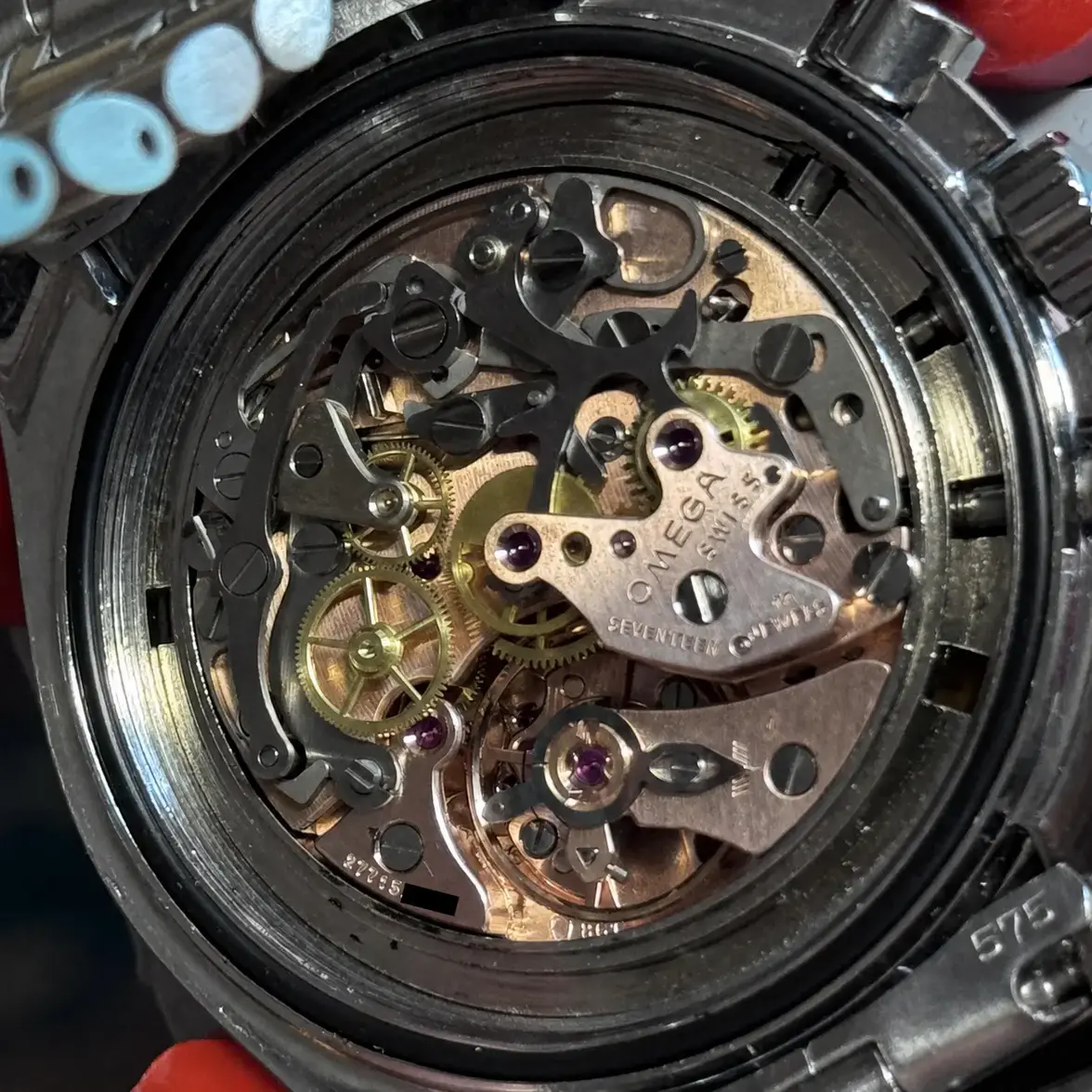
27xxxxxx serial Speedmaster 145.022-74's might be original after all

Posts
45
Likes
62
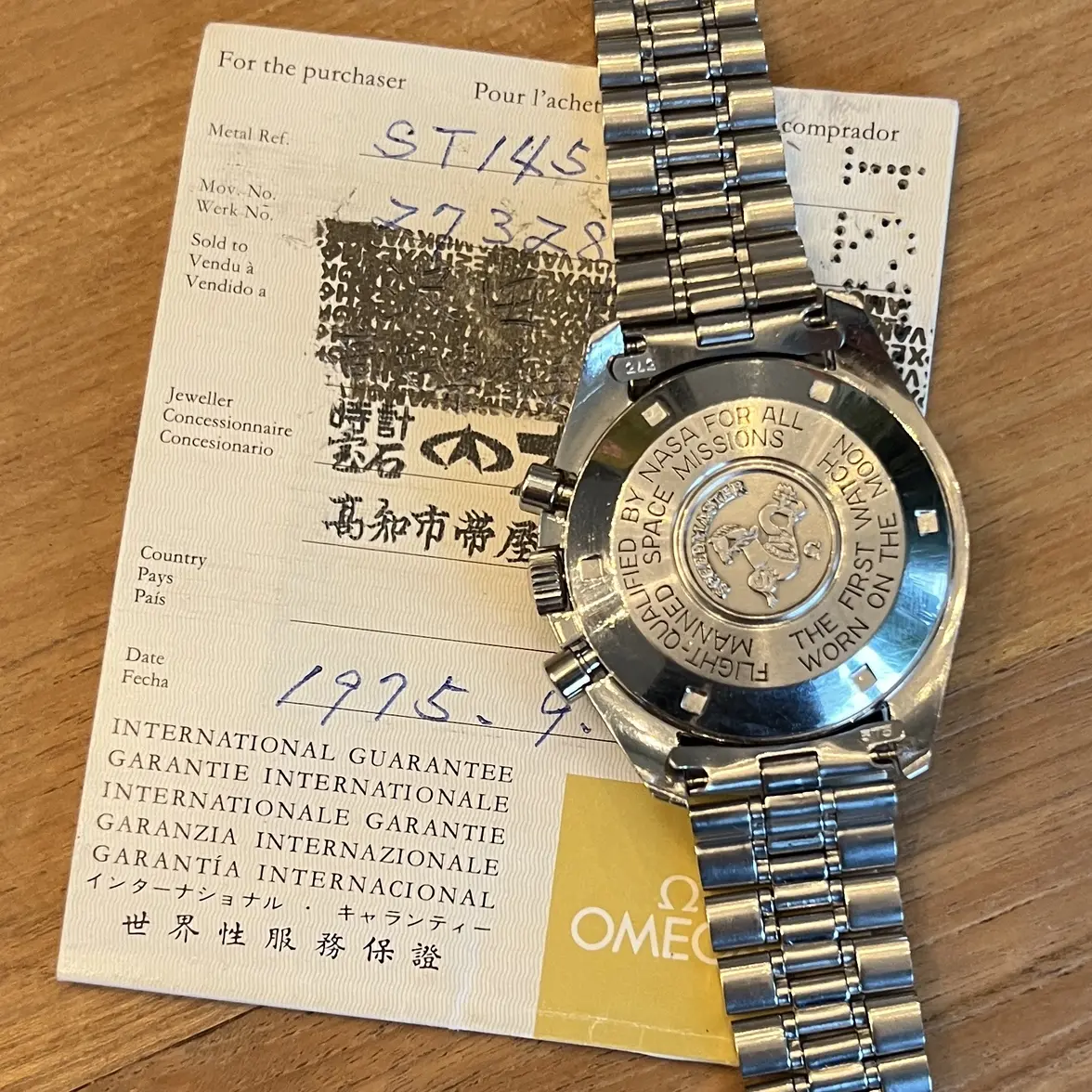
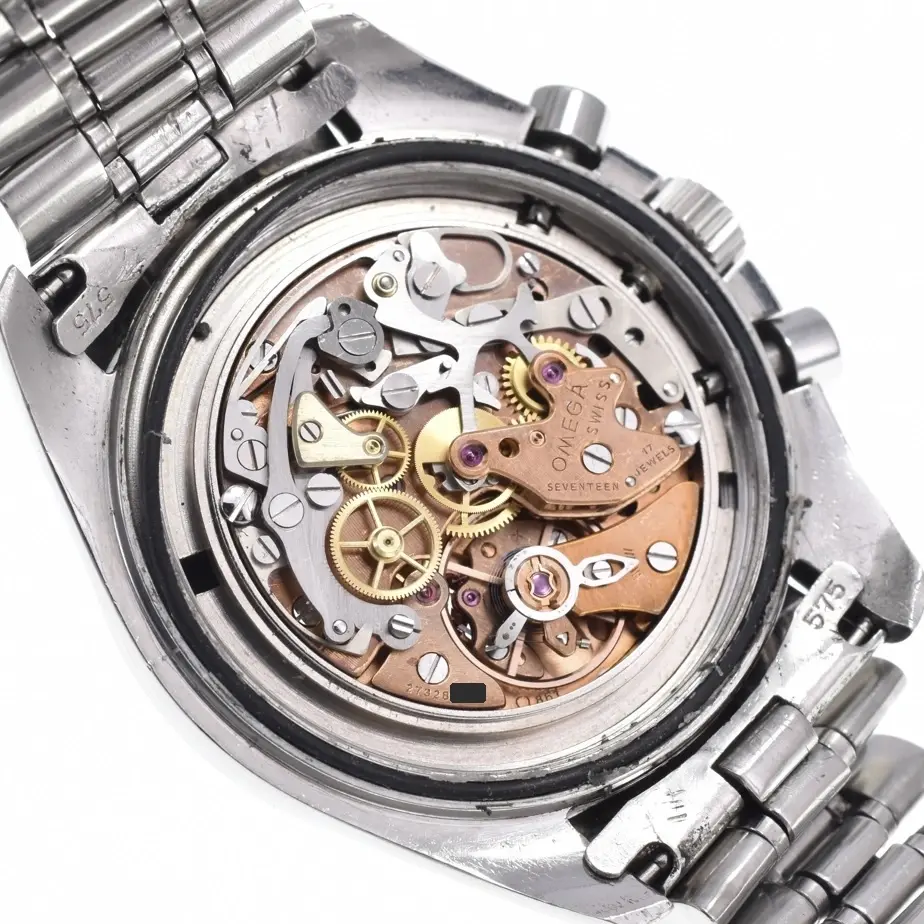
TLDR: Perhaps those 145.022-74 Speedmasters with very early serials, even as low as 27xxxxxx, are original after all. This based on (a) the large number examples seen over the years, (b) a statement made in MWO regarding outlier serials in the 145.022-71 and -74 and (c) the original papers that came with a recent new acquisition of mine, which seems to be an unmolested specimen carrying a 27328xxx serial.

For those still interested, here is the full version.

Introduction and prior discussion
Over the years, multiple threads have been started mentioning early serial 145.022-74's, which almost exclusively ended in the conclusion that the Speedmasters concerned had either been subject to a movement swap, or were full Frankens altogether. In multiple of these threads, I have also been on the 'this must be a Franken' side of the argument. A few examples can be found here:


Additionally, dealer listings occasionally also produce unusually early serials of 145.022-74's, like this one: https://www.vintagemasters.eu/product/vintage-omega-speedmaster-145-022-74-from-1969-74/

By all means, I would not claim all the Speedmasters discussed here are (entirely) original as they came off the factory, but there at least seems to be some sort of pattern where movements with 27xxxxxx and 31009xxx serials are regularly ending up in 145.022-74 cases.

@eugeneandresson eloquently mentioned the quartz crisis and resulting decline in (Speedmaster) sales as one of the possible explanations for early movements to have been lying around at Omega for years until they ultimately got married to much later 70s cases. This sounds plausible to me, let's try to find out more...

MWO
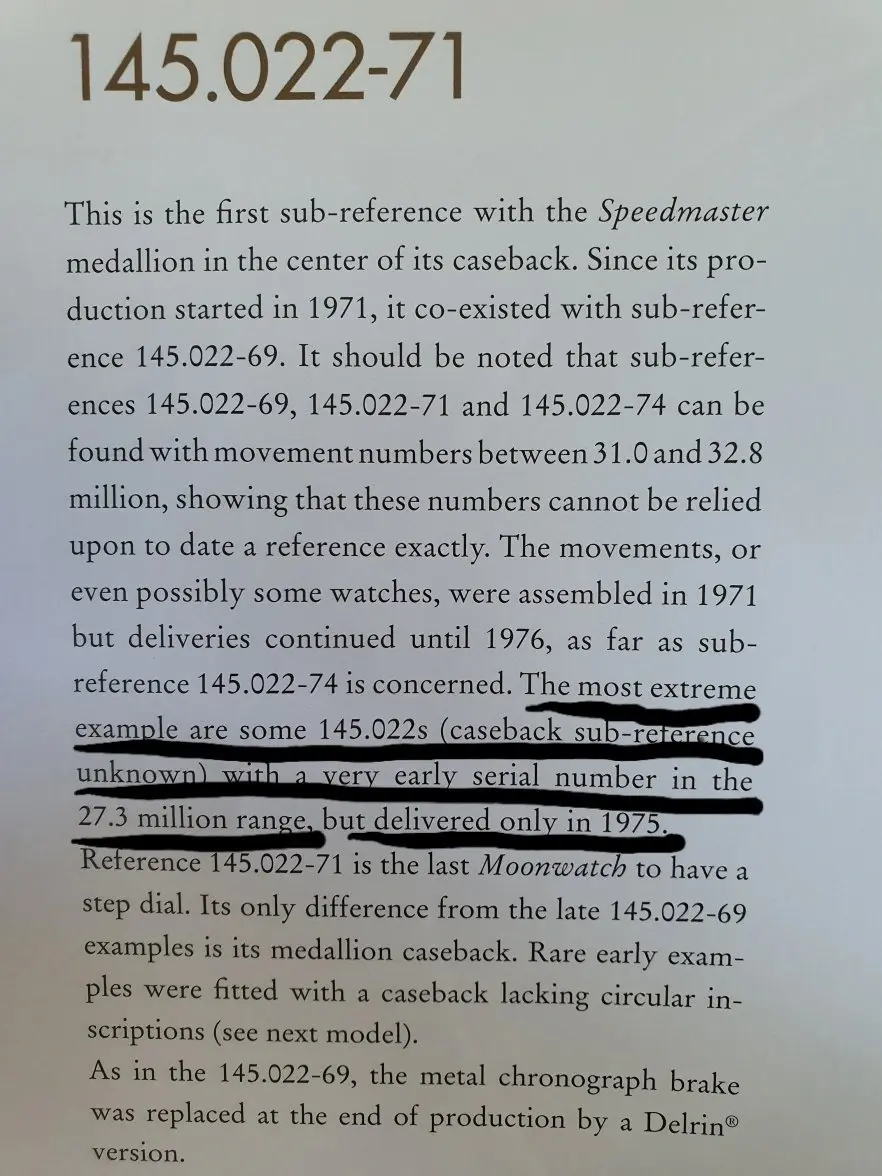
Extracts of the Archives might not help much in these cases as they don't list the sub reference these could only confirm that the movements are originally destined to sit in a Speedmaster. Moonwatch Only does provide a bit of a clue (thanks to @Wylie194 who referred to this in one of the topics linked above) under the description of the 145.022-71 and mentions the 145.022-74 as well. This text, however, has been disputed too.


New example
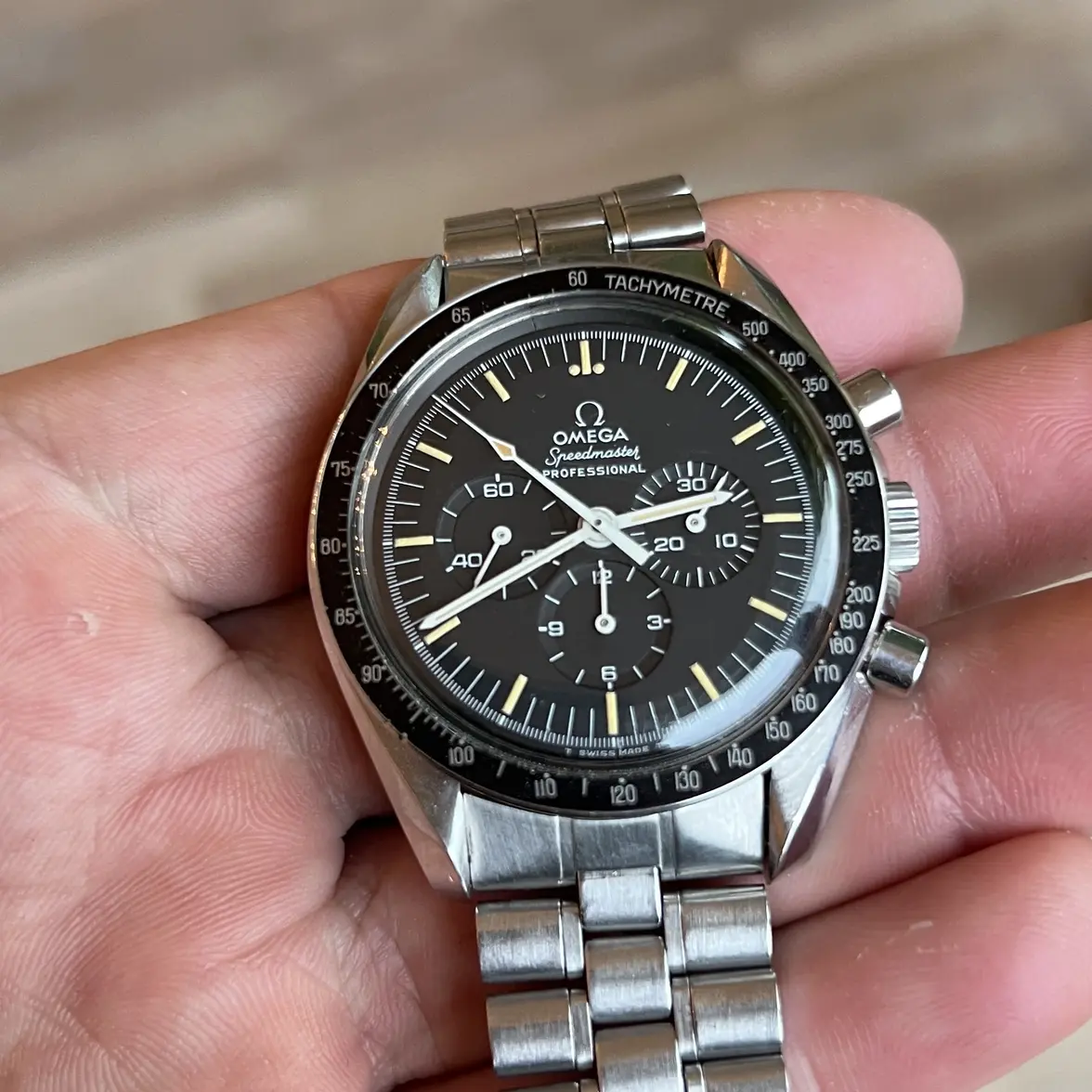
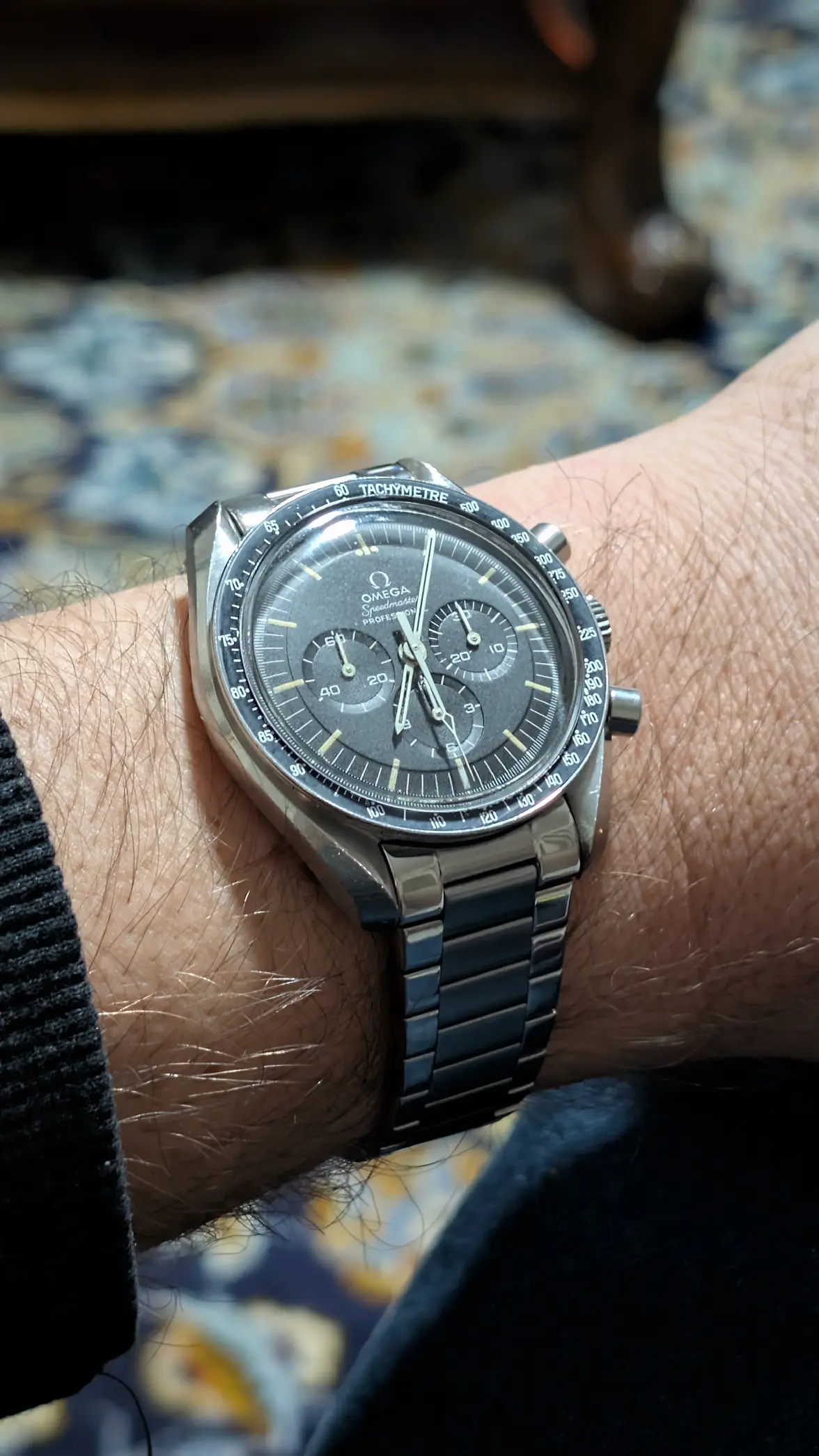
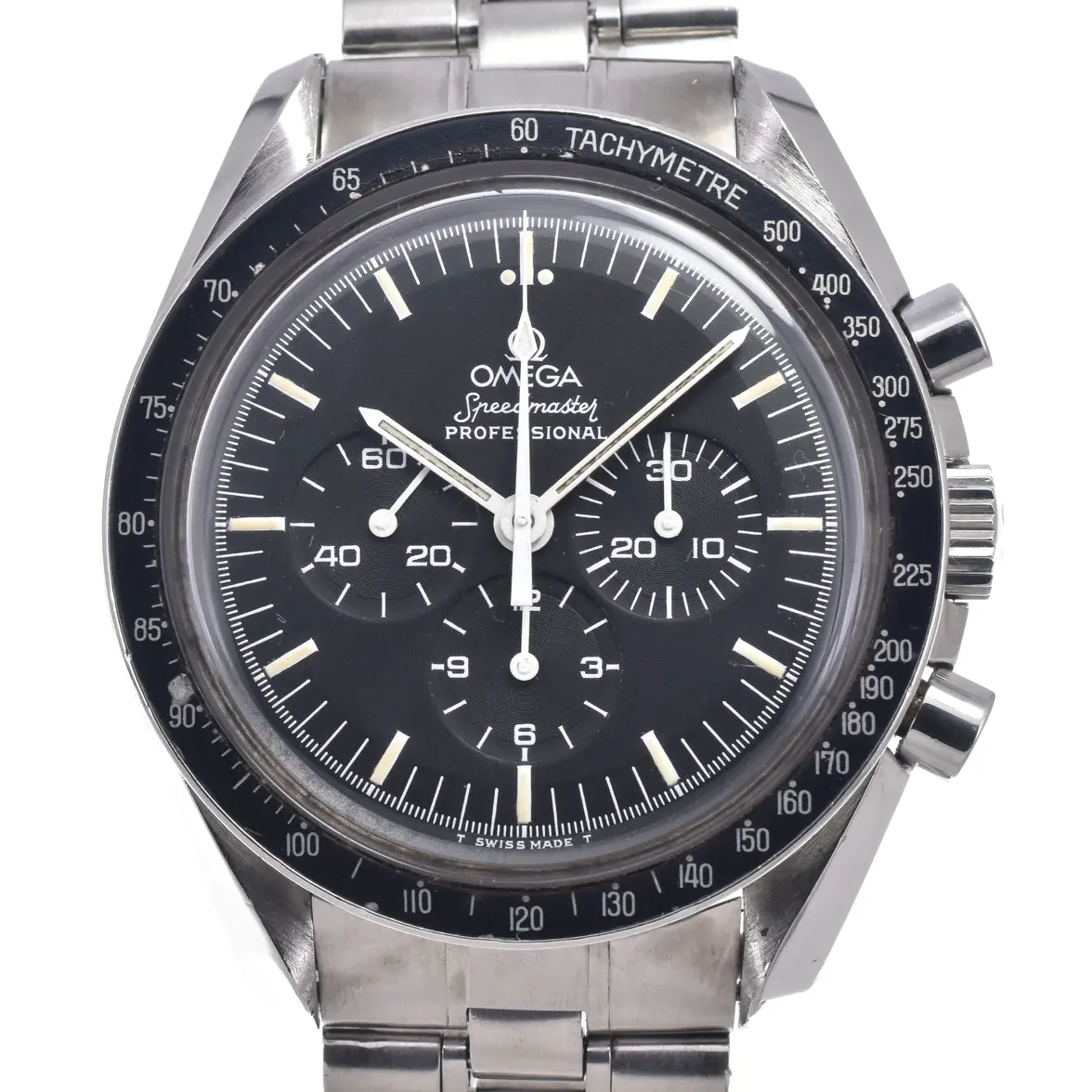
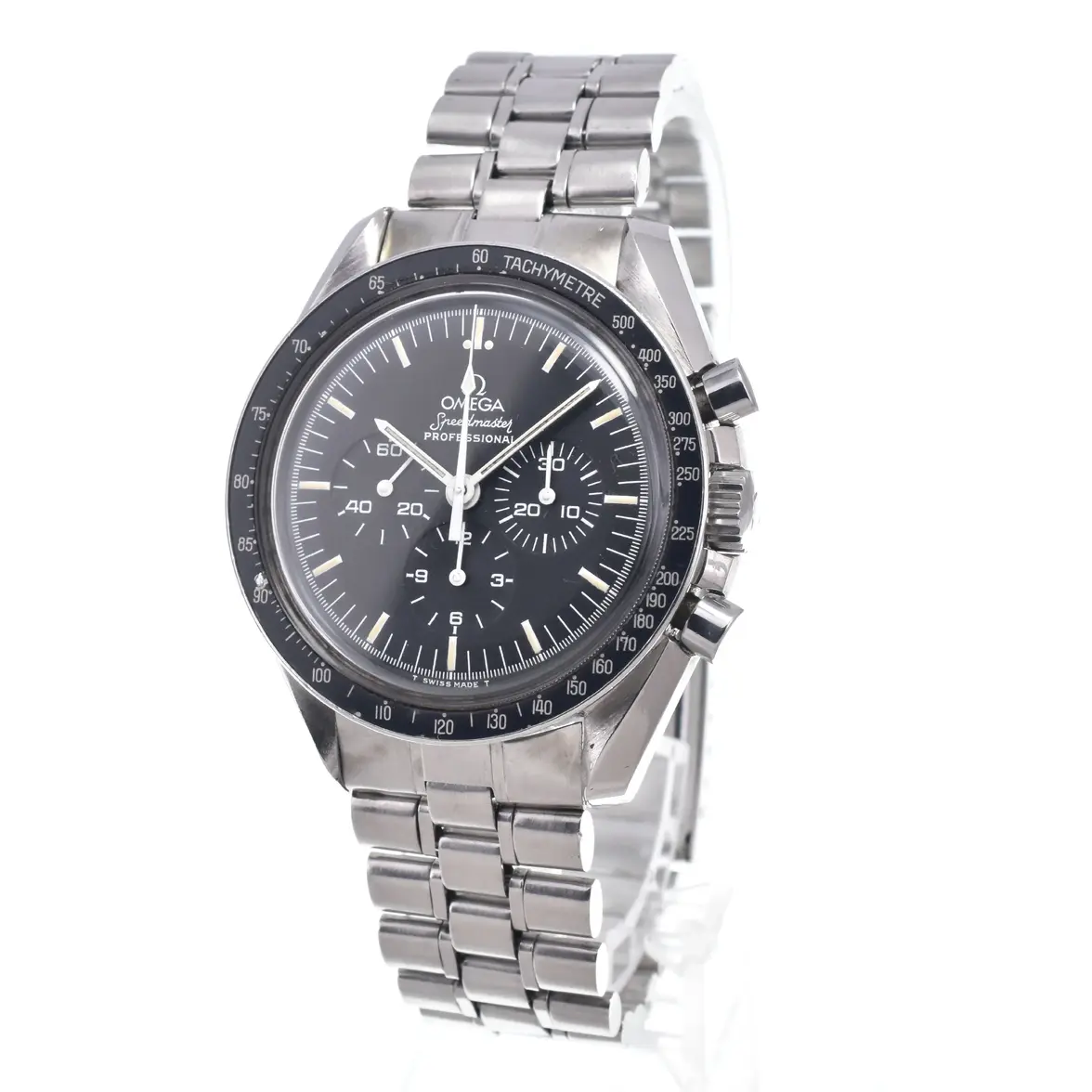
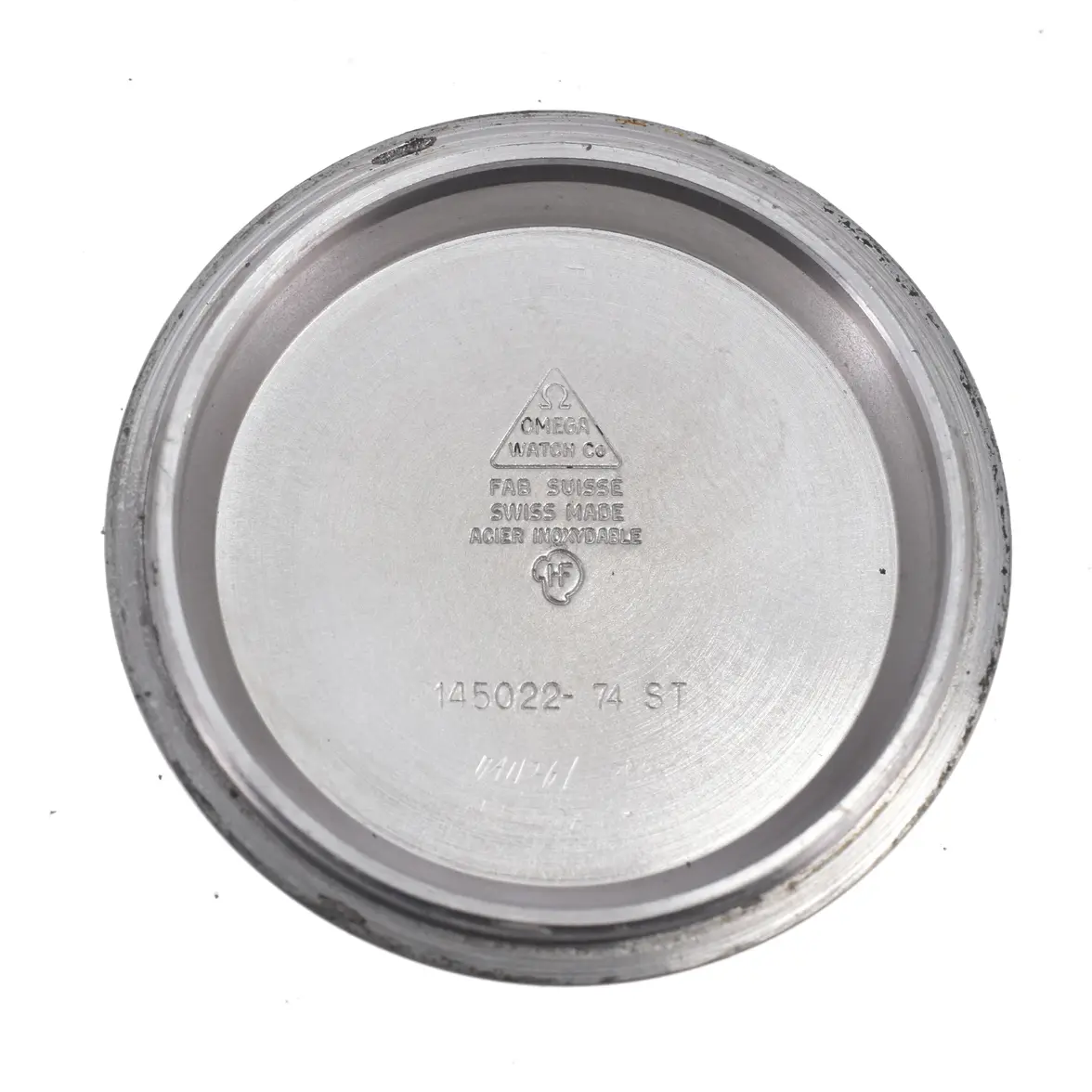
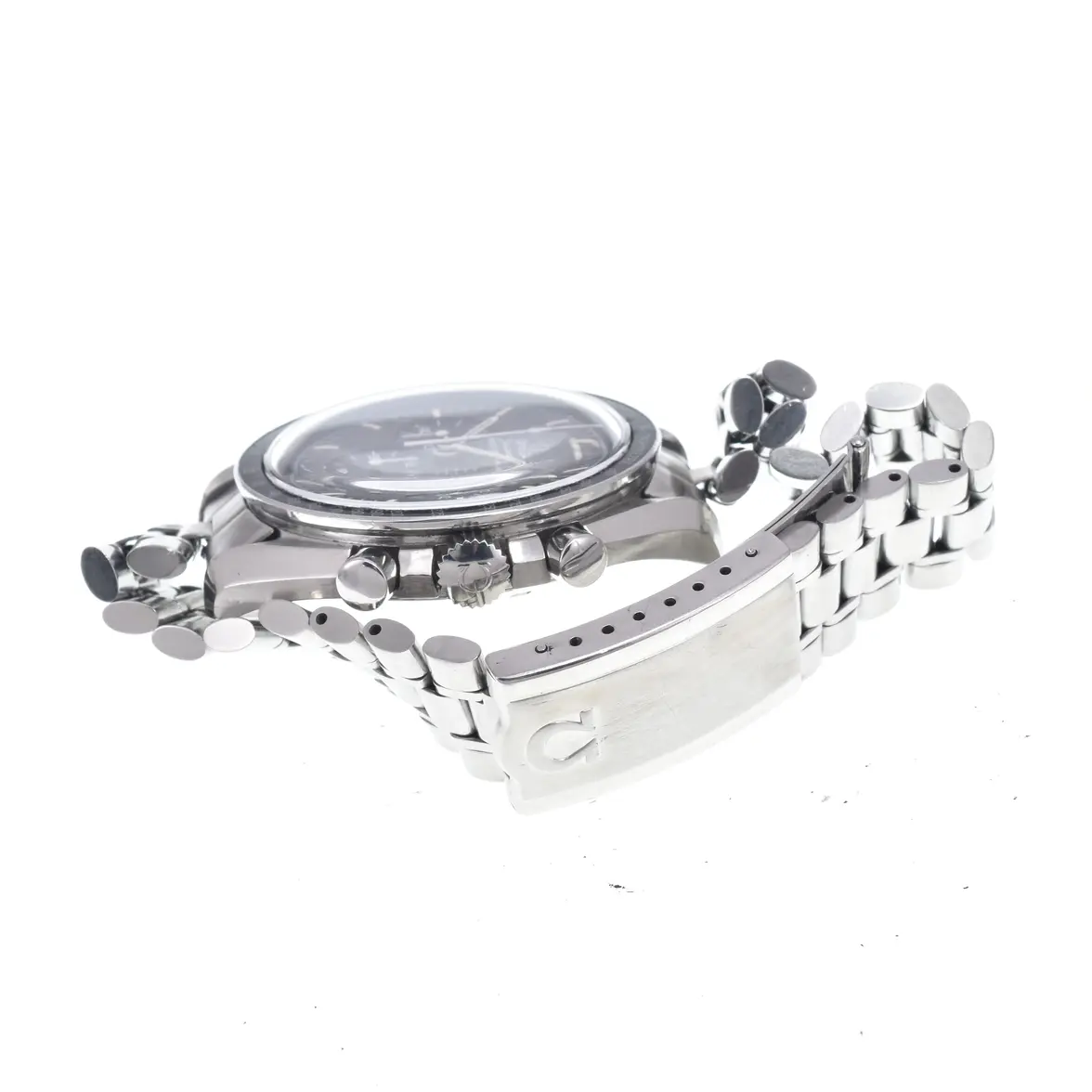
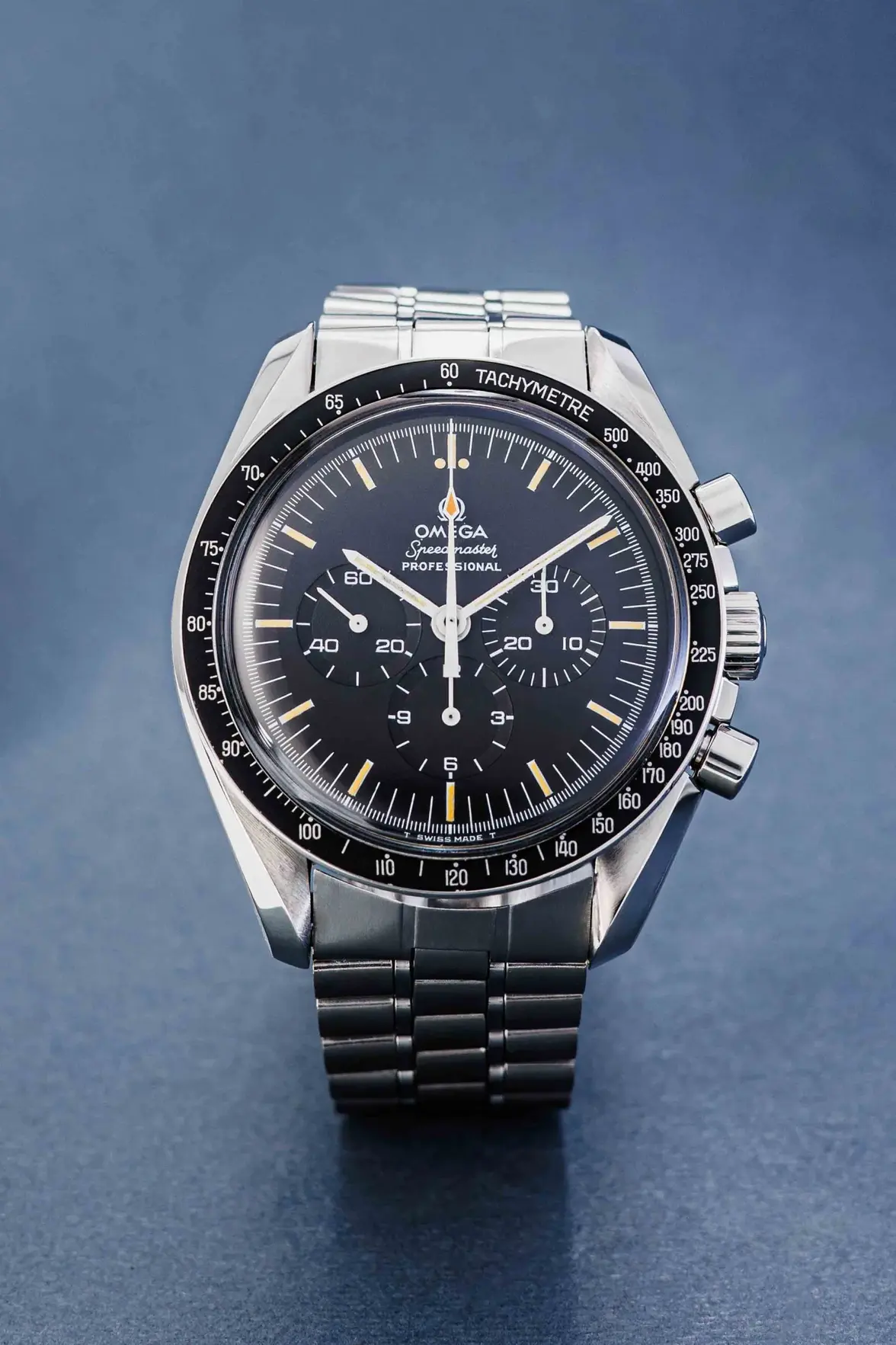
At the very close of 2024, this 145.022-74 landed on my doorstep, which could provide a further data point towards the originality of early serial 145.022-74's. In this case, the serial is 27328xxx Apologies for the relatively poor pictures, daylight is in short supply here at this dreary time of year.
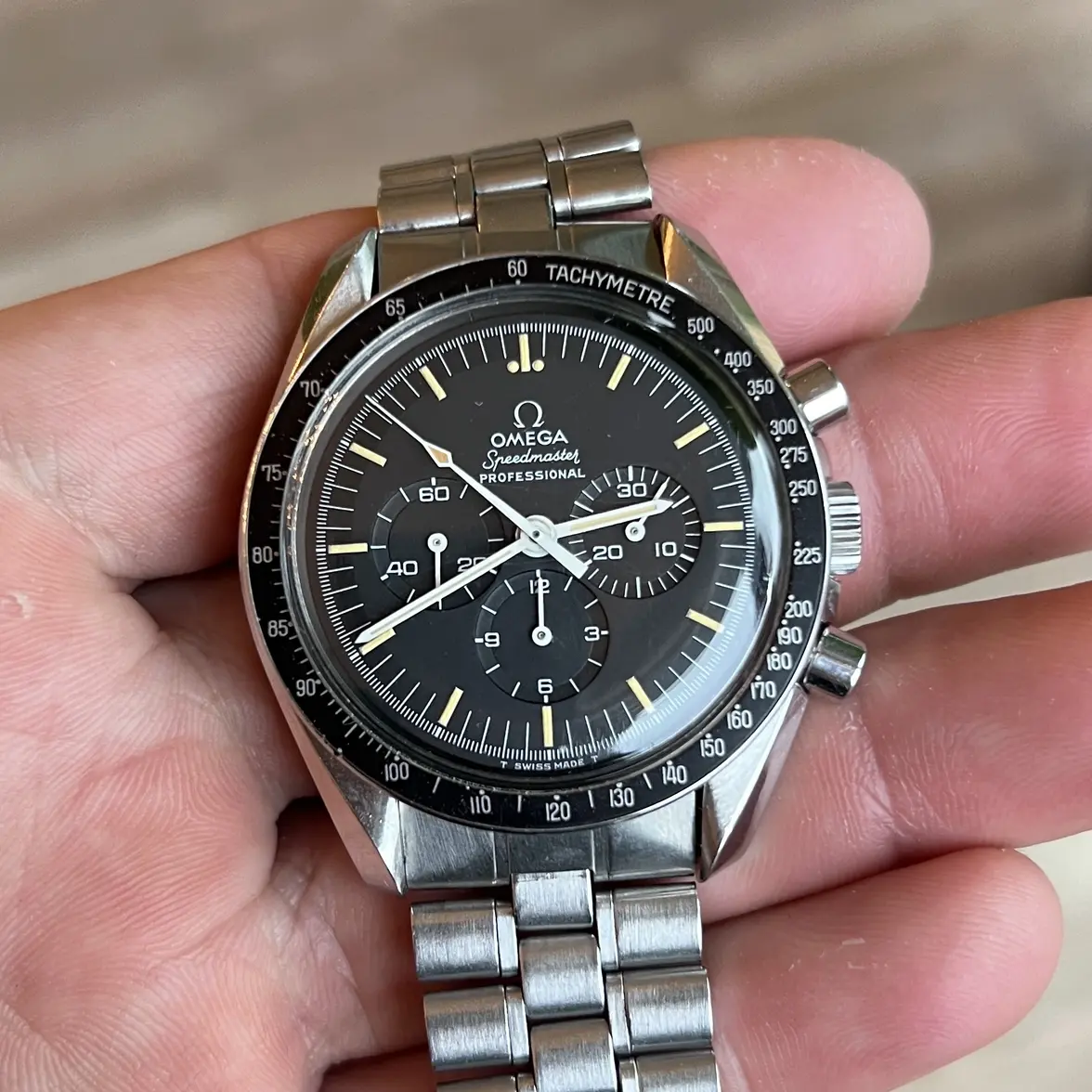
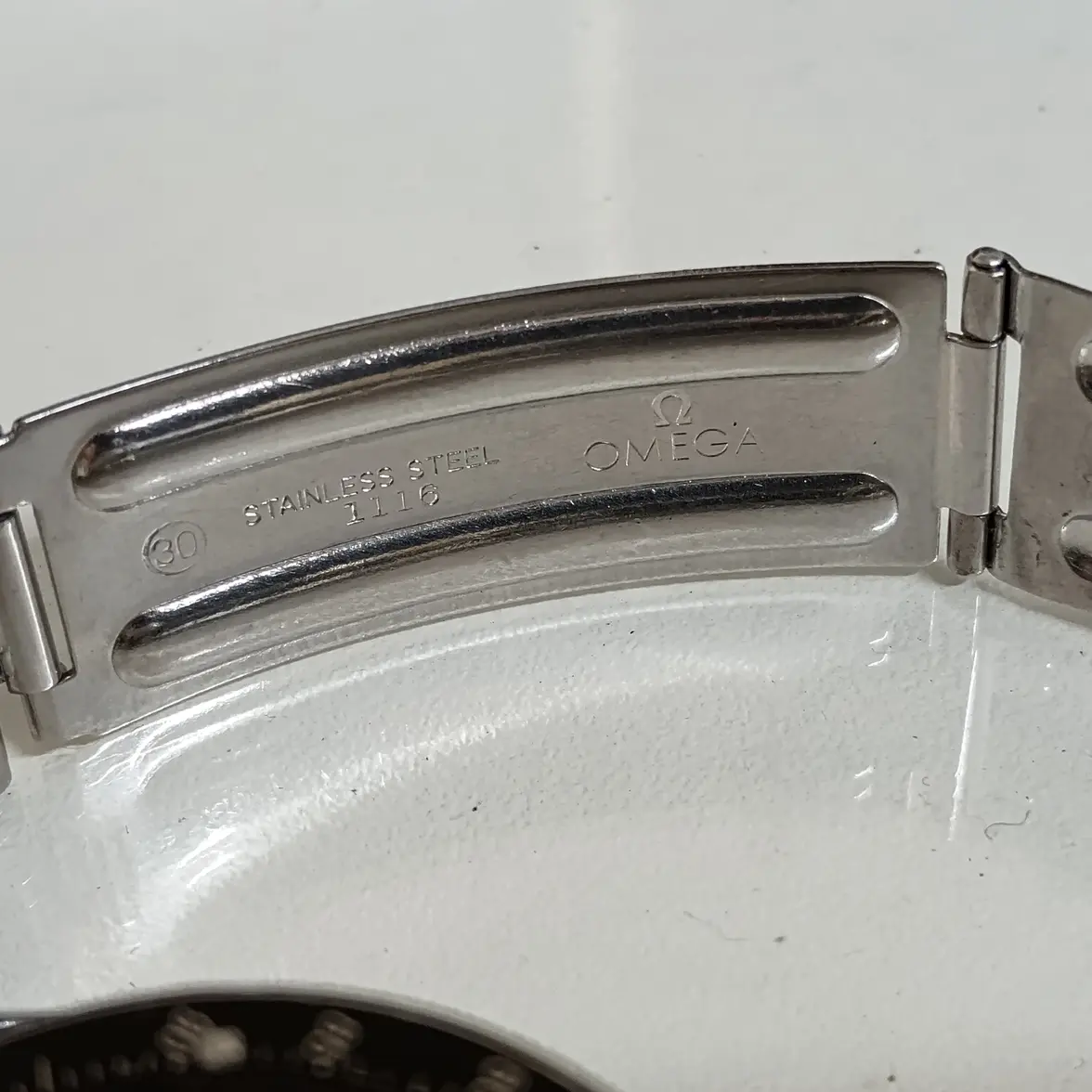
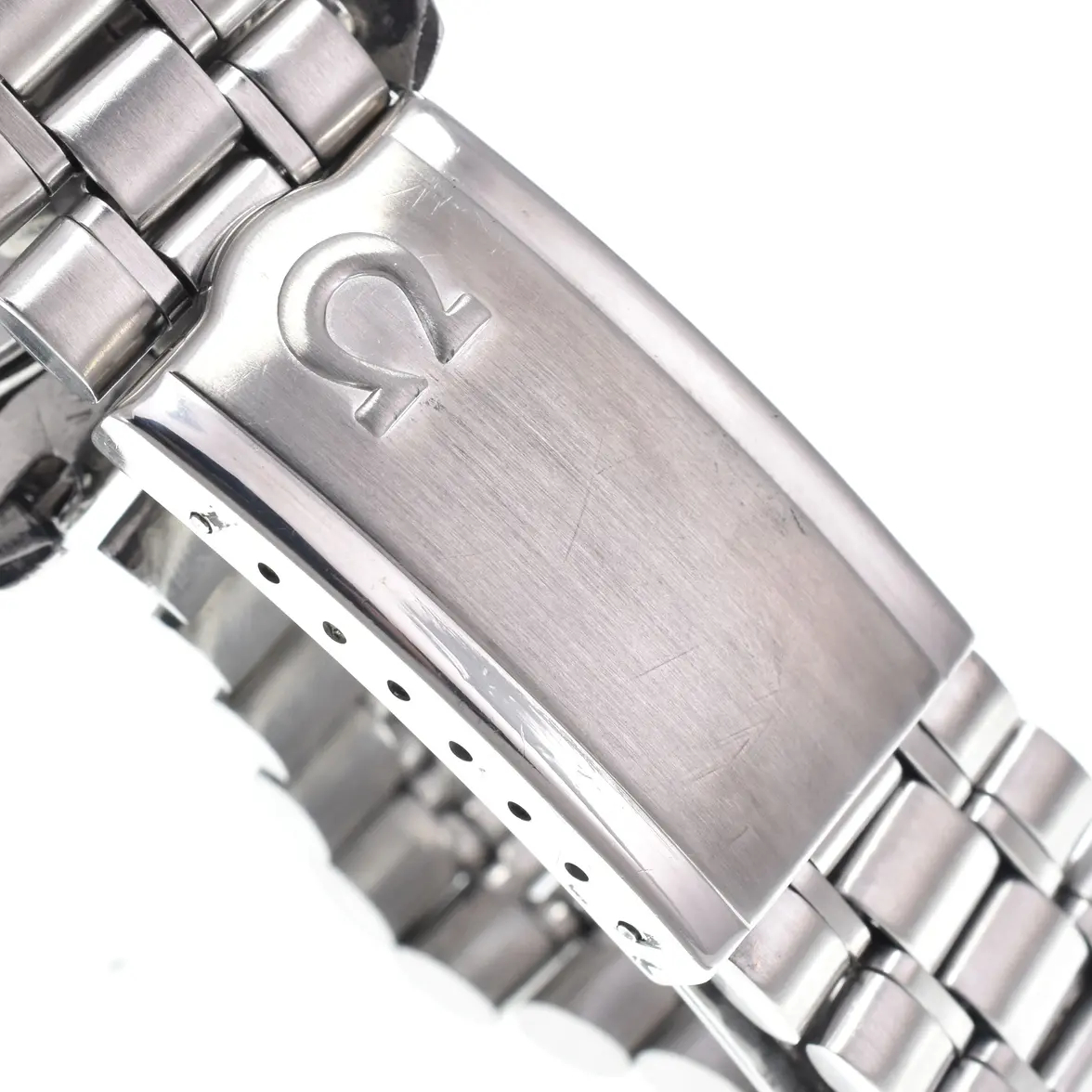
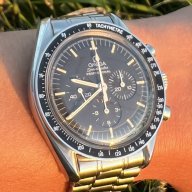
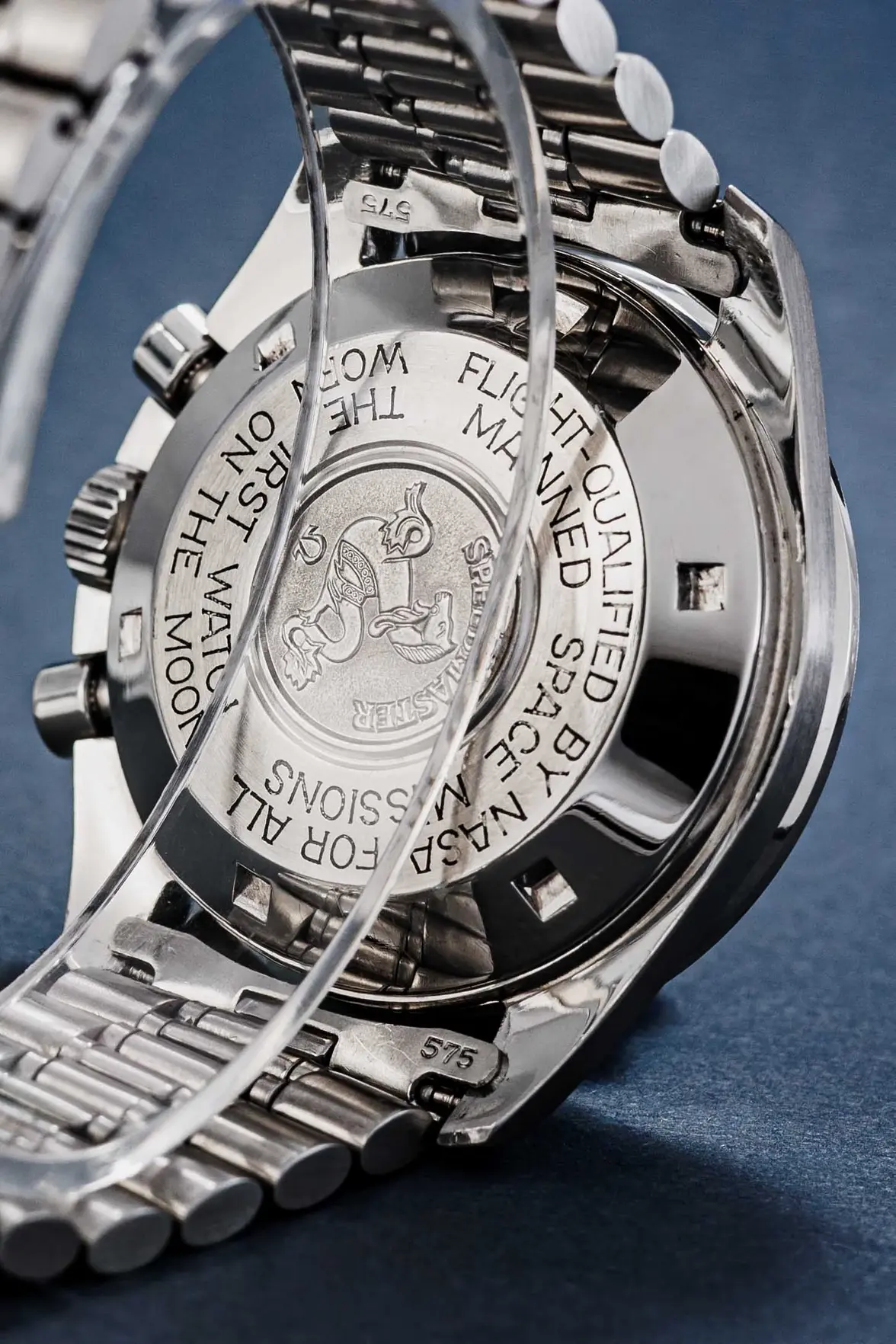
To my eyes, this watch is completely unmolested and almost textbook correct. Sharp correct case and bezel, lovely dome dial and as some of you might have already noticed, rather orange lume in the chrono seconds hand in comparison to the other hands. The latter is actually something commonly seen in this specific reference. The only thing that deviates from MWO is the presence of a very good condition 1116 with the correct vintage 575 end links. This is a bit strange as one would expect this bracelet only up to the 145.022-71, still, no reason to doubt this examples originality, I think.

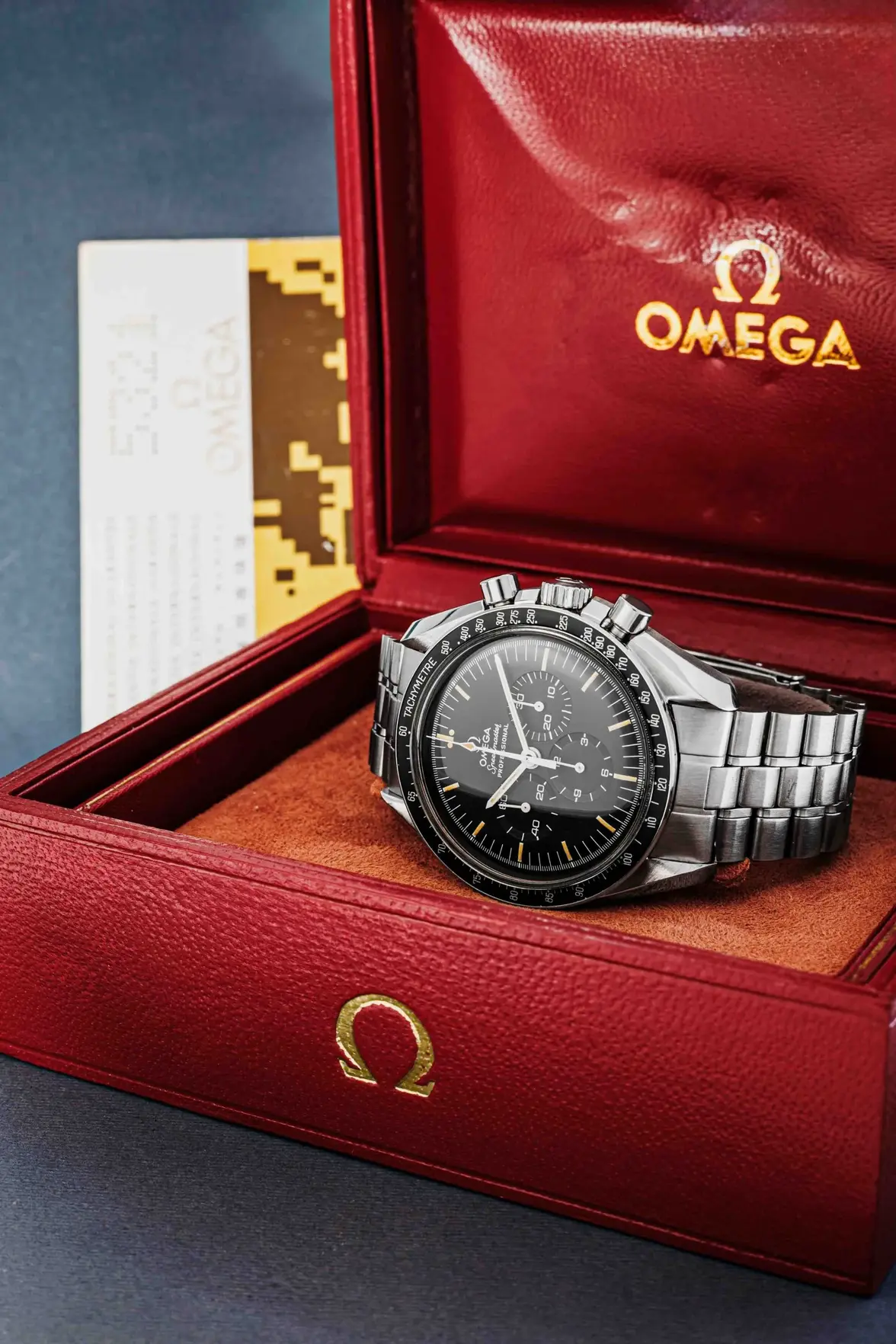
What is actually new about this example, though, is that I believe it is the first one to turn up with original papers, confirming the early serial and a sale in September 1975...


Preliminary conclusion
Based on the discussions that took place here before and taking this new example as an additional data point, I am to believe that Omega did indeed deliver a number of 145.022-74's with older movements that had been sitting around Bienne for quite a while. I would definitely welcome more discussion and data points to see if we can establish that those early 145.022-74s are actually original and should no longer be considered Frankens. As soon as the EoA service opens again (if ever), I will still request an extract for this watch to confirm the movement started its life in a Speedmaster, but I have little reason to doubt this given the condition and presence of original papers.

Discussion welcome! 😀
This is gold.

I have what appears to be an untouched -69 with a 27.7M movement. Can't wait for the extract form archives to open
 
Posts
2,621
Likes
5,843
This is gold.

I have what appears to be an untouched -69 with a 27.7M movement. Can't wait for the extract form archives to open
Pictures...?

Please....😉
 
Posts
45
Likes
62
Great watch !!
Loving it to bits. The research around these things sent me down a rabbit hole, though.
 
Posts
45
Likes
62
I am 3 floors down from you.....
Knowing there are more levels scare and excite me in equal measure.
 
Posts
45
Likes
62
Here is a -69 with 27322xxx delivered in 1969.
Appears that way in any case.

 
Posts
4
Likes
9
Hello everyone,


this is my first post on Omega Forums, and I could hardly have hoped for a more exciting reason to make it.


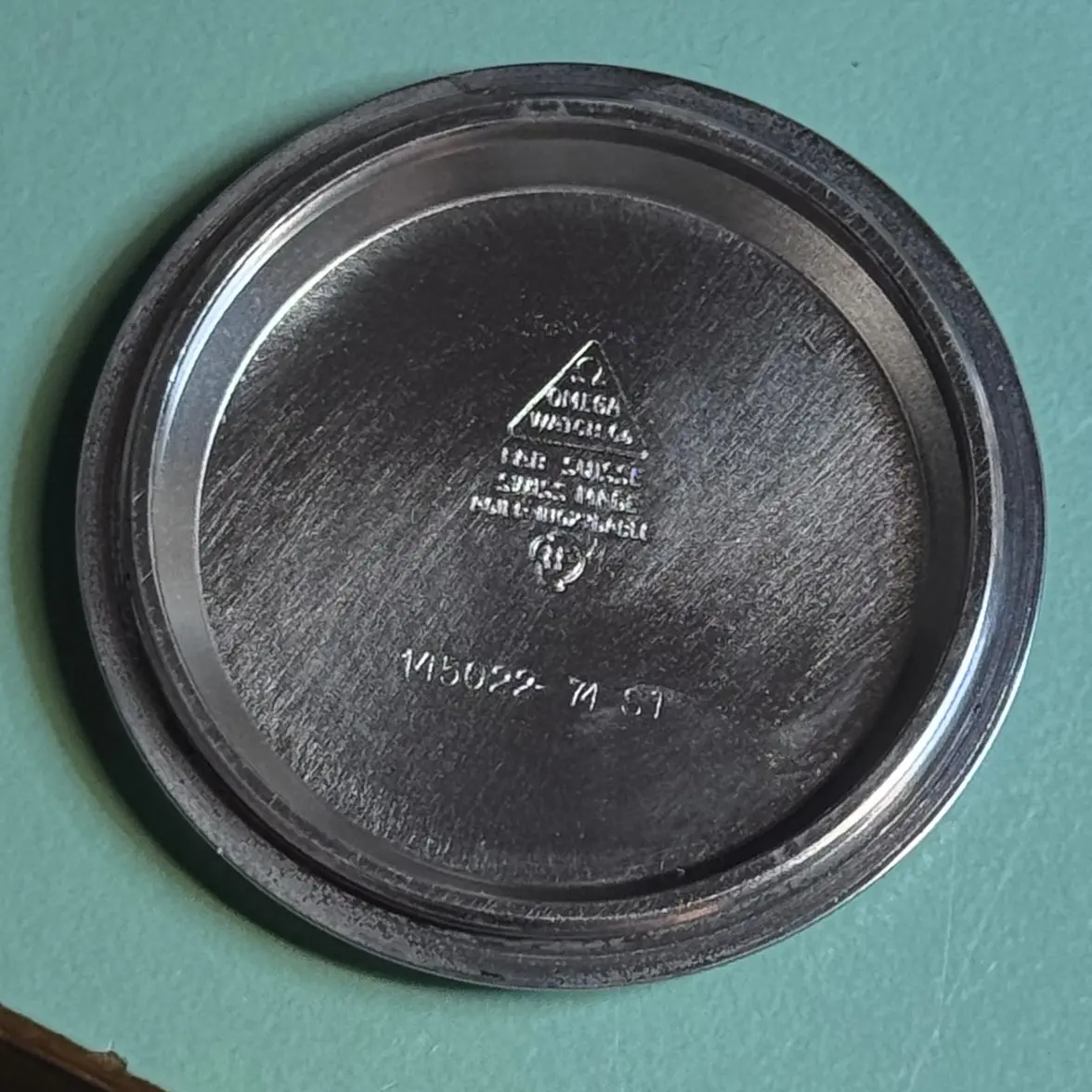
I first became interested in (@Aludic) 145.022-74 simply because I found the watch fascinating. Only after he directed me to this thread and the earlier discussions linked in his opening post did I fully understand how unusual and potentially historically significant its configuration may be: a calibre 861 movement in the 27.328.xxx range, a 145.022-74 ST caseback, a domed non-step dial, and original Japanese papers documenting a sale in September 1975.


A few days later, I unexpectedly came across another 145.022-74 offered by the Japanese dealer aonohappa. I initially found the watch on Chrono24 and subsequently purchased it directly from the dealer.


Unlike @Aludic ‘a beautifully documented example, my watch unfortunately comes without box or original papers, and its service history is unknown. The dealer photographs nevertheless show the following highly unusual combination:


  • calibre 861 movement in the 27.328.xxx range
  • early metal chronograph brake
  • 145.022-74 ST caseback
  • domed non-step dial
  • 1116 bracelet with 575 endlinks

After completing the purchase, I asked the dealer for a clear high-resolution photograph of the movement. This confirmed that the movement is indeed in the 27.328.xxx range.


This is where the story becomes rather extraordinary.


@Aludic and I subsequently compared the complete movement numbers privately. Without publishing either full serial number, I can confirm that the two movements are directly consecutive.


The watches therefore do not merely fall within the same million, ten-thousand or thousand-number range. Their movement numbers are adjacent.


Both watches also share the same remarkably unusual underlying configuration, and both have surfaced in Japan. @Aludic ‘S watch remains the crucial documented example because its original papers confirm a Japanese sale in September 1975. Mine has no original documentation, so the fact that it was found at a Japanese dealer does not by itself establish its original delivery market.


I also appreciate that a bracelet cannot reliably date a watch head on its own. Nevertheless, the fact that both watches are fitted with an 1116/575 combination is another interesting repeated characteristic.


It was already clear to me from the dealer photographs before purchasing the watch that the central chronograph seconds hand is a later service replacement. After I shared the photographs with @Aludic, he also pointed out that the subdial hands appear to have been repainted, with the paint looking particularly flat around their centres.


Neither point was decisive for me when buying the watch. I was not purchasing it as a completely untouched, collector-grade example. The hands are components that can be addressed later if desired. What mattered to me was the exceptional underlying configuration: the very early movement, the 145.022-74 ST caseback, the correct non-step dial and, above all, the possibility that this watch might represent another surviving example of the same highly unusual historical phenomenon documented by @Aludic


The photographs below are the dealer’s very brightly lit studio images. This type of lighting tends to wash out surface tones and can make both the dial and the tritium appear paler and cooler than they do under natural light. The lume may therefore prove noticeably warmer once the watch is in hand. I will add more representative natural-light photographs after it arrives.


This discovery does not yet prove exactly how Omega handled these early movements, how long they remained in stock, or how large the relevant group may have been. It also does not mean that every 27-million movement found in a 145.022-74 must automatically be original to that watch.


However, two directly consecutive movements appearing in the same exceptionally unusual 145.022-74 configuration constitute a substantially stronger data point than a single isolated example. In my view, this materially strengthens the hypothesis that a group of early calibre 861 movements remained in stock and was later fitted to 145.022-74 watches.


The next step must be to identify further examples and determine whether this consecutive pair is isolated or forms part of a wider serial-number corridor.


If anyone owns, has photographed, or has records of another 145.022-74 in the 27.328.xxx range—or of another well-supported 27.3-million example—I would be extremely grateful if you could contribute the available information. Even a partially obscured serial number, together with photographs of the movement, dial and inside caseback, could help define the pattern.


Once the watch arrives, I will document it thoroughly and add further observations and photographs to this thread.


Many thanks to @Aludic for sharing his research, documentation and complete movement number with me privately. Without his original thread, I would not have understood the significance of this watch when I encountered it.


Edited by a mod:
 
Posts
1,537
Likes
6,709
Cool first post, @DrDan, and congrats on landing another Speedy!

Looking at this new piece of evidence, showing a 145.022-74 in the exact same configuration (including 1116/575) and originating from the same country, the likelihood of these being delivers like this from the factory grows. I mean, what are the odds of earlier Speedies getting recalled and “upgraded” and two consecutive numbers landing in the same country again…?

Goes to show that these unusually early serials in 70s Speedmasters might not be that unusual after all.
 
Posts
10,695
Likes
16,662
Hello everyone,


this is my first post on Omega Forums, and I could hardly have hoped for a more exciting reason to make it.


I first became interested in (@Aludic) 145.022-74 simply because I found the watch fascinating. Only after he directed me to this thread and the earlier discussions linked in his opening post did I fully understand how unusual and potentially historically significant its configuration may be: a calibre 861 movement in the 27.328.xxx range, a 145.022-74 ST caseback, a domed non-step dial, and original Japanese papers documenting a sale in September 1975.


A few days later, I unexpectedly came across another 145.022-74 offered by the Japanese dealer aonohappa. I initially found the watch on Chrono24 and subsequently purchased it directly from the dealer.


Unlike @Aludic ‘a beautifully documented example, my watch unfortunately comes without box or original papers, and its service history is unknown. The dealer photographs nevertheless show the following highly unusual combination:


  • calibre 861 movement in the 27.328.xxx range
  • early metal chronograph brake
  • 145.022-74 ST caseback
  • domed non-step dial
  • 1116 bracelet with 575 endlinks

After completing the purchase, I asked the dealer for a clear high-resolution photograph of the movement. This confirmed that the movement is indeed in the 27.328.xxx range.


This is where the story becomes rather extraordinary.


@Aludic and I subsequently compared the complete movement numbers privately. Without publishing either full serial number, I can confirm that the two movements are directly consecutive.


The watches therefore do not merely fall within the same million, ten-thousand or thousand-number range. Their movement numbers are adjacent.


Both watches also share the same remarkably unusual underlying configuration, and both have surfaced in Japan. @Aludic ‘S watch remains the crucial documented example because its original papers confirm a Japanese sale in September 1975. Mine has no original documentation, so the fact that it was found at a Japanese dealer does not by itself establish its original delivery market.


I also appreciate that a bracelet cannot reliably date a watch head on its own. Nevertheless, the fact that both watches are fitted with an 1116/575 combination is another interesting repeated characteristic.


It was already clear to me from the dealer photographs before purchasing the watch that the central chronograph seconds hand is a later service replacement. After I shared the photographs with @Aludic, he also pointed out that the subdial hands appear to have been repainted, with the paint looking particularly flat around their centres.


Neither point was decisive for me when buying the watch. I was not purchasing it as a completely untouched, collector-grade example. The hands are components that can be addressed later if desired. What mattered to me was the exceptional underlying configuration: the very early movement, the 145.022-74 ST caseback, the correct non-step dial and, above all, the possibility that this watch might represent another surviving example of the same highly unusual historical phenomenon documented by @Aludic


The photographs below are the dealer’s very brightly lit studio images. This type of lighting tends to wash out surface tones and can make both the dial and the tritium appear paler and cooler than they do under natural light. The lume may therefore prove noticeably warmer once the watch is in hand. I will add more representative natural-light photographs after it arrives.


This discovery does not yet prove exactly how Omega handled these early movements, how long they remained in stock, or how large the relevant group may have been. It also does not mean that every 27-million movement found in a 145.022-74 must automatically be original to that watch.


However, two directly consecutive movements appearing in the same exceptionally unusual 145.022-74 configuration constitute a substantially stronger data point than a single isolated example. In my view, this materially strengthens the hypothesis that a group of early calibre 861 movements remained in stock and was later fitted to 145.022-74 watches.


The next step must be to identify further examples and determine whether this consecutive pair is isolated or forms part of a wider serial-number corridor.


If anyone owns, has photographed, or has records of another 145.022-74 in the 27.328.xxx range—or of another well-supported 27.3-million example—I would be extremely grateful if you could contribute the available information. Even a partially obscured serial number, together with photographs of the movement, dial and inside caseback, could help define the pattern.


Once the watch arrives, I will document it thoroughly and add further observations and photographs to this thread.


Many thanks to @Aludic for sharing his research, documentation and complete movement number with me privately. Without his original thread, I would not have understood the significance of this watch when I encountered it.


Welcome Dan, that is a long first post so apologies if I have missed you mentioning it but can I draw your attention to the long S in Speedmaster on your dial. That is a feature not seen until the -78 model. What do you think about that? I am persuaded that some -71 and -74 models ended up with seemingly earlier movement serials, but your dial quirk is not something I can easily accept as original on a model with either a 27m serial or -74 caseback.
Edited:
 
Posts
4
Likes
9
Welcome Dan, that is a long first so apologies if I have missed you mentioning it but can I draw your attention to the long S in Speedmaster on your dial. That is a feature not seen until the -78 model. What do you think about that? I am persuaded that some -71 and -74 models ended up with seemingly earlier movement serials, but your dial quirk is not something I can easily accept as original on a model with either a 27m serial or -74 caseback.
Thank you very much for pointing this out - you are absolutely right, and I completely missed the long S.


Looking at the dial again, it is clearly a later long-S type rather than the short-S dial normally associated with a 145.022-74. I therefore agree that the dial should not be regarded as original to the watch and was most likely fitted later in its life.


This also corrects one point in my original post: the two watches do not share the exact same overall configuration. The remarkable common features are the directly consecutive 27.328.xxx movements, the 145.022-74 ST casebacks and the 1116/575 bracelets.


Together with the later chronograph seconds hand and the apparently repainted subdial hands, the dial is further evidence that my watch has undergone cosmetic work at some point. Fortunately, this does not affect the aspect that made me buy it: the extraordinary movement and caseback combination.


Thank you again - this is exactly the kind of critical observation I was hoping the forum would provide.
 
Posts
4
Likes
9
Following the unusual consecutive-number find I recently added to this thread, I have now been able to acquire another especially interesting 145.022-74. Having inspected it in person today, it has turned out to be an even stronger example than I had hoped from the seller’s photographs.


As already discussed above, my previously mentioned 27.3xx.xxx example is not fully reference-correct in its present configuration. That does not diminish the essential finding: its movement is directly consecutive to @Aludic’s watch, and both watches combine this exceptionally early movement range with 145.022-74 ST casebacks and 1116/575 bracelets.


The newly acquired watch takes the discussion to a different early movement block: 27.7xx.xxx.


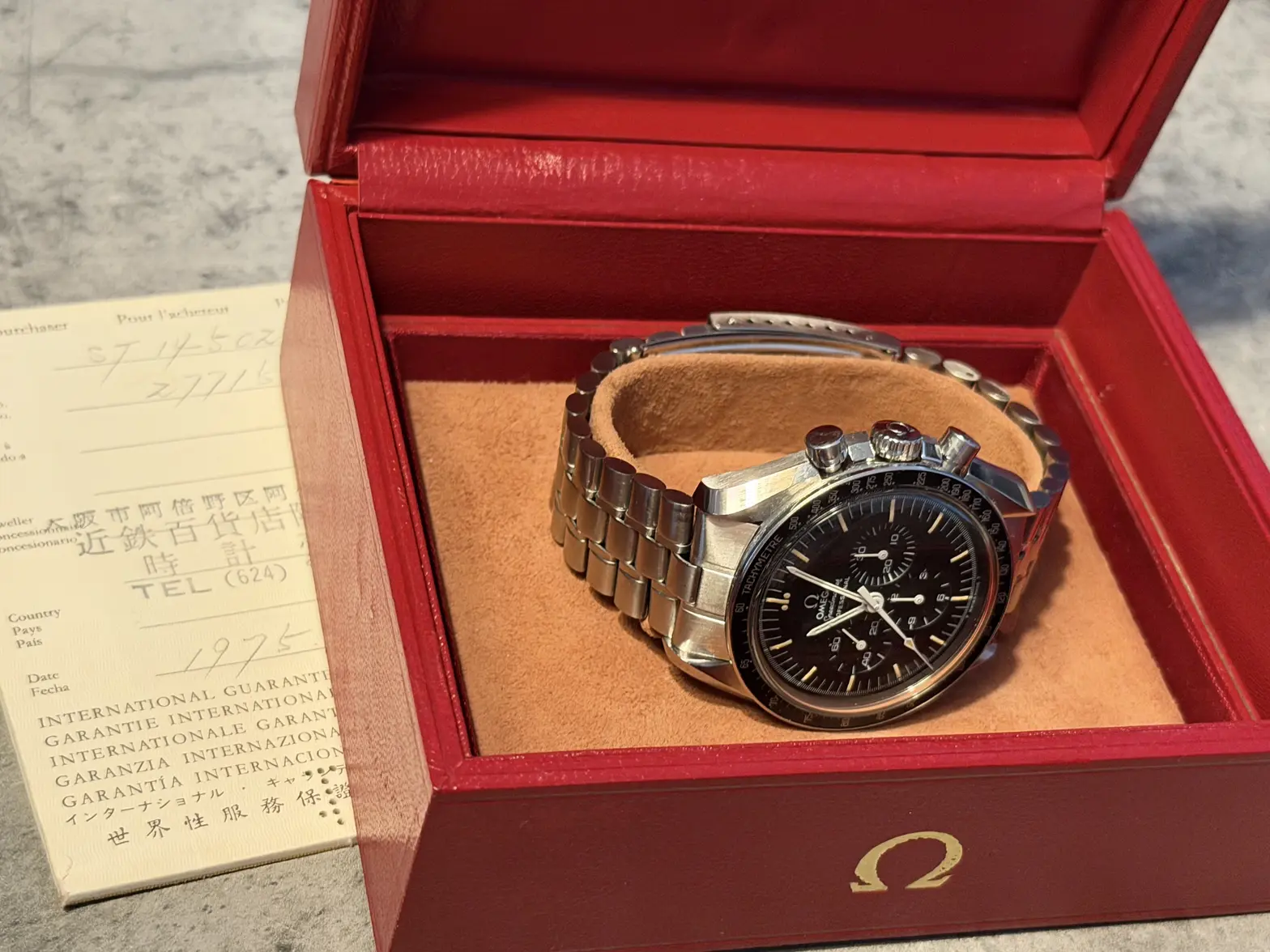
It has a movement number within that range, an inside caseback stamped 145.022-74 ST, and its original Japanese Omega guarantee card, dated 1975. The card links the complete movement number to an ST 145022; the “-74” suffix is documented by the caseback.


The overall impression is remarkably coherent. The case is strong, with clear edges and very attractive geometry; the dial and complete hand set have aged beautifully together; and the early 1116/575 bracelet is in excellent condition.


The UV test was especially pleasing. Dial and full hand set, including the central chronograph-seconds hand, show a very homogeneous old-tritium reaction. This is particularly interesting because the chronograph-seconds hand has the same warm orange tone already discussed in this thread. Under UV, it behaves entirely consistently with the rest of the luminous material and not like a modern service hand.


Functionally, the watch also makes a very good first impression. Crown and pushers operate cleanly, the chronograph starts immediately, and it resets correctly.


The old red Omega box with its beige outer carton is also a charming addition. It appears period-near and probably belongs to the late-1960s/early-1970s Omega box family. I would not claim that it originally belongs to the watch, but it is a very nice period-near box to have with the set.


This is noteworthy in light of the Moonwatch Only passage reproduced in the opening post. MWO specifically refers to examples with 27.3xx.xxx movements delivered in 1975, while noting that their exact caseback sub-reference is unknown. The evidence now emerging from the 27.7xx.xxx range suggests that the phenomenon may not have been confined to that earlier movement block.

While researching this watch, I also found another 145.022-74 ST from the same 27.7xx.xxx range in Catawiki lot 105191657:


https://www.catawiki.com/en/l/10519...-moonwatch-chronograph-145-022-74-st-men-1974


It is not fully correct in its present configuration, but its publicly documented movement in the same range and its 145.022-74 ST caseback make it another valuable data point.


There is also the 2023 example posted by @Emanuele84, already linked in the opening post:


https://omegaforums.net/threads/omega-speedmaster-145-022-74-st.162464/


After enhancing the movement photograph a little, my strongest reading is that it may also fall within the same 27.7xx.xxx range. I would not treat this as confirmed without asking @Emanuele84, but if that reading is correct, it would represent another 145.022-74 ST case from this block.


So, as things stand, the 27.7xx.xxx range includes at least two separately documented 145.022-74 ST examples, one of them accompanied by an original matching Japanese Omega guarantee card dated 1975. A possible third example remains unresolved.


This still does not prove exactly when or how Omega assembled these watches, and one should always remain cautious with early movement numbers in later casebacks. But it provides further evidence that the occurrence of early calibre 861 movements in 145.022-74 cases extended beyond the 27.3xx.xxx examples mentioned in MWO.