Right to Repair Movement

Posts
5
Likes
3
If you have the level of education, experience, and a well equipped modern shop (with a number of required pieces of equipment), then you can apply. Then if they agree you go to Swatch for training, pass it, and you are now able to order all parts, with a few exceptions.

For a hobbyist, there are some that I know that I would say could do this quite easily, as they are as good at this as many professionals are. For the majority of hobbyists, this is unrealistic.
 
Posts
5
Likes
3
Archer, Thank you for your insight. I guess this proves the point. I would need a time machine to get to the point where I could not have income for a few years while I attended WOSTEP or the like.
Do you know if AWCI CW21 certification falls within the scope of training recognized by Swatch?
 
Posts
29,674
Likes
76,836
Archer, Thank you for your insight. I guess this proves the point. I would need a time machine to get to the point where I could not have income for a few years while I attended WOSTEP or the like.
Do you know if AWCI CW21 certification falls within the scope of training recognized by Swatch?

Not sure what point it proves, other than Swatch won't sell parts to just anyone. They do in fact sell to watchmakers, which means the statements made by Otto Frei are at best misleading, if not an outright lie.

Back when this first happened in 2015, all the watchmakers who simply bought their parts from these resellers all said to people like me, who already had parts accounts with Swatch, that they would be taking away our parts soon. They said "what's the point going through this if they are just going to take our access away anyway!" Well, I'm still waiting...8 years later and I still order parts pretty much every week - just got a shipment in yesterday. Those same watchmakers could have had years of access to parts (with no end in sight) but they failed to take the opportunities provided to them.

Although Swatch doesn't formally "recognize" the CW21 certification as some sort of requirement (it's a Rolex thing after all), they would value the education you would get by taking all the AWCI courses. That's exactly what I did...
 
Posts
5
Likes
3
That's good information. Thank you. I see this is a common thread on many forum pages here and you have commented on many. I should have read these before posting. I'm preparing to move into restoring/servicing higher level watches and see the cost prohibitive requirements as a challenge to progression in the profession. That's a personal issue rather than an issue of the industry. This is nothing new so I'll leave it here. Adapt and overcome.
 
Posts
2,842
Likes
4,537
There really needs to be a way to certify collector/restorers who work on their own watches.

The problems is when parts are sold to just anyone, then there are a few who go into the 'Manufacturing' business on their own. This even happens on the top levels as what happened with the Heritage department, that was to quick to produce the 'perfect' watch.

I am pretty much limited to OFrie, eBay and goodwill. Just got a Tissot case (more on that later it only arrived withing the last hour) Has a broken pusher. I also finally found a 2577 case with a missing crown and tube. A search of these forums gives the needed part number. Unfortunately there is no way to simply order the part.

I tried to get into WOSTEP when I was in my 30s. That was 30 years ago. They said I was too old. I was at the height of my field at Apple working on the laser printers. Those when obsolete by the time I was 40. I went into working on pipe organs. I would have liked to have continued with the watches as well. I suspect I would have drifted into teaching.

That is in effect what my friends and mentors did. They passed on some of their knowledge before they died. I guess that is why I like posting here.

The pipe organ and player piano suppliers pretty much shut down 10 years ago. There are a couple of places that do continue to sell to the trade. Many of the materials have been banned as bad for the environment. Used to one could go into the hardware store and purchase animal hide glued and high proof alcohol (denatured.) Sears stopped selling lathes in the 1960s, because people could use them to make or modify a gun.

Such things look good on paper.

None of this is new. The trade guilds have been restricting competition for centuries. Especially the myth that women are not technical. (Yet who are the low wage semi skilled workers on the assembly line?) If you can read the contract they will not hire you.

If it were not for the liability. I might possibly open a watch shop perhaps even find some apprentices. On the other hand there are at least three places like that within a few KM of here. The public expects to get a few thousand in service for 35 to 50 bucks.

Still it would be nice to be able to get crowns, case tube, clamps and the consumables like gaskets. Not to mention dials and hands. Especially hands.

Hairsprings and balances are the other pesky thing. More so for the high end. There are plenty for 'generic' low end. Ironically no one is (or should be making) A Schild parts. Yet these are widely available.
 
Posts
2,781
Likes
4,693
Here in Oz we have a problem, there are very few authorised repairers for agricultural equipment and even less authorised technicians for various models, so when farmer Joe’s shiny late model harvester that cost him cubic dollars shits itself in the middle of harvest he is on a waiting list for the one technician in the country qualified and approved by the manufacturer to get around to fixing it.
This is unacceptable monopolistic behaviour from manufacturers, you pay good money to own it, you should have access to technical information and parts to fix it in a timely manner.
There is nothing that technical about any of this shit that a capable tradesman can’t fix.
 
Posts
5
Likes
2
The biggest issue here is that companies are not paying for their externalities (like a firm polluting a community). As much as I hate government regulation, firms need to be held accountable for the creation of waste. One good way to encourage good design and the provision of replacement parts would be to enact strict fines for any companies items that find their way into municipal garbage. This would be more effective for electronics and such as opposed to watches.

The US government did legislate that auto firms must either produce spare parts for years after a car model's production, or allow others to produce these parts (relinquish patent protection). The situation would need to get very bad for this to happen. The farm equipment sector is getting there, but hopefully farmers will simply buy Chinese equipment and force American companies to stop blatantly evil behavior (preventing repairs, bricking equipment for no reason,...). I personally see old cars and similar equipment gaining value as people realize how terribly designed modern products are (anything "smart" is a good example). I am shocked that no firms are offering alternatives. I would pay extra to avoid modern inconveniences (I have mostly bought used items to avoid senseless touch screens and other problematic design fails).

As an example, I strongly prefer ETA movements to in-house. They make me feel more comfortable in the long-run. I can stomach high-volume in-house, but boutique brand items terrify me (especially complex ones). It seems like we live in an age of bad design. Fortunes will be made by those who make products that rise above this.
 
Posts
1,107
Likes
1,655
This is all fairly new to me, but after doing some reading, it seems to me that the farm equipment issue seems largely about software, not mechanical parts. Isn't that the main point of contention? Whether the manufacturer is required to provide open source code?

Being the devil's advocate here.. Equipment manufacturers spend a ton of money developing software. Making it open source would allow any competitor to copy it. If anyone could copy your software, no one would spend much money to develop it. Innovation would stagnate.
 
Posts
2,842
Likes
4,537
I think the Open source movement has proven otherwise. Open source is robust. Proprietary software is often crippled and limited. Who knows what is happening inside your data?

There is more open source running critical things than you probably realize.

A lot of the Apple OS code is Open Source. It is easy to forget Apple is a hardware company. Sadly there is a move away from this model with the personal devices. In theory anyone can write an App (which these days are basically front ends to big data bases.)

Possibly the trade secret is that the mfgs do not want customers to know how much Linux does run the world. Ironically AT&T tried to lock down Unix. This gave rise to first BSD (Berkley Systems Distribution.) and of course Linux.

Windows is pretty much last century these days. Sure people still use it. The best versions still remain 98 and XP. A lot of critical stuff ran on that. When was the last time anyone really wrote a program in Basic. Nowadays it is all Python and the cloud.

Innovation happens when people get access to the cast off stuff. I was raised in the 1960s and 1970s SF Bay Area what gave rise to the Silicon valley. The art class used to make field trips to the dump.

There used to be great surplus stores which sold stuff repurposed from dumpsters. A lot from organizations with tax payer funded government contracts. This ended when someone dumpster dived some semi obsolete networking software.

Now such garbage is owned by corporations. Some say this is used to launder money and other things.

One could learn a lot from the old failed products that were tossed into the rubbish bin.

I recently re-read Mark Twain's Connecticut Yankee in King Arthur's court. Sill as relevant as when written. Especially the chapter on wages and inflation.

None of this is new. It was forbidden to take manufacturing knowledge out of England. Still it was smuggled out anyway and gave birth to the so called Yankee ingenuity. If the old restrictions were kept in place, the Wright brothers never would have got past building bicycles.
 
Posts
7,651
Likes
21,952
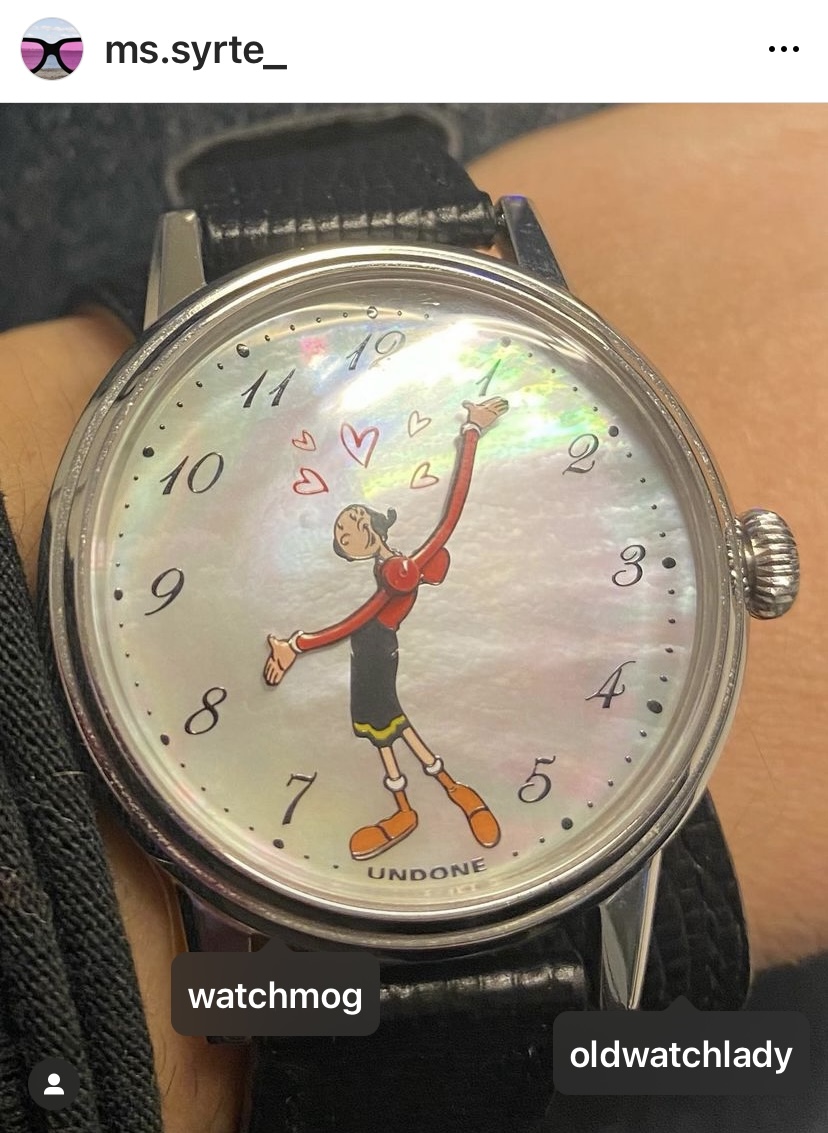
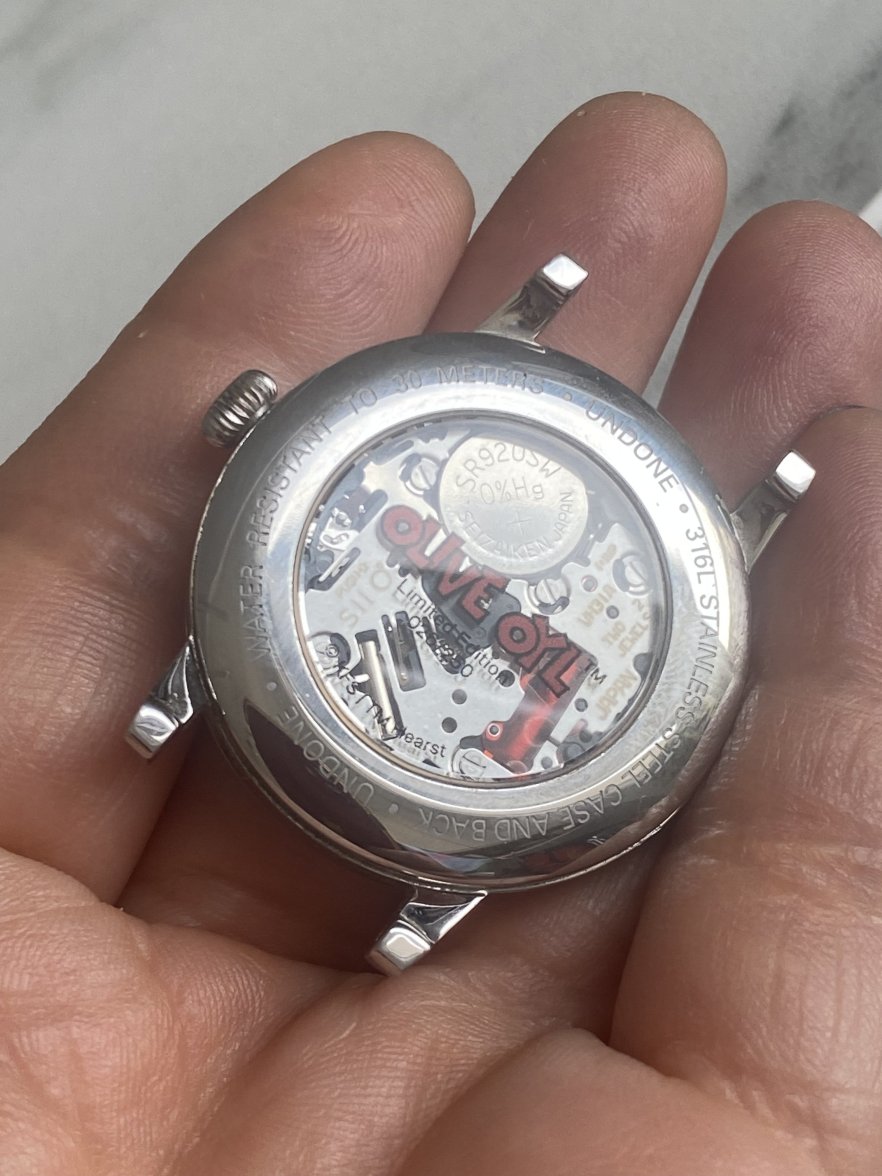
Well this isn’t about repairing a movement, but I’m finding out to my great dismay that the fun and supposedly friendly micro-brand « Undone » is also trying to lock in customers by creating cases that are incredibly hard to open.

Sure enough they want me to ship the watch so they can charge 50 USD for a battery change (and return shipment).

Too bad as I really liked them. No longer fun or friendly though.

I created a separate thread for others to see.
https://omegaforums.net/threads/beware-undone-micro-brand-cases-locked.162635/
Edited:
 
Posts
2,781
Likes
4,693
Well this isn’t about repairing a movement, but I’m finding out to my great dismay that the fun and supposedly friendly micro-brand « Undone » is also trying to lock in customers by creating cases that are incredibly hard to open.

Sure enough they want me to ship the watch so they can charge 50 USD for a battery change (and return shipment).

Too bad as I really liked them. No longer fun or friendly though.

I created a separate thread for others to see.
https://omegaforums.net/threads/beware-undone-micro-brand-cases-locked.162635/
Undone eh? That would appear to be the crux of the problem…… it bloody well can’t be undone!
 
Posts
17,942
Likes
37,522
Well this isn’t about repairing a movement, but I’m finding out to my great dismay that the fun and supposedly friendly micro-brand « Undone » is also trying to lock in customers by creating cases that are incredibly hard to open.

Sure enough they want me to ship the watch so they can charge 50 USD for a battery change (and return shipment).

Too bad as I really liked them. No longer fun or friendly though.

I created a separate thread for others to see.
https://omegaforums.net/threads/beware-undone-micro-brand-cases-locked.162635/

Have your watchmaker try one of these.