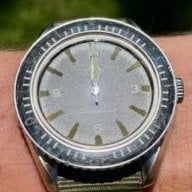
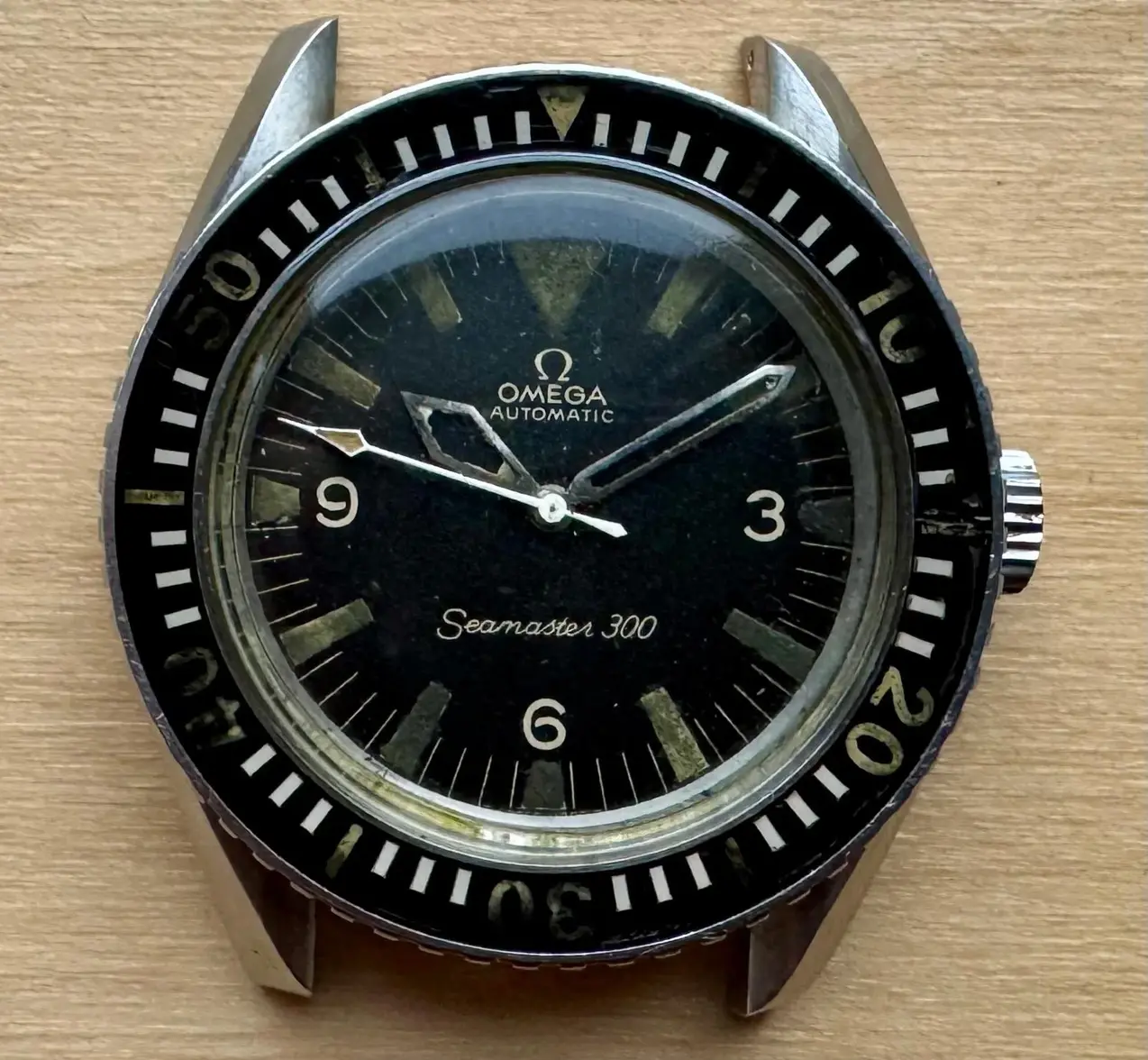
Omega 165.024 restoration opinions welcomed

Posts
212
Likes
149
Don't be tempted to overdo the restoration. I would do just the minimal amount so as to maintain the look of originality including whatever warts may exist. Consider servicing the movement and strive to cause any other work to fit and blend with the originality of the watch. Something I learned long ago is that it can only be original one time.
 
Posts
280
Likes
204
So, it has arrived, I had not much time to spend dealing with it so far, but...first impressions: this is how looks a never serviced watch, spending whole life near the sea.
The movement runs, but stops quite fast, which is expected. The bezel was completely frozen, but I was able to remove it and clean it and working as new now.... all rubies okay, one crack in the insert I knew about, will be sorted with clear epoxy.
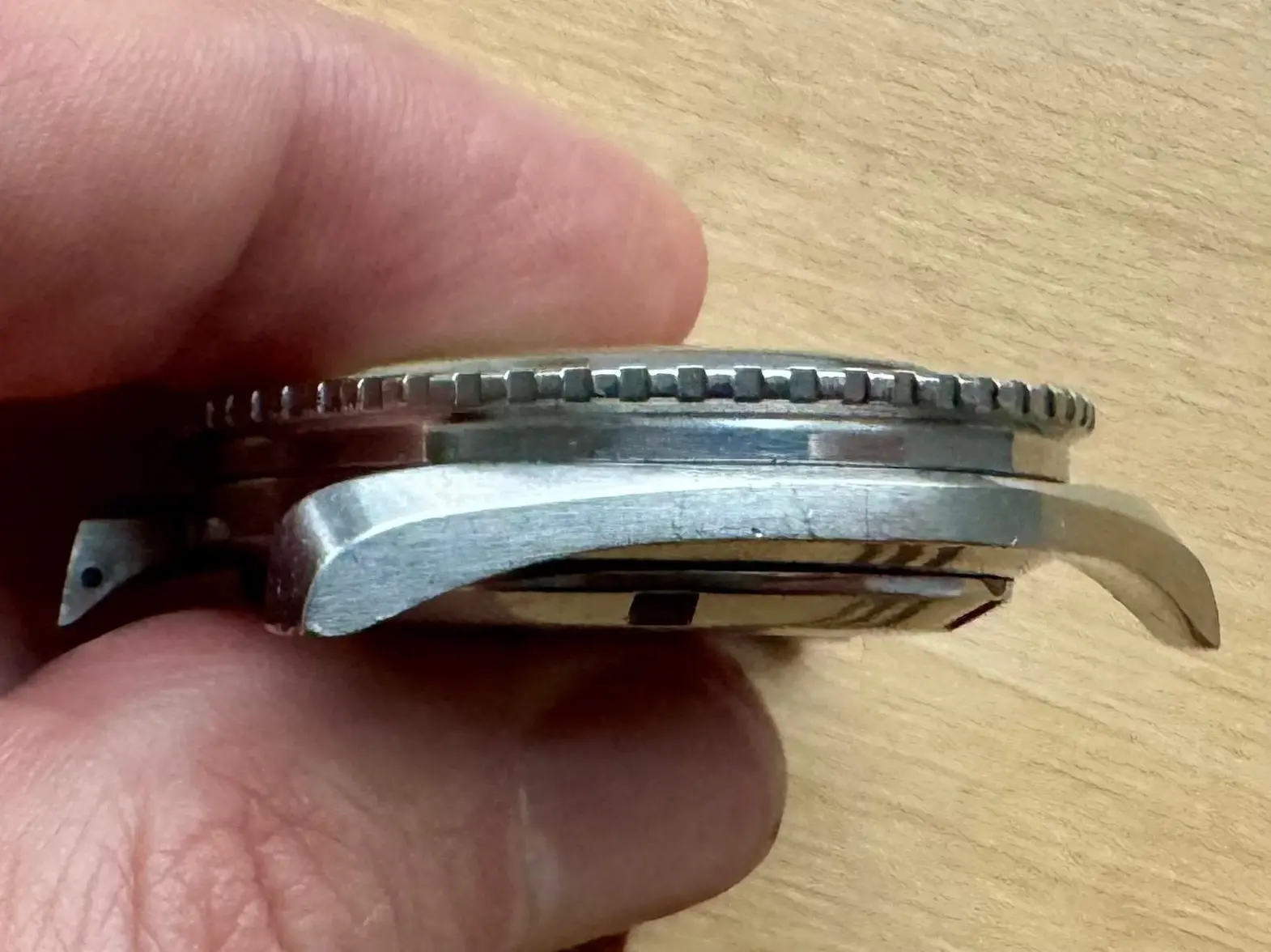
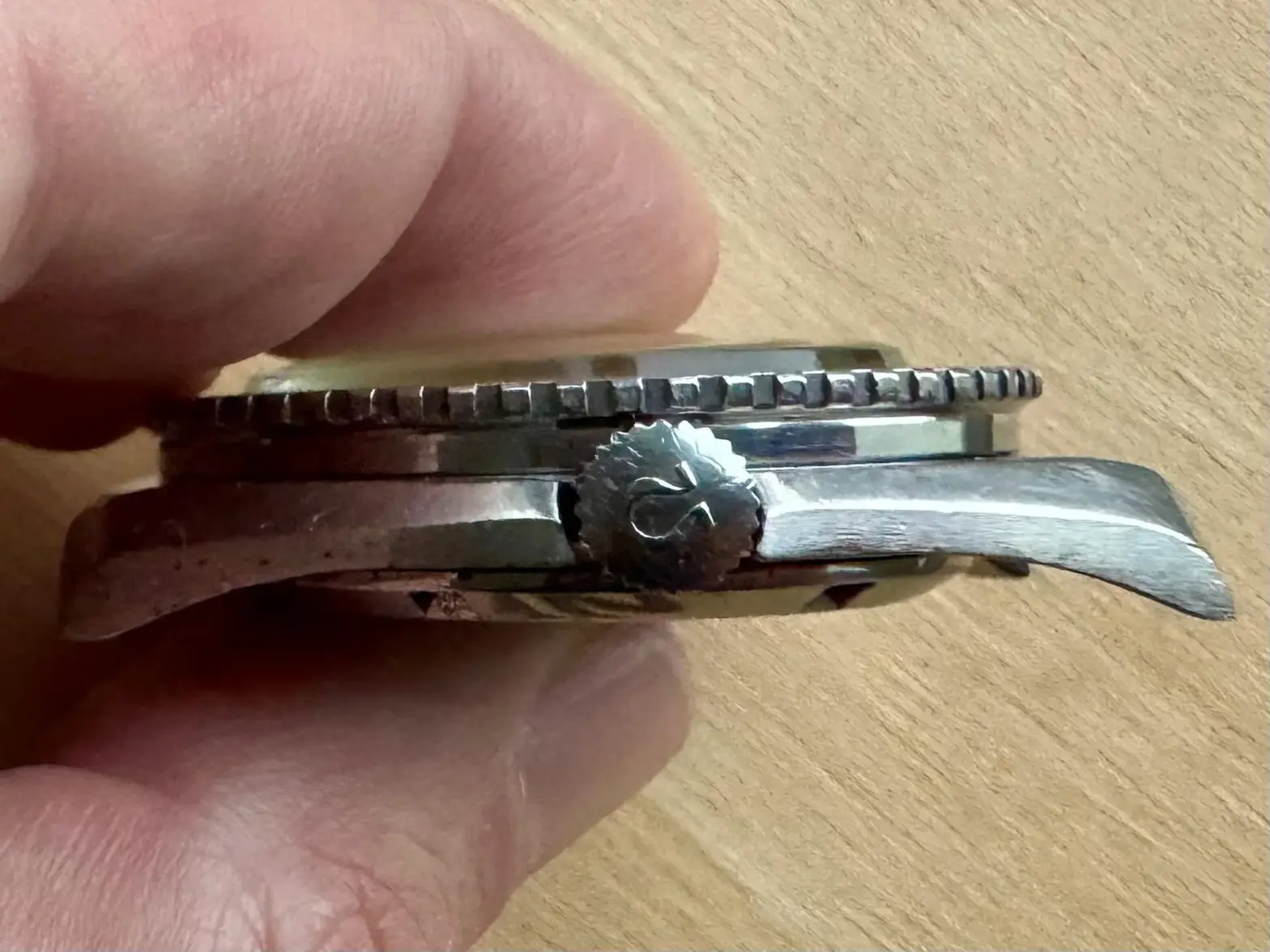
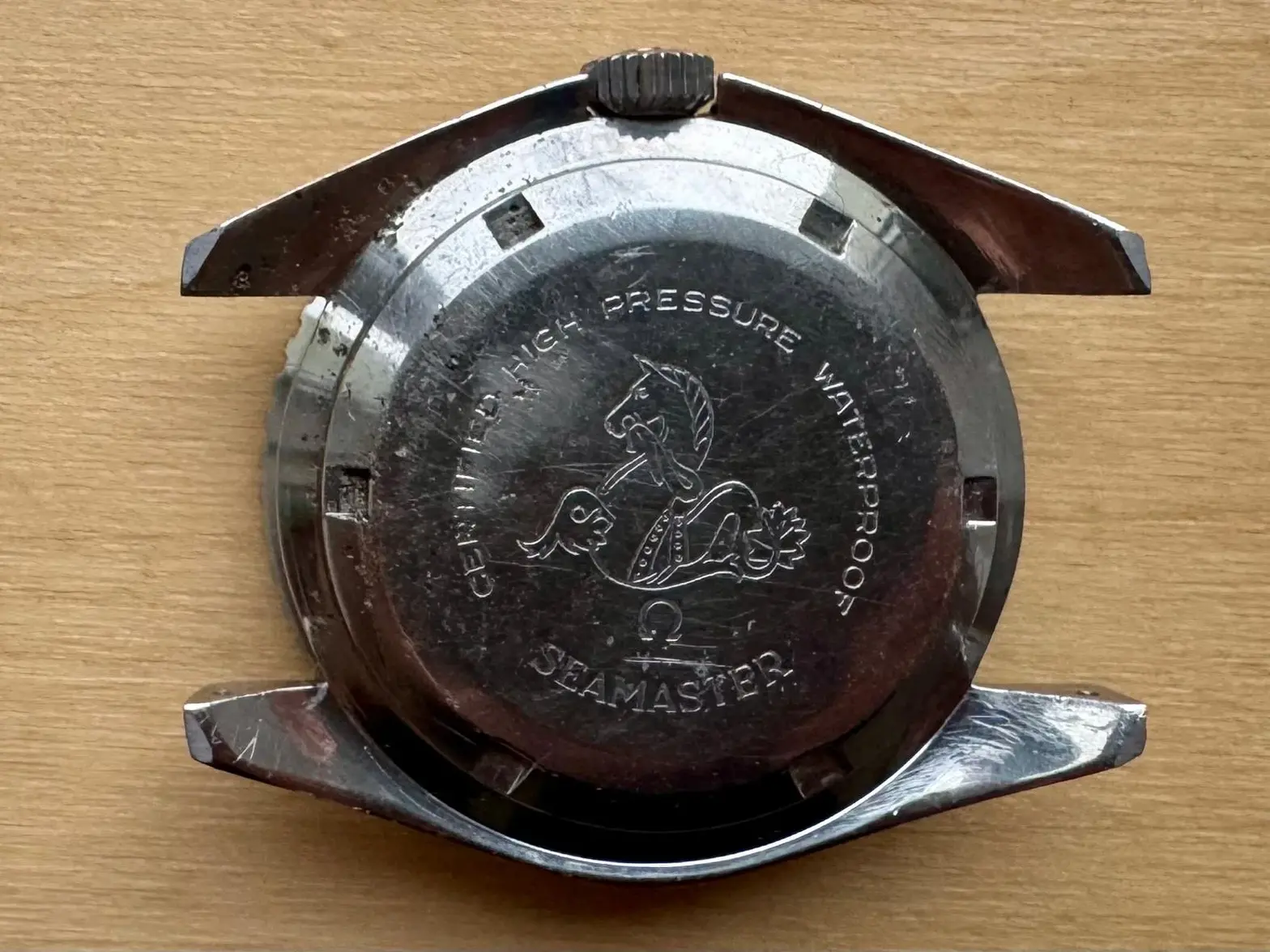
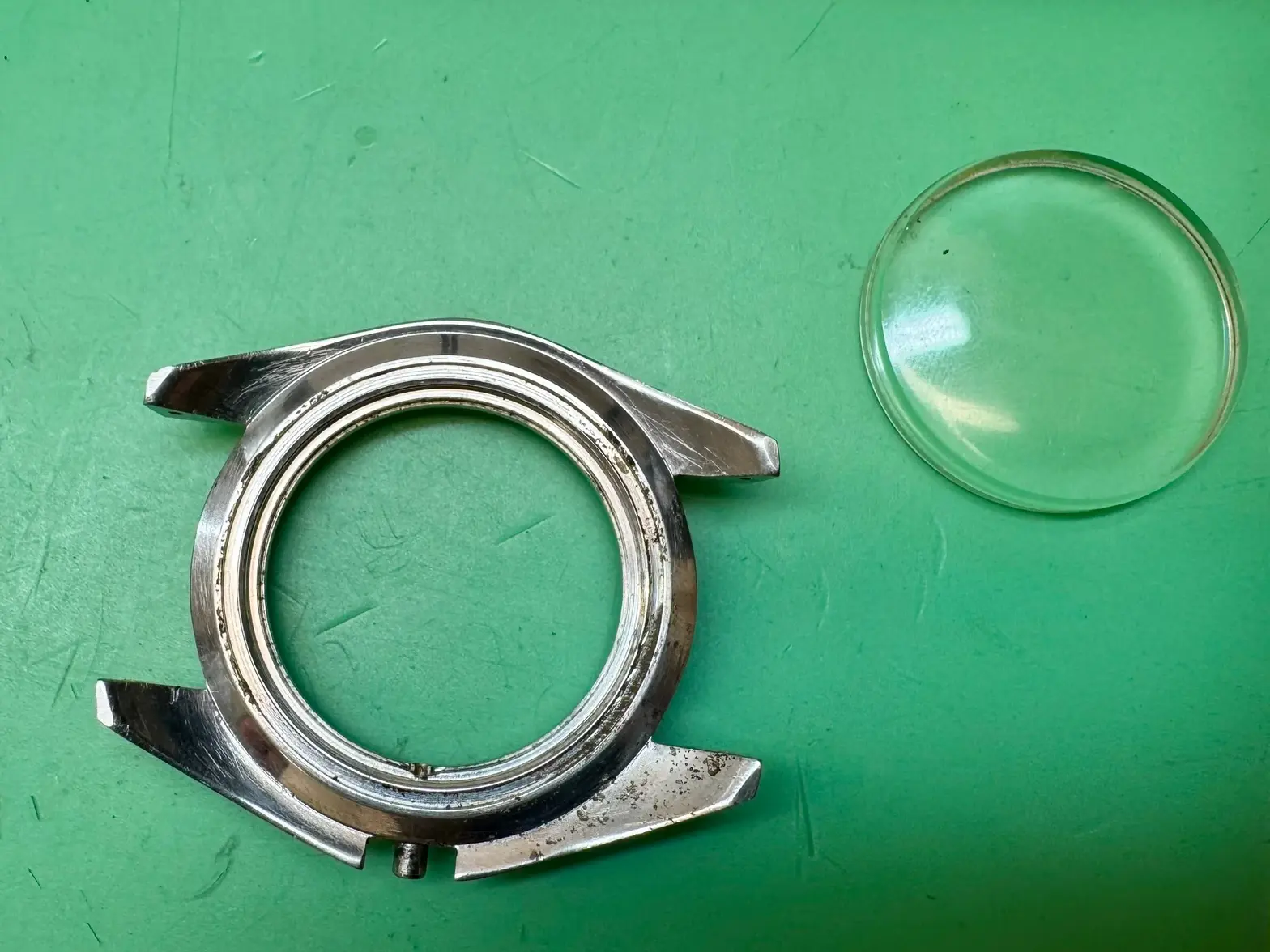
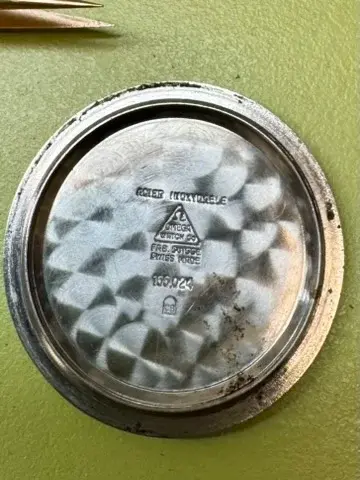
What is a headscratcher, is the condition of the case... it is in original factory brushing, no major dents or nicks, but it suffers with crevice corrosion on one of the lugs and caseback... I quite nervous, how it will look under the caseback itself... I expect more rust in the seal groove 馃檨
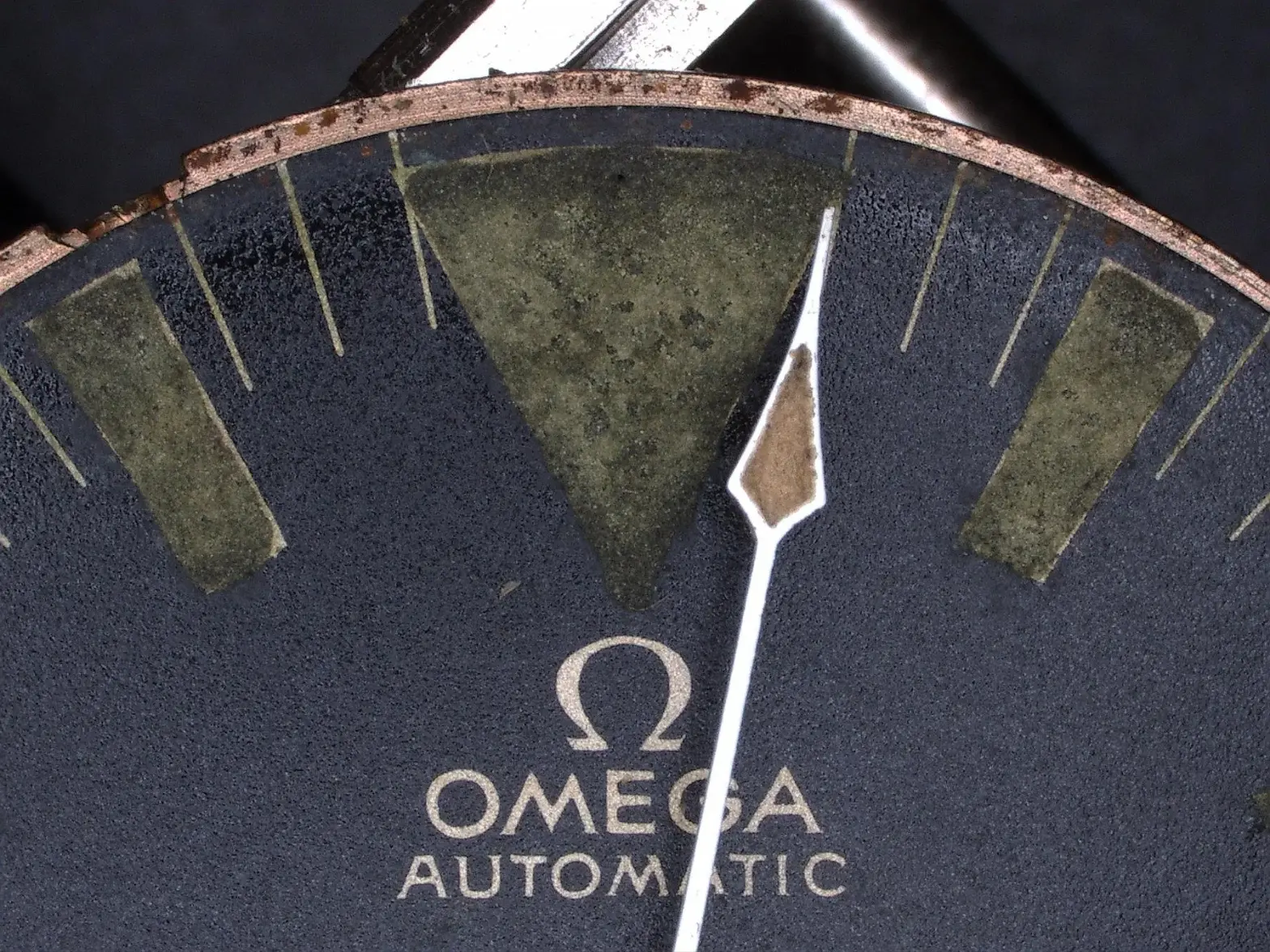
I`ve polished the hesalite a bit, dial seems okay, just pieces of tritium compound everywhere.... it glows in UV light just a bit....
So....what would you do with it? If it was not corroded, I`d keep it as is, as the case is quite straight, but now it seems, that some laser welding will be necessary anyway... some quick pics, more to come probably tomorrow....

 
Posts
186
Likes
55
So, it has arrived, I had not much time to spend dealing with it so far, but...first impressions: this is how looks a never serviced watch, spending whole life near the sea.
The movement runs, but stops quite fast, which is expected. The bezel was completely frozen, but I was able to remove it and clean it and working as new now.... .
Congratulations!! These models are a favorite of many collectors.
..what would you do with it? If it was not corroded, I`d keep it as is, as the case is quite straight, but now it seems, that some laser welding will be necessary anyway...

It would have been beneficial for you to have asked for more photos from the seller before pulling the trigger!! You could have posted your question to the forum with some of those photos to get better pre-sale advice before sending the funds. More knowledgeable members here have helped me in the past avoid making regrettable costly mistakes. It would have also been a good bargaining strategy for you to compensate for the laser welding that you are intending to do ( which isn't cheap and you will always risk introducing other problems when laser welding - especially 18-8(10) / 304L stainless steel) .

Whenever I buy a watch regardless of brand, especially stainless steel, I always ask for photos of where corrosion and pitting is expected such as between the lugs, under the case back seals and mid case where the 2 mating metal parts can trap oxidants ( salts and sweat residue for example) which feed corrosion. Once corrosion begins ( breaking of that SS passive layer)), it cannot be stopped and you get a chain reaction just like rust on normal iron.

Personally, any stainless steel watch I ever had in my collection, the very first step I always did was cleaned the case back sections and used a coating such protectaclear or clear nail polish as a coating to stop anything trapped between these mating areas attacking the stainless steel passive layer which cannot be cleaned regularly like the rest of the exposed case. Stainless steel is good for utensils and kitchen appliances, pans spoons etc as you are always washing them clean to avoid any oxidants damaging the passive layer of stainless steel. Watch cases should also be cleaned the same way to keep them from corroding BUT that is not always possible as they are not all water proof.
Prior to 2014, I have worked with stainless steel metallurgists for almost 27 years and have been exposed to quite a lot regarding different grades of stainless steel corrosion and it is a complete science all to itself ( Avesta - Sheffield Outokumpu laboratories in Sweden)

As others have suggested to you, I would not overdo it and would keep everything in line with how it blends with the dial ageing.
Most importantly, enjoy the watch in good health!!!
 
Posts
280
Likes
204
Hi, thanx, I had more photos from the seller, I saw the pitting, but I did not expect that much. I got it for a price, that was reflecting the "unknown status". The laser welding/grinding is not as expansive for me, as it is done by friend, but of course it will take time and some money.
Lets see, what hides under the caseback seal ...this worries me now the most...
 
Posts
186
Likes
55
The laser welding/grinding is not as expansive for me, as it is done by friend, but of course it will take time and some money.
Lets see, what hides under the caseback seal ...this worries me now the most...
If you do go down that path, make sure that any welding done in the gasket groove is not over lathed when smoothing out the welds as you want the seal to sit as plumb as possible. Otherwise just laser weld anything visible on the outside and coat that seal section with something to stop any moisture getting into the pitted areas if there is any pitting under there!!! That particular section is never going to be exposed so the coating will not wear off as easily as if done on the outside of the case.
 
Posts
12,989
Likes
22,523
I鈥檇 still go with my thoughts earlier.

Regarding pitting and laser welding, do you know you have someone who can do this? When I鈥檝e had pitted cases in the past, every laser welder I鈥檝e spoken to has said they cannot laser weld corroded areas.
 
Posts
280
Likes
204
I`ve just sent him the photos, will have a call later today to discuss the options... I can imagine, it will need some chemical treatment before the welding, or he may refuse, as in the past he weld for me only dings&dents...it has all started as a gamble, so lets gamble and see, how it goes...
 
Posts
186
Likes
55
I鈥檇 still go with my thoughts earlier.

Regarding pitting and laser welding, do you know you have someone who can do this? When I鈥檝e had pitted cases in the past, every laser welder I鈥檝e spoken to has said they cannot laser weld corroded areas.
Ditto!!!! This is exactly what we were dealing with when working with sea equipment where stainless steel corrosion was usually deeper than what it appeared from the outside! Corroded and pitted areas were grinded out or cut out where a new virgin piece of stainless steel was welded in that area. Then the stainless weld joints needed to be pickled with nitric acid as the crystal lattice of the metal was distorted and you would run risks of stress crevice corrosion from welding . There is a lot involved and to think about before diving into this unknown. I would just leave it in my opinion unless one wants to spend big 拢 拢 拢 defeating the purpose of having bought one in much better condition in the first place! This type of pitting can tunnel throughout the inside of the steel.
Stainless steel corrosion repair can be very involved.

I recall a situation on the vintage rolex forums with the James bond 6538 Submariner where this exercise was very involved. For those of you who are interested, this is only part of what happened ( as I recall that a new stainless steel ring was replaced in the corroded section of the gasket groove of the case )

https://www.tapatalk.com/groups/vintagerolexforum/pitted-6538-case-restored-t46571.html
 
Posts
711
Likes
748
Lets see, what hides under the caseback seal ...this worries me now the most...
I鈥檝e seen cases with pitting on the lugs and caseback and no pitting in the gasket groove. I鈥檝e also seen almost perfect cases externally with the gasket groove full of corrosion once the caseback is removed. It鈥檚 hard to predict. I wouldn鈥檛 be surprised if this one isn鈥檛 too bad.
 
Posts
186
Likes
55
I鈥檝e seen cases with pitting on the lugs and caseback and no pitting in the gasket groove. I鈥檝e also seen almost perfect cases externally with the gasket groove full of corrosion once the caseback is removed. It鈥檚 hard to predict. I wouldn鈥檛 be surprised if this one isn鈥檛 too bad.
True and I have also seen those that are rotted with pitting/corrosion inside and out!!! Hopefully, for the OP it will be the lucky scenario!

I don't want to go off topic, but the misunderstanding of stainless steel by society is they tend to think that it is a noble metal like platinum, It is just steel with a passive layer of chromium oxide that keeps healing itself when it scratches like a wound on your skin. Unfortunately, because of the way it is combined at the foundry, some areas of the metal are weaker in that passive layer than other areas, so when it does get scratched, it may not be as effective to heal itself as in other areas of the same steel.

Most of these vintage watches like Omega and Rolex would use staybrite stainless steel which at the time was predominantly 304L grade being 18-10 where it contained 18 parts Chromium and 10 parts Nickel. There is also a marine grade stainless like 316L stainless and 904L stainless which Rolex boast about in using the best corrosive stainless available. One of my 904L Rolex was fully rotted with corrosion in the back gasket groove, so again this is a hit or a miss. 904L is rich in Nickel and Molybdenum.
There are also super stainless steel which go under the title "Duplex" which are great against halides. A common example of Duplex is 2205 which is very rich in Chromium. If I had it my way I would replicate ever stainless steel watch case of all my watches in 6MO stainless which is the closest you get in terms of corrosion properties. Like 904L it is a pain in the **** to machine
,
For further reading your best source is to go to the world capital city of stainless steel research and production, you can access their bible for further information and reading on
https://www.outokumpu.com/en/products/corrosion-tables
 
Posts
280
Likes
204
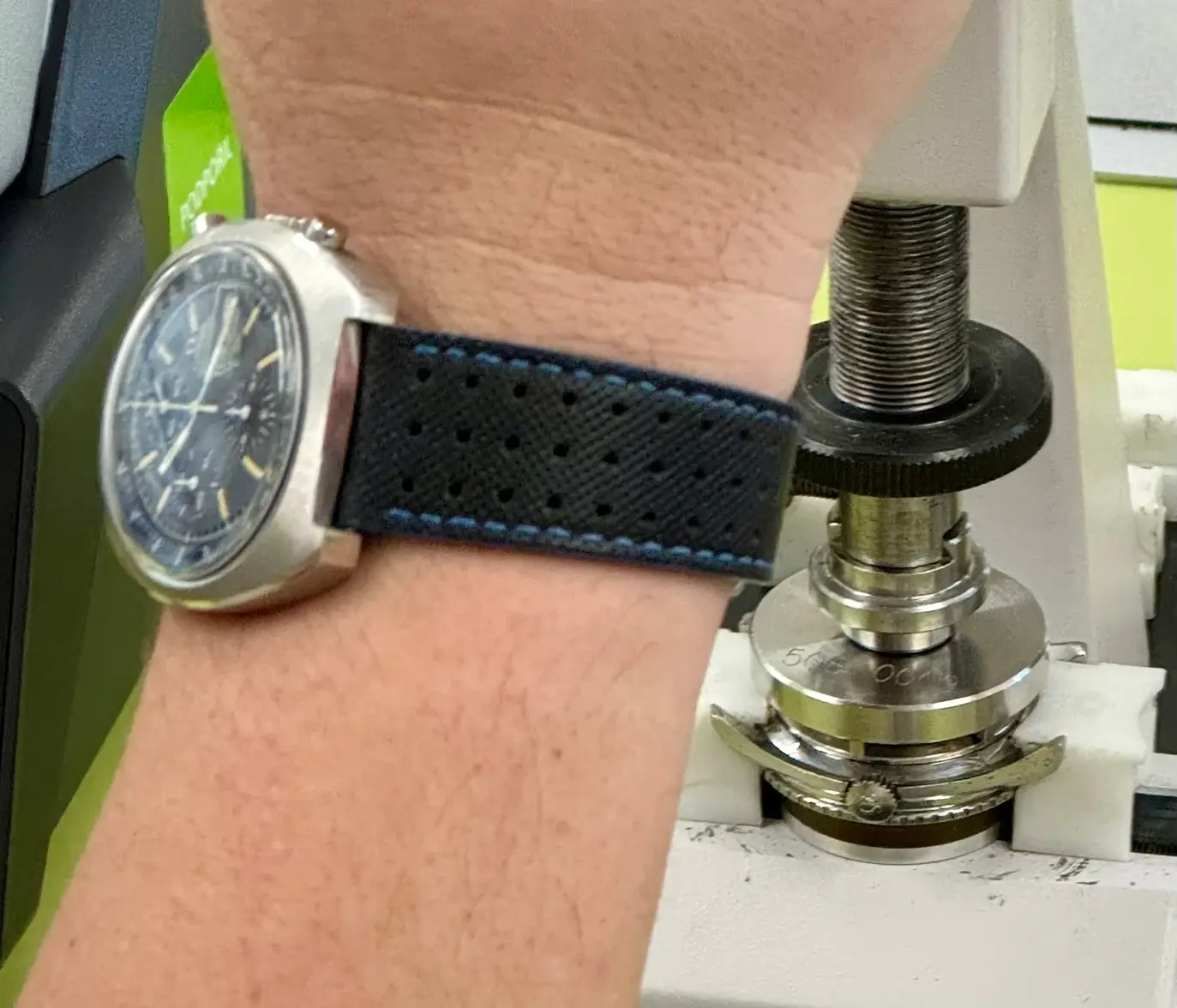
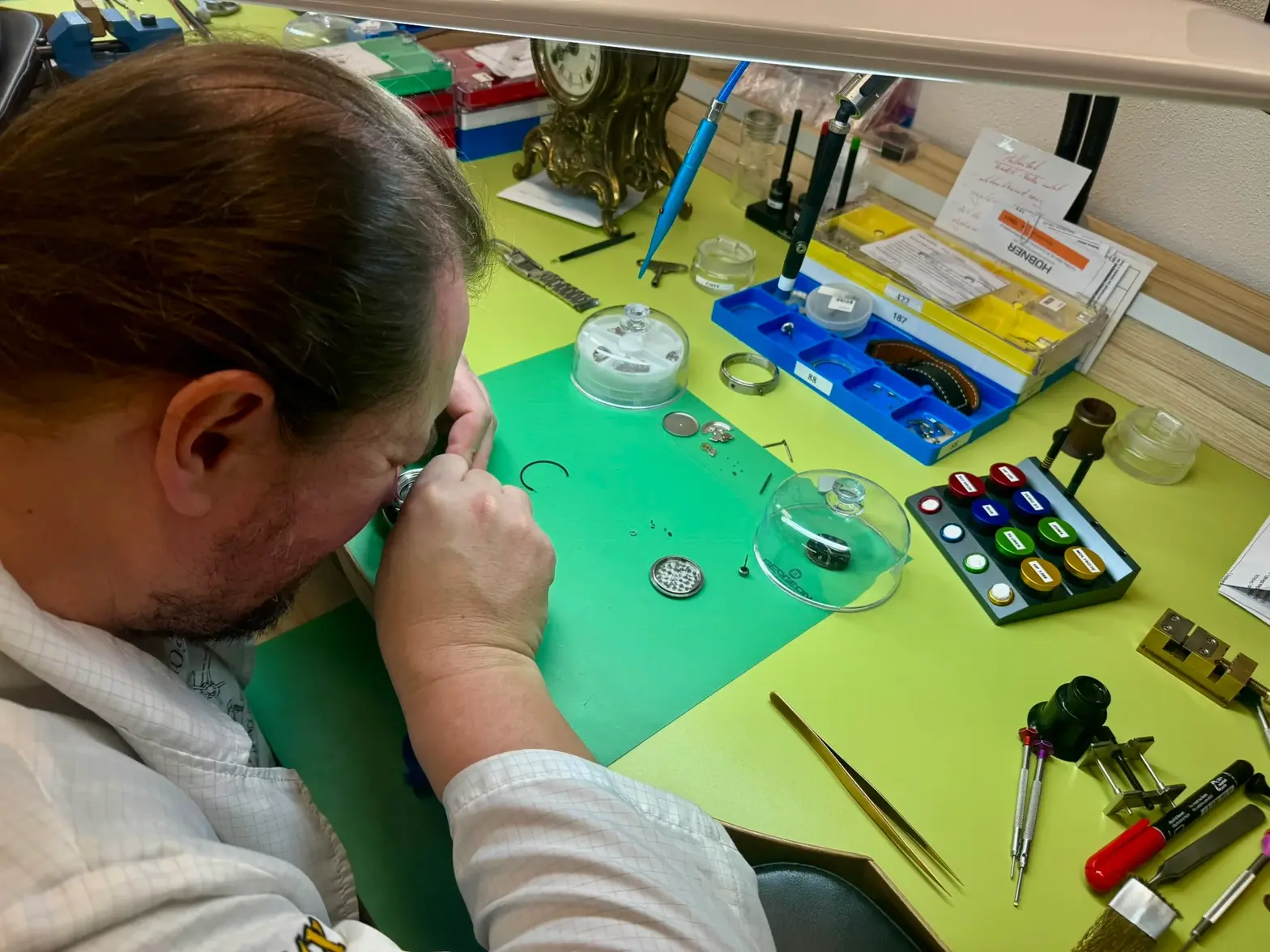
Hi, so, as promised, I went to see my professional watchmaker fellows, and good news... the caseback and seal groove is safe!
Drit from melted gasket and a bit of surface rust in the groove, that they will polish out, new crown tube will be ordered, original crown re-sealed and should pass WR tests w/o problem...

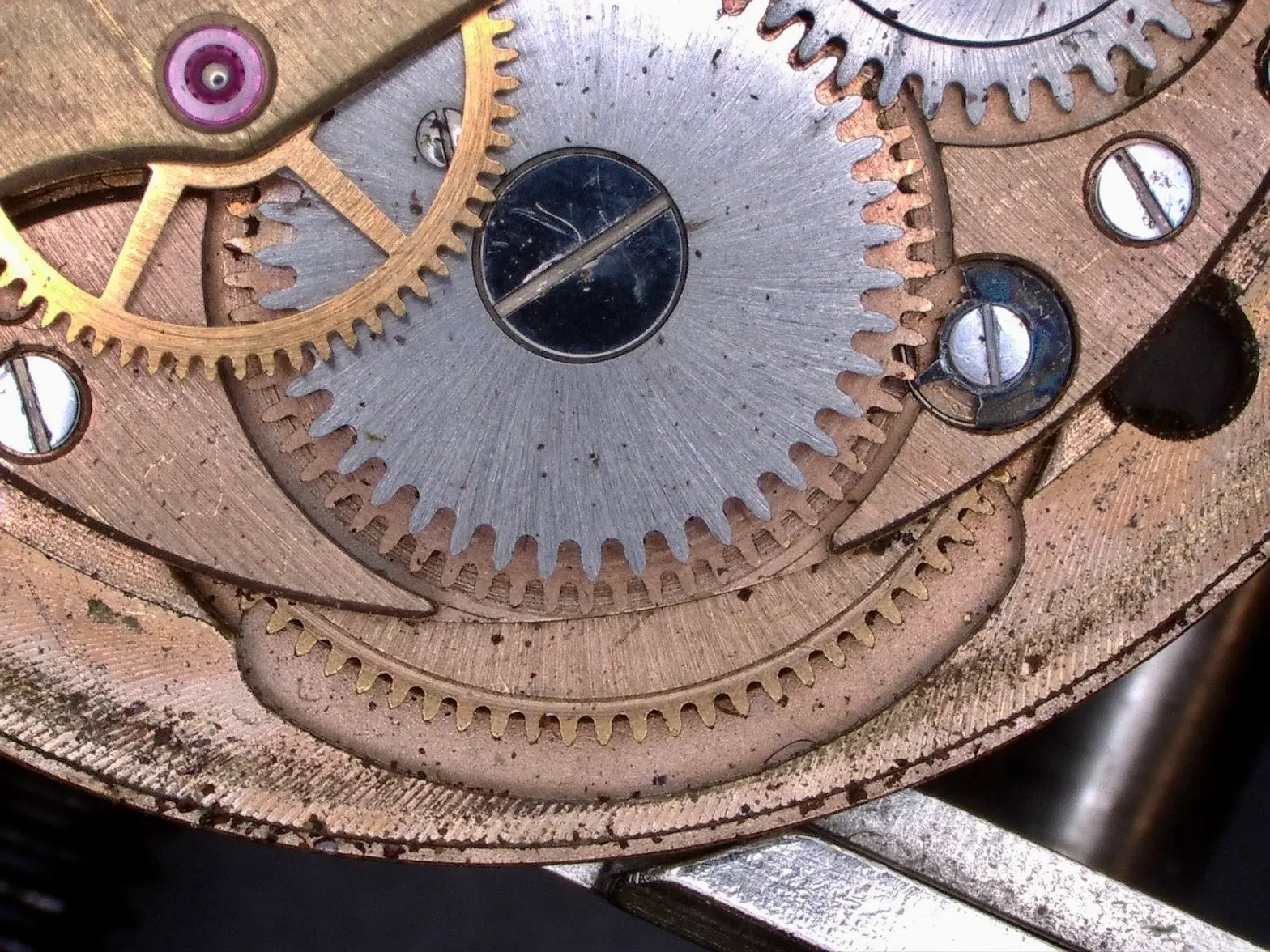
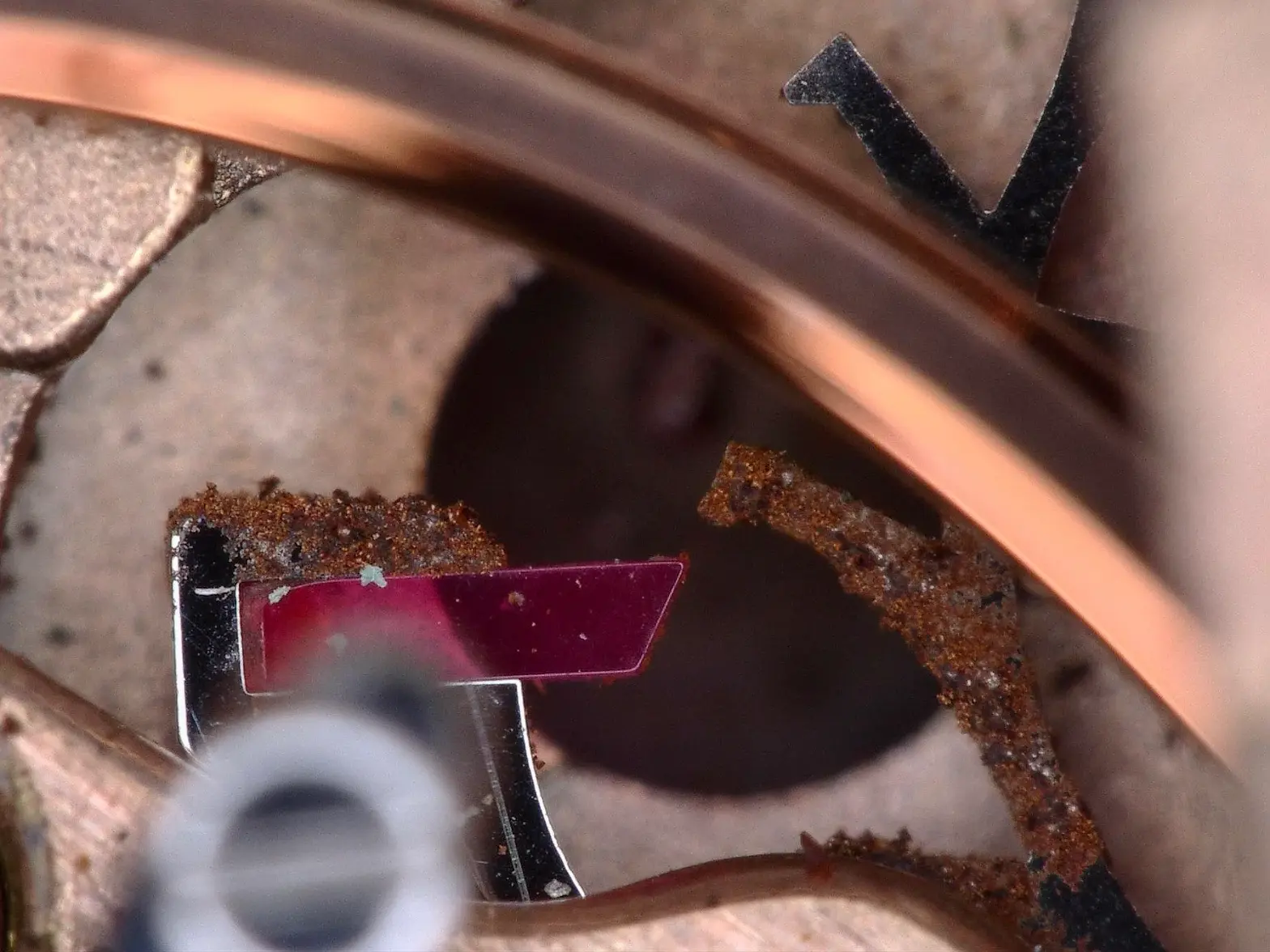
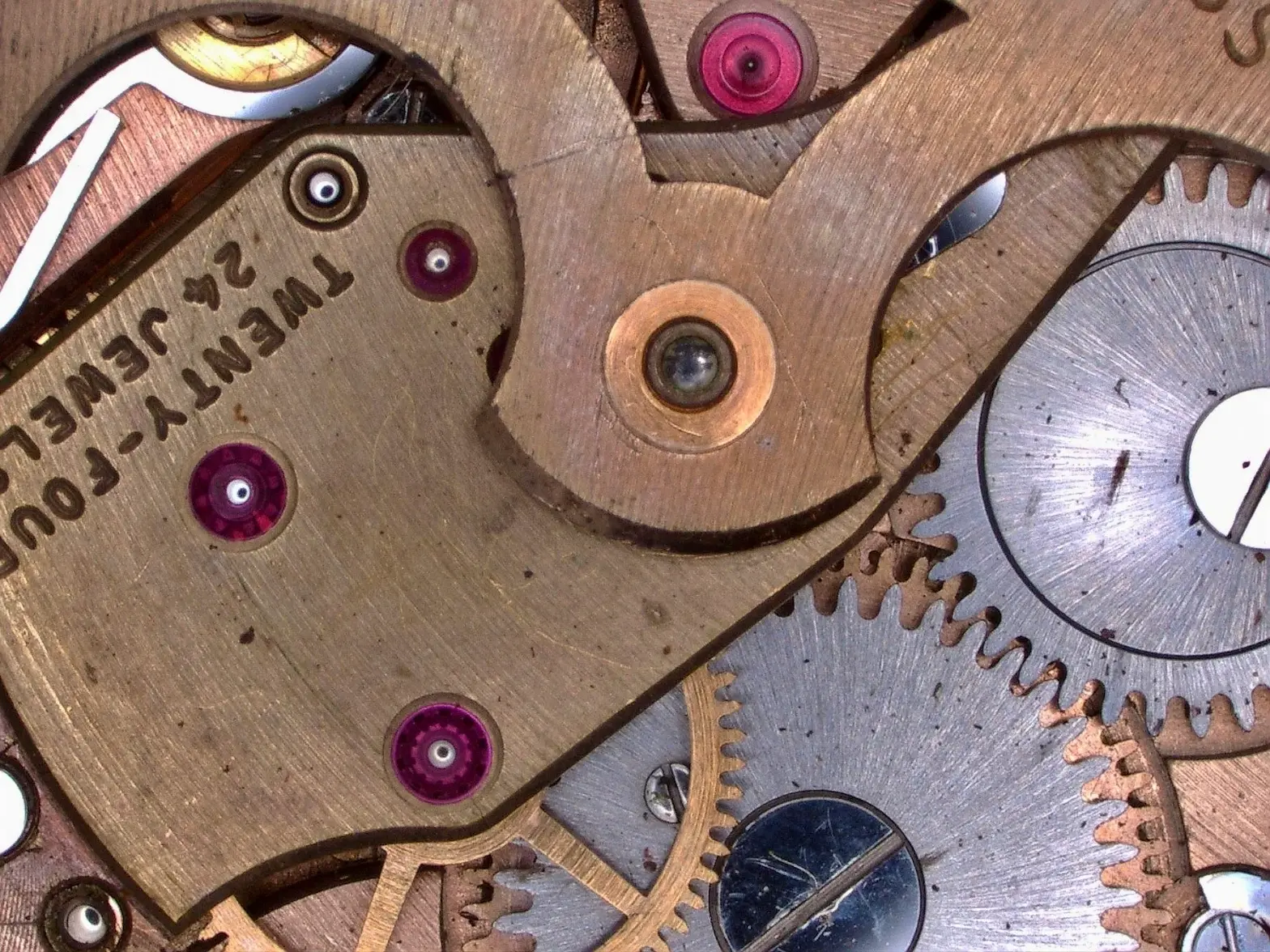
Posting also some pictures of the movement, which runs and keeps suprisingly good time... this is a timecapsule, se all the dirt and oxidation... will use some parts from the donor 552 I have... the SN of the movement dates it to NOV67, I have in my db one 165.024 just 40 digits away.

So far the conclusion is to keep the case externally as is, I will use another set of vintage tritium hands to match the second hand. Dial will be just cleand for now, If I decide to relume, will be done onto original skeletonized hands...
Will keep you updated with the result then, thanx for all your inputs!

 
Posts
23,521
Likes
52,299
Wow, serious corrosion on the escapement.
 
Posts
221
Likes
375
Looks like it had at least one service. Screws on the movement are not pristine...

Great watch regardless! I'd love to have that one myself!
 
Posts
29,253
Likes
75,654
Wow, serious corrosion on the escapement.
That won't be a cheap service...
 
Posts
264
Likes
256
The rust is a concern, I had never seen that much on an Omega watch. I wasn't even aware this was possible. Looks like this will need to be addressed somehow. Otherwise the watch is beautiful and the case has retained its lines.
 
Posts
778
Likes
2,392
I'll be rooting for you. I bought a project Omega as well, and the estimate for service was $4,000-$5,000 plus the cost of a donor movement, due to rust.

So what did I do? I bought a second movement with slight rust for $150, and I'm going to attempt to clean the parts of both movements myself, and then present both to watchmakers until one agrees to take it on. I'm probably a nightmare for a watchmaker, but once rust is involved, they seem to just see dollar signs. $$$
 
Posts
221
Likes
375
I would guess new old stock escapement parts could be found. These generally run in families with parts being shared across movements. But a donor movement is never a bad idea to have on hand.
 
Posts
29,253
Likes
75,654
I'm probably a nightmare for a watchmaker, but once rust is involved, they seem to just see dollar signs. $$$
We do. Because we know how expensive parts are and how even a little rust can cause the need for a whole lot of new parts.
 
Posts
221
Likes
375
Assuming you can find those expensive parts...
 
Posts
280
Likes
204
So, movement parts for cal55x can be ordered new from Omega and are not cheap, true..thats why I`ve bought in the past several used 552/565 movements as spare donors...I can use just the train bridge with serial number from the original movement, if needed.
Only what was ordered from Omega now was the case tube 090ST1306 that will cost me 12 euro and caseback seal 088NS5133 SEAL O-RING d31 D33 is 6 euro.
The movement service work will be cca 200 euro. There will be some extra work, like bezel insert crack repair, and I will share the final price with you once its over.
Those guys are Omega certified watchmakers. You should know, that the official service prices for Omega watches are just recommended prices, but what the service cost is depends how thigh your friendship is....