Newbee question (about mainsprings)...

Posts
3,502
Likes
8,771
Archer,
Thank you for that additional information.
So - what is a "Dog Screw Style"?

Best search results by looking for "dog point screw".
 
Posts
29,196
Likes
75,443
Archer,
Thank you for that additional information.
So - what is a "Dog Screw Style"?
I guess I can sort of tell - by looking at my case screws, but I have never heard that term - so wondering what would make a screw "Dog Style".
Is it the bevel around the circumference of the head?
Kind Regards,
-Paul
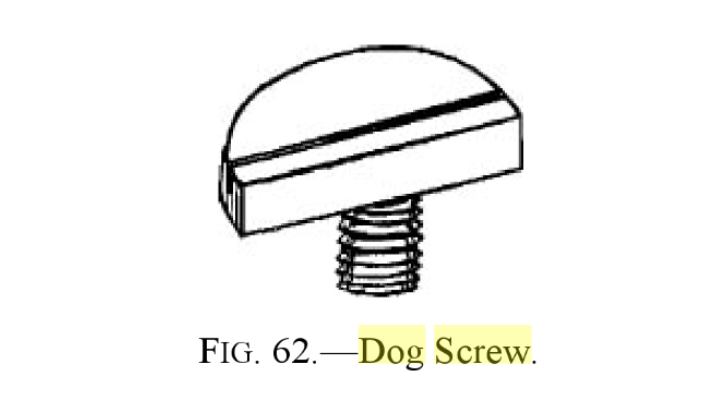
This is what it refers to in a watchmaking context...


The potential drawback to this design is that it can cut into the case as you tighten it, so full head screws are generally preferred.
 
Posts
110
Likes
79
This is what it refers to in a watchmaking context...


The potential drawback to this design is that it can cut into the case as you tighten it, so full head screws are generally preferred.

Gotcha - thank you for the illustration!

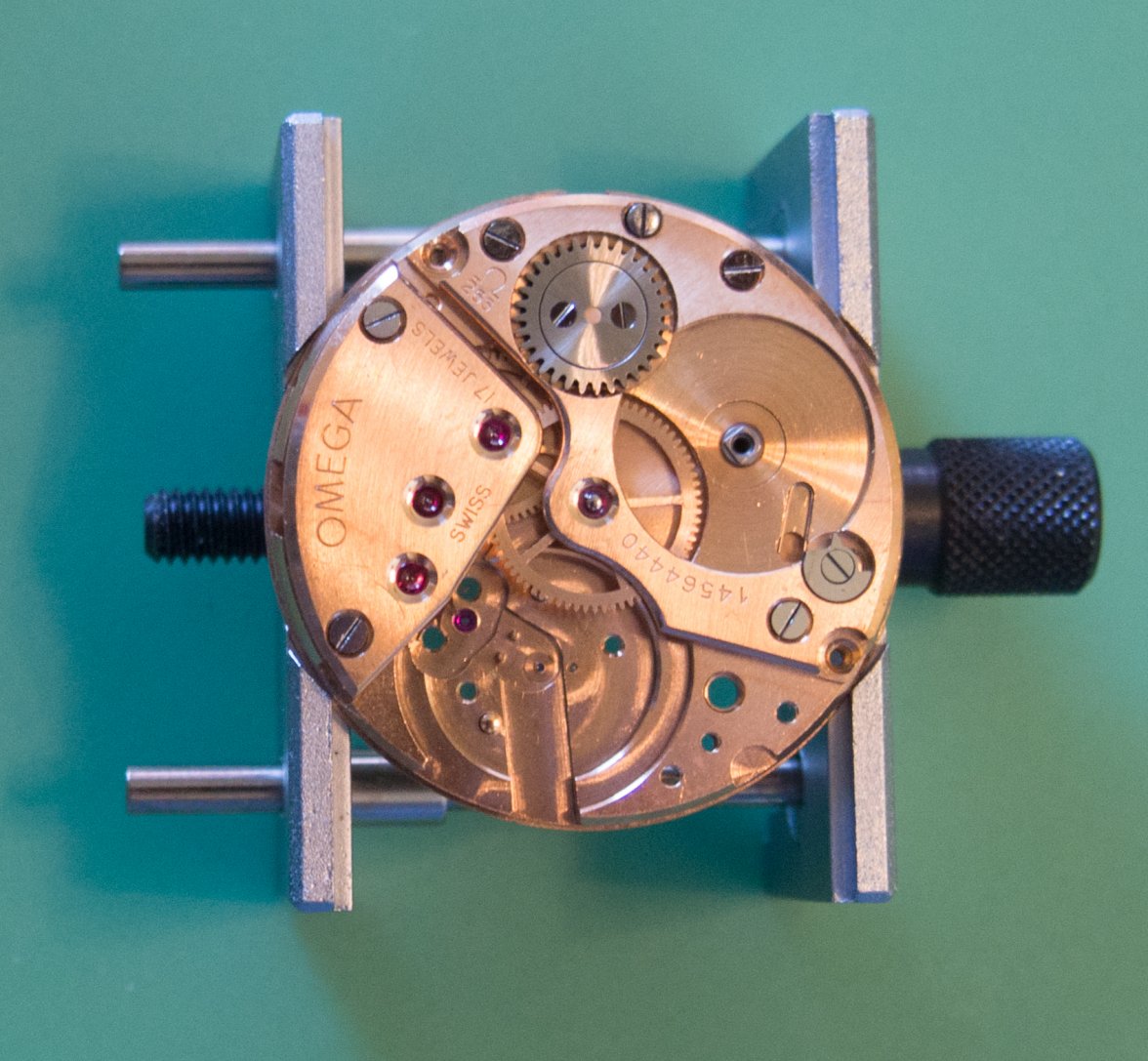
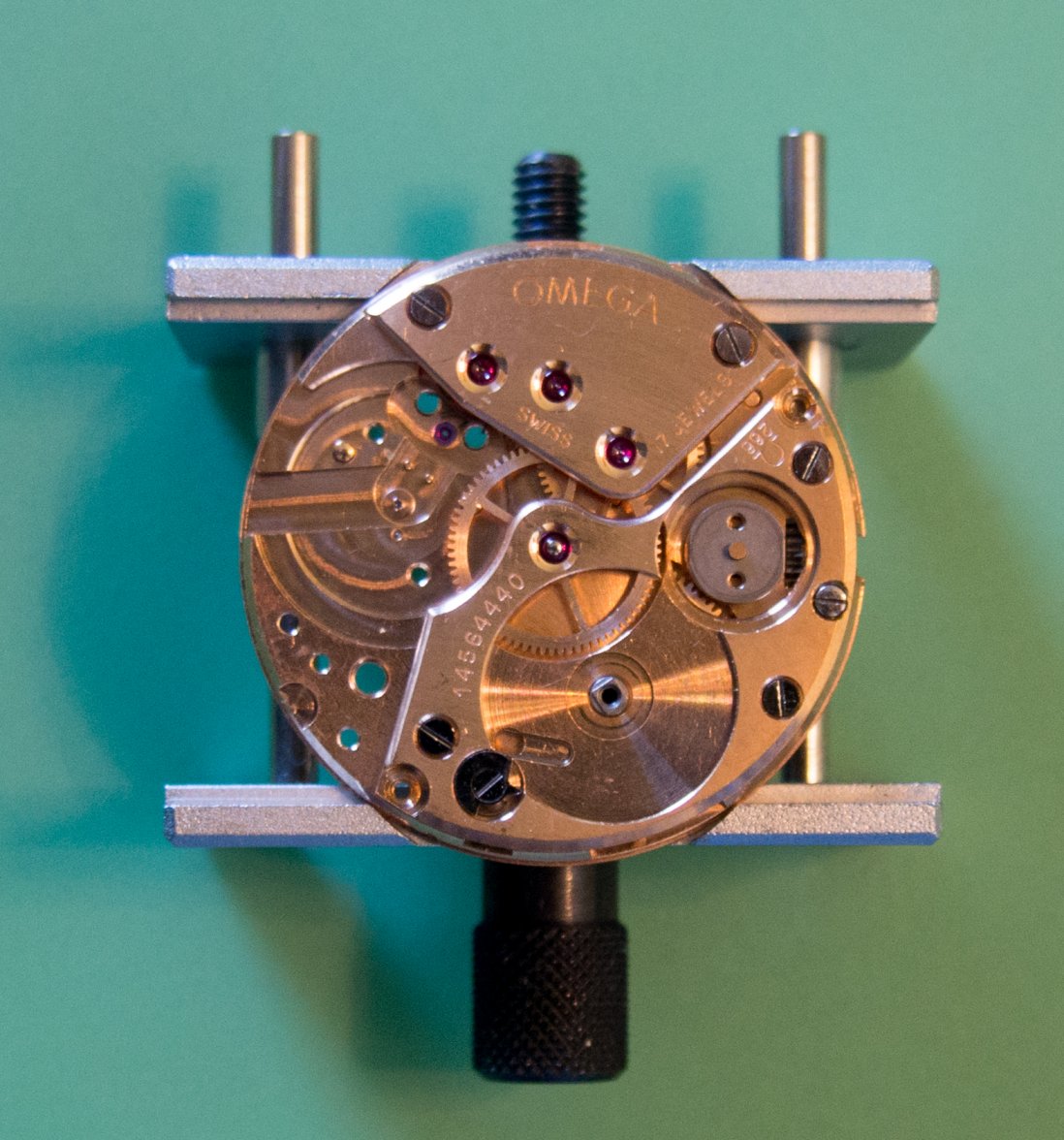
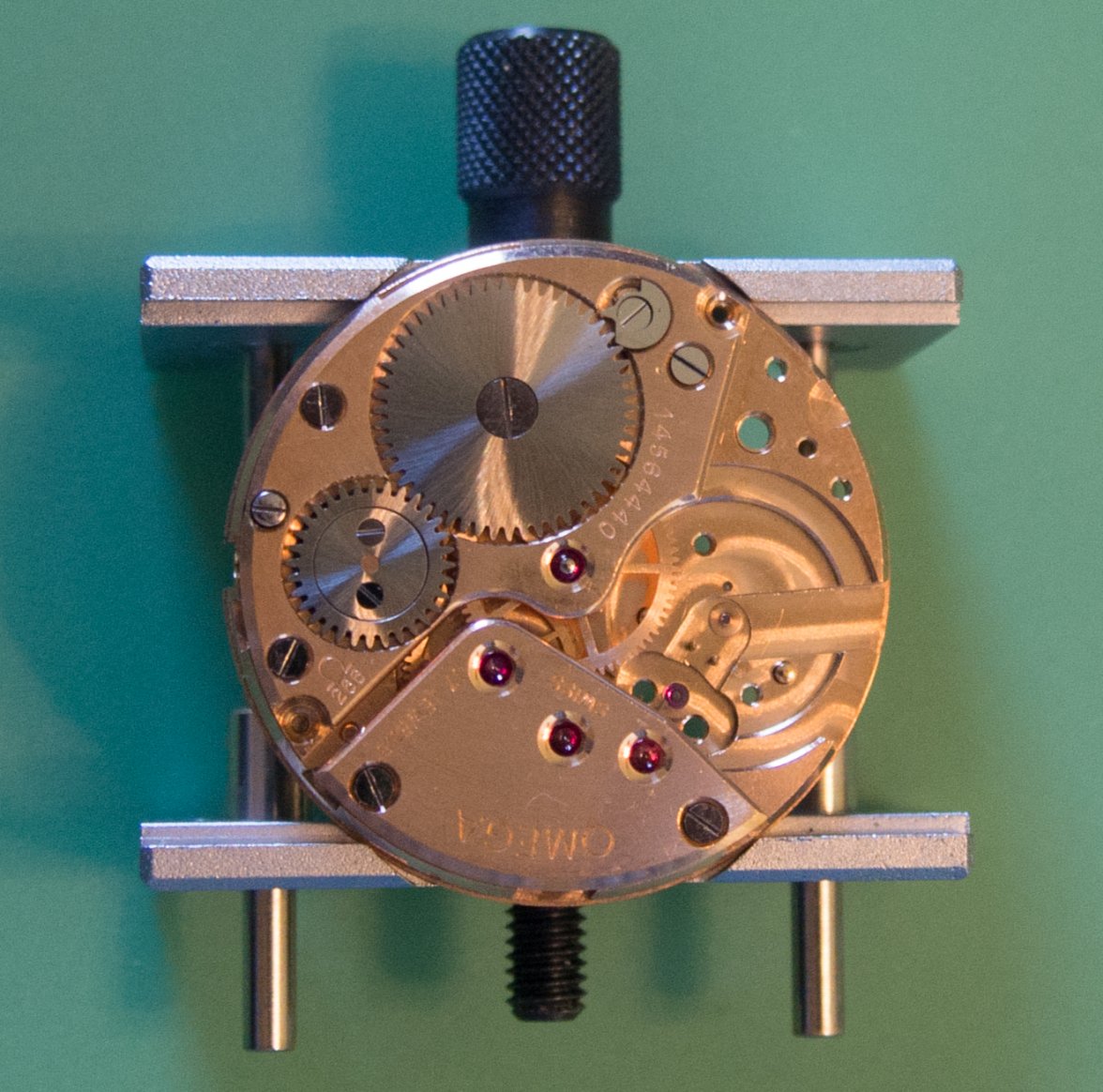
Hum - I must have a bad # (2704) then. As that is not the type/style screw that I have. Mine are full head (as can be seen in the pics of the movement before it was uncased).

-Paul

 
Posts
3,502
Likes
8,771
This is what it refers to in a watchmaking context...


The potential drawback to this design is that it can cut into the case as you tighten it, so full head screws are generally preferred.

Hmmm, not related to the "dogs" I'm familiar with in race car gearboxes. Given that it has to turn what is the advantage over a full head? Can't be much weight saving in something so small.
 
Posts
29,196
Likes
75,443
Hmmm, not related to the "dogs" I'm familiar with in race car gearboxes. Given that it has to turn what is the advantage over a full head? Can't be much weight saving in something so small.

This isn’t a race car gearbox...😀

The “benefit” is that it only requires a half turn to release. Not much of an advantage, so that’s why they are replaced with full head screws.
 
Posts
29,196
Likes
75,443
Gotcha - thank you for the illustration!

Hum - I must have a bad # (2704) then. As that is not the type/style screw that I have. Mine are full head (as can be seen in the pics of the movement before it was uncased).

-Paul

Right...yours has the newer version, which I’ve given you the part number for above. The screws you ordered are the dog screws...
 
Posts
17,575
Likes
36,771
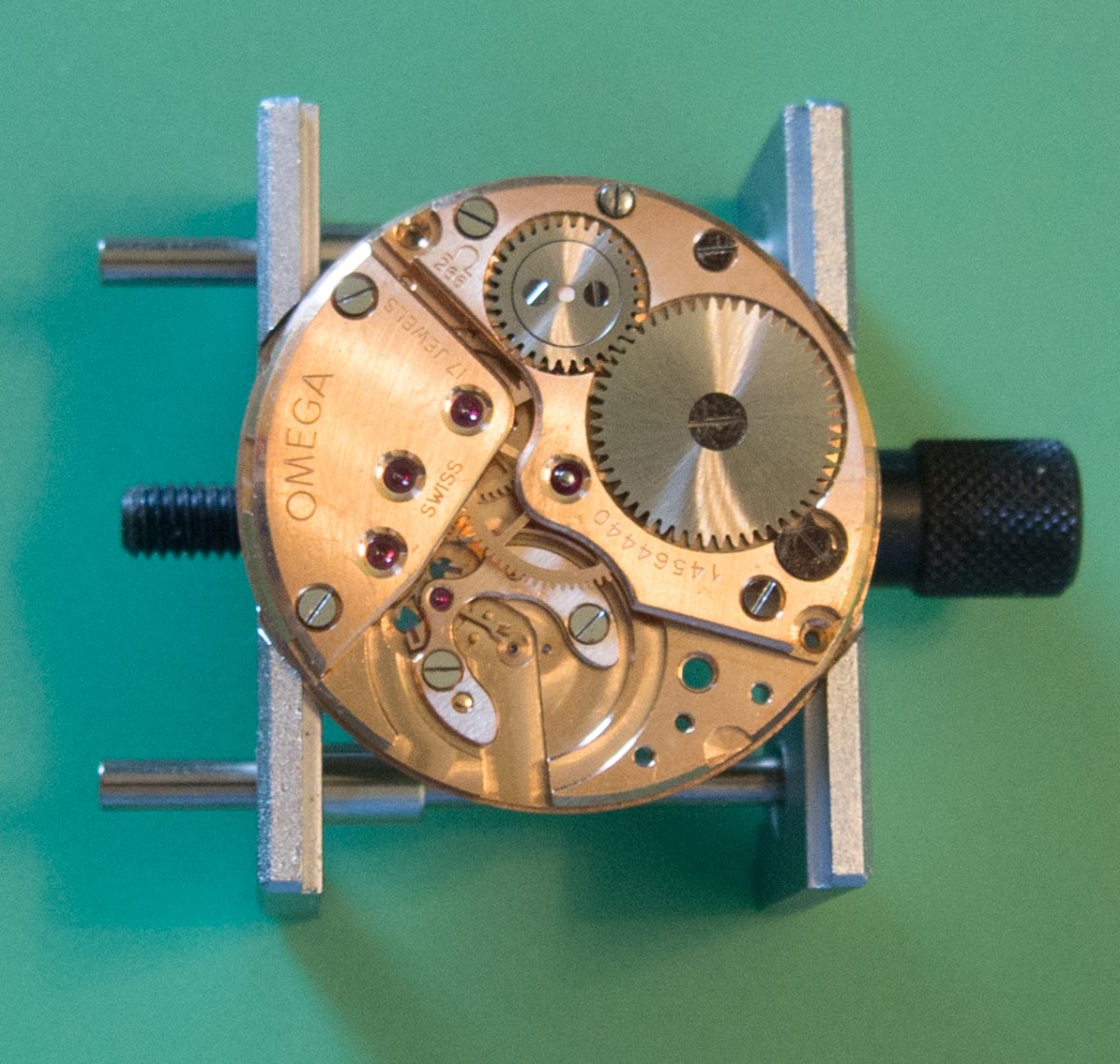
.................... I'd like to remove the broken half and replace the broken screw.
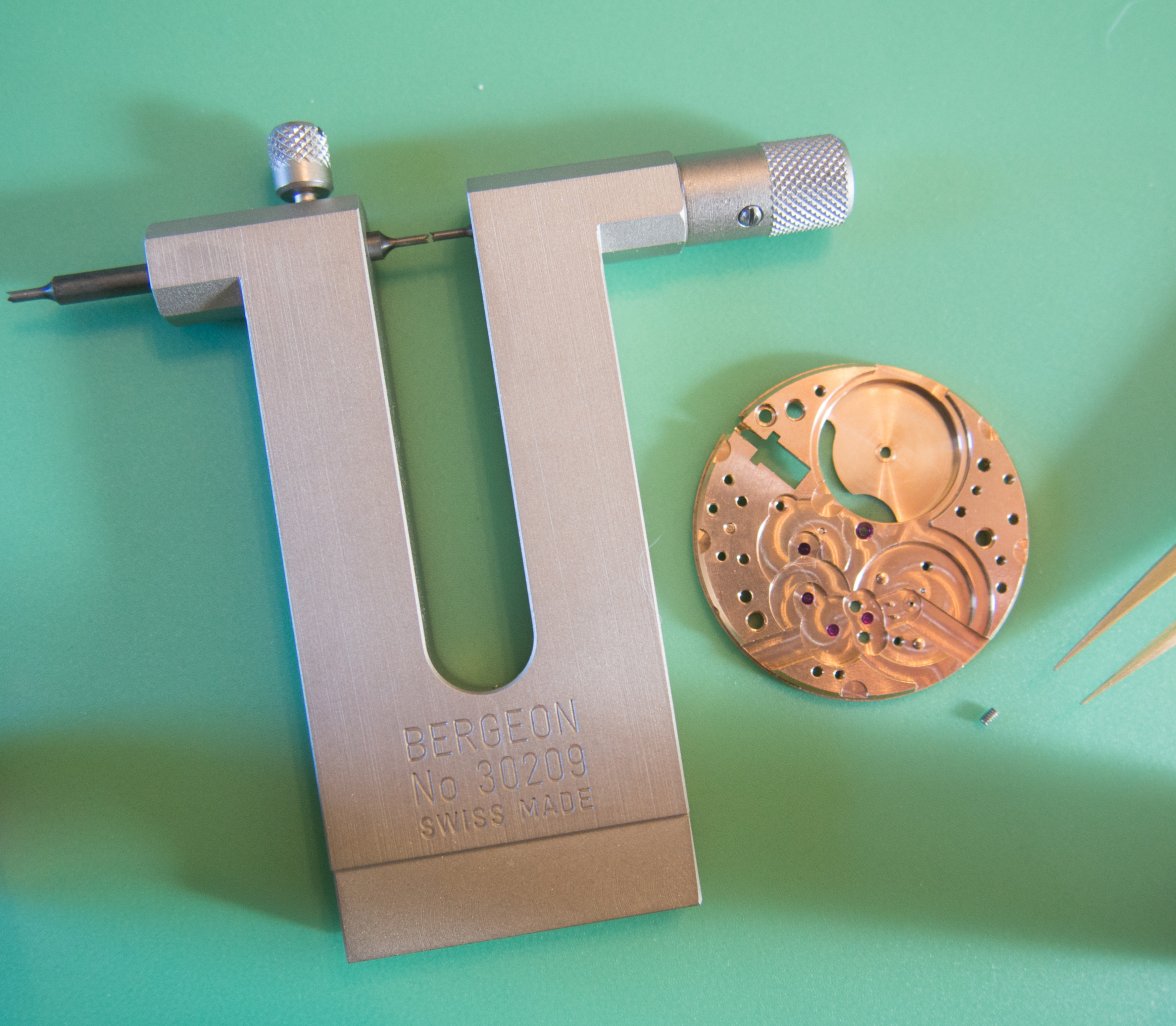
I have ordered the Bergeon 30209 tool to extract the broken half ...........................

Why didn't you go the cheap way and use an alum solution to dissolve the broken screw?

https://omegaforums.net/threads/removing-a-broken-stem-from-a-speedmaster-crown.61416/#post-766008

Thanks to @Archer I've used this method a couple of times with great success.
 
Posts
110
Likes
79
Why didn't you go the cheap way and use an alum solution to dissolve the broken screw?

https://omegaforums.net/threads/removing-a-broken-stem-from-a-speedmaster-crown.61416/#post-766008

Thanks to @Archer I've used this method a couple of times with great success.
Well Jim - I guess it's because I was looking for a tool - and the 30209 seemed to be it. 😀
Having said that, I may indeed use that method if the piece to be extracted is stuck too tight for the 30209.
I was very happy to learn of all the alternate methods and ideas that members posted.
I should have the 30209 this afternoon - so will know today if it's going to do the job.
 
Posts
110
Likes
79
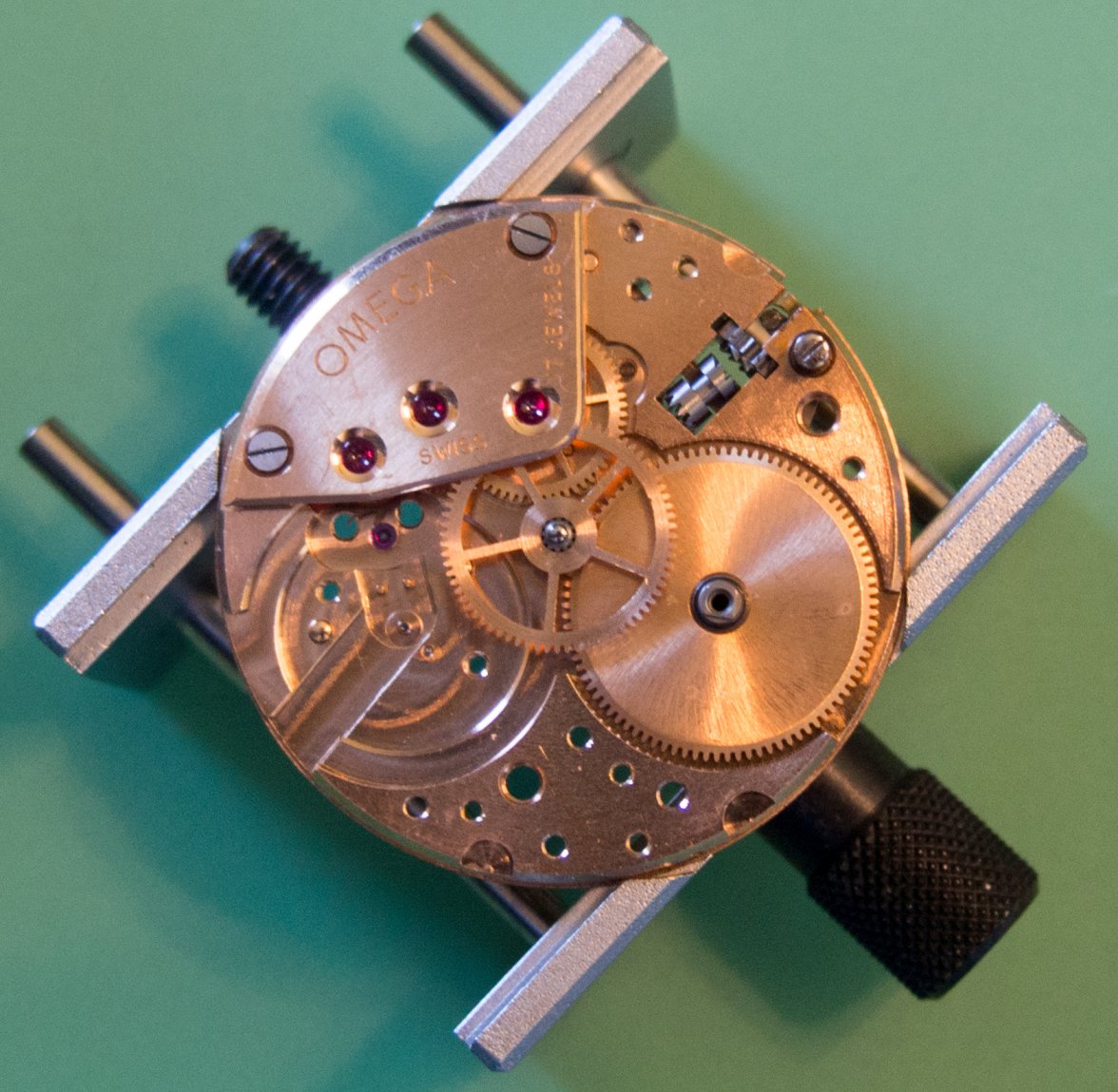
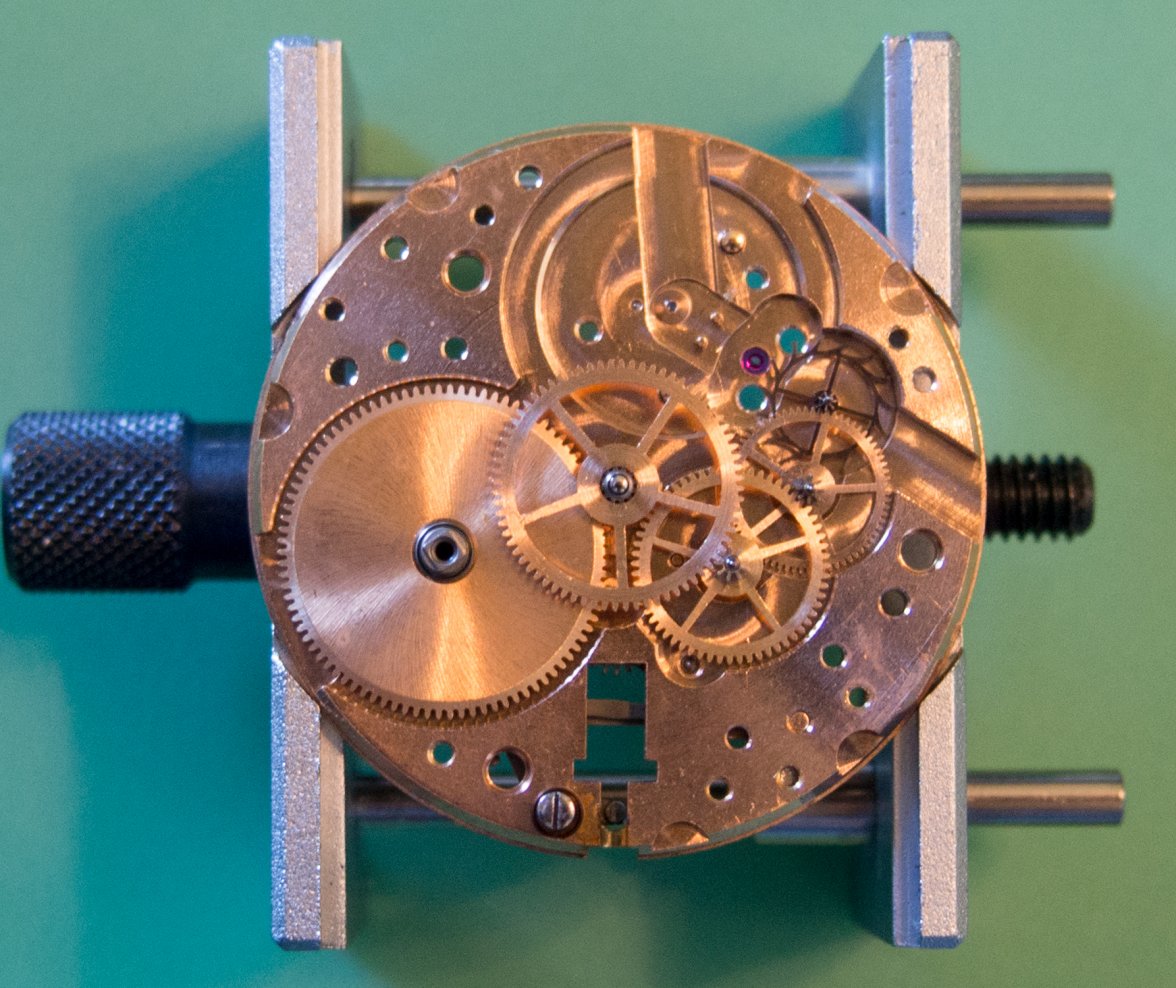
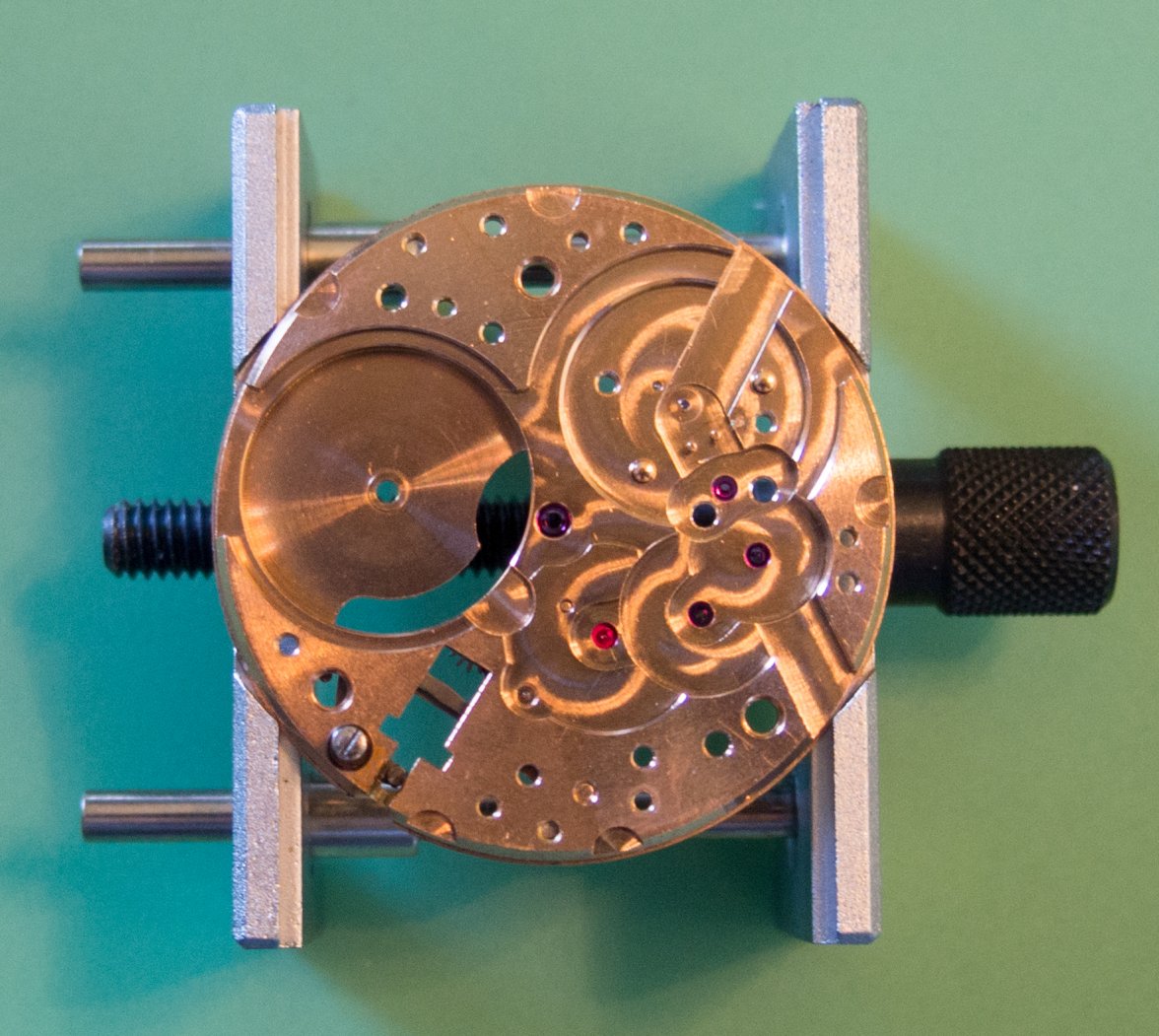
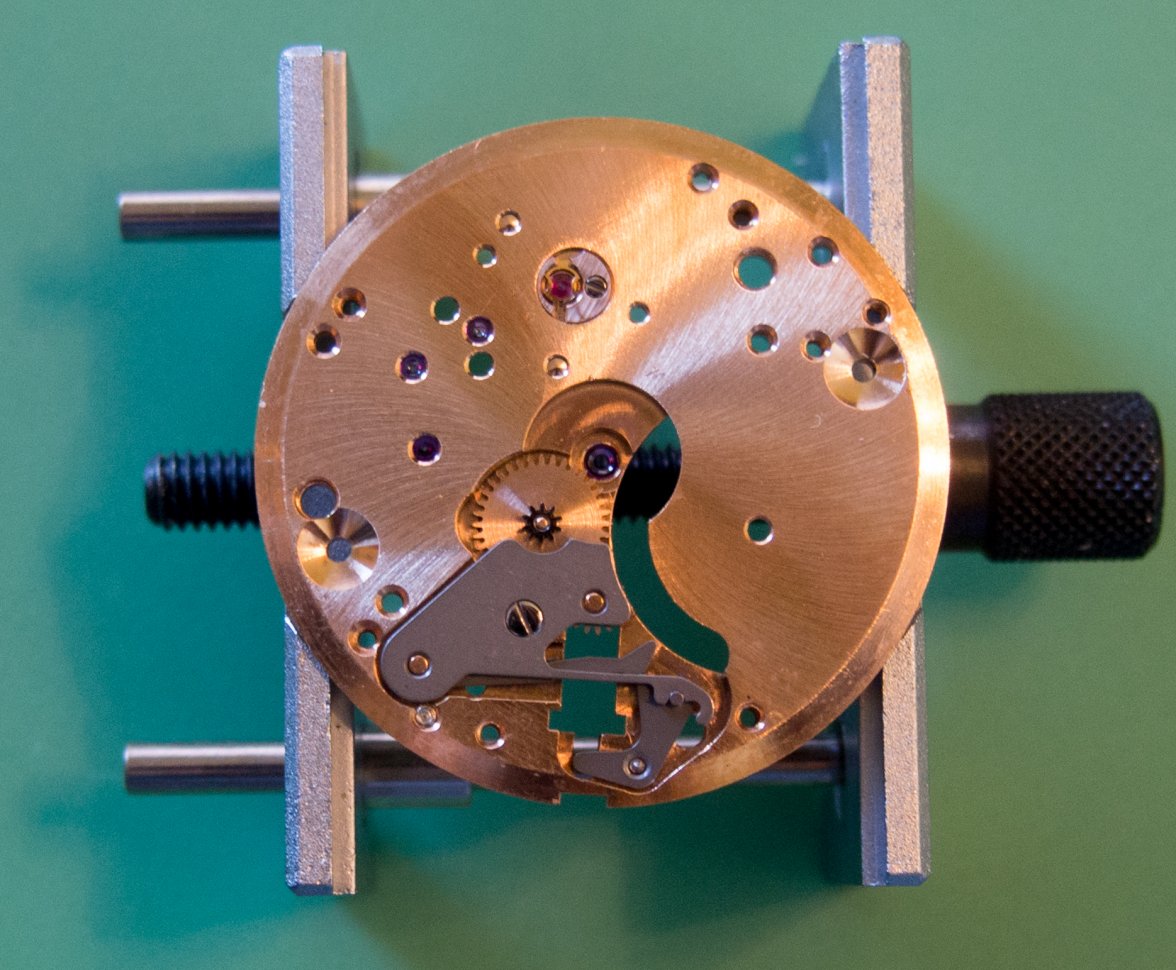
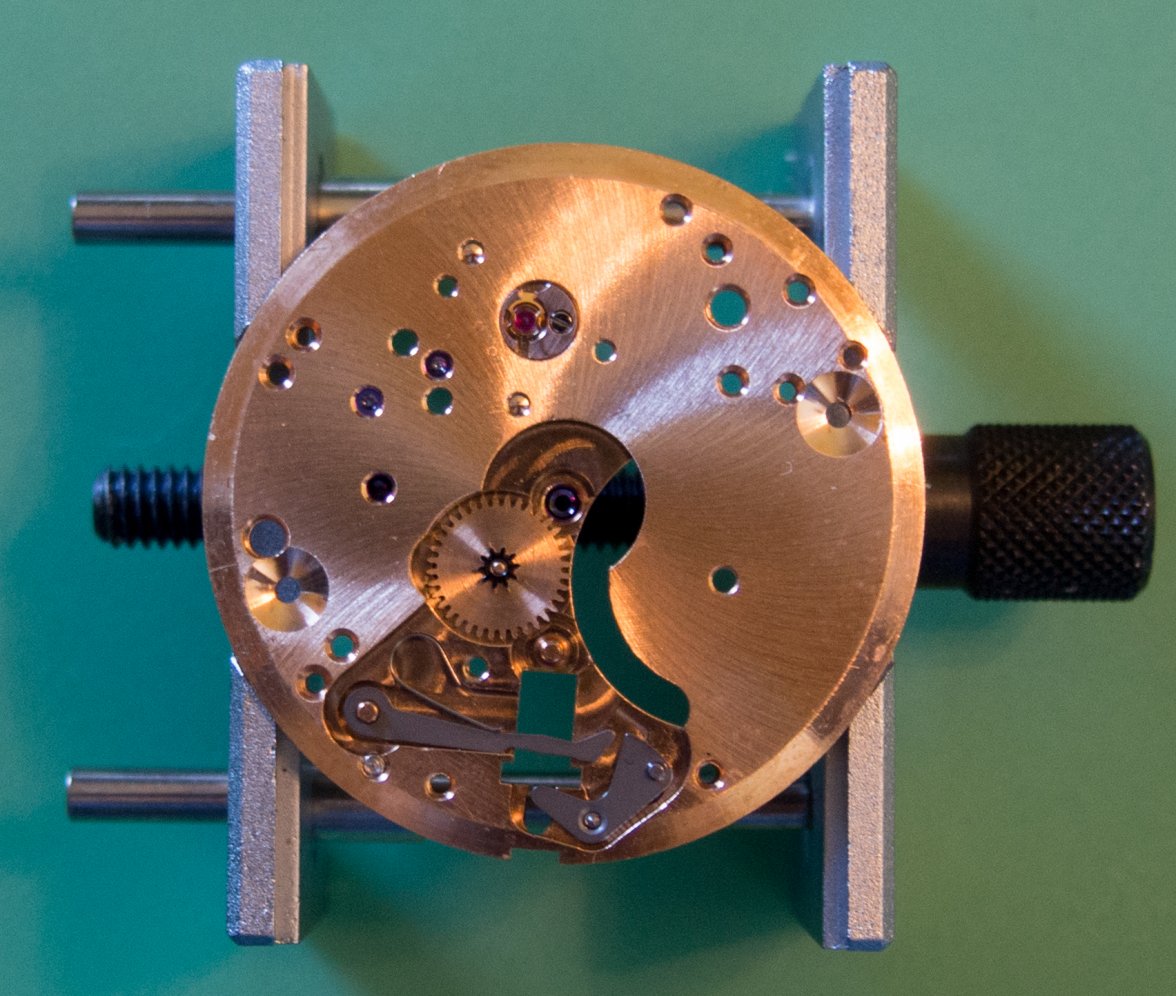
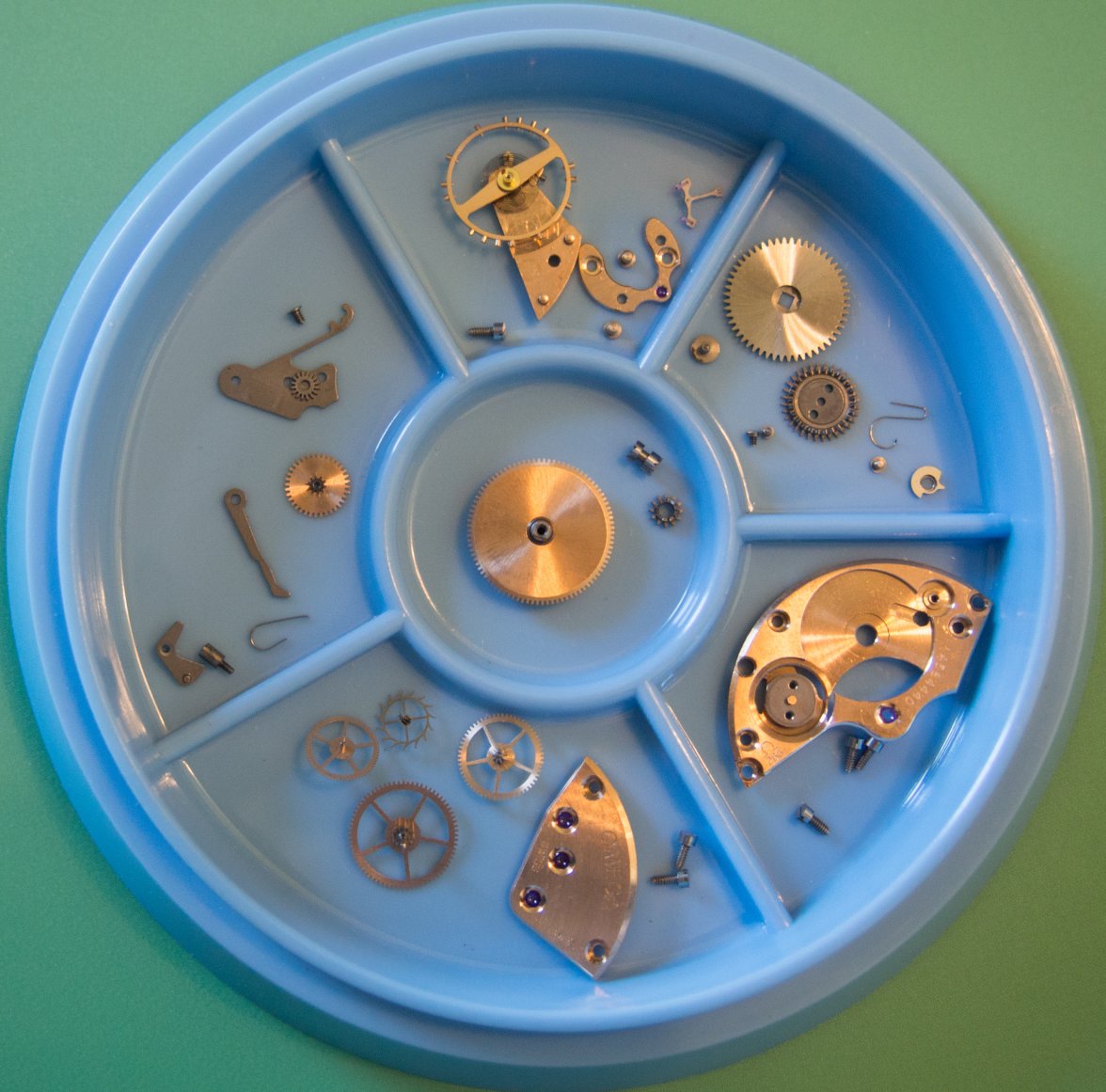
So, here are some pics from last weekend's strip down.

Apologies for the less than entertaining text and poor photography. I have purchased a small tripod so that I won't have to hand hold the camera. That should help take some of the motion blur out.

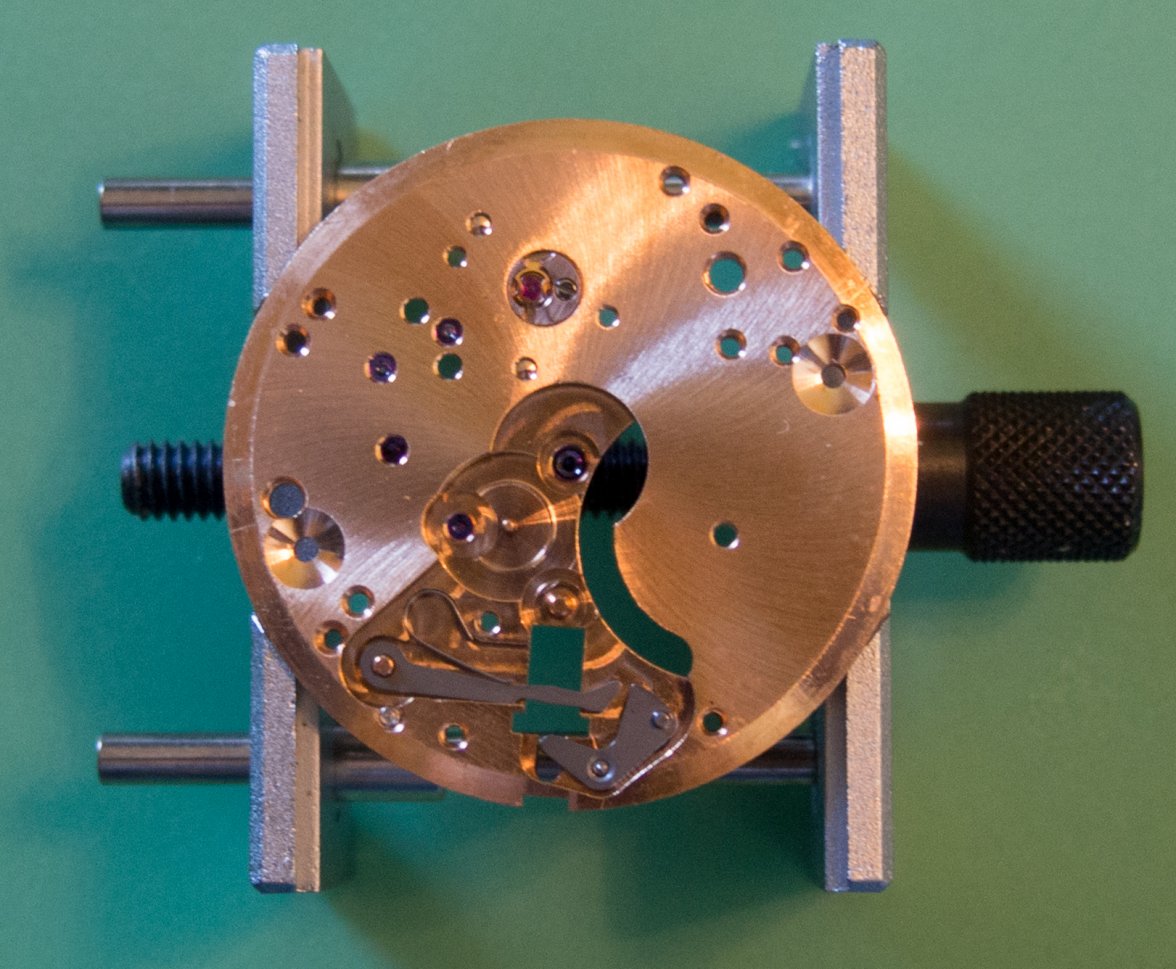
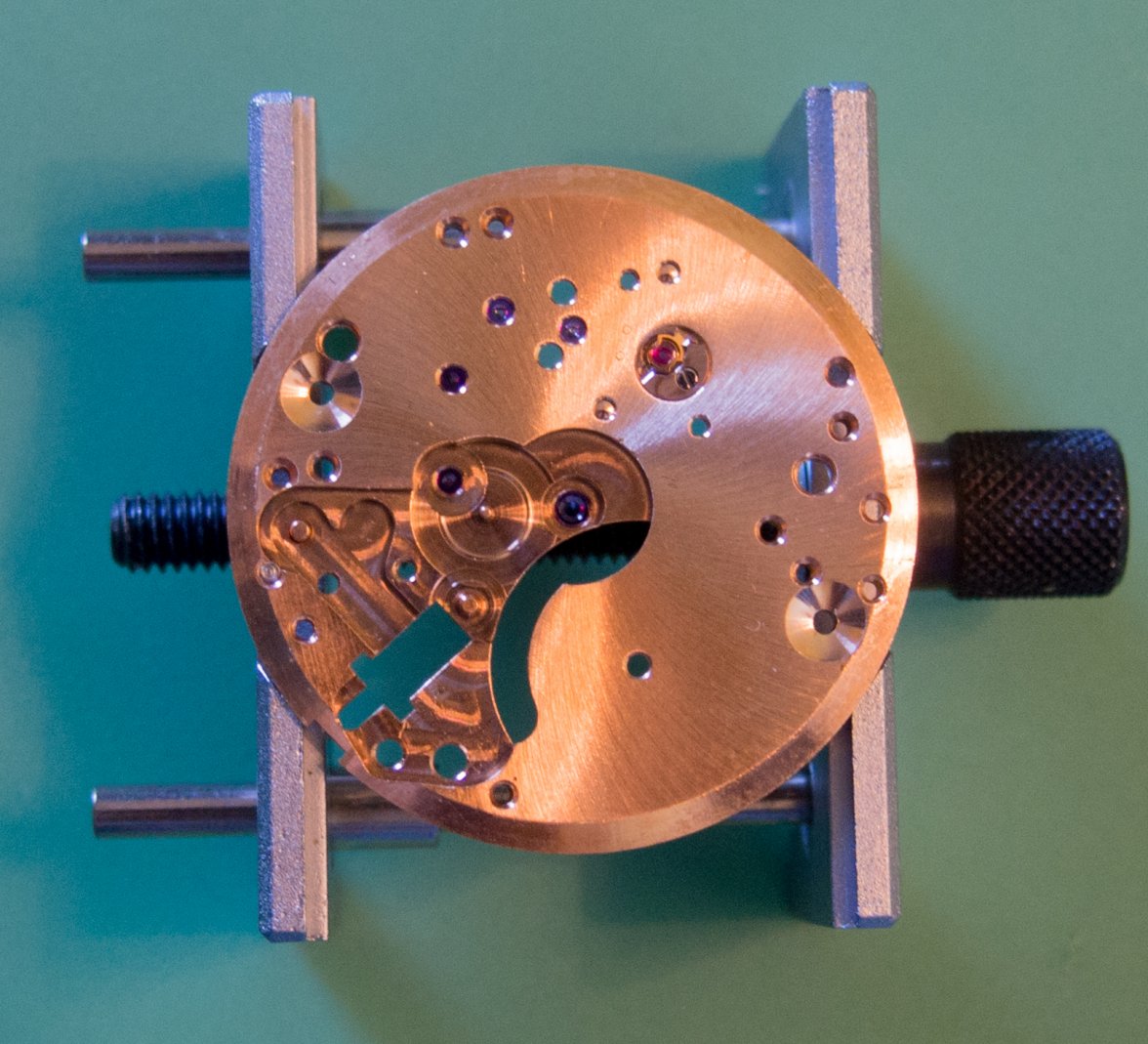
Balance removed...


Pallet bridge and fork removed...


Ratchet wheel removed...


Crown wheel removed...


Barrel bridge removed...


Train bridge removed...


Train wheels and barrel removed...


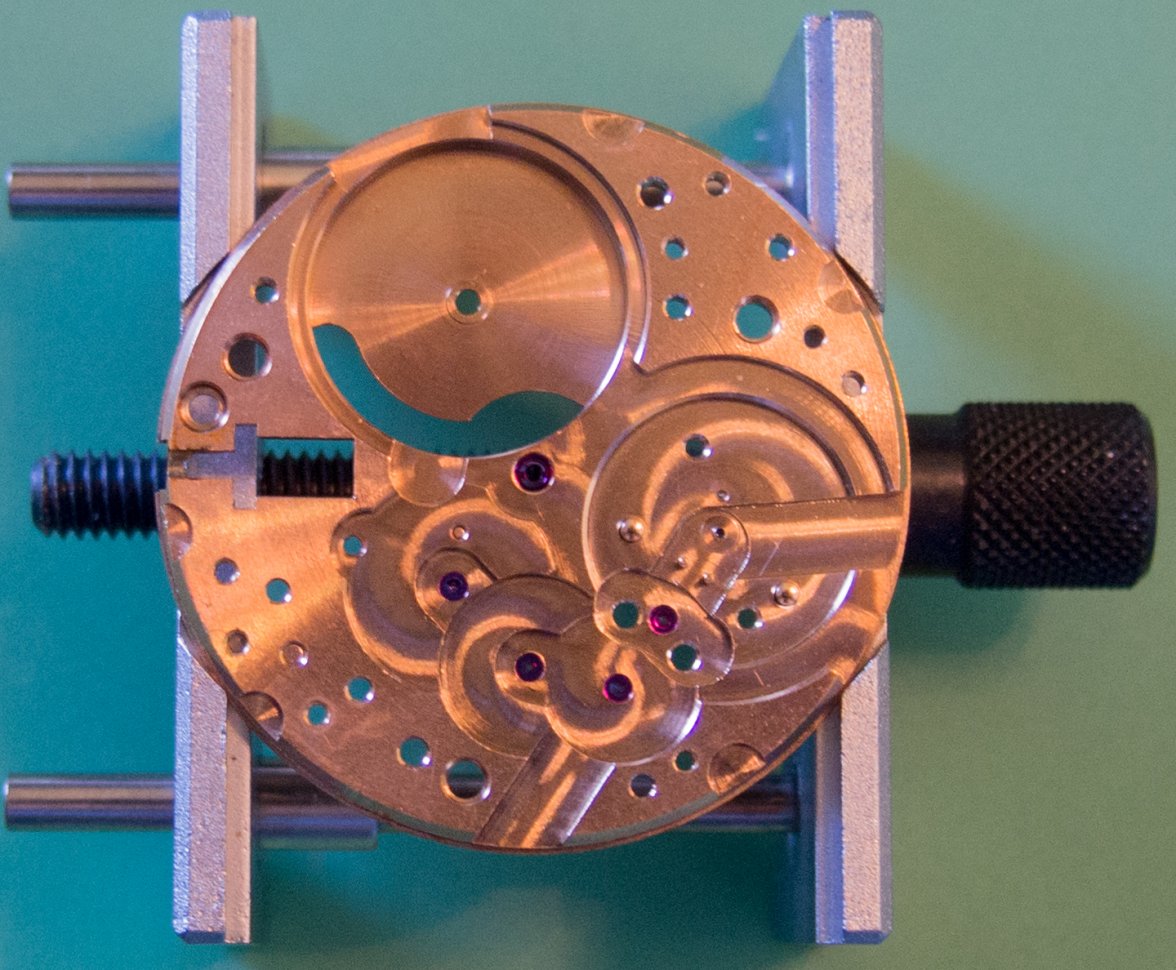
Bock over to the front to remove the rest of the keyless works...


Setting bridge (and intermediate wheel) removed...


Minute wheel removed...


Setting lever, return bar, and return bar spring removed.


And another short of the bottom with everything removed.


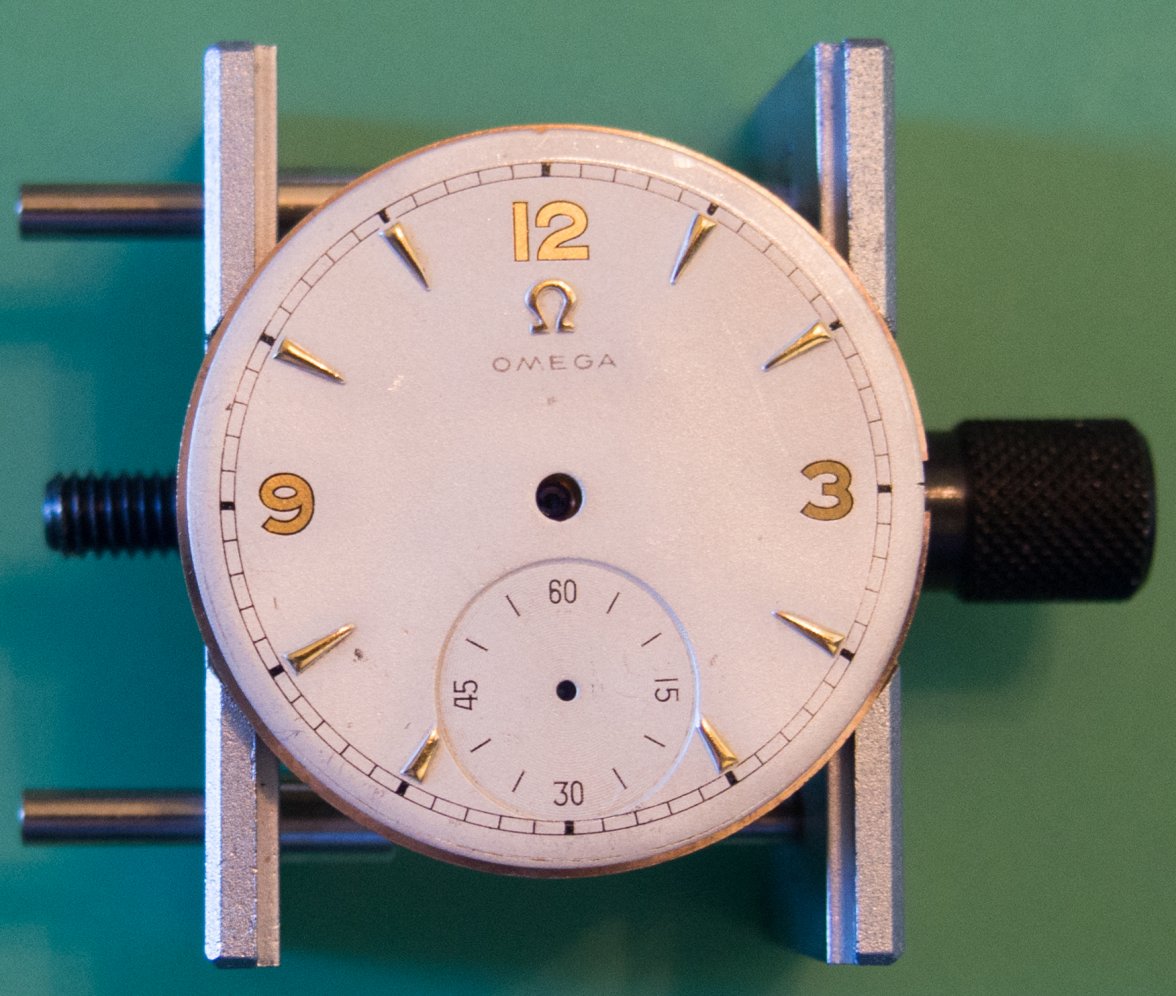
Here is an updated pic of the dial. All of the original damage is still there, but I wanted to remove the grime. I will enjoy the watch much more with the dial cleaned. Perhaps there are some that would say I have damaged it by removing some the the natural patina. ???


Now just waiting on the screw extractor to see if that's going to remove the broken case screw.

-Paul
 
Posts
15,224
Likes
44,704
I don’t like these “dog” screws. On occasion, you find that the screw cannot be fully tightened, or otherwise over-tightened to permit the screw head to engage with the edge of the case. When that happens, it is necessary to swap the position of the case screws in hopes that solves the problem.

At what point did you remove the shock resist jewels for cleaning and rinsing?
 
Posts
110
Likes
79
I don’t like these “dog” screws. On occasion, you find that the screw cannot be fully tightened, or otherwise over-tightened to permit the screw head to engage with the edge of the case. When that happens, it is necessary to swap the position of the case screws in hopes that solves the problem.

At what point did you remove the shock resist jewels for cleaning and rinsing?

I haven't yet. I generally do that at the end of the reassembly. After everything else has been lubricated.

I'm sure it's just habit from what I saw/did first. My "training" is from Mark Lovick's on-line courses.

But I did think about that this morning as I was posting the pictures, that I might as well go ahead and do that.

-Paul
 
Posts
110
Likes
79
Just oiled the end-stones.

Perhaps this is a little late - but I assume that 9010 is okay for these end-stones?

-Paul
 
Posts
29,196
Likes
75,443
Just oiled the end-stones.

Perhaps this is a little late - but I assume that 9010 is okay for these end-stones?

-Paul

Yes.
 
Posts
110
Likes
79
Well Jim - I guess it's because I was looking for a tool - and the 30209 seemed to be it. 😀
Having said that, I may indeed use that method if the piece to be extracted is stuck too tight for the 30209.
I was very happy to learn of all the alternate methods and ideas that members posted.
I should have the 30209 this afternoon - so will know today if it's going to do the job.

And the 30209 did not disappoint...

The broken piece came out without a fight. I may have been able to turn that with a drill bit. But not unhappy about buying the 30209.

Now I'm just waiting on a spring...

-Paul
 
Posts
110
Likes
79
Possible alternate mainspring?

All, still waiting for Cousins to be resupplied with the correct mainspring (1.5 x 0.135 x 340 x 11) [ thank you @JimInOz ]. Which they now show stock coming December 4th.

I did find something very close to this specification at Otto Frei. Their part # MS-69P (1.5 x 0.13 x 343).
Any thoughts on using a 0.130 thick spring in place of a 0.135? Is a slightly thinner (and very slightly longer) spring a possible substitute? Or is the 0.005 mm difference in thickness too much in the world of mainsprings?

The fact that they make and measure them down to 0.005 mm would indicate that it is significant and should not be substituted - but still thought I'd ask.

-Paul
Edited:
 
Posts
29,196
Likes
75,443
Possible alternate mainspring?

All, still waiting for Cousins to be resupplied with the correct mainspring (1.5 x 0.135 x 340 x 11) [ thank you @JimInOz ]. Which they now show stock coming December 4th.

I did find something very close to this specification at Otto Frei. Their part # MS-69P (1.5 x 0.13 x 343).
Any thoughts on using a 0.130 thick spring in place of a 0.135? Is a slightly thinner (and very slightly longer) spring a possible substitute? Or is the 0.005 mm difference in thickness too much in the world of mainsprings?

The fact that they make and measure them down to 0.005 mm would indicate that it is significant and should not be substituted - but still thought I'd ask.

-Paul

Mainspring strength varies as a cube of it's thickness, so even small differences can make a big impact...
 
Posts
110
Likes
79
Mainspring strength varies as a cube of it's thickness, so even small differences can make a big impact...

@Archer - I'll take that to mean - shouldn't substitute. 😀 (yes/no?)

But good to have that additional information about the strength and how it varies in relation to thickness.

I must say, that is quite surprising given the range of spring thickness that I see listed. I wouldn't expect movements to accept (require) that wide range of power.

Thank you sir!

 
Posts
29,196
Likes
75,443
@Archer - I'll take that to mean - shouldn't substitute. 😀 (yes/no?)

But good to have that additional information about the strength and how it varies in relation to thickness.

I must say, that is quite surprising given the range of spring thickness that I see listed. I wouldn't expect movements to accept (require) that wide range of power.

Thank you sir!

I can't tell you what to do, but if it were me, I would wait for the right spring. Keep in mind these are older movement, parts are likely worn slightly, and even with the right spring you may struggle to get amplitude. If you put in a spring that you know is already weak, then you are certainly not helping yourself.

Thickness is the least tolerant to change of the three mainspring dimensions. you can often get away with one where the width might be slightly less, or the length ay be a bit long or short, but strength is the one you don't want to compromise on.
 
Posts
4,991
Likes
18,535
OF is just great. I enjoy reading these kind of threads. Even though I dont understand them... Keep it up! 👍