What’s on your watchmaker's bench today?

Posts
2,189
Likes
2,407
You're braver with the tools than I, good luck!
I actually might skip... all of the sewing needles in my wife's needle drawer are WAY too large to spin the regulator. THis one might just be a 'runs not bad' for now 😀
 
Posts
12
Likes
1
Those Enicar chronographs are gorgeous, what condition did you find the movement in?
 
Posts
2,189
Likes
2,407
I actually might skip... all of the sewing needles in my wife's needle drawer are WAY too large to spin the regulator. THis one might just be a 'runs not bad' for now 😀


In a moment of ~bordem~ ~stupidity~ inspiration, I decided to try adjusting the collet without removing it from the balance cock. I just put it on a spike, and carefully put a screwdriver down from the top and tweaked it. It took about a half dozen tries, but I managed to just get silly--lucky all at once.
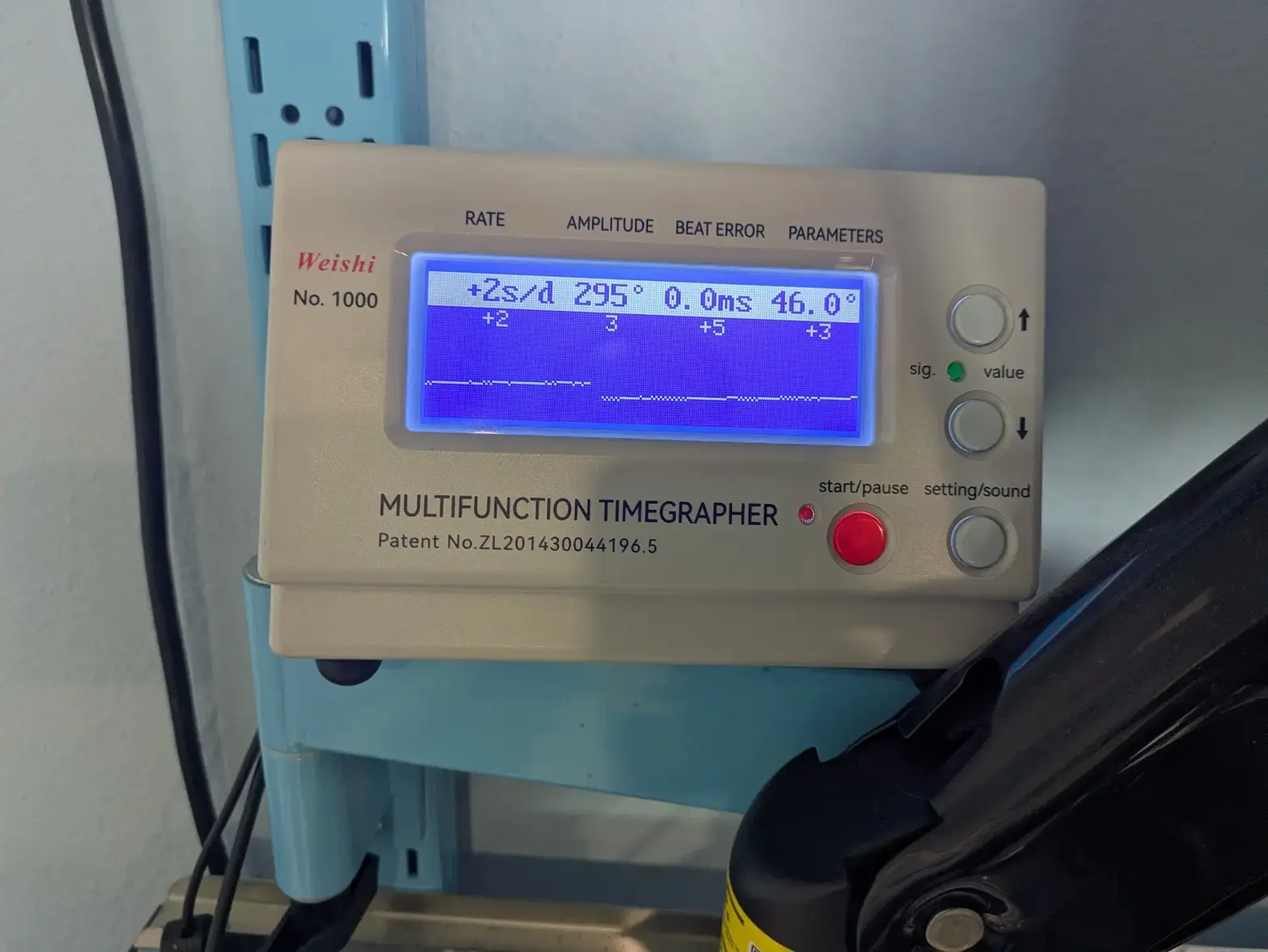
Dial up is ~+10s/d, -15amp, and 0.1ms beat error (I figure the two are a rounding error apart). So way better than I am typically capable of 😀


Posts
29,822
Likes
77,184
I just put it on a spike, and carefully put a screwdriver down from the top and tweaked it.
This is how I do it most of the time - I would only remove the balance if there was no clear path through the balance spring to the collet.

A screwdriver works, and sometimes I use that, but just be aware that it can spread and loosen the collet over time if the collet is very tight on the staff. In some cases it can also cause the collet to lift up from it's seated position, so that is something to watch for.

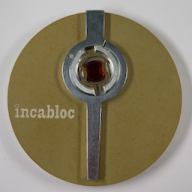
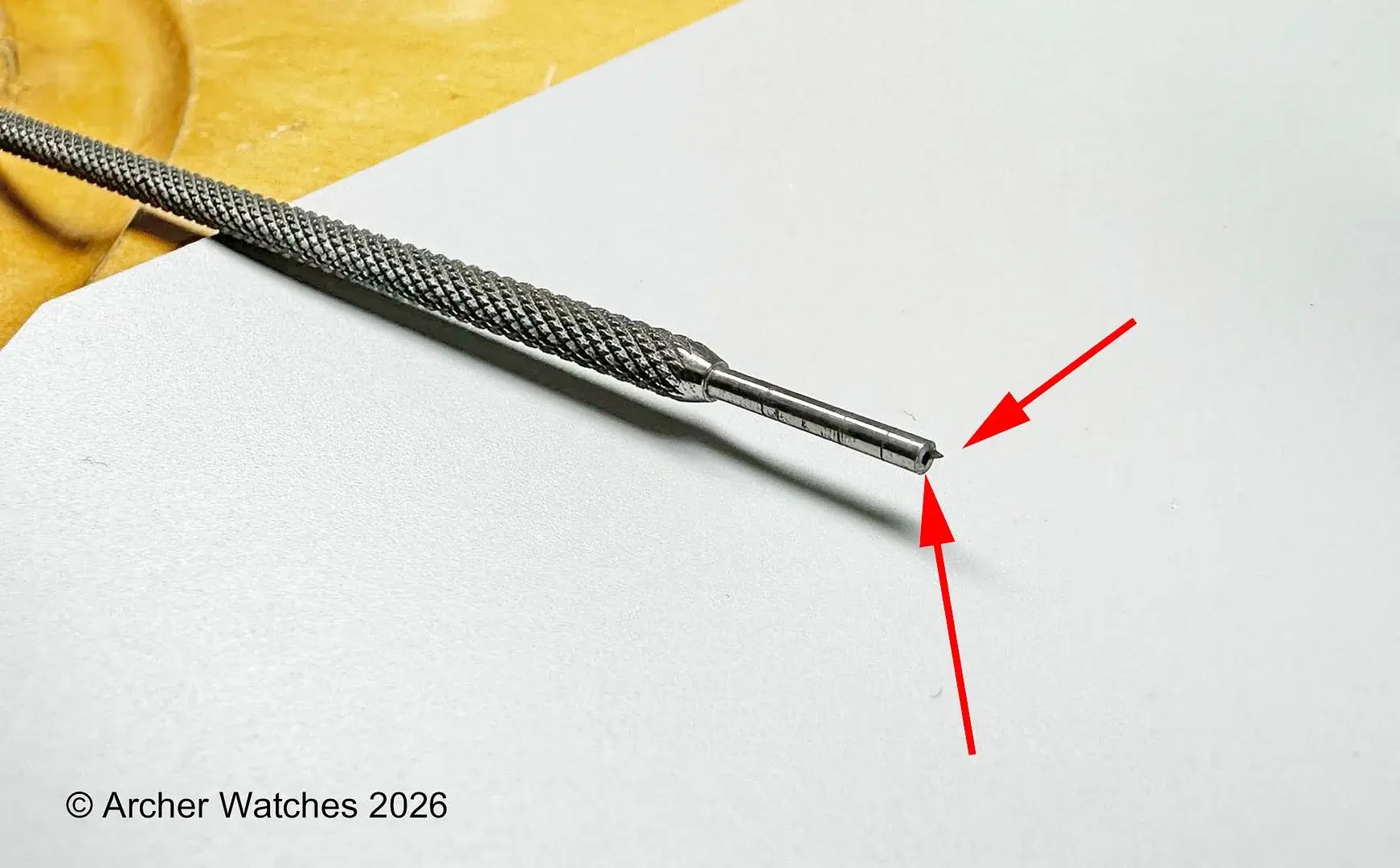
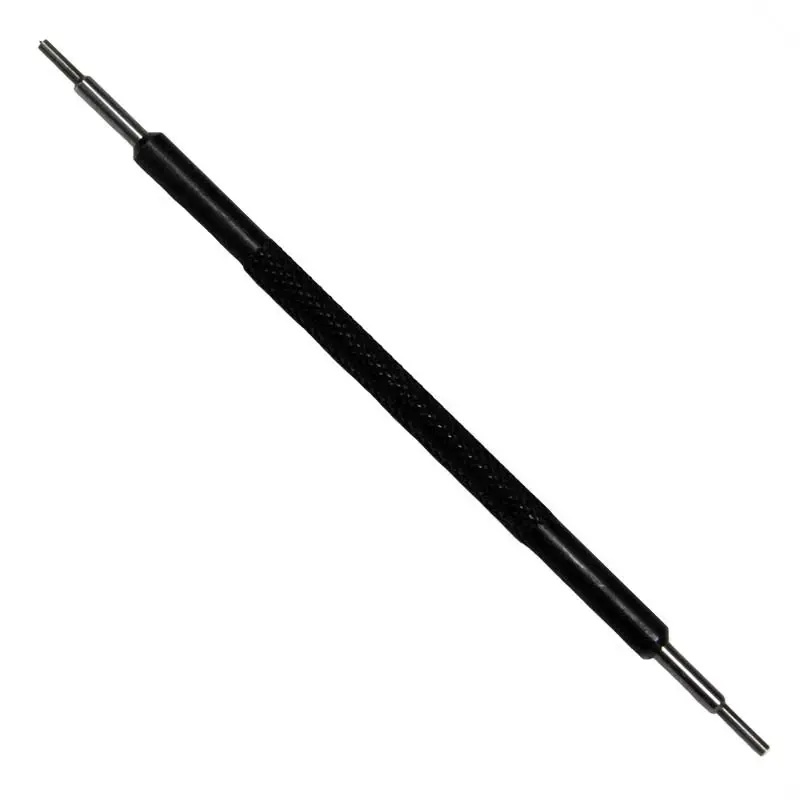
There are tools specifically for turning the collet:


There is a hole in the center for the staff, and the little spike goes in the slot in the collet - this helps keep the collet down on the staff while turning it. Not sure if these collet tools are still being made as I bought mine used, but they are out there...I have a few different sizes.

 
Posts
2,189
Likes
2,407
This is how I do it most of the time - I would only remove the balance if there was no clear path through the balance spring to the collet.

A screwdriver works, and sometimes I use that, but just be aware that it can spread and loosen the collet over time if the collet is very tight on the staff. In some cases it can also cause the collet to lift up from it's seated position, so that is something to watch for.

There are tools specifically for turning the collet:


There is a hole in the center for the staff, and the little spike goes in the slot in the collet - this helps keep the collet down on the staff while turning it. Not sure if these collet tools are still being made as I bought mine used, but they are out there...I have a few different sizes.
Good notes about the screwdriver!

I've seen those tools! I actually tried to pick up a few about 4-5 months ago and it was either "wouldn't ship because europe" or out of stock. I should go looking again. Obviously they are pretty expensive. Seems easy enough to make from tube stock! Though this is a task I've done pretty rarely, so shrug
 
Posts
875
Likes
3,684
ooh, neat! Any idea which ones are a 'good' size? It would be nice to not buy the whole set particularly if 1 size was a 'never use'.
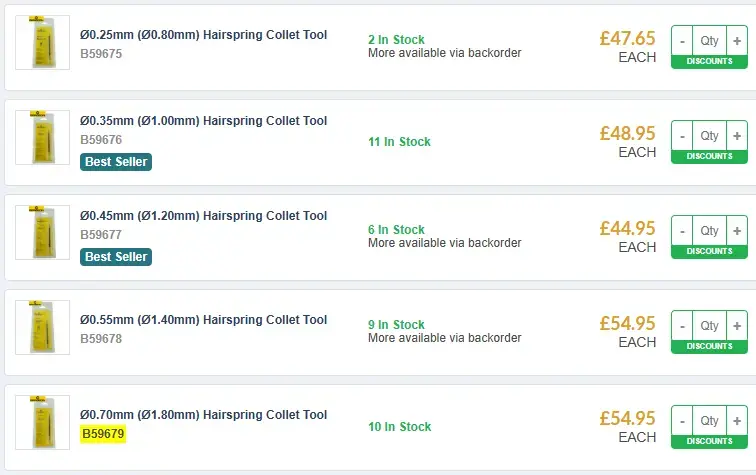
Good question that I don't have an answer for, but I'm curious to know as well. Maybe Al can share which size he uses for vintage Omegas like the 50X movements.

This the Bergeon version of the tool from Cousins. I'm assuming they sell the 1mm and 1.2mm sizes more than the others.
 
Posts
29,822
Likes
77,184
I just grab one and eyeball the size to make sure it looks right. It’s mostly based on the hole size and the size of the staff. If you measure some staffs you commonly work with, you can determine what the best size is. Doesn’t have to be an exact fit.
 
Posts
156
Likes
139
thanks for sharing this tool. I have been doing it with a driver and have never really enjoyed that experience.
I'm currently servicing a omega and had a question pop in my head today...

Is there a tool set that are made for omega bridge pry points? (imagining something that mates with the arched form rather then a square one).
I've always used a standard flat head driver heads to help pry but I know that I'm leaving small marks when I do this. Something I can make myself but would be great if there was something build for this job that is available.
Edited:
 
Posts
2,878
Likes
4,596

Something a bit different. Cleaning up a mechanical bird mechanism, Oiling it and dusting things off. I have a number of these, This one I keep uncovered for when I would give lectures on automata.

Tomorrow I am giving a talk titled "A child's history of AI." A subject I have been researching since the maker faire last fall.

This one is sponsored by the local maker space, and called a S.T.E.A.M discovery festival.

I also have my crank organ which I have been bringing for over a decade.

I would do a bit at the Dickens fair noting how Ada Lovelace's abstractions evolved the music box into a cell phone. I would start by stating she told me to connect my music box to the telegraph?

... the wires would get all tangled, would be my implied response.

Her counter argument would be that she wanted to study with Michael Faraday who said electricity and magnetism were the same thing and the music could be sent wirelessly.

The next part would be about sending pictures through the transatlantic cable. And so on. Relating how the punched holes in the paper could not simply represent words. They could be sounds or colors.

For this lecture I want to explain Time space transforms. Which involve the sums of sin and cos waves. So the birdie is the perfect example. In a lot of way neural network activation functions can be modeled as cam follower systems.

To the Romans and the 18th century audience, what rediscovered the technology, Such toys were much like AI is now. They seemed alive.
 
Posts
1,052
Likes
8,018
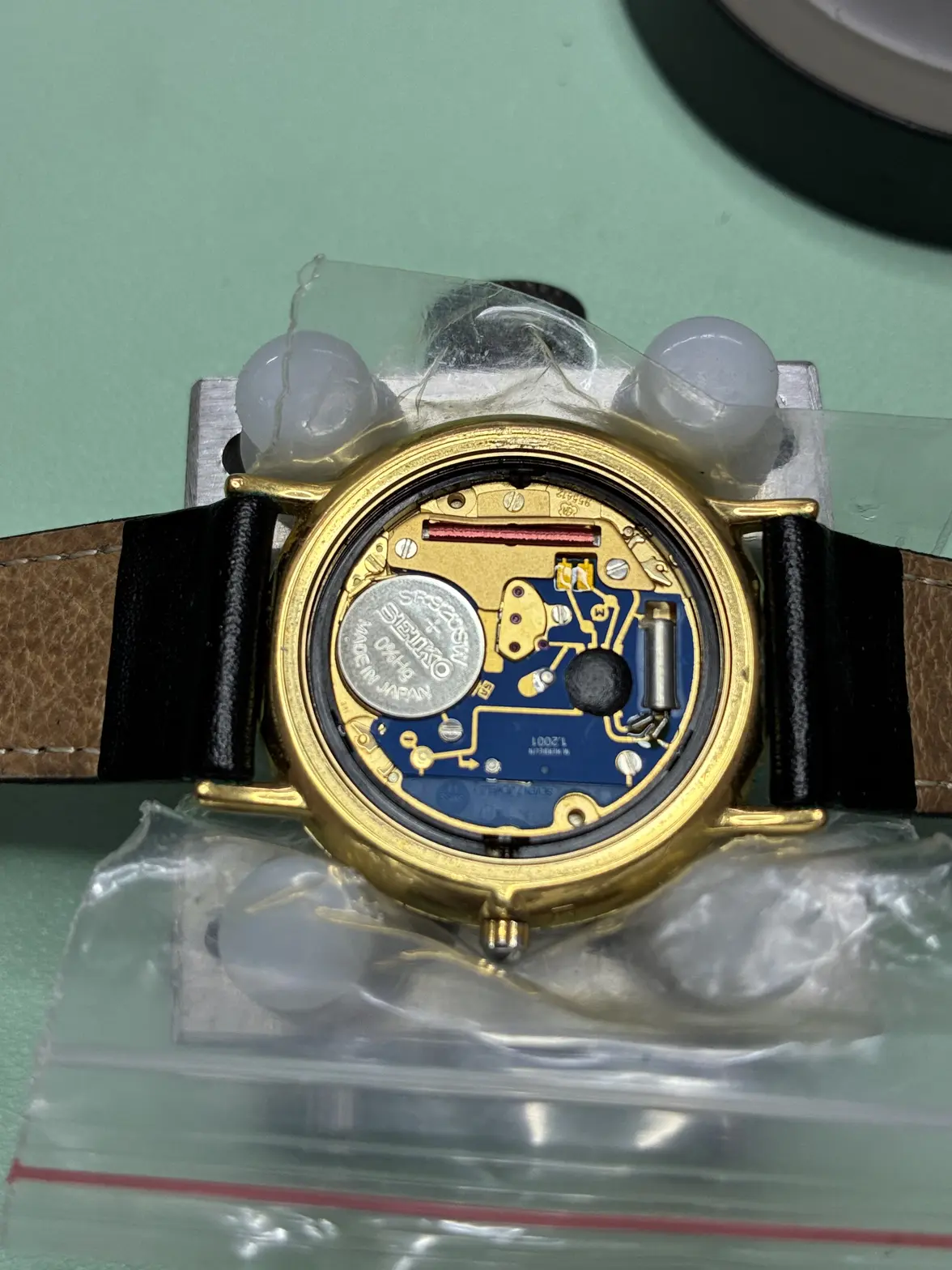
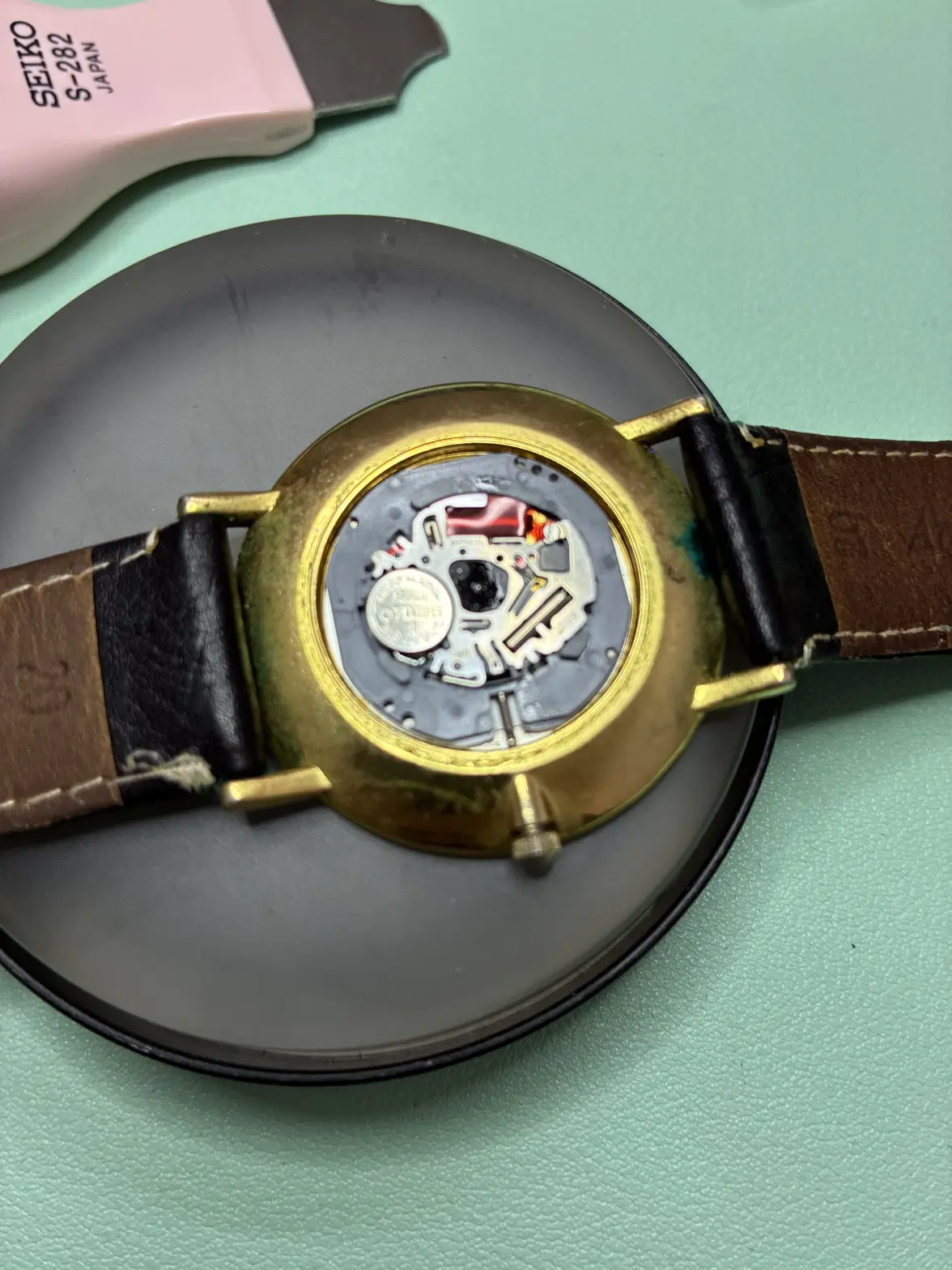
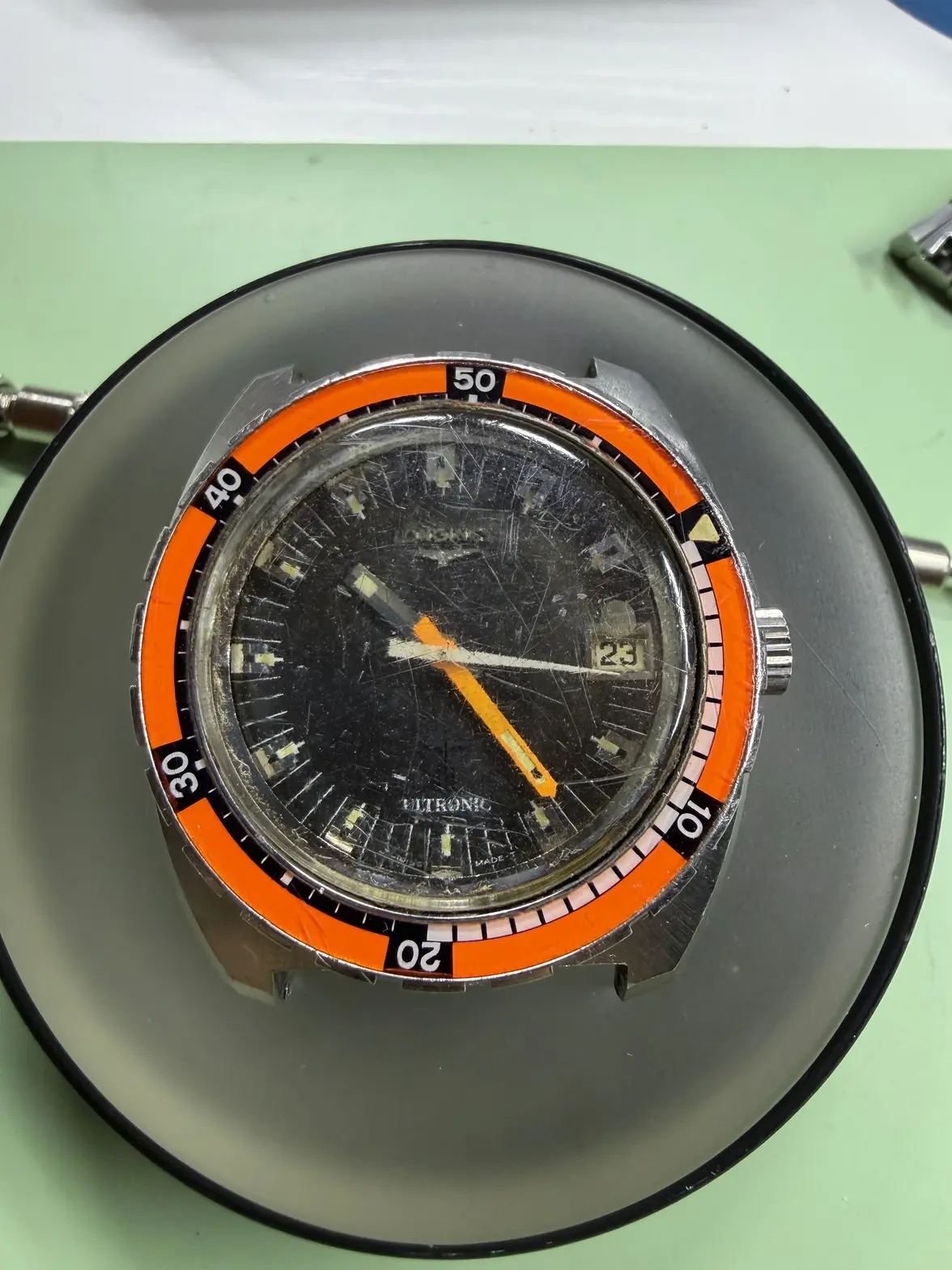
Just two quartz watches, changing batteries for a friend and a quick clean. One a longines and the other a Herbelin. The movement in the Herbelin is far superior to that in the Longines, which surprised me, I guess Longines really cheaped out back in the quartz days.
 
Posts
29,822
Likes
77,184
thanks for sharing this tool. I have been doing it with a driver and have never really enjoyed that experience.
I'm currently servicing a omega and had a question pop in my head today...

Is there a tool set that are made for omega bridge pry points? (imagining something that mates with the arched form rather then a square one).
I've always used a standard flat head driver heads to help pry but I know that I'm leaving small marks when I do this. Something I can make myself but would be great if there was something build for this job that is available.
No - there's no specific tool. Using screwdrivers is generally frowned upon because as you have found, it leaves marks. I generally use my tweezers to lift bridges off - nt necessarily only lifting from the slot they provide you, but lifting the bridge from another location to loosen it, etc.

If there is a need to use the slot and tweezers aren't doing the job, I have made a small brass tool to get in there and aide lifting the bridge. Just a wedge shape, but you don't ever twist it - just lift.
 
Posts
2,878
Likes
4,596

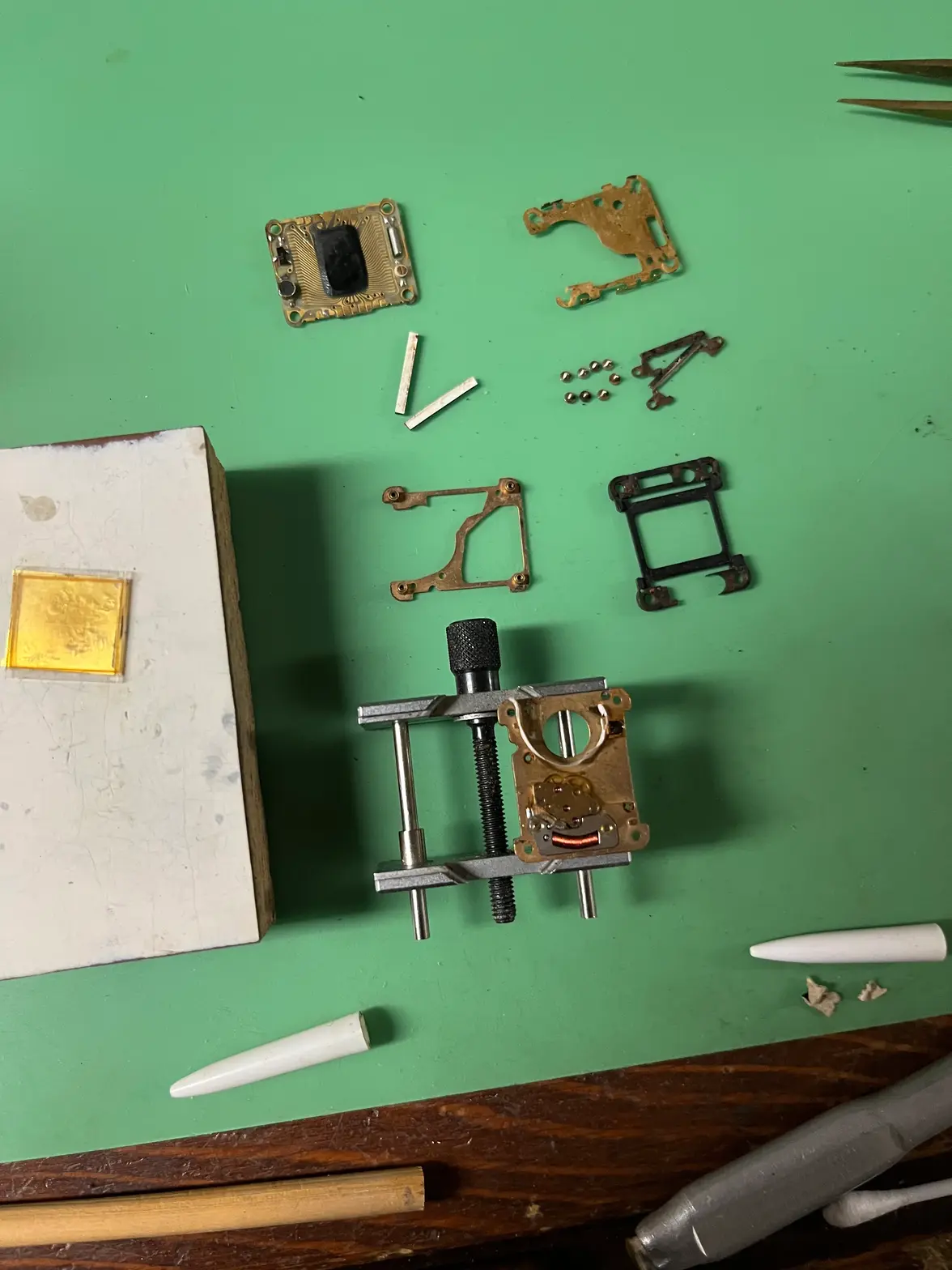
1655 with the electronics disassembled.

Looks like the issue was water damage. There was still liquid between the display and the reflector. I do not think it is the nematic crystal fluid as the glass seals look to be intact.

The gunk on the battery was cardboard used to wedge it in. One screw which hold the + battery contact and retains the battery is rusted in place. I put some penitrating sili-kroil on it. This also holds a strip of plastic coated insulating paper, which is basically parchment paper.

Part of the plastic retainer frame, what holds the display, has disintegrated. Sadly this was the part where the serial number sticker was. Not sure why they did not engrave this onto a metal part. Now this information is irrevocably lost. Part of the retaining clips also seem to be missing.

The spotting on the display does seem to be between the glass plates. If I can figure out a way to connect tiny probes, I can see if the nematic fluid is still active. If I hold the glass at an angle I can see the plate contacts.

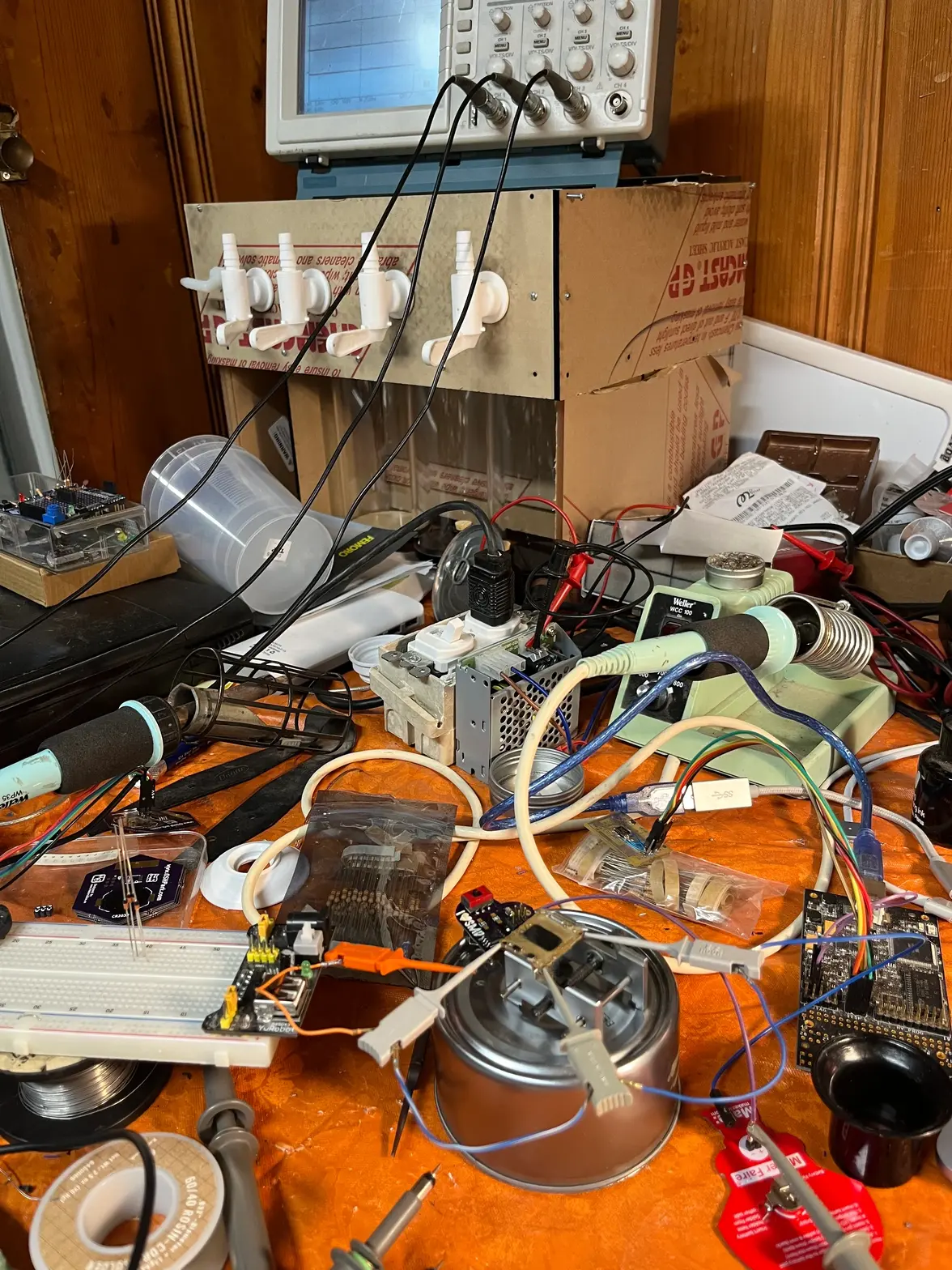
The whole point of this project is to revive my old LCD testing setup. Where I was probing unknown displays. That is a subject unto itself.

The circuit board looks to be in better shape than the one offered on line. (I see the seller made me an offer on theirs.) There is some obvious rework on one of the traces. Everything is gold plated, although this would amount to a microscopic amount of gold.

Modern chip packages can be moisture sensitive. So are baked before re flow soldering. This is more to keep them from blowing up when the steam escapes. Not sure if the epoxy potting compound is water resistant. Most of the water damage is around the chime speaker and the transistor what powers it.

From skimming the literature, this is an hourly chime and not an alarm. There are quite a few functions this can do as there are 5 contact buttons. There are also a number of test points on the side of the PCB.

The analog side looks to be in good condition. There is no signs of rust or water damage. The coil seems to be in good shape. I have not measured it yet as it was pretty late by the time I got this apart.
 
Posts
2,189
Likes
2,407
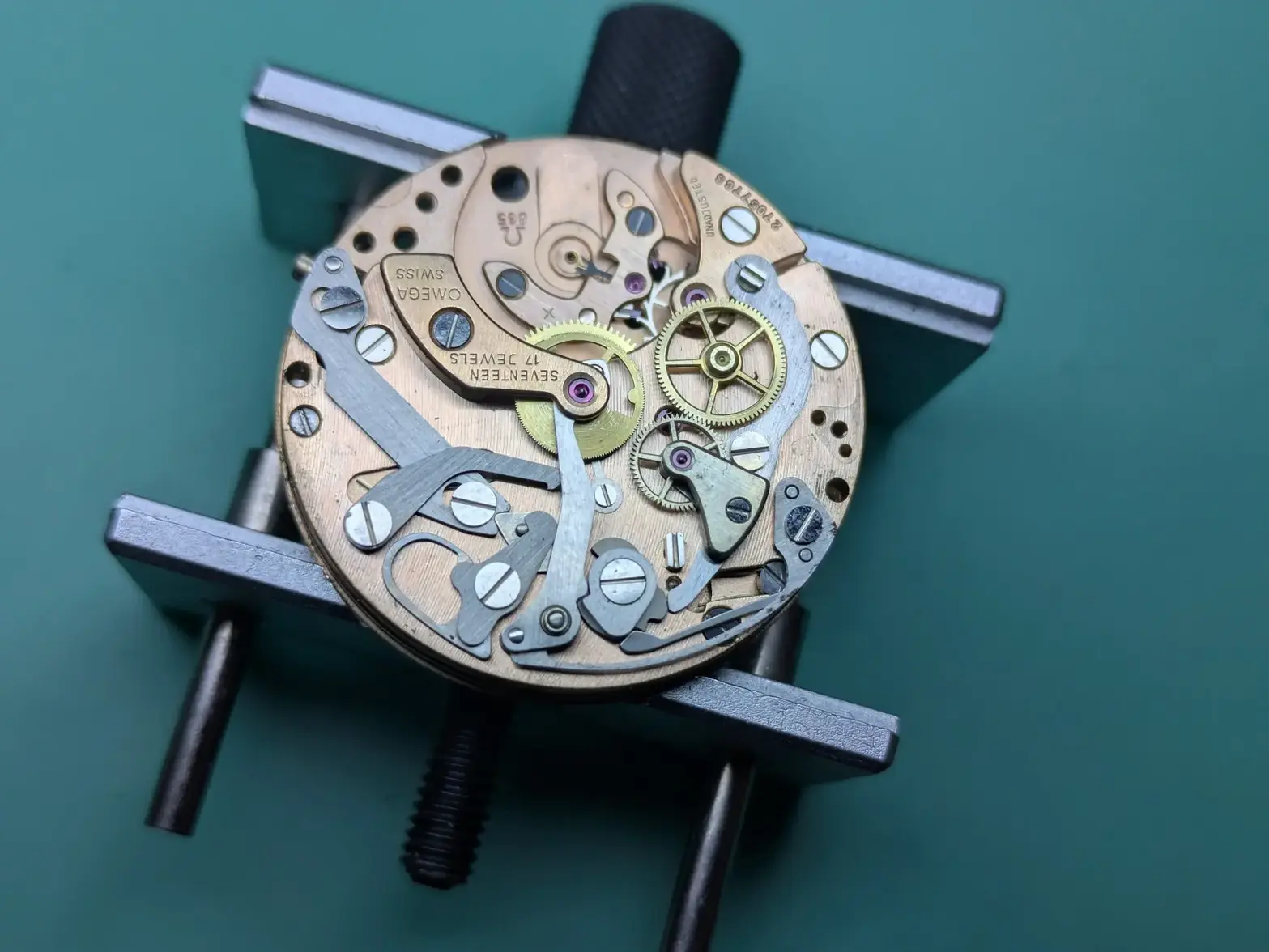
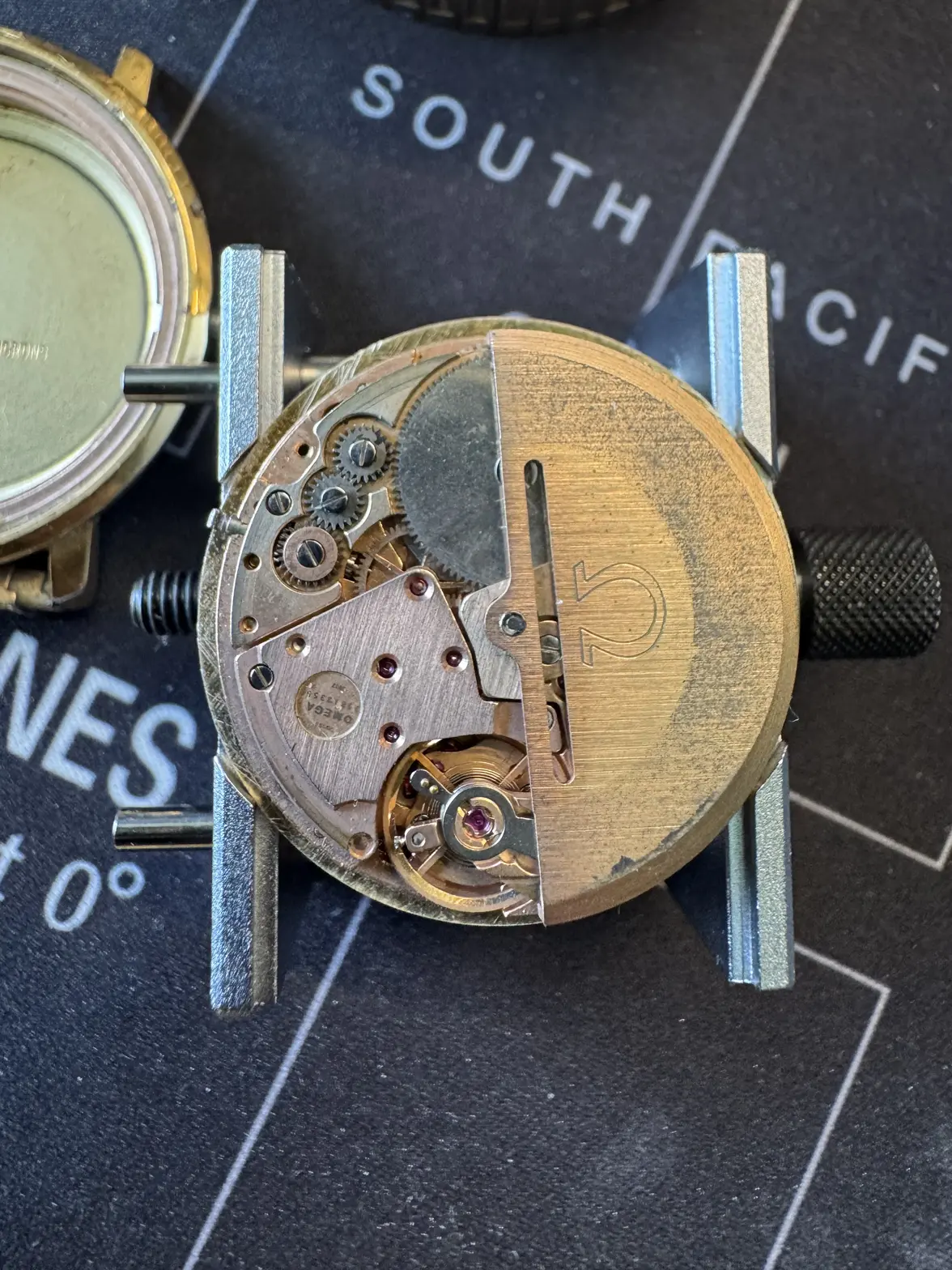
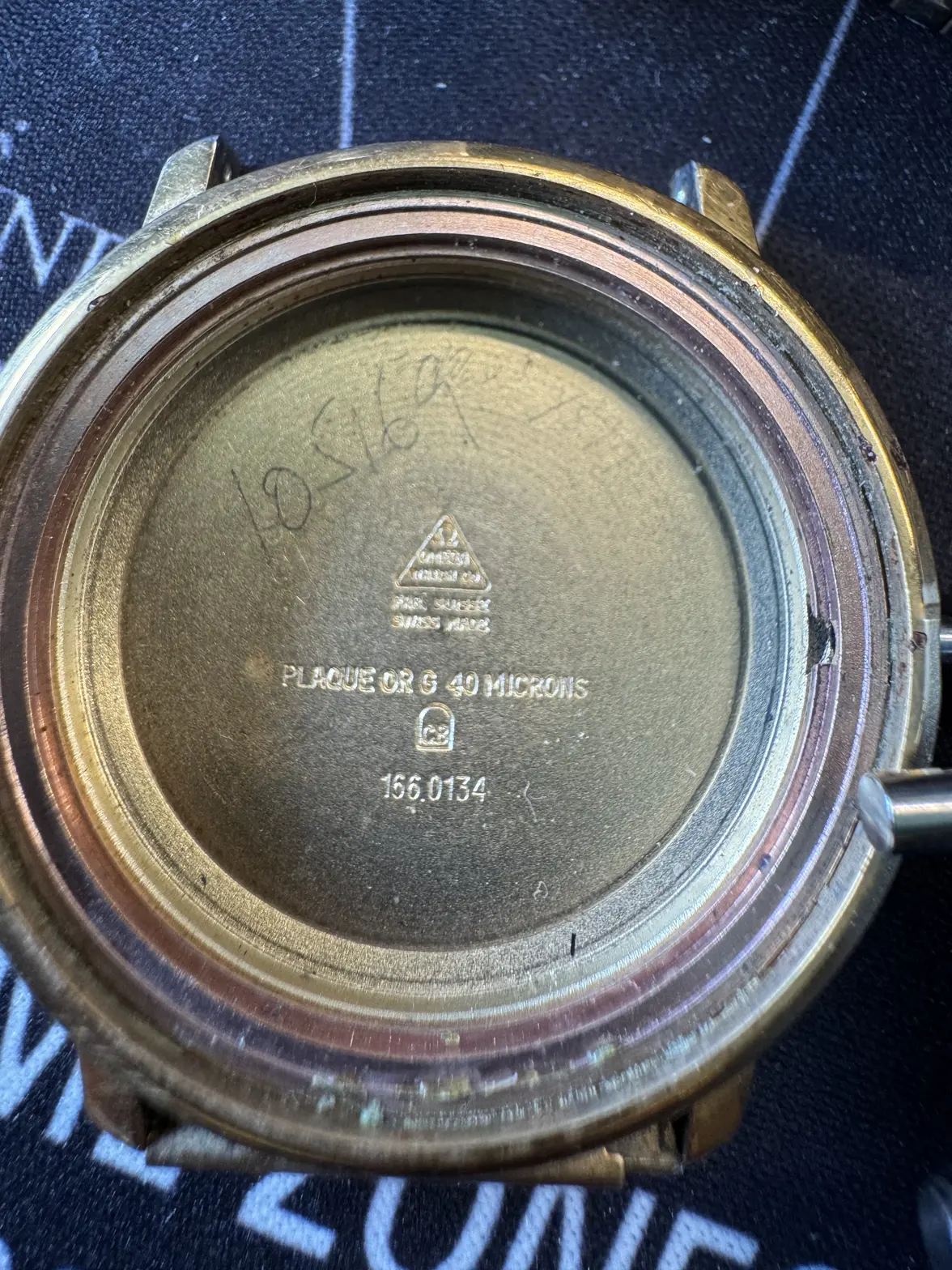
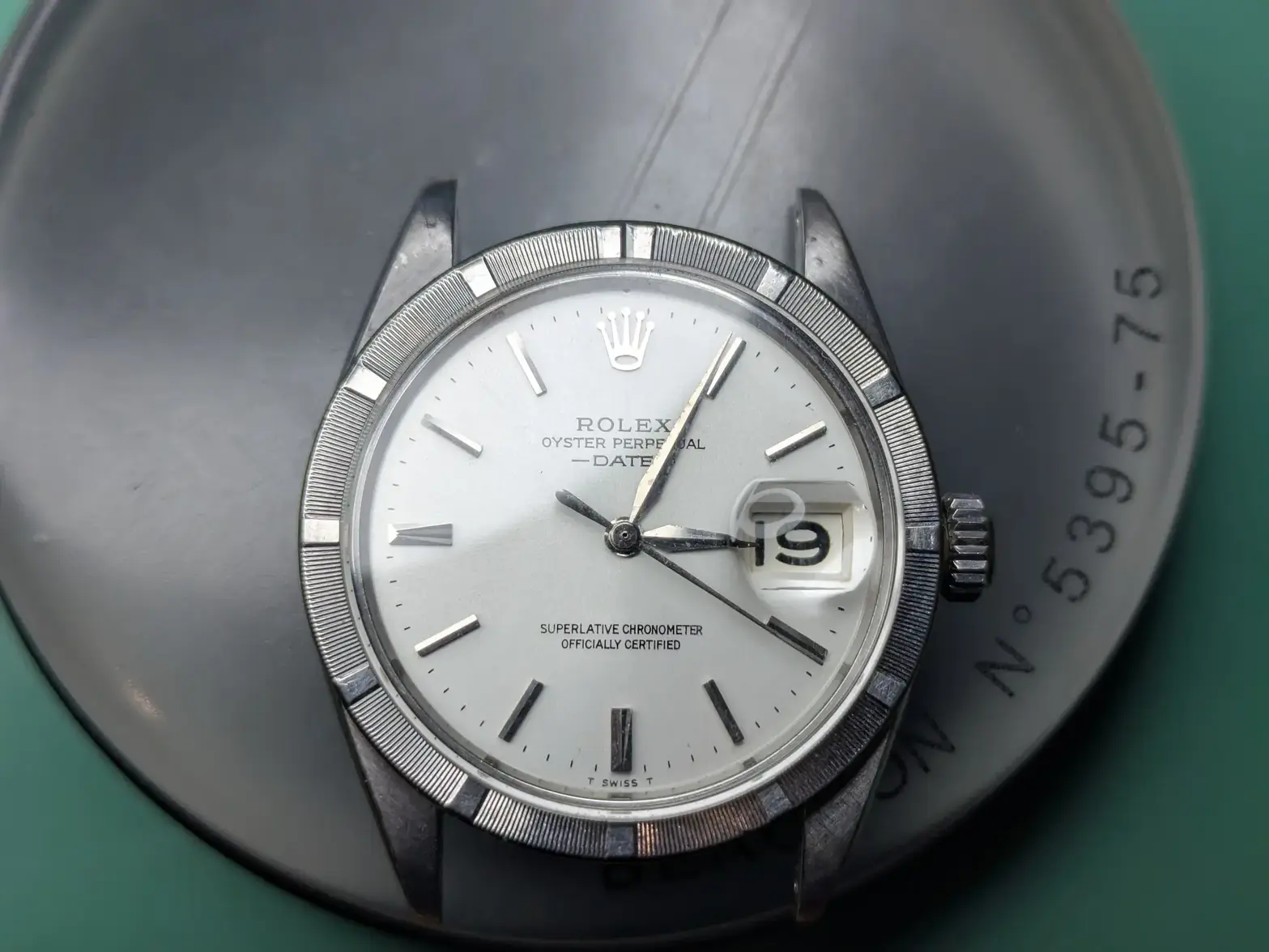
Finished up (I hope!) my Rolex Date project, and started a new one! An Omega 865 Chronostop.

I managed to end up with TWO Chronostops, this is a grey dial "Driver" model. I also have an incoming white one that also needs a seconds hand, but I have two new ones showing up!

Fun movement so far, pretty easy to tear down. I'll have a bit of work to get it together, but I ran out of time not long after I took it out of the cleaning machine.