On My Bench - A Turtle

Posts
29,681
Likes
76,840
Been quite a while since I did a 6309, but I don't recall having issues lubricating the escapement. Did you look at going through the dial side? Might be something to look at for the next one.

Cheers, Al
 
Posts
17,946
Likes
37,527
There is an access hole in the plate and I could maybe get to it with a bent oiler, my scope doesn't have enough clearance for my big hand doing delicate work like that.

What about lubing the escape wheel teeth, say every third or fourth tooth and doing the same sort of rotation?
Or do I need to practice more 馃槈.

PS: Is it only on one stone, or is the lube placed on both then the escape rotated?
 
Posts
17,946
Likes
37,527
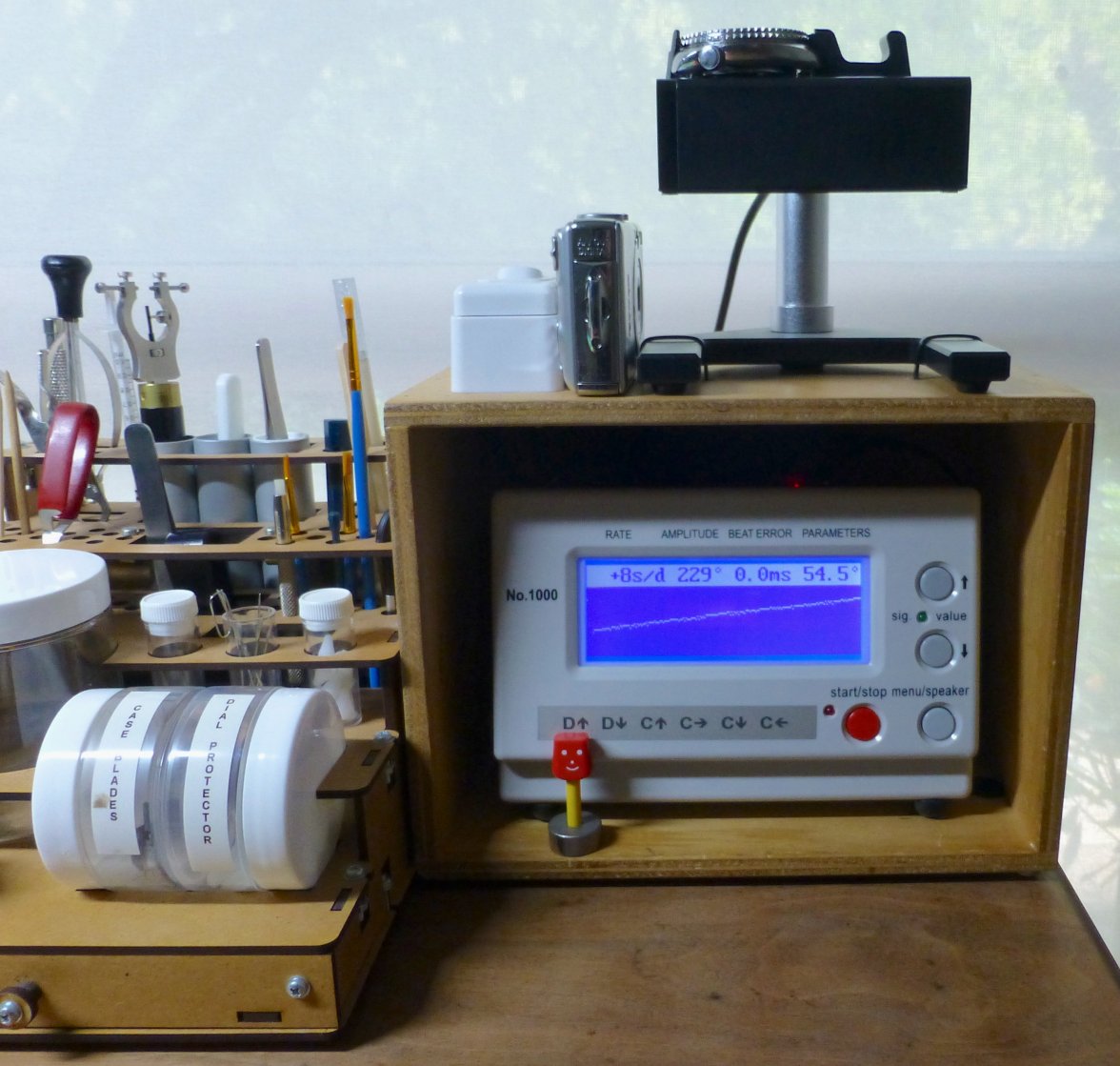
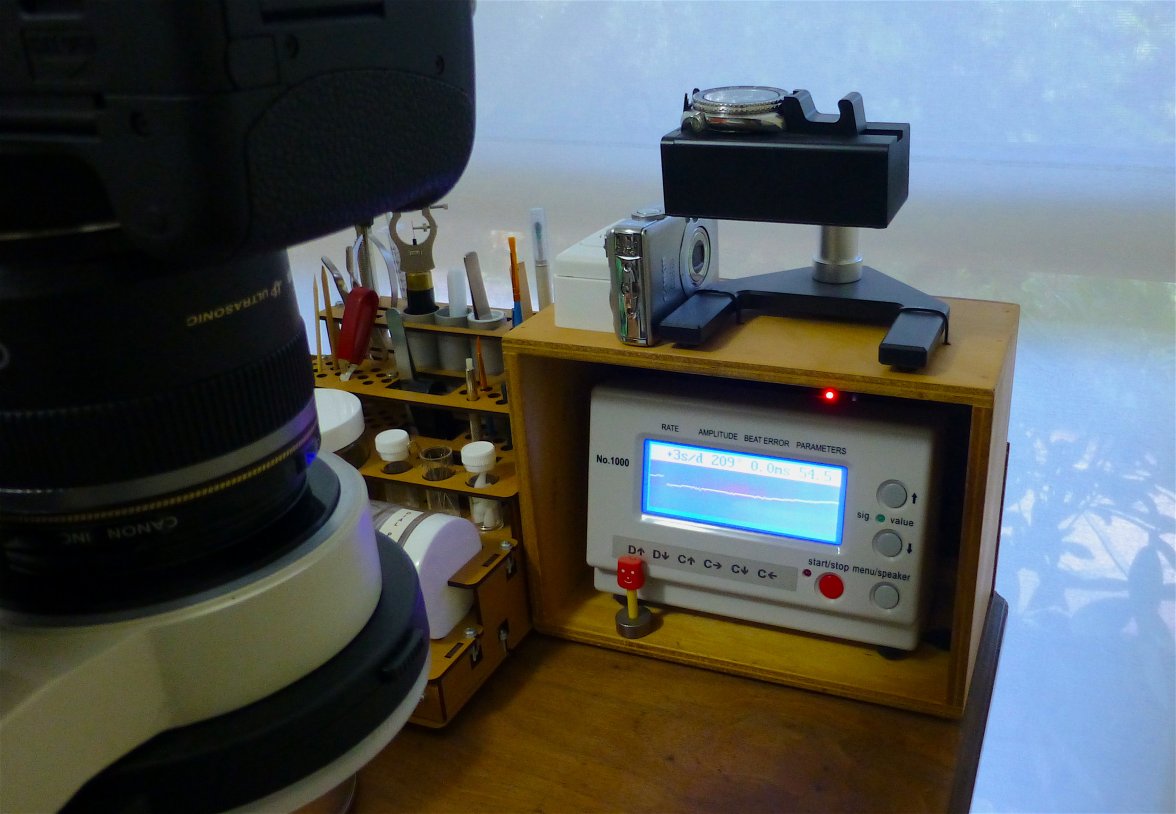
After a quiet morning finishing off the casing of the movement and doing some adjusting, I think I have the watch working to reasonable limits.

I don't know what the "COSC" specification is for a 38 year old Seiko, but I've adjusted it to the two positions where it will spend most of its life, crown down (being worn) and dial up (being stored).

At crown down, it's minus four seconds per day.


And at night, it will gain eight seconds per day.


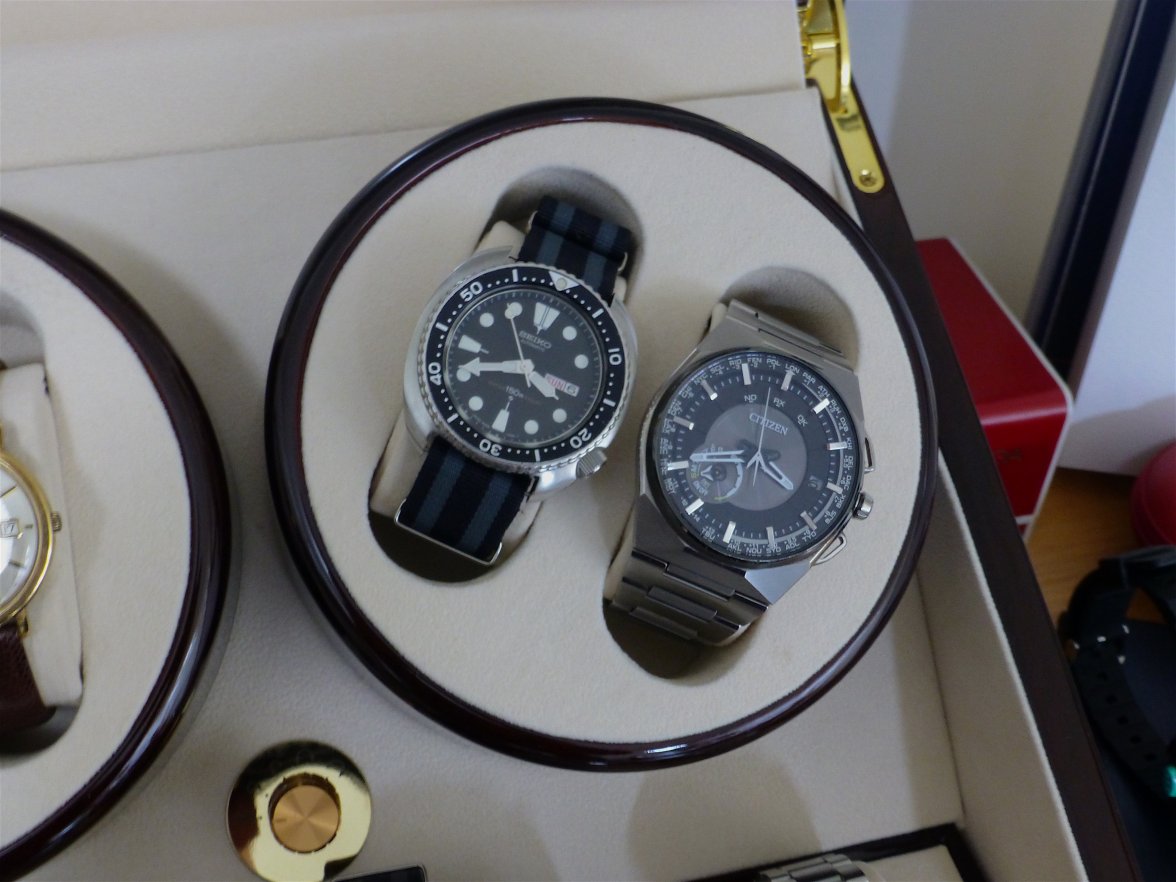
So, theoretically, the watch will gain four seconds every 24 hours, however, these figures are not absolute as the rate will change depending on many factors in the power train and the way the watch is worn (as explained in detail here), so onto my winder with a super accurate companion to see how it performs over the next 24 hours.


Edited:
 
Posts
29,681
Likes
76,840
There is an access hole in the plate and I could maybe get to it with a bent oiler, my scope doesn't have enough clearance for my big hand doing delicate work like that.

What about lubing the escape wheel teeth, say every third or fourth tooth and doing the same sort of rotation?
Or do I need to practice more 馃槈.

PS: Is it only on one stone, or is the lube placed on both then the escape rotated?

As you can see in the photos in that thread, the oil is placed on the exit stone, and then the escape wheel is cycled back and forth to distribute it.

The problem with putting it on the teeth of the escape wheel, is that it's an even smaller surface to aim for, and you don't want oil on the sides of the teeth - that will draw oil away from the part of the tooth that needs it.

I don't use a microscope for oiling Swiss lever escapements - just use a 10X loupe and I can see it fine. It might be easier to oil it on the bench, since you can tip the movement in a way that allows easier access to the pallet stone...

Cheers, Al
 
Posts
2,808
Likes
8,339
After a quiet morning finishing off the casing of the movement and doing some adjusting, I think I have the watch working to reasonable limits.

I don't know what the "COSC" specification is for a 38 year old Seiko, but I've adjusted it to the two positions where it will spend most of its life, crown down (being worn) and dial up (being stored).

At crown down, it's minus four seconds per day.


And at night, it will gain eight seconds per day.


So, theoretically, the watch will gain four seconds every 24 hours, however, these figures are not absolute as the rate will change depending on many factors in the power train and the way the watch is worn (as explained in detail here), so onto my winder with a super accurate companion to see how it performs over the next 24 hours.


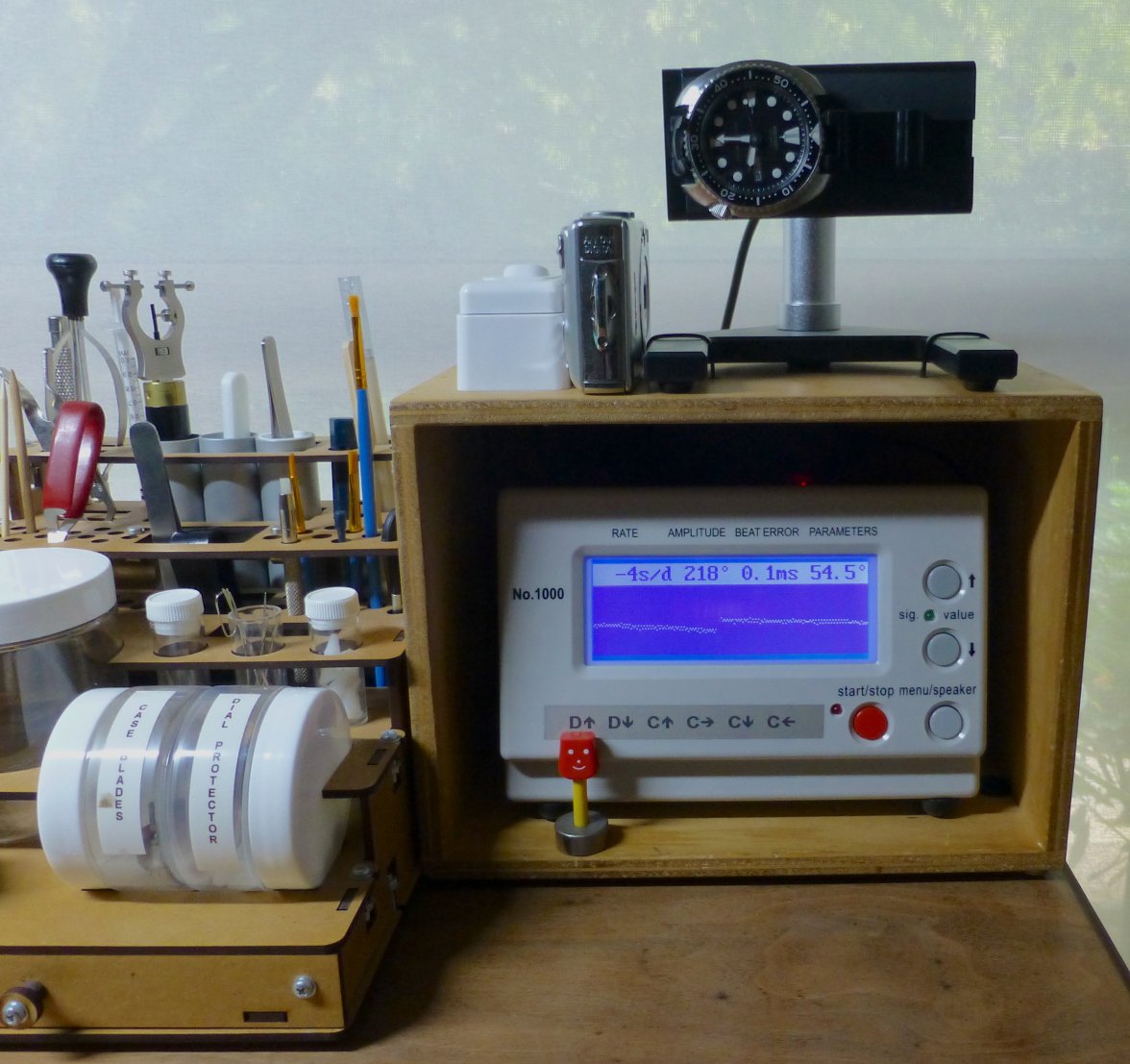
Looks good, but yeah, no way to be sure until you wear it or stick it on a winder and see what it does, since those 2 positions alone would be in a perfect world as you stated.

As I type this my Speedy Pro dial is facing up. And as I watched TV earlier today my dial was at 12 o'clock down, and it was only crown down when walking. But, if it was strictly those 2 positions, with no variation as the mainspring winds down = Crown down at -4 sec/day for 16 hours a day is -2.7 sec total loss. Then face up at +8 sec/day x 8 hours a night is +2.7 seconds = 0.0 total.
 
Posts
17,946
Likes
37,527
Well after 24 hours on a winding machine we should be at full power. It's lost about 5 seconds in 24 hours so I'll rest it dial up and see if that supports my theory of self regulating it to be on time.


While it's doing that, I'll be able to check power reserve and make sure day date is clicking over correctly, well, for a couple of days at least, I don't think the owner wants me to keep it to check the whole 32 days 馃榿.
 
Posts
17,946
Likes
37,527
Looking like this is done. All that remains is to get it back to the owner.


And once again, I've learn't more while doing this, thanks to tips and guidance from @Archer.

Until the next one.
 
Posts
1,763
Likes
7,222
Great report, thanks for taking us with you on this (tor-)tour 馃榿 When I disassembleb by first Turtle, I was impressed about the bunch of gaskets and rings that hold the crystal in place.

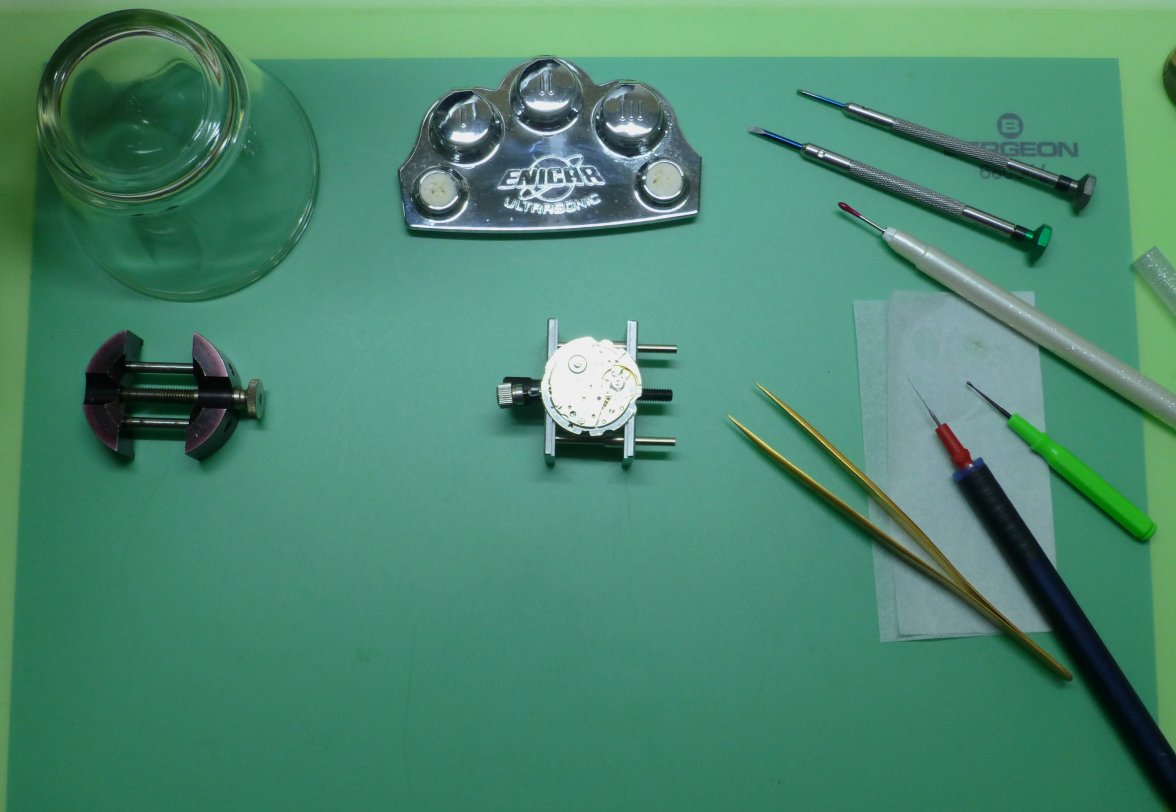
Btw, nice little Enicar oiler on your bench 馃槈

Edited:
 
Posts
926
Likes
1,027
Thanks alot for the very informative thread.
kund regards Max
 
Posts
376
Likes
541
Thank you for documenting this process鈥攊t's very informative to learn how much work goes into servicing a simple turtle. I sure hope Seiko makes more watchmaker-friendly movements these days though.
 
Posts
291
Likes
443
Cool thread - now I want to go diving again!