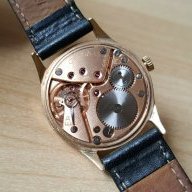
Newbee question (about mainsprings)...

Posts
29,196
Likes
75,443
Since the the coils of the spring generally lie on a plane, but the whole plane is tilted, then, if there is a bend, my guess it would be at the point where the spring attaches at the collet.

That would be my guess as well. It does look like the spring is pointing down right as it exits the collet...
 
Posts
110
Likes
79
Thanks @ChrisN (and @Deafboy & @Archer & all)

I'll investigate more this week and get some better pics after I find the places that look suspicious. If not through the week, then certainly over the weekend.

-Paul
 
Posts
110
Likes
79
That would be my guess as well. It does look like the spring is pointing down right as it exits the collet...

And if you hang the whole assembly on a balance tack, you can see the balance is tilted out of plane.

-Paul
 
Posts
29,196
Likes
75,443
And if you hang the whole assembly on a balance tack, you can see the balance is tilted out of plane.

-Paul

If you look at the collet right where the spring comes out, is the spring coil parallel to the top of the collet? if not, that is where I would start by adjusting that so it's parallel. Typically you deal with out of flat errors on a balance first, then deal with out of round after.

You do need to be very careful doing this though...so if you proceed, just know that you could end up making it worse. Go slow, study, think, then make small adjustments. Balance spring work is not something to be rushed in any way.

Cheers, Al
Edited:
 
Posts
110
Likes
79
If you look at the collet right where the spring comes out, it the spring oil parallel to the top of the collet? if not, that is where I would start by adjusting that so it's parallel. Typically you deal with out of flat errors on a balance first, then deal with out of round after.

You do need to be very careful doing this though...so if you proceed, just know that you could end up making it worse. Go slow, study, think, then make small adjustments. Balance spring work is not something to be rushed in any way.

Cheers, Al

Roger that Al - read you loud and clear.

I also subscribe to the notion that one learns by doing (as you have previously mentioned). I suppose that's obvious by the contents of this thread. 😀

Cheers, Paul
 
Posts
110
Likes
79
No time to take photos - or do anything other than look this morning (before work). But I can confirm the suspicions that the spring is bent right as it exits the collet.

It also looks to me like there is at least one bend in the over-coil. But I will ignore that for now. Will try to get pics of the hairspring as it exits the collet. Not sure if I will be able to capture that pic or not, But will certainly try.

And then, of course, begin small slow adjustments to resolve (or make worse 😲) that issue.

-Paul
 
Posts
110
Likes
79
The plot thickens?...

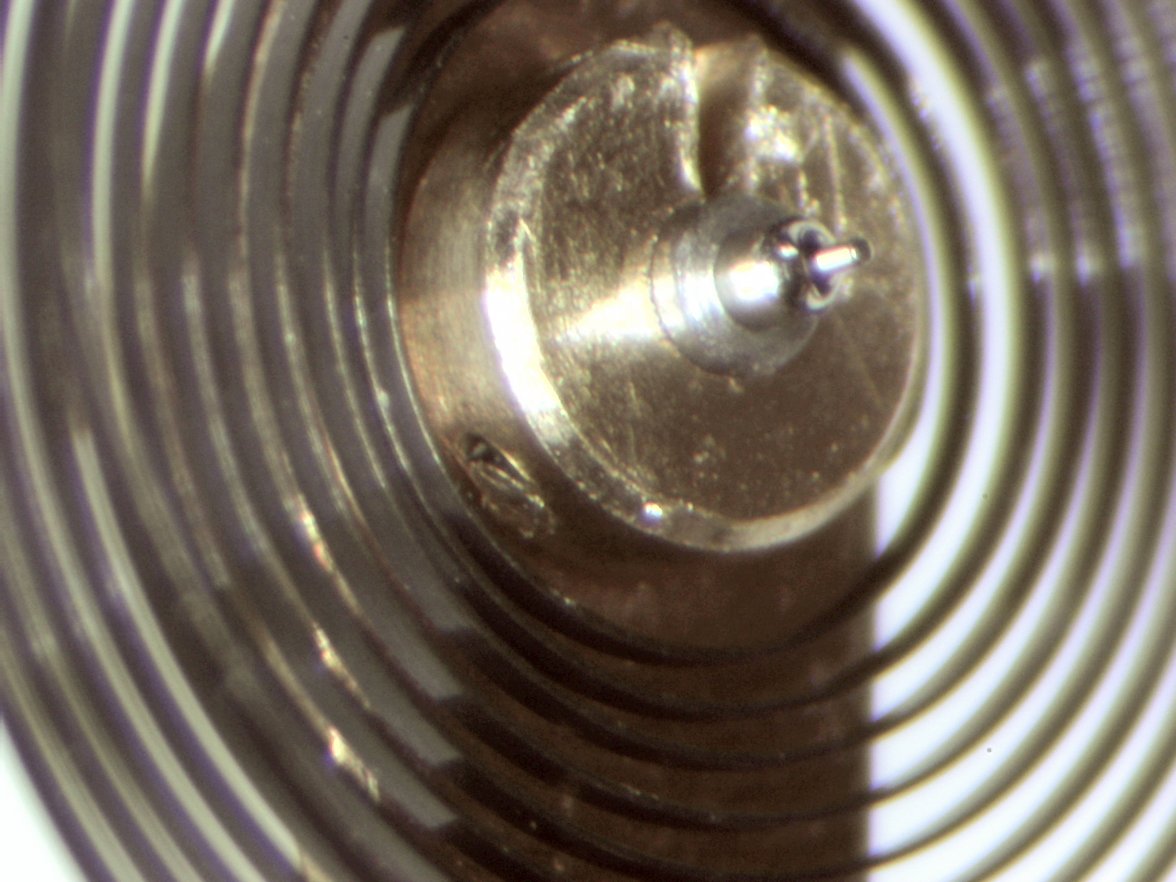
So - after taking a closer look at the hairspring and starting to think about trying to level it out as it leaves the collet - I quickly discovered that the hairspring is somewhat loose in the collet. In fact, the pin had backed out a little. I am assuming backed out - but don't really know for sure it's position when I started.

I do know for sure that the hairspring is somewhat loose now - as I can change the "exit angle" of the hairspring without bending it - and with very little force.

I managed to push the pin back in a little with brass tweezers (photo taken after it was pushed back in). But I am certain that it needs to be tighter than it is. As the spring can easily be "tilted" in either direction. In the photo below - the spring is sitting pretty level with the balance.


Conceptually very simple to fix. But how does one push that pin in so that it's snug enough to hold the spring firmly?

Thoughts?
-Paul
 
Posts
6,832
Likes
13,796
This whole thread is a pleasure to read. Exactly what a hobbyist needs to learn and appreciate more what a watch is,

Thank you!!
 
Posts
29,196
Likes
75,443
Conceptually very simple to fix. But how does one push that pin in so that it's snug enough to hold the spring firmly?

Thoughts?
-Paul

Conceptually yes, not a difficult fix. Practically, it's quite a difficult fix just due to the size and potential for a lot to go wrong very quickly. It's not something I even do that often, so it's always met with some trepidation...

As for how tight it has to be, well if for example you hang the balance by the spring from a balance tack like this:


It should not change the angle of the spring coming out of the collet. So if the current state would cause the spring to change angles, then it needs to be tighter than it is now.

Go slow, be careful...

Cheers, Al
 
Posts
110
Likes
79
Conceptually yes, not a difficult fix. Practically, it's quite a difficult fix just due to the size and potential for a lot to go wrong very quickly. It's not something I even do that often, so it's always met with some trepidation...
Cheers, Al

😲😲😲 Well, that makes me feel better. 😁

Any recommendations on approach?

I know you recommended leaving the hairspring assembly on the balance - when we were just looking at making adjustments to the hairspring.
But I'm starting to think I may want to separate the spring from the balance to tighten that pin.

I believe this would have the added advantage of being easier to do whatever "straightening" (bending) is required on the hairspring.

But I know this comes with some risk - which I am probably not fully appreciating. And I don't have a staking set (yet).

-Paul
 
Posts
29,196
Likes
75,443
You can do it either way, but for me it would seem easier to leave it on the balance. If you remove the spring for me it makes it more difficult to grasp the collet and hold it in place off the balance.
 
Posts
110
Likes
79
You can do it either way, but for me it would seem easier to leave it on the balance. If you remove the spring for me it makes it more difficult to grasp the collet and hold it in place off the balance.

So, wearing finger cots - hold the balance in hand? Then use a pin, modified oiler, (?) to push the taper-pin in tight?

I wasn't thinking about using my fingers (and maybe I shouldn't?) but I can see where leaving the spring on the balance would make it easier to hold (using fingers/thumb).

Probably obvious for those with experience. Not obvious for this novice.

I'll let you know How I make out with that approach.

-Paul
 
Posts
110
Likes
79
@Archer - you are right (of course) about that stuff being small.

I tried holding the balance in hand and then tried to push the taper-pin in with a fine oiler tool (with the tip broken off).

My fingers seemed a bit large - but usable. The shaft of the fine oiler however, seemed a little too large. I wasn't able to get the hairspring firmly attached at the collet - and without being able to do that, I think the best near-term solution is to replace.

I have ordered a NOS balance complete that I am going to use in the watch until my skills (and tools?) progress enough to get this spring sorted out. I'm confident that it can be saved - but I think it's going to take some time before I am able to get this resolved.

Incidentally - for those following. I have explored the "hire it out" option. I contacted Jules Borel (from the AWCI membership search). As suspected - he is running a material supply and not taking in work. However, they did give me the name of a couple of local places to try. One of them does have a watchmaker that they work with. However, they wouldn't take in a job like "fixing my hairspring". They said that any movement work required doing a full service.

So, still need to keep working the list to see if I can find a local watchmaker that will take in small specific jobs. It would be great to find one - as there are obviously MANY tasks beyond my skill set and tooling.

-Paul
 
Posts
110
Likes
79
Ugh - I just checked Cousins web site to see if I could order a mainspring (as they were supposed to be available for order today). Unfortunately they are now listed as available on March 2nd. Not critical - since I don't seem to be having any problems with the mainspring.

The NOS balance should arrive tomorrow. Which should get things rolling again pretty quickly - barring any issues with end-shake (or something else that I didn't even know could cause problems 😲😁).

I should have some new pics and timing numbers over the next few days.

-Paul
 
Posts
29,196
Likes
75,443
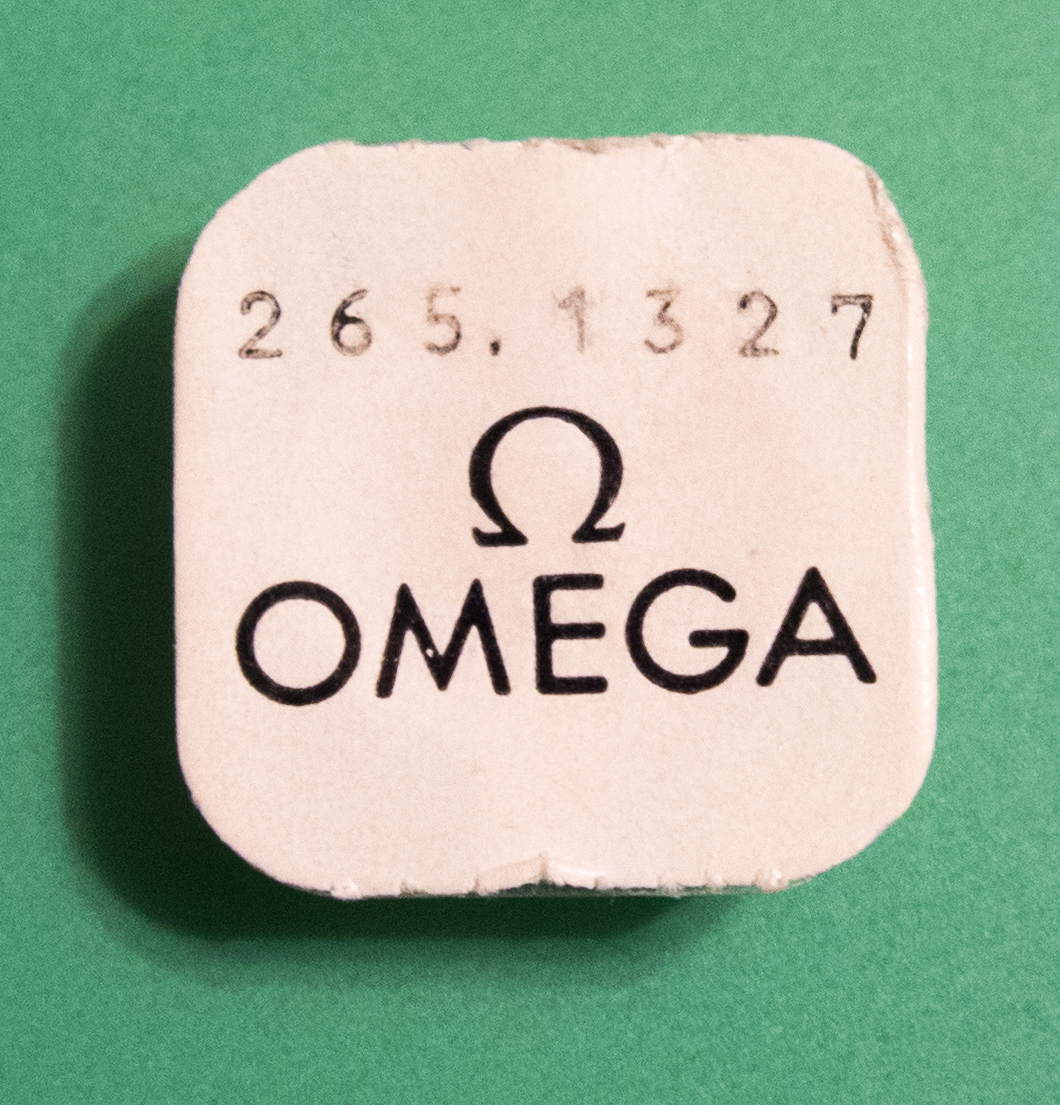
Good to see you sticking with this. No one said this work would be easy, so challenges like this happen all the time, in particular on vintage watches. You were fortunate to find a NOS balance complete that doesn't cost an arm and at least 1/2 a leg. Just to confirm, the balance you bought is a 265-1327?
 
Posts
110
Likes
79
Good to see you sticking with this. No one said this work would be easy, so challenges like this happen all the time, in particular on vintage watches. You were fortunate to find a NOS balance complete that doesn't cost an arm and at least 1/2 a leg. Just to confirm, the balance you bought is a 265-1327?

@Archer - Yes sir - that's the one. Will have to see what shows up. It's supposed to be in the original Omega packaging - so, hopefully will be correct and in perfect/new condition.

As far as value of body parts, I don't think it was cheep. BUT - seemed reasonable to me (assuming it is actually NOS). Of course, I don't have a lot of experience purchasing parts - and almost no experience in vintage. I paid $165.00 USD. Which wasn't much more than I could find used parts for.

Will post pics as soon as practical...

Again, many thanks for all of your help!

-Paul
 
Posts
110
Likes
79
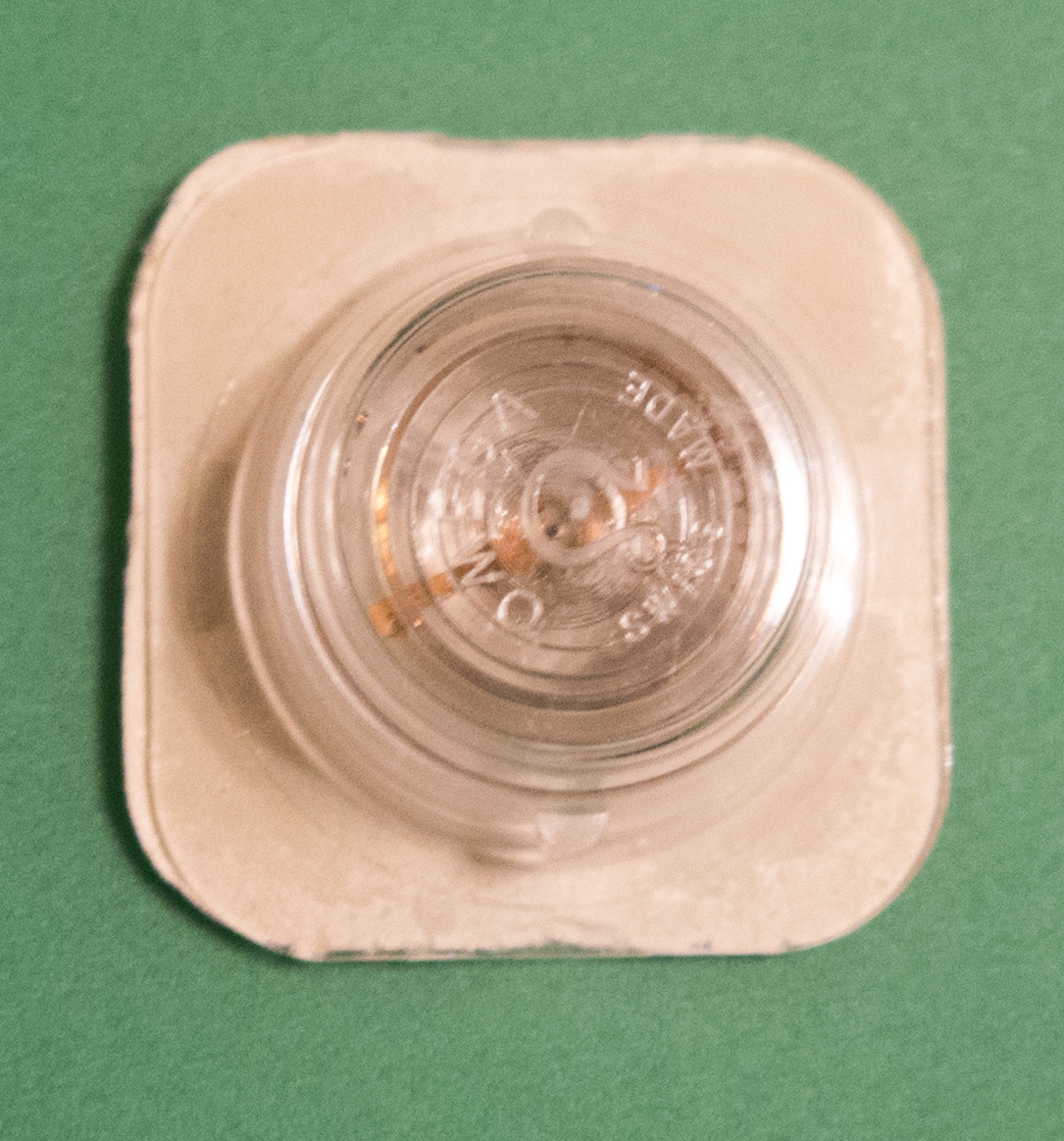
No time to mess with this before I go play hockey tonight - but the balance arrived today and does appear to be NOS in original Omega packaging.

So far - so good...

 
Posts
110
Likes
79
Okay, now finally time to play with parts (and post).

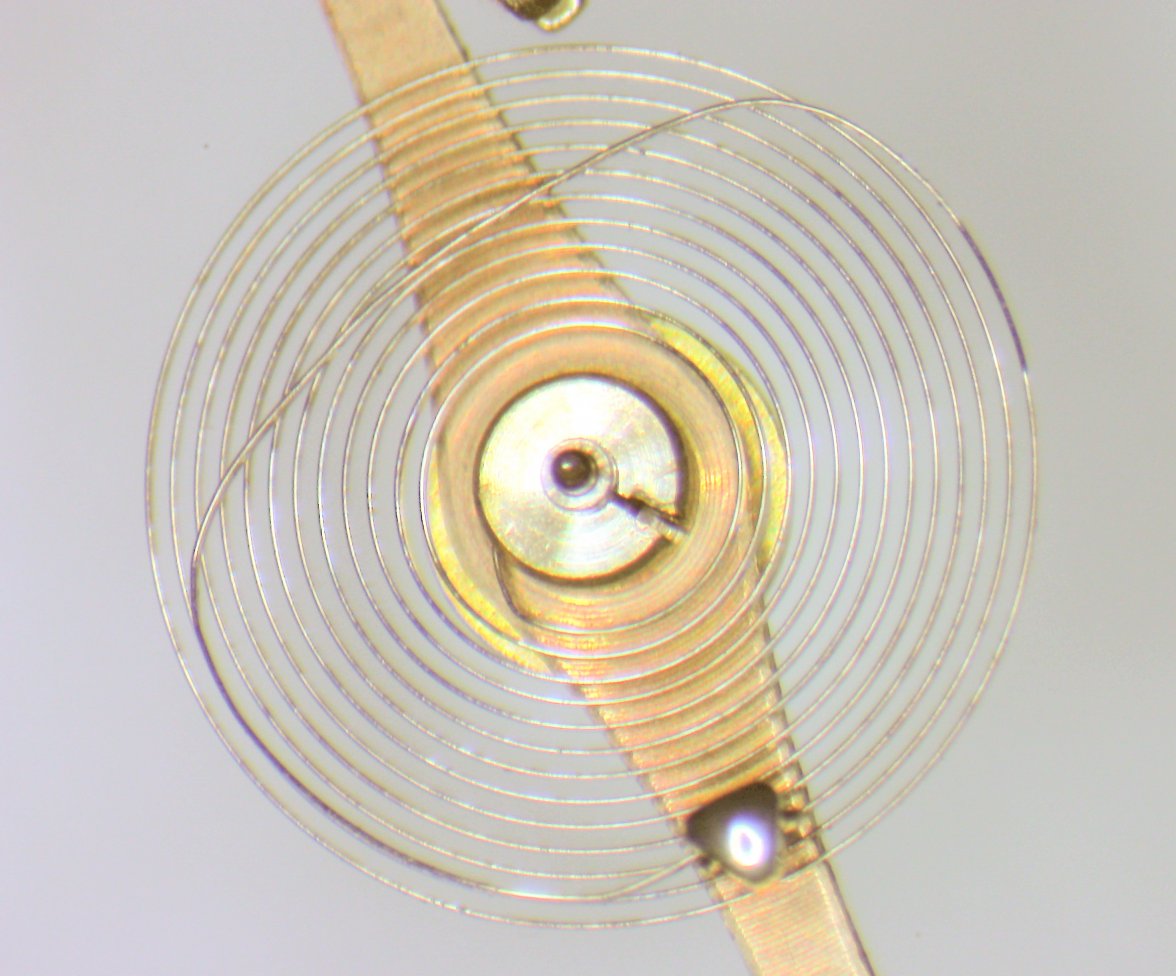
First - here's a look at the hairspring of the NOS balance. This exposure doesn't do it justice - but I think you can kind-of tell how bright and shinny the hairspring is. Looks like it was just made.

HOWEVER - this will not be the hairspring producing my "full-wind" numbers posted here. The reason being, that I had also acquired a used balance (complete) in excellent condition prior to finding the NOS part.

Initially, I thought I would rather install the NOS piece - and that's true. except, the NOS piece seems that it's going to require a little tweaking to install properly - as installing it introduces an out-of-flat condition.
I'm (pretty) sure that is a simple fix - but, since I had the used balance working nicely - and given my reputation as a hairspring murderer - I thought I'd proceed with the used one - and see if it would produce acceptable results.

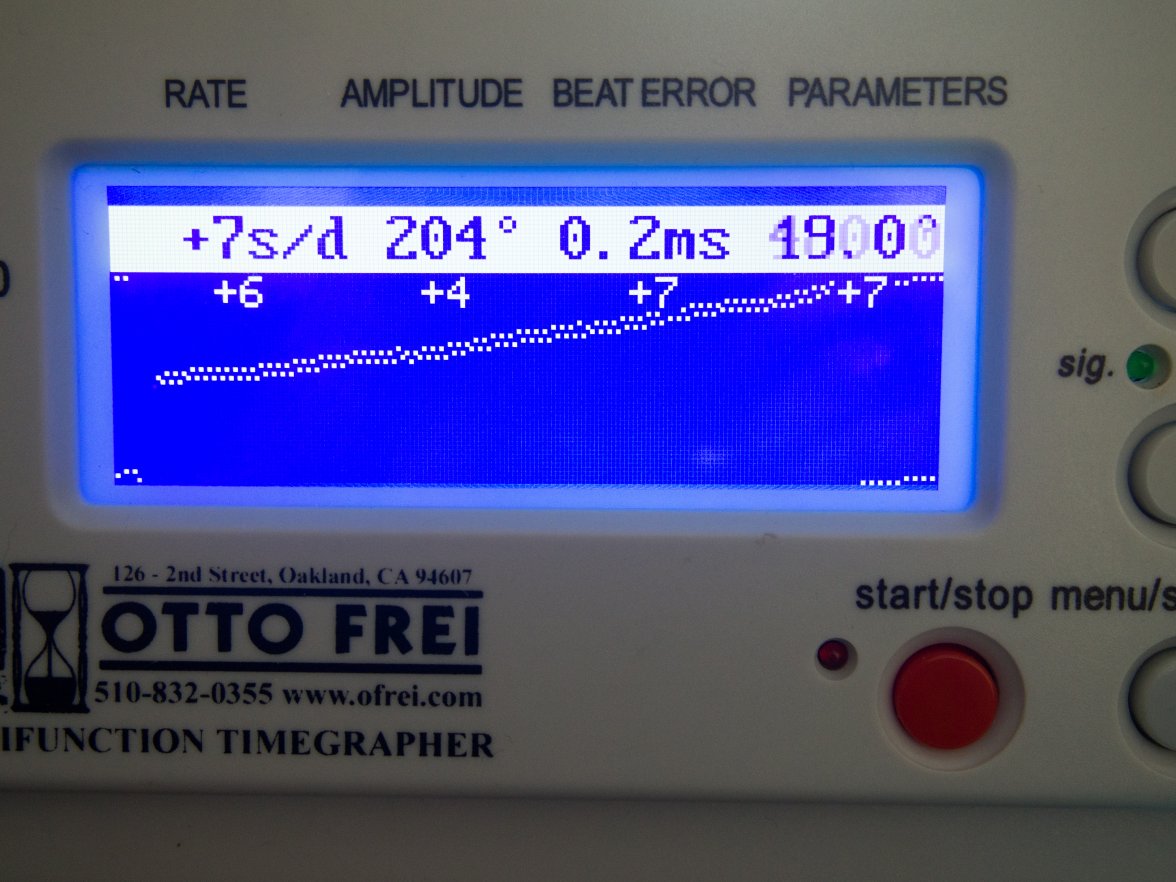
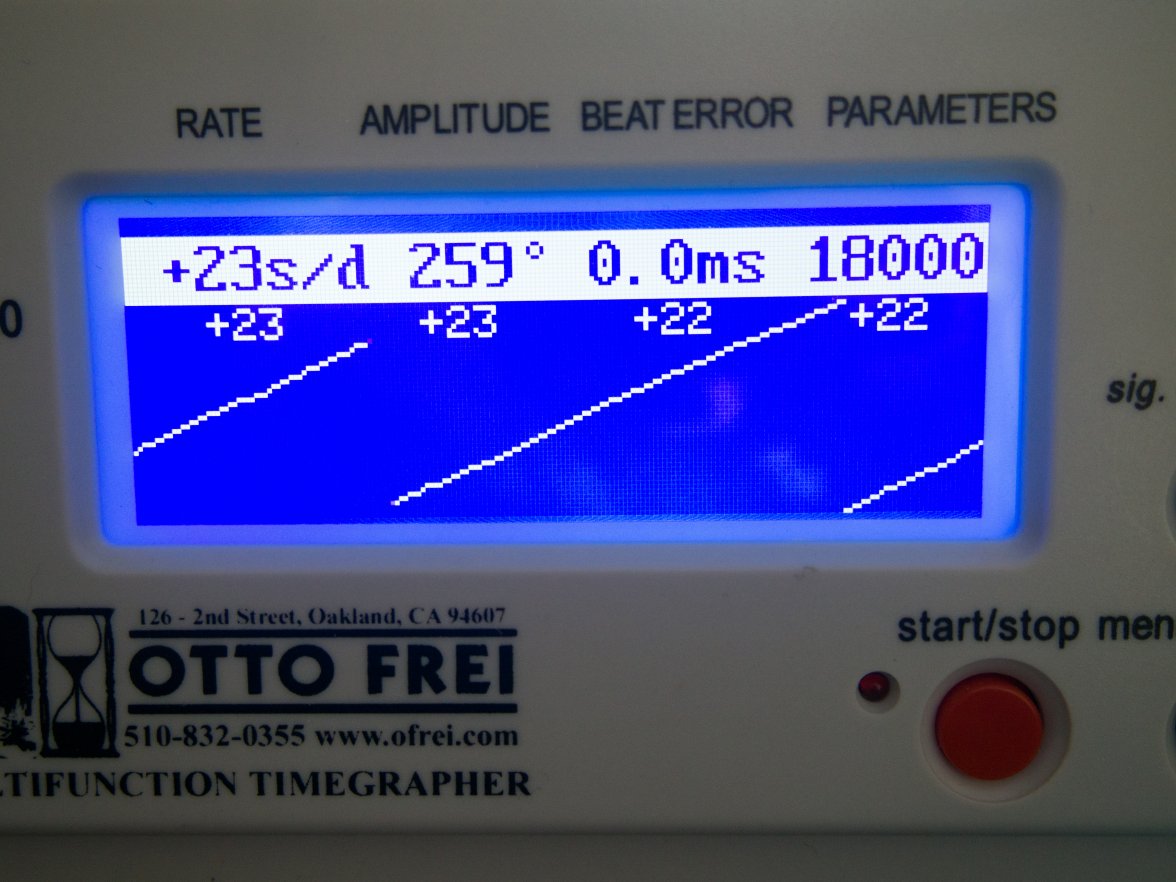
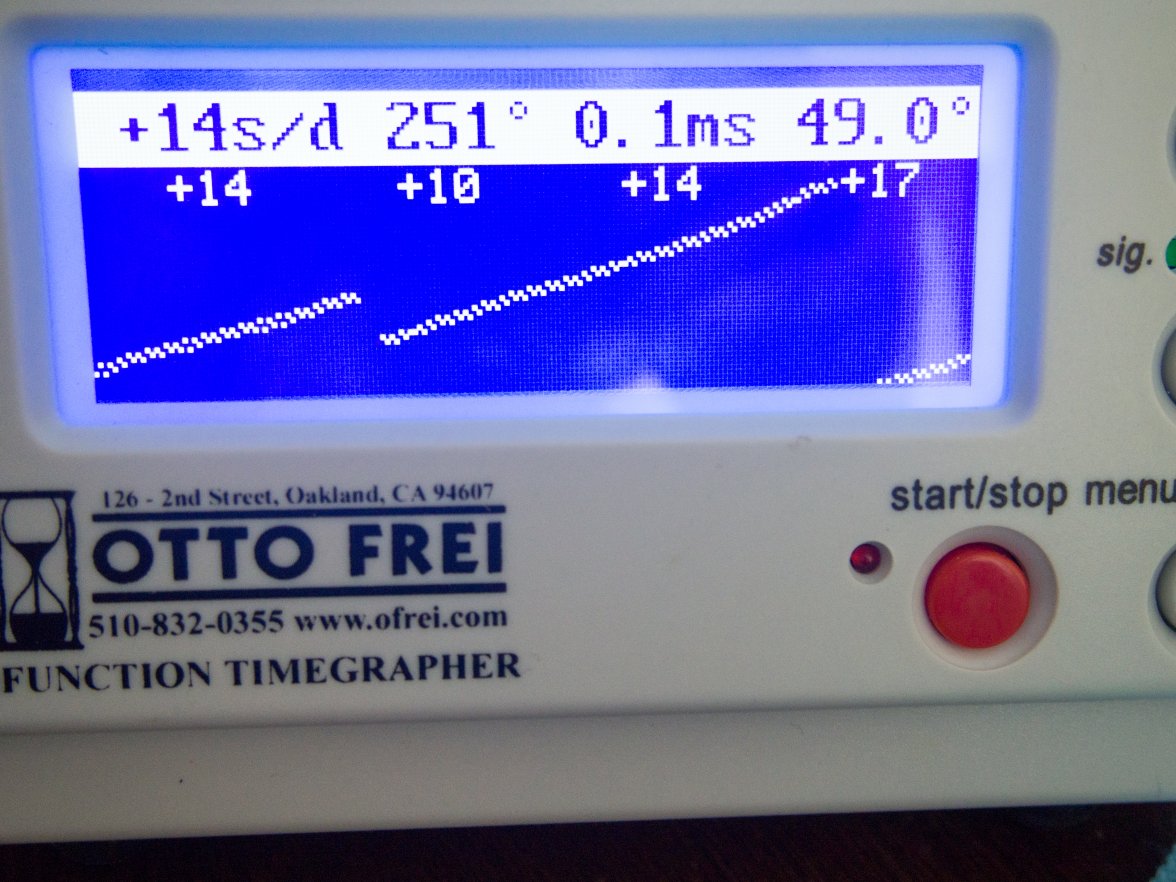
My "full-wind" numbers for the replacement (used) balance look pretty good to me. Though the amplitude drop in the pendant up position seems strange.

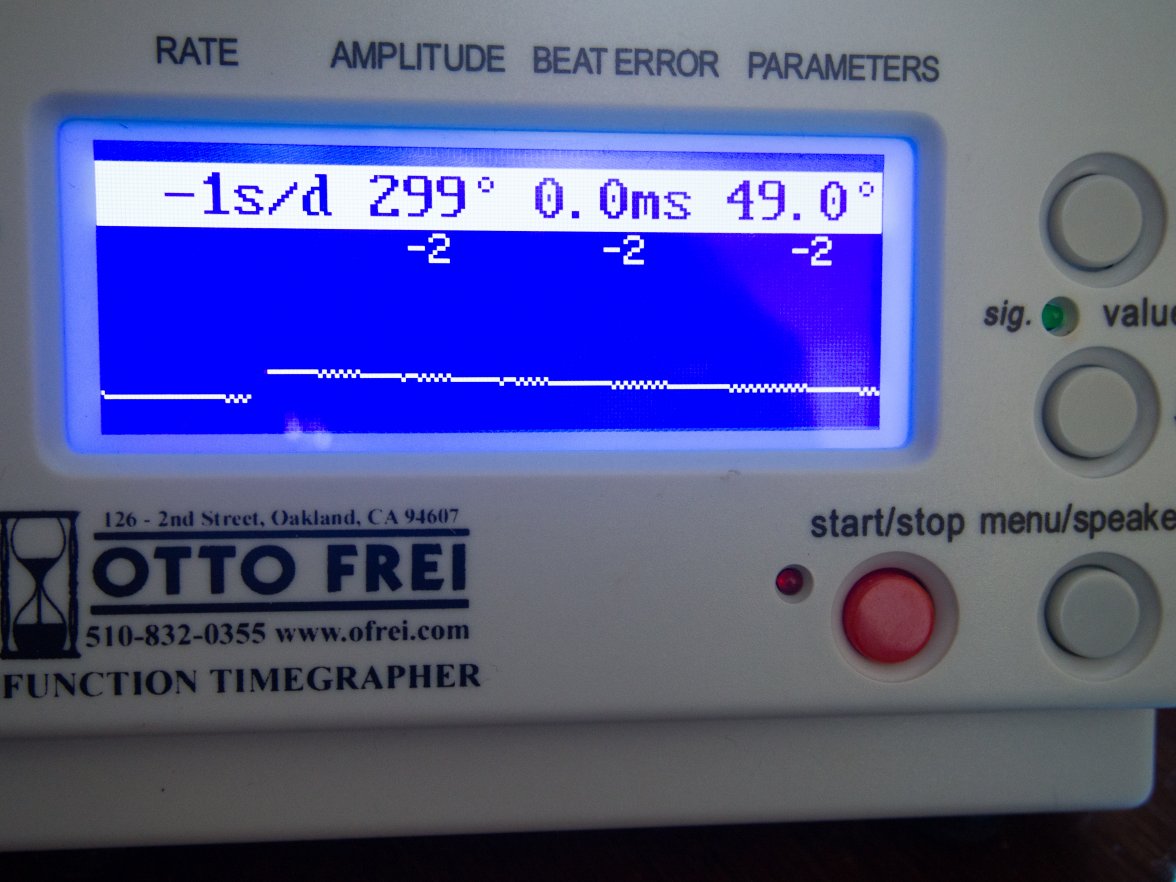
Here is dial up (DU)...


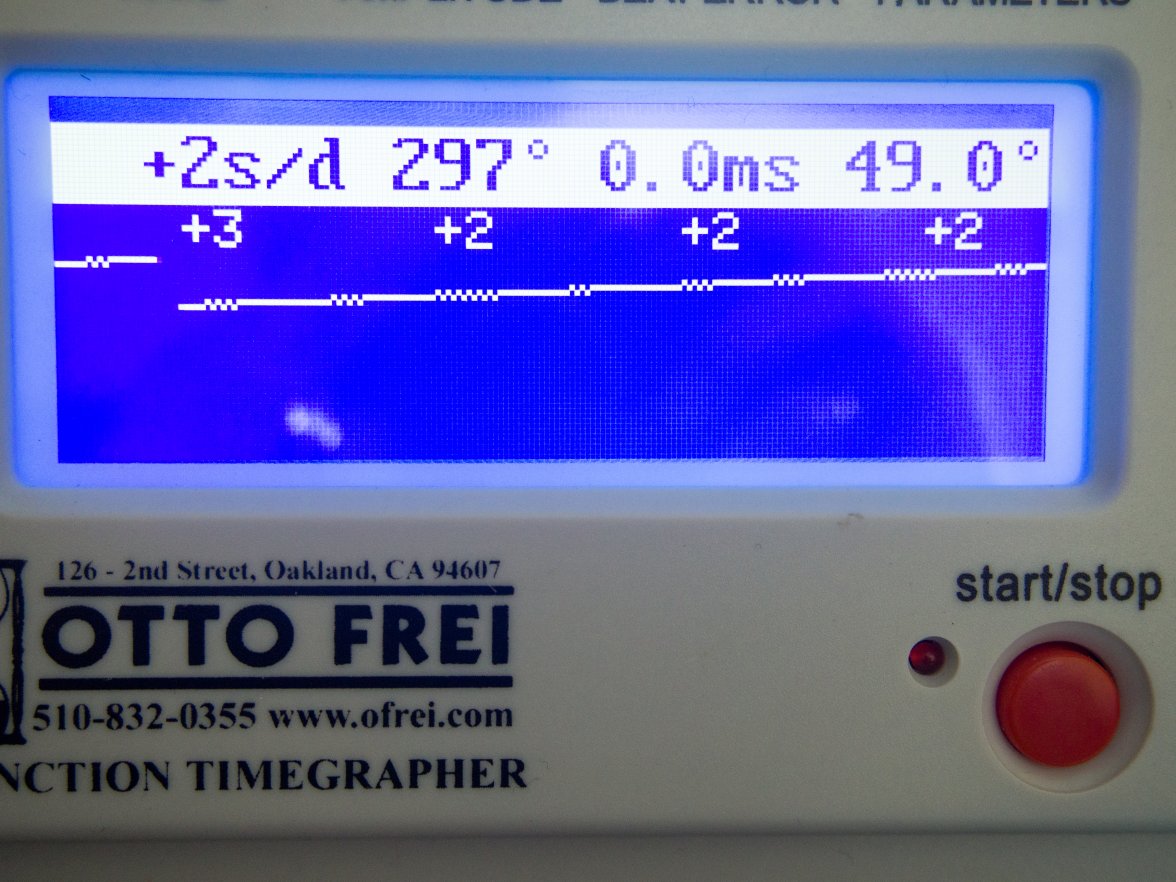
Dial Down (DD)...


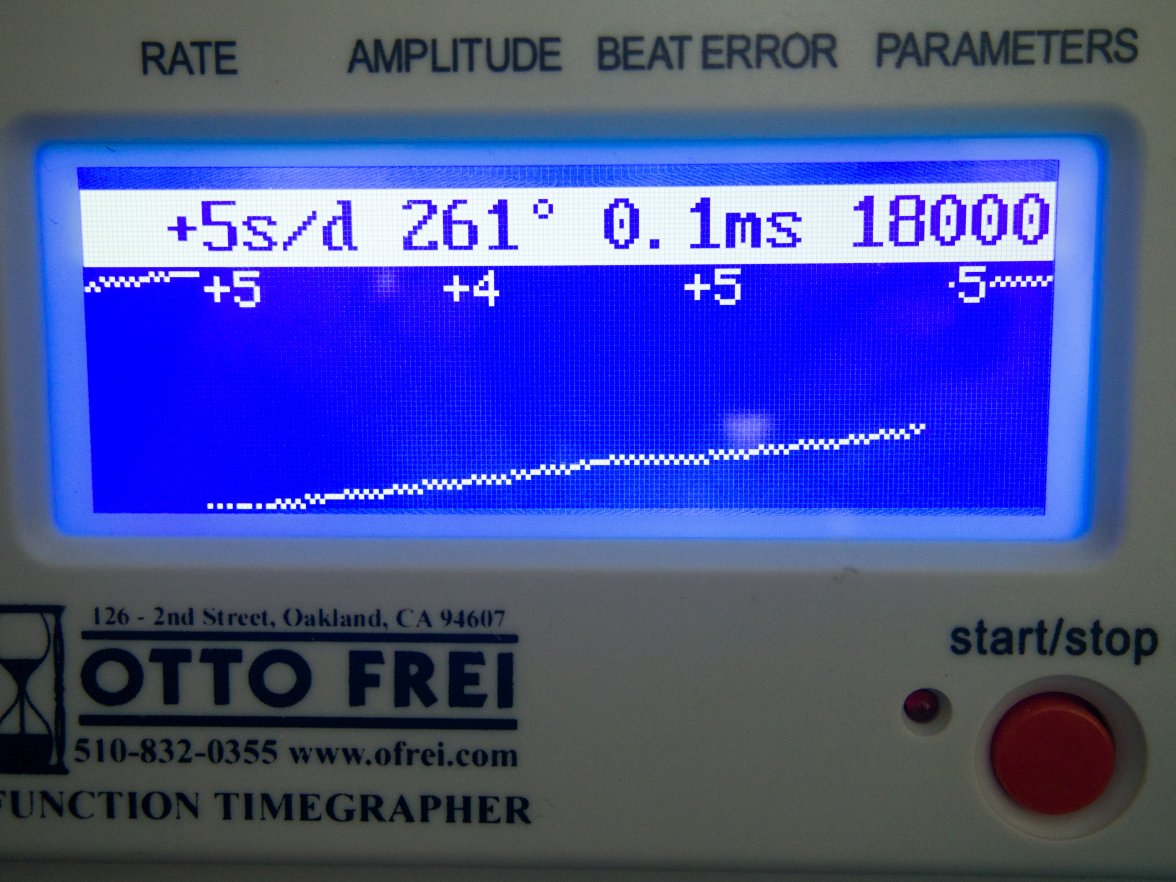
Pendant Right (PR)...


Pendant Up (PU)


Pendant Left (PL)...


And Pendant Down (PD)...


So - to consolidate in to a table:
[all measurements using 49 deg lift angle]

DU -1 s/d; 299 deg amp; 0.0 ms
DD +2 s/d; 297 deg amp; 0.0 ms
PU +7 s/d; 204 deg amp; 0.2 ms
PD +14 s/d; 251 deg amp; 0.1 ms
PL +23 s/d; 259 deg amp; 0.0 ms
PR +5 s/d; 261 deg amp; 0.1 ms

These numbers were taken about 90 minutes after full-wind.

Should be able to post the 24 hour numbers tomorrow. Will certainly record them - even if I don't have time to post.

-Paul
 
Posts
110
Likes
79
Okay, now finally time to play with parts (and post).

So - to consolidate in to a table:
[all measurements using 49 deg lift angle]

DU -1 s/d; 299 deg amp; 0.0 ms
DD +2 s/d; 297 deg amp; 0.0 ms
PU +7 s/d; 204 deg amp; 0.2 ms
PD +14 s/d; 251 deg amp; 0.1 ms
PL +23 s/d; 259 deg amp; 0.0 ms
PR +5 s/d; 261 deg amp; 0.1 ms

These numbers were taken about 90 minutes after full-wind.

Should be able to post the 24 hour numbers tomorrow. Will certainly record them - even if I don't have time to post.

-Paul

Here are the 24 HR numbers...

DU +19 s/d; 253 deg; 0.0 ms
DD +21 s/d; 250 deg; 0.0 ms
PU +19 s/d; 213 deg; 0.1 ms
PD +49 s/d; 205 deg; 0.1 ms
PL +43 s/d; 210 deg; 0.0 ms
PR +23 s/d; 215 deg; 0.1 ms

Interesting to me that I don't see that large drop in amplitude (in PU) in the 24 hour numbers.
Also interesting (in the ancient Chinese curse kind of way) is how much things sped up. 😵‍💫
That seems highly undesirable.🙁

Any usual suspects to investigate for that? I'll be looking to see what I can find while I wait to hear from the experts here.

-Paul
 
Posts
110
Likes
79
I found this - which seems like one possibility...

"...For example, if the overcoil approaches the staff too closely, the watch will go faster as the mainspring runs down (short arc). If the overcoil is too far from the staff, then the watch will slow down as the mainspring runs down..."

???

-Paul