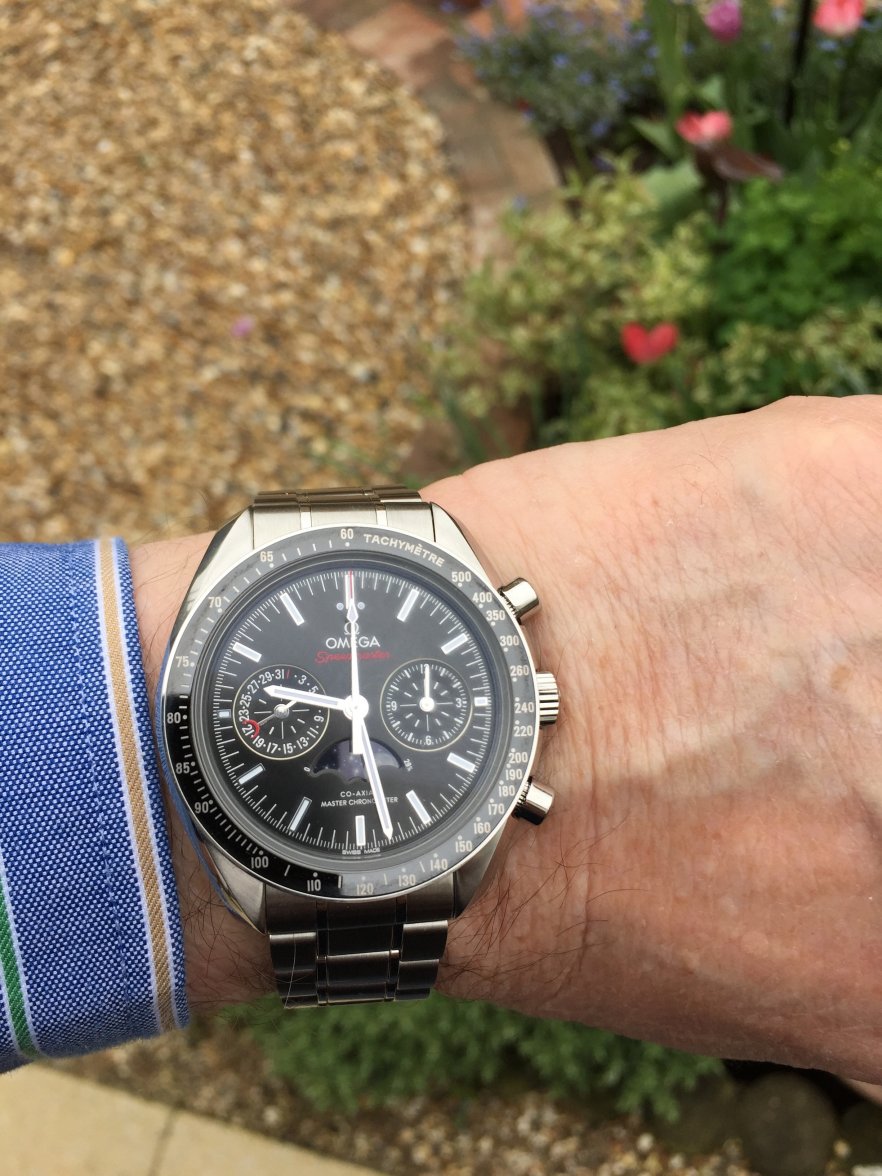
Master co-axial question on accuracy.

Posts
336
Likes
164
So what are you saying, I shouldn't have that with them, or.. The 8500 is relatively new, this year. The 2500 is older. It isn't really a problem, but are you saying that is not acceptable for a new 8500? According to their own standards?
 
Posts
29,737
Likes
76,964
It's out of tolerance is what I'm saying...
 
Posts
336
Likes
164
But they'd think I was mad If I complained about that... that's for sure.
 
Posts
29,737
Likes
76,964
I didn't say you should complain - I'm just answering the questions you are asking. If you decide to live with that, ask Omega to fix it, or whatever is up to you...
 
Posts
336
Likes
164
I didn't say you did, I'm talking aloud, I wonder how common it is, as I wasn't aware of that being their 'tolerance'. Personally, I don't care enough about it because it's close enough. But I can't be alone with the observation. In my experience of OSC they come back with more problems than they left with
 
Posts
336
Likes
164
Out of interest do you know if it's normal for the second hand to hover when you're setting the time on the 8500, didn't have it on the 2500 at all?
 
Posts
29,737
Likes
76,964
Out of interest do you know if it's normal for the second hand to hover when you're setting the time on the 8500, didn't have it on the 2500 at all?

Are you just talking aloud, or are you asking me to answer? I think we need a "just talking aloud" font...😉

Oh, and I have no idea what you are asking...watch hands that hover? Do you mean the watch hacks in position 3? If so, that's normal, and if your 2500 doesn't hack when setting the time, there's a problem...
 
Posts
336
Likes
164
Comedic watchmaker too..Thanks, I like it. I meant the second hand flickers when changing the time when its set to 12 before pushing back in to set time yes. It doesn't sit still when crown out yes, The 2500 doesn't have the quick set hour hand so assumed that's why the 8500 did and the other didn't. 2500 is 9 years old so assumed that was the norm for 2500. The 8500
 
Posts
29,737
Likes
76,964
I can't really answer the question, because it's not clear what you are describing. So let's try a different approach:

2500 - position 1 is winding, position 2 is quick set day, position 3 is hand setting. It should hack (stop) the seconds hand and the movement actually, when in position 3. In position 1 and 2 the movement stays running.

8500 - position 1 is winding, position 2 is quick set of the hour hand, and position 3 is hand setting. It should hack in position 3, but stay running in the other 2 positions just like the 2500 does.

"I meant the second hand flickers when changing the time when its set to 12 before pushing back in to set time yes."

Not exactly sure what this is describing, why it only seems to happen when setting something to 12, and how you set the time by pushing back in - you pull the crown out to position 3 to set the time.

My best guess is that you really are saying that when in position 3, and setting the hands, the seconds hand may move back and forth as you change the direction you are turning the crown and setting the hands. If that's what you mean, it's just backlash...
 
Posts
336
Likes
164
I
My best guess is that you really are saying that when in position 3, and setting the hands, the seconds hand may move back and forth as you change the direction you are turning the crown and setting the hands. If that's what you mean, it's just backlash...

Yes! That's the one, but you say the 2500 would do that or should do that as well? Pretty sure it doesn't. I don't change them that much but not noticed it on that one. Thanks for your help.
 
Posts
288
Likes
337
OP, you're not gonna get better accuracy than that for a mechanical watch. Wear and enjoy it in good health. Mine says hello...
P1460222_zpse7d82e83.jpg
 
Posts
2
Likes
0
Hello all,

My first post, forgive me if my 'newbie' question appears naive.

I purchased my first Omega a few months back (and indeed my first mechanical watch) namely Omega Globemaster Steel - Hard metal bezel on steel 130.30.39.21.02.001’ version. I entered my local Omega Boutique and was originally looking at other models but opted for the Globemaster which is a stunning timepiece.

After a number of weeks later I noticed condensation under the glass, a second model they exchanged it with had a similar issue and I took it back again and they kindly ordered a replacement which arrived last week. Nice service…however, on to my question which relates to OP and the reason for the post.

On checking the Omega METAS test results page the second watch had an outstanding ‘Average daily chronometric precision of the watch’ measured at + 1,5 sec/day. Real life usage confirmed this, in fact I would say it seemed closer to +1 sec /day.

The replacement is reported at + 3,8 sec/day. Still within the specification of 0 to +5 sec/day and it does seem to run around 3.5 secs fast each day which I guess is true to the test results. My question is should I be disappointed with this or am I just relating this to the previous model which was so accurate?

Also, has anyone else had condensation issues?

I’d appreciate any comments.

Thanks in advance.
Edited:
 
Posts
29,737
Likes
76,964
On checking the Omega METAS test results page the second watch had an outstanding ‘Average daily chronometric precision of the watch’ measured at + 1,5 sec/day. Real life usage confirmed this, in fact I would say it seemed closer to +1 sec /day.

The replacement is reported at + 3,8 sec/day. Still within in the specification of 0 to +5 sec/day and it does seem to run around 3.5 secs fast each day which I guess is true to the test results. My question is should I be disappointed with this or am I just relating this the previous model was so accurate?

Note that the range for average daily rate is 0 to 5 seconds, but Omega also sets a target average rate of +3 seconds. The reason for this is that the watch can run quite differently depending on what position it is in - the difference between the fastest and slowest position tested is the Delta, and at full wind this can be as much as 12 seconds. Omega, like most watchmakers, set the watch to run a little fast, since most people will accept 3 seconds fast, opposed to even 1 second slow.

Your watch is running right where it should be.

On the condensation issue, this seems to be popping up a fair bit in recent times with a few different models - not sure what is going on =with their production and QC that is causing this.

Cheers, Al
 
Posts
2
Likes
0
Thanks for the prompt response Al, you've set my mind at ease. Much appreciated.

I was also really surprised at the condensation on the previous two watches. Hoping the new watch (#3) will not have a similar issue.
 
Posts
336
Likes
164
Mine is - 2 when first set, on the following day, then loses 1 to 2 seconds every day after that. Both my Planet Oceans do. Neither of them ever run at + anything. Always minus.
 
Posts
2
Likes
4
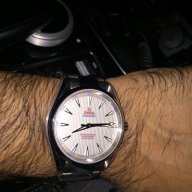
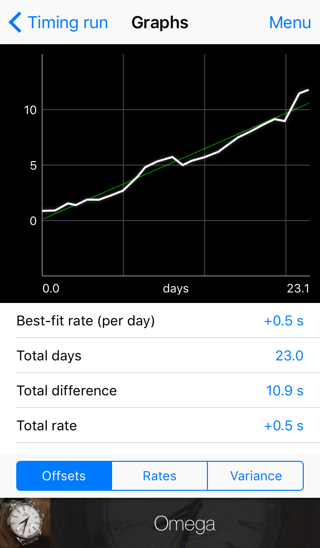
Hi everyone I have been using Watch Tracker over the last 23 days to check the accuracy of my Aqua Terra and the result is my watch is running at +0.5 seconds per day over the last 23 days with the fastest being at +2.0 seconds per day and the slowest rate was -0.8 seconds per day.
 
Posts
62
Likes
27
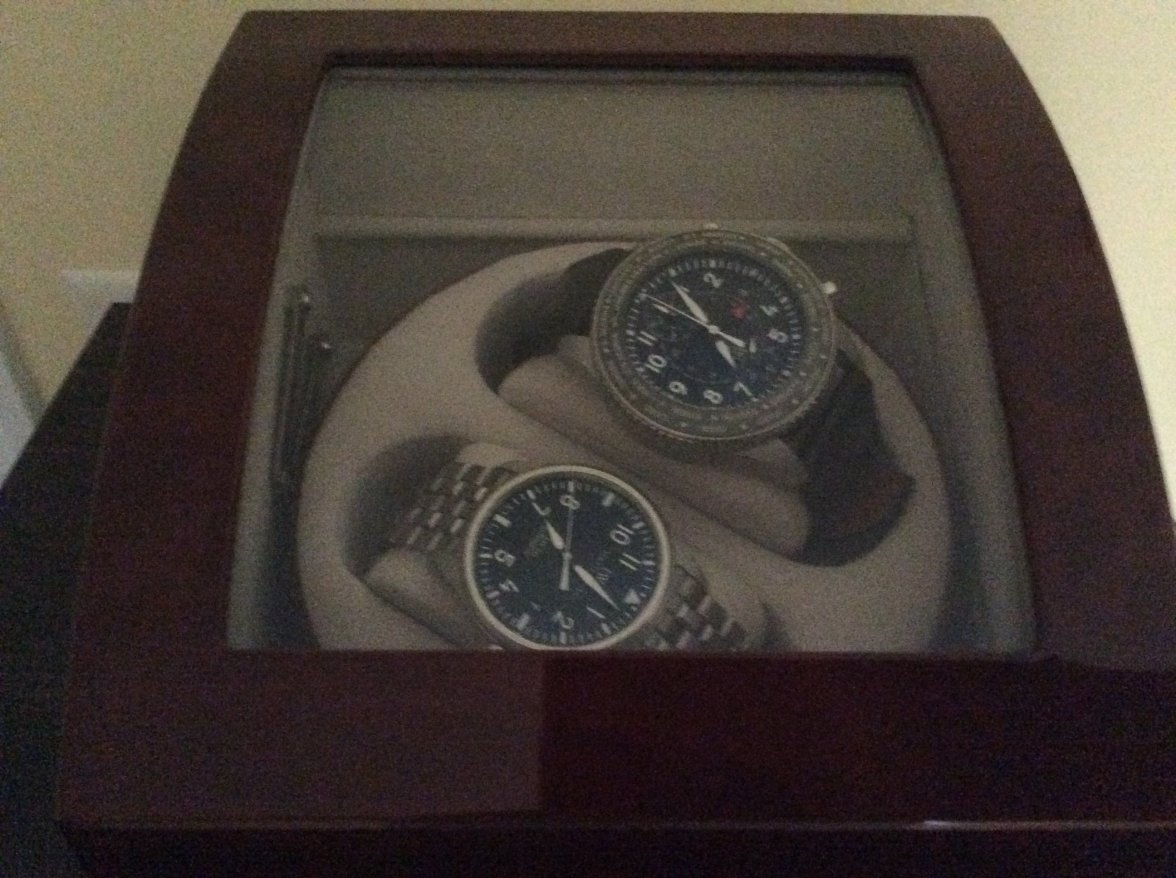
I have one of the early AT 15'000 Gauss. When new, it was +2 sec/day, but recently (this year) it's been running +10 sec/day. I store it on a watch winder when I'm not wearing it. Is this acceleration an indication the watch needs service? What could cause this phenomenon? I've added a picture of my winder. I've never seen much difference in accuracy form watches on the winder vs watches on my wrist.
Edited:
 
Posts
29,737
Likes
76,964
You should take the watch in for warranty repairs - there have been problems with pivots wearing in some of the anti-magnetic watches, and some parts may have to be exchanged if that is the problem.

Cheers, Al
 
Posts
4
Likes
1
Hi
I now have a Master Chronometer (since about April) and have read a fair bit on the timekeeping. In my career I have had to be extremely precise for many reasons on time so naturally have an interest.
First my watch has an average accuracy of 3.3 seconds per day according to the Omega on line test results for my particular timepiece.
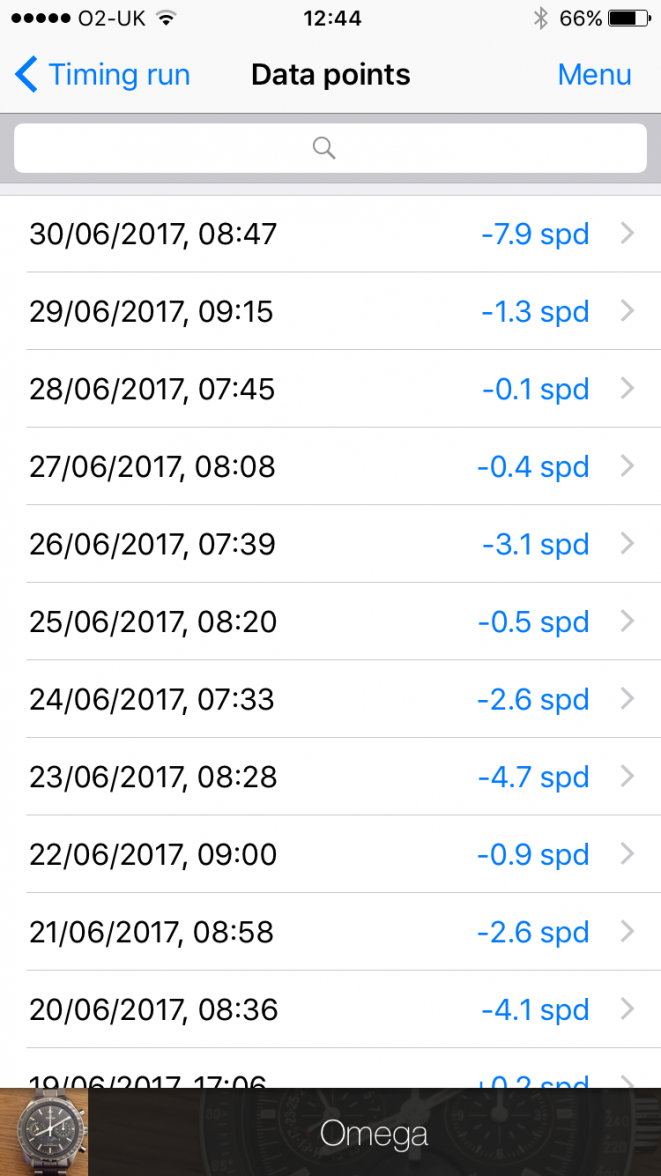
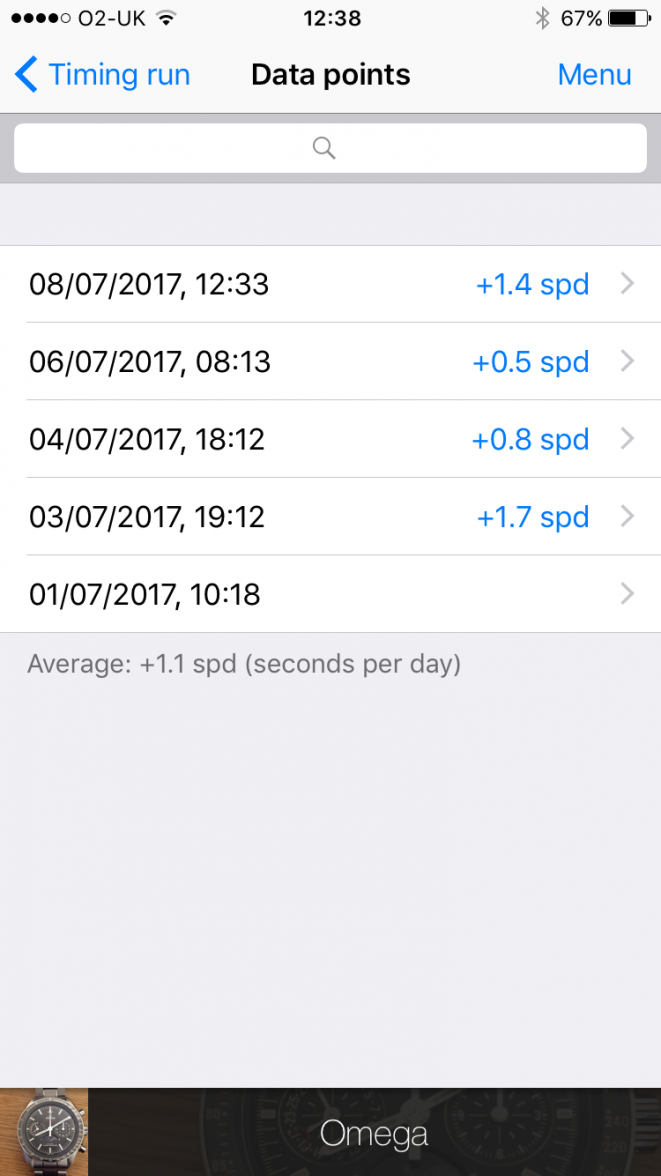
I have been using the Watchtracker App and had some unusual results. It has in general gained but very eratically and even in same position it has gained and lost. I am a complete newbie here but as an engineer some assumptions I can make.
First I found that my iPhone did synchronise within the app to an atomic clock but as I am in the UK by the time it was synced with a US server it was out by several seconds. I did speak to the app owner who confirmed this may be an issue.
So I then used my iPhones internal clock
Interesting results as seen below. One run the watch was losing and now it is gaining.
Would I be right in saying to get accurate seconds per day you need to take the reading at approximately the same time?
The watch needs to be in a similar state of spring capacity as I think when mine is close to the 60 hours standby it is slowing?
I like the fact that as it is now it seems to be gaining slightly so that enables an easy correction by just pulling out the crown and waiting until correct.
Anyway I love the watch and really enjoying learning about Omega specifically and these forums are great.
Cheers everyone
Remus
 
Posts
4
Likes
1
FWIW; I just purchased a PO 215.30.44.21.01.001 and the nice chap at the boutique referred me to:

https://www.omegawatches.com

You can check the actual Omega test results for your specific watch at the above link and it will show you the tolerances for your individual watch for each of the Master Chronometer certification tests that Omega performs.

I set mine using a NTP time from the WatchCheck app on December 1st. After 6 days (wearing it maybe 6 hours a day), the time is still correct to the second!

5YjOYg0.jpg
Thats a lovely picture