"laser" welding

Posts
663
Likes
4,777
Like any tool there are legitimate uses and those that are not so legitimate. Laser welding has been around for a while, and the machines are coming down in price. I have a friend who is a goldsmith who owns one, and it was about $30k (he bought it maybe 2 years ago). He uses it for jewellery repairs and for tacking parts in place in preparation for soldering, and he has said that it allows him to complete jobs much more easily, with better quality, and less time, so for him it was a good investment.

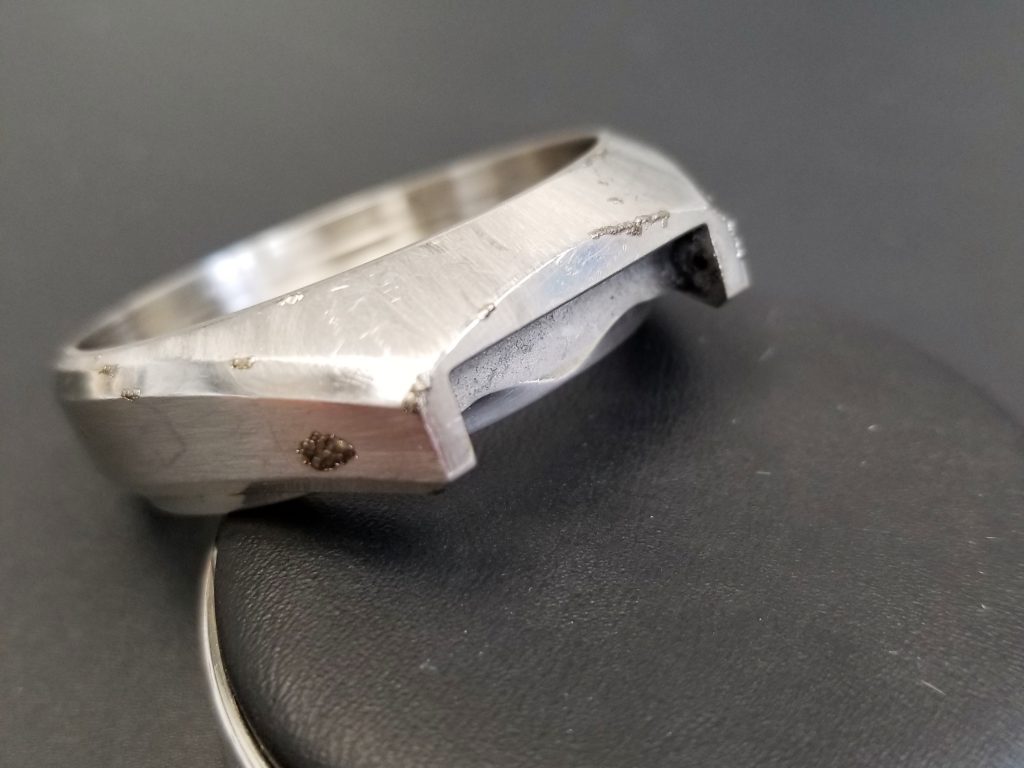
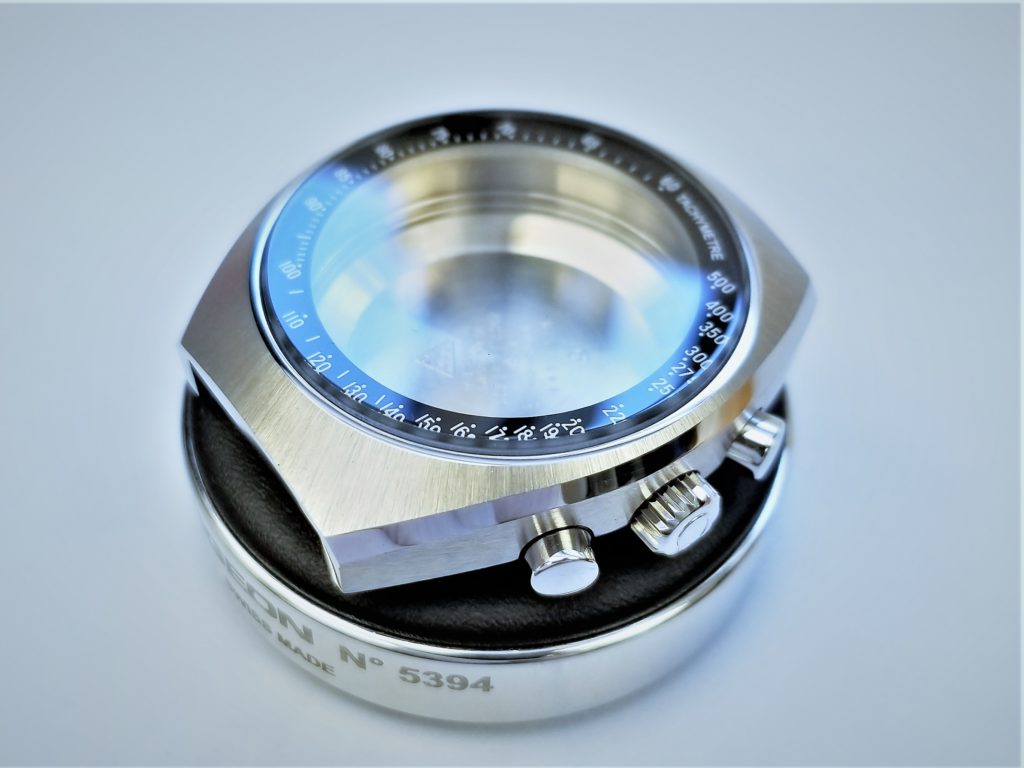
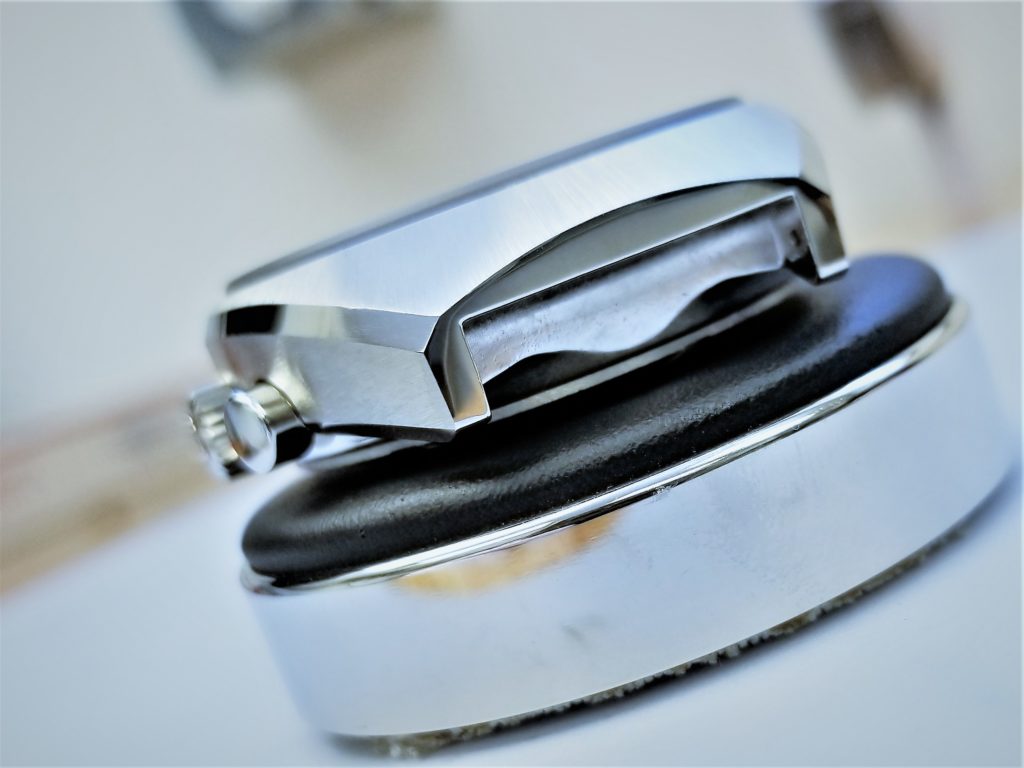
For the watch world, it can be used to restore cases certainly, and personally I do think it should be listed specifically that this kind of work was done. At least I would want to know...

Through the watchmaker grapevine I hear things about places buying up beat up vintage watches, building up the cases using laser welding, and then polishing/lapping the case to like new status. They then artificially age the cases and sell the watches at premium prices as "never polished" and that is one reason why such a description holds absolutely no weight with me.

It's a valuable tool to being back damaged cases, but the downside is it further muddies the waters with regards to what is "all original" or not. It's not the only thing that does this, as a skilled relumer can recreate original lume to a very high standard, so ask yourself if you would want to know if the lume was original or not when you think of this question about laser wedling...

Cheers, Al

I appreciate your thoughts. I agree that 'all original' is difficult to confirm at the best of times.

 
Posts
217
Likes
191
I may have 2x jobs fr someone depending on pricing. Has anyone used an Australian based watch maker for this type of thing before?
 
Posts
17,939
Likes
37,516
I may have 2x jobs fr someone depending on pricing. Has anyone used an Australian based watch maker for this type of thing before?

Have you contacted Lewis Watch Co?
 
Posts
16,863
Likes
47,901
I may have 2x jobs fr someone depending on pricing. Has anyone used an Australian based watch maker for this type of thing before?

Not something you would want to go the cheap option on 😗

As mentioned Lewis Watch Co
Situated in Perth WA
 
Posts
16,863
Likes
47,901
@photo500 is the member that works there. Send him a PM 😉

Everyone I have recommended him to has been more than happy with the work done by him.
Have to send him my Speedmaster soon
 
Posts
27
Likes
18
Does anyone know a watchmaker located in Germany (or EU) that could do laser welding repairs on a very scratched Chronostop?
 
Posts
227
Likes
791
The results of laser welding are truly exceptional , I dont think there are many collectors who can tell the difference between a NOS case and a laser welded one which is done professionally which is a bit scary ...
 
Posts
422
Likes
882
I've seen quite a lot of laser welding as used in the repair of injection moulding tooling. While the metals can be polished back to a perfectly matching surface there is pretty much always a visible line between the old material and the new. I think it's just discolouration from the heat of the process but it is almost always there. A real artist might be able to minimize it by using a finer bead of weld, we're talking about 0.005" here, but you have to find such a guy first. He'll also need to know the make up of the metal as he must pretty much match it for a seamless weld.

I call B.S. .... Ive had a number of things laser welded.
 
Posts
3,819
Likes
16,164
I call B.S. .... Ive had a number of things laser welded.
I call them as I see them. Having had dozens of repaired components through my hands I’m yet to see a perfect joint. Perhaps its because we tend to have inches of repair instead of a small point or perhaps its because we’re dealing in very hard metals but I stand by my statement.

but then, I was only involved in it for twenty years.
 
Posts
422
Likes
882
I call them as I see them. Having had dozens of repaired components through my hands I’m yet to see a perfect joint. Perhaps its because we tend to have inches of repair instead of a small point or perhaps its because we’re dealing in very hard metals but I stand by my statement.

but then, I was only involved in it for twenty years.

I suggest you get a more skilled operator to do any future work!!!!
 
Posts
3,819
Likes
16,164
I suggest you get a more skilled operator to do any future work!!!!
Wow, thats a stupid comment. you have no idea of the type of work I was involved in at that time or the tolerances involved.

lets just say it involved the production of tight tolerance hydraulic components and 0.0002” errors were enough to cause trouble.

and yes... that two tenths of a thou. About 1/40 of a human hair.

the guy we used for laser welding was widely regarded as the local artist and had quite the line up for his services.

go ahead and call it b.s. again, I won’t bother replying to it. You’re not worth the effort.
 
Posts
422
Likes
882
Wow, thats a stupid comment. you have no idea of the type of work I was involved in at that time or the tolerances involved.

lets just say it involved the production of tight tolerance hydraulic components and 0.0002” errors were enough to cause trouble.

and yes... that two tenths of a thou. About 1/40 of a human hair.

the guy we used for laser welding was widely regarded as the local artist and had quite the line up for his services.

go ahead and call it b.s. again, I won’t bother replying to it. You’re not worth the effort.

You are clearly having trouble reading and comprehending. I didn't call it B.S. again. I told you to use a different operator.

I am not disputing your issues with production tolerance as you didn't bring that up in your original post. You stated, "While the metals can be polished back to a perfectly matching surface there is pretty much always a visible line between the old material and the new".

I have had several watch cases welded and I am yet to see the "visible line". In my humble opinion this must be the molecular difference between the item being welded and the filler material

Its clear that welding a watch case does not require such strict tolerances. It's like comparing apples to oranges.

I have had one watch case extensively welded and refinished. I paid 3k UD for the job - done in HK. I got this job done as I wanted to test the abilities/capabilities of this process.

After receiving the completed job back I spent considerable time trying to find fault with the work under a microscope. I was unable to find fault.

Again, the tolerances you cite and the tolerances required to refinish a watch case are very different.

Having said that, I believe there is an acid test that can be done to show any repaired surfaces.
 
Posts
24,257
Likes
54,013
Except for one case, I have not been able to see a boundary between new and old material after laser welding and refinishing of watch cases. That one example was a 1940s case, where the SS alloy used at the time was slightly different than the standard alloys currently in use. The case restorer chose the closest matching alloy, and honestly the interface is almost invisible, but can be faintly seen under high magnification.
 
Posts
15,480
Likes
45,849
A friend of mine is excellent at using the laser for repairing jewellery. And he has done small jobs for me. I was under the impression that lasers do not require the use of solders or brazing material. In many instances, the process is more a “fusing” of items, rather than “welding”. When fusing two parts of a broken item, there wouldn’t be the introduction of another material, so it would seem that a repair might be invisible. Can solder, or another material be used in the process of doing a laser repair? I’ll have to ask him.
 
Posts
24,257
Likes
54,013
A friend of mine is excellent at using the laser for repairing jewellery. And he has done small jobs for me. I was under the impression that lasers do not require the use of solders or brazing material. In many instances, the process is more a “fusing” of items, rather than “welding”. When fusing two parts of a broken item, there wouldn’t be the introduction of another material, so it would seem that a repair might be invisible. Can solder, or another material be used in the process of doing a laser repair? I’ll have to ask him.

On watch cases, it is often used as an additive process to fill voids, etc. A typical application would be to add material around and within lug holes that have been "cratered" and made oval by the polishing wheel. After adding sufficient material, the hole is restored and surface refinished. The same can be done to restore chamfers and bevels worn down by polishing.
 
Posts
29,672
Likes
76,830
In restoring a watch case that is scratched, worn down, or over polished, filler wire is used. The selection of filler wire can affect how visible the laser welded area is, so ideally you would want to use a material that is as close to the base material as possible.
 
Posts
2,327
Likes
2,542
Wonder if Electroless plating might be suited to some restoration work?
If a case is plated and badly scarred or gouged, first de-plate the case and apply self leveling nickel to fill the gouge. polish smooth and re-plate.