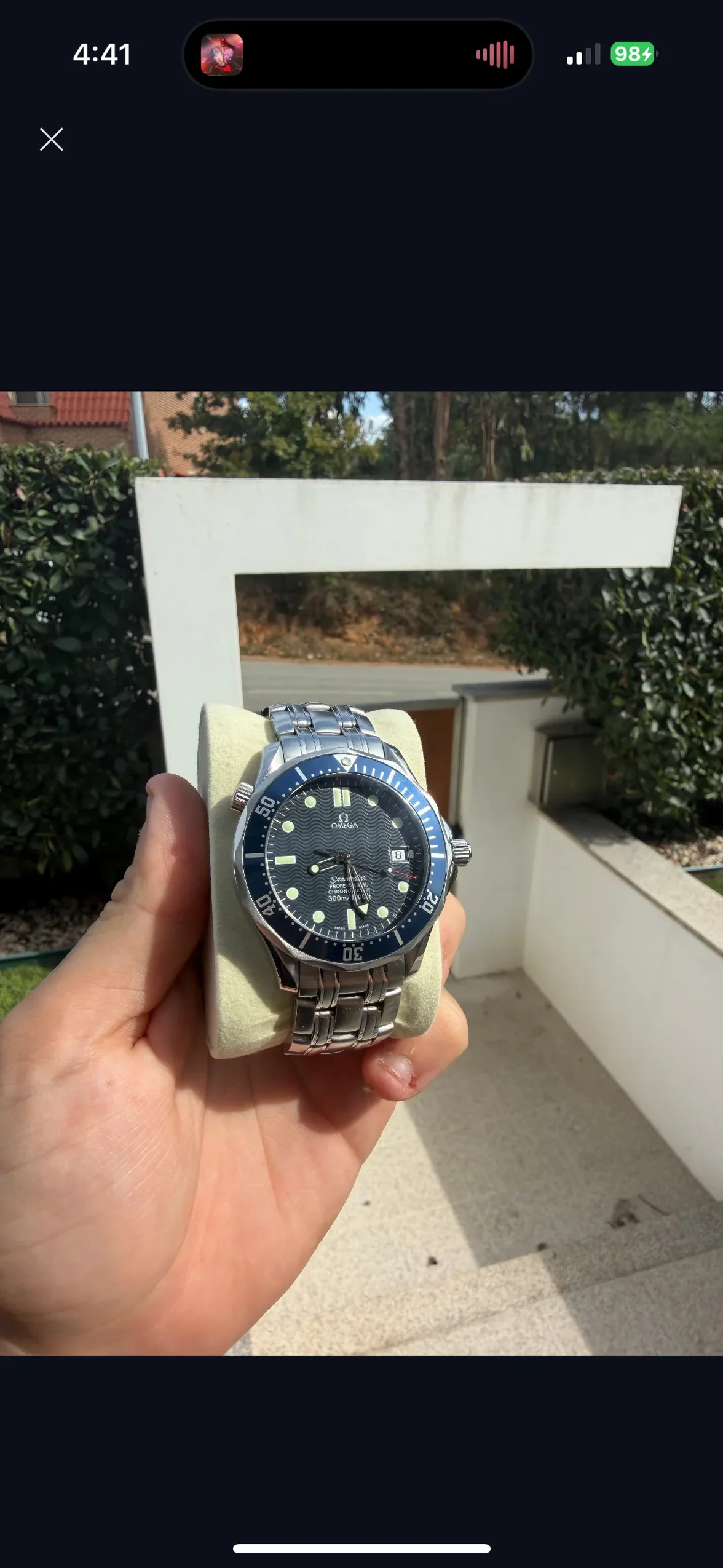
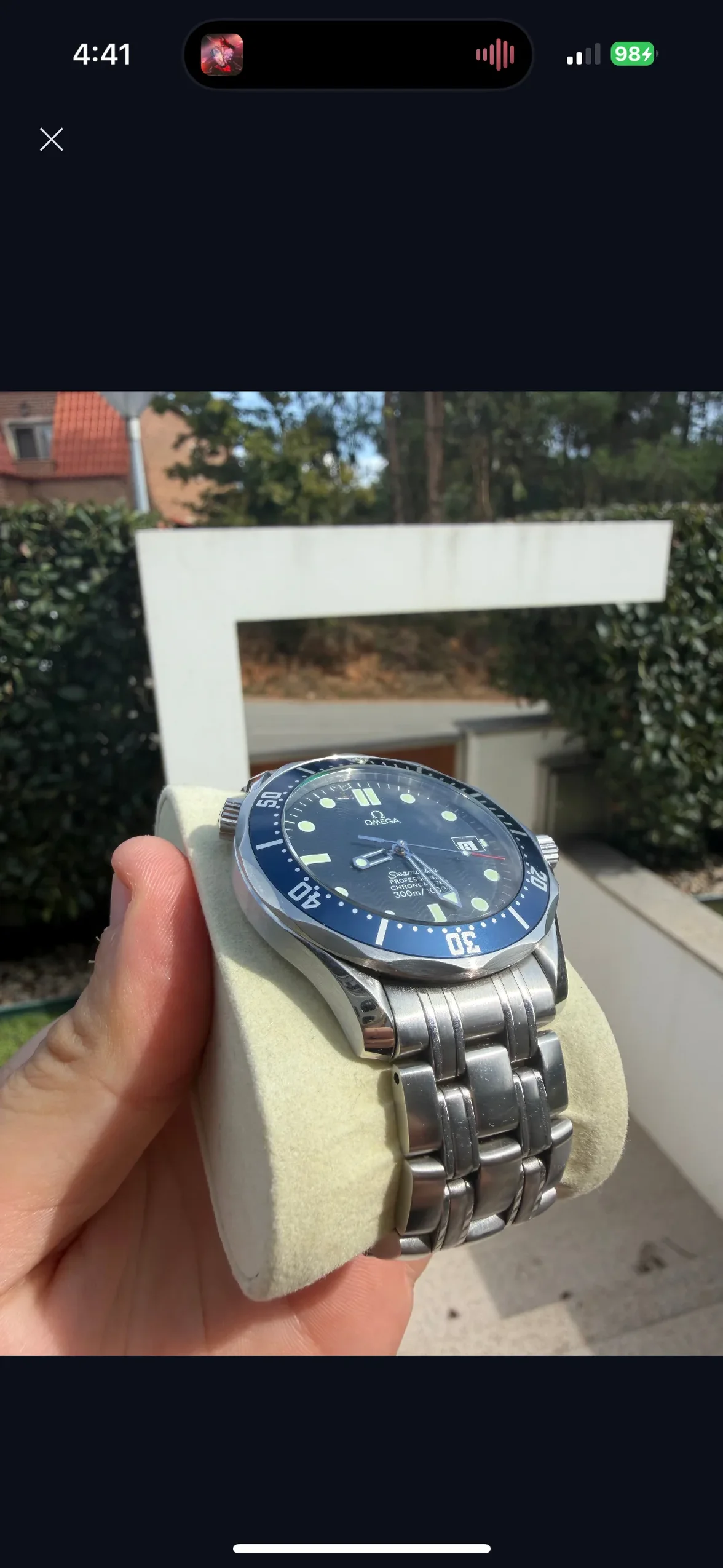
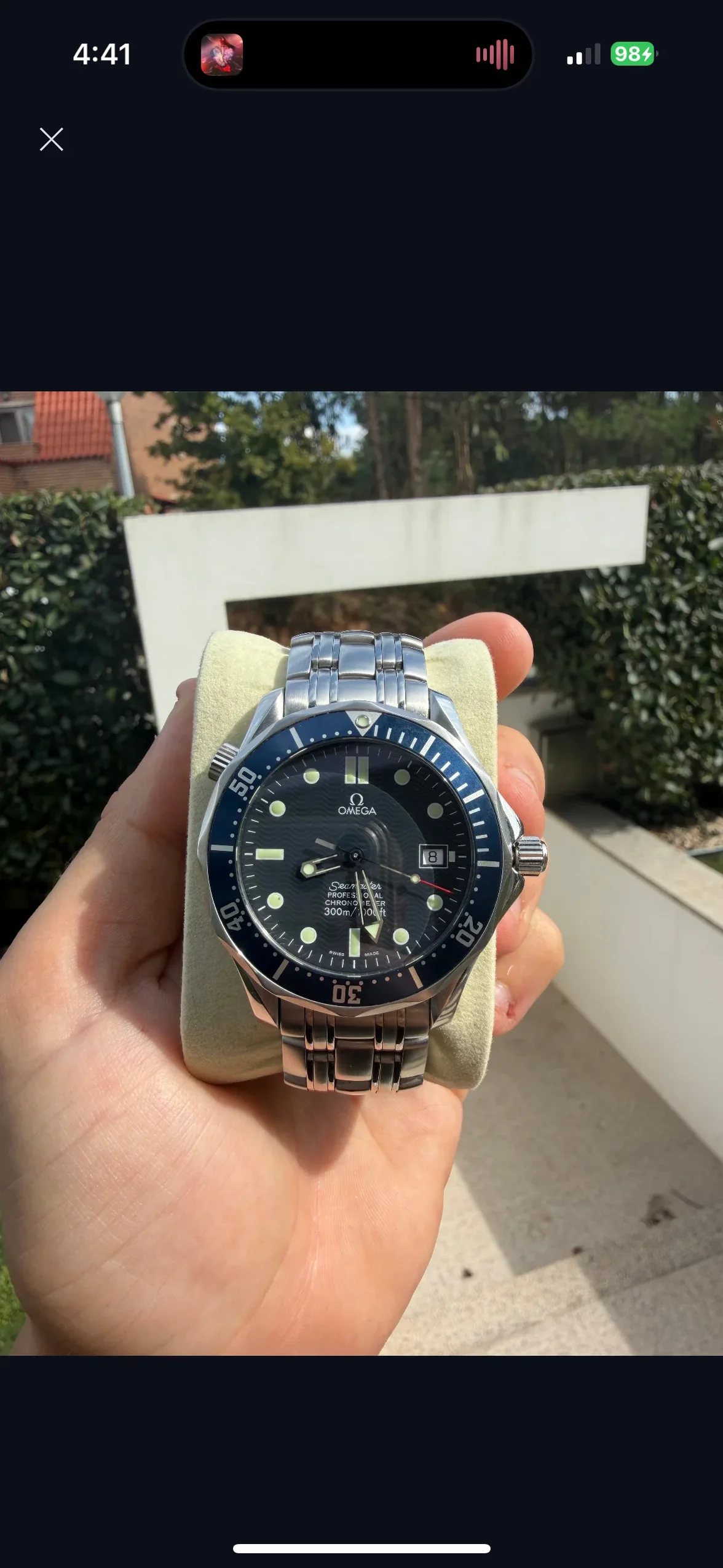
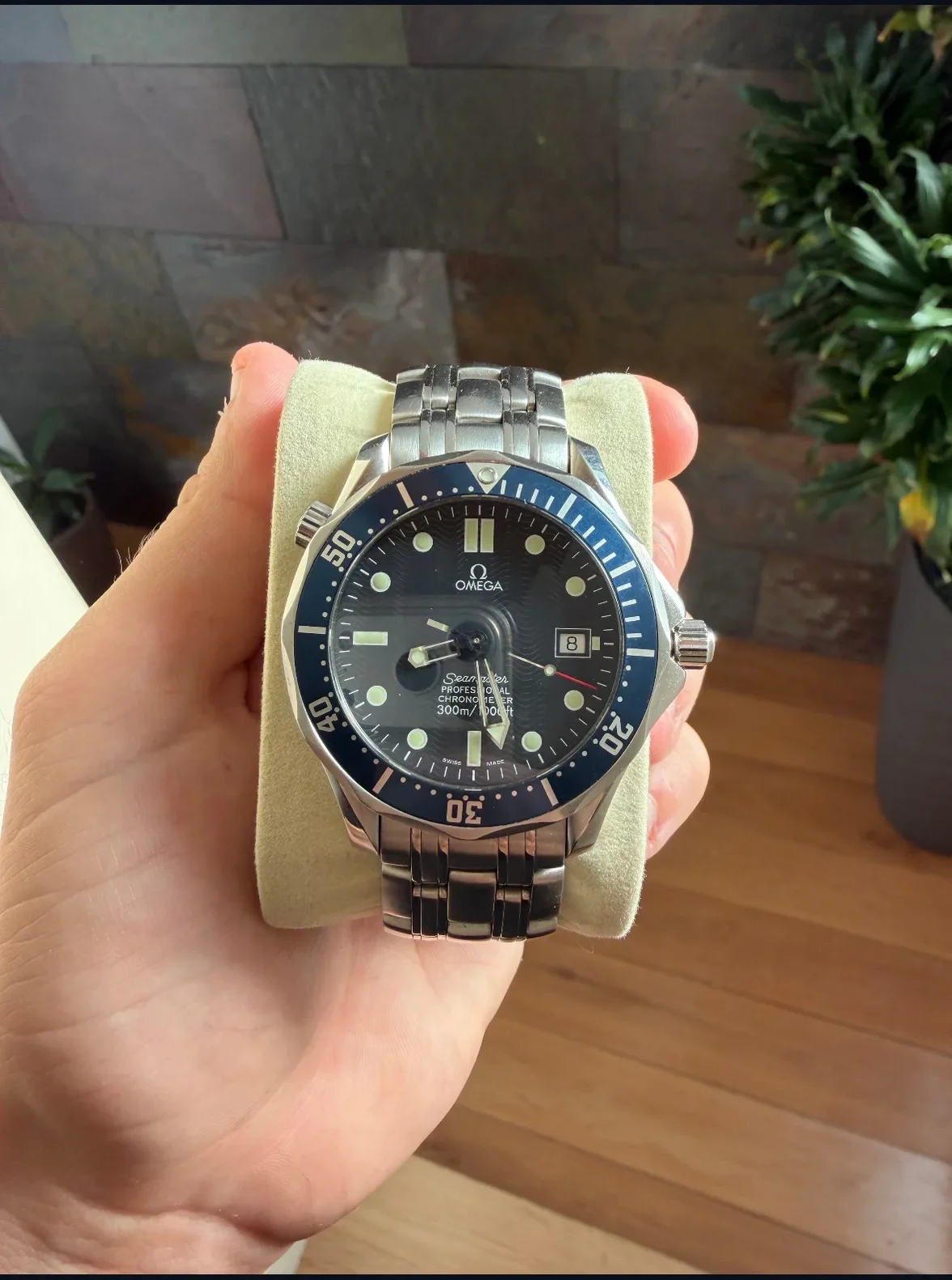
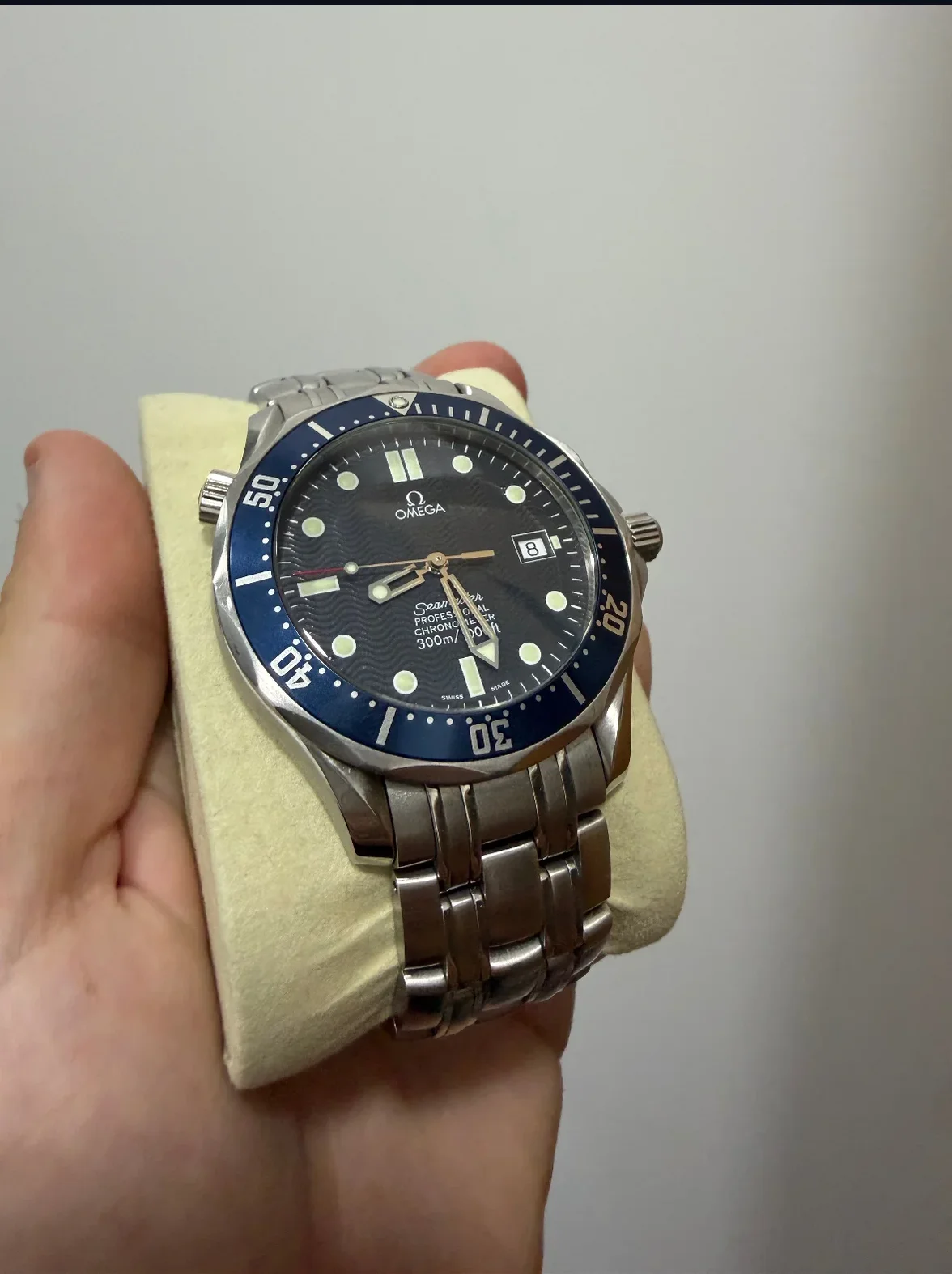
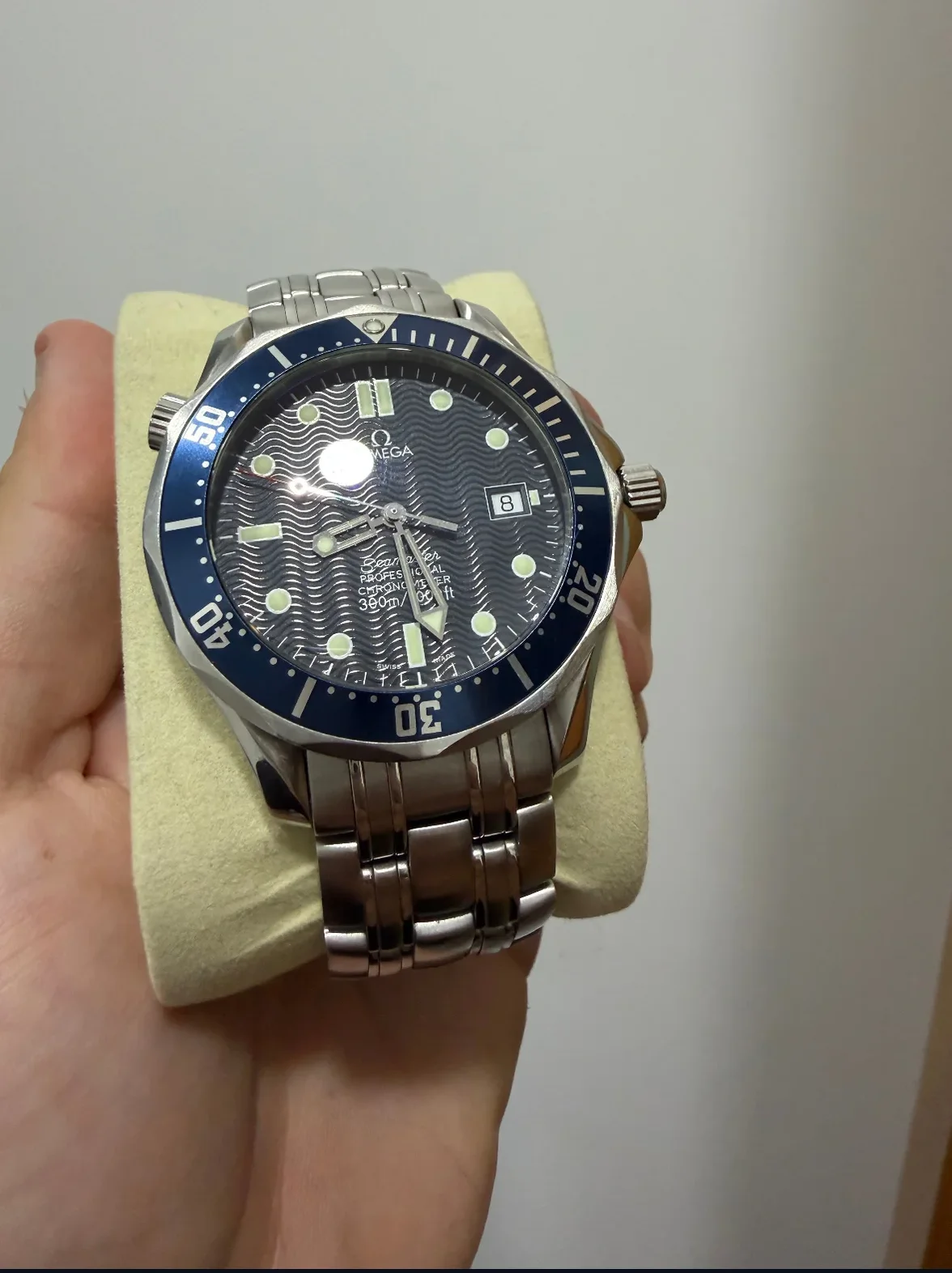
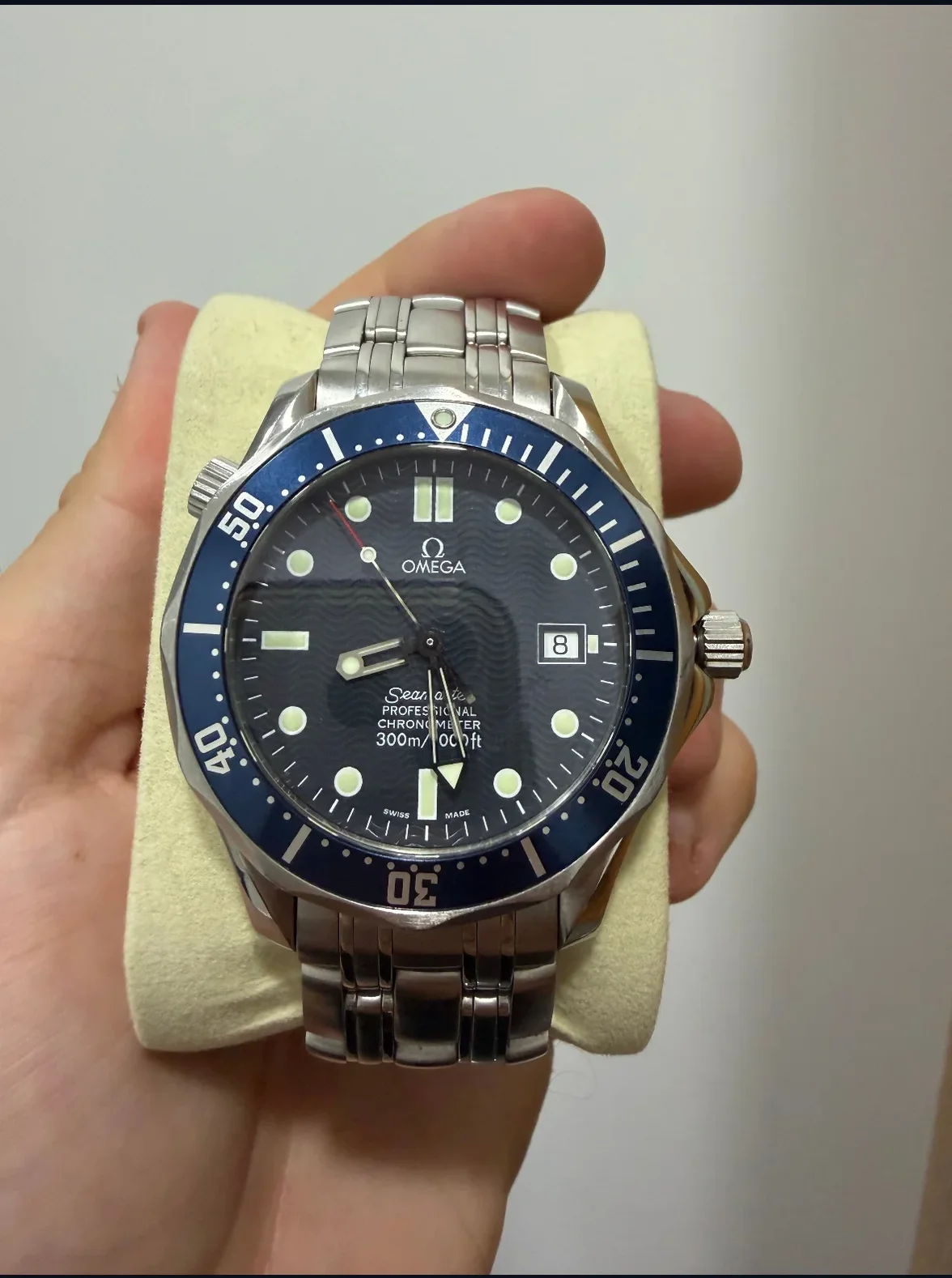
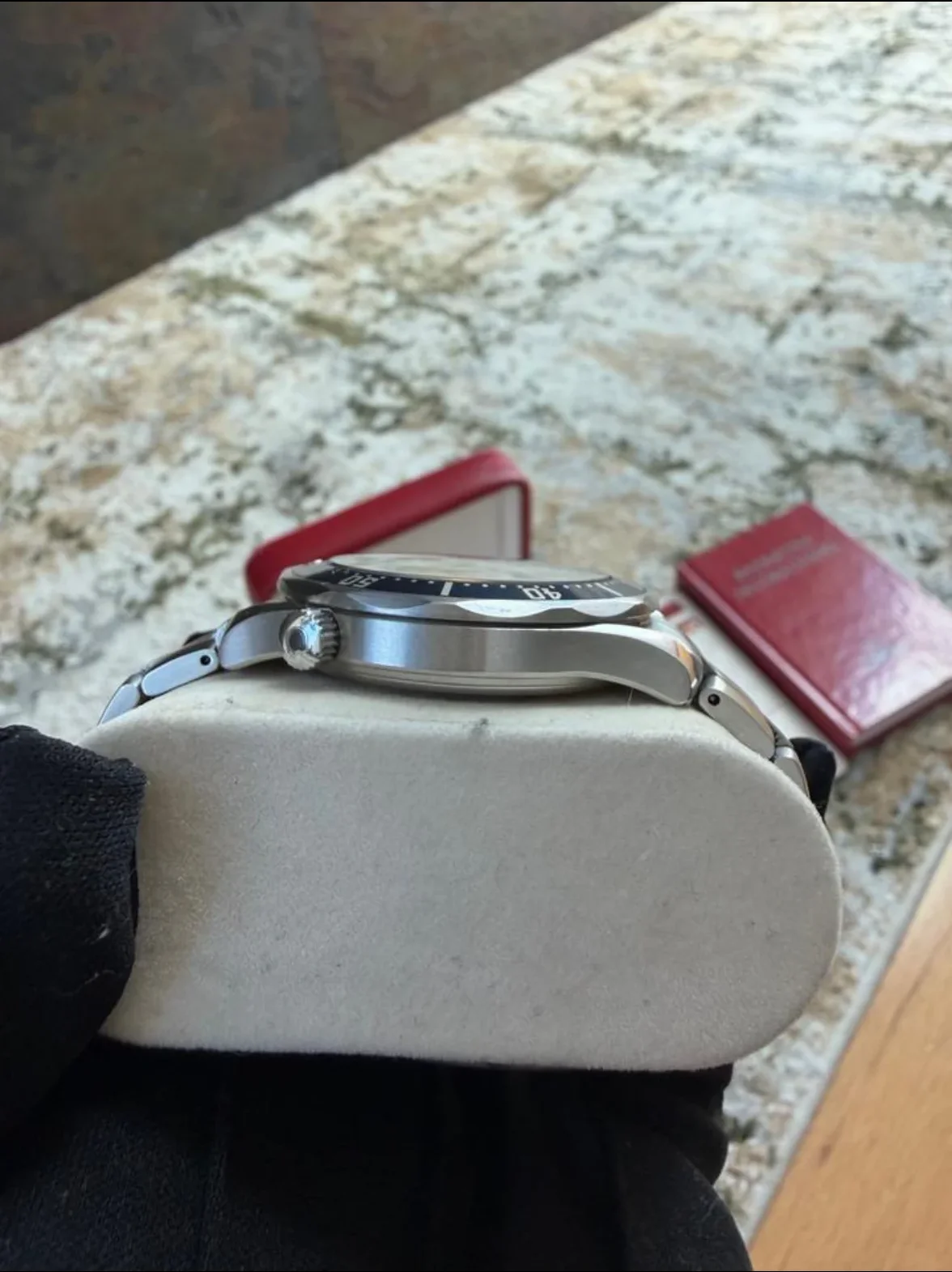
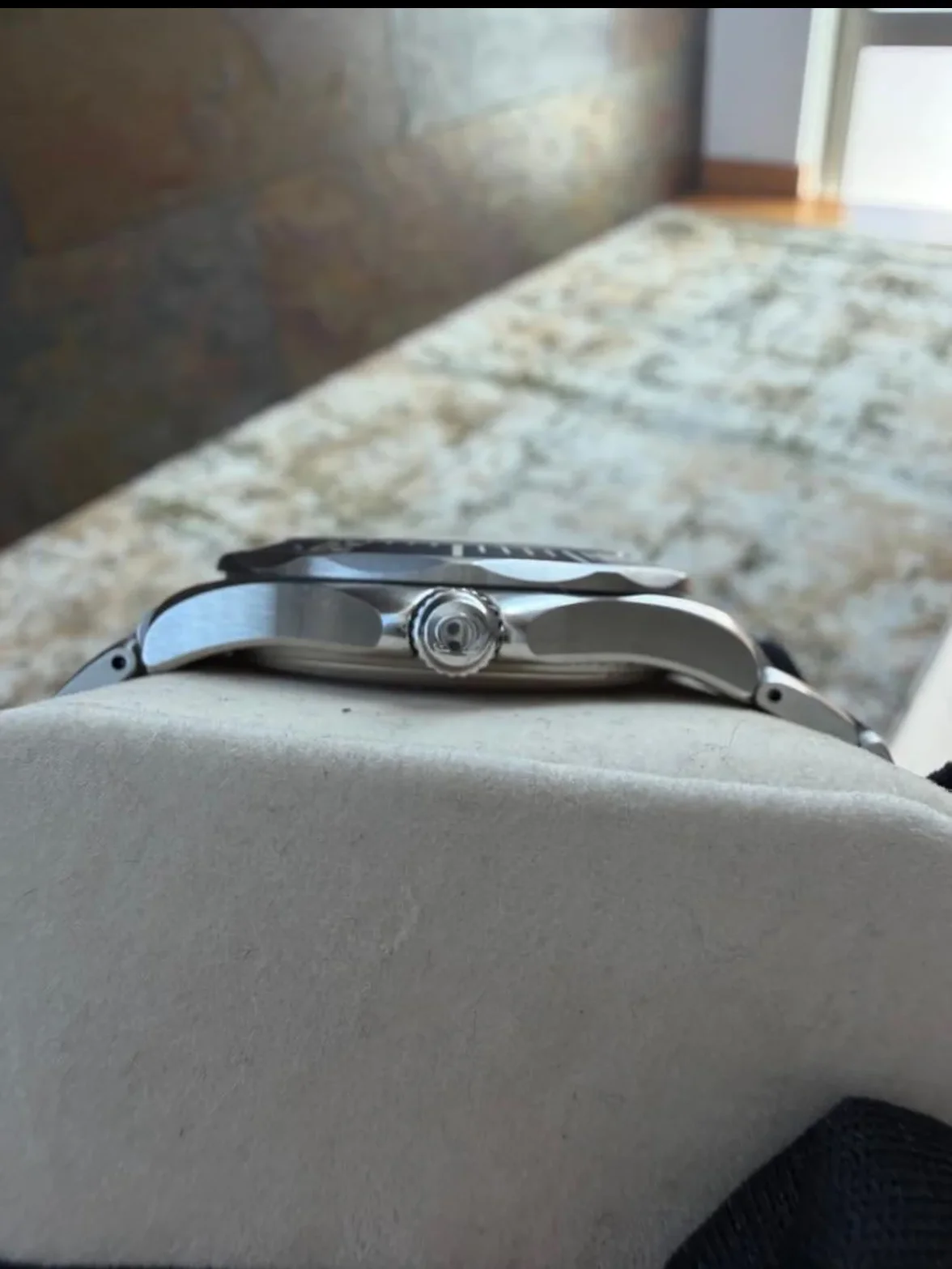
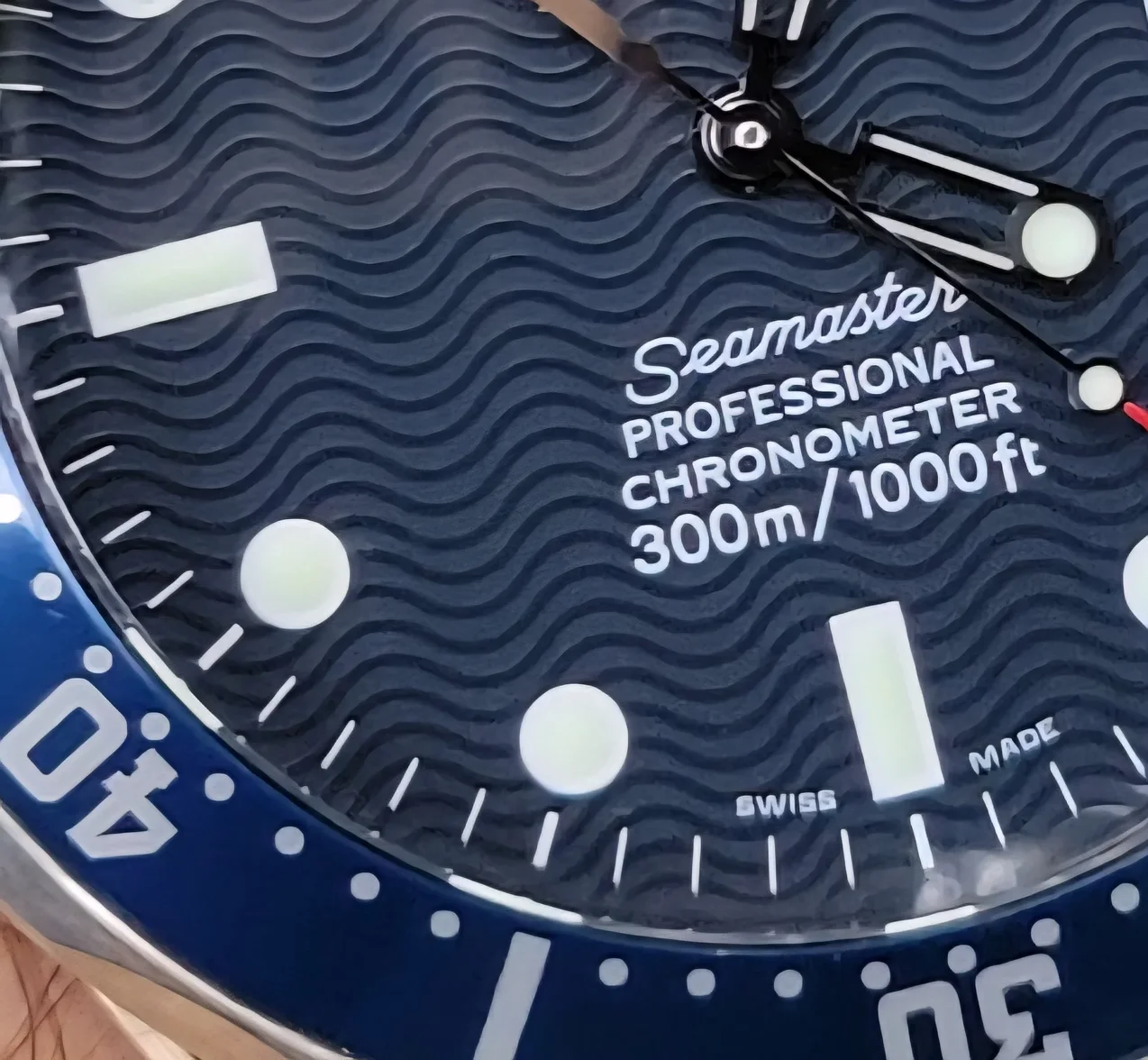
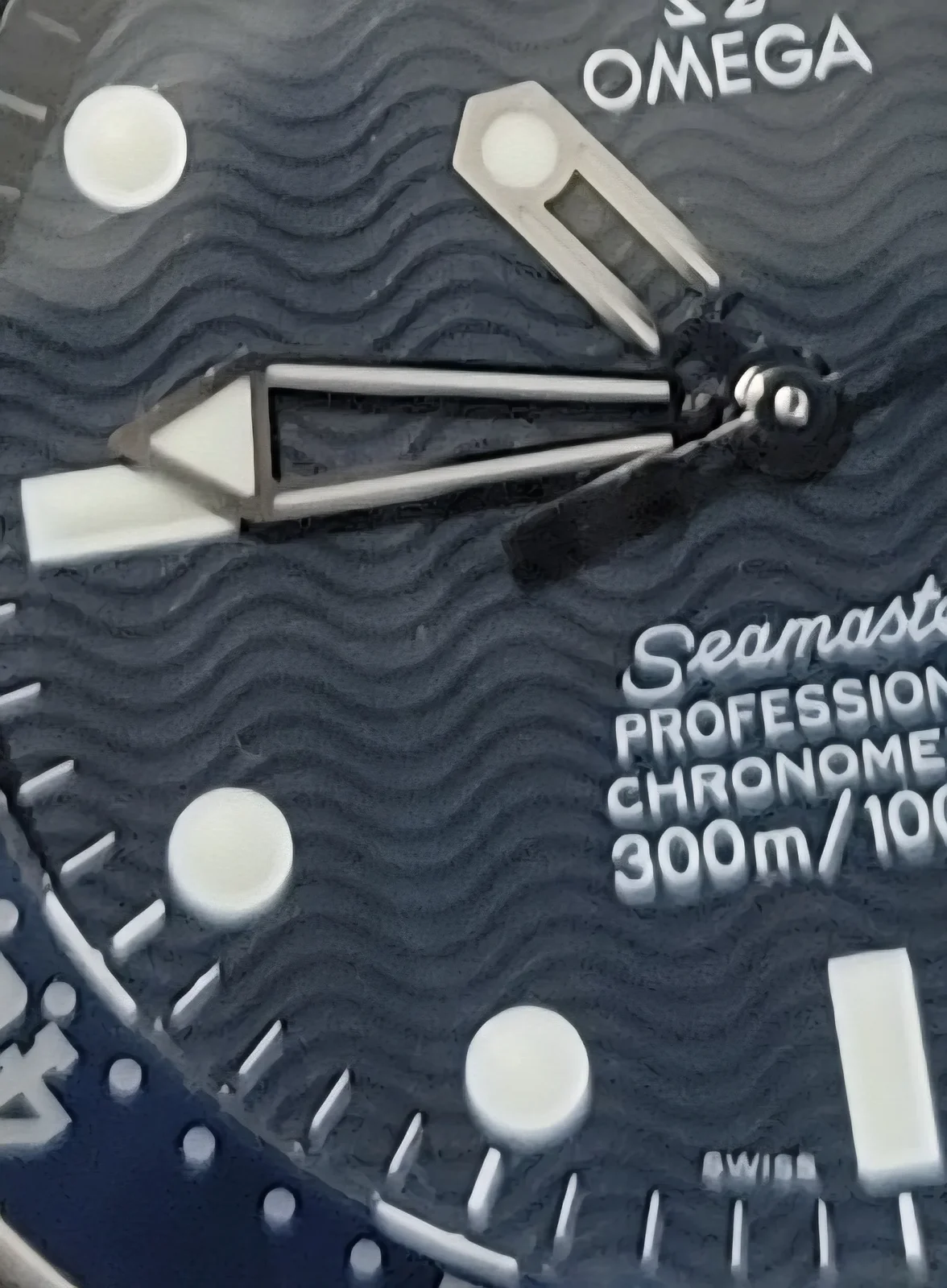
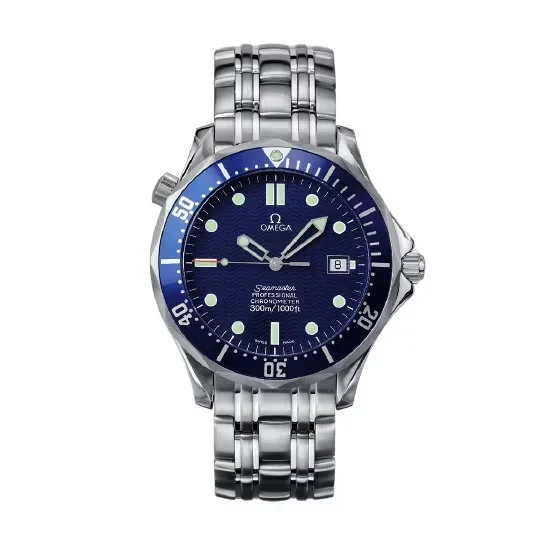
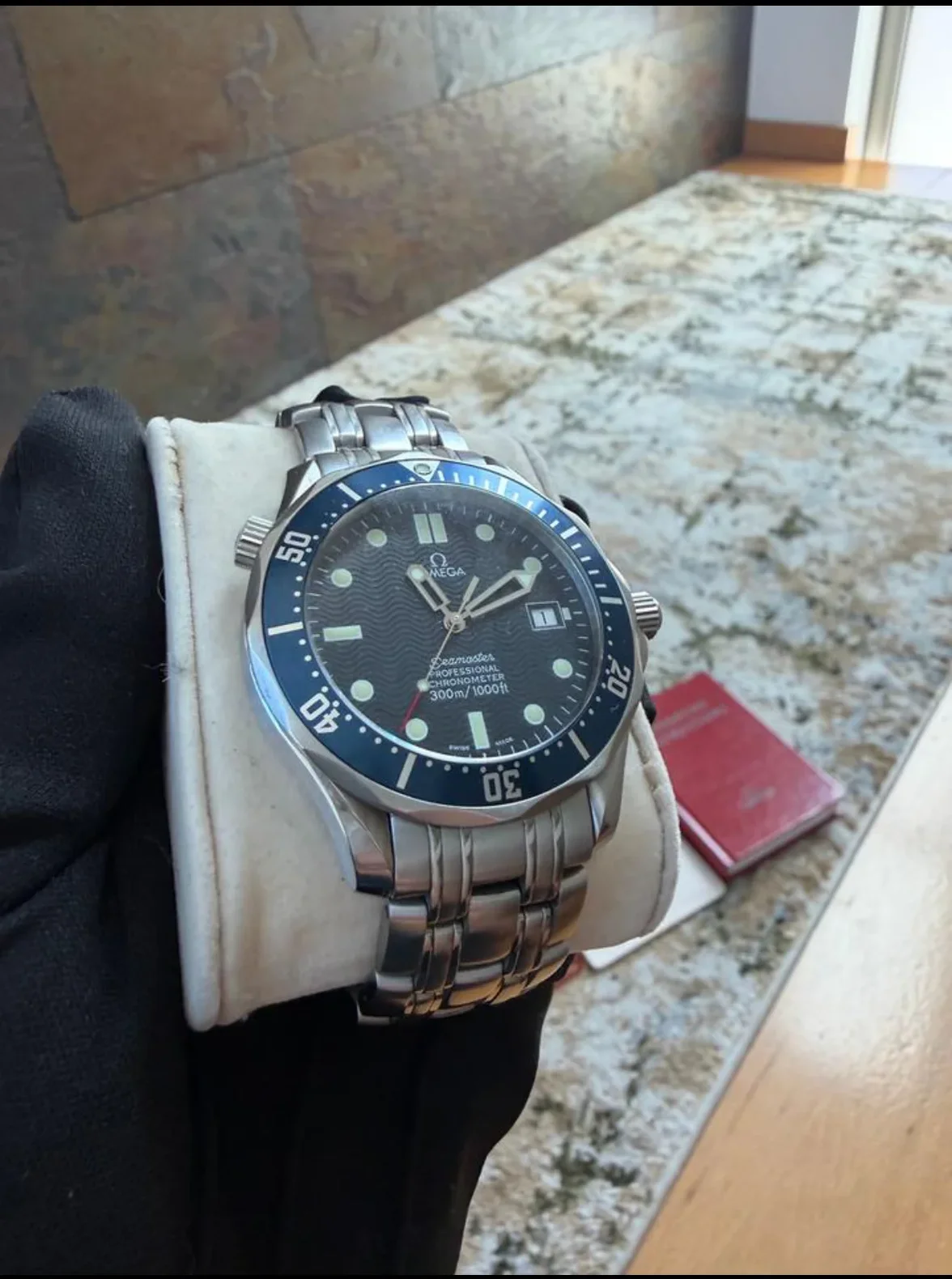
The color is the lume aging - totally normal for a 25 year old watch. What are they asking for it?
Is lume aging in superluminova a thing? Also then why others look almost white?
Superluminova really doesn't show signs of aging the same way as prior tritium lume, but it does "age" ever so slightly.
@OmegaBorder what's probably happened is that the lume is "charged" in all of the shots. I've seen a lot of 2531 pictures online that look just like this one; the camera likely picked up on the slight green and amplified it.
Cell phone cameras tend to be more sensitive to green light because of the way the camera filter is built. This is done because the human eye is also more sensitive to the green-yellow spectrum than any other, but I think cell phone pictures have a way to go before they look exactly like.
I'll attach two images of mine, one charged and in sunlight, and one not very charged and in garage light.
There's some slight green present to the camera even in bright light. It isn't as intense as the images you shared, but it's possible that camera is more sensitive to green
or that the lighting conditions weren't the same.
In this image, the lume is slightly less green tinted and looks more faded yellowish. HOWEVER- the lume was actually MORE visible to my naked eye in this image than it was in the first one, because of the ambient light.
I'd say you've got a pretty normal image there, I'd anticipate some amount of weirdness from the camera shots.
NOTE/EDIT: This lume is rarely true white. It can't be, because it's always emitting some amount of green-yellow light. Green-yellow lume tends to be the most visible to us at night because rod cells, despite not being able to perceive color, pick up green and slightly blue wavelengths most efficiently. Meanwhile, of our three cone cells, we have two that overlap in the yellow-green wavelength, and our most numerous cone (L) has the most detection at the
560–564 nm wavelength (yellow green). We're just really, really, really good at perceiving green-yellow.