- Posts
- 10,073
- Likes
- 57,387
gbesq
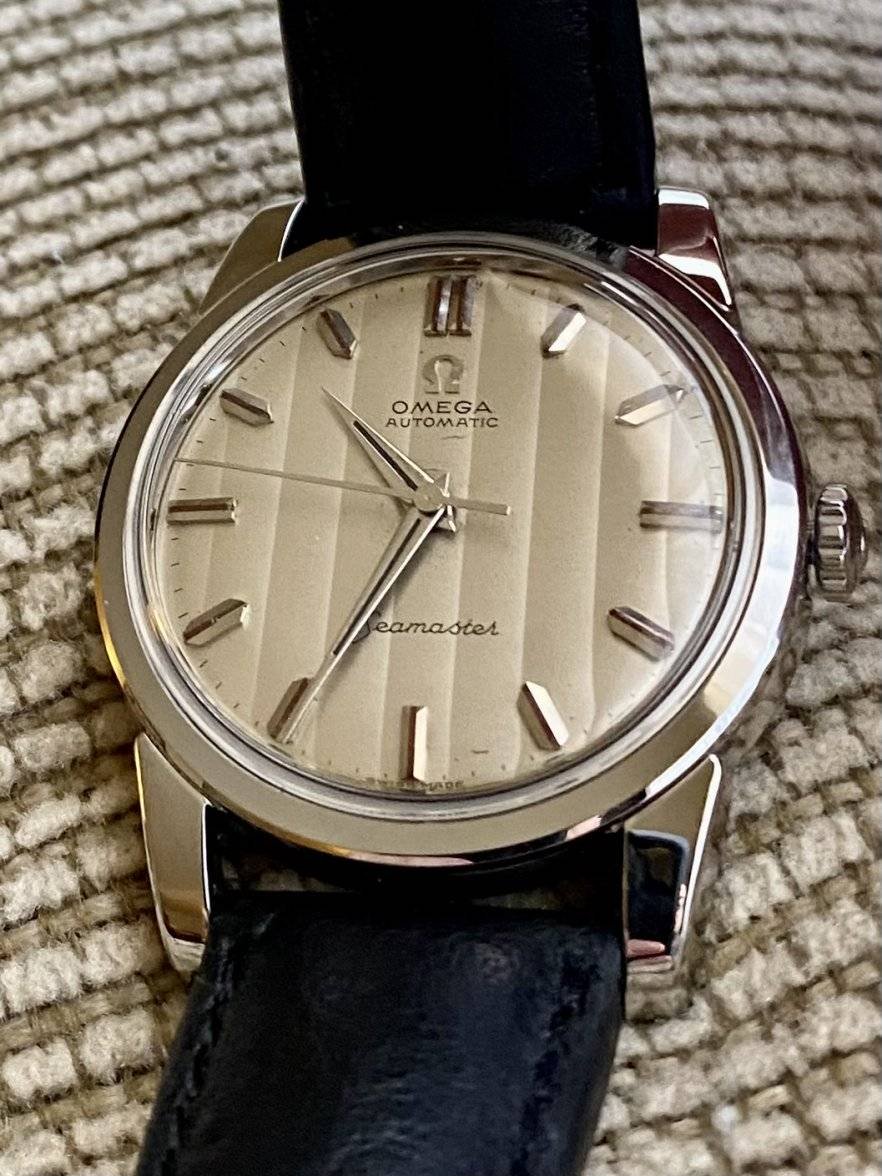
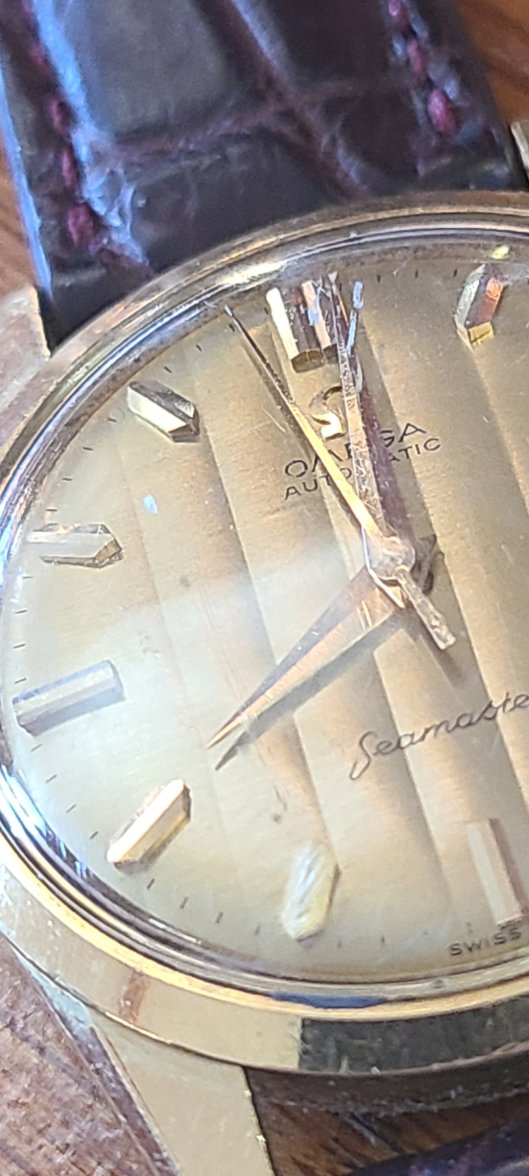
·So I have a bit of a mystery with my 1961 Seamaster 14761. Upon examining the curtain dial of this watch under magnification, I saw this when I viewd the 8 o'clock marker under magnification:
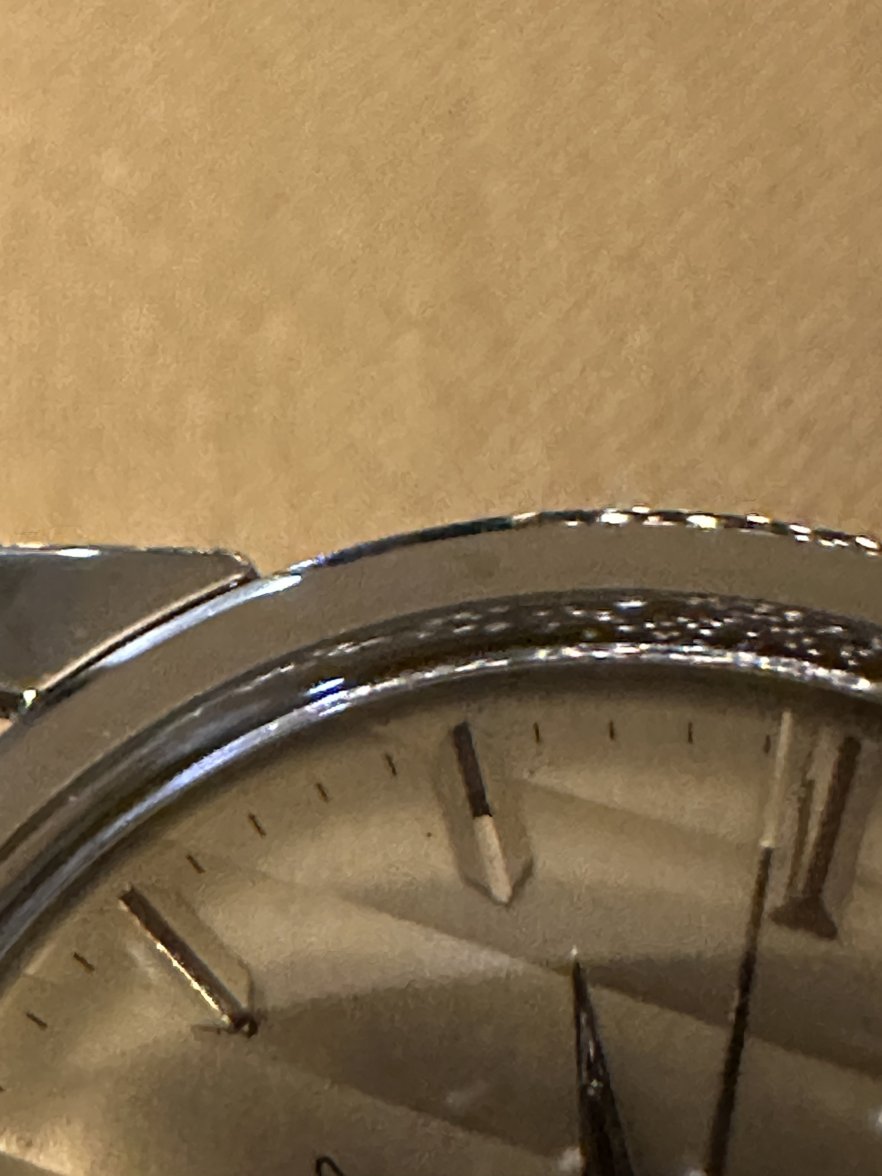
As you can see, about half of the inlay is missing - barely visible to the naked eye, but it's there. The watch has absolutely no reaction whatsoever to UV light, so I am assuming that whatever the inlay material is, that it can't be a luminous compound like radium or tritium. To my knowledge, Omega only used three materials for marker inlays - onyx, rubber and black paint. This watch is too early, I think, for the cost cutting era of black paint and, in any event, the "break" looks too clean for that. I'm thinking that it must be onyx, but I'd like confirmation or correction from some of our experts. If it is onyx, any idea where I can procure a replacement? My recollection is that the onyx inlays are friction fit and that a watchmaker simply slides them into place. Thanks in advance for any assistance.
As you can see, about half of the inlay is missing - barely visible to the naked eye, but it's there. The watch has absolutely no reaction whatsoever to UV light, so I am assuming that whatever the inlay material is, that it can't be a luminous compound like radium or tritium. To my knowledge, Omega only used three materials for marker inlays - onyx, rubber and black paint. This watch is too early, I think, for the cost cutting era of black paint and, in any event, the "break" looks too clean for that. I'm thinking that it must be onyx, but I'd like confirmation or correction from some of our experts. If it is onyx, any idea where I can procure a replacement? My recollection is that the onyx inlays are friction fit and that a watchmaker simply slides them into place. Thanks in advance for any assistance.