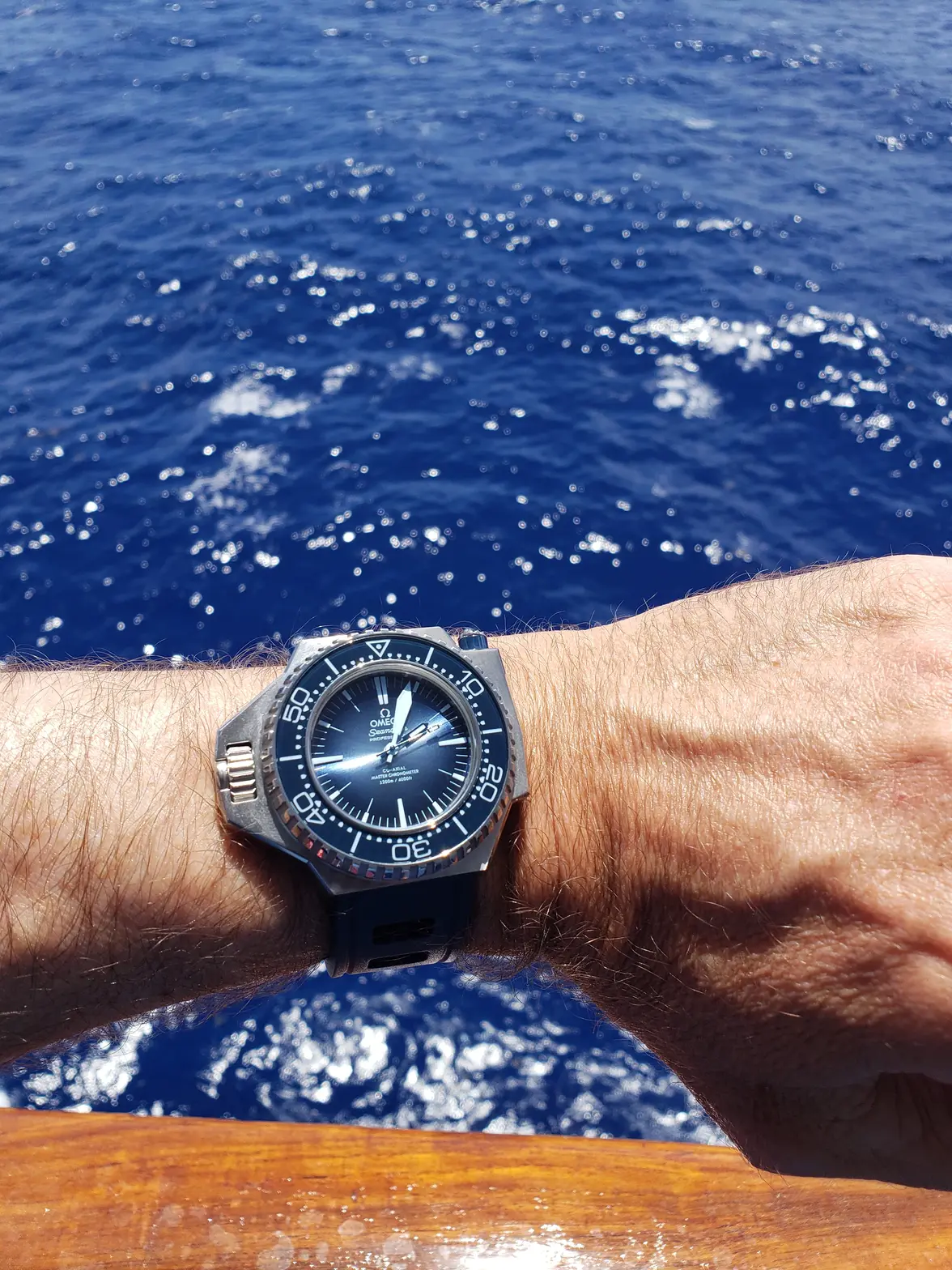
Using my Snoopy 50 as a comparison of thickness to the 1861 since they're very similar in thickness. You're basically making my point with the Snoopy caseback assembly which causes the it to be thicker yet the standard 1861 without any special caseback is just as thick.
On the Seamaster 300, I'm talking about the heritage. I didn't mention Diver and no one is going to refer to the PO as a Seamaster 300.
I'm bringing this up since someone else mentioned that Omega likes to increase the thickness of their watches. I just listed 3 examples where Omega did the opposite with the Speedmaster Pro, the newest PO, and Seamaster 300. If this wasn't a conscious decision by Omega, then they wouldn't be making this a point in their marketing pointing out the new thinner case dimensions.
If we want to go further, the updated FOIS also got slimmed down.
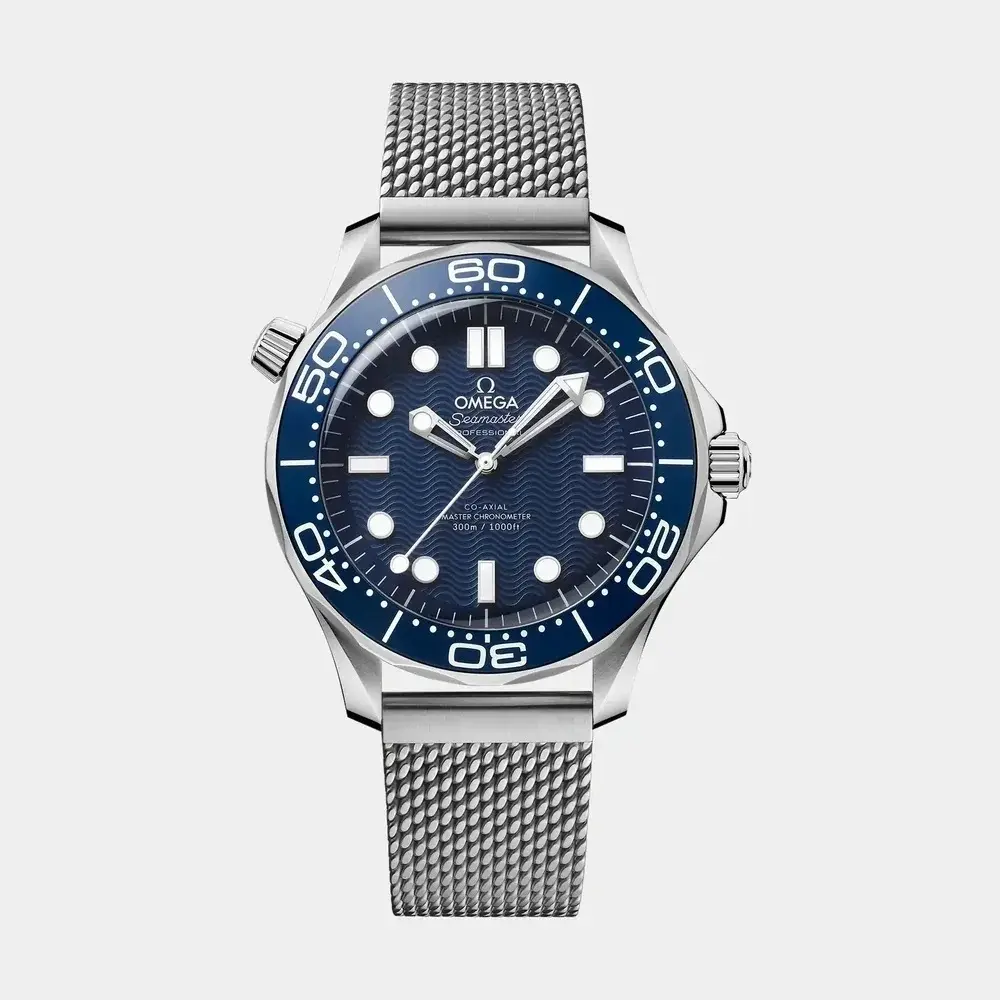
Fair enough on the Seamaster 300 Heritage, but don't say nobody. It was a complete redesign, and the overall proportions changed substantially. But again, the actual thickness reduction was only about 0.8 mm. Calling the previous 14.65 mm watch a “hockey puck” and the ~13.85 mm replacement meaningfully thin because of 0.8 mm seems like exactly the kind of significance I'm questioning. If the newer watch looks or wears slimmer, I think the overall redesign and proportions are doing far more work than eight-tenths of a millimeter in maximum measured thickness.
The Speedmaster comparison is where I really don't follow the argument. You consider the ~0.2 mm difference between the 1861 Hesalite and Snoopy 50 insignificant enough that they're “very similar in thickness,” which I agree with. But then the ~0.7 mm difference between the 1861 and 3861 Hesalite becomes meaningful evidence that Omega deliberately slimmed down the Moonwatch. The difference between those two deltas is less than half a millimeter. Fractions of a millimeter can't be insignificant in one comparison and then suddenly carry substantial design significance in another.
And the 3861 was a genuine redesign with different construction requirements. The 3861 Hesalite apparently uses the same Hesalite crystal as the previous generation, but the case/caseback architecture changed, including elimination of the soft-iron antimagnetic cover because the 3861 movement itself provides the required magnetic resistance. The caseback and sealing arrangement are also different. So a redesigned watch ending up ~0.7 mm thinner overall isn't particularly surprising.
If Omega ends up with a lower thickness number, of course they're going to market it. They know reviewers and enthusiasts scrutinize dimensions down to tenths of a millimeter. That doesn't necessarily mean the engineers began with “we need to make this watch 0.7 mm thinner” as a fundamental design objective. It may simply be one favorable result of redesigning the watch, which marketing quite reasonably highlights afterward.
And the FOIS seems to be another example of the same thing. It was substantially redesigned, including the case and crystal, and the supposed “slimming” we're talking about is again only about 0.6 mm. That's not additional evidence that changes my view; it's another substantially redesigned watch whose maximum measured thickness happens to differ by a fraction of a millimeter.
I'm not disputing that these watches technically got thinner, nor that Omega advertises it. I'm questioning the significance being assigned to fractions of a millimeter and, especially, using those fractions as evidence of some broader Omega strategy that tells us what they'll do with a future Diver 300M. If Omega actually redesigns that watch to be substantially thinner, great. I just don't think a 0.7–0.8 mm change on otherwise redesigned watches tells us that.
If Omega redesigns their diver's watches and gets it back into the 12.x mm range, then I'll start taking the idea that Omega is deliberately slimming its watches more seriously. The Peter Blake-era 2254.50 was roughly a 12 mm watch while still being an automatic 300m diver with an HEV. Going from the current ~13.6–13.8 mm range to ~12.5 or less would be an actual dimensional change worth discussing. Going from 14.6 to 13.8 mm, or 14.3 to 13.6 mm, and treating those fractions of a millimeter as evidence of some major slimming philosophy doesn't convince me.