2026 F1 Thread

Posts
136
Likes
77
I can already hear Alonso asking if the motor is from an F2 car as he goes down the main straight at Suzuka.
4s per lap more like F4 hahaha
 
Posts
2,781
Likes
4,693
It's looking more and more like I won't be signing up with Apple.

I've suspected the new teach regs are far too complicated since they announced them!
They need to relise that the spectacle is racing determined on the track not by geeks in the pits piss-farting about on computers in the pits!
 
Posts
34,258
Likes
38,882
I've suspected the new teach regs are far too complicated since they announced them!
They need to relise that the spectacle is racing determined on the track not by geeks in the pits piss-farting about on computers in the pits!
I think its pretty clear that these regs are already proving pretty hopeless, the inability for the crowd to see or hear 50 percent of what makes up the difference between an overtake succeeding or not is pretty embarrassing.

The MGU-H, complex as it sounded really was doing some work keeping these cars drivable and arguably was the best part of the 2014 engine regs. Now it's gone for apparent cost saving reasons, while half the German performance road cars on the market use them from AMG Mercs to 911s, and they've proven to be really good, people were scared hybrid systems would ruin the 911 until the MGU-H in the GTS and Turbo / S.

It feels like every time F1 makes a decision, especially when it comes to road relevance or cost savings they shoot themselves in the foot again. Maybe they should just go back to the 2013 era V8s with no re-fueling, try to lighten the cars some more and call it a day.
 
Posts
2,781
Likes
4,693
I think its pretty clear that these regs are already proving pretty hopeless, the inability for the crowd to see or hear 50 percent of what makes up the difference between an overtake succeeding or not is pretty embarrassing.

The MGU-H, complex as it sounded really was doing some work keeping these cars drivable and arguably was the best part of the 2014 engine regs. Now it's gone for apparent cost saving reasons, while half the German performance road cars on the market use them from AMG Mercs to 911s, and they've proven to be really good, people were scared hybrid systems would ruin the 911 until the MGU-H in the GTS and Turbo / S.

It feels like every time F1 makes a decision, especially when it comes to road relevance or cost savings they shoot themselves in the foot again. Maybe they should just go back to the 2013 era V8s with no re-fueling, try to lighten the cars some more and call it a day.
I tend to agree, I say teams should be given a set quantity of fuel for the race, with the caveat of having to comply with strict emission standards. In order to keep the racing on the track (where it belongs), no refueling and no tyre changing unless due to rain or damage.
Limits on aerodynamic down force could be considered, though I'm not sure how you'd monitor that with out incurring too much cost.

The fuel restriction will keep things in check, and it will effectively restrict engine capacity and the emission requirement can be monitored by on board sensors recording it and transmitting the results to the race steward throughout the race. Any emission readings that exceed the limit will result in disqualification. The emissions limit could perhaps be determined by the total amount emitted throughout the race, or a race average.

Teams could monitor everything via telemetry but shouldn't be able to upload changes to the car during the race, If they need to make changes to get them across the line within the rules, they need to tell the driver to change the way they are driving, such as slow down to conserve fuel or perhaps for to drive in a way that will keep the emissions down etc.

This is most likely a bit of an over simplification of the regs but better that than over complication.
The spectators will better understand simple and simple should make for better on track racing, which should increase interest in the sport.

Any technical innovations that allow them to get away with a larger, radical engine designs or mechanical layout, will ultimately be of benefit thereby improving the breed as in time these may well filter down to road cars.
So if they can get something as fantastical as a 37 litre 81 cylinder hybrid engine with a wanklel rotary supercharger that is able to complete the race distance with bugger all emissions.........then I say: good luck to them!
 
Posts
228
Likes
953
especially when it comes to road relevance
Affirm, road-relevance doesn't provide great flat-out racing.

Bring back V10s, slap on some KERS, and slap on manufacturer branding.

 
Posts
34,258
Likes
38,882
Affirm, road-relevance doesn't provide great flat-out racing.

Bring back V10s, slap on some KERS, and slap on manufacturer branding.
Much as I love the V10s, if it brings back refuelling that'll have a similarly negative impact on racing. It was so much harder to even track who was in the lead during that era when fuel loads meant more than position, and a 3.0 V10 will likely lead to a car carrying 200L around weighing it down.

Going with the most efficient N/A V8 possible, maybe with a mild hybrid system would probably strike the best balance of weight, sound, performance and size even if slightly less cool than the V10.

 
Posts
18,202
Likes
27,525
Much as I love the V10s, if it brings back refuelling that'll have a similarly negative impact on racing. It was so much harder to even track who was in the lead during that era when fuel loads meant more than position, and a 3.0 V10 will likely lead to a car carrying 200L around weighing it down.

Going with the most efficient N/A V8 possible, maybe with a mild hybrid system would probably strike the best balance of weight, sound, performance and size even if slightly less cool than the V10.


Interesting since I thought refueling would solve issues. Smaller cars is a huge step as these cars are massive which is a large part of the issue. It also allows for tradeoffs in strategy and you can toss tire mandates out with refueling.
 
Posts
228
Likes
953
@dsio brings up good points about refueling (it's been so long I'd forgotten). It makes for great strategic variations (see any IndyCar race) but it is another fire risk and pain points.

I'll agree with efficient V8s and some KERS.

Let's see what "Bahrain 2" brings in terms of the driver comments and that F1 commission meeting (oh the drama).
 
Posts
34,258
Likes
38,882
Interesting since I thought refueling would solve issues. Smaller cars is a huge step as these cars are massive which is a large part of the issue. It also allows for tradeoffs in strategy and you can toss tire mandates out with refueling.
It caused a lot of weirdness, especially when they qualified on fuel they started the race with you'd have quali that meant nothing, back markers would short-fuel their car with like 3KG fuel, do a lap to get on pole then pit on lap 1, or a team short feeling though not as much, doing 10 laps, short stop, still be fast since they're short fueled with 10-20kg, overtake a bunch of faster cars, then have to fuel again, and again, losing track position but making meaningless overtakes until they finish last.

Then at one point Ferrari had effectively designed their car and their Bridgestone tyres around running light constantly and Schumacher overtook everyone on super soft tyres and low weight like he was in another category constantly while making 5+ stops and winning by a mile in the end.

It sort of made track position impossible to see and therefore overtakes were meaningless as each car was running its own race until the last couple of laps, half the time there wasn't even any point in trying to defend and you were just waiting for the results at the end.

Making overtaking possible but hard such that it matters when it happens, causes the crowd to cheer and go crazy should be a priority, I do think this engine formula is going to make overtaking much harder in general but is also going to lead to a lot of really weird overtakes, as the really creative drivers like Max, Fernando, Oscar, even Isaac, are going to save energy and deploy in oddball places nobody expects a move to be made.

That'll be cool to see on one hand, but I also think the deployment disparity is going to lead to some really weird, unexpected and severe crashes.

All of the circuits are designed and graded based on a general idea of the speeds the cars are travelling and the racing line, and with this amount of electrical deployment that can be controlled there are going to be some extreme speed disparities used in places never seen before, off the racing line and causing shunts not thought possible.
 
Posts
18,202
Likes
27,525
It caused a lot of weirdness, especially when they qualified on fuel they started the race with you'd have quali that meant nothing, back markers would short-fuel their car with like 3KG fuel, do a lap to get on pole then pit on lap 1, or a team short feeling though not as much, doing 10 laps, short stop, still be fast since they're short fueled with 10-20kg, overtake a bunch of faster cars, then have to fuel again, and again, losing track position but making meaningless overtakes until they finish last.

Then at one point Ferrari had effectively designed their car and their Bridgestone tyres around running light constantly and Schumacher overtook everyone on super soft tyres and low weight like he was in another category constantly while making 5+ stops and winning by a mile in the end.

It sort of made track position impossible to see and therefore overtakes were meaningless as each car was running its own race until the last couple of laps, half the time there wasn't even any point in trying to defend and you were just waiting for the results at the end.

Making overtaking possible but hard such that it matters when it happens, causes the crowd to cheer and go crazy should be a priority, I do think this engine formula is going to make overtaking much harder in general but is also going to lead to a lot of really weird overtakes, as the really creative drivers like Max, Fernando, Oscar, even Isaac, are going to save energy and deploy in oddball places nobody expects a move to be made.

That'll be cool to see on one hand, but I also think the deployment disparity is going to lead to some really weird, unexpected and severe crashes.

All of the circuits are designed and graded based on a general idea of the speeds the cars are travelling and the racing line, and with this amount of electrical deployment that can be controlled there are going to be some extreme speed disparities used in places never seen before, off the racing line and causing shunts not thought possible.

I see your point, but that was one era though. The Quali fuel on start was gone by the Brawn days. I thought the rule set in that era was pretty good, and didn’t have stupid tire games with the same three tires do all on the grid.

Pirelli can make a soft tire that goes the entire race but F1 wants different tires for different strats. The era of multiple tire makers is long gone.
 
Posts
228
Likes
953
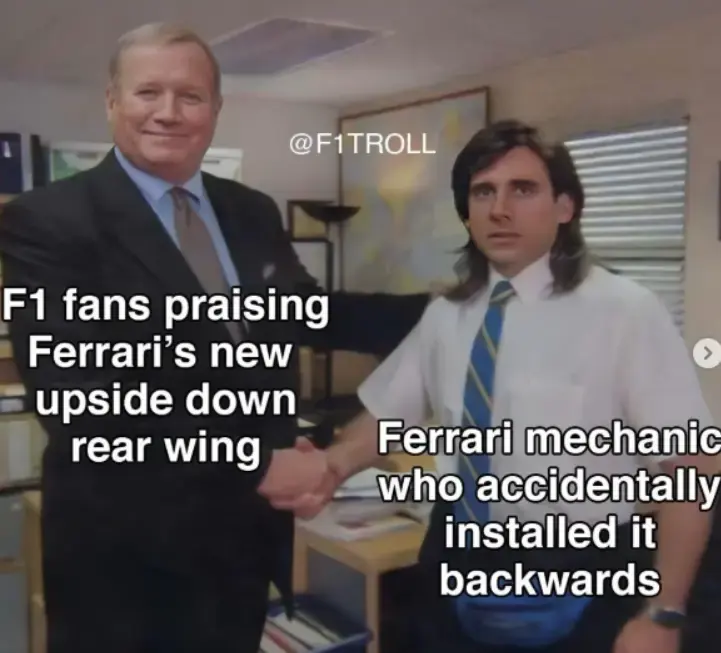
Are we optimistic this Ferrari hype and hopium train will translate into actual race-winning?

I'm not a Ferrari tragic BUT I can't get my hopes up and get crushed, again.
 
Posts
4,711
Likes
23,809
I'm team Audi and Caddy this year.
Always rooting for HAAS and anyone who is some competition for Max.
And as far as drivers go - I'd like to see Oscar do well.
 
Posts
4,711
Likes
23,809
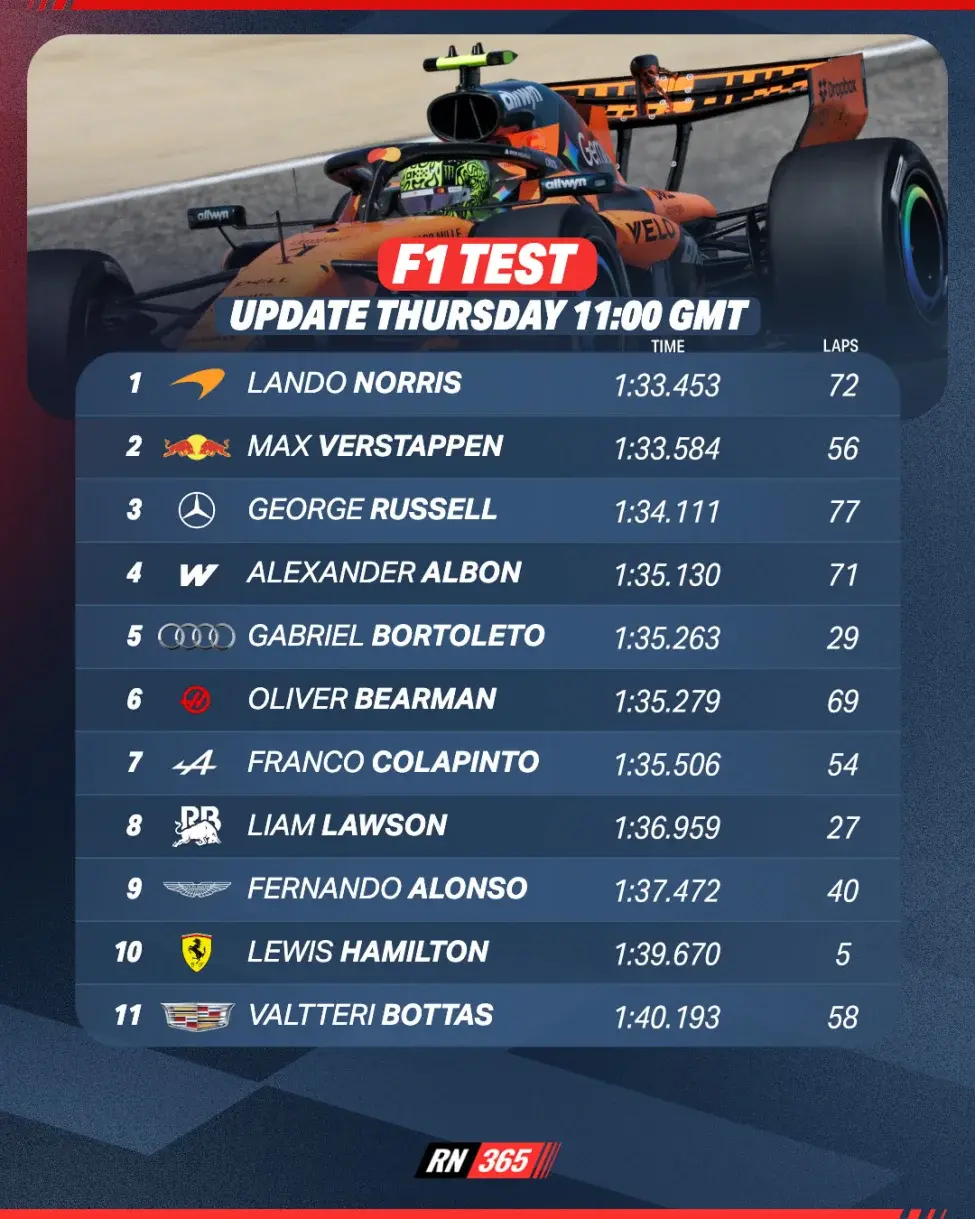
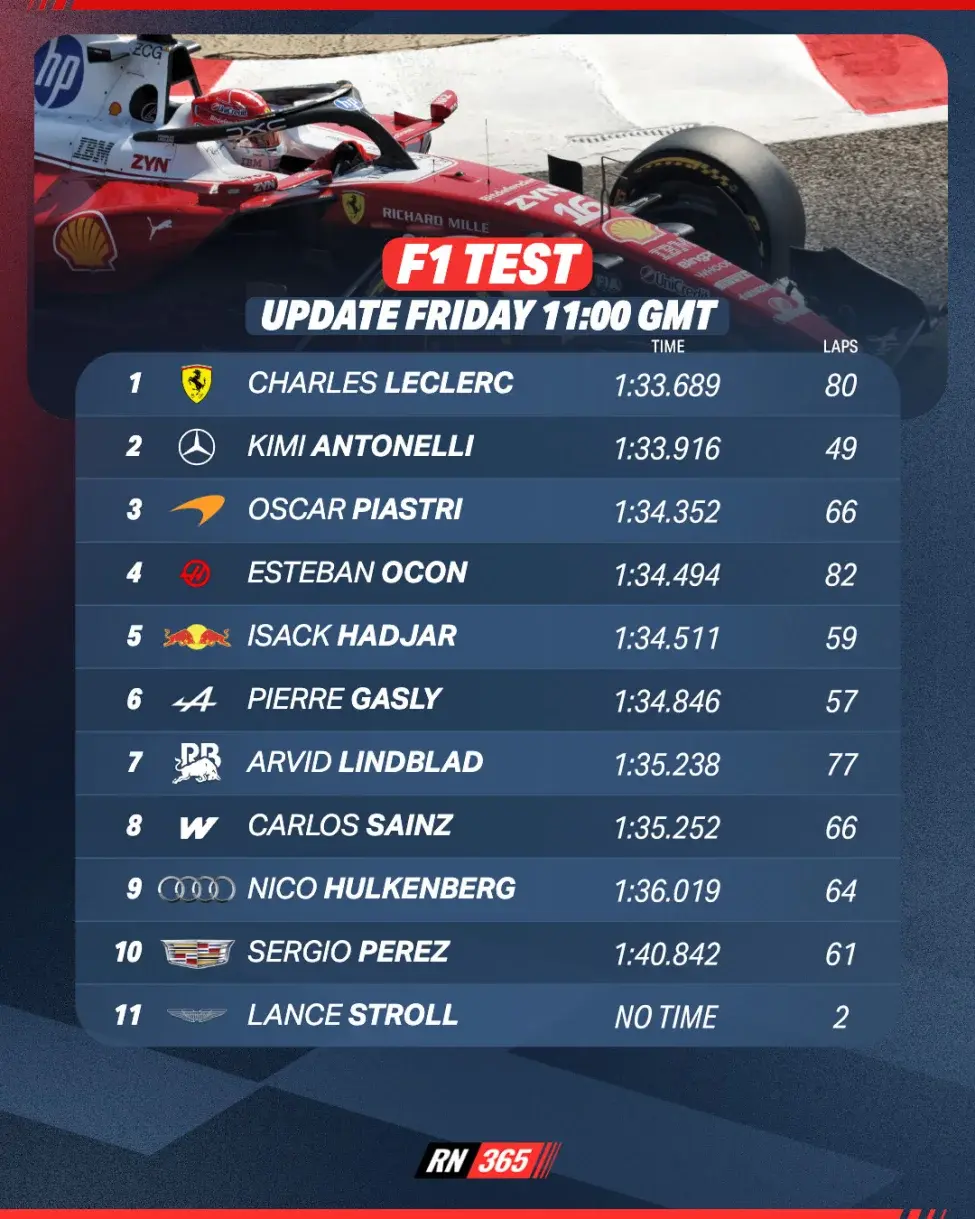
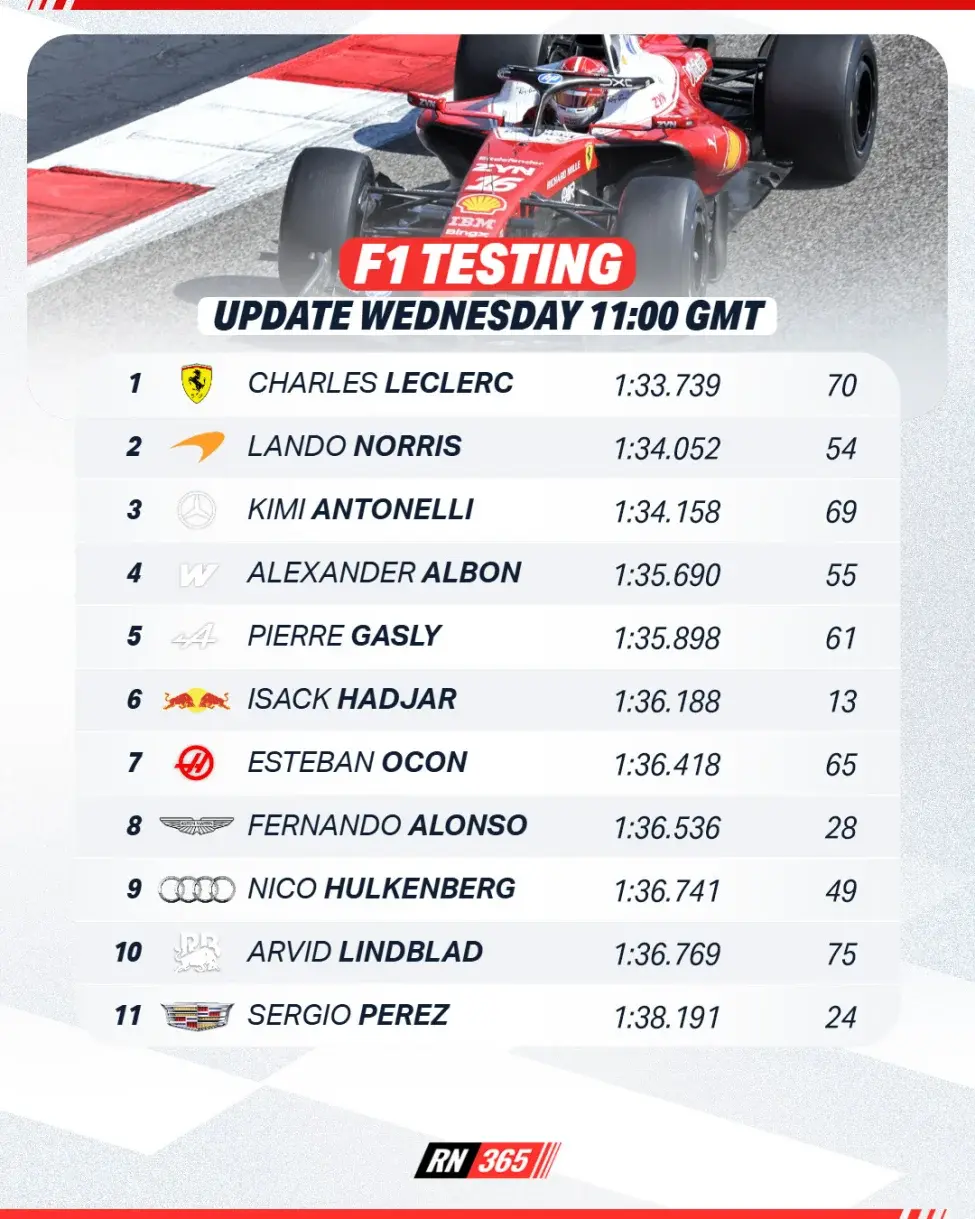
From the last 3 days of testing...


Apparently, Aston called it quits early due to some PU issues that Honda is taking responsibility for.