- Posts
- 2,842
- Likes
- 4,536
sheepdoll
·Another test of the fiber laser. This time with watch hands.
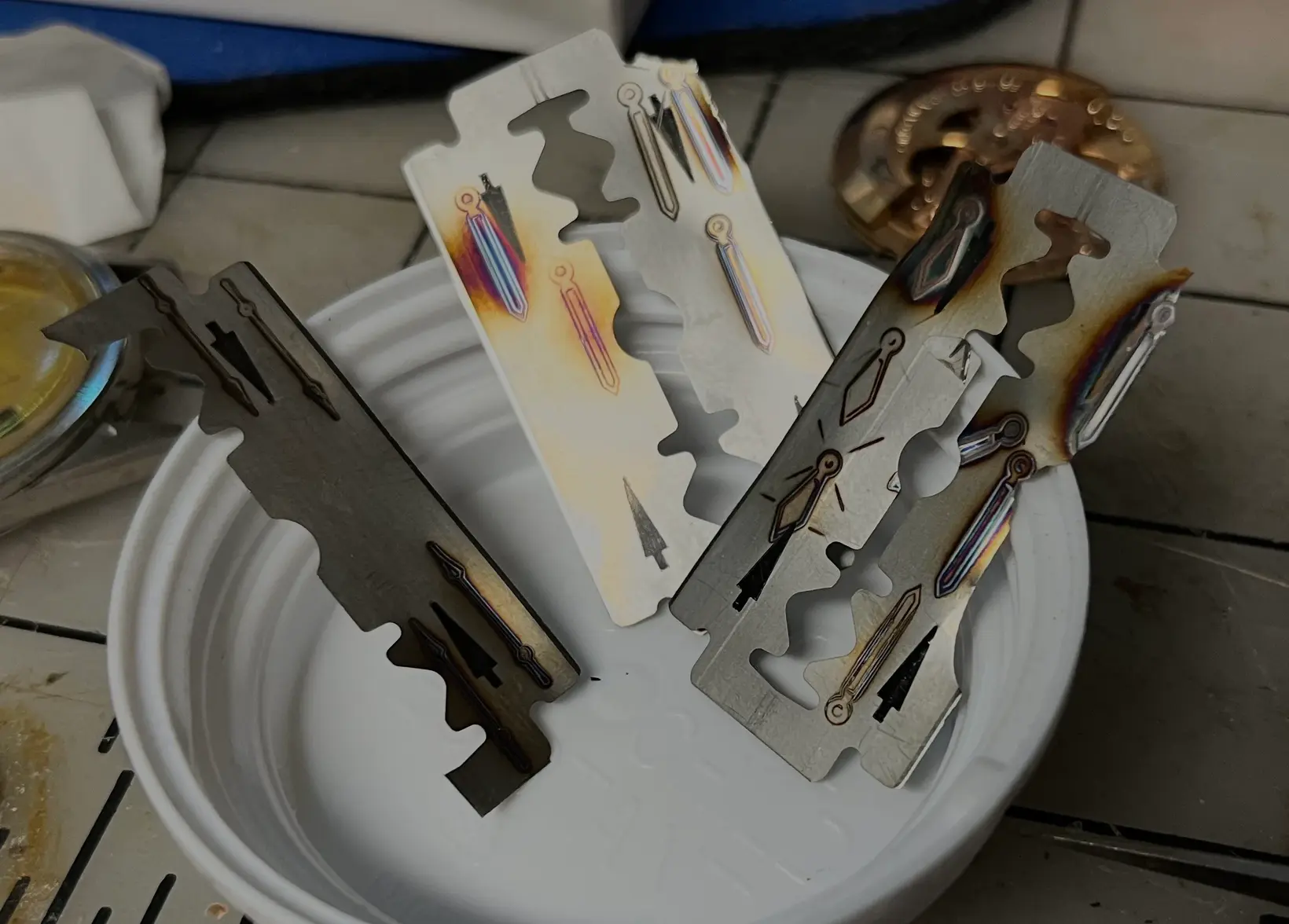
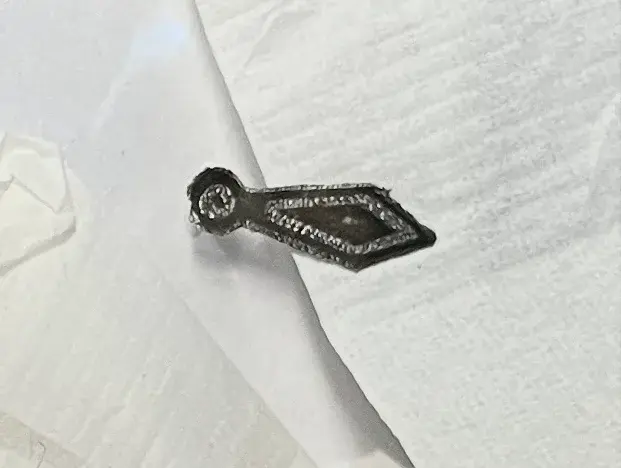
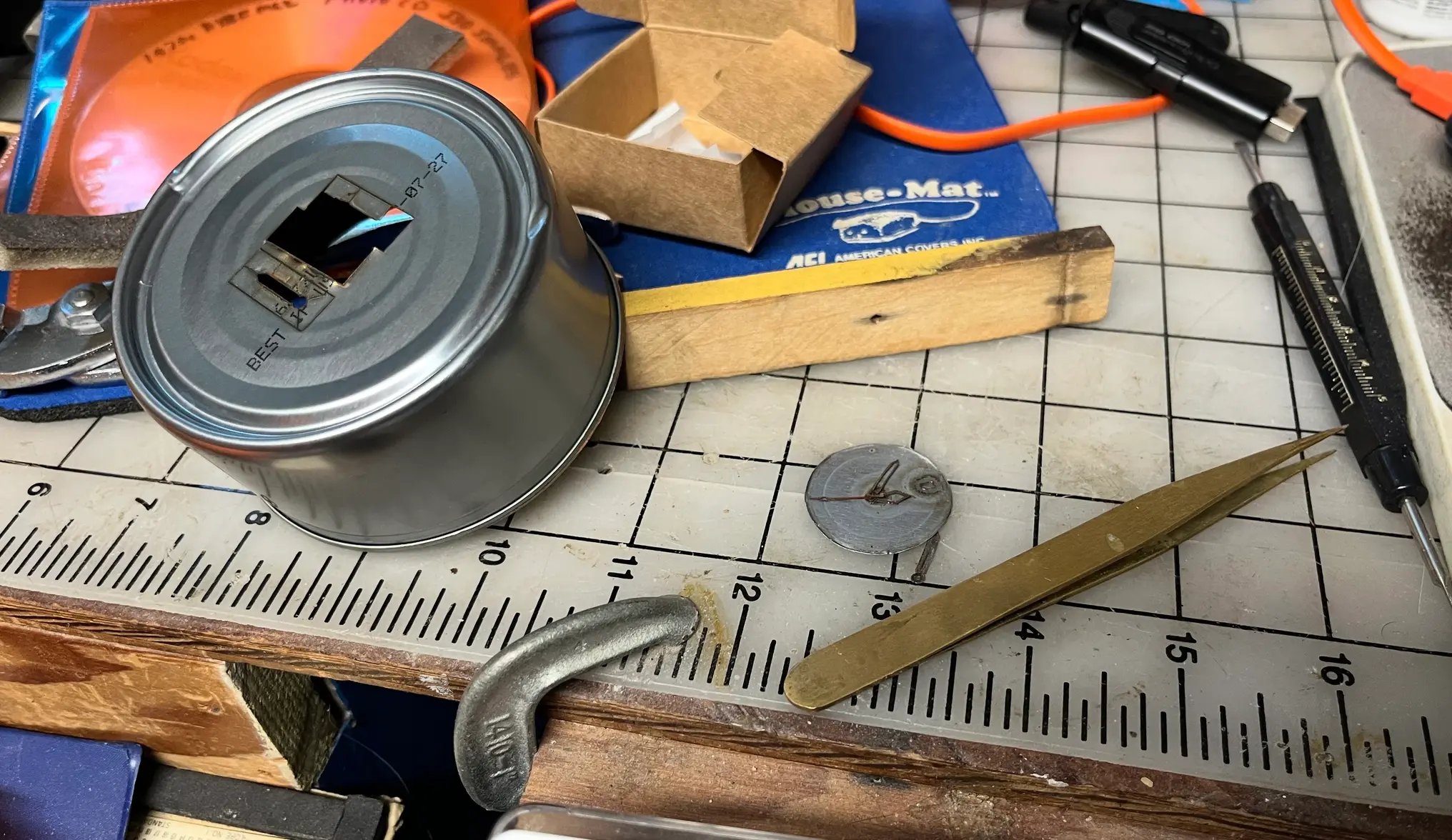
Found a nice sward hand graphic. Not to any particular scale. Got a box of cheap double sided blades.
Beam width looks good. The hands though will not separate from the rest of the metal. At this thinness the metal acts like a spring.
Increasing the power only heats the metal up, which warps it. The laser is only 30 watts. The giggle AI says that effectively the laser is drilling a chain of holes in the metal. Why a frequency of 30 cuts better than a higher frequency.
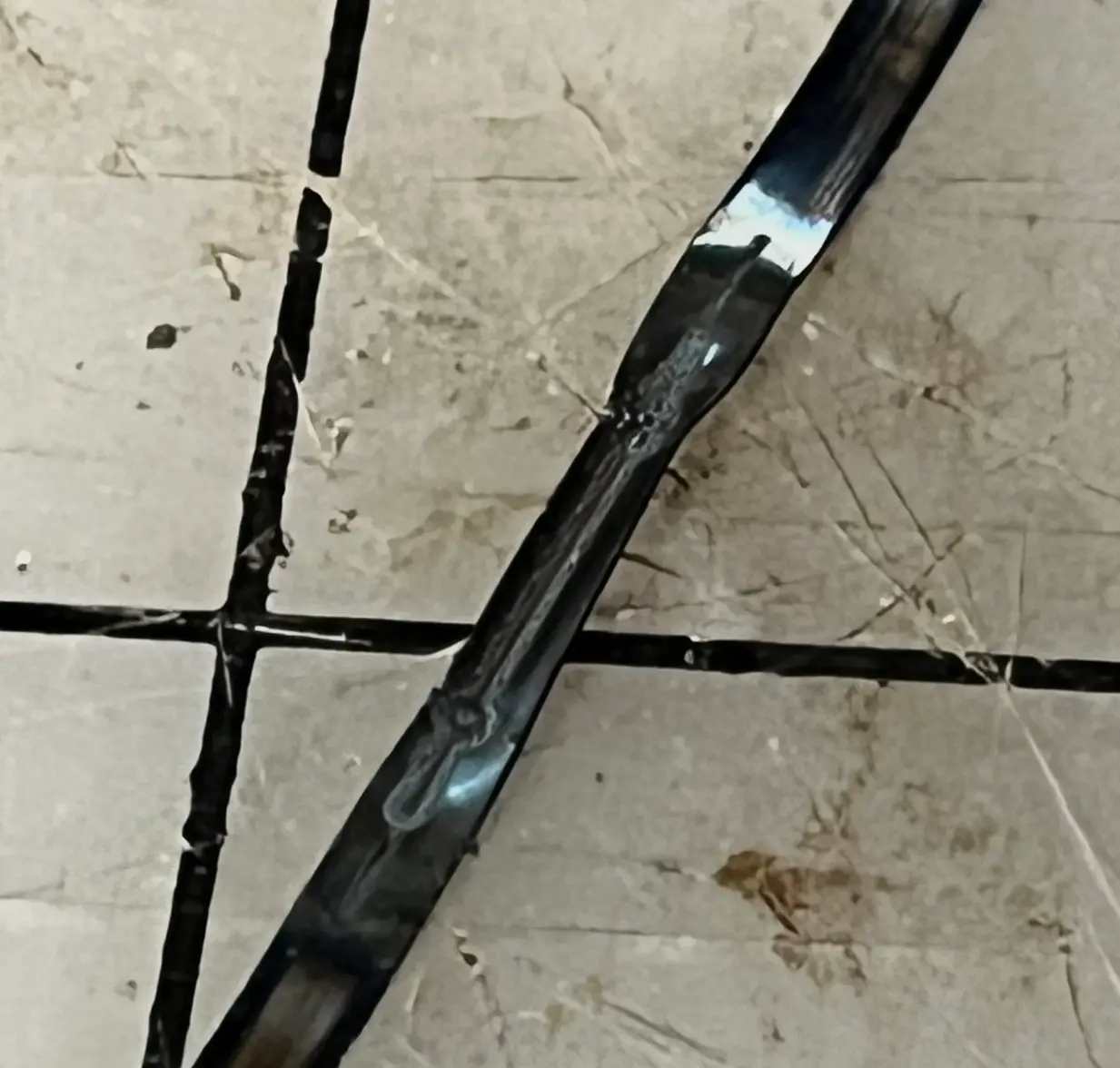
When attempting to separate out the hand, the metal does not break at the line like it does on the thicker blades. It looks more like it simply tempered the line to blue. Fatigue fractures do not stop a the line.
There are suggestions to use cleaning passes, with lower power, which in theory removes some of the carbon scoring.
I just looked up the video again. Had to use 'chess clock' in the search terms.
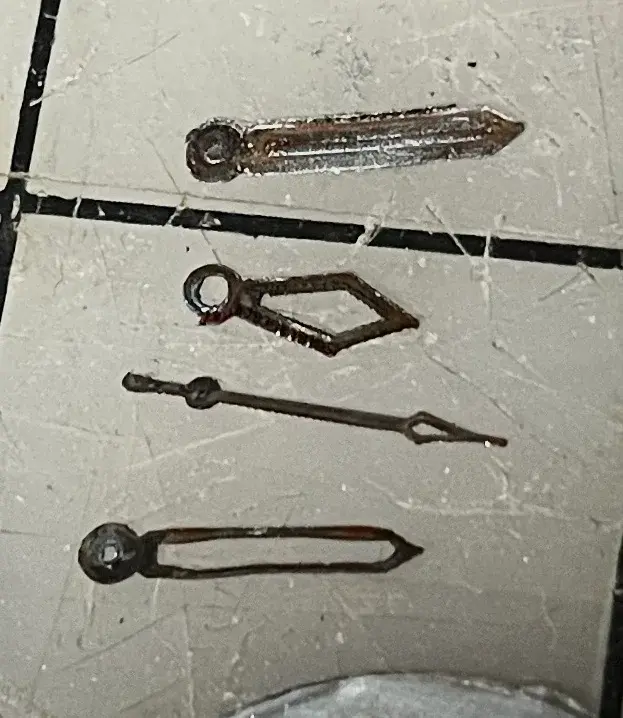
I see they say low power for 600 passes. I find that more than 5 passes and the metal turns blue and warps. The best results were from 3300 mm/s 42 power and 30 freq. More than 5 passes with gaps of time and the metal warps.
I think traditionally watch hand replacements were made from broken mainspring steel. Might try that next.
I did try turning the freq to 60 and another 5 passes which makes the thing look nice.
Missed the point where they sanded the part before trying to break it free. Pre sanding may also help clean the finger oils, which tend to mark the metal more than the cleaner parts. Or rough up the reflection.
You tube also suggested a more recent video
which is a bit longer. I probably should have watched it first. I found the part where they were doing the same thing I was. I also see they were doing some things I was considering when driving home, like extra lines to wear down the side of the cut. I also see they are using the same program and can see what settings they use.
Does go to show, that if one thinks of something. Many others are thinking the same thing. Which is why intellectual property ideas are so stupid.
There is a whole lot more stuff in the suggestions since I last looked for watchmaking with lasers. Curious that these videos showed up this morning on this computer, and not last night when I was searching for the speed power frequency setting.
Just goes to show that the videos are not for actual instruction. They are there to get you to click, then go to the next one as the voice over is so annoying. I tend to mute and use the auto generated captions more often than not.
Found a nice sward hand graphic. Not to any particular scale. Got a box of cheap double sided blades.
Beam width looks good. The hands though will not separate from the rest of the metal. At this thinness the metal acts like a spring.
Increasing the power only heats the metal up, which warps it. The laser is only 30 watts. The giggle AI says that effectively the laser is drilling a chain of holes in the metal. Why a frequency of 30 cuts better than a higher frequency.
When attempting to separate out the hand, the metal does not break at the line like it does on the thicker blades. It looks more like it simply tempered the line to blue. Fatigue fractures do not stop a the line.
There are suggestions to use cleaning passes, with lower power, which in theory removes some of the carbon scoring.
I just looked up the video again. Had to use 'chess clock' in the search terms.
I see they say low power for 600 passes. I find that more than 5 passes and the metal turns blue and warps. The best results were from 3300 mm/s 42 power and 30 freq. More than 5 passes with gaps of time and the metal warps.
I think traditionally watch hand replacements were made from broken mainspring steel. Might try that next.
I did try turning the freq to 60 and another 5 passes which makes the thing look nice.
Missed the point where they sanded the part before trying to break it free. Pre sanding may also help clean the finger oils, which tend to mark the metal more than the cleaner parts. Or rough up the reflection.
You tube also suggested a more recent video
which is a bit longer. I probably should have watched it first. I found the part where they were doing the same thing I was. I also see they were doing some things I was considering when driving home, like extra lines to wear down the side of the cut. I also see they are using the same program and can see what settings they use.
Does go to show, that if one thinks of something. Many others are thinking the same thing. Which is why intellectual property ideas are so stupid.
There is a whole lot more stuff in the suggestions since I last looked for watchmaking with lasers. Curious that these videos showed up this morning on this computer, and not last night when I was searching for the speed power frequency setting.
Just goes to show that the videos are not for actual instruction. They are there to get you to click, then go to the next one as the voice over is so annoying. I tend to mute and use the auto generated captions more often than not.