- Posts
- 7
- Likes
- 0
crislealo
·Hello everyone,
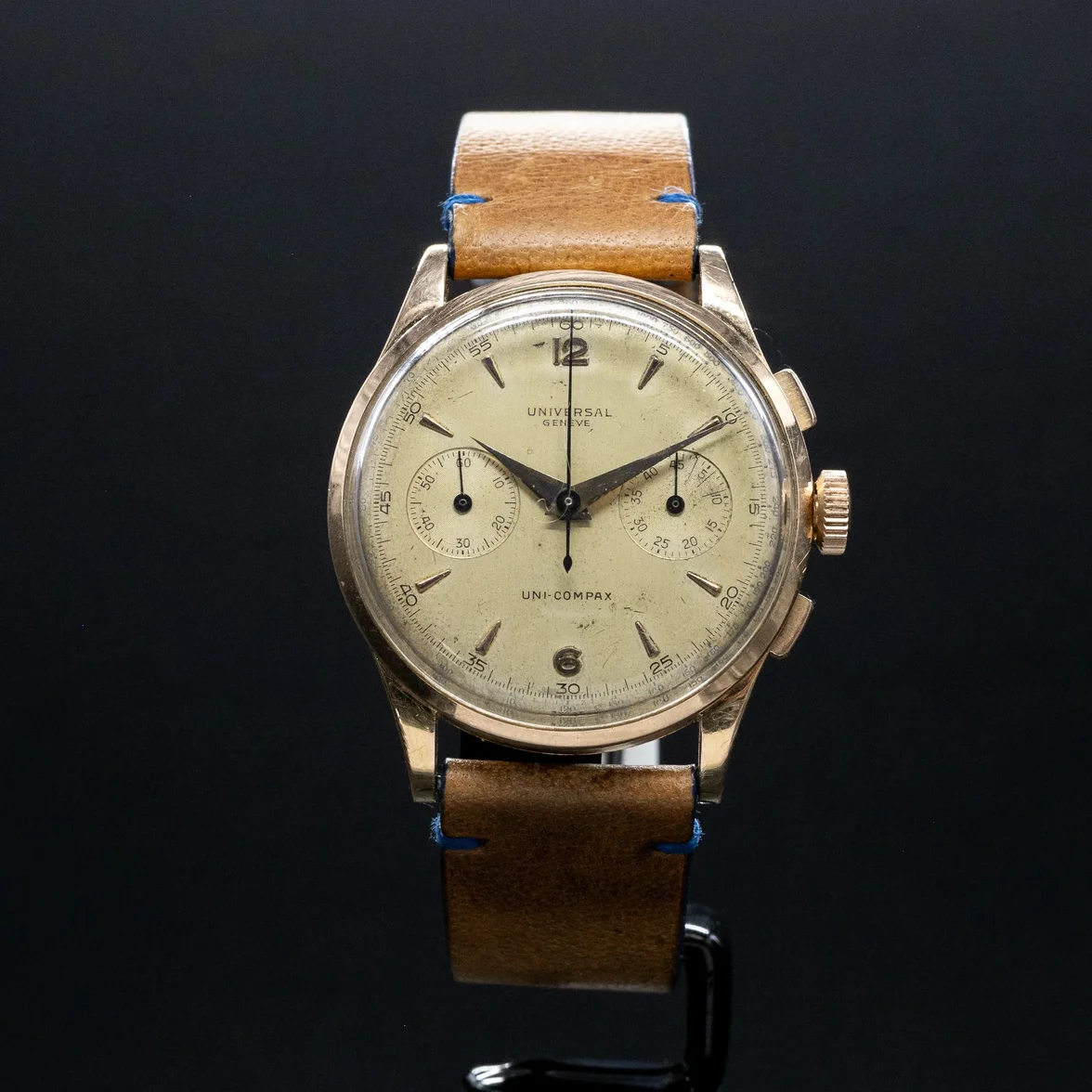
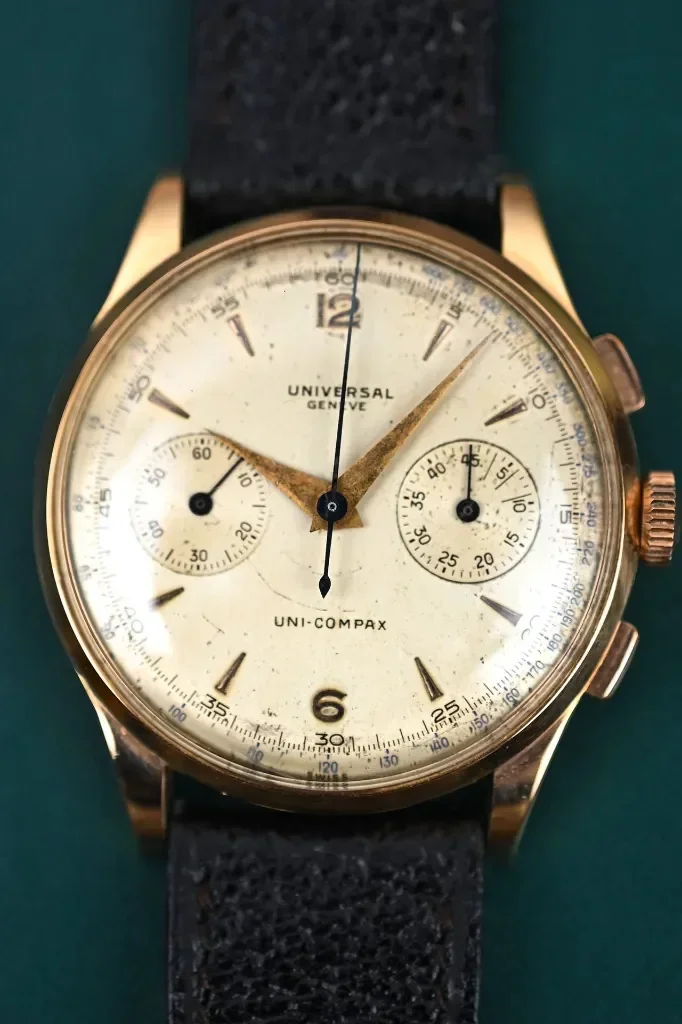
I would appreciate your opinions on the dial of this Universal Genève Uni-Compax ref. 124103, particularly from those familiar with UG chronographs from the late 1940s/early 1950s.
Watch details:
My main concern is with the subdials rather than the overall patina of the dial.
In particular, I would be interested to hear your thoughts on:
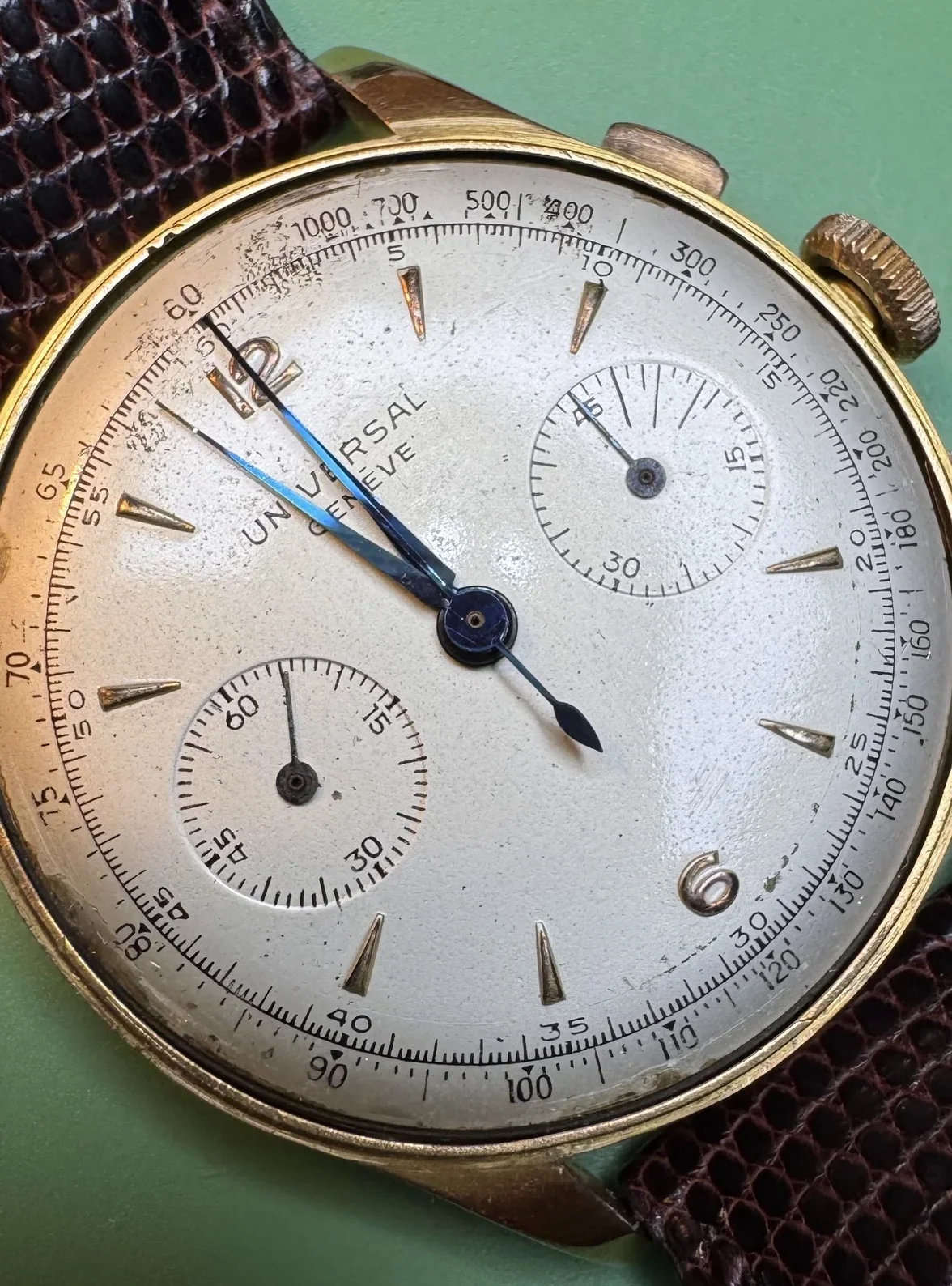
For reference, I have been comparing it with other examples of the 124103, including case no. 1,449,279 sold by Dorotheum, which is only 626 case numbers below mine.
I have also compared it with a 124103 sold by Pandolfini, which the auction house explicitly describes as having a “quadrante argenté ristampato” (reprinted silvered dial). Interestingly, the overall subdial geometry and the arrangement of the markings on the Pandolfini example are quite similar, although the actual printing appears different.
For that reason, I do not want to assume that apparently irregular markings necessarily indicate a redial. I would be particularly interested to know whether anyone has original 124103 examples with case numbers close to the 1.449.xxx range, or high-resolution photographs that would allow comparison of the printing cliché.
I am not looking for a valuation. My aim is simply to determine, as far as possible, whether:
I am attaching overall photographs and macro shots of the subdials, together with comparison images of other 124103 examples.
Any explanation of the specific details that lead you to consider the dial original or a redial would be especially helpful.
Thank you.
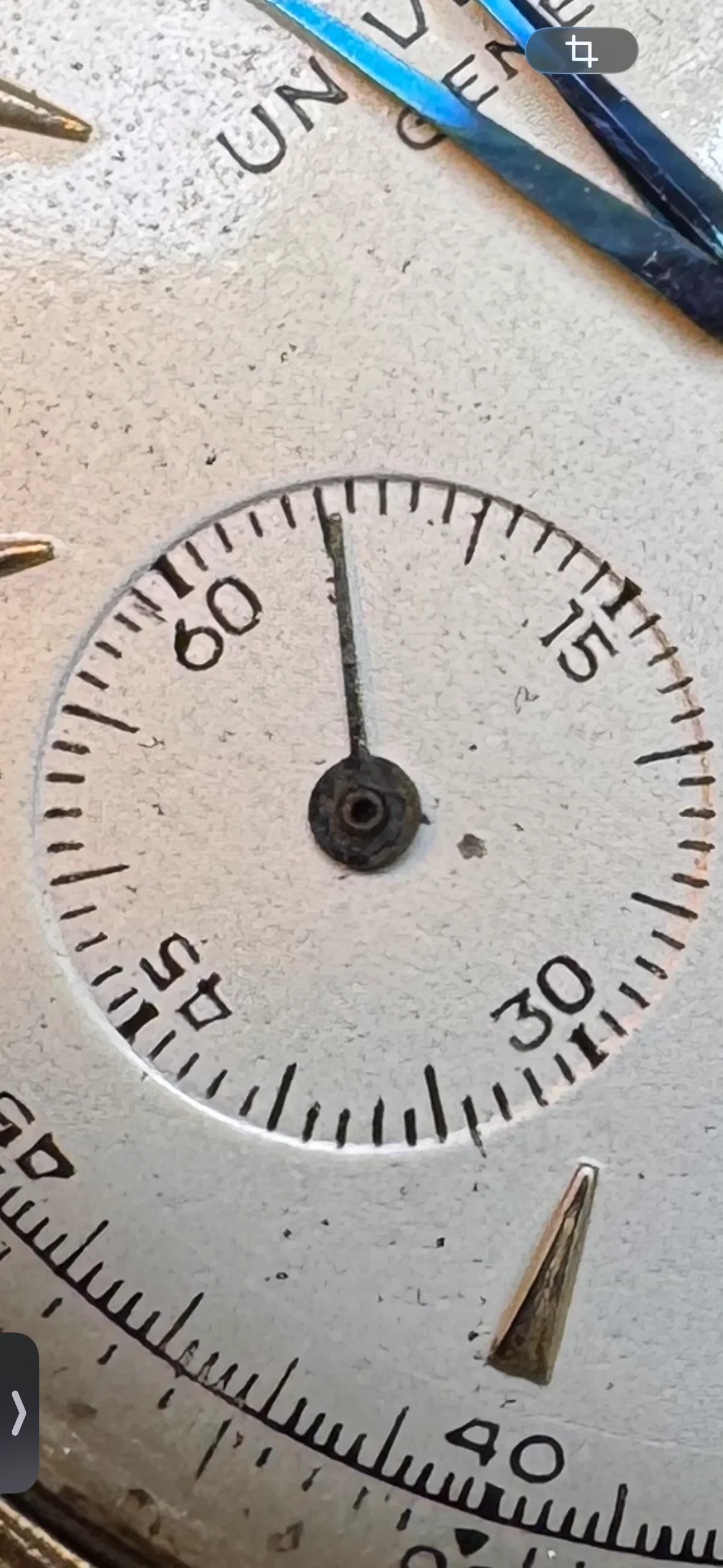
I would appreciate your opinions on the dial of this Universal Genève Uni-Compax ref. 124103, particularly from those familiar with UG chronographs from the late 1940s/early 1950s.
Watch details:
- Reference: 124103
- Case number: 1,449,9xx
- Case: 18K / 0.750
- Movement: Universal Genève cal. 285
- Two-register chronograph: small seconds at 9 and 45-minute counter at 3
- Silvered dial with applied 12 and 6 numerals, applied hour markers, and outer scales
My main concern is with the subdials rather than the overall patina of the dial.
In particular, I would be interested to hear your thoughts on:
- The spacing and positioning of the subdial markings.
- The length and thickness of those markings.
- The typeface and positioning of the 60 / 15 / 30 / 45 numerals.
- The relationship between the numerals and the divisions surrounding them.
- The printing of UNIVERSAL GENÈVE.
- Whether the wear to the printed ink appears consistent with the aging of the dial surface, or whether you see signs of an old or partial reprint.
For reference, I have been comparing it with other examples of the 124103, including case no. 1,449,279 sold by Dorotheum, which is only 626 case numbers below mine.
I have also compared it with a 124103 sold by Pandolfini, which the auction house explicitly describes as having a “quadrante argenté ristampato” (reprinted silvered dial). Interestingly, the overall subdial geometry and the arrangement of the markings on the Pandolfini example are quite similar, although the actual printing appears different.
For that reason, I do not want to assume that apparently irregular markings necessarily indicate a redial. I would be particularly interested to know whether anyone has original 124103 examples with case numbers close to the 1.449.xxx range, or high-resolution photographs that would allow comparison of the printing cliché.
I am not looking for a valuation. My aim is simply to determine, as far as possible, whether:
- the dial retains its original printing;
- the dial itself is original but certain areas or one/both subdials were retouched;
- or the dial has been completely reprinted.
I am attaching overall photographs and macro shots of the subdials, together with comparison images of other 124103 examples.
Any explanation of the specific details that lead you to consider the dial original or a redial would be especially helpful.
Thank you.