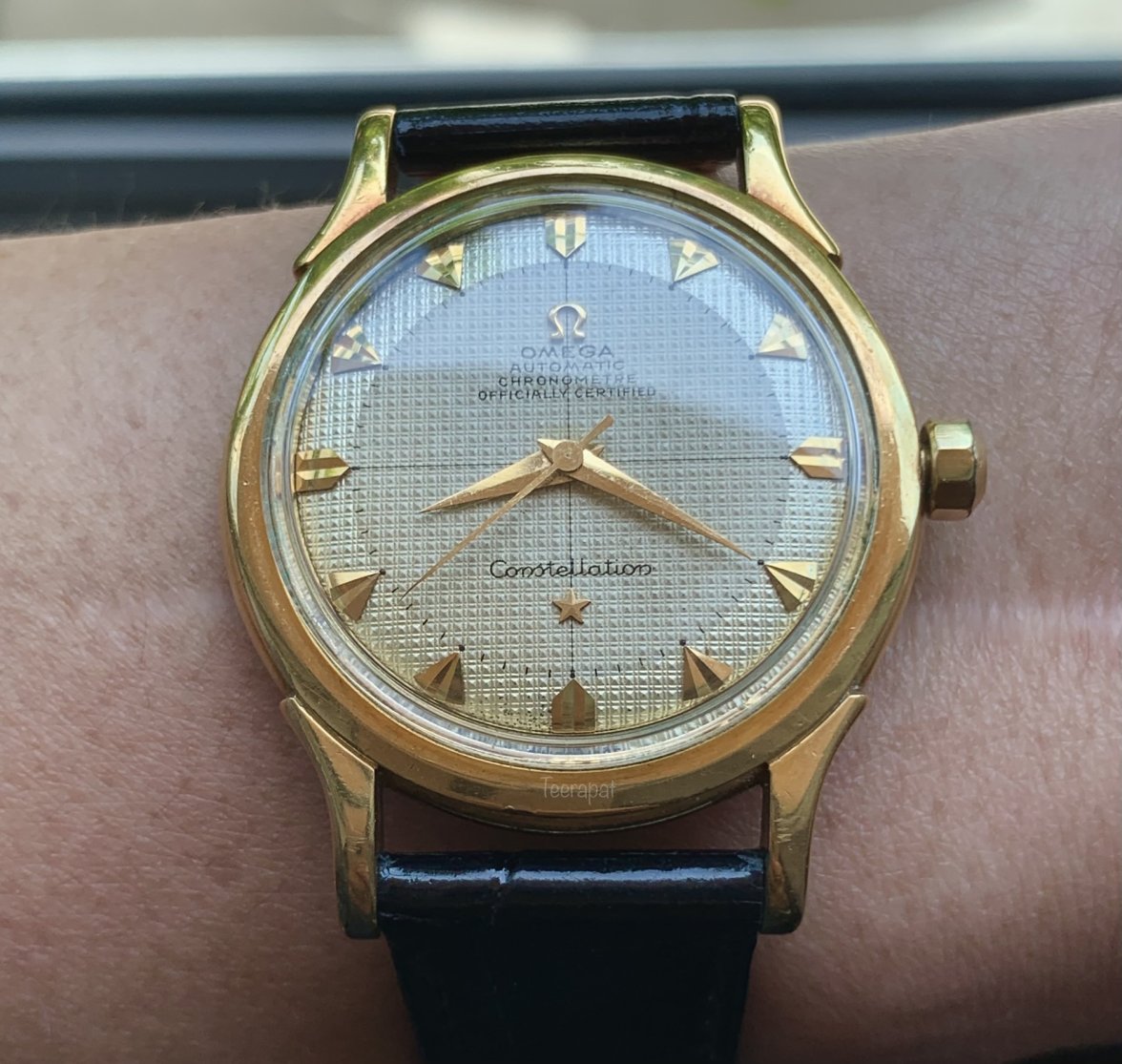
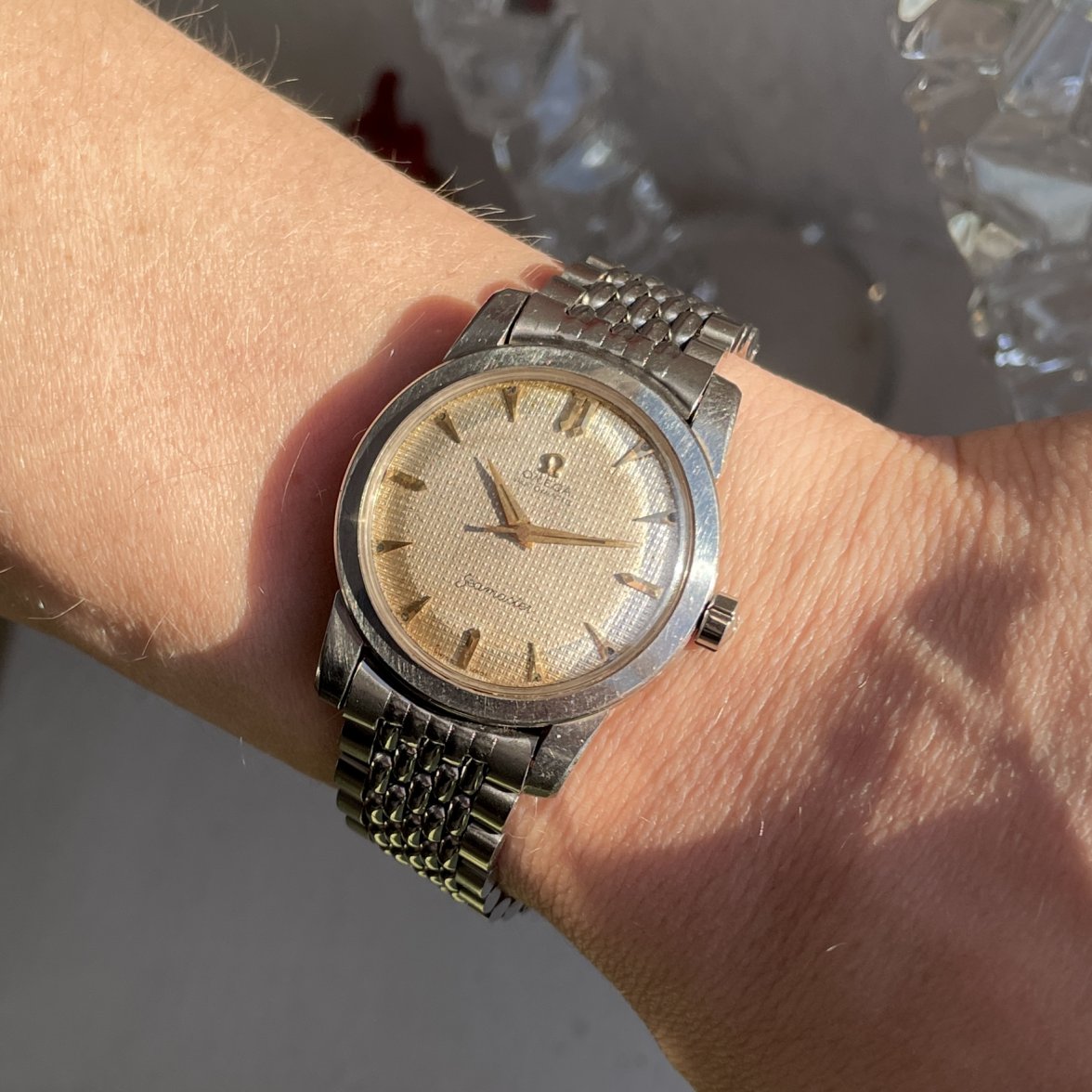
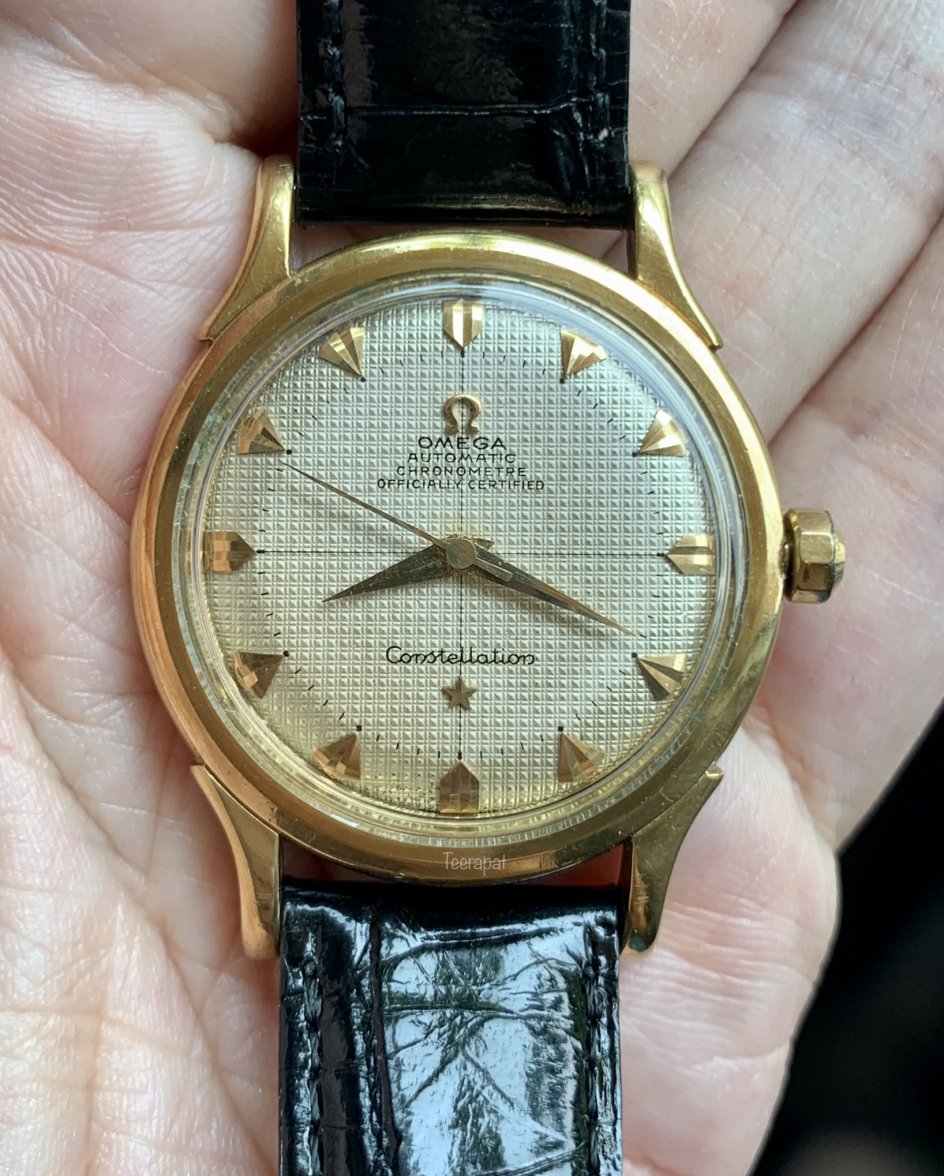
The list was specifically for hobnail with arrowhead markers. I should have prefaced with that. My apologies. Yours had other dial configurations correct?
I don't have it yet, but I'll ask for one. Let's just hope Omega won't force me to pay twice if the dial/serial of my 2782 turns out to be correct for a 2652...
I don't have it yet, but I'll ask for one. Let's just hope Omega won't force me to pay twice if the dial/serial of my 2782 turns out to be correct for a 2652...
hi,
70 years have passed, what Omega confirmed on the dial 2782?
Nothing yet - the watch is still with a watchmaker.
I'm sorry if I answer you, I have a doubt, I think the dial has been moved to 2782. The second hand printed on the dial is positioned inside the indexes.
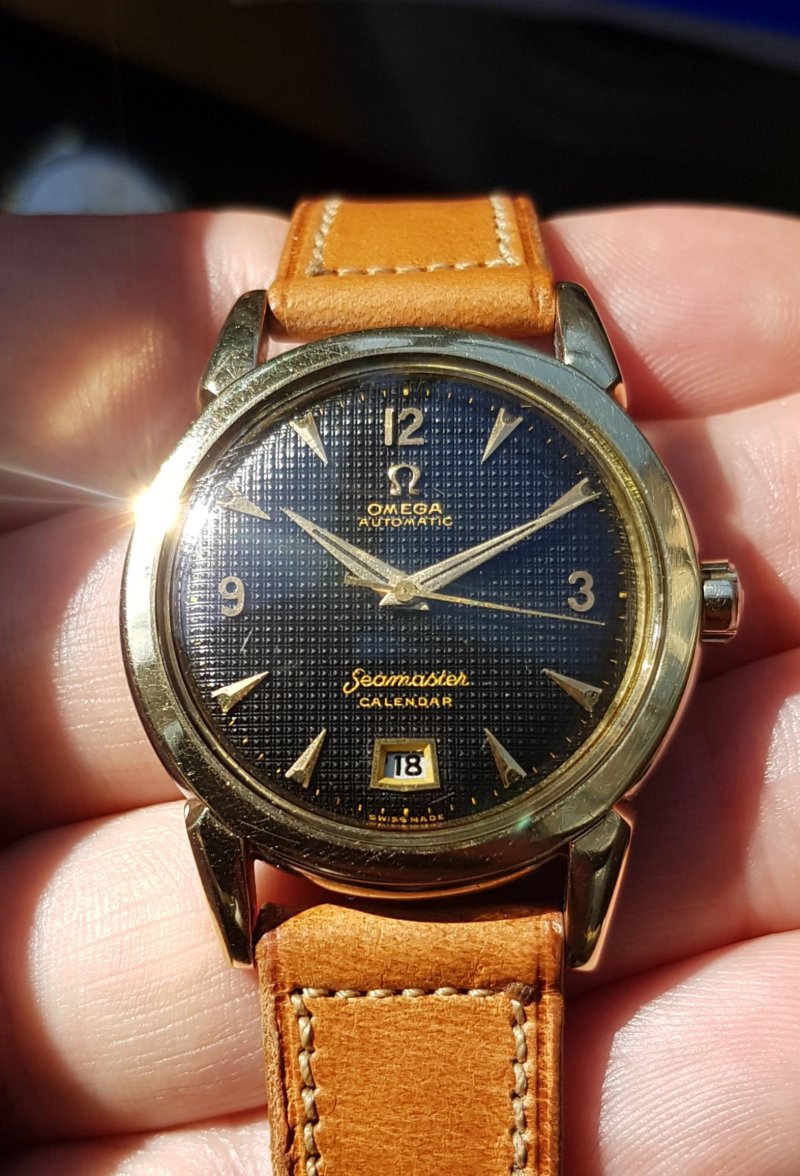
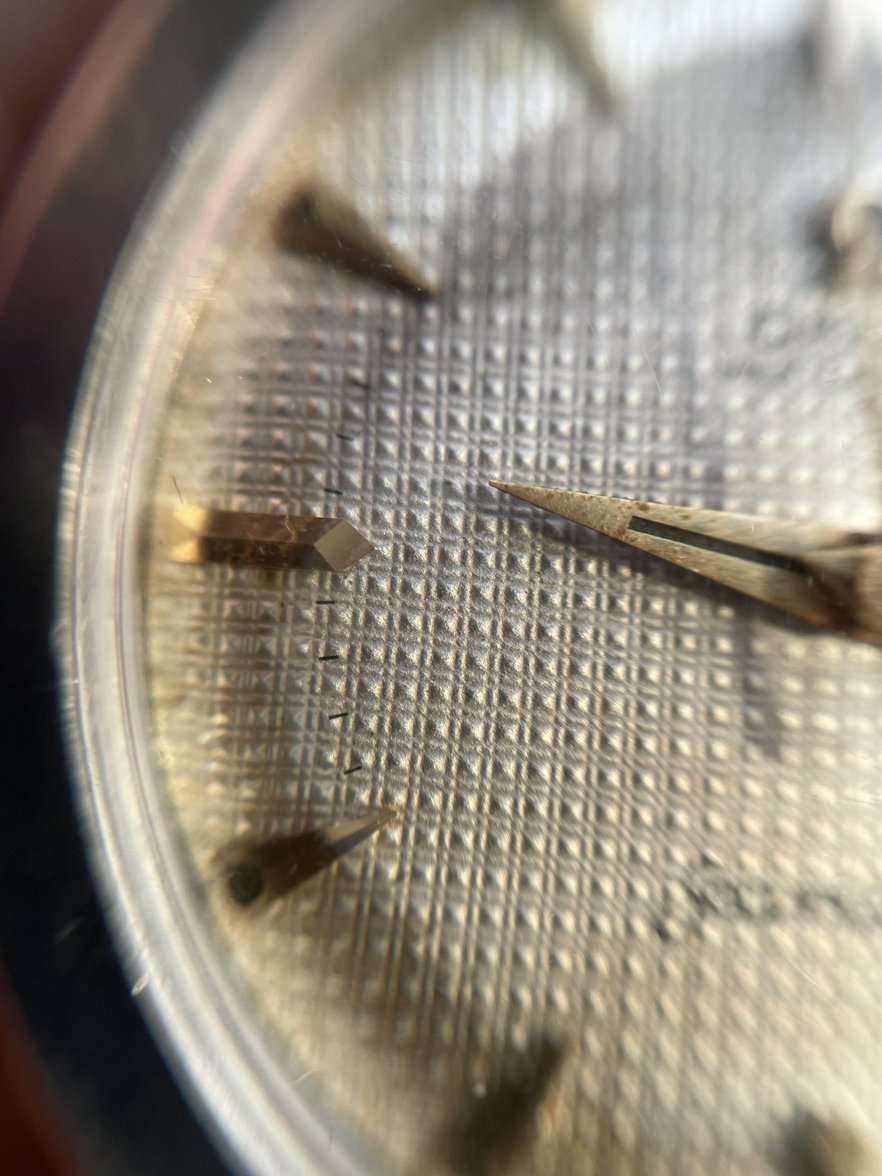
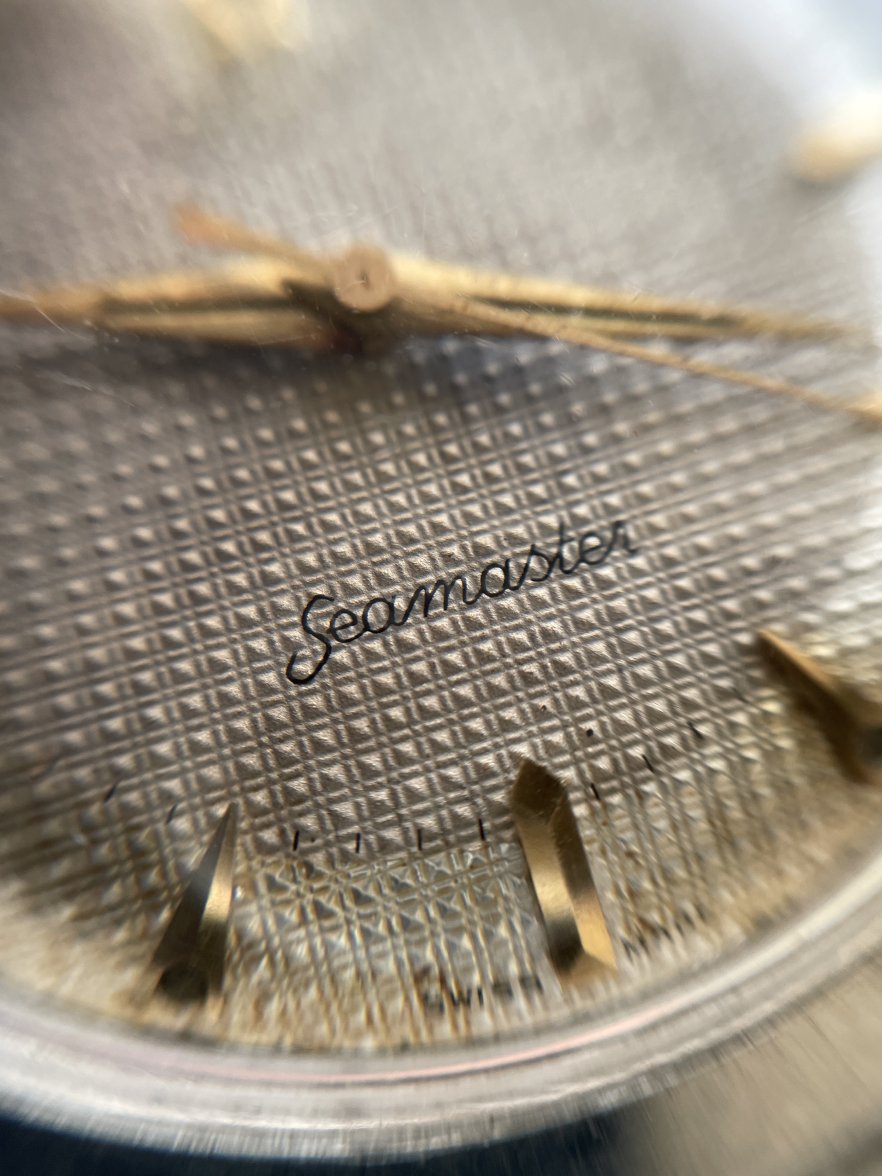
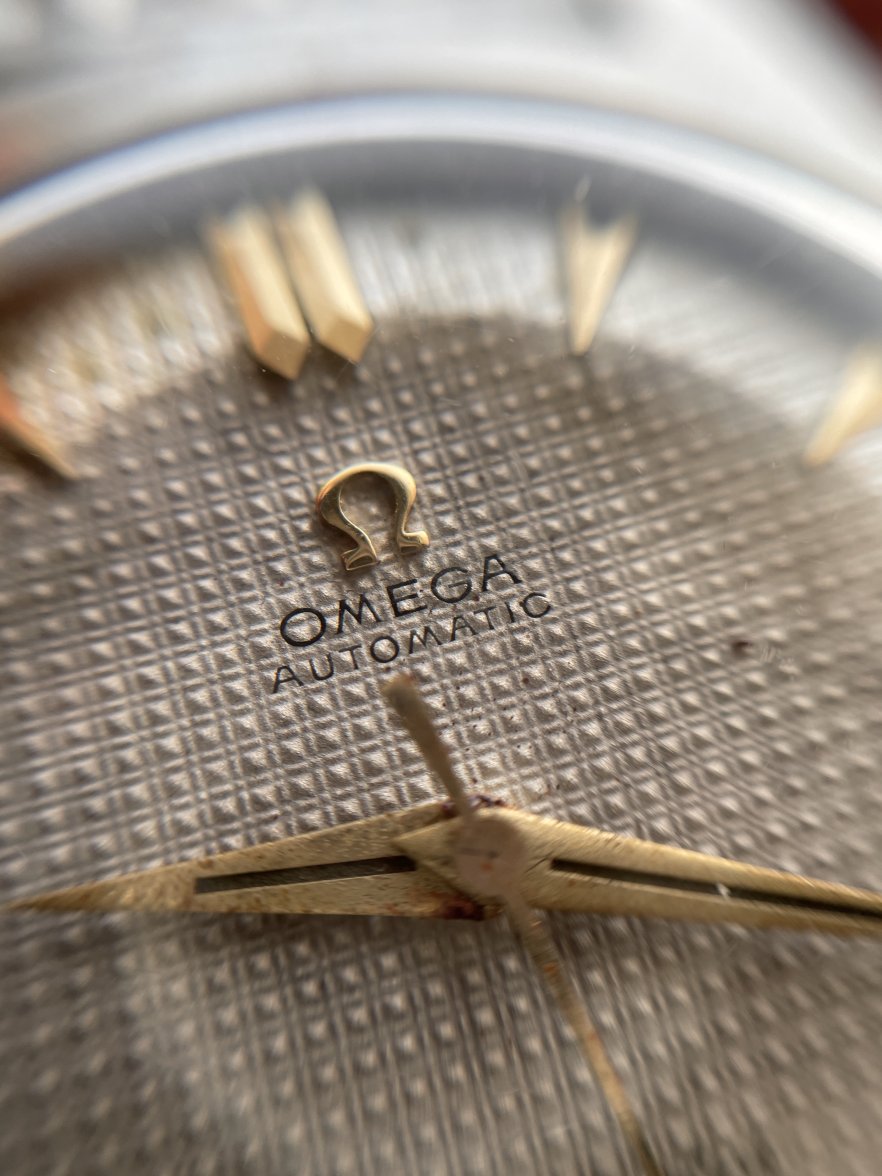
I am always wondering what technique has been used to produce such detailed dial structure, and how they managed to print such fine lettering on that uneven surface ?? Wowwwww !
One has to realize that it is on a mere 1" dia surface, and letters are far less than a mm high !!
I am always wondering what technique has been used to produce such detailed dial structure, and how they managed to print such fine lettering on that uneven surface ?? Wowwwww !
One has to realize that it is on a mere 1" dia surface, and letters are far less than a mm high !!
This! As @hejsam 's outstanding(!) photos clearly show, the printing technique is so clever that the lettering appears not even to follow the contours of the hobnailing, but rather to float on an invisible surface just above it. OK, game over, will an expert now just please explain how this astonishing feat is achieved? I feel this thread is my best chance of truly solving this...
This! As @hejsam 's outstanding(!) photos clearly show, the printing technique is so clever that the lettering appears not even to follow the contours of the hobnailing, but rather to float on an invisible surface just above it. OK, game over, will an expert now just please explain how this astonishing feat is achieved? I feel this thread is my best chance of truly solving this...
please explain how this astonishing feat is achieved?
It is done with "Tampondruck" (German), "pad printing" in English - I hope this is the correct translation.
Pad printing, also known as tampon printing, is a printing process used to transfer designs onto uneven surfaces. The process involves the use of a flexible stamp (pad) that is soaked with the desired ink and then pressed onto the object to be printed. The elastic pad conforms to the shape of the printing material, allowing for printing on three-dimensional, irregular, or curved surfaces.
Here are the basic steps of the pad printing process:
Plate making: The desired design is transferred onto a printing plate.
Ink transfer to the pad: The pad is moved over the printing plate to pick up the ink.
The pad is made of a silicone material that is flexible and elastic.
Transfer to the object to be printed: The pad is pressed onto the surface to be printed, transferring the ink.
Pad printing is particularly suitable for small to medium-sized runs and for products with complex shapes. It is a versatile process used in various industries to create durable and precise prints on different surfaces.
It is done with "Tampondruck" (German), "pad printing" in English
Thanks Mac for taking the time to respond so kindly - it is so easy to overlook just what a marvel this is at the scale we are considering! Presumably the inner secrets must lie in the characteristics of the ink, and also the properties of the specific silicone used - but I still think it's a wonder. I know electrostatic printing is sometimes used for small objects, but what we see above is so rich it must be hard to beat.
I thought it would be a "Tampondruck", but one thing is to know it, and the other is the amazing accuracy obtained ! I am truly astonished ! what a beauty! and as already said, on such tiny scale !!! Woww ! Thanks Mac for sharing your knowledge on that ! 👍