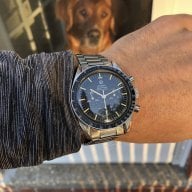
Speedy Chrono button fell off..........

Posts
15,048
Likes
24,057
Not giving away secrets, but putting information that could be misused into untrained hands. 馃檮
 
Posts
11
Likes
1
If the pusher cap had simply come unscrewed, and the "internal pin" (the screw that holds the cap in place) is still there, then I can see that this is possibly poor workmanship on the part of the manufacturer. Even if this was the case, the watch is out of warranty period, so you have no claim for a warranty repair, but they may consider giving you a break as a courtesy.

Note that I apply Loctite to the threads of the pusher screw to ensure that the cap stays on.

But since you have stated that the internal pin is missing, this means it was snapped off. The screw can't back out and go somewhere inside the watch, since it is within a mm or 2 of contacting the movement. Yes it sucks that your watch is flooded, but this is not Omega's fault. As has been suggested, by your own description of the problem it's likely that the pusher was damaged by an impact, breaking the screw and causing the cap to come off.

Note that if it had come unscrewed, this down not happen immediately, so you would have seen the pusher cap on one button being further out from the case then the other - a cap unscrewing is something that can be caught if you pay attention to the watch.

Although it likely would not have helped here in the case where the screw was snapped off, I do recommend that any watch you intend to get wet regularly should be pressure tested regularly.


Not all - I have recounted this repair here...


Sorry, but you are SOL on this one, and it will be at your expense unless Omega takes pity on you...

Cheers, Al

Thanks so much Al for your response.
Very informative. This was the type of response that I hoped for.
 
Posts
112
Likes
76

Ow, ow, ow. Can you tell us the approximate repair cost? I'd have thought you'd have to replace the entire movement, but I guess you managed to salvage some parts.
 
Posts
16,863
Likes
47,901
馃槜馃槈

 
Posts
1,783
Likes
4,126
馃槜馃槈

I'm sure we've all done it but I remember putting a nail or a penny (none of those left in Canada) in Coca-Cola when I was a child. That was MAGIC!
 
Posts
29,672
Likes
76,830
Ow, ow, ow. Can you tell us the approximate repair cost? I'd have thought you'd have to replace the entire movement, but I guess you managed to salvage some parts.

Wasn't cheap! But you can't buy a complete movement - Omega does not offer entire replacement movements for the Speedmaster Pro like the do for other movements like this one...


Most of the movement is made of brass, so a lot of the visible rust on the plates was rust that was just sitting there - just had to clean it off. Every steel part was cleaned and inspected to determine the 3 R's...no not those 3 R's (and I don't know anyone who spells it "riting" anyway).

Reuse, Repair, or Replace. No matter if you are rebuilding a wrist watch or a large piece of industrial machinery (something I used to do a lot of) the principle is the same. If the operating surfaces of the part were good, the part could be cleaned up and used again (I prefer vinegar to Coke for rust removal - to be Speedy these parts don't need the added sugar in the Coke thanks), and cleaning them up cosmetically was done to the best I could. Some parts were polished, but many of the wheels were replaced - this one was in salt water so not a lot was spared really...

Cheers, Al
 
Posts
279
Likes
299
Wasn't cheap! But you can't buy a complete movement - Omega does not offer entire replacement movements for the Speedmaster Pro like the do for other movements like this one...


Most of the movement is made of brass, so a lot of the visible rust on the plates was rust that was just sitting there - just had to clean it off. Every steel part was cleaned and inspected to determine the 3 R's...no not those 3 R's (and I don't know anyone who spells it "riting" anyway).

Reuse, Repair, or Replace. No matter if you are rebuilding a wrist watch or a large piece of industrial machinery (something I used to do a lot of) the principle is the same. If the operating surfaces of the part were good, the part could be cleaned up and used again (I prefer vinegar to Coke for rust removal - to be Speedy these parts don't need the added sugar in the Coke thanks), and cleaning them up cosmetically was done to the best I could. Some parts were polished, but many of the wheels were replaced - this one was in salt water so not a lot was spared really...

Cheers, Al
What a fantastic usable post for any weekend warrior mechanic. Pleasure to read this thread.


Sent from my iPhone using Tapatalk
 
Posts
13
Likes
6
Flashbacks. I've seen this many times before.
I'm assuming that this isn't the first time you have submerged the watch into water? For a Speedmaster, that can be the death of it. Especially if it's been subjected to water previously as the pusher screw can rust away with moisture lingering. They were never built to be swam with.
So what is actually said is that the watch needs to be checked every two years for water resistance. We had this issue come up all the time when I worked in a boutique service center specifically for Omega. No one follows what is recommended by Omega, and that is to have the watch checked every two years.
In regards to the comment on the build quality of the Speedmaster, I assume that comment was made out of frustration to the situation. I know first hand that the Speedmaster is one engineering masterpiece. From the movement, case, to the pushers.
Omega send all watches that have more than 50% of parts corroded to Switzerland. This is to keep TAT's lower. The time required to have a rusty Omega serviced in the local service centers isn't economical. That's just simple business.

In regards to your issue, unfortunately it is user error. It sucks to hear it as they aren't that cheap and the watches are expensive to service, but that's the reality.

I hope some of that helped.
 
Posts
13
Likes
6
Wasn't cheap! But you can't buy a complete movement - Omega does not offer entire replacement movements for the Speedmaster Pro like the do for other movements like this one...


Most of the movement is made of brass, so a lot of the visible rust on the plates was rust that was just sitting there - just had to clean it off. Every steel part was cleaned and inspected to determine the 3 R's...no not those 3 R's (and I don't know anyone who spells it "riting" anyway).

Reuse, Repair, or Replace. No matter if you are rebuilding a wrist watch or a large piece of industrial machinery (something I used to do a lot of) the principle is the same. If the operating surfaces of the part were good, the part could be cleaned up and used again (I prefer vinegar to Coke for rust removal - to be Speedy these parts don't need the added sugar in the Coke thanks), and cleaning them up cosmetically was done to the best I could. Some parts were polished, but many of the wheels were replaced - this one was in salt water so not a lot was spared really...

Cheers, Al


Wow. That thing is toast. Definitely have seen plenty of those.
 
Posts
34,267
Likes
38,886
Wow. That thing is toast. Definitely have seen plenty of those.
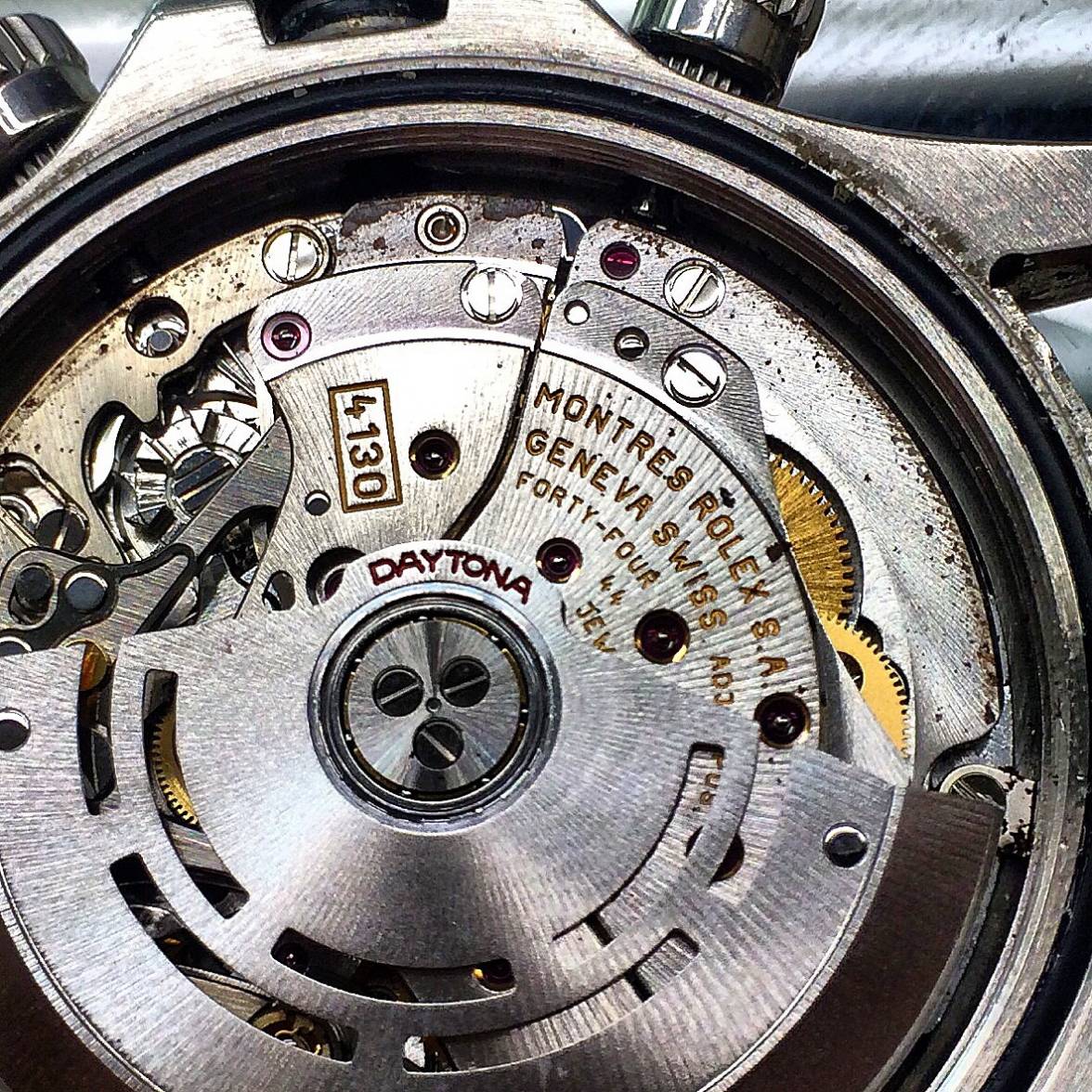
Here's my closest effort, nowhere near as bad, but a lot more expensive, the seals managed to keep water out about 11 years before they finally didn't, not exactly their intended lifespan but a relative wouldn't let me take it to get re-sealed.

78590-b41707722c4b2439688e5a8e0b8c9420.jpg
 
Posts
13
Likes
6
Here's my closest effort, nowhere near as bad, but a lot more expensive, the seals managed to keep water out about 11 years before they finally didn't, not exactly their intended lifespan but a relative wouldn't let me take it to get re-sealed.


78590-b41707722c4b2439688e5a8e0b8c9420.jpg

It's definitely not the worst I've seen, and I'm sure will clean up nicely. This is a prime example why it should be checked and tested every 2 years.
No one will trust the mechanic, but they do know best. Find a watchmaker you can trust and stick with them.

JT