Now I have had a time to reflect, here is what I think.

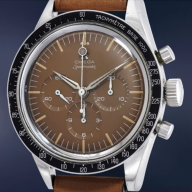
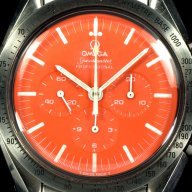
The Alaska II above, may have actually been an Alaska I, and there is at least one more in Collectors Circles. It does not look like the Alaska II I have seen before, in that the Alaska II's have radial dials:

There is an article here, with information that is useful, from which I took the image.
https://www.europeanwatch.com/blog/omega-alaska-project-history/
I think the watch sold by phillips is a "First Glance" prototype.
I still think its a fantastic watch, but I am not unhappy that I did not spend half a million dollars on it. (If i could that is).

The Monza Dial, for a quarter $mil is not something I understand. That dial has no solid provenance, and it will be interesting to see the feet - that is who put them on, and how. Personally I doubt this can be resold between level headed collectors, unless I am missing something. I am genuinely open to educated on this one.
First point, is that for the excess money over a standard watch, that would give me about $240,000. For that I could go and make a dial like this, identical, and it would have the same provenance: here is the extract from the listing, where there is no solid evidence of origin - so that if we made a dial, removed the serial (as in this watch) how could we tell the difference?
I
ndeed, the present watch is one of such hallowed prototype pieces. Donning a white dial, this Speedmaster is set apart from all the rest by a never-before-seen red “Monza” signature at 6 o’ clock. The parallelism with the Daytona signature on the Rolex chronograph is immediate: both are sports chronogrphs direct competitors, and indeed the Daytona Cosmograph takes its name from another town with strong automotive links. It is not impossible that the “Monza Speedmaster” was considered as the new-millennium competitor of the Daytona Cosmograph. Whatever the reason for its creation, it goes without saying that the present piece can be considered one of the ultimate Speedmasters, a true unicorn of the field.
Furthermore, while no extract can be produced for the watch as it bears no serial number - no serial number is a common occurrence in most prototype watches - Omega confirmed to us, via email, that indeed the Monza Speedmaster was a project undertaken by Omega during the 1990s but eventually aborted. Furthermore, after looking at pictures of the watch, they state a lapidary “everything looks correct”.
The above essay is entirely speculation. As I said, give me $250,000 and I can make you at least 10 of these, with equal provenance.

Well it seems collectors know where to get 5.5mm pushers now, and will pay full price for an otherwise excellent watch.
Beware the Soyuz in Phillips HK (Soyuz No 073) has 5mm pushers AND a case that does not take the 5.5mm pushers.
I have long thought a correct Soyuz in very good condition should be 100k.

For me, at $53,500 this correct example may have been the best buy in Geneva.

Sold for $51,000. This 2998-1 had a couple of issues for me. First, it has long been known that dealers have been fitting Pulsations bezels to -1's (as that is proposed a correct bezel) instead of trying to find a BASE1000. To me the pulsations bezel lacks symmetry and while some like it, all things being equal, I would rather any other. The lollipop when I inspected this watch was in perfect condition, with new lume, very straight sides and no distortion anywhere. Draw your own conclusions, and also does it matter?
Very good price for the seller. Not sure if this price will be seen in the private market, I know at least three being offered that make this one look ugly if you put them side by side, for a bit less. (Look at the lume on this one, a face only a mother could love as they say)

Selling at $33,000 either the market has dropped, or buyers were wary (with good reason) of the orange hand on this watch.

Selling for $33,000 I would argue this is a very special watch for the money. It also has no real provenance, but the sheer engineering and the "Not For Sale" stamp to lend a feeling of genuineness to this watch that the Monza lacked. I feel this was one of the more interesting watches, though I did not bid on it - I kind of wish I had now.

This sold high at $191,000 and I can only speculate why.
The FAP connection has never made me want to pay more, but in the Rolex world it does affect values, and perhaps the Geneva buyers are thinking along those lines.
The watch did have a feeling of correctness and integrity in the metal, which the other 2998 in the sale did not.
High prices on watches are emotionally driven. So if a watch feels right, or touches more than one person's heart, then money takes a back seat. Maybe that happened here.
Hats off to Phillips - Their photos are the best, from a buyer's assessment view, and they always have good selection nowadays. And remember as a buyer, any auctioneer is not your friend, so don't expect them to be - do your own diligence and trust your own judgement, buy a watch YOU like, and sings to you.