Speedmaster 60th waterproofness

Posts
1,060
Likes
1,631
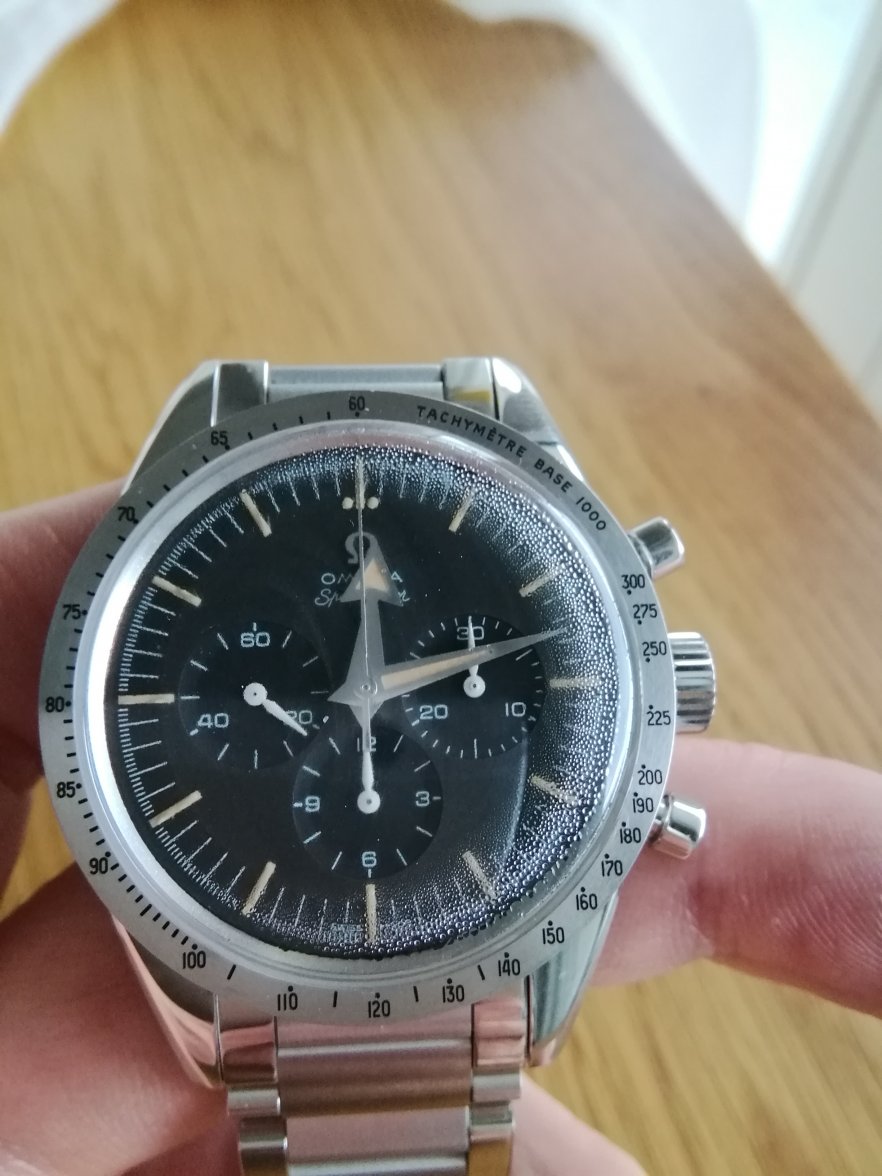
Went to the swimming pool yesterday with my daughter. I do not know what I was thinking about but I kept my one and only modern watch at my wrist. Thought those modern speedies were waterproof but they are not...


Any advice?


Keep it like this, the dial might turn to a very desirable brownish tone
 
Posts
352
Likes
1,371
Having just purchased a speedy (with concern about water) I am very interested in hearing the outcome with the warranty.
 
Posts
2,152
Likes
3,810
For me a chronograph would have to have operational underwater pushers or screwdown pushers for me to consider submerging it in the pool. I know Speedy pushers are quite stiff, making accidental operation unlikely...nevertheless, I would not take the risk.

Good luck OP, hope you get this sorted out ASAP. As Al/Archer mentioned, you need to be quick...the clock is ticking.
 
Posts
1,813
Likes
9,393
Sorry, but Omega disagrees with you...

From the table above I get the impression that Omega is implying that the Trilogy watches should be OK in surface swimming conditions. It mentions that the crown and pushers should be intact which does not mean the same as operated to me. This raises a couple of questions:-
1) How much water can penetrate past pushers and crowns when operated underwater (assuming the watch is rated: 60m non-screw locked and just a few cm below water) and
2) could there be a manufacturing quality issue with some/all Trilogy watches, e.g. defective or incorrect seals (non-specification compliant) having been used due to delivery schedule pressures?

I guess the only way to be sure is to actually submerge a few watches and operate them, checking for the amount of moisture afterwards....a potentially expensive undertaking.

Is it possible to do such a test with just case, pushers and crown, i.e. with the movement not installed?

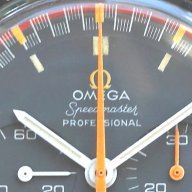
I‘m kind of curious to know what happened to this one:-
 
Posts
231
Likes
510
You can pull the crown out to make the watch stop until you have it serviced (under warranty of course). These METAS-certified models should be ok for swimming for a year or two, though it is not advisable as you might accidentally depress the pushers underwater. The fact that the Speedy's pushers don't have protection makes the Daytona with screw-down ones a better alternative for swimming.

Wish you good luck in stating your case with Omega.
 
Posts
16,856
Likes
47,859
The think is OP said he was swimming with hes daughter. We don't know if he was carrying a young child or anything really.
Those quick to jump on the faulty, warranty bandwagon we need more information.


Have been on forums for years and heard about heaps of accidents with new watches.
Like all the times watches drop and a thread is created ( remember the ceramic cracks and broken lugs ) it always seems to be from only 1ft and last time I had a watch on my wrist not my ankle. 😗

Would be interesting to find out more about what actually happened @mappleluna
 
Posts
66
Likes
125
I would expect that swimming in what i guess to be 3m of water or less should not affect watch that is rated to 60m. Good luck on service being covered.

The meters guides on watches are misleading as the 60M simply means that is the watch is absolutely still up to 60 meters under the still water then it should not leak due to the pressure exerted by that depth of water.

If the water is running or you are pushing against water then the water creates more pressure regardless of the actual depth, so this simply means that you can make the watch take on water by diving into a pool or even going under a shower if you exert extra pressure by moving the watch against water or vice versa..

I would never go swimming in a watch with a measly 60m water resistance grading, that is for heavy rain and you can risk washing your hands with it.
 
Posts
16,856
Likes
47,859
The meters guides on watches are misleading as the 60M simply means that is the watch is absolutely still up to 60 meters under the still water then it should not leak due to the pressure exerted by that depth of water.

If the water is running or you are pushing against water then the water creates more pressure regardless of the actual depth, so this simply means that you can make the watch take on water by diving into a pool or even going under a shower if you exert extra pressure by moving the watch against water or vice versa..

I would never go swimming in a watch with a measly 60m water resistance grading, that is for heavy rain and you can risk washing your hands with it.

Do you know this to be true or are you making it up from myths on the Internet

Read the link in my post above or Below.

http://forums.watchuseek.com/f17/water-resistance-myth-vs-reality-159142.html

Been diving all my life with a lot of diving watches and moving your hand in 60 meters of water does not increase the pressure in a watch or anything more than the most minuscule amount ( due to not being able to move that quick anyway due to the pressure.
 
Posts
2,152
Likes
3,810
You can pull the crown out to make the watch stop until you have it serviced (under warranty of course). These METAS-certified models should be ok for swimming for a year or two, though it is not advisable as you might accidentally depress the pushers underwater. The fact that the Speedy's pushers don't have protection makes the Daytona with screw-down ones a better alternative for swimming.

Wish you good luck in stating your case with Omega.
For the Speedy 60th, I don't think pulling out the crown would make much difference as the 1861 calibre is manual wind and does not have hacking seconds, it is also not METAS certified (unlike your lovely, gorgeous Railmaster😀)
 
Posts
10,307
Likes
16,127
The meters guides on watches are misleading as the 60M simply means that is the watch is absolutely still up to 60 meters under the still water then it should not leak due to the pressure exerted by that depth of water.

If the water is running or you are pushing against water then the water creates more pressure regardless of the actual depth, so this simply means that you can make the watch take on water by diving into a pool or even going under a shower if you exert extra pressure by moving the watch against water or vice versa..

I would never go swimming in a watch with a measly 60m water resistance grading, that is for heavy rain and you can risk washing your hands with it.

Sigh. Another one who needs to read up on the dynamic pressure myth. Moving you arm at 3m depth is not remotely the same as static pressure at 60m. It would be a tiny effect.
 
Posts
66
Likes
125
Do you know this to be true or are you making it up from myths on the Internet

Read the link in my post above or Below.

http://forums.watchuseek.com/f17/water-resistance-myth-vs-reality-159142.html

Been diving all my life with a lot of diving watches and moving your hand in 60 meters of water does not increase the pressure in a watch or anything more than the most minuscule amount ( due to not being able to move that quick anyway due to the pressure.

I think it is Common sense really as 60m water pressure is nothing, for example to put the discussion to extremes, try using a jet washer on a watch and see what happens and then the watch is under only cms of water. Water pressure can be ramped up by movement of water or by pushing an object against water.

Recently a guy i know at the local gym here got his watch to leak water during a 1 hour aqua aerobics class. this was a watch he had used many times normally swimming on the surface with and it was a 100m water resist.. Diving into a pool off a high board is another way to exert extra water pressure on a watch.

As I said "I would not go swimming in a watch with a measly 60m water resist rating", that goes especially for an expensive one with chrono push buttons, you must do what you feel is right.
 
Posts
66
Likes
125
Sigh. Another one who needs to read up on the dynamic pressure myth. Moving you arm at 3m depth is not remotely the same as static pressure at 60m. It would be a tiny effect.
Sigh, Not if the chrono button was pushed under water and not if the person was diving from a high board, as we do not know the full story and you do not need the full 60m depth of water to make a watch leak water, just the equivalent pressure. I would not go swimming in an expensive chrono with a measly 60M water resist, you however must do what you feel is right for you.
 
Posts
29,234
Likes
75,571
From the table above I get the impression that Omega is implying that the Trilogy watches should be OK in surface swimming conditions. It mentions that the crown and pushers should be intact which does not mean the same as operated to me. This raises a couple of questions:-
1) How much water can penetrate past pushers and crowns when operated underwater (assuming the watch is rated: 60m non-screw locked and just a few cm below water) and
2) could there be a manufacturing quality issue with some/all Trilogy watches, e.g. defective or incorrect seals (non-specification compliant) having been used due to delivery schedule pressures?

I guess the only way to be sure is to actually submerge a few watches and operate them, checking for the amount of moisture afterwards....a potentially expensive undertaking.

Is it possible to do such a test with just case, pushers and crown, i.e. with the movement not installed?

I‘m kind of curious to know what happened to this one:-

That table is for all Omega watches, and yes the trilogy watches should be fine for swimming.

It mentions the crown and pushers being intact because people often treat water resistance as a permanent feature, when it's not - it has to be maintained regularly just like the movement. This is why brands typically replace the crown and pushers every time a watch comes in for service.

The crown has a seal inside it that seals on the case tube, and no matter if it is pushed against the case or pulled out to the time setting position, that seal stays in contact with the case tube. The seals inside the pushers seal on a post in the pusher cap, and again they stay in contact as the pusher cap is depressed. The concern with operating the pushers underwater is with the fact that doing so will sort of act in a way that could possibly "pump" the water that is under the pusher cap into the case.

So pushing a pusher or pulling the crown out does not create a big hole in the watch, which seems to be the impression of some. Neither of these things is going to cause the amount of water I see condensing under the OP's crystal.

No one knows what caused the water to enter this case yet, but I suspect the first thing Omega will do is pressure test the watch using the dry testing equipment - you can see how that works in the first two photos of this thread:

https://omegaforums.net/threads/pressure-testing-a-watchco-sm300.45375/

I suspect the watch will fail this test, and that means there is a manufacturing defect of some kind. It is unlikely to be one that affects every one of these watches made.

What likely happened to the one in the video is....nothing.

Cheers, Al
 
Posts
16,856
Likes
47,859
I think it is Common sense really as 60m water pressure is nothing, for example to put the discussion to extremes, try using a jet washer on a watch and see what happens and then the watch is under only cms of water. Water pressure can be ramped up by movement of water or by pushing an object against water.

Recently a guy i know at the local gym here got his watch to leak water during a 1 hour aqua aerobics class. this was a watch he had used many times normally swimming on the surface with and it was a 100m water resist.. Diving into a pool off a high board is another way to exert extra water pressure on a watch.

As I said "I would not go swimming in a watch with a measly 60m water resist rating", that goes especially for an expensive one with chrono push buttons, you must do what you feel is right.

I would dive to 50 meters with a 60m depth rated watch that had the seals freshly replaced ( up to 12 months ) and pressure tested no mater what your mate at the gym says.

The science of water pressure can be used to calculate a watch from a diving board but I bet it is nowhere near the same as being 50 meters under water.
Edited:
 
Posts
29,234
Likes
75,571
Sigh, Not if the chrono button was pushed under water and not if the person was diving from a high board, as we do not know the full story and you do not need the full 60m depth of water to make a watch leak water, just the equivalent pressure. I would not go swimming in an expensive chrono with a measly 60M water resist, you however must do what you feel is right for you.

For Omega, 60m means 60m, and if they were concerned about movement of the watch under water, for their own sake they would say something about it in their water resistance information or the watch manual.

I agree that everyone needs to do what is right for them, but please unless you have proof of what you claim, stop making things up. Please do the math for us, and remember to show your work. If you want to refute those who have done the work already, saying it's "common sense" doesn't cut it, because it isn't when you do the math...

Cheers, Al
 
Posts
10,307
Likes
16,127
Sigh, Not if the chrono button was pushed under water and not if the person was diving from a high board, as we do not know the full story and you do not need the full 60m depth of water to make a watch leak water, just the equivalent pressure. I would not go swimming in an expensive chrono with a measly 60M water resist, you however must do what you feel is right for you.
Nor would I but your gut feelings and suppositions are not backed up by science. Now you are taking about button pressing which is a nice swerve, you were on about dynamic pressure earlier which has been debunked over and over. Yes buttons and crowns are entry risk points but still have gaskets, see above for more info.
Edited:
 
Posts
66
Likes
125
Nor would I buy your gut feelings and suppositions are not backed up by science. Now you are taking about button pressing which is a nice swerve, you were on about dynamic pressure earlier which has been debunked over and over. Yes buttons and crowns are entry risk points but still have gaskets, see above for more info.

Once again surely we all know it is a Speedmaster chronograph 60m we are discussing and not a Seamaster 200 or 300M, and its weak spot is the push buttons. It seems that to one or two posters on here you have to spell everything out so that they can not try to snipe at you, lol.

It changes nothing though because as I said, I personally would not go swimming or diving in to a pool the way I do in a 60m rated watch especially a chronograph. It is not worth the risk or the cost to put it right. I would wear my Seamaster or better still my Casio G shock
You however can do what you like with your property.
I wish the unfortunate buyer all the best in getting his watch sorted out under warranty if it fails the pressure test that it will most likely soon encounter.