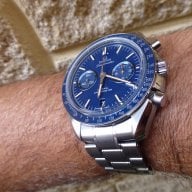
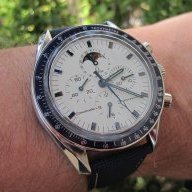
Real world water resistance Speedmaster

Locked
Posts
18,202
Likes
27,527
Good point and I got one! sometimes dishes need scrubbed even before going into the dishwasher (dried egg...oatmeal) since not everyone in the family rinses before throwing them in the sink - I know I know - it's a personal problem 😀


All makes sense, thanks!

Thank you again for all the input and consideration. With this post, I am mostly interested in the real world usage/concern that speedy owners have. I'm not gonna wear it into a pool or at the beach and I wouldn't be submerging it more than 6" of water.

I can already hear heads exploding ::stirthepot::, but does anyone know if the pushers need to be completely pressed down to allow for water intrusion or do they just need to pushed a little to allow moisture in? For example, would the chrono need to be started underwater or would a simple wrist bend pressing on the pusher cause leakage?
Depends on the age of the seal, and condition of the pusher.
 
Posts
836
Likes
2,462
Man...

They went to the moon with that watch.

Please, don’t overbrain.

As other members said, it’s 50 meters.

Alberto
 
Posts
16
Likes
33
Man...

They went to the moon with that watch.

Please, don’t overbrain.

As other members said, it’s 50 meters.

Alberto

well yeah...but there's no water on the moon 😗

just kidding! thank you all for your input
 
Posts
29,669
Likes
76,826
well yeah...but there's no water on the moon 😗

just kidding! thank you all for your input

Well, there was when they got back...


They call it "splashdown" for a reason.
 
Posts
29,669
Likes
76,826
Please continue to use your own property in any way you see fit, me I won't even wear a Speedy on a wet lawn.

The answer from someone who hasn't done the math...😉

But I agree, only use it how you feel comfortable using it, even if it can handle far more that you think.

I can already hear heads exploding ::stirthepot::, but does anyone know if the pushers need to be completely pressed down to allow for water intrusion or do they just need to pushed a little to allow moisture in? For example, would the chrono need to be started underwater or would a simple wrist bend pressing on the pusher cause leakage?

Well to clarify, the seal that is inside the pusher is never out of contact with the surface that it seals on. So pushing the pusher in doesn't somehow create a "hole" in the case that water can rush into.

The concern is that when water gets trapped under the pusher cap, and you press the pusher, that water will get forced past the seal inside the pusher. So by pressing the pusher you are essentially "pumping" water past the seal. Chances are that this is only going to happen with full depression of the pusher cap, so I don't think flexing your wrist is going to be a problem. if it was, the seal would be compromised enough for any water exposure to be a concern.

Cheers, Al
 
Posts
1,530
Likes
3,593
The answer from someone who hasn't done the math...😉

Cheers, Al

Oh I've done the math alright. Seiko diver, designed from the ground up to be used in water, price £250. Omega Speedmaster priced at £3500 not designed from the ground up to be used in water.
 
Posts
5,522
Likes
9,437
And what about a £3500+ Planet Ocean?
 
Posts
29,669
Likes
76,826
Oh I've done the math alright. Seiko diver, designed from the ground up to be used in water, price £250. Omega Speedmaster priced at £3500 not designed from the ground up to be used in water.

Using a watch like this in water is an individual decision everyone has to make. That doesn't mean we should be distorting facts to make a point.

The fact is the Speedmaster was designed from the ground up to work in up to 50m of water, if you choose to do so or not.
 
Posts
7,680
Likes
14,204
It will be fine in day to day activities but I don't see much sense in showering with it on. One, you are around soap and shampoos which can find its way into nooks and crannies of the watch and bracelet if not well rinsed off. And there is always the debate whether soaps can lower the surface tension of the water enough to allow ingress past the seals, plus you are inadvertently shooting water from the shower head onto the watch head which will be of a lot higher pressure than dipping it three feet in a swimming pool. That is why it is never recommended to take a watch into a hot tub spa where there is hot water and pulsating water jets. Most likely it will be fine but I just don't chance it.
 
Posts
3,388
Likes
8,935
I never understood why anyone would shower wearing a watch. The watch will remain wet long after one has dried off. Makes no sense to me.
 
Posts
1,530
Likes
3,593
Using a watch like this in water is an individual decision everyone has to make. That doesn't mean we should be distorting facts to make a point.

The fact is the Speedmaster was designed from the ground up to work in up to 50m of water, if you choose to do so or not.


There are people on this thread who are indeed "distorting facts" I'm not one of them. The fact remains, you are running a much great risk of damage to your watch and wallet by using a Speedy in water, but as I said a while back please use your own property as you see fit, but I will be using my Planet Ocean on my next trip to the beach.
 
Posts
29,669
Likes
76,826
There are people on this thread who are indeed "distorting facts" I'm not one of them.

Then can you explain what you mean by this?

It's not all about depth, it's more to do with the pressure applied to the seals
 
Posts
15,475
Likes
45,810
It is water resistant until it leaks. If you are bound you want to be wearing it in wet environments, then be prepared to spend to have it frequently water resistance tested, and more when a leak shows up. You could spend a week reading all the posts on this message board about Speedmaster water resistance. Sure NASA astronauts wore them in water. They were paid to take risks, and NASA footed the bill when things went awry. And when you weighed the risks they took, the risk that their Speedmaster might leak was of no consequence.
 
Posts
1,530
Likes
3,593
Then can you explain what you mean by this?


My understanding is that it is possible to apply the maximum pressure to the watch before it gets to the maximum depth, but of course I could be wrong. However a quick look at this convinces me that using a 50M rated watch and a chronograph at that is foolhardy in my opinion.

Water resistance classification[edit]
Watches are often classified by watch manufacturers by their degree of water resistance which, due to the absence of official classification standards, roughly translates to the following (1 metre ≈ 3.29 feet). These vagueries have since been superseded by ISO 22810:2010, in which "any watch on the market sold as water-resistant must satisfy ISO 22810 - regardless of the brand."[1]

Water resistance rating Suitability Remarks
Water Resistant 3 atm or 30 m Suitable for everyday use. Splash/rain resistant. Not suitable for showering, bathing, swimming, snorkeling, water related work, fishing, and diving.

Water Resistant 5 atm or 50 m Suitable for everyday use. Splash/rain resistant. Not suitable for showering, bathing, swimming, snorkeling, water related work, fishing, and diving.

Water Resistant 10 atm or 100 m Suitable for recreational surfing, swimming, snorkeling, sailing and water sports. Not suitable for diving.

Water Resistant 20 atm or 200 m Suitable for professional marine activity, serious surface water sports and skin diving. Suitable for skin diving.

 
Posts
18,202
Likes
27,527
My understanding is that it is possible to apply the maximum pressure to the watch before it gets to the maximum depth, but of course I could be wrong. However a quick look at this convinces me that using a 50M rated watch and a chronograph at that is foolhardy in my opinion.
Its been pretty disproven that moving a watch quickly through water increases the pressure applied to the watch, ie like a swimming stroke.
 
Posts
29,669
Likes
76,826
My understanding is that it is possible to apply the maximum pressure to the watch before it gets to the maximum depth, but of course I could be wrong. However a quick look at this convinces me that using a 50M rated watch and a chronograph at that is foolhardy in my opinion.

Water resistance classification[edit]
Watches are often classified by watch manufacturers by their degree of water resistance which, due to the absence of official classification standards, roughly translates to the following (1 metre ≈ 3.29 feet). These vagueries have since been superseded by ISO 22810:2010, in which "any watch on the market sold as water-resistant must satisfy ISO 22810 - regardless of the brand."[1]

Water resistance rating Suitability Remarks
Water Resistant 3 atm or 30 m Suitable for everyday use. Splash/rain resistant. Not suitable for showering, bathing, swimming, snorkeling, water related work, fishing, and diving.

Water Resistant 5 atm or 50 m Suitable for everyday use. Splash/rain resistant. Not suitable for showering, bathing, swimming, snorkeling, water related work, fishing, and diving.

Water Resistant 10 atm or 100 m Suitable for recreational surfing, swimming, snorkeling, sailing and water sports. Not suitable for diving.

Water Resistant 20 atm or 200 m Suitable for professional marine activity, serious surface water sports and skin diving. Suitable for skin diving.

Yes that’s what I thought. This is the “dynamic pressure“ argument that has been discredited pretty thoroughly by actually doing the math, hence the requests for you to show the math by others.

As for the “classifications” you have quoted, please keep in mind that when Omega says 50 meters, they mean its good to 50 actual meters depth.

No one is saying you must use your watch in the water, or that you are being foolish not to. Only that you can if you wish. If you do or not, I personally couldn’t care less about, but please do not spread misinformation about water resistance thanks.

Cheers, Al
 
Posts
1,530
Likes
3,593
Its been pretty disproven that moving a watch quickly through water increases the pressure applied to the watch, ie like a swimming stroke.

And has this been disproven from diving from a 10M diving board? Either way it's safe to say that there's a multitude of watches that cost very little that are more suited to use in and around water than a Speedmaster and this non qualified watch fan is sticking to his PO for such activities, others are free to do as they please.
 
Posts
1,530
Likes
3,593
Yes that’s what I thought. This is the “dynamic pressure“ argument that has been discredited pretty thoroughly by actually doing the math, hence the requests for you to show the math by others.

As for the “classifications” you have quoted, please keep in mind that when Omega says 50 meters, they mean its good to 50 actual meters depth.

No one is saying you must use your watch in the water, or that you are being foolish not to. Only that you can if you wish. If you do or not, I personally couldn’t care less about, but please do not spread misinformation about water resistance thanks.

Cheers, Al

Al, all I can say is good luck when you take the watch back to the AD when it has leaked, and how much credence will they have when they say a guy on the internet said it would be fine, not much I'll wager.