Omega Geneve pie pan

Posts
9,588
Likes
27,696
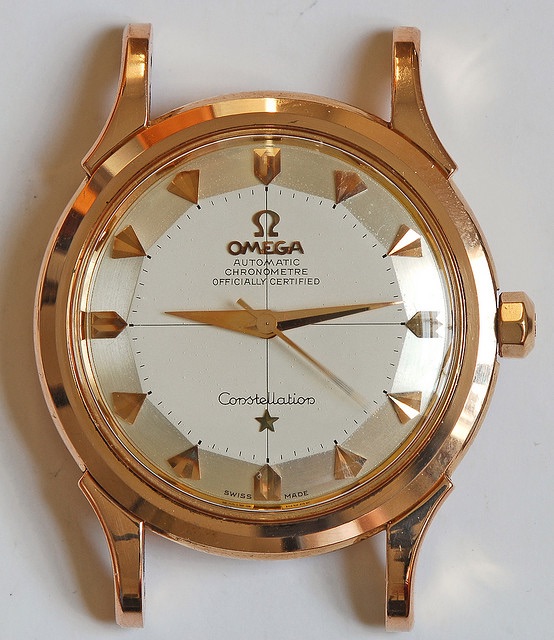
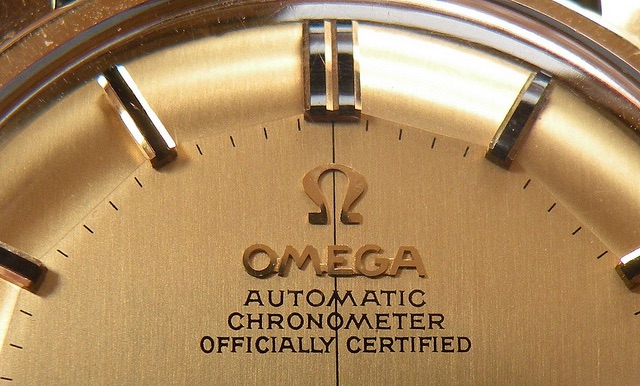
It doesn't matter what piepan dials from other brands look like, for Omegas, it does contain a distinct 12 straight edges for the minute ring. These edges are also the edges of 12 flat sides beyond the minute rings.

The other Omega examples you posted all don't have the 12 straight edges or 12 flat sides. All have a pretty much continuous convex shape, hence they're called dome dials. They don't have the same look as piepan dials from other brands either.

That's my definition as well (bold part). That said, I don't think Omega themselves ever made any official wording on this subject, as far as I know it's all just a matter of what the community as a whole has decided on.

 
Posts
1,325
Likes
1,870
Not sure we can make this any clearer, but i,ll give it another shot

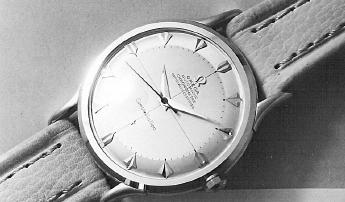
Photos shamless borrowed from members here, but both these show true Omega Connie pie pans

hope this helps
 
Posts
2,876
Likes
1,962
Anyone can redefine what piepan is wrt Omega dials, but there needs to be a term to differentiate the less common 12 sided dials, that are unique to Constellations and two special Seamaster models, from the more common dome, convex dials.

Piepan also only applies to dials on the above two model lines, but does not to dials on Speedmasters, even though their dials have exactly the same characteristics that Tony C described on other brands' dials.
 
Posts
8,152
Likes
28,762
It doesn't matter what piepan dials from other brands look like, for Omegas, it does contain a distinct 12 straight edges for the minute ring. These edges are also the edges of 12 flat sides beyond the minute rings.

The other Omega examples you posted all don't have the 12 straight edges or 12 flat sides. All have a pretty much continuous convex shape, hence they're called dome dials. They don't have the same look as piepan dials from other brands either.

If the center portion of the dial is flat, and the dial moves down and away from that flat axis at (around) the second-track demarcation, such as in Miki's example and possibly the Connie and Geneve above, then they certainly are pie-pan dials, no matter what you may think.

None of those examples have a "continuous convex shape", and couldn't unless they actually began to round down from the very center of the dial. A "domed" dial might be technically distinguished from a "pie-pan" in that the segue from flat to downward curve is not as clearly defined, and perhaps that is what you are trying to say. However, if the downward slope begins in the same general area, I would argue that it is still a pie-pan.
 
Posts
8,152
Likes
28,762
Anyone can redefine what piepan is wrt Omega dials, but there needs to be a term to differentiate the less common 12 sided dials, that are unique to Constellations and two special Seamaster models, from the more common dome, convex dials.

Piepan also only applies to dials on the above two model lines, but does not to dials on Speedmasters, even though their dials have exactly the same characteristics that Tony C described on other brands' dials.

LOL! Really? They have exactly the same characteristics, yet are not pie-pan dials? And you arrive at that conclusion because - let me guess - most Omega-centric collectors don't use the expression?
 
Posts
8,152
Likes
28,762
If you want a way to distinguish the distinctive Connie pie-pans from other variations, call 'em dodecagon pie-pans, which they are. But seriously, the expression ranges far beyond Omega models, so it strikes me as silly to pretend that any of those which fall into the category shouldn't be identified as such.
 
Posts
2,876
Likes
1,962
If the center portion of the dial is flat, and the dial moves down and away from that flat axis at (around) the second-track demarcation, such as in Miki's example and possibly the Connie and Geneve above, then they certainly are pie-pan dials, no matter what you may think.

None of those examples have a "continuous convex shape", and couldn't unless they actually began to round down from the very center of the dial. A "domed" dial might be technically distinguished from a "pie-pan" in that the segue from flat to downward curve is not as clearly defined, and perhaps that is what you are trying to say. However, if the downward slope begins in the same general area, I would argue that it is still a pie-pan.
It doesn't matter what I think, nor does it matter what you think. I only describe what the normal terms are for these Omega dials. Like I've said, you can redefine the term pie-pan to include Omega "dome" dials, but people need something to call the unique 12 sided dials, and you can't just lump the two dial types together. They have different values because of the look and the rareness. That's why they're called differently, whether you accept or not.
 
Posts
2,876
Likes
1,962
LOL! Really? They have exactly the same characteristics, yet are not pie-pan dials? And you arrive at that conclusion because - let me guess - most Omega-centric collectors don't use the expression?
Not my conclusion, just what people don't call those speedmaster dials.
 
Posts
2,876
Likes
1,962
If you want a way to distinguish the distinctive Connie pie-pans from other variations, call 'em dodecagon pie-pans, which they are. But seriously, the expression ranges far beyond Omega models, so it strikes me as silly to pretend that any of those which fall into the category shouldn't be identified as such.
I don't need a new way to call them. You can call them anything you like, but whether it'd become accepted or not is a different matter.

One thing about your idea of pie-pan is that almost all dials from Omega for about 3 decades, beside a few flat ones, would all become pie-pans. So labouring a new definition just to muddy up the water would be much more silly, IMO.
 
Posts
8,152
Likes
28,762
It doesn't matter what I think, nor does it matter what you think. I only describe what the normal terms are for these Omega dials. Like I've said, you can redefine the term pie-pan to include Omega "dome" dials, but people need something to call the unique 12 sided dials, and you can't just lump the two dial types together. They have different values because of the look and the rareness. That's why they're called differently, whether you accept or not.

They have different values for many reasons, but incorrectly failing to call a pie-pan a pie-pan isn't likely one of them. I mean, who would confuse a 12-sided pie-pan Connie with the others, even if they were also identified as having pie-pan dials?

I'm quite happy for Omega collectors to use whatever vernacular they like, but that doesn't mean that the convention is accurate.

Not my conclusion, just what people don't call those speedmaster dials.

I don't follow Speedmasters at all. But if the dials have the same characteristics as the IWC and Tissot that I showed, then they are unequivocally pie-pan dials, no matter what they are called by Omega collectors. Why? Because the shape is a classic pie-pan.

If Omega collectors had decided not to refer to Speedmasters as chronographs, would they not still have been chronographs?
Edited:
 
Posts
6,445
Likes
9,966
If I might throw my hat into the ring..

from Desmond's site
As a young pre-internet watch enthusiast, I never heard the description “pie pan”, but rather heard these dials described as “twelve sided” or “faceted” dials.But someone, somewhere, at some time, probably after the advent of the worldwide web, was responsible for transforming “douze pans” into “pie pans”, and since that defining moment the “pie pan” factoid has been repeated so often by so many that Omega now uses the term in its printed and on-line material.

so the original reference to pie pan was likely something of a misnomer and someone -not speaking french - considered that the dials looked like upturned pie pans -which they do.
I blame the Americans and their love of pies......😉

this has become the accepted reference for dials of this shape -not just Connies -and they are quite distinctive even if they don't have sharp facets -the ones shown are definitely not your regular 'dome dials'

so -whilst being a devotee to Constellations -and would affirm that their 12 sided sharp-faceted dials are most likely the 'original' pie pans -I am happy to go along with the principal that because the origin of the term is itself suspect -the common reference for these type of dials -of whichever make -can be referenced as pie-pans

just stirring the pot......::stirthepot::

Philip
 
Posts
8,152
Likes
28,762
When were the 12-sided Connies first produced?
 
Posts
4,453
Likes
11,353
Omega Pie-Pan dials, at least for me will always refer to those with straight line facets between the hour markers. I have only seen them on 50s Seamasters, 50s/60s Constellations and some weird 70s/80s quartz models.

14361665962_04c91be5dc_c.jpg

13440402074_2ef5c81645_c.jpg

This would be a two-tone dome dial in my opinion.

16215159125_233a1f6411_c.jpg
 
Posts
8,152
Likes
28,762
Omega Pie-Pan dials, at least for me will always refer to those with straight line facets between the hour markers. I have only seen them on 50s Seamasters, 50s/60s Constellations and some weird 70s/80s quartz models.

This would be a two-tone dome dial in my opinion.

That's a good summary of the status quo view, and I understand it. I do question the distinction between "domed" and "pie-pan", but appreciate that a sharper roll-off from the center portion of the dial is a more distinctive pie-pan shape.

Here's a Seamaster that sure looks like a pie-pan:

SeaPP5.jpg

SeaPP6.jpg

I don't know where the colloquialism came from originally, but IWC was producing classic pie-pan dials as early as 1955 (ref. 666 Ingenieurs).
Edited:
 
Posts
2,876
Likes
1,962
Here's a Seamaster that sure looks like a pie-pan:

SeaPP5.jpg

SeaPP6.jpg
This wouldn't meet your criteria for pie-pan like on other brands. There's no sharp edge at the minute track. It's just illusions by the painting design.

It sure does have the shape of a frying pan of some kind.
 
Posts
13,426
Likes
18,635
When were the 12-sided Connies first produced?
That is an interesting question.

Bottom line is that Omega referred to these dials as "Pie-pan" back to the very first Constellation reference:

Ref. 2648: http://www.omegawatches.com/planet-omega/heritage/vintage-watches-database?ref=14814
"Dial:
'Pie-pan' type, with "Dauphine" hands."


Not sure how this particular style obtained the name "Pie-pan" from Omega, but there you are.

IMO, the first true "pie-pan" dials were the solid gold dialed bumper versions from the early-1950's. Like this Ref. 2699:

http://omega-constellation-collecto...5/omega-constellation-model-2699-star-of.html

18K-Omega%20Constellation%202699%20De-Luxe.JPG

Take care,
gatorcpa
 
Posts
8,152
Likes
28,762
That is an interesting question.

Bottom line is that Omega referred to these dials as "Pie-pan" back to the very first Constellation reference:

Ref. 2648: http://www.omegawatches.com/planet-omega/heritage/vintage-watches-database?ref=14814
"Dial:
'Pie-pan' type, with "Dauphine" hands."


Take care,
gatorcpa

Well well, doesn't this presumably original and accurate catalogue depiction raise questions about the "only 12-sided Connies are true pie-pans", and "domed dials are not pie-pans" arguments?

Thanks Gator!
 
Posts
13,426
Likes
18,635
Well well, doesn't this presumably original and accurate catalogue depiction raise questions about the "only 12-sided Connies are true pie-pans", and "domed dials are not pie-pans" arguments?
You know what they say about opinions...😉😜😁
gatorcpa