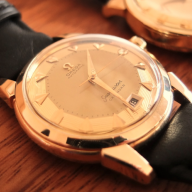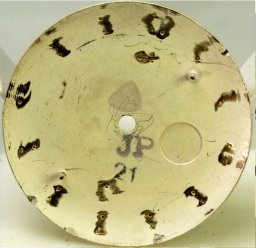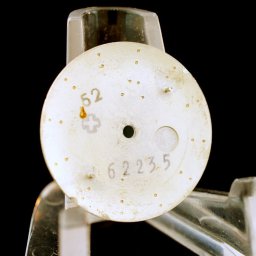
Is This Guilloche Constellationl Original?

Posts
59
Likes
8
I just like the fact is has a "Rare Back With Observatory And STARTS" lol
 
Posts
15,048
Likes
24,057
These dials are silvered (plated) not painted.

This one looks spot on original.
I though that was underneath Norm, why is it white?

Here it is so we can see what we are talking about 😁
 
Posts
34,272
Likes
38,892
I just like the fact is has a "Rare Back With Observatory And STARTS" lol
I know, sounds like he's describing a FIAT, not an Omega lol
 
Posts
10
Likes
1
Primer coat was not cited as abnormal, it was the manor of the small feet sticking through. Funny I see so many 50s dials with burring?

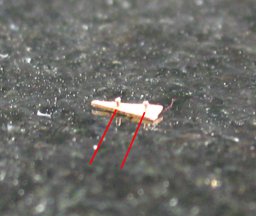
Maybe you are talking about feet, yes some where solder, but not soft solder, but with brass or copper solder, some packet watch dials, and some other dials. On this Omega dial feet where stamped, then the front dial polished and painted. Small feet sticking thought special channel. Channels where made so you do not have re-granted the back when Markers set and stamped.
 
Posts
10
Likes
1
That's actually a rather detailed and interesting response, its a discussion above my paygrade but just out of interest, are you a collector or a dealer William? Welcome by the way

Thank you, i am collector, we all learn something, here and there. This dial is spot on original.
 
Posts
13,483
Likes
31,778
Here is a gold figure from a spare dial I had laying around showing the back side and the two tiny feet (rivets).


I though that was underneath Norm, why is it white?

Just looks white, it is actually plated front and back. This is why there is a protective lacquer top coat to keep it from tarnishing.

A gold dial would simply be plated gold, rose/pink the same.

Original Black Omega dials are actually plated as well. On a black and gold dial the gold is put down first with a black top coat
allowing the gold lettering to show through, the lettering and minute track is NOT printed. BTW most 1960/70s blue Omega dials
were plated as well.

The solution to do black or blue plating is ungodly toxic and expensive so few if any dial re-finishers will even touch it.
 
Posts
34,272
Likes
38,892
Here is a gold figure from a spare dial I had laying around showing the back side and the two tiny feet (rivets).


Just looks white, it is actually plated front and back. This is why there is a protective lacquer top coat to keep it from tarnishing.

A gold dial would simply be plated gold, rose/pink the same.

Original Black Omega dials are actually plated as well. On a black and gold dial the gold is put down first with a black top coat
allowing the gold lettering to show through, the lettering and minute track is NOT printed. BTW most 1960/70s blue Omega dials
were plated as well.

The solution to do black or blue plating is ungodly toxic and expensive so few if any dial re-finishers will even touch it.

Now that, I genuinely had no idea about, especially the gold lettering being masked when the paint went down rather than printed.
 
Posts
13,483
Likes
31,778
Note this is in specific reference to black dials.

Original Black Omega dials are actually plated as well. On a black and gold dial the gold is put down first with a black top coat
allowing the gold lettering to show through, the lettering and minute track is NOT printed.

when the paint went down

Actually the black is plated as well not painted.

On a typical silvered dial the lettering, etc IS printed.
 
Posts
6,667
Likes
11,570
I disagree with the comment that the dial back is typical - in my experience it is not typical for an early 1950s omega constellation or seamaster dial. The appearance of the rivets of this particular watch is for me more typically seen in redials. The point about the notches in the dial being aligned with the dial feet is well taken though by no means a consistent feature. Now I actually agree that the front of the dial is consistent with an original print and would overall consider it an original dial taking front and back views into consideration.

Following are the pictures of 2 early 1950s dials - one constellation and the other seamaster and you can see for yourself they look quite different from the dial of the watch in question. These are to me fairly representative of the era as I have seen many other dials whose backsides look quite similar:

8192272403_a32d404667_b.jpg

8193358872_abd28df52c_b.jpg
 
Posts
15,048
Likes
24,057

Yes the back of Mikes dials is more consistent with the Omega dials of the period that I have seen.
 
Posts
13,483
Likes
31,778
As with many things Omega, just because you haven't seen it before doesn't mean it wasn't done or isn't correct.

Omega used different makers for both cases and dials during this period and each did things a little differently.

I simply don't see the dial in question as having been refinished.

 
Posts
15,048
Likes
24,057
As with many things Omega, just because you haven't seen it before doesn't mean it wasn't done or isn't correct.

Omega used different makers for both cases and dials during this period and each did things a little differently.

I simply don't see the dial in question as having been refinished.
From the total evidence, I have to agree with you, but the back of the dial was suspicious based on previous experience. Incorrectly suspicious perhaps, but suspicious none the less.
 
Posts
6,667
Likes
11,570
As with many things Omega, just because you haven't seen it before doesn't mean it wasn't done or isn't correct.

Omega used different makers for both cases and dials during this period and each did things a little differently.

I simply don't see the dial in question as having been refinished.

I agree with the presence of variations between different makers. I would bet though that if all that was seen was the back of the dial in question the conclusion would be a refinish. At least for myself and for others perhaps - it was a close examination of the front side of the dial that led to the conclusion it was original - rather than a clear image of the back leading for this conclusion to be made.

I remember a trusted watchmaker I am friends with who will make a definitive call as to originality (in dials where it is a very close call) only after he has looked at the rivets closely under a microscope.
 
Posts
3,742
Likes
6,360
I remember a trusted watchmaker I am friends with who will make a definitive call as to originality (in dials where it is a very close call) only after he has looked at the rivets closely under a microscope.

If the redialer doesn't remove the markers , he only cleans up the dial then prints the new font on, can your friend make the right call ?

 
Posts
10
Likes
1
I would also like to point out that, this guilloche dial is very well done compared to other Omega dials, superb detail work by very skilled dial maker. I am not surprised it was star of the month at Mondodec's Constellation Collectors Blog
 
Posts
6,667
Likes
11,570
If the redialer doesn't remove the markers , he only cleans up the dial then prints the new font on, can your friend make the right call ?

Obviously harder - but one would imagine if the markers aren't removed it would be a bit more difficult to print the front perfectly though that would not be impossible with a skilled craftsman.
 
Posts
6,667
Likes
11,570
I wanted to add that this is the kind of in-depth discussion that I look forward to having. Here's hoping we have more of these as omegaforums.net continues to evolve to eventually become a must-visit destination for omega fans whether they are newcomers or savvy veterans.
 
Posts
1,426
Likes
191
I wanted to add that this is the kind of in-depth discussion that I look forward to having. Here's hoping we have more of these as omegaforums.net continues to evolve to eventually become a must-visit destination for omega fans whether they are newcomers or savvy veterans.

Respectable Member MSNWatch

I agree with what you have stated. It brings this forum to another level altogether.

People like me and maybe a few others cannot comprehend what has been discussed. It is really too technical, for us. Nevertheless it is very challenging trying to understand, every moment of the discussion. This makes vintage-watch collecting to be even more interesting.

Keep it up.

Thank-you.
 
Posts
3,742
Likes
6,360
The reason I asked because some early dials (manual winding 30mm etc....) have fixed markers (not removable) These markers were attached permanently onto the dial from the factory and we don't see anything from the other side

Olddial.jpg