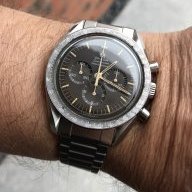
Is the patina "yellow" enough on this Seamaster 165.024?

Posts
84
Likes
104
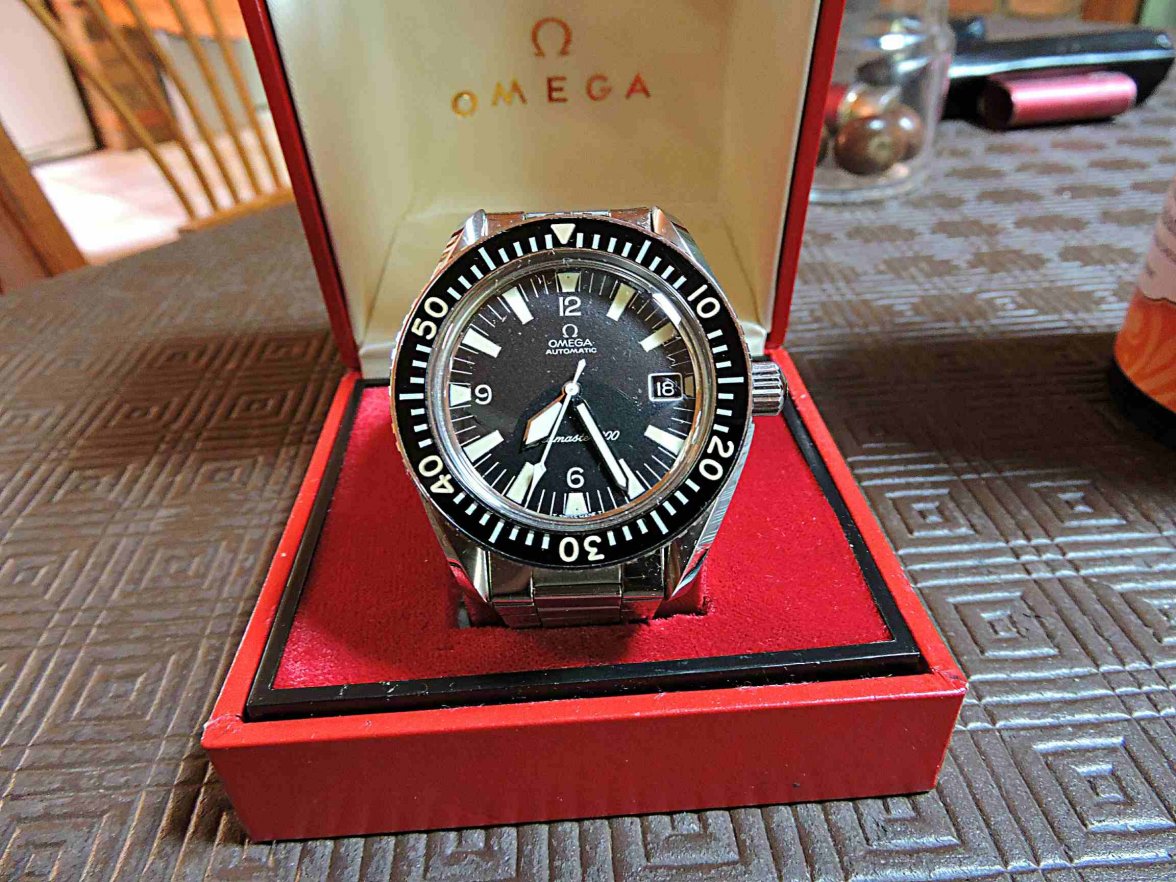
As you'd realize the with the half life of tritium of 12 years and the watch nearly 48 years that lume is well and truely gone.
But the white colour( indicies) as it was originally has remained the same, it has been boxed for the better part of those years.

On Chrono24 they have for sale an original 166.024 dial and it exhibits the same white colour on the indicies, I would asume that would have been boxed away from the light for many years
 
Posts
84
Likes
104
Guys, That would be an interesting study, to know at what point or even if there was a point that the patina developed in relation to the decay of the tritium, did the yellowing accelerate after the tritium decayed with exposure to the sun or was this a gradual yellowing with exposure from the start of the life of the watch.


I can understand why so many were relumed after 20years or so with their lume gone.

Its only now that we realize it’s a no no to relume but in the late 80’s at the end of the life of the tritium so many owners may have felt the need to restore their lume.


I only know from my watch that it hasn’t developed a patina to this point. I have made mentioned of this before, that the chrome edges of hands rusted of my 300 and it was never exposed to high temperature variation and has never been in the water.


I wonder whether the edges of the chrome rusting had any thing to do with the decay of the tritium
 
Posts
1,818
Likes
2,573
As you'd realize the with the half life of tritium of 12 years and the watch nearly 48 years that lume is well and truely gone.
But the white colour( indicies) as it was originally has remained the same, it has been boxed for the better part of those years.

On Chrono24 they have for sale an original 166.024 dial and it exhibits the same white colour on the indicies, I would asume that would have been boxed away from the light for many years
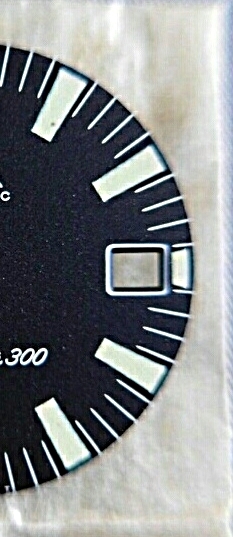
This could be any colour in reality, the photo is taken indoors.
 
Posts
84
Likes
104
This could be any colour in reality, the photo is taken indoors.
You really know how to stifle a post with a one liner like that. I suppose I should have expected something like this.

You obviously won’t entertain another point of view and you certainly don’t value courtesy.

Any colour you say….there must be many 300’s around the globe that are similar to mine.

At least I have first hand evidence of my own watch to support my findings with my photo being taken with natural light from a skylight, but I don’t think that would matter to you as long as you can make it your colour
 
Posts
1,818
Likes
2,573
You really know how to stifle a post with a one liner like that. I suppose I should have expected something like this.

You obviously won’t entertain another point of view and you certainly don’t value courtesy.

Any colour you say….there must be many 300’s around the globe that are similar to mine.

At least I have first hand evidence of my own watch to support my findings with my photo being taken with natural light from a skylight, but I don’t think that would matter to you as long as you can make it your colour
I don't know what you are banging on about mate.
You showed a Chrono 24 photo of a dial whose tritium looks white, I said it proves nothing due to being taken inside, now you are all offended?
You got thing for white tritium that no-one is allowed to doubt?

If so then prove your case, I for one cannot recall seeing any correct vintage Seamaster 300's with white tritium, and I've seen a few, in my hands, not just in photos.
I've seen everything from shiny mint green through matt yellow all the way to dark green/black.
No white, only white underplots.

Over to you.
 
Posts
238
Likes
683
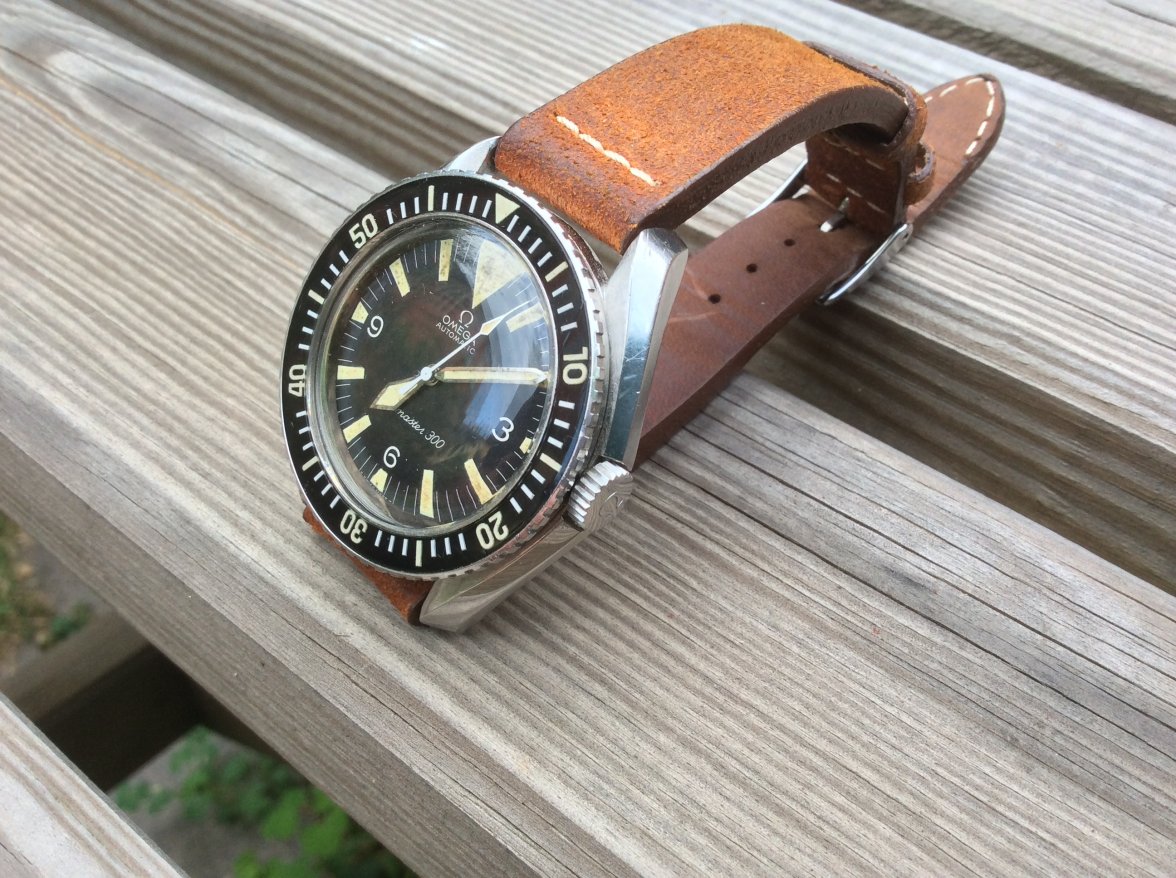
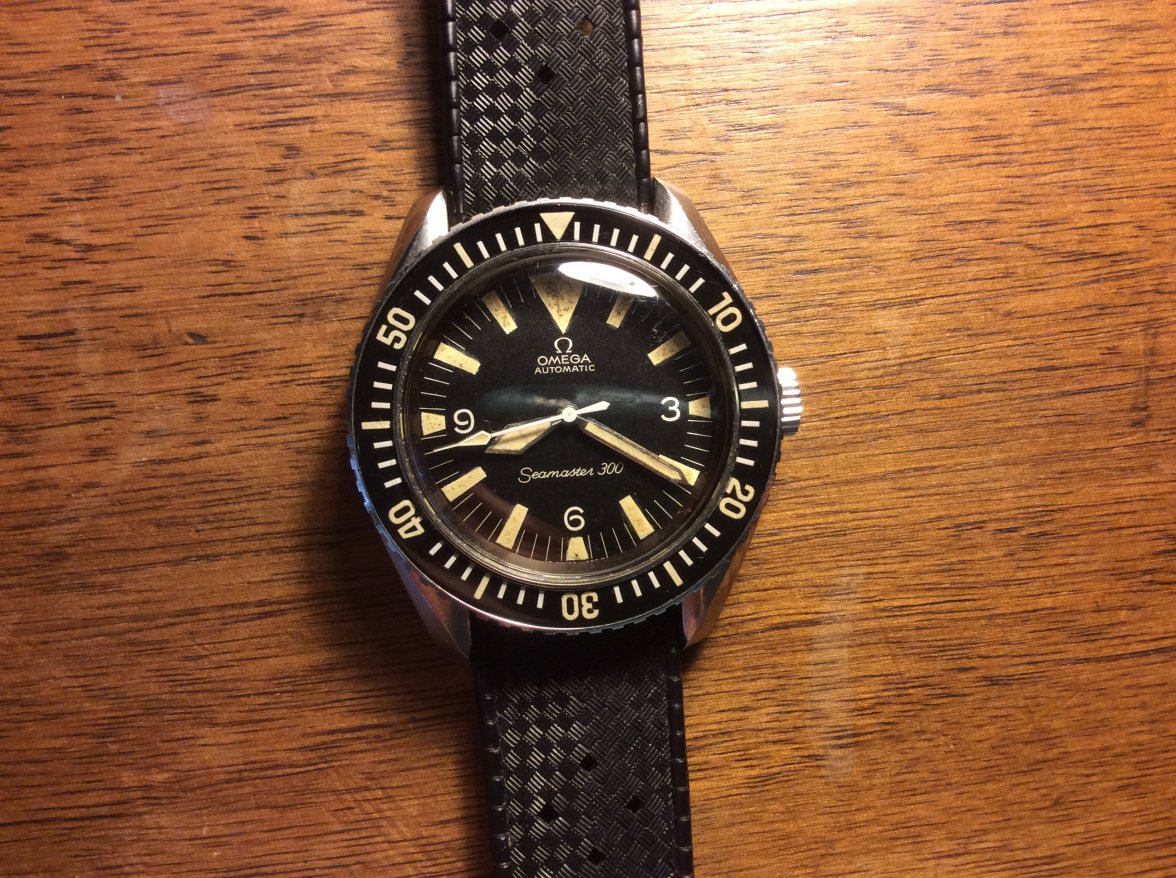
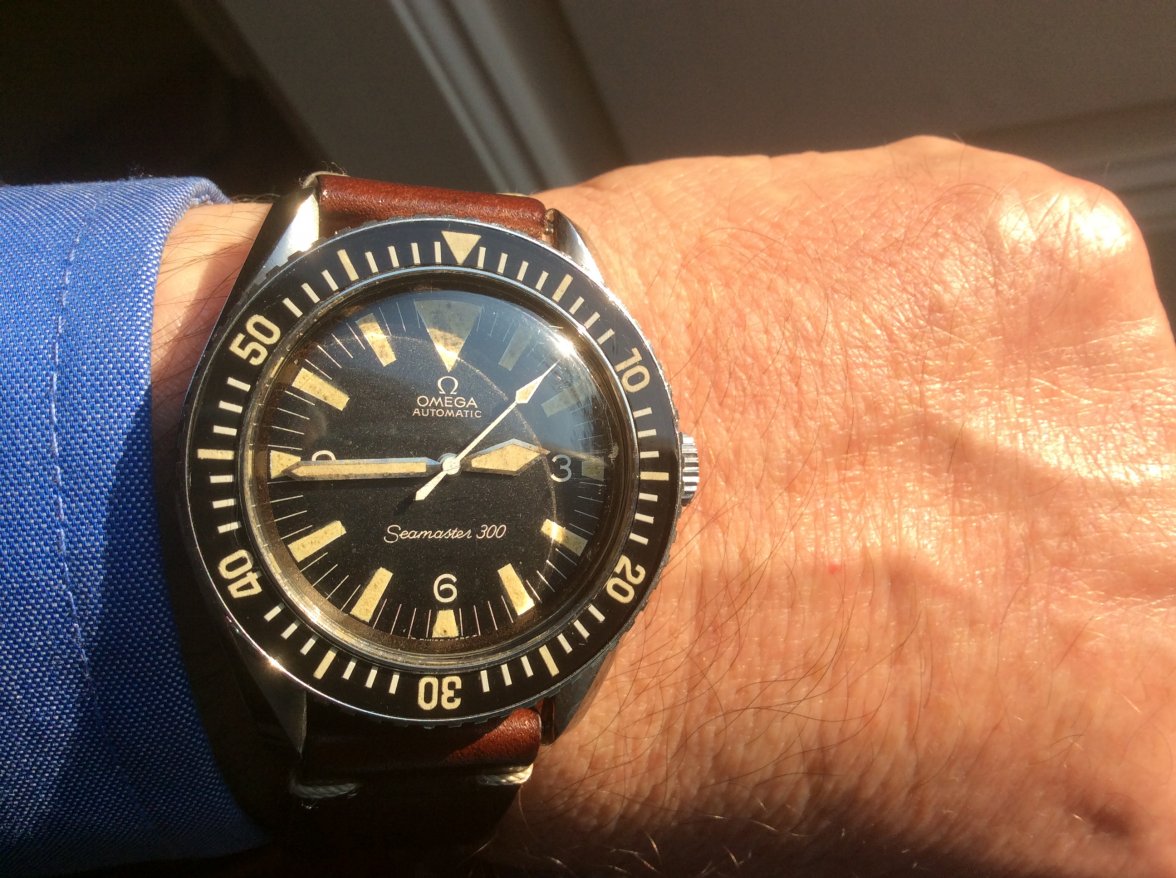
I think it is difficult to assess the color of the tritium from the photographs.
The coloration is determined from light (shade, sun, artificial, orientation, camera ...).
Here my 165.024 (1966) in three different pics: color is different.
1) shade
2) artificial light
3) direct sunset light
 
Posts
465
Likes
786
I think it is difficult to assess the color of the tritium from the photographs.
The coloration is determined from light (shade, sun, artificial, orientation, camera ...).
Here my 165.024 (1966) in three different pics: color is different.
1) shade
2) artificial light
3) direct sunset light
Nice BT! 👍