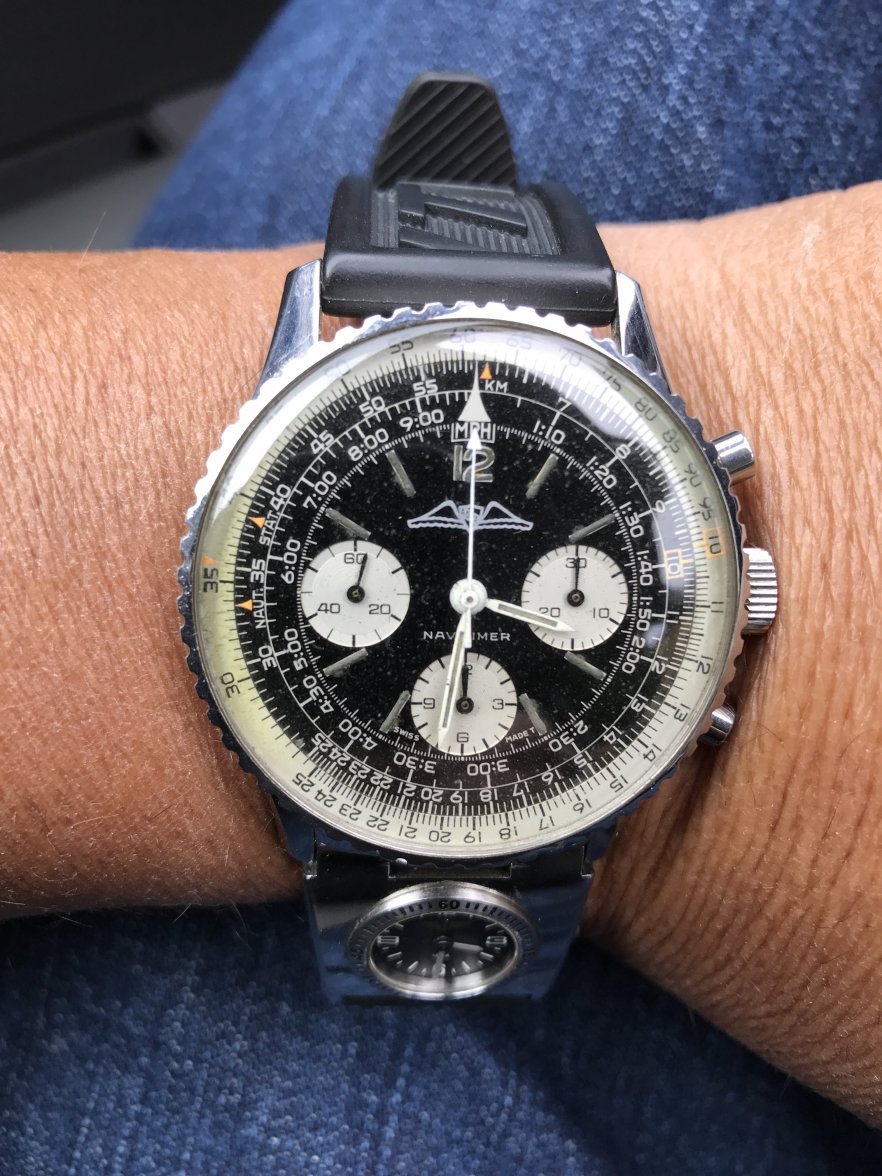
Conservator Experiments with my Navitimer 806 Dial

Posts
29,675
Likes
76,836
A layer of toluene is applied as a test on the broad areas of the dial - conservator says this is fully reversible - to protect the dial. A side effect is that it adds a bit of gloss, which also pleasantly hides some of the dial scratches.

Are you sure it was toluene? Having worked around toluene for a couple decades (used for producing a carbon rich atmosphere in a furnace for adding carbon to steel so the steel parts could be case hardened) it is a very volatile substance and evaporates very quickly. Saying you added a "layer" of toluene seems odd - it would evaporate almost immediately.

BTW when I say volatile it's not just how fast it evaporates...toluene is a constituent of TNT - trinitrotoluene...

 
Posts
3,719
Likes
4,205
Are you sure it was toluene? Having worked around toluene for a couple decades (used for producing a carbon rich atmosphere in a furnace for adding carbon to steel so the steel parts could be case hardened) it is a very volatile substance and evaporates very quickly. Saying you added a "layer" of toluene seems odd - it would evaporate almost immediately.

BTW when I say volatile it's not just how fast it evaporates...toluene is a constituent of TNT - trinitrotoluene...

You're correct and I was wrong. Further discussion with the conservator and she says that the toluene was to rinse away the HEDTA - which is kind of in line with what you were saying. She showed the pic to me to see how the dial would look like if she applied a finish (not sure what this would be yet).

Finally the edges of the dial was not dirt, but abrasion. Not sure how that would have happened unless the outer white ring of the rotating bezel/crystal was rubbing against it. So thats probably as far as it goes for the edges.
 
Posts
1,552
Likes
1,973
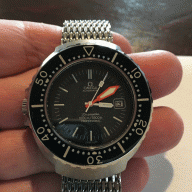
Here is mine lime dead since long time but keep a good look