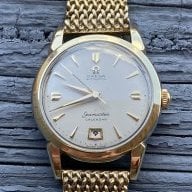
Another thread about winding from a first time owner.

Posts
4
Likes
1
Hi All,

Tldr; I think I gave my 300m ~40 winds at what I think was already full wind and slightly adjusted crown in date setting within 'danger hours'. Wondering what the signs of damage would be, if I've caused any.

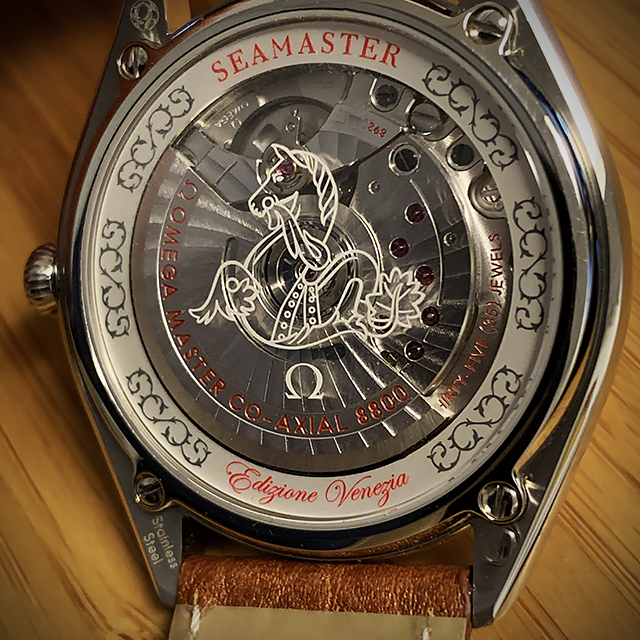
Bought my first mechanical watch a little under a week ago, a Seamaster 300m w/8800 movement. Whilst in the shop the rep explained that the automatic movement would only prevent or slow the wind from decreasing and would not wind it back to full from wearing. E.g. If I put the watch on at 80% wind the watch would only be at 80% or less when I eventually took it off rather than 81-100.

With this newly found information I decided that over the 5 or so nights I had left the watch on my nightstand, it must be in need of a manual wind to top it up. I did this at the end of the day, just after I'd taken it off to go to bed. As I've never wound a watch before, I had no bearing on how much resistance to expect and found that I had to pinch the crown between thumb and index finger to turn (rather than being able to just push my finger across the top of the crown). Whilst I thought it a little stiff, it was turning and so I did this for around 40 turns with no discernible change to resistance or audible cues.

At this point I'm questioning the advice given to me in the shop and I'm now wondering if I've just attempted to wind an already fully wound watch. Somewhat frustrated I also decided to correct the time whilst the crown was unscrewed. In doing so I accidentally rotated the crown around a 1/4 to 1/2 a turn forwards and backwards a couple of times, before realising that I was in fact in the date setting and not time setting position (daft, I know...) this was at 10PM.

I appreciate that no one can diagnose a watch through a screen, so I'm wondering what the indicators would be if I have damaged anything.

Many thanks, John

 
Posts
16,863
Likes
47,901
Put it on wear it and enjoy it.

If you wear it all day and take it off at night it should be good the next day. (If it’s the right time don’t bother about having to top it up)

Never had to wind more than a few winds to get a automatic going and let the wrist movement do the rest.

Also changing the date on modern movements is not the same as vintage movements.

My advice is, just wear it and enjoy.
 
Posts
925
Likes
494
Ok, there's a few things to address.
Firstly, it's not really a good idea to wind with one finger. It can put undue sideways pressure on the Winding crown with potentially negative consequences. IWC Schaffhausen directly advise to not follow the practice and give a reasonable explanation of it on their website.
It's best to use Thumb and Forefinger whilst it's off the wrist👍

Secondly, follow the manual and don't change days or dates within the danger zone.
Different manufacturers have varying zones spread either side of Midnight, but the principal is the same. This does not apply to what is regarded as modern Rolex movements.
The good news is it's fairly unlikely you have damaged your watch this one time👍

Thirdly, to some extent you were told rubbish by the SA.
The amount of wind the Automatic winding system on your movement puts into the mainspring every day, is directly proportional to your activity levels.
Some people can wear a completely unwound watch throughout their normal day and it will be fully wound by the time they go to bed.
At the other end of the spectrum a person could theoretically be lying in a coma wearing their fully wound watch and it won't run beyond the stated power reserve of the movement.
Your experience will vary, but unless you are fairly sedentary. You will probably never have your watch randomly stop on you unless it's in need of a service or simply broken somehow👍

Fourthly, enjoy that beauty😀
Edited:
 
Posts
2,705
Likes
3,601
As others have said, you likely did not damage the watch, but don’t do it again!

With that out of the way, all you need to do is wind the watch a good number of times to start with, screw down the crown, then wear it and forget about it. There is no need to wind it every day, although doing so will not harm the watch in any way - there is a system inside to disengage the crown from winding the spring when it is fully wound.

what the sales associate was trying to convey was that the auto-winding system can’t efficiently wind the watch from a state of low power to bring it up to full power. It is meant to keep it topped off or bring it back to full once it has unwound overnight - you won’t loose a lot of reserve overnight.
 
Posts
77
Likes
28
I avoid hand winding any of my autos. I just wear it for a couple minutes, then set it.

You would have to be incredibly sedentary for a watch to ever wind down while wearing it
 
Posts
2,705
Likes
3,601
I avoid hand winding any of my autos. I just wear it for a couple minutes, then set it.

You would have to be incredibly sedentary for a watch to ever wind down while wearing it

have you tested the power reserve of your watches when doing this? I believe you that the watch works (I.e., the seconds hand starts to work), but I doubt you will have anywhere near the full power reserve if you took the watch off after a day or so.
 
Posts
88
Likes
236
Watches typically have a day or more of power reserve. I never understood the need to wind a watch all the way.
 
Posts
5,636
Likes
5,810
Firstly, it's not really a good idea to wind with one finger. It can put undue sideways pressure on the Winding crown with potentially negative consequences. IWC Schaffhausen directly advise to not follow the practice and give a reasonable explanation of it on their website.
It's best to use Thumb and Forefinger whilst it's off the wrist👍
This is the absolutely first time I've ever hear this and no watchmaker ever has told not to do this nor replaced a crown tube or a winding stem in the past 30 years.

I watched the video on "how to wind your watch" and while the person in the video used his thumb and forefinger, he never said you had to do it.

Now, mind, I don't disagree with taking the watch off to wind it; in fact, I take my watch off to take a shower and wind it (for a manual winder) before I put it back on.

But using one finger? Sorry, I completely and totally disagree, and 30 years and probably 30 watches agree with me.
 
Posts
5,562
Likes
54,030
First of all, congrats on the Seamaster! I wish you many, many years of happy and healthy wearing.

Your watch's movement is as modern as they come so I see no danger in winding the watch manually by turning the crown. A rule of thumb that I heard or read somewhere (can't remember where) is that fifteen full turns -- with the crown pinched between the index finger and thumb -- will yield about 24 hrs of power. I have confirmed that (more or less) with some of the watches I own.

Since your watch is designed to provide a 55 hour power supply, 40 full turns should take a fully depleted power reserve to a fully wound state (or close to it). And because of the design of your watch's movement, it will never allow itself to become "over-wound", so there's no danger of over-doing it on the crown turns.

One final bit of pro advice: when you need to re-set the date on a watch that has stopped (due to depleted power reserve), get it running again by manual winding, set the date to the date before the desired date (doing this while outside the danger zone), then pull out the crown fully and turn the hour and minute hands forward until the date changes to the desired date and until the hour hand lands on the proper hour in the 24-hr cycle.

My cal. 8800 says hello 😀

Edited:
 
Posts
77
Likes
28
have you tested the power reserve of your watches when doing this? I believe you that the watch works (I.e., the seconds hand starts to work), but I doubt you will have anywhere near the full power reserve if you took the watch off after a day or so.
Of all the autos I owned I have never hand wound any of them, other than to simply make sure the hand wind function works once a year or so. I have one auto with a 42 hour reserve plus an indicator.
If I had to guess, after wearing this model for about 2 hours and just being somewhat active around the house, it will indicate about 10 hours from dead. 8 hours or so will bring it to full
 
Posts
925
Likes
494
have you tested the power reserve of your watches when doing this? I believe you that the watch works (I.e., the seconds hand starts to work), but I doubt you will have anywhere near the full power reserve if you took the watch off after a day or so.

There is a super simple real world test/experiment to actually verify how much power is being put into the mainspring, which we all can do to eliminate all doubt and also to check whether the watch may need a service.
This will work for any Automatic movement on anybody's wrist.

Firstly, set the watch aside and leave it to stop of its own accord however long it may take.

Secondly, after its stopped put the watch back on and wear it for a fixed period of time without exceeding 8 hours(if possible). Do not manually wind the watch for any reason. Allow it to only wind up by itself on the wrist.
At this point, setting the time correctly on the watch is necessary for this experiment.

Thirdly, after the watch has been worn normally for the 8 hour period.
Take it off to set it aside again without touching it again.
Crucially, now one must make note/record the time on the watch.

Fourthly, wait until the watch stops and note the time on the watch and compare it to the time shown when it was set aside.
Finish😀

This test/experiment does two key things.
Firstly, it establishes a set time frame for time on the wrist where it's being wound up by our own individual wearing habits.
Secondly, it clearly establishes how long the watch will run for over the set wearing period.

It's repeatable in order to establish a trend and verify typical inputs which may be varied in terms of time on the wrist. (It's easiest over 6, 8 and 12 hour periods because these numbers are easily divisible into 24 hour periods.)
It also gives the clearest indication of the ratio between time on the wrist and power reserve built up into the mainspring.
Results will vary for every individual, but the results will be irrefutable.👍
The more times one performs the test, the more accurate the daily trend pattern will be, but I find 3 times is enough to remove all doubt. Unless one has wildly different day to day activity levels👍
 
Posts
24,266
Likes
54,035
Most manufacturers recommend hand-winding an auto-winding watch prior to wearing, and you cannot cause any damage by hand-winding an automatic watch because it has a slipping clutch. While an automatic watch will generally start up and run if you shake it around or wear it, the timekeeping performance is generally better when it is closer to fully wound and gradually degrades when it reaches the end of its power reserve. So if you fully wind it by hand to start, the auto-winding will keep it close to fully wound, and the movement will perform optimally.
 
Posts
5,636
Likes
5,810
One final bit of pro advice: when you need to re-set the date on a watch that has stopped (due to depleted power reserve), get it running again by manual winding, set the date to the date before the desired date (doing this while outside the danger zone), then pull out the crown fully and turn the hour and minute hands forward until the date changes to the desired date and until the hour hand lands on the proper hour in the 24-hr cycle.
Excellent advice and what I also do.
 
Posts
925
Likes
494
Of all the autos I owned I have never hand wound any of them, other than to simply make sure the hand wind function works once a year or so. I have one auto with a 42 hour reserve plus an indicator.
If I had to guess, after wearing this model for about 2 hours and just being somewhat active around the house, it will indicate about 10 hours from dead. 8 hours or so will bring it to full

I concur😉
I haven't bothered trying my auto Omega, but I get similar numbers with a Rolex in that after 8 hours of normal daily wear after it's previously stopped dead. I can set the watch aside and it will run for it's stated 48 hour power reserve.
I'll take a 6:1 ratio any day.
If I only wear the watch the same way for 6 hours from a dead stop, it will run by itself for around 36 hours.
5 hours wear will yield roughly 30 hours power reserve and so on👍
 
Posts
925
Likes
494
Most manufacturers recommend hand-winding an auto-winding watch prior to wearing, and you cannot cause any damage by hand-winding an automatic watch because it has a slipping clutch. While an automatic watch will generally start up and run if you shake it around or wear it, the timekeeping performance is generally better when it is closer to fully wound and gradually degrades when it reaches the end of its power reserve. So if you fully wind it by hand to start, the auto-winding will keep it close to fully wound, and the movement will perform optimally.

Agreed, but I currently have a watch that doesn't have a manual wind capability.
This was always the case for Seikos so that's not universal.
 
Posts
24,266
Likes
54,035
Agreed, but I currently have a watch that doesn't have a manual wind capability.
This was always the case for Seikos

I also have some Seikos that don't hand wind and I just shake them around for a couple of minutes, there's no other option. Honestly, I do the same thing with hidden crown models even though they can be hand-wound in principle.
 
Posts
925
Likes
494
Of all the autos I owned I have never hand wound any of them, other than to simply make sure the hand wind function works once a year or so. I have one auto with a 42 hour reserve plus an indicator.
If I had to guess, after wearing this model for about 2 hours and just being somewhat active around the house, it will indicate about 10 hours from dead. 8 hours or so will bring it to full

I manually wind them once a month or whenever I change the date but they're always at near full wind in the morning as it's possible to hear and feel it through the Winding crown.
Unless it's a strictly Auto wind Seiko of course👍
 
Posts
77
Likes
28
The main reason I avoid hand winding autos is simply that they typically (maybe always?) have winding mechanisms that aren’t built for this, and would accelerate wear. To what extent I have no idea, but combined with the fact that I could never think of a situation where hand winding an auto would be even remotely necessary, it just doesn’t happen with my watches. I typically wear a watch for at least a couple days, and just let them wind down when not wearing
 
Posts
24,266
Likes
54,035
I could never think of a situation where hand winding an auto would be even remotely necessary, it just doesn’t happen with my watches.

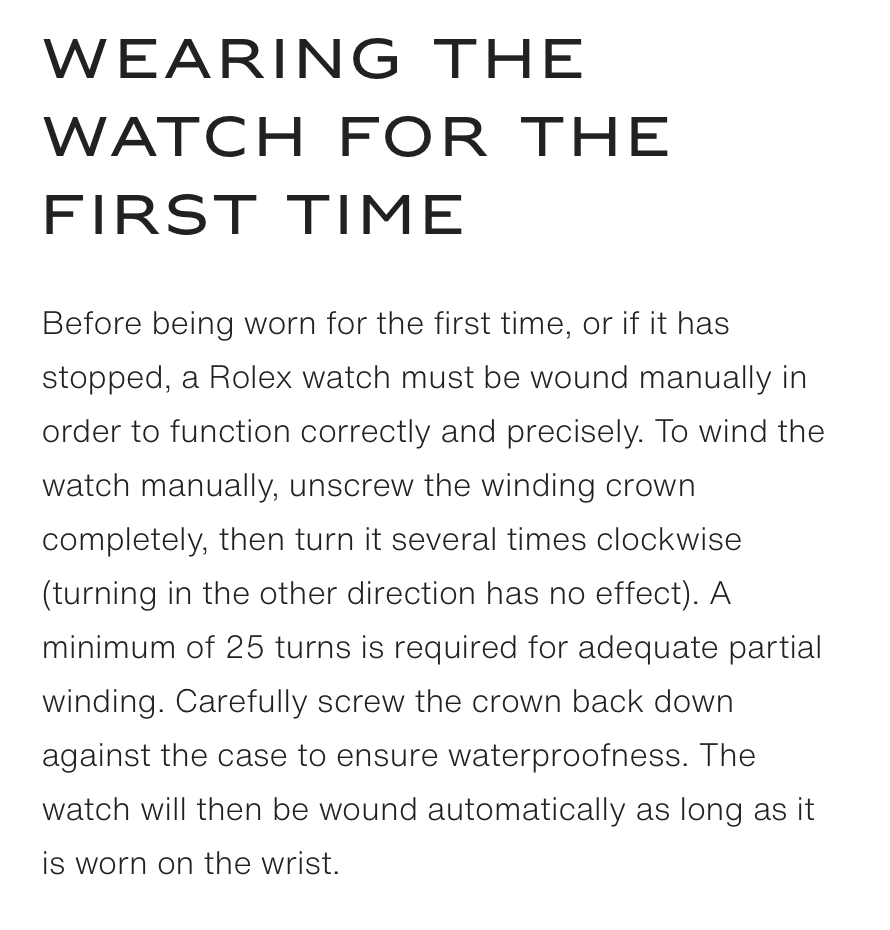
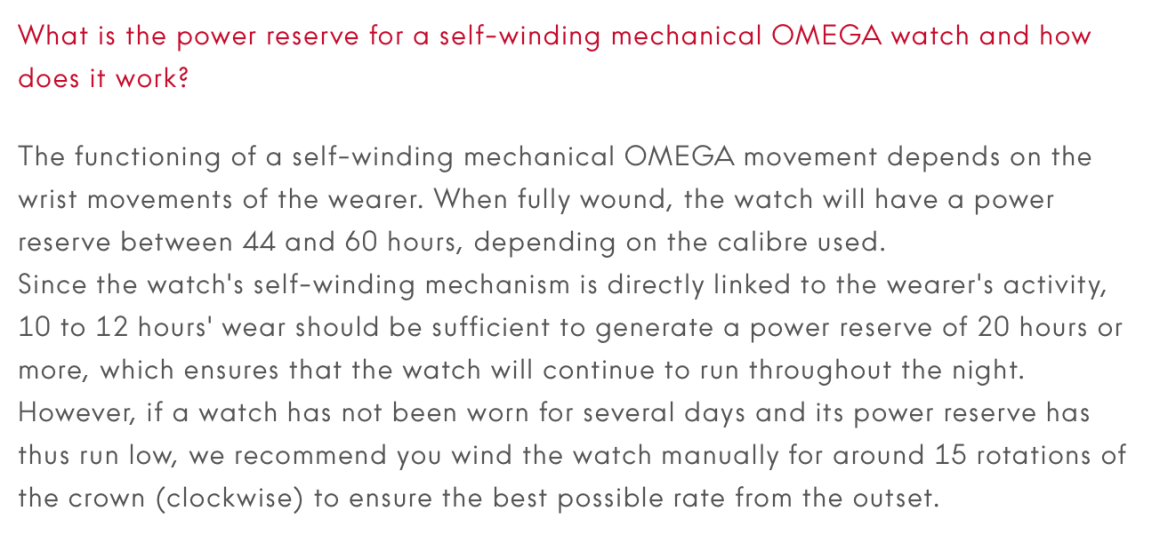
That's certainly your choice, but not consistent with how manufacturers expect their watches to be used. Here are the official instructions for Rolex and Omega, for example.

https://www.rolex.com/en-us/watch-care-and-service/caring-for-your-rolex.html


And the following from Omega FAQs.
Edited:
 
Posts
5,995
Likes
28,698
I typically wear a watch for at least a couple days, and just let them wind down when not wearing

the fact that I could never think of a situation where hand winding an auto would be even remotely necessary, it just doesn’t happen with my watches.

Uhm, so how do they start running if you put one on your wrist again?👎