A Closer Look at a 105.012-63: Provenance, Originality, and Quality

Posts
5,316
Likes
24,321

It has been a while since I posted - lots of family and work pushing my watches to one side.

About 15 years ago, I picked up this Speedmaster on eBay. It was listed as a “1970s Omega chronograph” with just three blurry photos and little detail. The seller claimed it came from a family member’s estate, and given the condition and presentation, I believe it was a genuine single-owner piece—forgotten in a drawer for decades. As far as provenance goes for Speedmasters, this kind of quiet history is far more common than an original Omega Guarantee and for me it is usually more genuine.
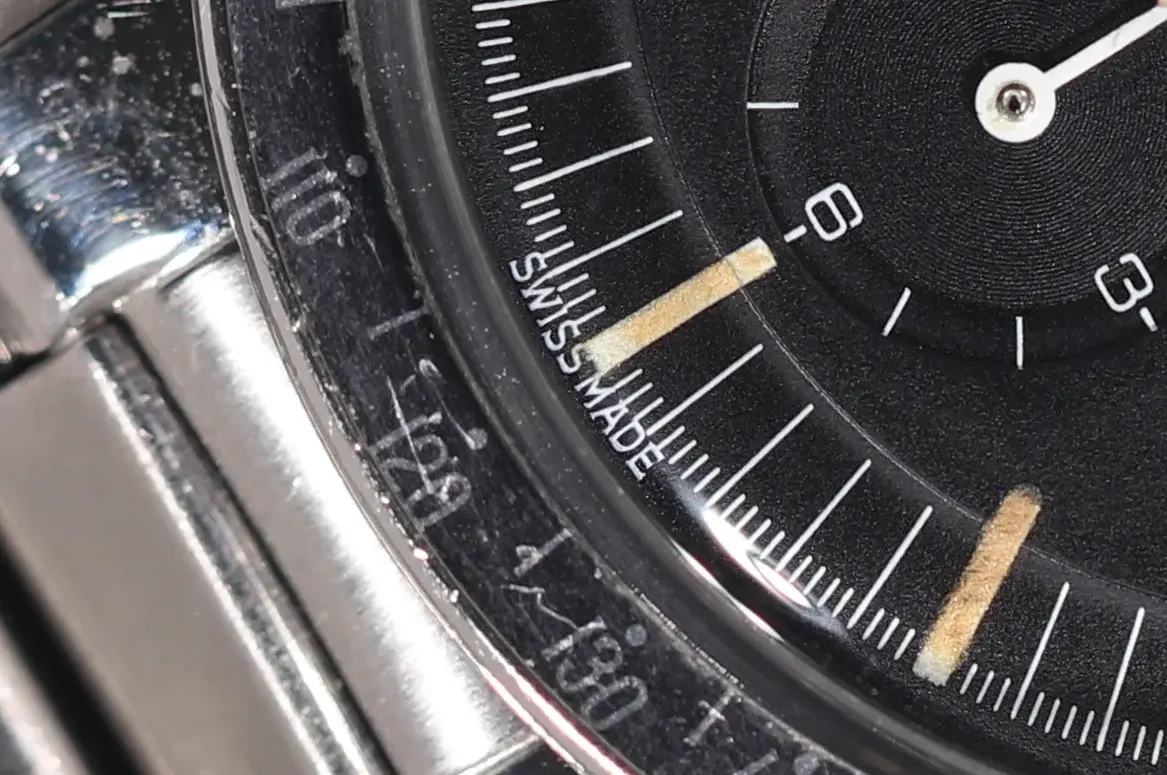


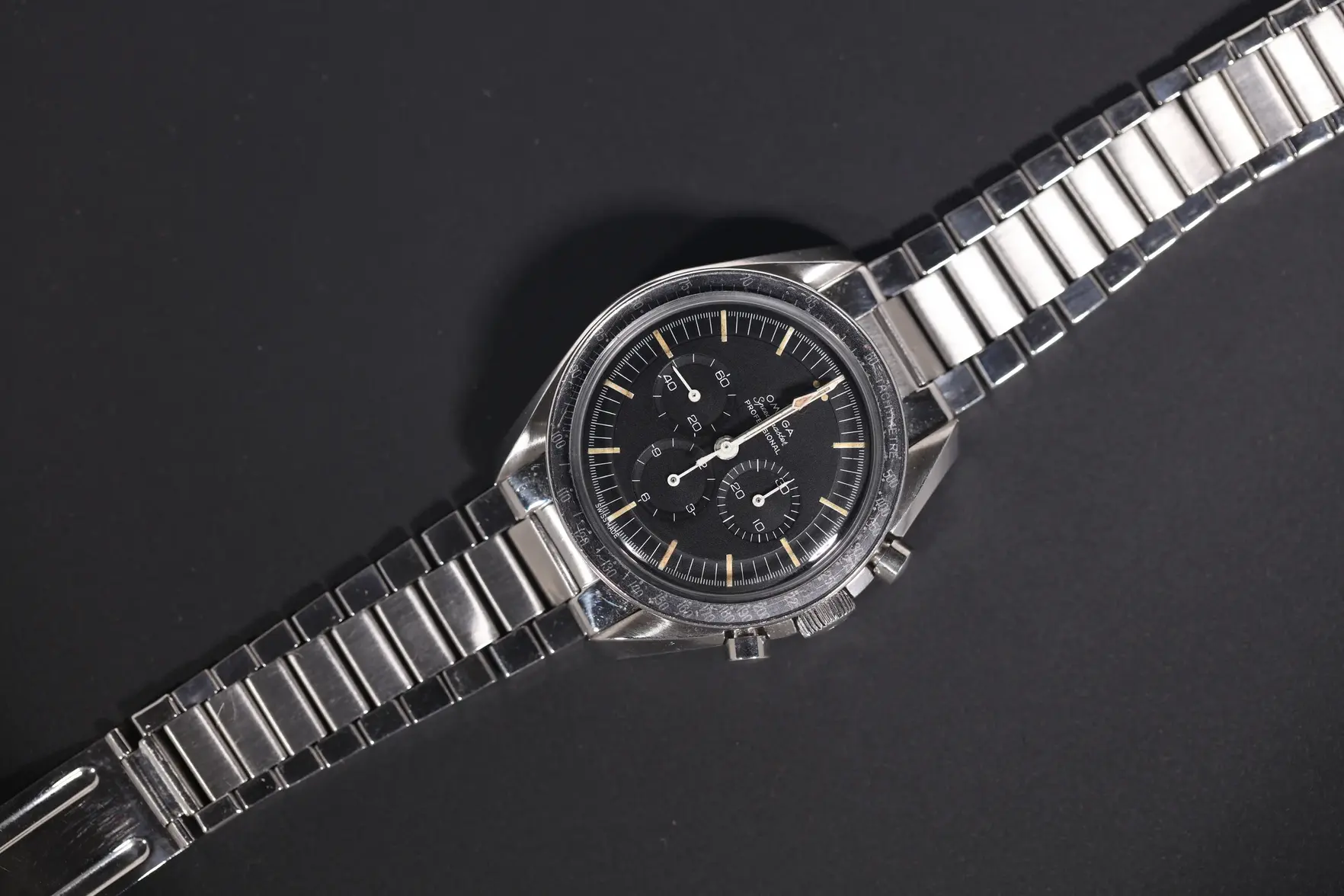
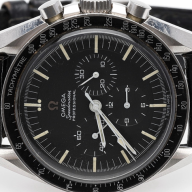
Once in hand, it was immediately clear that this was something special: a very early 105.012-63, the first reference with the twisted lug case. The key dial detail is the “SWISS MADE” text at 6 o’clock, with no T marks—confirming it as part of the very first batch of this reference.


Let’s take a look at originality:
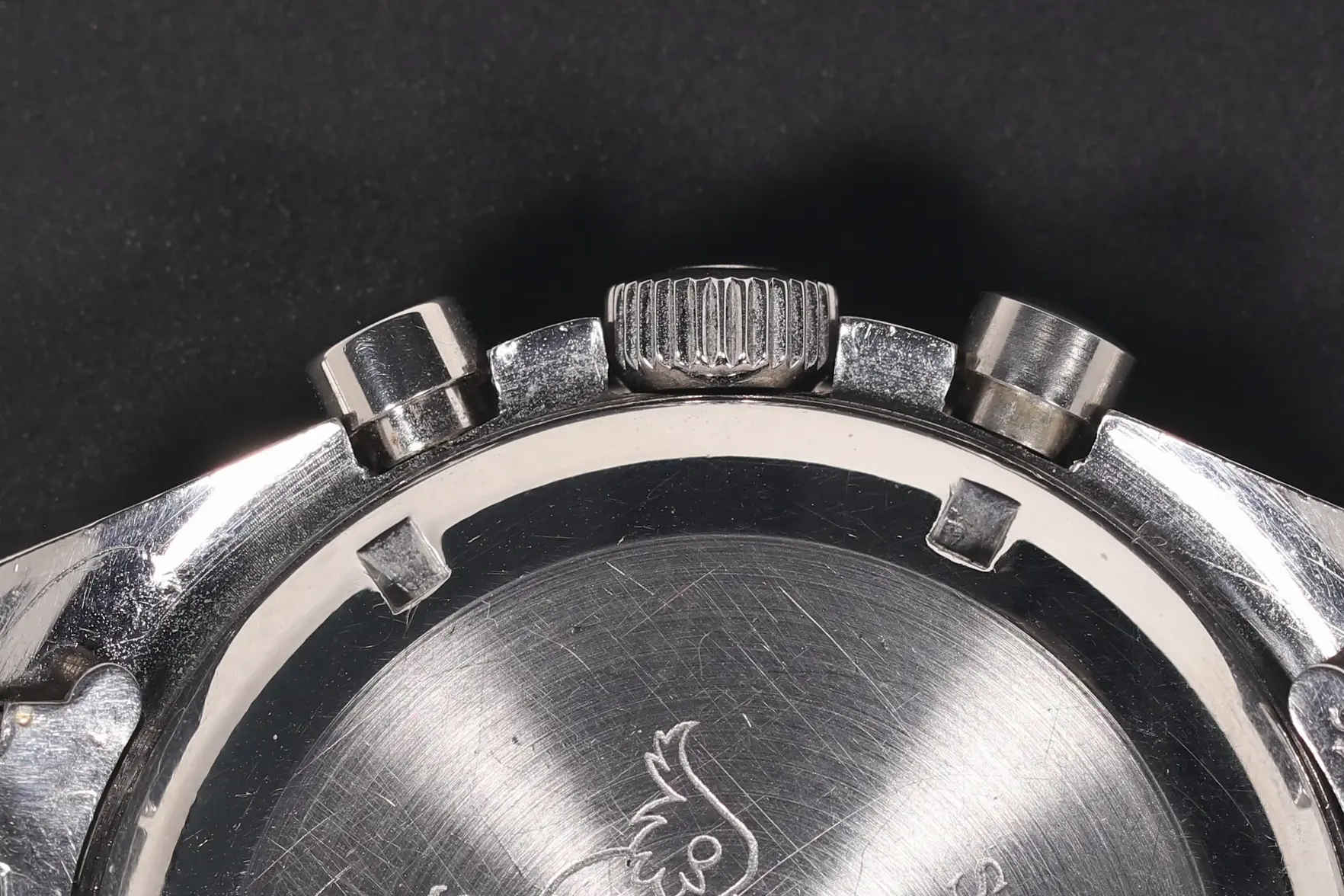


  • Pushers: Short, fat-neck pushers are present. These are original to the 105.012s and almost impossible to replace. Their presence is a big plus.
  • Case: The asymmetrical case shows no sign of polishing, with original brushing still visible on the sides. Notably, the lugs lack the “facet line” seen on later 105.012-66 cases.
  • Bezel: It’s a correct DO90 (dot over 90), with pleasing fade to a grey tone. While some collectors pay a premium for this colour, I don’t assign extra value to fading alone—it’s all about condition and originality.
  • Crown: A 32-tooth crown is fitted, likely a service replacement, and is commonly accepted with a value adjustment in region of $400
  • Caseback: Features the expected double bevel, consistent with this reference.


When it comes to quality, I always start with the dial:
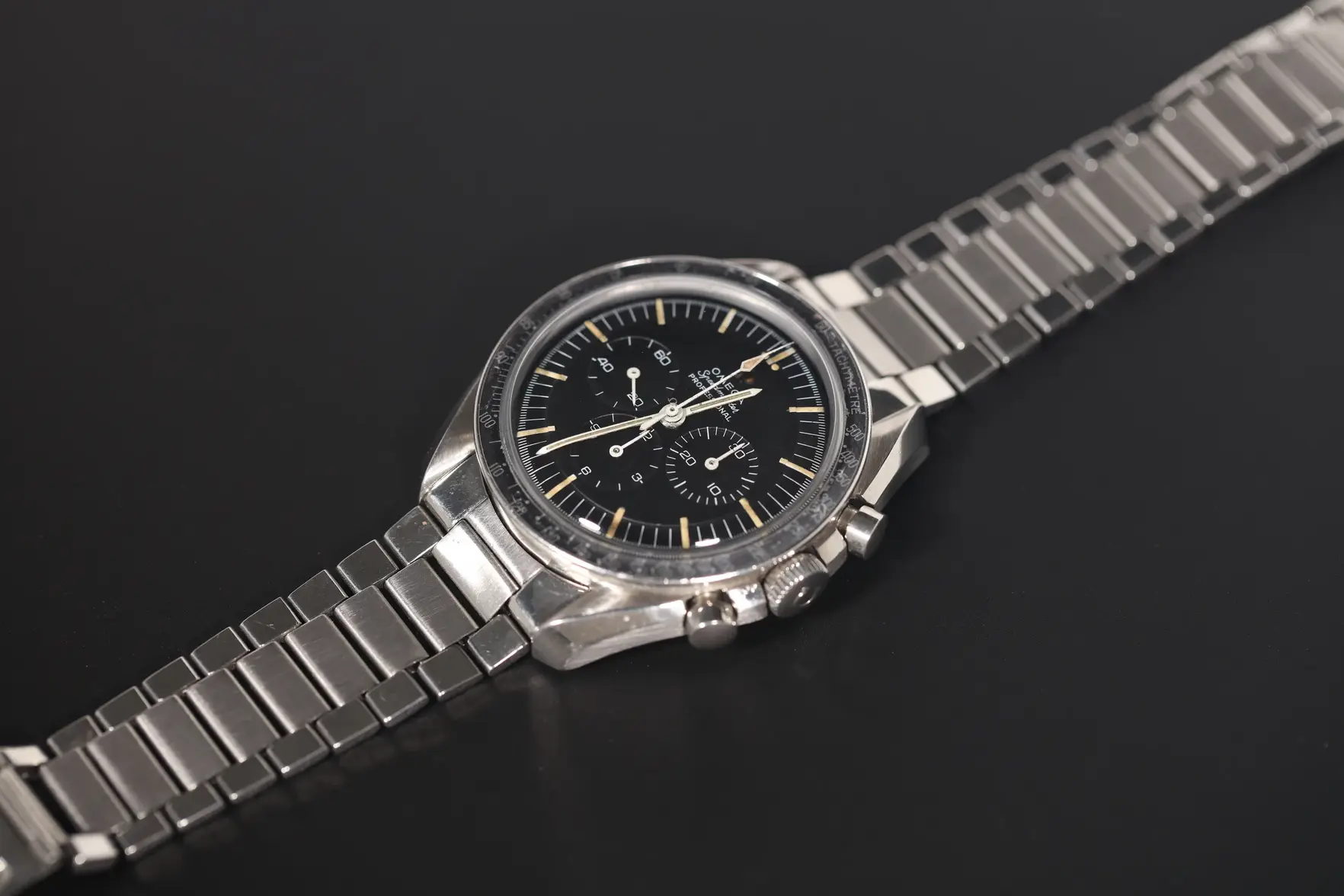


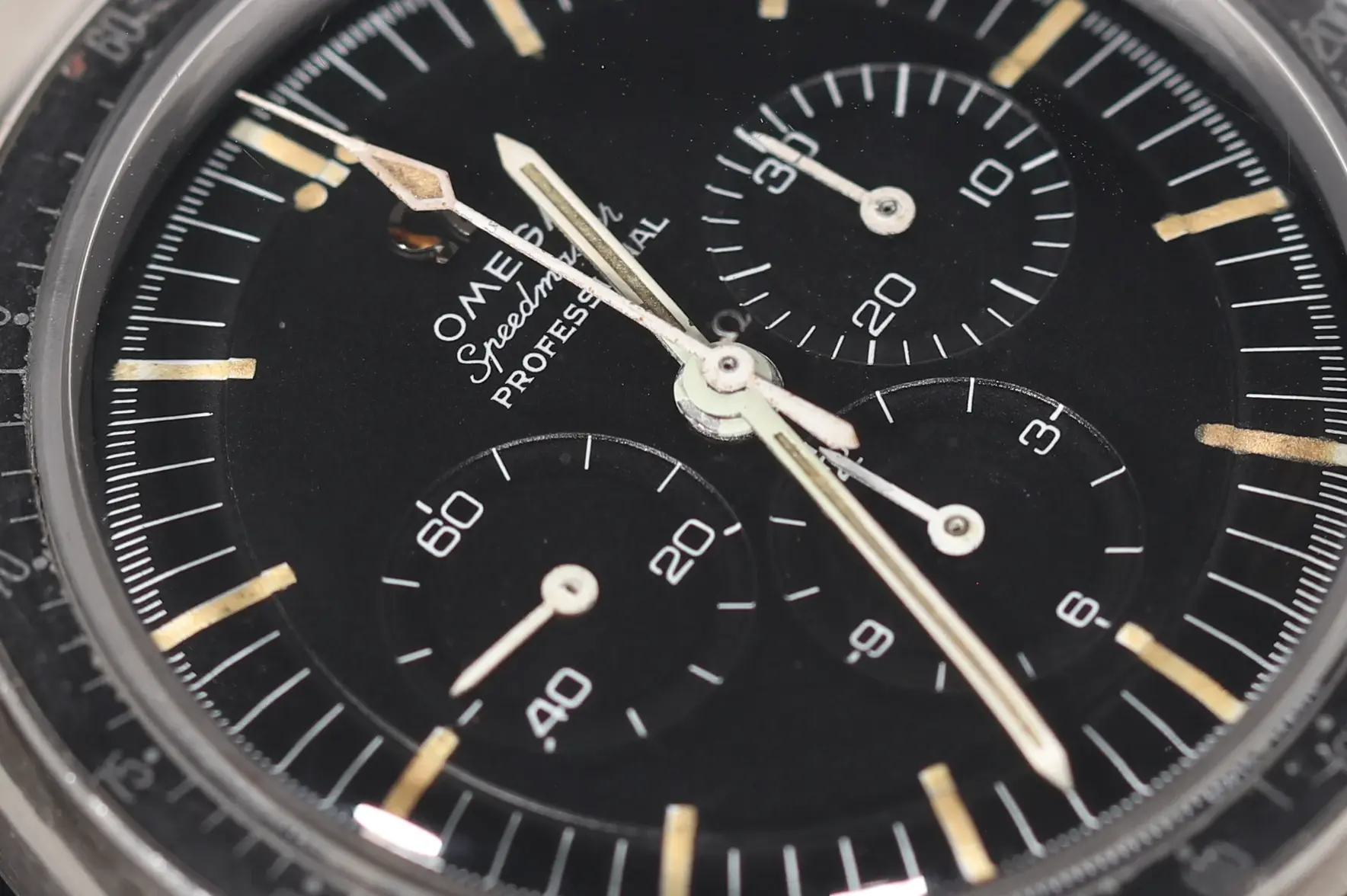
  • The dial surface is exceptionally clean—no visible blemishes or damage.
  • The lume on the hour markers is largely intact, with a warm patina that adds character without distraction.
  • The hands are the correct specification. One or more may have been re-lumed, but it’s subtle and doesn’t detract from the overall appeal as the colour and texture look original. It's very hard to tell. We can see there is a difference in colour between the H/M hands and the Chrono Seconds hand.


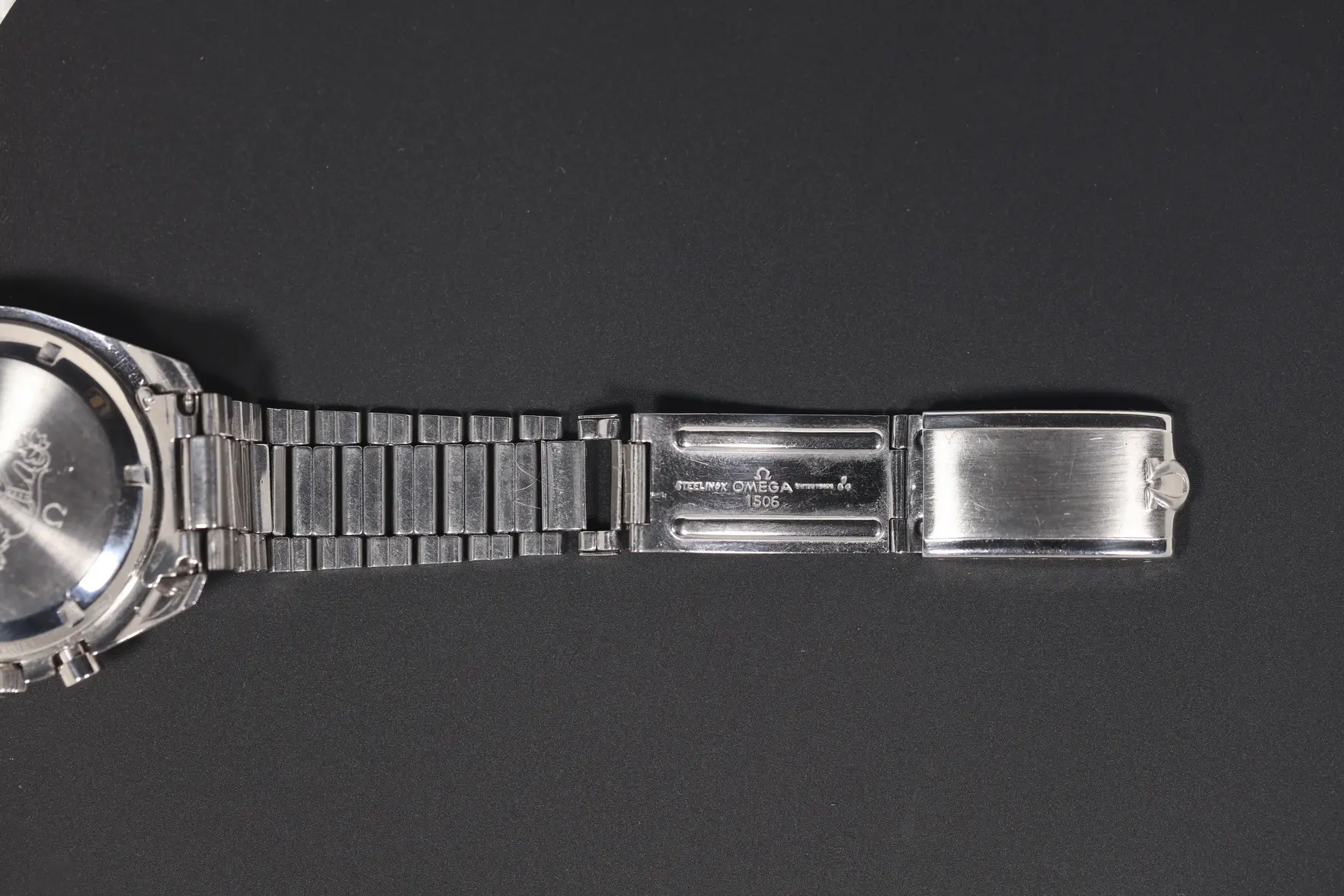
The watch came with a 1506 bracelet with No. 16 end links—often criticized for their flimsiness, but in my experience, they hold up well in daily use. I’ve never had one fail.


Conclusion:

This 105.012-63 is a rare and desirable reference, especially in this condition. Every major component—dial, case, bezel, pushers—is correct, with only the crown likely replaced. The untouched, honest feel of the watch is reinforced by its quiet eBay provenance, which to me adds significant charm. These are the kinds of watches that make the hunt worthwhile.

Also the more familiar we become with one owner watches like this, the more we can recognise and optimised watch for what it is. Optimised watches are not an issue if declared and valued appropriately.
 
Posts
1,533
Likes
3,182
Thanks for another very informative article !
 
Posts
13,192
Likes
22,933
Beautiful watch. There’s something about a .012 with a faded bezel.

Have you ever tested the lume? It looks like tritium to me but I do wonder if any of the first -63’s came with radium.
 
Posts
2,170
Likes
5,730
Really lovely watch. I'm particularly fond of those bracelets. Flimsy or not, they just look right.
 
Posts
2,514
Likes
5,531
Thanks for sharing an unusual reference, and the very honest and detailed description!
And what a nice and beautiful Speedy!
😍
 
Posts
383
Likes
410
When it comes to quality, I always start with the dial:
  • The dial surface is exceptionally clean—no visible blemishes or damage.
  • The lume on the hour markers is largely intact, with a warm patina that adds character without distraction.
  • The hands are the correct specification. One or more may have been re-lumed, but it’s subtle and doesn’t detract from the overall appeal as the colour and texture look original. It's very hard to tell. We can see there is a difference in colour between the H/M hands and the Chrono Seconds hand.

My long history in an Omega workshop probably influences my thinking and is the reason why I tend not to intervene in discussions anymore.
I wonder however, since a watch is born as a tool for measuring time, why no consideration is ever made about the state of the movement.
The condition of the movement cannot be determined visually, and a large number of factors affect its condition and its residual ability to measure time correctly.
In particular, it is well known that in these calibers there is a tendency of ovalization of the plate holes to occur, as well as some play on part of the gear train, not to mention the isochronism hairspring, which at the time was different from example to example to a much larger extent from what happens nowadays.
Unfortunately, collectors tend to think that these problems can be easily resolved during an overhaul, which is not true. It would therefore be nice if, out of respect for us old-school watchmakers, a few words were said regarding the running characteristics of the specimens examined.
I remain optimistic and hope that one day this will happen.
 
Posts
275
Likes
271
great Speedy, thanks for posting. i wish i started collecting them 20 years ago...
 
Posts
13,192
Likes
22,933
My long history in an Omega workshop probably influences my thinking and is the reason why I tend not to intervene in discussions anymore.
I wonder however, since a watch is born as a tool for measuring time, why no consideration is ever made about the state of the movement.

The condition of the movement cannot be determined visually, and a large number of factors affect its condition and its residual ability to measure time correctly.

I think you’ve answered your own question.

Most collectors rely almost entirely on visual inspection of a watch to assess condition and attractiveness. Detailed movement condition assessment aside from how it looks is out of most peoples capabilities.
 
Posts
845
Likes
2,697
Thank you for the pictures and great story. What a nice watch...
 
Posts
3,014
Likes
6,428
I think you’ve answered your own question.

Most collectors rely almost entirely on visual inspection of a watch to assess condition and attractiveness. Detailed movement condition assessment aside from how it looks is out of most peoples capabilities.

The buyer can ask about time keeping and timegrapher data. But that is often not available particularly on auctions. I admit I am perhaps overly optimistic that a service will cure any ailments, maybe that is mistake.
 
Posts
7,175
Likes
23,246

It has been a while since I posted - lots of family and work pushing my watches to one side.

About 15 years ago, I picked up this Speedmaster on eBay. It was listed as a “1970s Omega chronograph” with just three blurry photos and little detail. The seller claimed it came from a family member’s estate, and given the condition and presentation, I believe it was a genuine single-owner piece—forgotten in a drawer for decades. As far as provenance goes for Speedmasters, this kind of quiet history is far more common than an original Omega Guarantee and for me it is usually more genuine.


Once in hand, it was immediately clear that this was something special: a very early 105.012-63, the first reference with the twisted lug case. The key dial detail is the “SWISS MADE” text at 6 o’clock, with no T marks—confirming it as part of the very first batch of this reference.


Let’s take a look at originality:


  • Pushers: Short, fat-neck pushers are present. These are original to the 105.012s and almost impossible to replace. Their presence is a big plus.
  • Case: The asymmetrical case shows no sign of polishing, with original brushing still visible on the sides. Notably, the lugs lack the “facet line” seen on later 105.012-66 cases.
  • Bezel: It’s a correct DO90 (dot over 90), with pleasing fade to a grey tone. While some collectors pay a premium for this colour, I don’t assign extra value to fading alone—it’s all about condition and originality.
  • Crown: A 32-tooth crown is fitted, likely a service replacement, and is commonly accepted with a value adjustment in region of $400
  • Caseback: Features the expected double bevel, consistent with this reference.


When it comes to quality, I always start with the dial:


  • The dial surface is exceptionally clean—no visible blemishes or damage.
  • The lume on the hour markers is largely intact, with a warm patina that adds character without distraction.
  • The hands are the correct specification. One or more may have been re-lumed, but it’s subtle and doesn’t detract from the overall appeal as the colour and texture look original. It's very hard to tell. We can see there is a difference in colour between the H/M hands and the Chrono Seconds hand.


The watch came with a 1506 bracelet with No. 16 end links—often criticized for their flimsiness, but in my experience, they hold up well in daily use. I’ve never had one fail.


Conclusion:

This 105.012-63 is a rare and desirable reference, especially in this condition. Every major component—dial, case, bezel, pushers—is correct, with only the crown likely replaced. The untouched, honest feel of the watch is reinforced by its quiet eBay provenance, which to me adds significant charm. These are the kinds of watches that make the hunt worthwhile.

Also the more familiar we become with one owner watches like this, the more we can recognise and optimised watch for what it is. Optimised watches are not an issue if declared and valued appropriately.

Wonderful review, as always. Many thanks.

My long history in an Omega workshop probably influences my thinking and is the reason why I tend not to intervene in discussions anymore.
I wonder however, since a watch is born as a tool for measuring time, why no consideration is ever made about the state of the movement.
The condition of the movement cannot be determined visually, and a large number of factors affect its condition and its residual ability to measure time correctly.
In particular, it is well known that in these calibers there is a tendency of ovalization of the plate holes to occur, as well as some play on part of the gear train, not to mention the isochronism hairspring, which at the time was different from example to example to a much larger extent from what happens nowadays.
Unfortunately, collectors tend to think that these problems can be easily resolved during an overhaul, which is not true. It would therefore be nice if, out of respect for us old-school watchmakers, a few words were said regarding the running characteristics of the specimens examined.
I remain optimistic and hope that one day this will happen.

Always instructive to hear from one of our resident experts with years of experience working with this caliber. Just curious: with some of the problems you note in your post above, can one ascertain these by providing a full timegrapher report? I’m sure many calibers have their own”Achilles heel,” problems that tend to appear with prolonged use over time.

One quirk I’ve noticed with many 321’s, even after a full service: the amplitude in most positions other than dial-up are often notably under published specs.
 
Posts
24,234
Likes
53,968
I think you’ve answered your own question.

Most collectors rely almost entirely on visual inspection of a watch to assess condition and attractiveness. Detailed movement condition assessment aside from how it looks is out of most peoples capabilities.
Also, I think when you are talking about a $10k-ish watch, most buyers don't mind paying to have repairs made (e.g. bushings in damaged holes) or parts replaced during a service. That wouldn't be a dealbreaker.
 
Posts
8,483
Likes
60,613
Best to have a talented, trusted and industrious watchmaker in your back pocket if treading these treacherous waters of vintage timepieces. Especially higher dollar examples.

It allows for a calculated "reach" others may not choose to gamble upon.
 
Posts
6,187
Likes
21,181
Also the more familiar we become with one owner watches like this, the more we can recognise and optimised watch for what it is. Optimised watches are not an issue if declared and valued appropriately.

I'm grateful for your market updates seen in your price list, your analysis of references and how to systematically approach a watch, but the thing I find most useful is this, being able to see what an original watch should look like. While there might be NOS still existing, mostly what I get to see are used.

We (maybe not everyone, but most of us) obsess over originality, sometimes to the point of being unrealistic in our expectations, but also possibly missing something that's reconditioned. Posts like these not only help train us/me on how to evaluate the condition, they more importantly (in my mind) help to standardize our evaluations. This gives us a shared language when talking about vintage Speedys. My more frustrating conversations about vintage speedys have not been about parts and components, but about overall condition. Most disagreements will eventually point to a Speedmaster101 example to buttress our position.

I risk sounding like a sycophant, but you deserve the thanks, and possibly a small amount of encouragement to keep 'em coming. 😁
 
Posts
37
Likes
75
Thanks for sharing your hard earned knowledge... "eBay provenance, which to me adds significant charm. These are the kinds of watches that make the hunt worthwhile."

What a stunning find, and well deserved for pulling the trigger based on just three blurry photos...
 
Posts
383
Likes
410
Always instructive to hear from one of our resident experts with years of experience working with this caliber. Just curious: with some of the problems you note in your post above, can one ascertain these by providing a full timegrapher report? I’m sure many calibers have their own”Achilles heel,” problems that tend to appear with prolonged use over time.

One quirk I’ve noticed with many 321’s, even after a full service: the amplitude in most positions other than dial-up are often notably under published specs.
Omega calibers 320/321 have a rather heavy balance wheel and it is not surprising that the maximum amplitude is attained in horizontal positions, where the friction tends to be the lowest.
Of course the value depends on a number of matters, including the type of mainspring employed, given that often recourse is made to the one meant for 860/861 movements.
In a good sample, the drop in the amplitude from horizontal to vertical positions can be expected to be about 50/55°, as it is generally the case for the new caliber 321b.
For a very very good one, you can limit the drop to about 30°, but it is rare.
 
Posts
1,533
Likes
3,182
Good point to make about the movement, it should not all be about the cosmetics because if the watch does not work properly, what is the use ?

Regarding amplitude, i think for a cal 861 the minimum Omega spec is 180 degrees dial up if i remember correctly, what is the number for a cal 321 ?

Omega calibers 320/321 have a rather heavy balance wheel and it is not surprising that the maximum amplitude is attained in horizontal positions, where the friction tends to be the lowest.
Of course the value depends on a number of matters, including the type of mainspring employed, given that often recourse is made to the one meant for 860/861 movements.
In a good sample, the drop in the amplitude from horizontal to vertical positions can be expected to be about 50/55°, as it is generally the case for the new caliber 321b.
For a very very good one, you can limit the drop to about 30°, but it is rare.
 
Posts
7,175
Likes
23,246
Omega calibers 320/321 have a rather heavy balance wheel and it is not surprising that the maximum amplitude is attained in horizontal positions, where the friction tends to be the lowest.
Of course the value depends on a number of matters, including the type of mainspring employed, given that often recourse is made to the one meant for 860/861 movements.
In a good sample, the drop in the amplitude from horizontal to vertical positions can be expected to be about 50/55°, as it is generally the case for the new caliber 321b.
For a very very good one, you can limit the drop to about 30°, but it is rare.

Thank you. This is extremely helpful, as it re-frames expectations to a more realistic level.