321 chrono not resetting easily

Posts
451
Likes
1,026
The stuttering chrono hand has been resolved, but I'm now trying to fix the reset issue. Basically, I press in the lower pusher but nothing happens until I REALLY push hard (not ideal at all!). Then the chrono hand and sub-dial will zero out.

Do I just need to apply some oil or is this a sign that I need to replace the hammer spring (p/n 320.1734 I think)???

Thanks guys!!
 
Posts
29,186
Likes
75,420
When was it last serviced?
 
Posts
451
Likes
1,026
When was it last serviced?
I just bought the watch and of course got the claim of "recently serviced" so have no idea really.
 
Posts
29,186
Likes
75,420
I would suggest that unless you have proof (not the seller's word) that it was serviced, you should consider that it hasn't been.

Rather then putting oil in or replacing hard to find springs, you should probably just get it serviced.
 
Posts
2,520
Likes
17,831
Every 321 I purchase gets serviced, regardless of what the seller says, even if there’s a proof of service.

These movements, I gather, were hand fitted when assembled (something Lemania cured in designing the simpler 861) and require greater care in reassembling during service.

At least 30% of the ‘serviced’ 321 movements I’ve bought arrive with one or more malfunction.

What you’re describing is a significant problem that could have a number of causes.

Be sure that the watchmaker you use has experience with 321 movements.
 
Posts
1,430
Likes
2,955
Every 321 I purchase gets serviced, regardless of what the seller says, even if there’s a proof of service.

These movements, I gather, were hand fitted when assembled (something Lemania cured in designing the simpler 861) and require greater care in reassembling during service.

At least 30% of the ‘serviced’ 321 movements I’ve bought arrive with one or more malfunction.

What you’re describing is a significant problem that could have a number of causes.

Be sure that the watchmaker you use has experience with 321 movements.

I agree with airansun. A more typical problem with the 321 caliber movement was with the hour recorder creeping despite the fact that the chronograph was not active. Inaccurate resetting is also another issue, however, I have not heard of your issue. It usually takes more force to start the chronograph then to stop. I don't believe oil will be the answer and you will need to service the movement. Please let us know what the issue was as I am curious. Thanks
 
Posts
29,186
Likes
75,420
These movements, I gather, were hand fitted when assembled (something Lemania cured in designing the simpler 861) and require greater care in reassembling during service.

Hand fitting presumes that parts on the watch are not fully interchangeable. These were massed produced movements that have fully interchangeable parts. No hand fitting is required if a part needs to be replaced.

Although the 321 has nearly mythical status with Omega collectors, it’s a pretty bog standard chronograph movement. The only thing making it difficult in any way is the lack of parts.

What you’re describing is a significant problem that could have a number of causes.

Definitely multiple possible causes for this. Could be as simple as a burr on the movement spacer making the operating lever difficult to move, or a bent stem bolt for hammer, or something more involved. I would not expect this to be anything too difficult to resolve with a full service by a competent watchmaker.

Cheers, Al
 
Posts
2,520
Likes
17,831
Hand fitting presumes that parts on the watch are not fully interchangeable. These were massed produced movements that have fully interchangeable parts. No hand fitting is required if a part needs to be replaced.

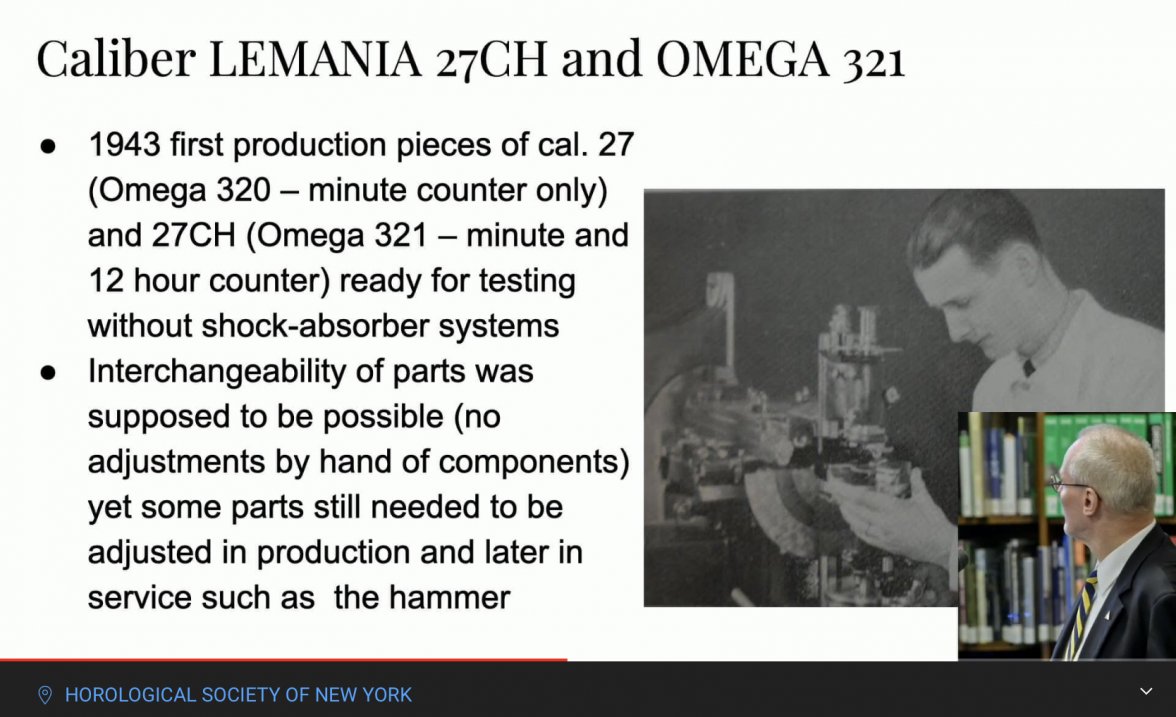
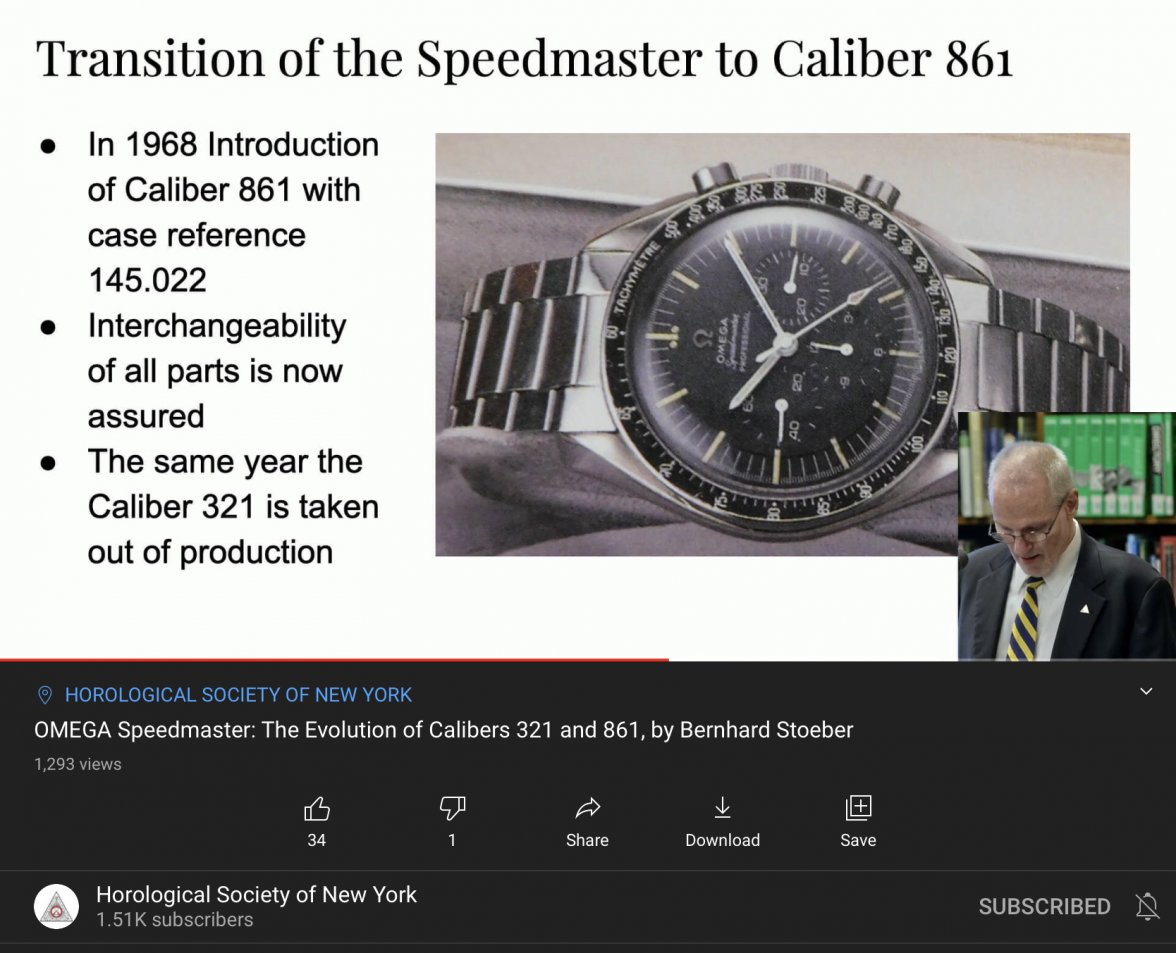
@Archer : I’ve read that one of Lemania’s problems with the 321 were certain parts had to be modified by hand when fitting them, either on assembly or when a replacement was fitted during service, like some of the hammers - which were left a little long so they could be trimmed upon fitting. According to this, Lemania had not achieved full parts interchangeability with the 321.

There’s also these screen shots of the below video lecture. The discussion in question starts around 48 minutes in.


Edited:
 
Posts
29,186
Likes
75,420
@Archer : I’ve read that one of Lemania’s problems with the 321 were certain parts had to be modified by hand when fitting them, either on assembly or when a replacement was fitted during service, like some of the hammers - which were left a little long so they could be trimmed upon fitting. According to this, Lemania had not achieved full parts interchangeability with the 321.

Thanks.

He mentions the hammer as the lone example of a part that requires fitting. This is true that hammers require fitting, so yes he is correct. The fact is you can't buy a new hammer for a 321 from Omega, because the part is discontinued, so if you are buying a spare it has likely already been fitted. Thankfully I've not had to replace one on a 321 as I imagine they are not cheap.

The claim though that this was "solved" by the introduction of the 861, is strange.

Let's look at the description of the hammer for the 861 - taken just now from the Omega Extranet:

72208601728 | HAMMER MOUNTED WITHOUT GRINDING MIN.FUNC

"Without grinding min, function" - this means...you guessed it, that this requires hand fitting by the watchmaker in situ. This is because when the hammer is fully on the cam for the chronograph wheel, there is a very slight gap between the hammer and the cam on the minute counting wheel. They leave the minute counting part of the hammer long, and you have to file it to the correct length to get that clearance. The minute counter is not located by the cam at rest - it's located by the minute counter jumper, so this play allows for proper locating using that jumper.
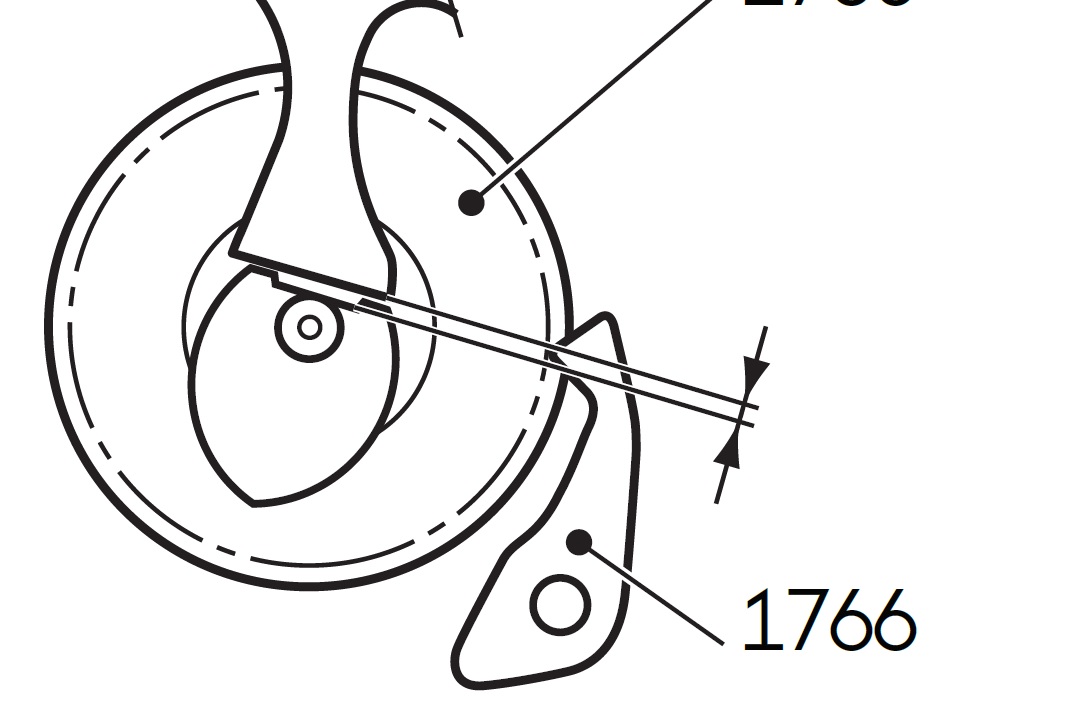


So yes, you are correct that one part in a 321 required fitting by hand, but the same part requires the same fitting by hand on an 861, and also on an 1861. Omega still has all the procedures listed in the technical documents for the 861/1861. This part is rarely replaced to be honest, so it's something I've done on an 861/1861 maybe once or twice off the top of my head. So this had slipped my mind on the previous reply as it's not a typical issue that one would come across.

When I think of a watch that requires hand fitting, I think of watches made before there were even standardized parts available, so no part was interchangeable between two different watches. In this case it's one part, and that part still requires hand fitting to this day.

Note that other brands built in adjustments in this area, so you didn't actually have to fit them by hand, and you could adjust the contact point easily without having to file off excess material.

Cheers, Al

 
Posts
1,430
Likes
2,955
Thanks.

He mentions the hammer as the lone example of a part that requires fitting. This is true that hammers require fitting, so yes he is correct. The fact is you can't buy a new hammer for a 321 from Omega, because the part is discontinued, so if you are buying a spare it has likely already been fitted. Thankfully I've not had to replace one on a 321 as I imagine they are not cheap.

The claim though that this was "solved" by the introduction of the 861, is strange.

Let's look at the description of the hammer for the 861 - taken just now from the Omega Extranet:

72208601728 | HAMMER MOUNTED WITHOUT GRINDING MIN.FUNC

"Without grinding min, function" - this means...you guessed it, that this requires hand fitting by the watchmaker in situ. This is because when the hammer is fully on the cam for the chronograph wheel, there is a very slight gap between the hammer and the cam on the minute counting wheel. They leave the minute counting part of the hammer long, and you have to file it to the correct length to get that clearance. The minute counter is not located by the cam at rest - it's located by the minute counter jumper, so this play allows for proper locating using that jumper.


So yes, you are correct that one part in a 321 required fitting by hand, but the same part requires the same fitting by hand on an 861, and also on an 1861. Omega still has all the procedures listed in the technical documents for the 861/1861. This part is rarely replaced to be honest, so it's something I've done on an 861/1861 maybe once or twice off the top of my head. So this had slipped my mind on the previous reply as it's not a typical issue that one would come across.

When I think of a watch that requires hand fitting, I think of watches made before there were even standardized parts available, so no part was interchangeable between two different watches. In this case it's one part, and that part still requires hand fitting to this day.

Note that other brands built in adjustments in this area, so you didn't actually have to fit them by hand, and you could adjust the contact point easily without having to file off excess material.

Cheers, Al

Al, you seem far more knowledgeable about watch movements then myself. I'm curious, when Omega re-introduced the caliber 321 recently are the parts in any way interchangeable with vintage cal 321? Would have been nice.
 
Posts
2,520
Likes
17,831
@Archer : Just explaining the basis for my comments. I know better than to try to be right over you. You have decades of direct experience and first hand knowledge and I am dependent on my own limited observations and the insight of people like you and Mr. Stoeber.

He also talks, without being specific, about the general, laborious hand fitting process Lemania engaged in during initial assembly. It doesn’t sound like true interchangeability of parts.

Oops! Just noticed. My 2000th post. ::rimshot::
 
Posts
29,186
Likes
75,420
Al, you seem far more knowledgeable about watch movements then myself. I'm curious, when Omega re-introduced the caliber 321 recently are the parts in any way interchangeable with vintage cal 321? Would have been nice.

No idea since they have not made the parts available...
 
Posts
29,186
Likes
75,420
@Archer : Just explaining the basis for my comments. I know better than to try to be right over you. You have decades of direct experience and first hand knowledge and I am dependent on my own limited observations and the insight of people like you and Mr. Stoeber.

He also talks, without being specific, about the general, laborious hand fitting process Lemania engaged in during initial assembly. It doesn’t sound like true interchangeability of parts.

Oops! Just noticed. My 2000th post. ::rimshot::

I’ve replaced virtually every other part of this movement. None of the parts required hand fitting.

I don’t know how valid the information is that you are getting, but it certainly doesn’t match my experience at all.

Cheers, Al
 
Posts
7,103
Likes
23,044
@Archer : I’ve read that one of Lemania’s problems with the 321 were certain parts had to be modified by hand when fitting them, either on assembly or when a replacement was fitted during service, like some of the hammers - which were left a little long so they could be trimmed upon fitting. According to this, Lemania had not achieved full parts interchangeability with the 321.

There’s also these screen shots of the below video lecture. The discussion in question starts around 48 minutes in.


Great lecture, I’m just surprised they let the typo of referring to ref 145.012 as 145.015 slip by.
 
Posts
451
Likes
1,026
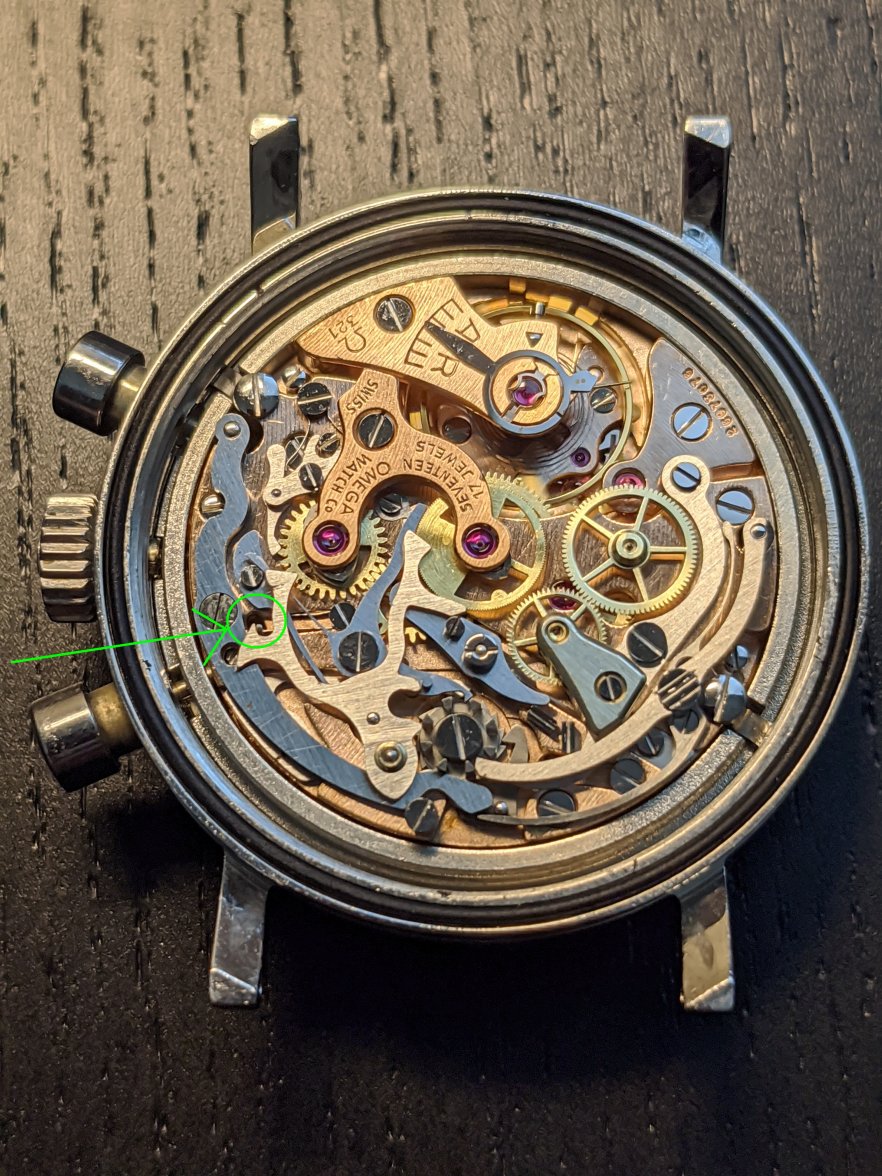
So upon closer inspection, it seems that my reset problem is being caused by the stem bolt not fully releasing the hammer. I can't tell what is causing this, but the problem lies from either the pusher, hour hammer operating lever, or stem bolt???

I'd really appreciate the thoughts of the pros (and @Archer ) as to what is causing this or some insight/pics into the connection mechanism underneath? Could it be dirty internal pusher issues?

(I checked again with the guy I bought this from & it supposedly had a full tear down & clean service... take that as you will)

 
Posts
29,186
Likes
75,420
(I checked again with the guy I bought this from & it supposedly had a full tear down & clean service... take that as you will)

Without proof, this means nothing.

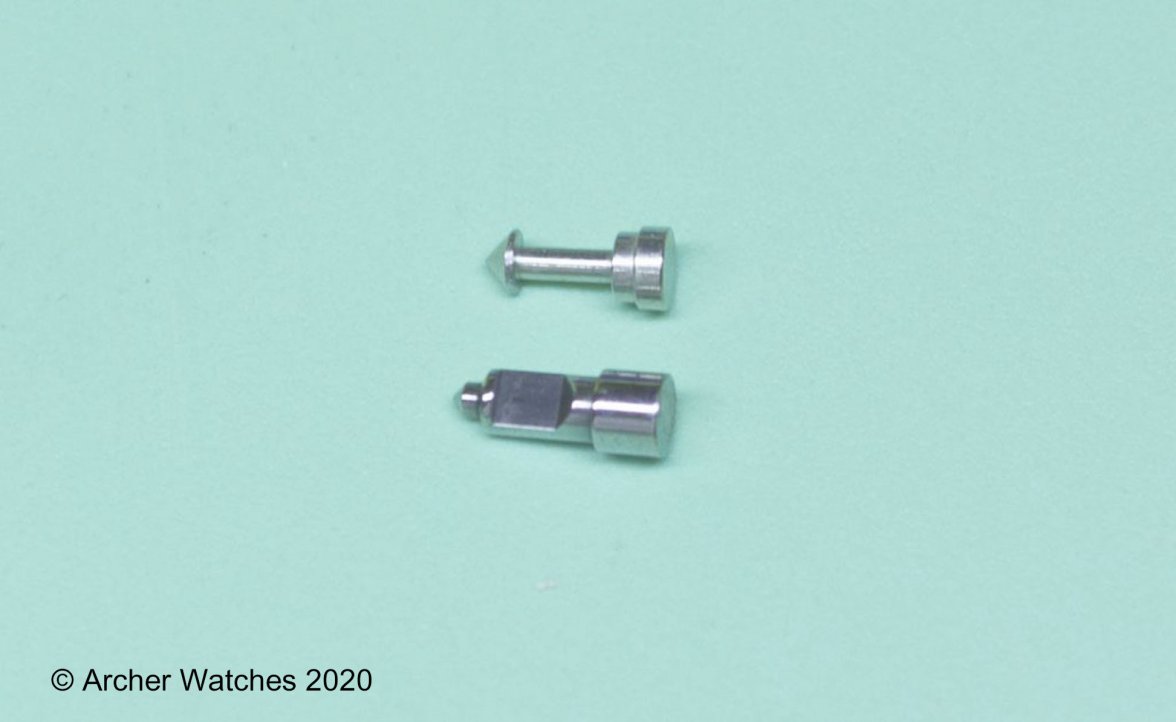
As for how this works, it's very simple. When you press the pusher, it moves a part called the "pusher stem for zero action" and in a Speedmaster it looks like this - top one is for a 321 and bottom one is for an 861:


For other cases it can look a little different, but the key thing is that one end of it is tapered. This is the end that contacts the stem bolt for hammer. The tapered end of the pusher stem contacts the body of the stem bolt for hammer, and simply pushes it aside, releasing the hammer to fall and reset the hands.

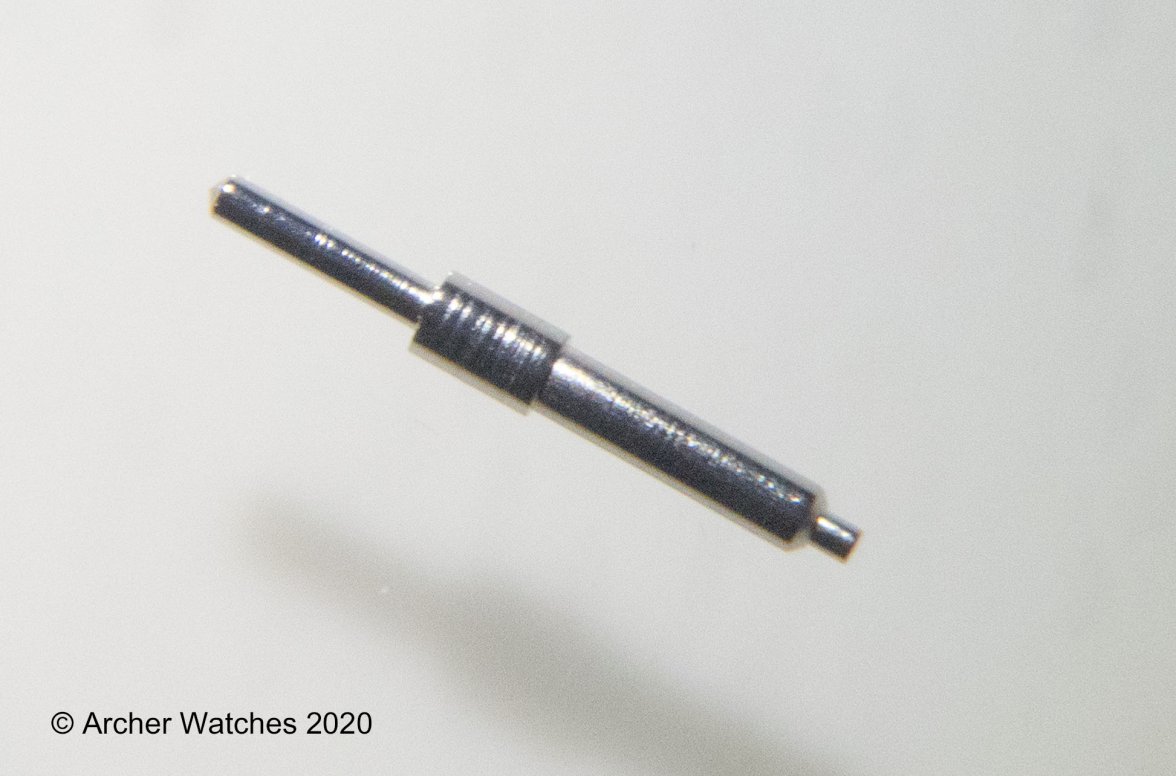
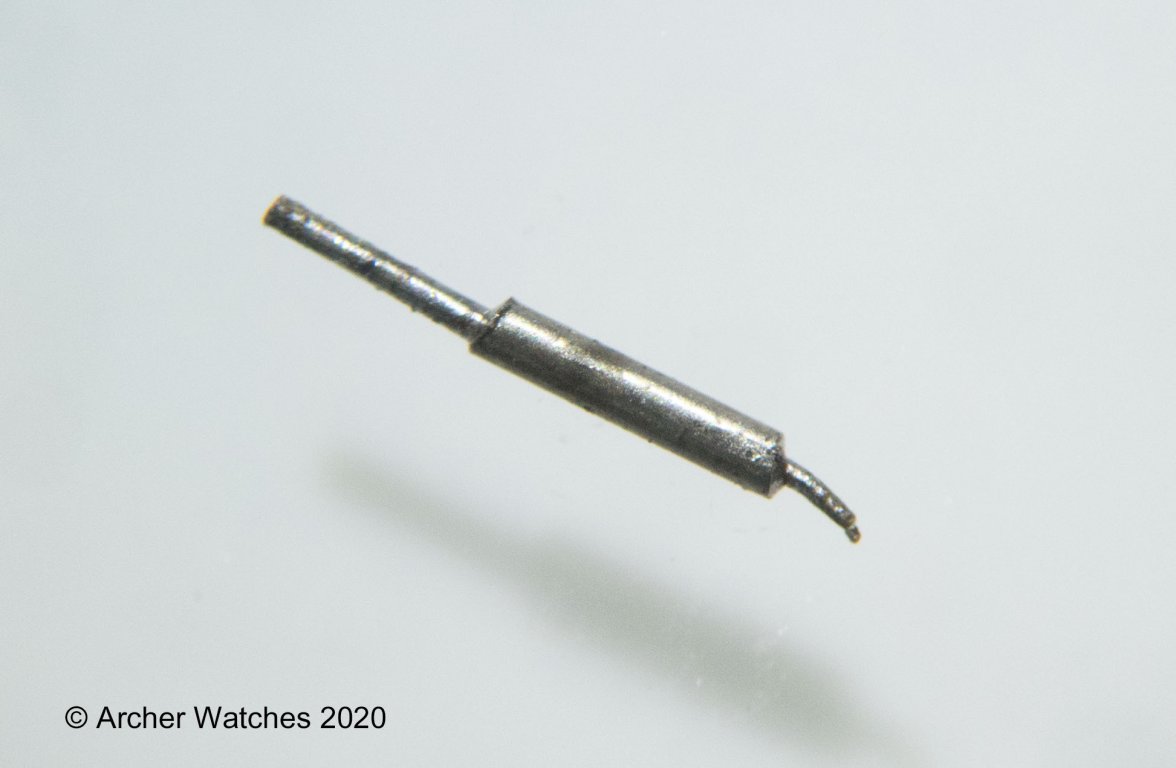
As for why yours won't move, without being able to see it, who knows. I've seen some horribly messed up watches that were "serviced" by someone, but had such poor work it's clear whoever did the work was not exactly competent. Not just on 321's, so I have an 861 in the shop now that has been butchered by someone...related to this issue here is what the stem bolt for hammer should look like:


And this is what I found in the watch:


Someone's clearly home made and quite ineffective version of a stem bolt for hammer...

You need to take this to someone who knows what they are doing to get it repaired. Pressing "really hard" on the reset button is not a good idea. The stem bolt small stubby end sits in a hole machined in the brass main plate. If you press "really hard" enough times and the stem bolt isn't moving, you can distort that hole and now you have bigger problems.
 
Posts
53
Likes
193
Hi, I have a broken 321 stem bolt... are these interchangeable with 861 stem bolts?

Finding it difficult to source a 321 one. Cheers!
 
Posts
29,186
Likes
75,420
Hi, I have a broken 321 stem bolt... are these interchangeable with 861 stem bolts?

Finding it difficult to source a 321 one. Cheers!

Part number required is 72203211759. Not the same as the 861 version.