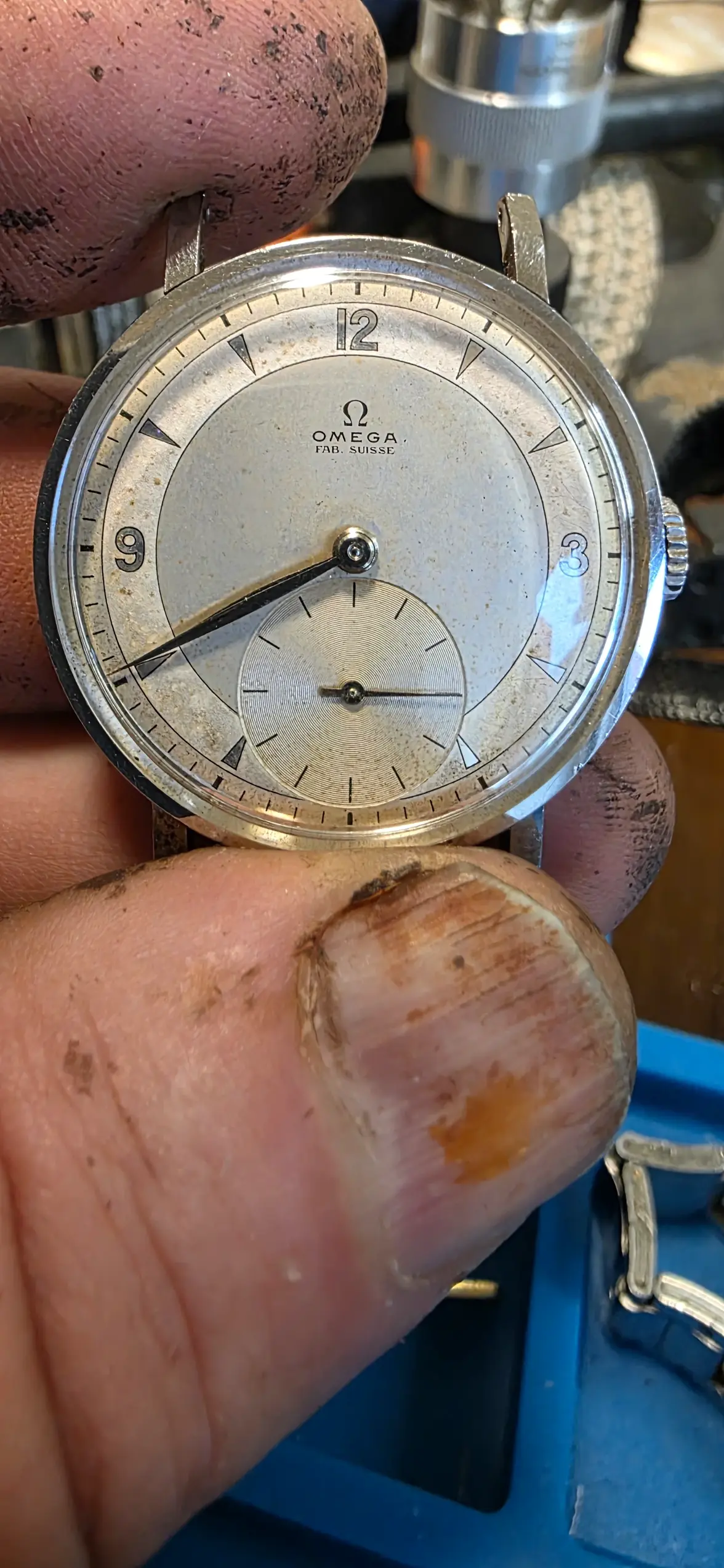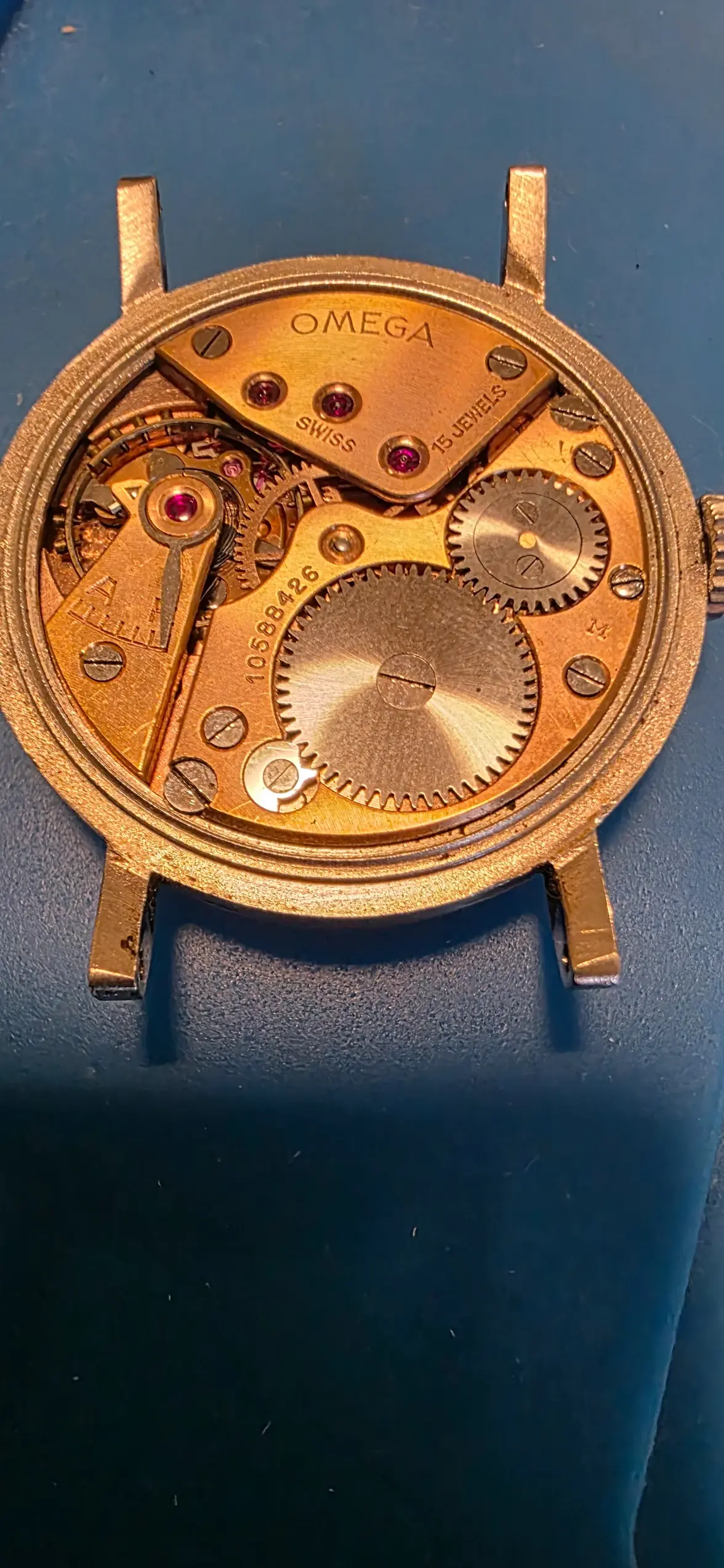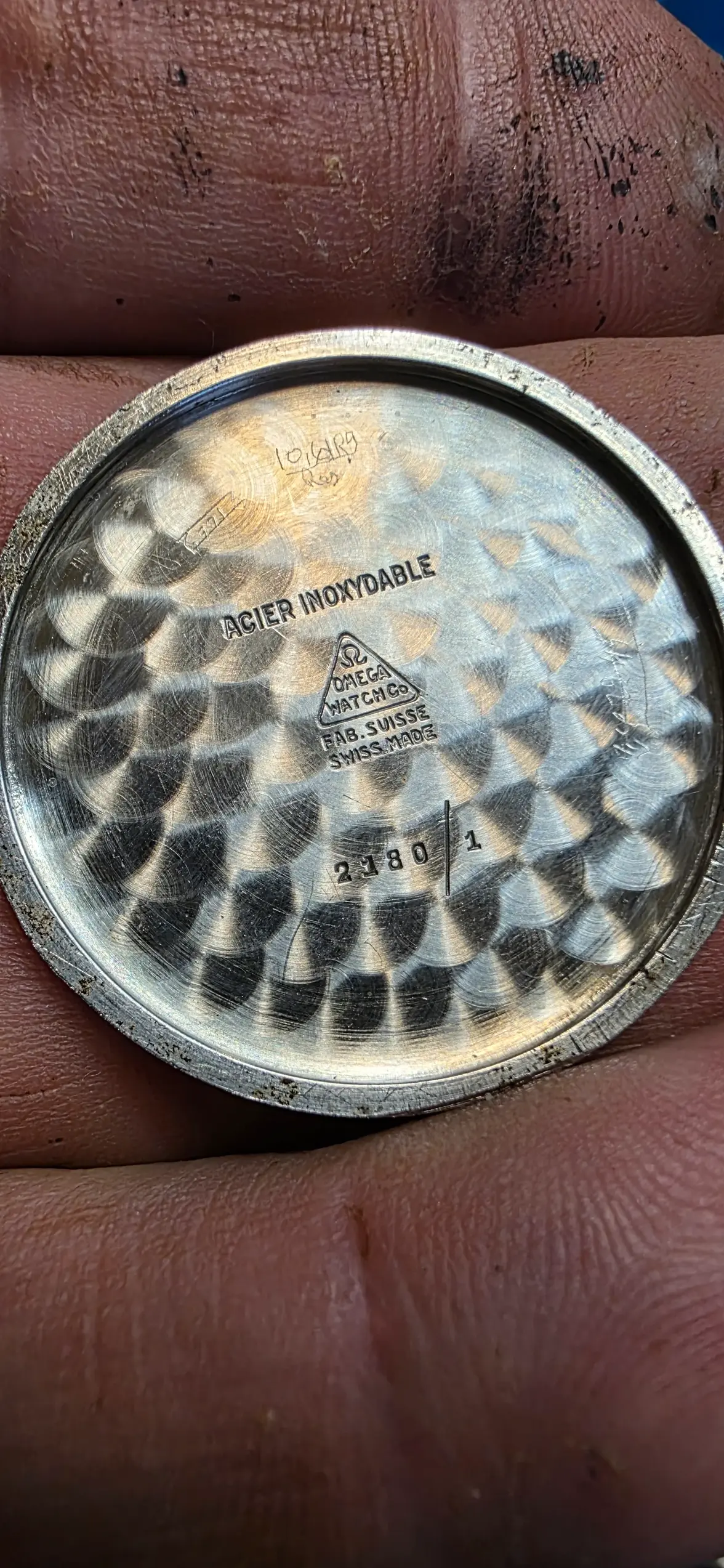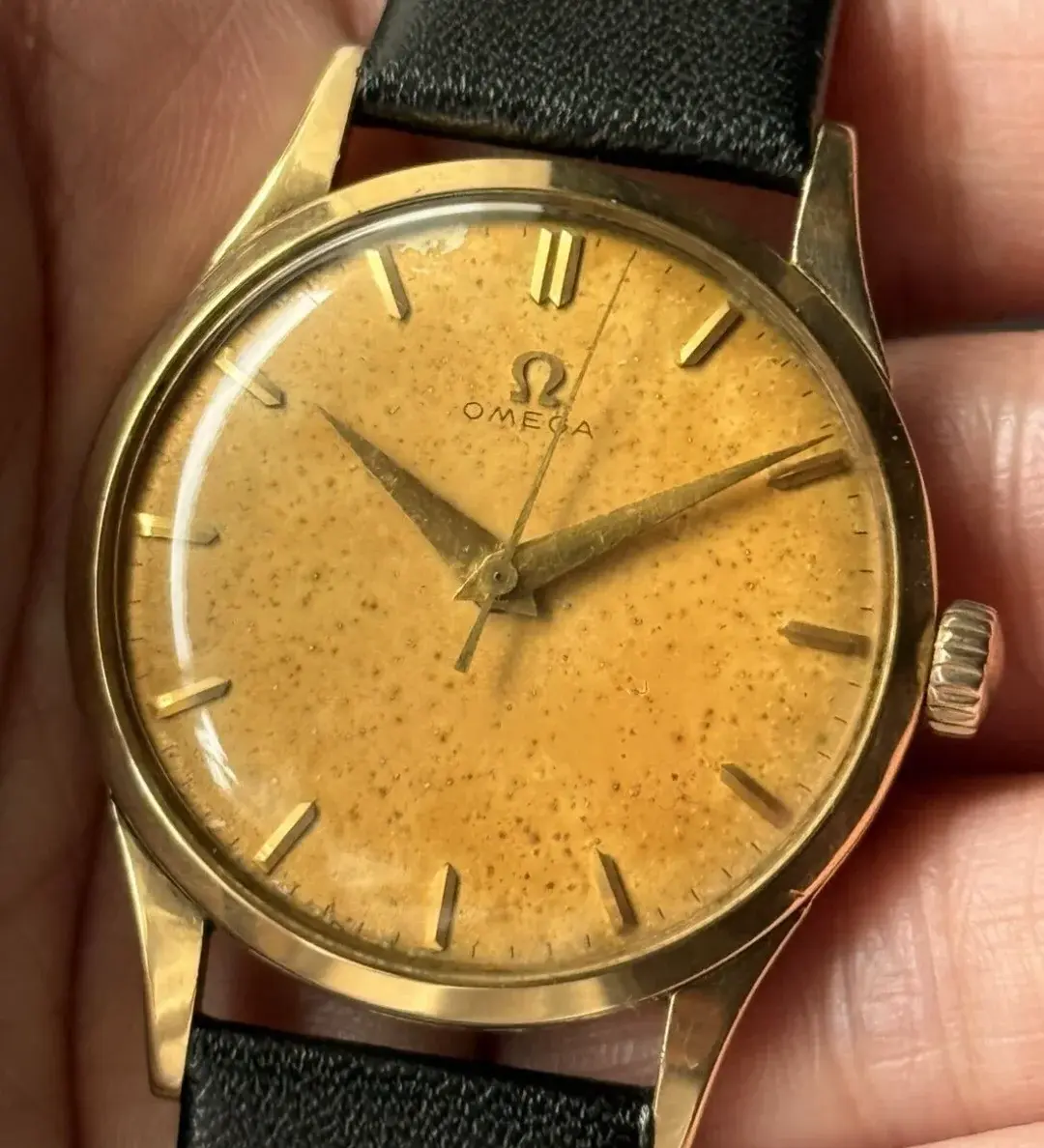
1944 Omega 30T2 Jumbo Ref 2189/1 Dial Cleaning

Posts
146
Likes
75
As always, sorry for the horrible photos 🤣🥰

1944 Omega 30T2 two-tone "Jumbo" reference 2189/1 with all original parts (except the strap)

I spent over 4 hours gently removing 82 years of nicotine and other ghastly stains off this beautiful original dial today. Unfortunately I forgot to take "before" pictures. It was dark brown when I started and very mottled.

Now everything is as perfect as I'm ever going to get it and I'm a bit in love 🥰

Next stop is my watchmaker for a full movement service, clean, relube and hand alignment.

I love everything about vintage watches.
 
Posts
146
Likes
75
A dangerous undertaking, but you did it well.
I practiced on dozens and dozens of garbage dials well before I tackled something like this. Whatever they did differently on thier pre-1960 dials made them so much more robust and easier to clean. After the late 50's whatever varnish they changed to made it very easy to remove paint and decals when attempting cleaning.

The textured dials (honeycomb, waffle etc.) Are also very easy to clean without removing paint etc. I'm guessing they used something different in the finishing because of the texture? I wish they used the old finishes on all thier watches, my life would be a lot less stressful 🤣🤣🤣
Edited:
 
Posts
24,577
Likes
54,572
Do you have any photos at all from before? Like maybe when you bought it?
 
Posts
1,618
Likes
3,322
Nice result, can you share a little about your process and the cleaning fluids used ?
 
Posts
146
Likes
75
Nice result, can you share a little about your process and the cleaning fluids used ?

ALWAYS test a tiny patch first and go slower than a legless turtle

1. For the older, more robust dial finishes I first use "Zippo" brand lighter fluid (naptha) on disposable cotton fabric cleaning pads as it removes any waxy or greasy build up but does not seem to affect any paints or varnishes in most cases.. I put a very small amount on the cotton and slowly and gently dab the dial. Once the cotton starts to get dirty I bin it and grab another. I keep doing this until I get to a level of cleanliness I am happy with.

2. I make up 100ml of warm distilled, demineralised water with 1 tiny drop of natural, organic, sensitive skin dishwashing liquid and mix well. I then use a piece of Magic Eraser and follow the exact process above, just ever so lightly dab across the entire dial evenly. I usually do one full pass of the dial with the mild soap solution, immediately followed by clean distilled water on a seperate magic eraser and then dry it with my rubber ball dial dusting thingie (?) to see how it looks dry as they can look very different wet and dry. I keep repeating this process until I am happy with it.l then do a final dry.

I've gotten the best results when I have cleaned the entire dial with the same amount of cleaning, rather than trying to concentrate on problem areas as it can look much worse with an unevenly cleaned dial than when it was dirty in a lot of cases.

This process has given me the best results of the dozens and dozens of different dial finishes colours, textures and brands I experimented on before coming to this method.

If you get brave enough to try it, good luck and hopefully you get some great results.

I recommend buying a bulk lot of damaged dials from ebay etc. to practice on before touching any watch you love. Thats how I learned and I quite often am very happy with the finished product, but occasionally it goes balls up and makes me want to cry!!
Edited:
 
Posts
146
Likes
75
Do you have any photos at all from before? Like maybe when you bought it?

I wish I did, unfortunately I rarely remember to take photos but it was filthy
 
Posts
146
Likes
75
Do you have any photos at all from before? Like maybe when you bought it?
Unfortunately not
 
Posts
49
Likes
32
Looks great - it's so satisfying when it works out. I had some positive results using diluted lemon juice (there's a recipe online somewhere), but the main risk is that the print begins to lift off the dial. I might try your approach in the future. I am glad you had such success!

FYI, I used a cotton bud (but sometimes I "pull" the cotton out a bit to reduce the abrasion), and agree with a dabbing technique.
 
Posts
76
Likes
51
See my response to the question above, its quite long
Thanks, not sure how I missed that. I’ve also had ok results using Rodico to remove oils that have accumulated from people touching the dial, which seems a bit safer than using lighter fluid. Might have to try your method next time if I gain the courage. Thanks for sharing!
 
Posts
6,786
Likes
53,805
You did work wonders on that precious dial, but what are you going to do about that patinated thumbnail?!
 
Posts
146
Likes
75
You did work wonders on that precious dial, but what are you going to do about that patinated thumbnail?!
🤣 they are acid burns from processing silver
 
Posts
146
Likes
75
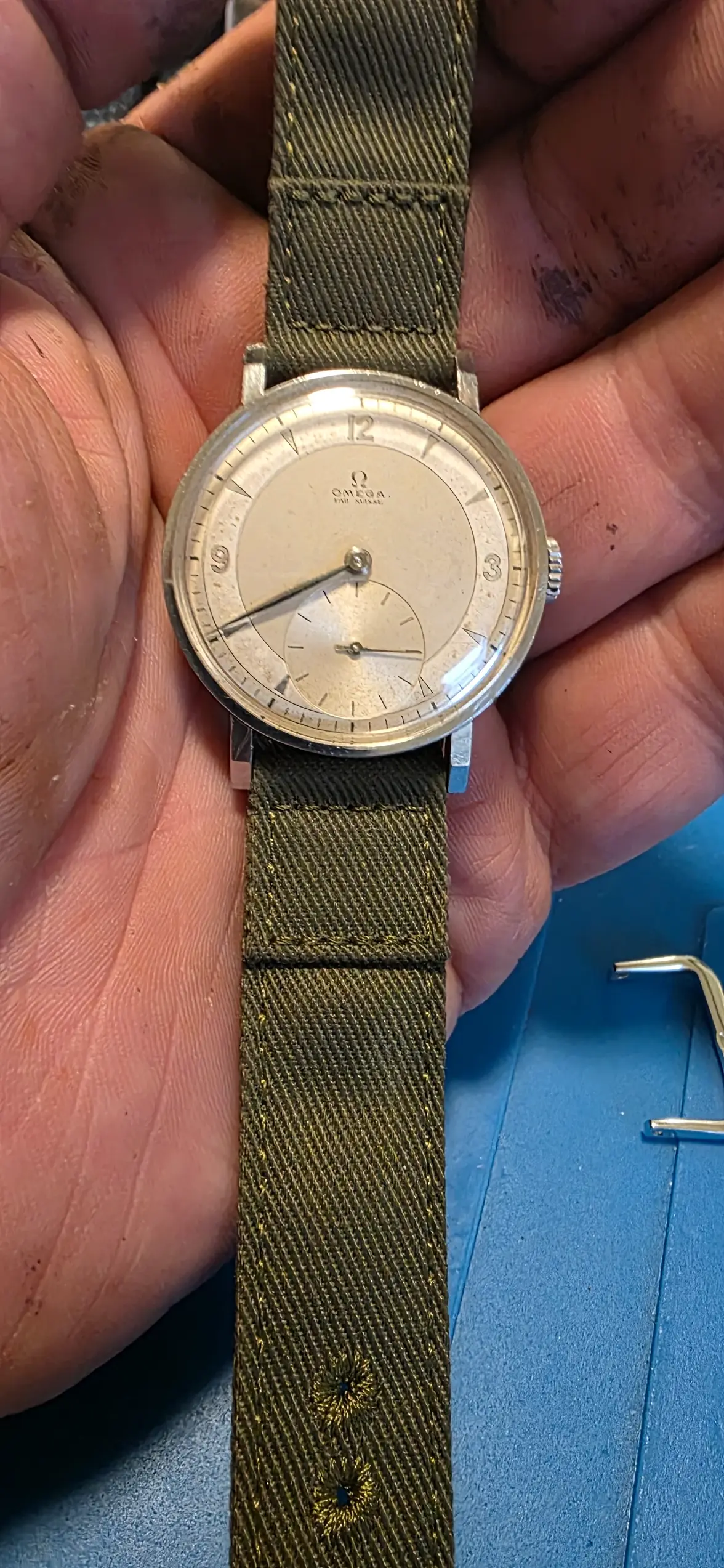
This 35mm 1958 ref. 2910-30SC in 18k is the next one in line to receive "the treatment" 🤣

 
Posts
6,786
Likes
53,805
We await the results with bated breath.

Or, is that baited breath, but only if I had a can of sardines with my salad lunch?
 
Posts
2,454
Likes
7,059
I wonder about Omega dials where the print easily lifts off. Perhaps the print was laid on top of the lacquer instead of underneath. The cleaning removes the lacquer and the print comes with it.
 
Posts
3,570
Likes
7,607
I wonder about Omega dials where the print easily lifts off. Perhaps the print was laid on top of the lacquer instead of underneath. The cleaning removes the lacquer and the print comes with it.
The print is always the last "thing" to be applied, at least with Omega. Can´t speak for other brands but I assume there is the same.
Different with vintage Patek, there the print is made of fine kiln-fired enamel...