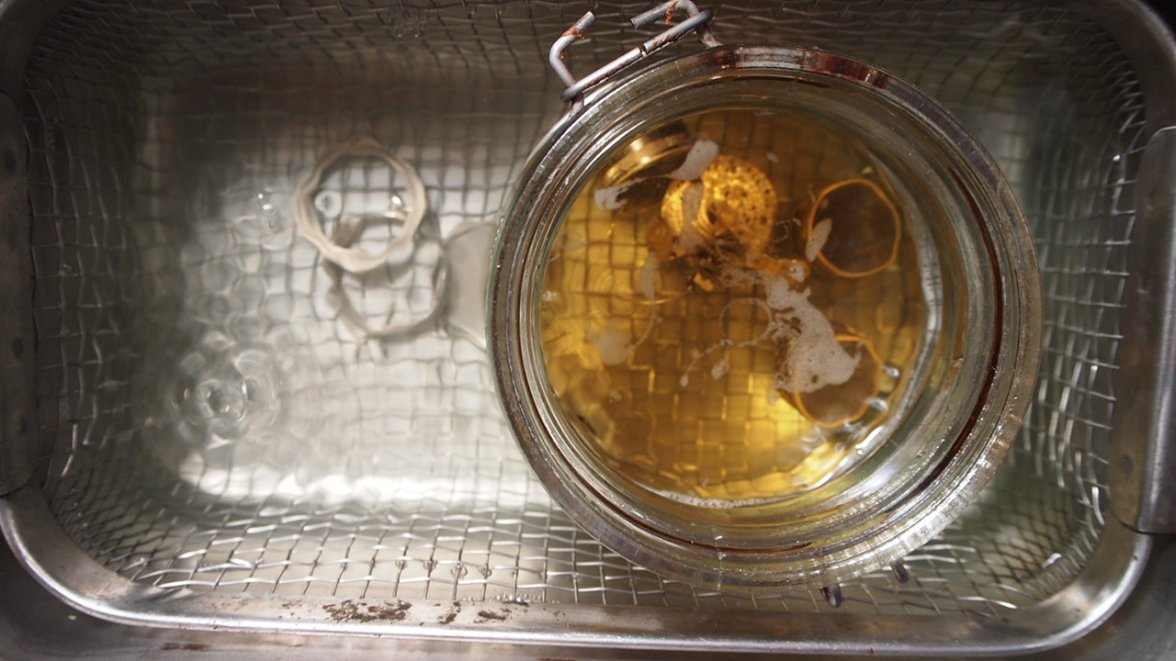
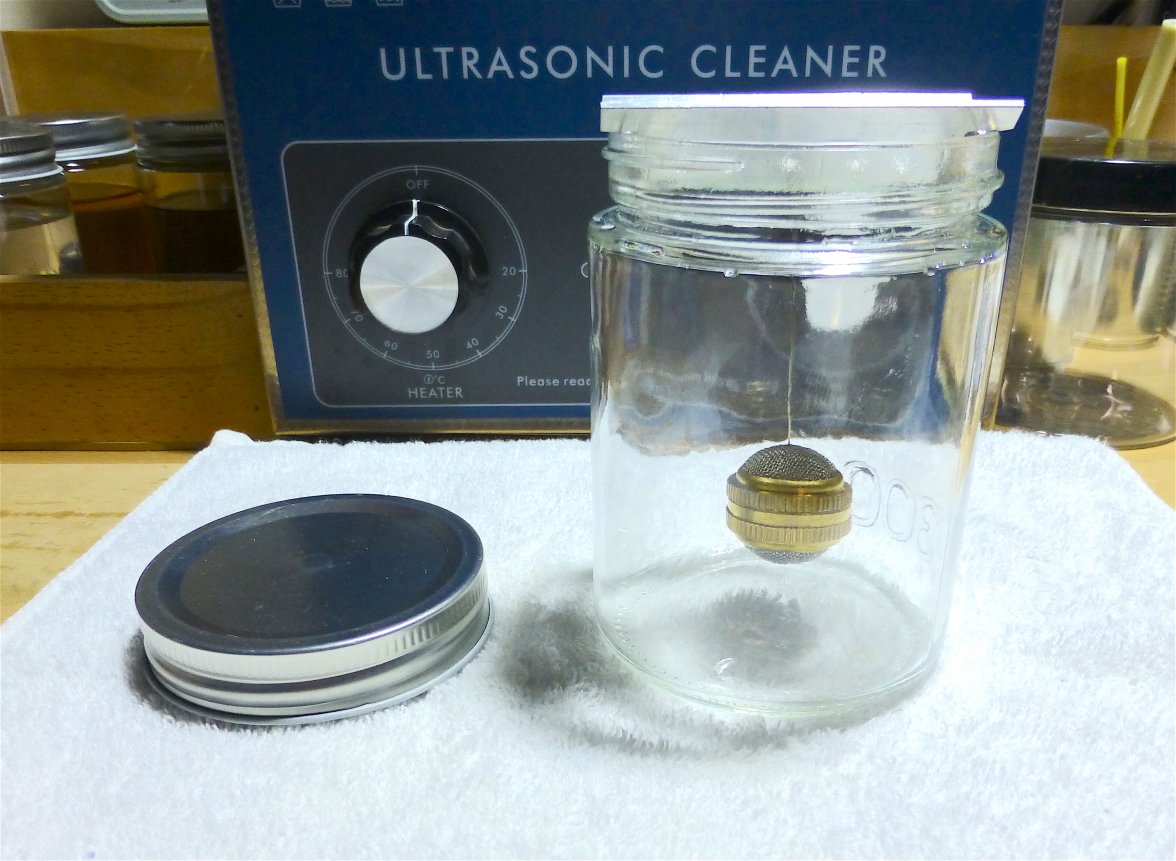
You can get away with naphtha (benzine, white gas, coleman fuel, etc) but you should get proper cleaners (Be very careful if you use naphtha as it is quite flammable). I use L&R #111 Ultrasonic Watch Cleaning Solution - Ammoniated and L&R Ultrasonic Watch Rinsing Solution. They are based on Stoddard Solvent with various additives for enhanced cleaning in an ultrasonic. The picture Canuck posted above is the right idea for a hobbyists ultrasonic; the thinner the glass the better. Kimax beakers are recommended although a bit expensive in lots of 12.
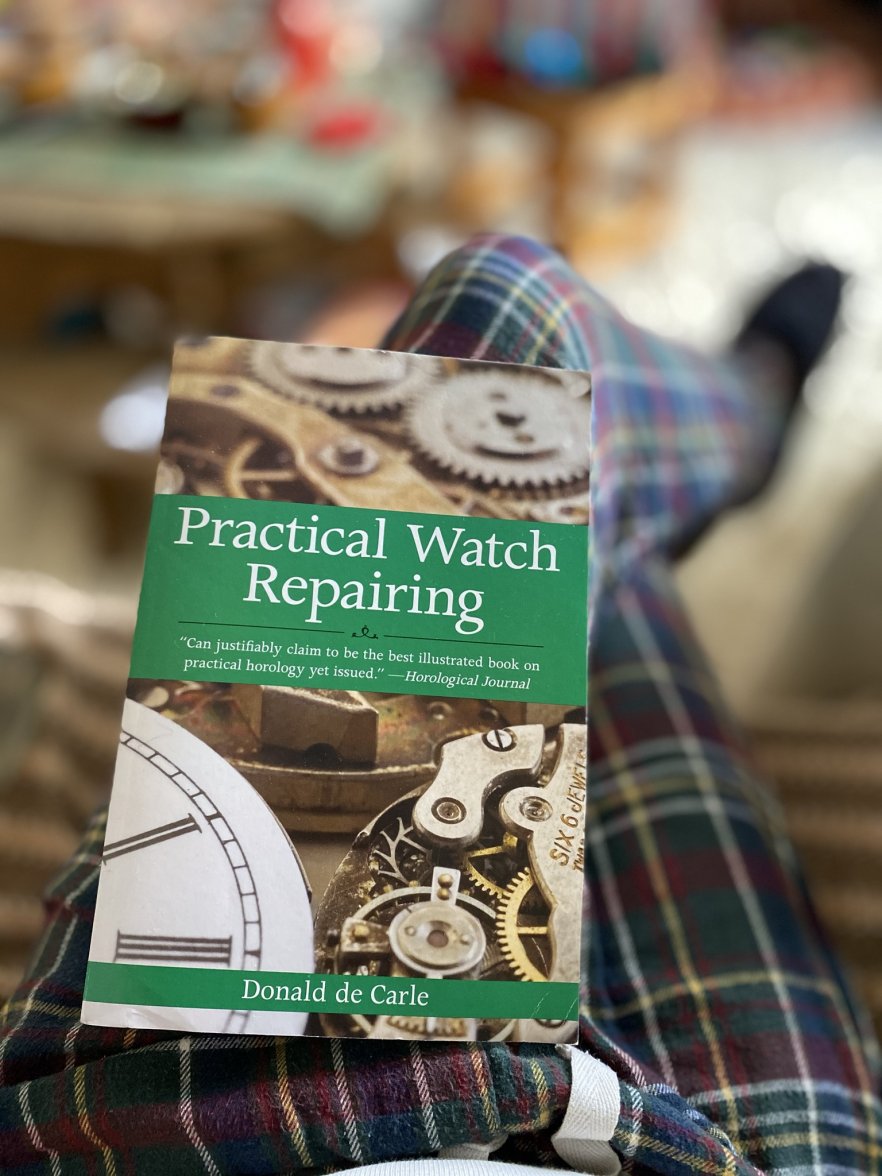
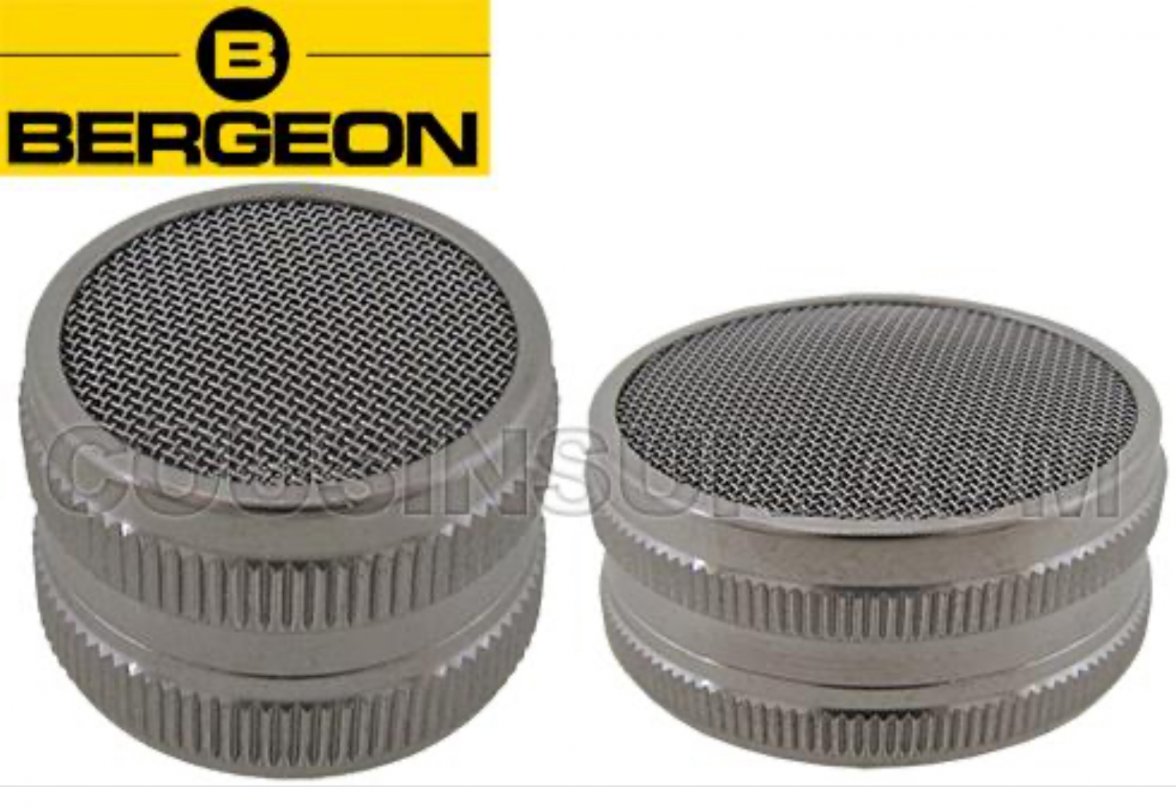
Get one or more cleaning baskets, about the size of a large thimble with a screen on each end for the little parts. A larger basket that just fits the glass makes it easier to drain and dry the parts; a hair dryer or heat lamp does the trick (again the flammability caution on naphtha). Get pegwood for pegging the bushings and pithwood for cleaning pivots; you can read about both in de Carle. I have his Practical Watch Repairing and as Archer says, it goes into the basics pretty well but many parts are dated.
As you probably already figured out, none of this stuff is cheap. You can buy good stuff or cheap stuff, but unless you throw in the towel, you will eventually buy good stuff. I've done both but have resigned myself to avoiding cheap stuff.
Also get in the habit of never touching anything without wearing finger cots. Powder-free gloves also work but are not as comfortable and you will grow tired of wearing them for extended periods. Cots go on the left thumb, fore and middle fingers (assuming you are not a southpaw). Tools go in the right hand.