- Posts
- 375
- Likes
- 431
cimo
·@Nobel Prize When I referred to dials turning brown, this is what I meant. Black dials fade naturally, yes. But this white dial seems particularly aged. I know that certain discoloration comes from radium, but is not the case here as it is a tritium dial. Likewise, moisture is the often the culprit behind rust, corrosion, oxidation, cracked or peeling lacquer, and disintegrating lume, but I don't think we can blame humidity for an otherwise even patina. What causes this change in hue, if not the degradation of material over time? And if it is simply the age of the piece, why is patina not always consistent among dials of the same age and reference? (differentiating between patina and moisture damage, which of course varies) This is why I hypothesize a smoker's watch could bear the same tar stains as clothing or interior walls. Is it so far fetched to think that after years of holding cigarettes, potentially in the same hand wearing a person's watch, that some of the atomized particulate from the smoke might find its way into the case and bind to the paint on the dial? Just thinking out loud here.
Edit: As for the case or crystal showing smoke damage before the dial--yes perhaps. But consider that the dial is the only part of the watch not typically cleaned or replaced during a service. Perhaps compromised crystals get replaced, whereas the dials do not.
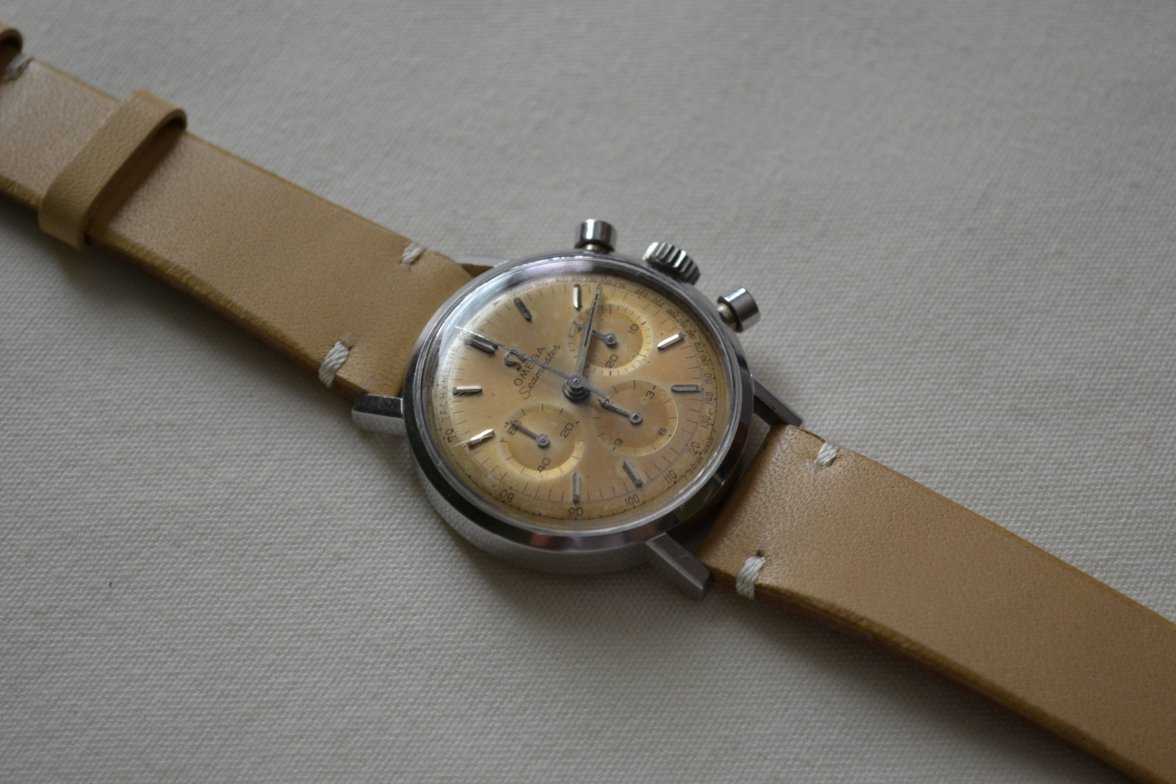
Edit: As for the case or crystal showing smoke damage before the dial--yes perhaps. But consider that the dial is the only part of the watch not typically cleaned or replaced during a service. Perhaps compromised crystals get replaced, whereas the dials do not.