- Posts
- 1,097
- Likes
- 3,784
krogerfoot
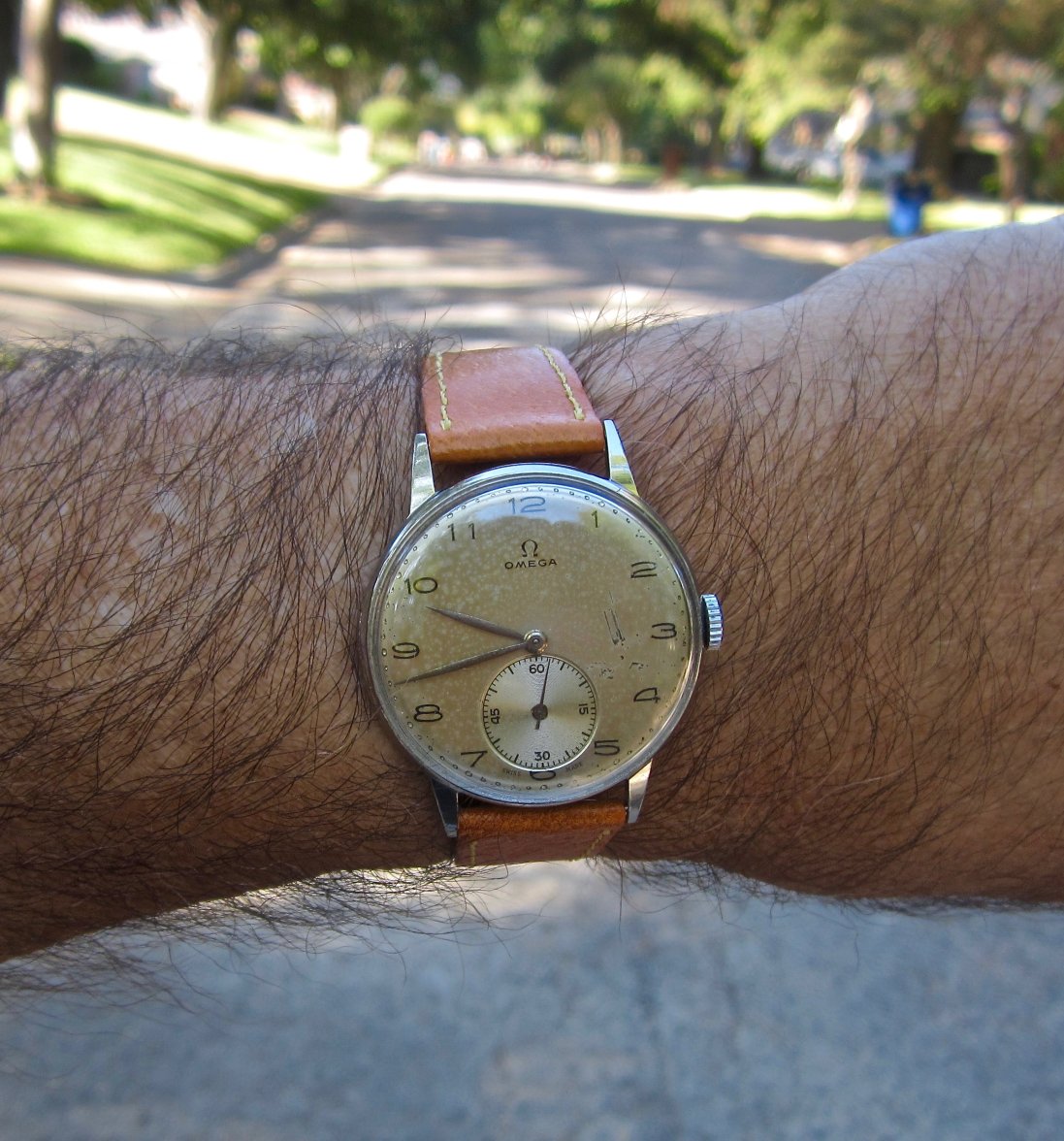
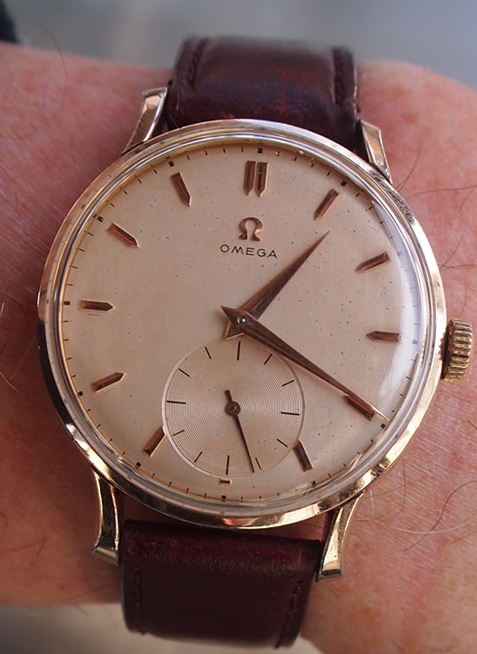
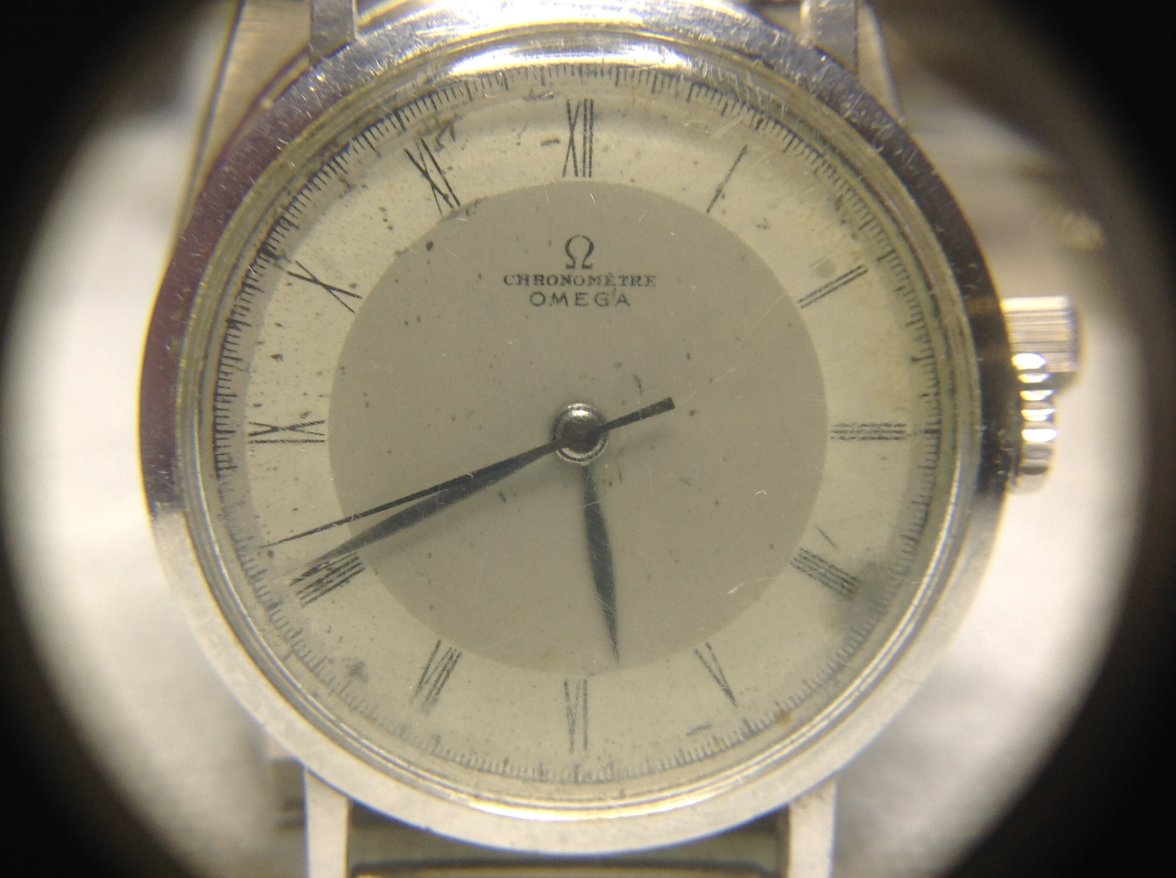
·I have been interested in “jumbo” Omegas for a while, but now that I have acquired a few described as such, I’m not sure I’ve yet really handled a jumbo model.
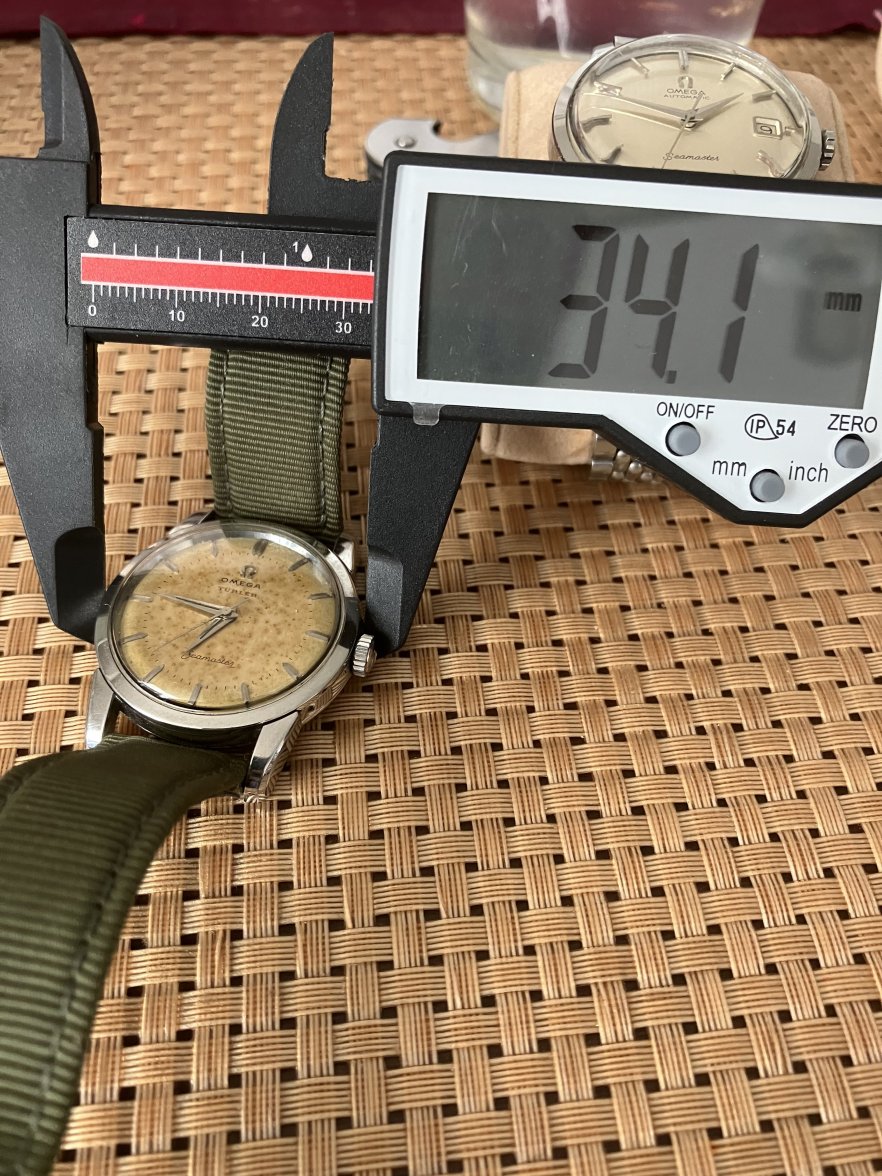
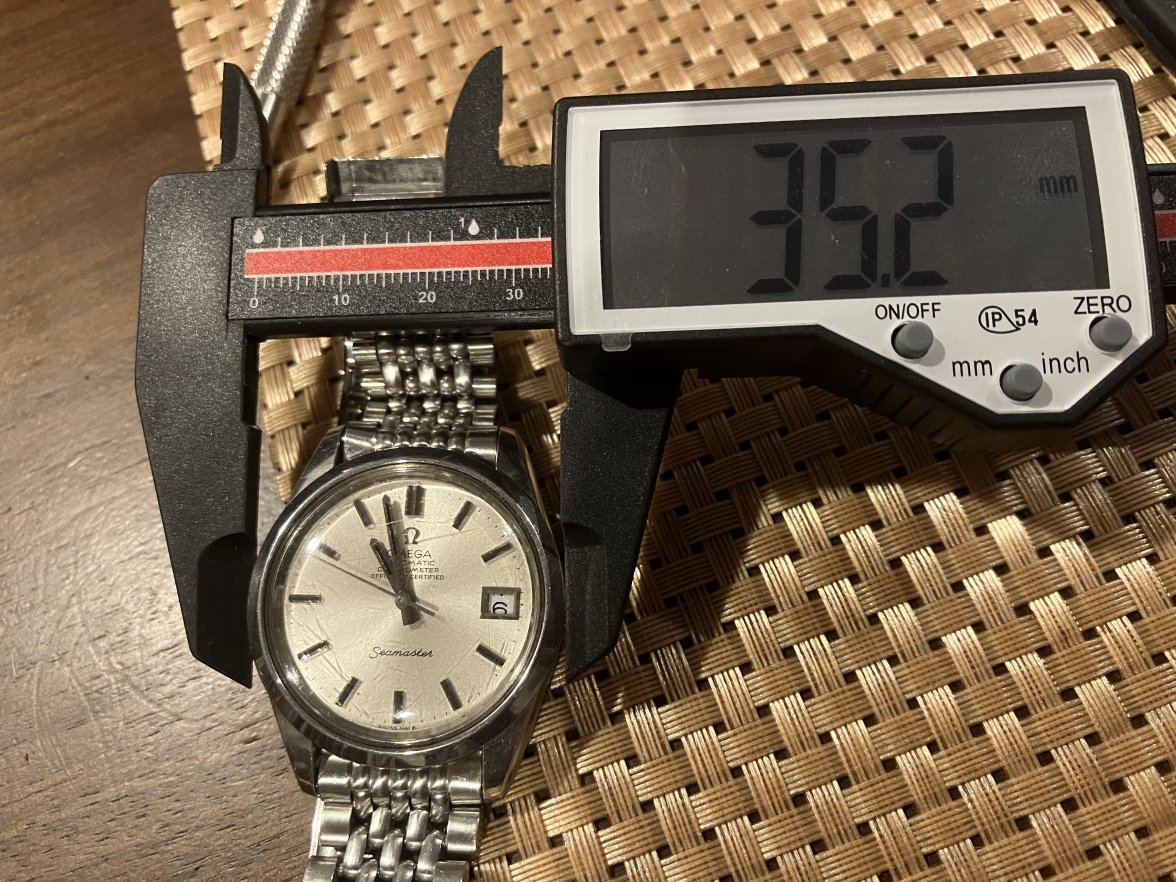
When I got my hands on a 166.011, I didn’t immediately notice a size difference between it and similar contemporaneous models like the 166.010/168.024, of which I am an aficionado. However, 36.0mm does feel substantial on the wrist. (I bought this caliper* specifically to convince myself that the 166.011 was indeed larger.)
* These calipers? This pair of calipers? I’m a professional grammarian; I’m supposed to know this stuff.
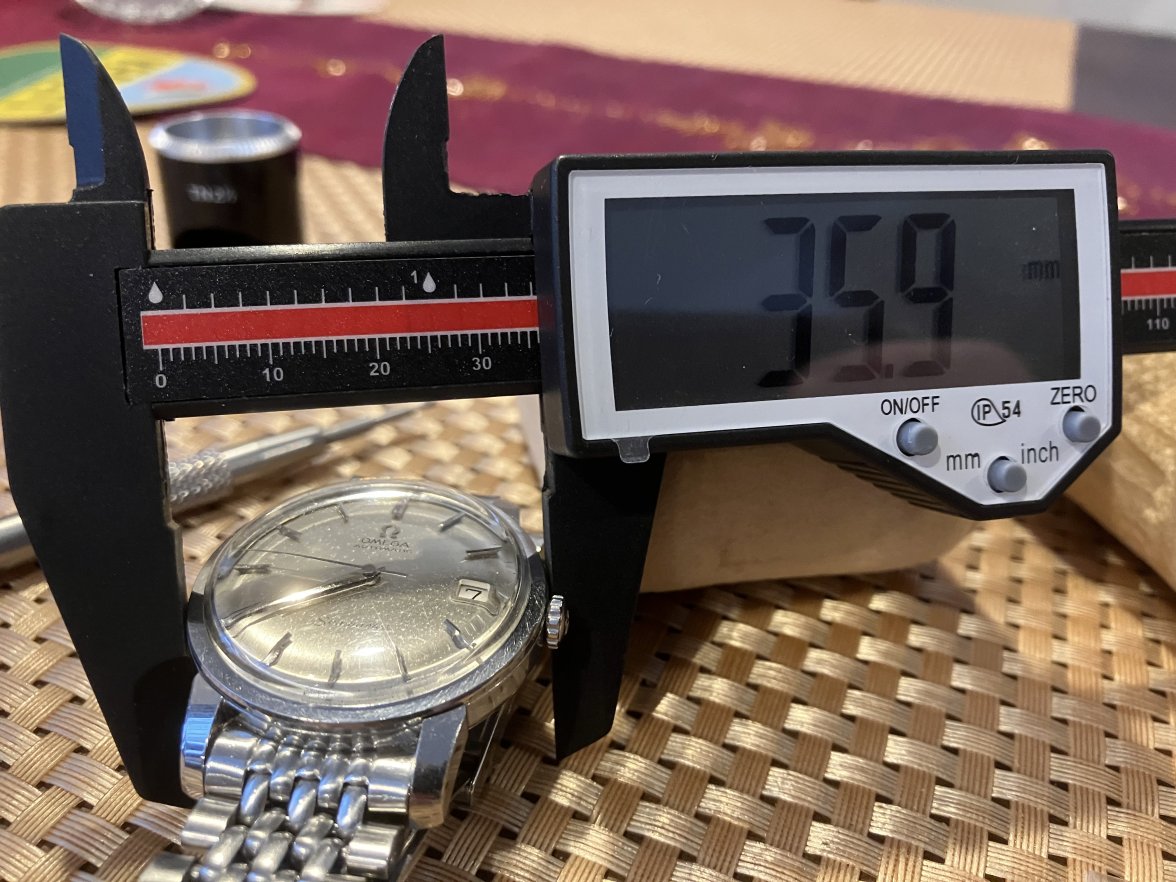
Maybe the case shrunk overnight, but now I’m getting 35.9mm.
Here it is side by side with an early-1970s 160.0001.
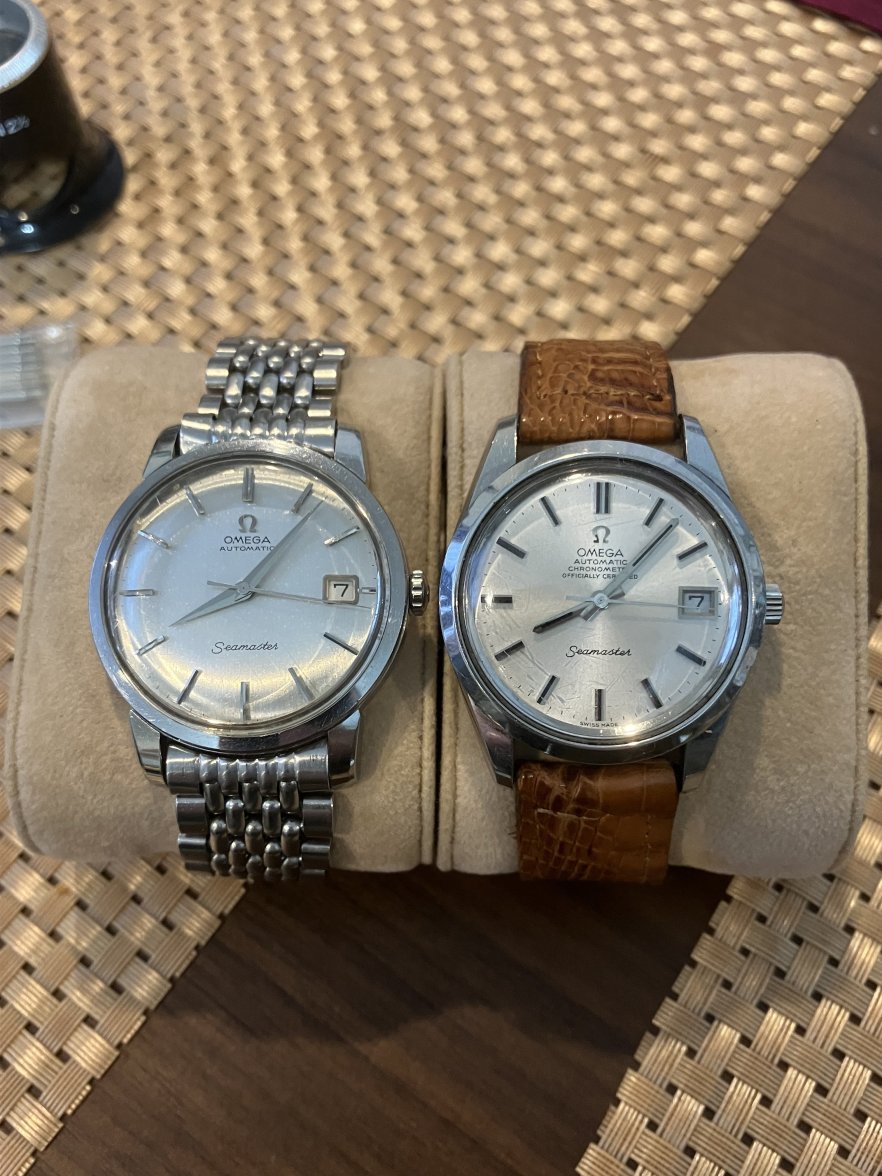
The 168.0001 has been called a jumbo as well, but I’m having a hard time seeing the case for categorizing it as such. Mine has precisely the same case diameter as my 166.010, which I’ve never thought of or seen described as a jumbo model.
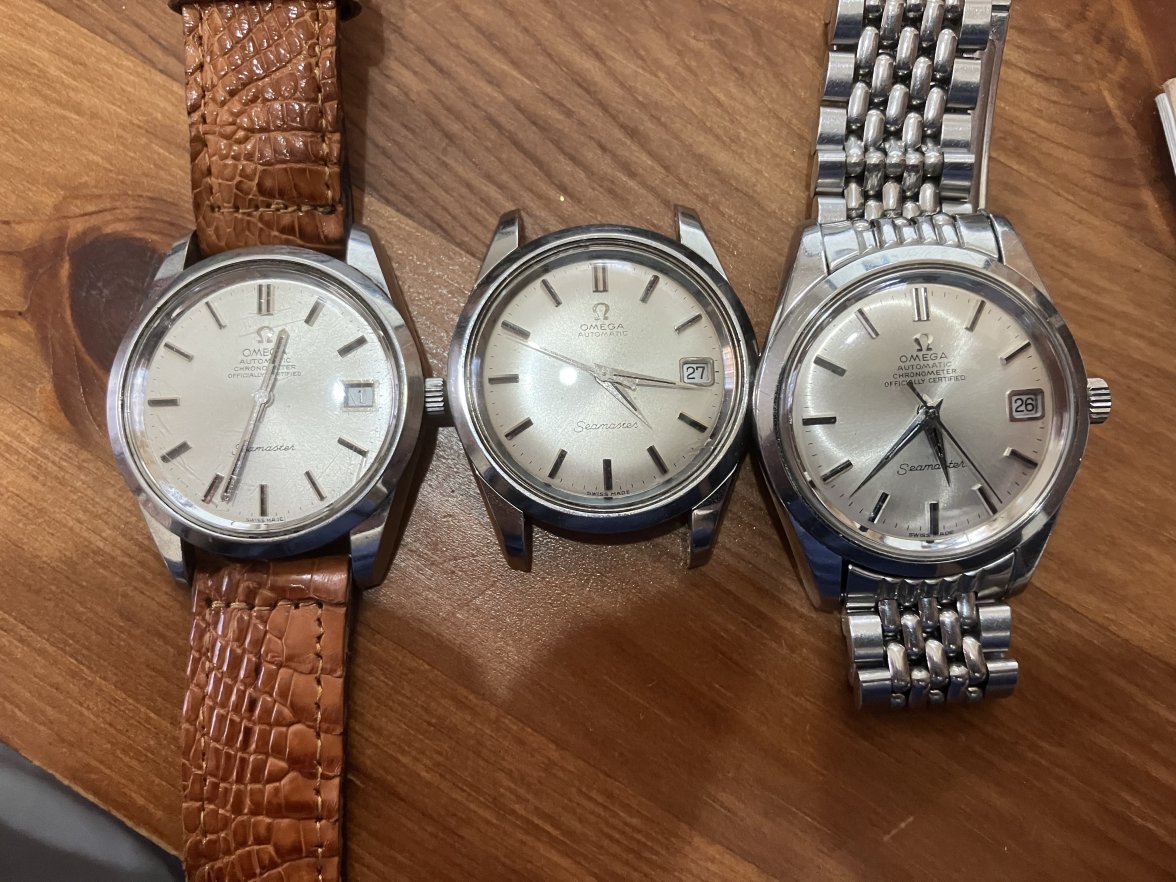
L-R: 168.0001, 166.010, 168.024. The rightmost watch is sitting slightly closer to the camera but has the same case as the middle watch.
I was ready to claim that all three of the watches in the second shot have the same case, but in fact the 168.0001 has a more voluptuous curve to the top of its lugs, while the 166.010/168.024 is sleeker. I thought I had taken photos of the comparative measurements before dropping off the 166.010 for service, but no. However, endlinks do seem to fit the two different cases differently.
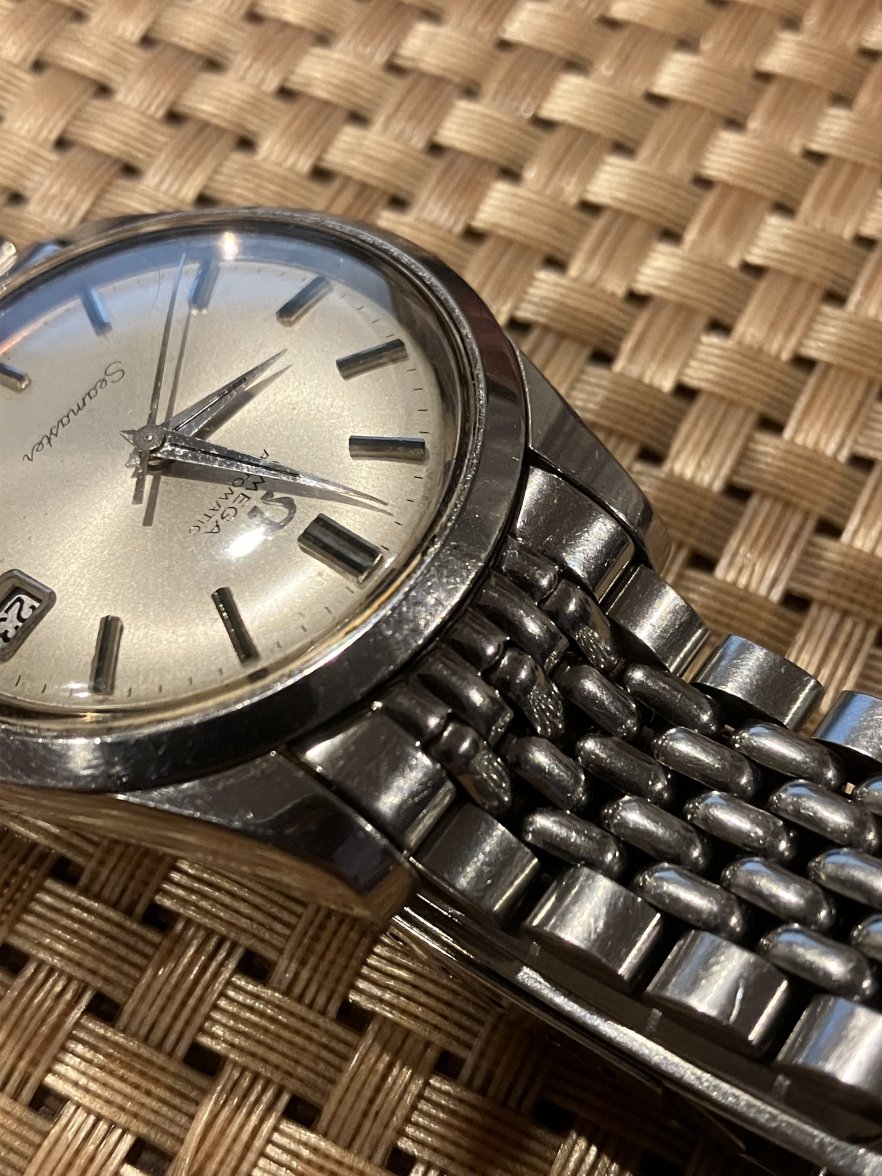
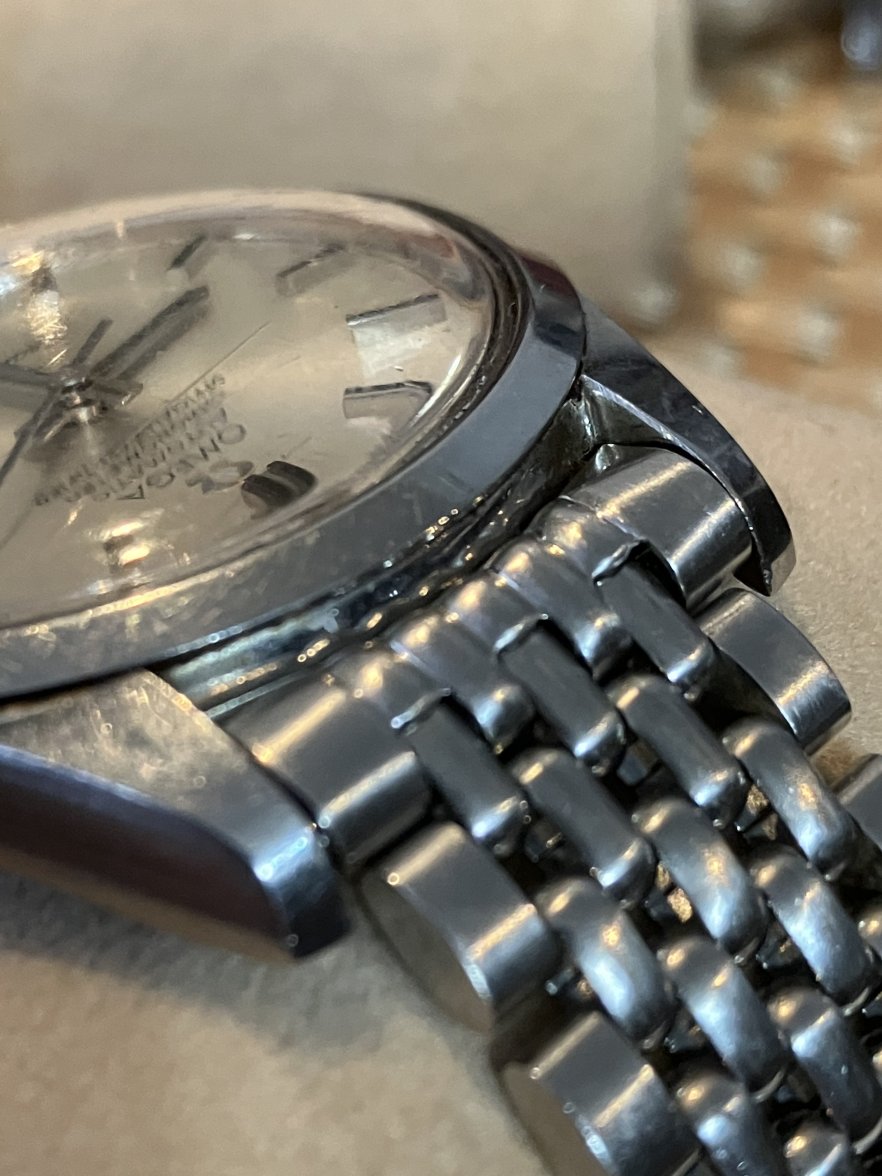
The top photo is the 166.010 and the bottom the 168.0001. These endlinks are not identical, so I need to do more research when I have both watches in hand, but I’m pretty sure the 168.0001 has a thicker case.
Anyway, I’m sure it’s been discussed before, but I’m procrastinating and seeking attention, so what makes an Omega watch a jumbo model? Was the 166.010 case seen as a significant step up in size from earlier 33-34mm sized watches? Did the bigger 36-38mm cases, whether Omega or from other makers, first emerge in the Asian market as it seems, and does anyone know of any marketing material that drew attention to these larger models?
When I got my hands on a 166.011, I didn’t immediately notice a size difference between it and similar contemporaneous models like the 166.010/168.024, of which I am an aficionado. However, 36.0mm does feel substantial on the wrist. (I bought this caliper* specifically to convince myself that the 166.011 was indeed larger.)
* These calipers? This pair of calipers? I’m a professional grammarian; I’m supposed to know this stuff.
Maybe the case shrunk overnight, but now I’m getting 35.9mm.
Here it is side by side with an early-1970s 160.0001.
The 168.0001 has been called a jumbo as well, but I’m having a hard time seeing the case for categorizing it as such. Mine has precisely the same case diameter as my 166.010, which I’ve never thought of or seen described as a jumbo model.
L-R: 168.0001, 166.010, 168.024. The rightmost watch is sitting slightly closer to the camera but has the same case as the middle watch.
I was ready to claim that all three of the watches in the second shot have the same case, but in fact the 168.0001 has a more voluptuous curve to the top of its lugs, while the 166.010/168.024 is sleeker. I thought I had taken photos of the comparative measurements before dropping off the 166.010 for service, but no. However, endlinks do seem to fit the two different cases differently.
The top photo is the 166.010 and the bottom the 168.0001. These endlinks are not identical, so I need to do more research when I have both watches in hand, but I’m pretty sure the 168.0001 has a thicker case.
Anyway, I’m sure it’s been discussed before, but I’m procrastinating and seeking attention, so what makes an Omega watch a jumbo model? Was the 166.010 case seen as a significant step up in size from earlier 33-34mm sized watches? Did the bigger 36-38mm cases, whether Omega or from other makers, first emerge in the Asian market as it seems, and does anyone know of any marketing material that drew attention to these larger models?
Edited: