cicindela
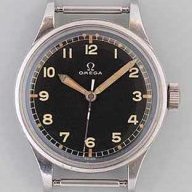
··Steve @ ΩFThe diameter of the case. Though this is a small watch, it is not a ladies watch.
Laurel you may find this link interesting reading.
https://squeletteblog.wordpress.com...hronometers-30mm-30t2rg-and-30t2scrg-english/
Please consider donating to help offset our high running costs.
The diameter of the case. Though this is a small watch, it is not a ladies watch.
Laurel you may find this link interesting reading.
https://squeletteblog.wordpress.com...hronometers-30mm-30t2rg-and-30t2scrg-english/
I also checked https://squeletteblog.wordpress.com...hronometers-30mm-30t2rg-and-30t2scrg-english/
But after some closer inspection the movement in laurels watch is more likely to be R13.5SC than R17.8 SC.
Here is a R13.5 (with sub second) http://www.ranfft.de/cgi-bin/bidfun-db.cgi?10&ranfft&0&2uswk&Omega_R13_5SC
And here is R17.8 (also with sub second) http://www.ranfft.de/cgi-bin/bidfun-db.cgi?10&ranfft&0&2uswk&Omega_R17_8SC
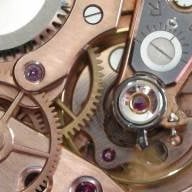
If you compare it to picture of the movement laurel posted it looks like R13.5.
Just compare bridge positions on those two different movement types. It is different.
I like how it became both a prototype AND a military watch 😁
How many more to fill out the entire bingo sheet?
Lovely watch, by the way - good luck with your research!
In order to end all the wild speculations and uneducated guesses of several noobs and also few of the more advanced members here -
I am back with my final verdict:
Firstly I must confess that I was a bit mislead by the shape of the case and the design of the screw back and also by the lack of information about the diameter and lack of movement picture.
So my first thought, which I had expressed in this thread, was a center second version of the Ref. 2144 - it was the most rational solution I could find.
I was also in error through the lack of some important info.
Here we go:
1) This is definitely a woman´s watch as we now know the size.
2) the movement is a Cal. R 13,5 SC with 18J later name was changed to Cal. 250
This movement derived from the R 13,5 (later 240) which had sub seconds.
The center second version was introduced in 1939
It was built either with 16, 17 or 18 jewels
Later it was developed to be amagnetic (Cal. 251) and a shock absorber added (Cal. 252)
The total production of this very successful caliber family was 1,3 million movements.
The R 13,5 SC (later 250) was particularly successful even in achieving chronmeter quality ratings which was expressed in a letter of the "Official Bureau Of Control" in Bienne of June 3rd 1941.
A movement Cal. R 13,5 SC achieved chronometer testing results easily although it was not designed as a chronometer - it was a simple movement of the mill run... Very remarkable result for a tiny women´s watch movement!
Obviously this remarkable result led Omega to issue a model marketed as chronometer.
This was not only expressed through the arched Chronometre printing above the Omega logo but also the movement finish was a special execution - including polished ratched wheel and crown wheel and also the click - features we all know from the later 30mm Rg movements.
Only the regulator is of the simple style and not specially executed.
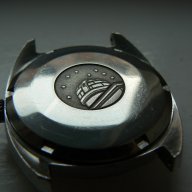
The number "30" inside the case back is neither a serial# nor a reference# - it is an "internal" production number of the case manufacturer to find together the matching parts for final assembling after they had been finished.
The serial number of the case is found outside the case back hand engraved as it was common with these early Omega models.
This is all I can say for now. The reference number has to be unveiled later if ever.
enjoy guys!
best
Erich

In order to end all the wild speculations and uneducated guesses of several noobs and also few of the more advanced members here -
I am back with my final verdict:
Firstly I must confess that I was a bit mislead by the shape of the case and the design of the screw back and also by the lack of information about the diameter and lack of movement picture.
So my first thought, which I had expressed in this thread, was a center second version of the Ref. 2144 - it was the most rational solution I could find.
I was also in error through the lack of some important info.
Here we go:
1) This is definitely a woman´s watch as we now know the size.
2) the movement is a Cal. R 13,5 SC with 18J, later name was changed to Cal. 250
This movement derived from the R 13,5 (later 240) which had sub seconds.
The center second version was introduced in 1939
It was built either with 16, 17 or 18 jewels
Later it was developed to be amagnetic (Cal. 251) and a shock absorber added (Cal. 252)
The total production of this very successful caliber family was 1,3 million movements.
The R 13,5 SC (later 250) was particularly successful even in achieving chronometer quality ratings which was expressed in a letter of the "Official Bureau Of Control" in Bienne of June 3rd 1941.
A movement Cal. R 13,5 SC achieved chronometer testing results easily although it was not designed as a chronometer - it was a simple movement of the mill run... Very remarkable result for a tiny women´s watch movement!
Obviously this remarkable result led Omega to issue a model marketed as chronometer.
This was not only expressed through the arched Chronometre printing above the Omega logo but also the movement finish was a special execution - including polished ratched wheel and crown wheel and also the click - features we all know from the later 30mm Rg movements.
Only the regulator is of the simple style and not specially executed.
The number "30" inside the case back is neither a serial# nor a reference# - it is an "internal" production number of the case manufacturer to find together the matching parts for final assembling after they had been finished.
The serial number of the case is found outside the case back hand engraved as it was common with these early Omega models.
This is all I can say for now. The reference number has to be unveiled later if ever.
enjoy guys!
best
Erich
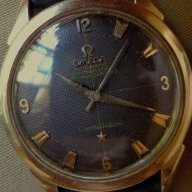
Sorry, a lot of mistakes here. the wristwatch is a rare early chronometre Omega, quite valuable.
Please read my article on Chronometre Omegas (part2):
https://squeletteblog.wordpress.com/author/squeletteblog/