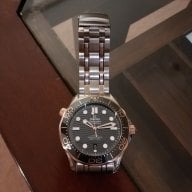
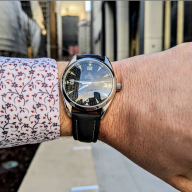
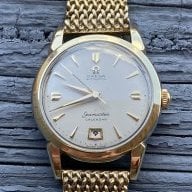
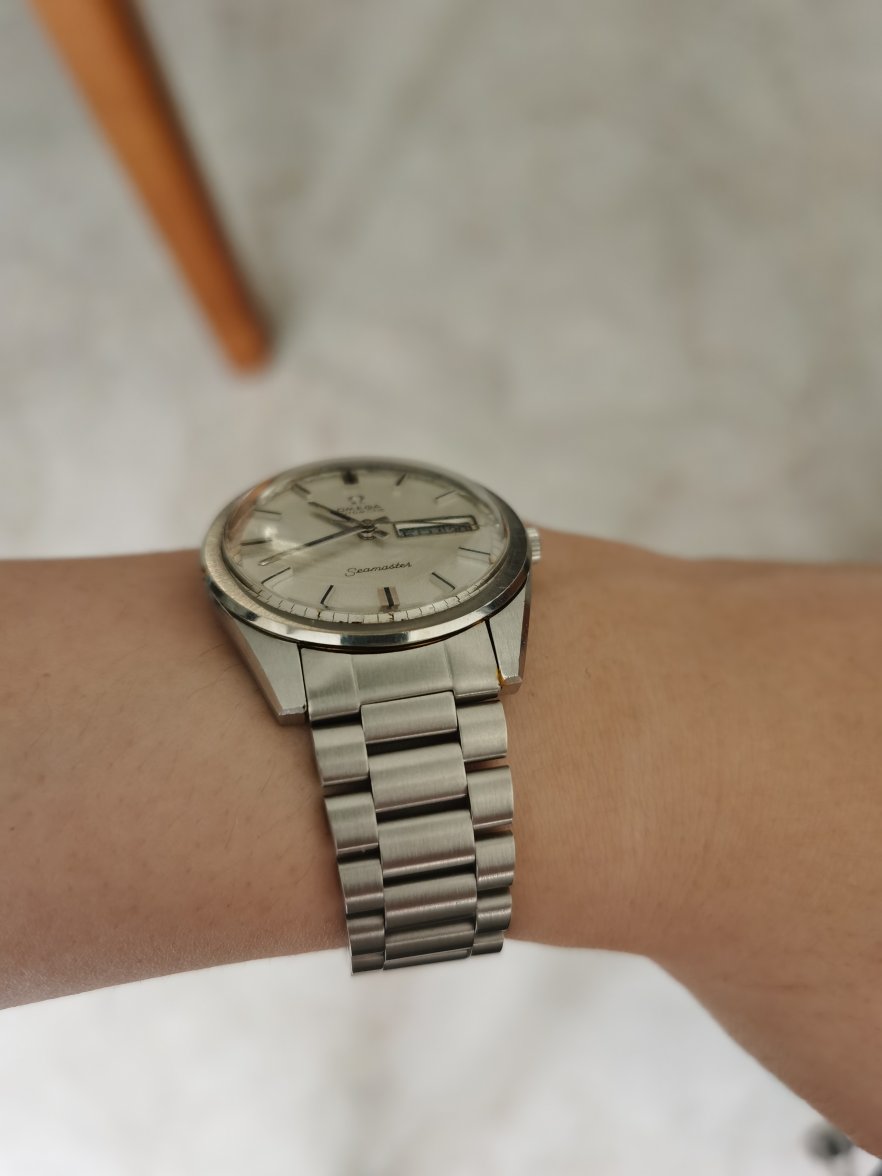
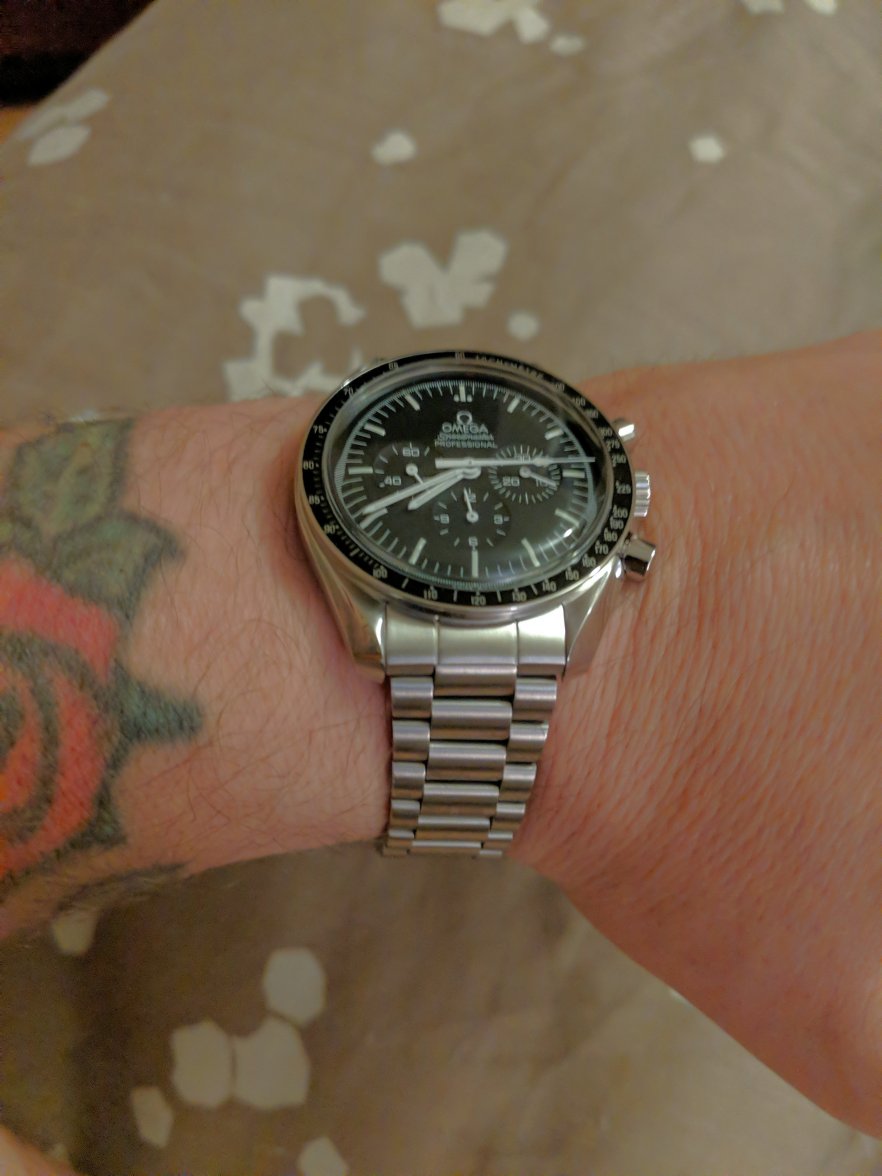
What is the difference between "sitting flush" and contacting the case? Not a native speaker, sorry. I have many bracelets with folded endlinks on other watches, and I always assumed them contacting the case makes them sit in place. Is that wrong?
Historically, some companies made a single bracelet and endlink set that worked on several references with similar case shapes. The tolerances were fairly loose so they would be fitted at the retailer by bending the top plate slightly (using flat nosed pliers wrapped in electrical tape to avoid scratching the finish), opening up the guide rings inside with a pick or needle nose pliers to give a little more slack where the pin goes through or tightening it up to close the gap, then the tabs on the bottom crimped up to flush-up the tabs under the case to minimize rattle. The ideal result should be endlinks that sit within a micron of the case and lugs but don’t actually rub against it....but that wasn’t always the case thus we see varying gaps on some older watches, some not- it’s just considered part of the charm. Also filing or trimming endlinks was standard practice if the match-up wasn’t perfect. Hollow endlinks are stamped then folded metal so they can easily get out of shape (sometimes you will see one side sitting higher than another on top- just needs proper fitment).
Modern bracelets are made to tighter tolerances and endlinks (most solid) specific to each model (or reference within each model). With solid endlinks you have to have the specific endlink for a given case- there is no wiggle room and if you want to put that on another watch, the pin holes must align or you will either have a gap at the case if the distance between pin holes and case are too far apart for the length of the endlink (from the case to the back where it meets the bracelet), or it will push against the case if the distance is too short. With a solid endlink, if the endlink is too long, it will not let you mount the bracelet- you will struggle to get the pin in and short of bending the pin it won’t align with the holes. But with hollow end links, it has enough flex that you can cram it in and think it “fits”, but it’s actually a touch too long and riding up against the case. Every movement you make will cause it to rub.
I believe Uncle Seiko designed these endlinks based on a specific Speedmaster model (can’t remember which one), but as I said earlier, Omega has changed the distance between lug holes and case a few times over the life of the SMP by very small amounts- so fitment will be slightly different depending on which generation.
The way to customize you endlinks to fit your case (or “marrying” it to the watch) is to tweak the endlinks with pliers (wrapped in a layer of electrical tape) on top, bottom, fore and aft. If you have to struggle to get the endlinks in because the pressure against the case it pushing it back towards the bracelet, your endlinks are just a hair too long. If bending it doesn’t work, carefully filing the edge against the case with a curved or rat-tail file can take off some of the metal-but you have to know what your doing or you can mar the finish or file unevenly.
If you lack the tools or skills to custom fit your endlinks to the case, your watchmaker can do this easily.