- Posts
- 718
- Likes
- 2,107
GuiltyGear
·Hi forum. For the past year or so, I've been designing a watch parts cleaning machine with the invaluable help of @JimInOz . The whole idea was to make something compact that can fit on anyone's desk, relatively simple to build without much experience in electronics, and cheap. What I'm presenting here is the second prototype, one I'm proud to show, but plenty of work remains before it's ready for me to share the build plans. I'm mostly looking to get your feedback and perhaps answer some questions, which may provide insights on how to improve it.
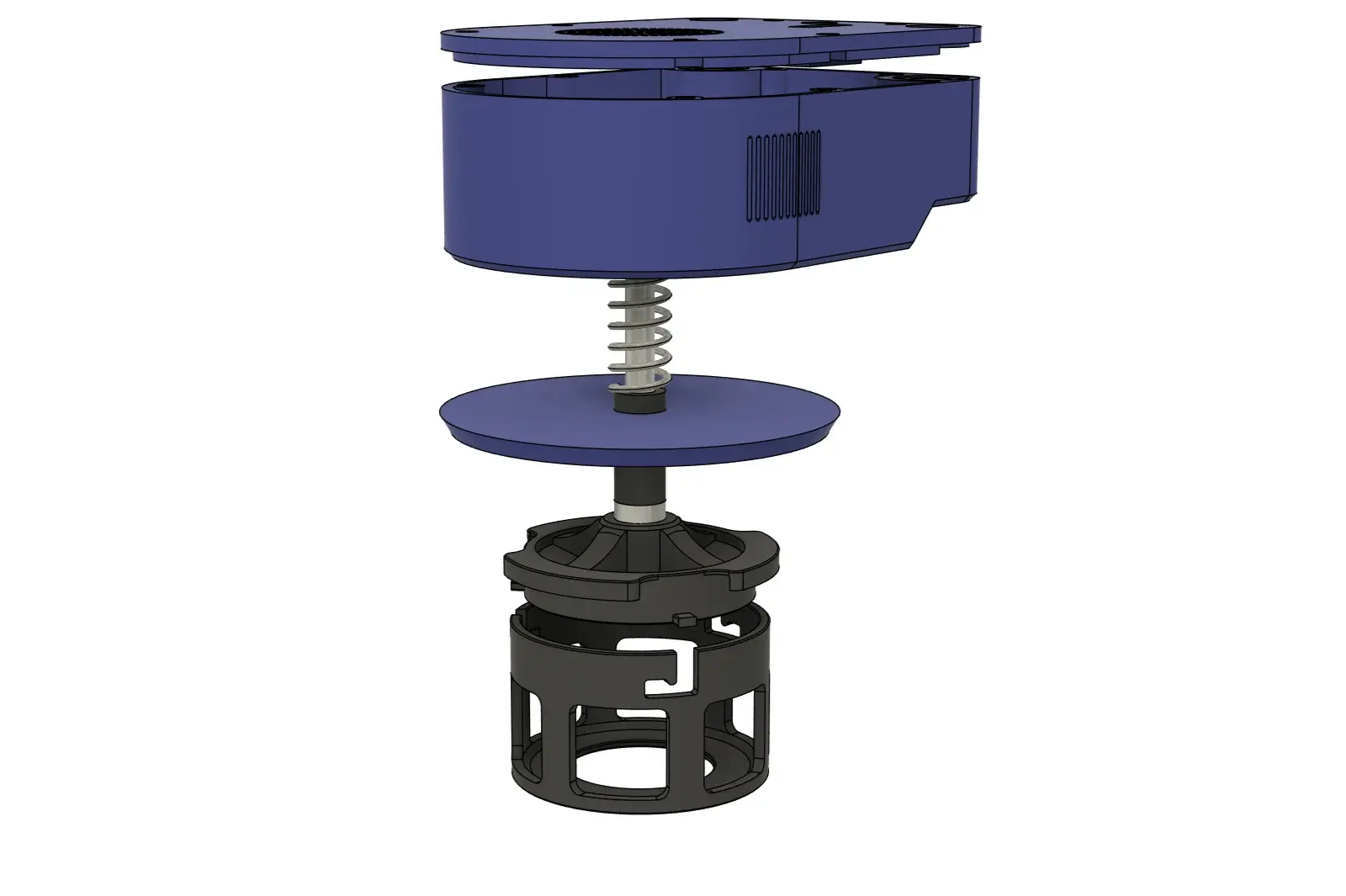
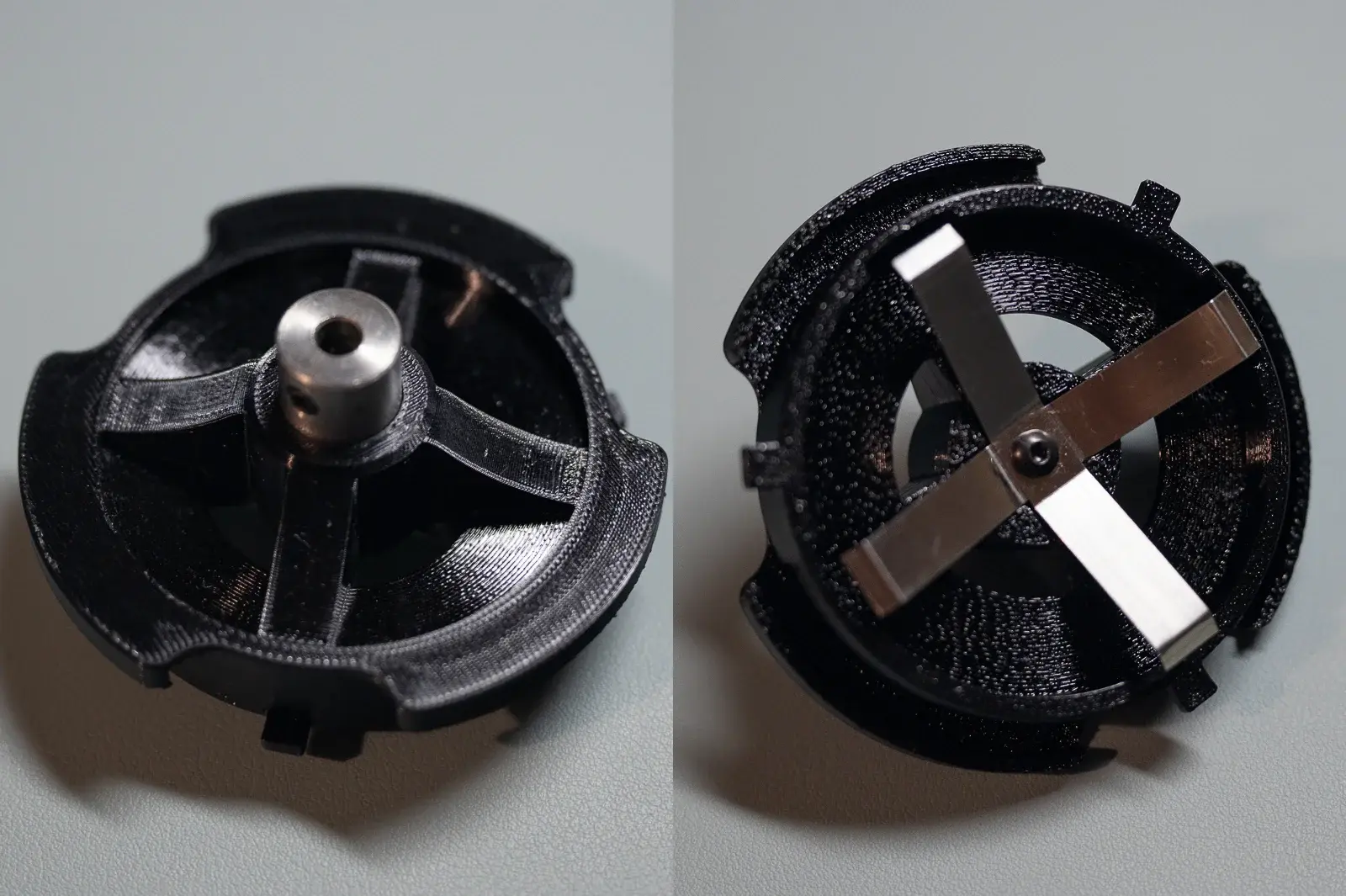
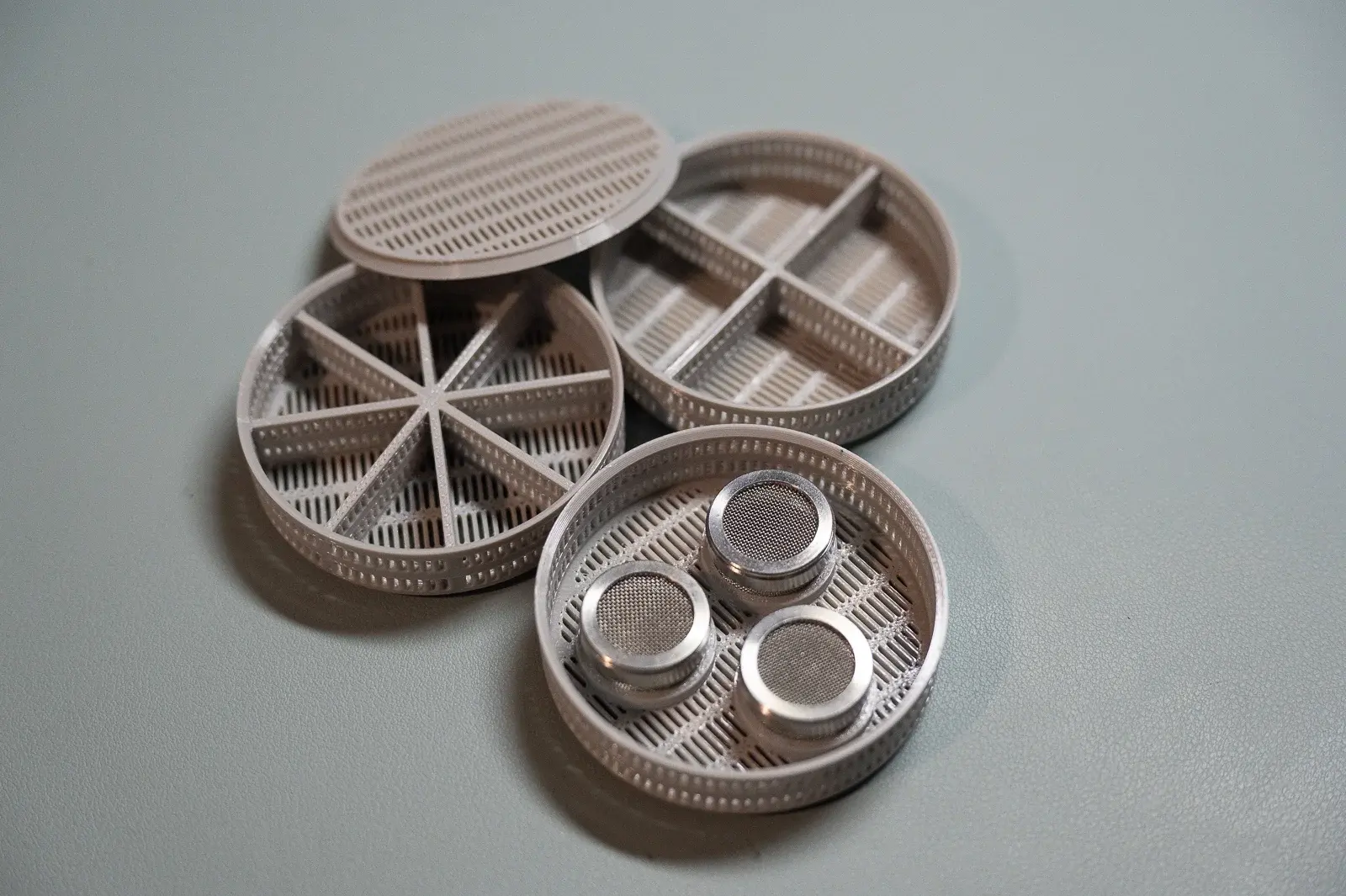
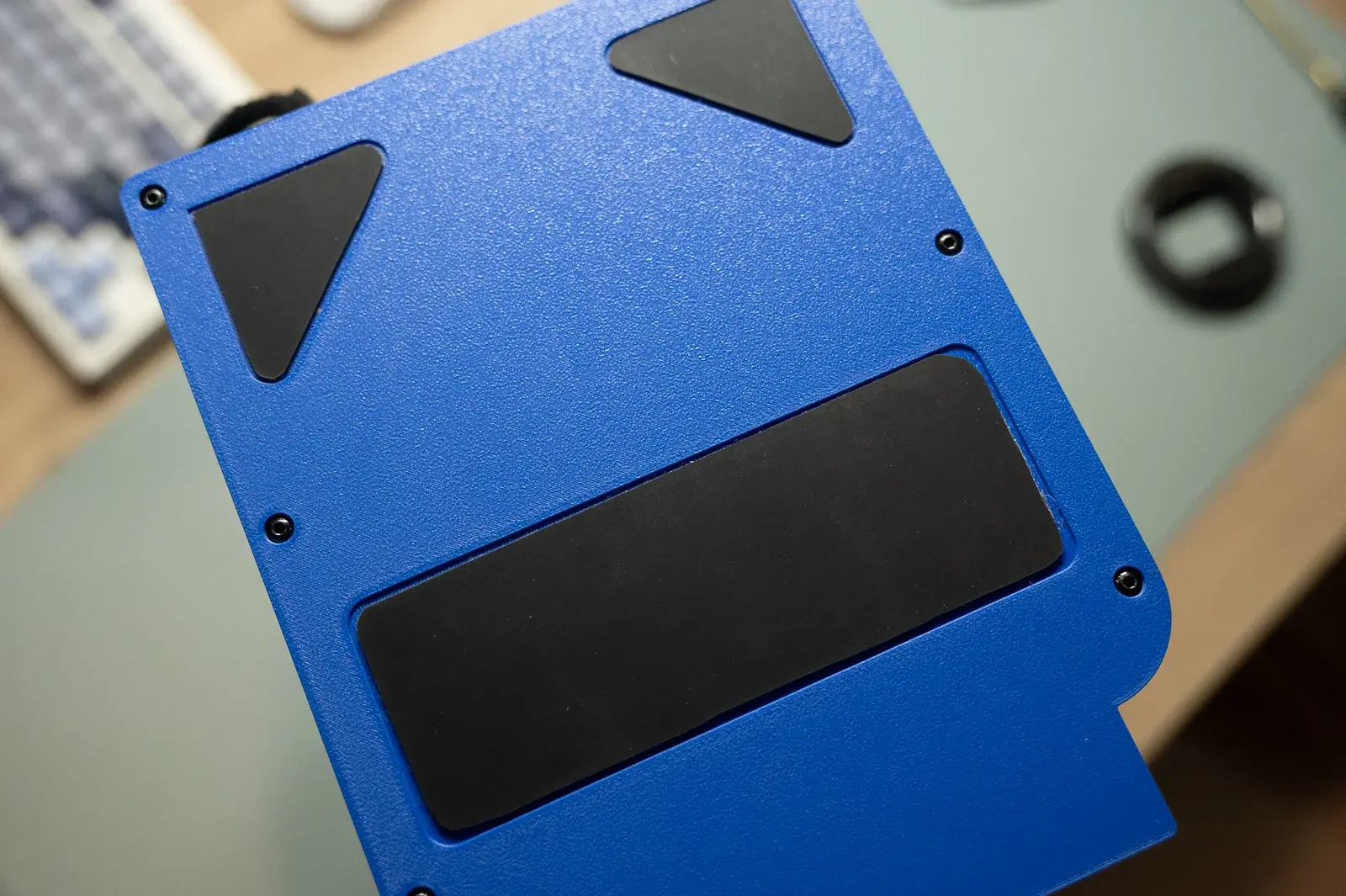
The 3D-printed parts are its core, consisting of about 500 grams of PLA and about 150 grams of PETG for the basket holder and the baskets themselves. Logic is handled by a Raspberry Pi Pico, a couple of TMC2209 to control the stepper motors, and a few components like a button, screen, buzzer, and encoder. The Nema 17 stepper motors handle the carriage movement and spinning, with 2x 12mm linear shafts on linear bearings on the head unit and an 8mm lead screw. The total cost to build, at least as an approximation since I haven't done a detailed BOM yet, should be around $150.
As a single-jar machine, it handles the washing and spin-drying phases automatically. Once done, it beeps and waits for you to change the jar and start the next step. On the final step, it expects the dryer unit, which currently is simply a powerful server fan. Before starting each step, you can update the run time via the rotary encoder.
I have a bunch of improvements for the electronics and software on my list: a custom PCB, PTC heater with a small fan, a larger screen (128x128 instead of 128x64), a redesigned menu system, and an EEPROM chip for saving custom programs and telemetry. These will probably be completed in the following months.
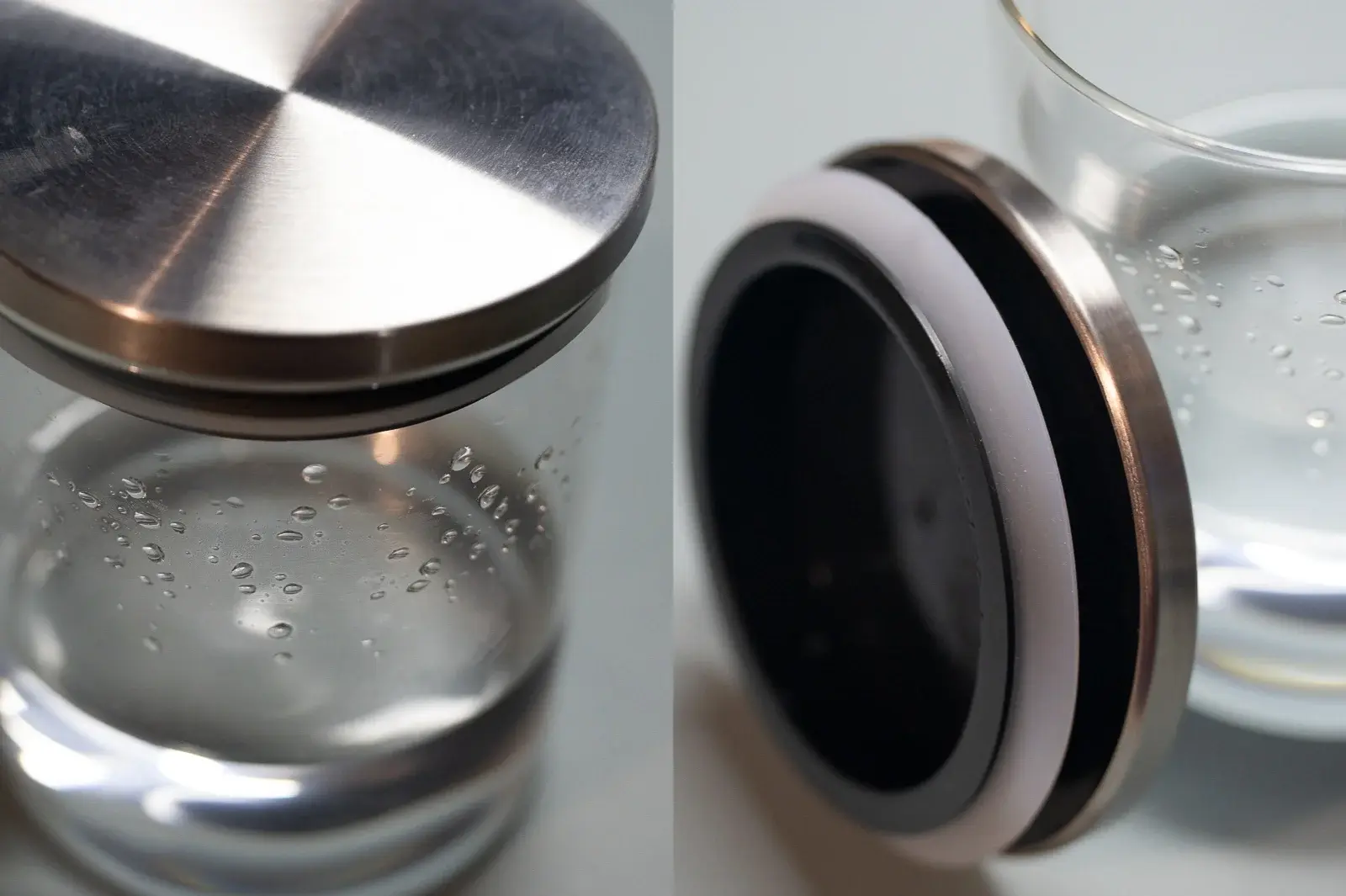
I'll let you watch a video of the machine in action and a few photos. Tell me what you think!
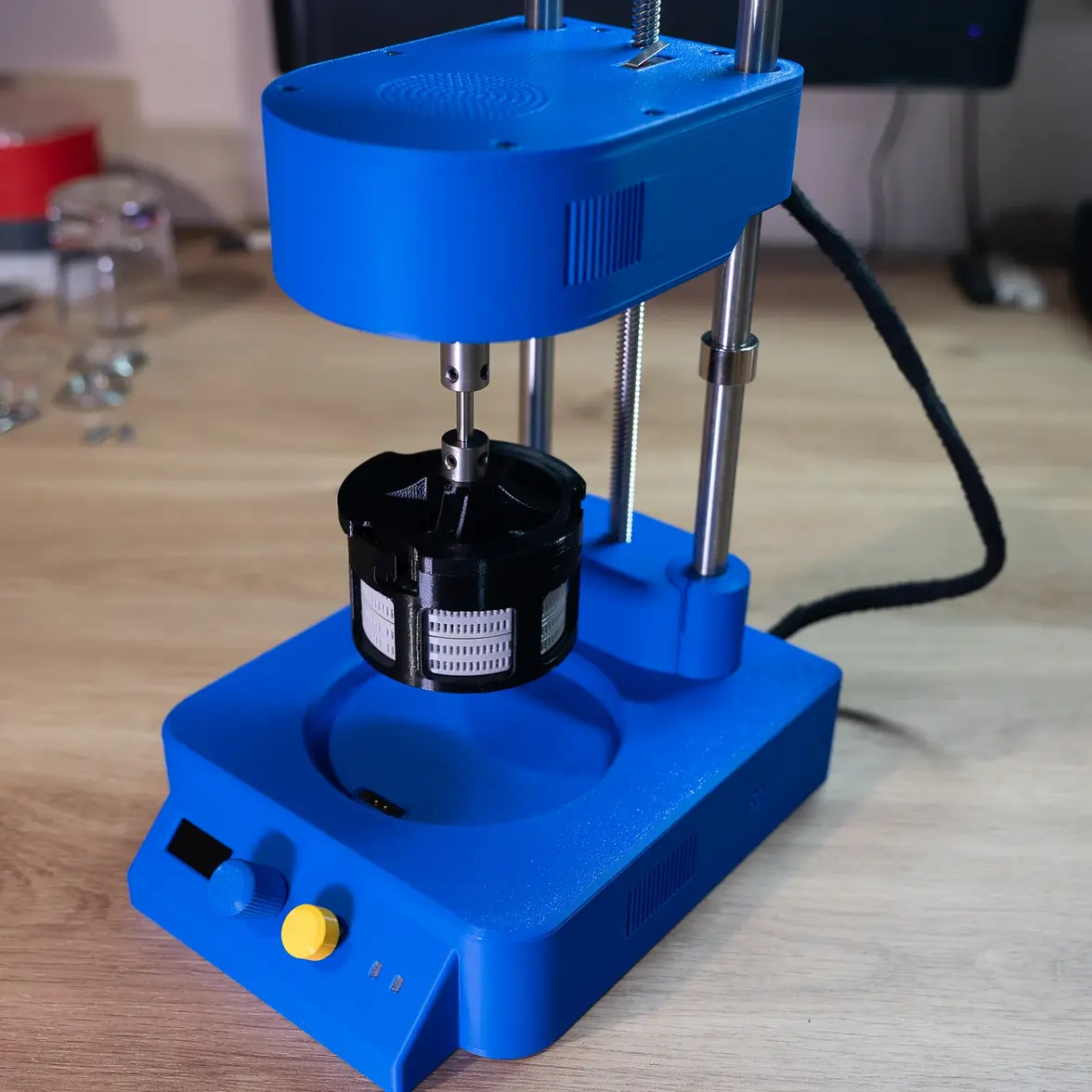
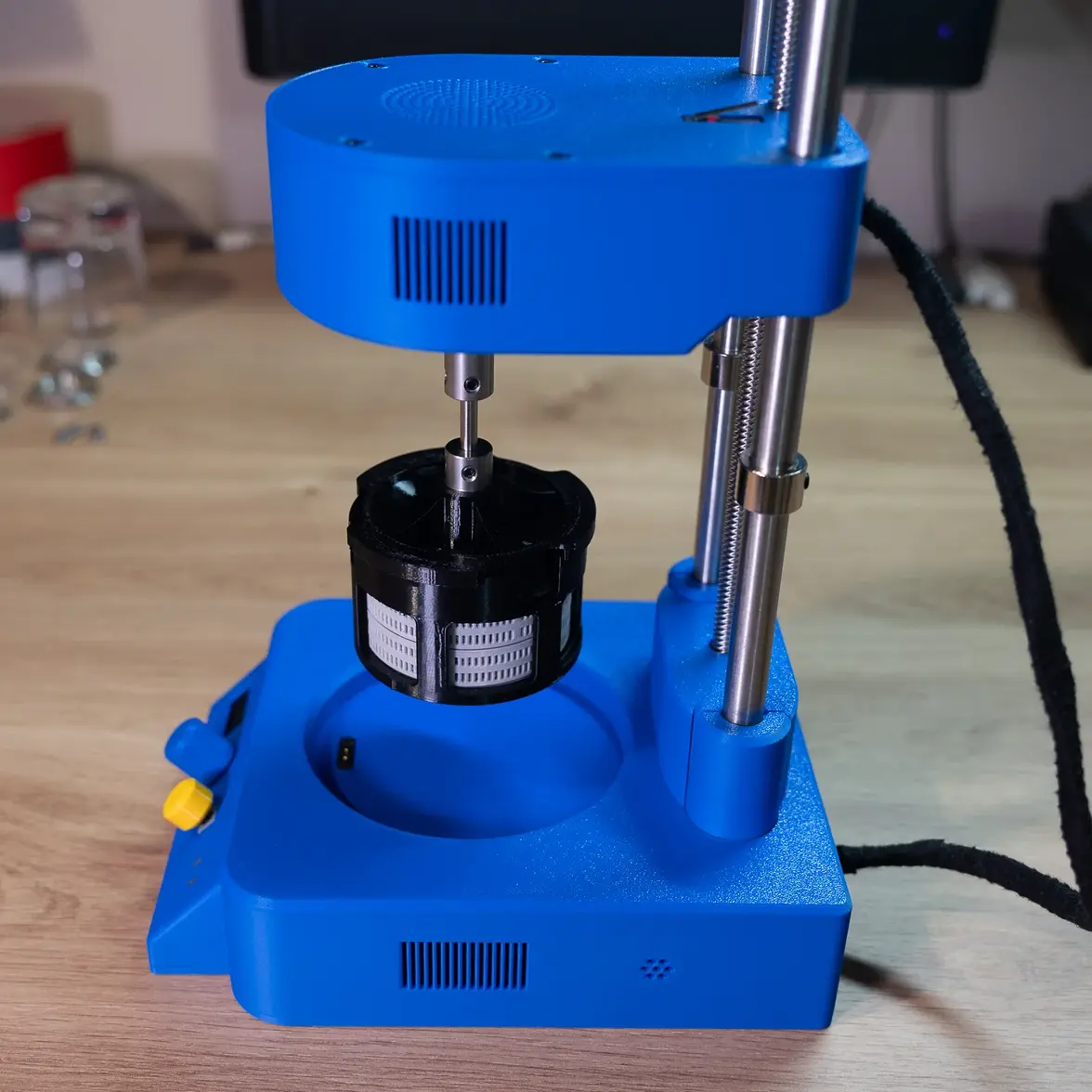
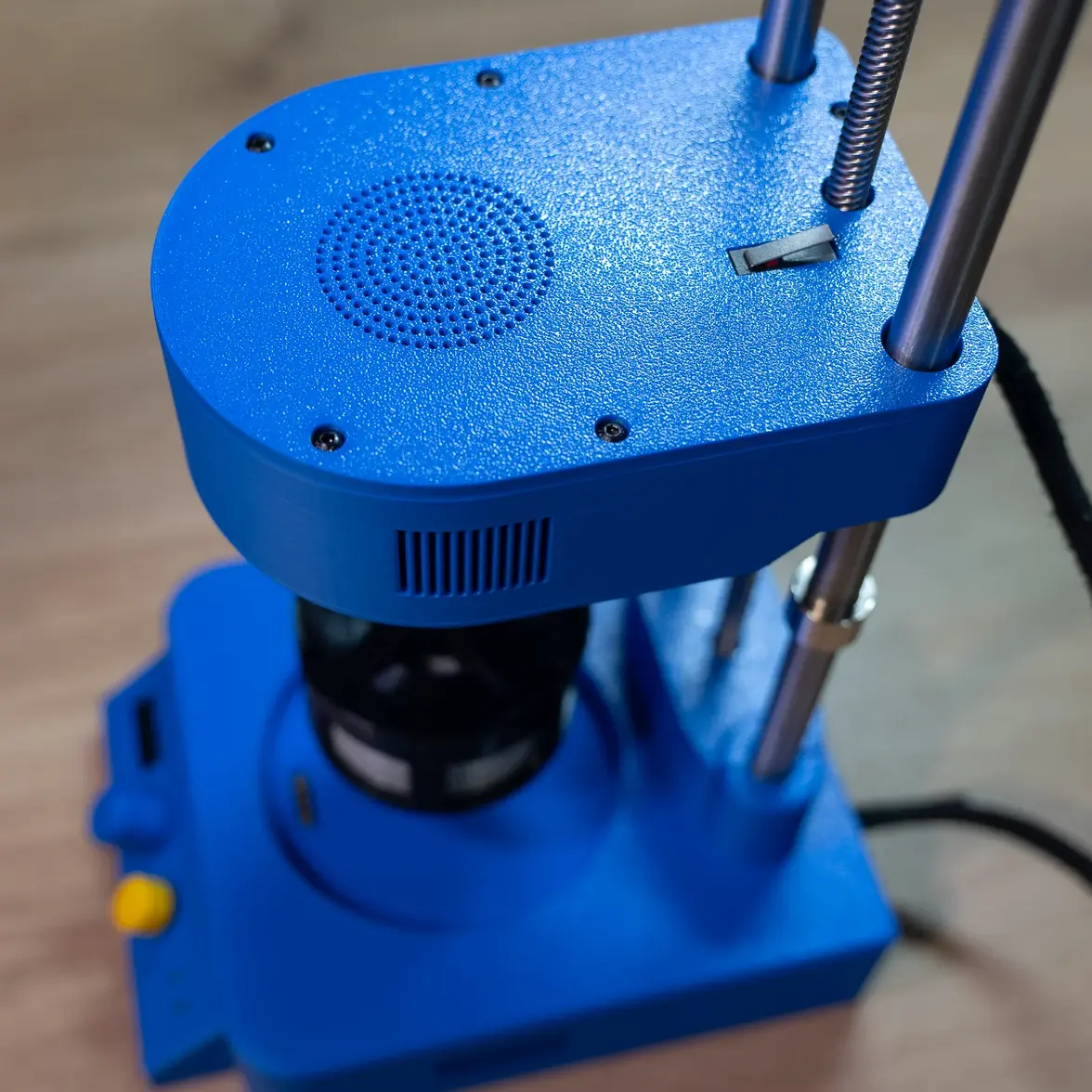
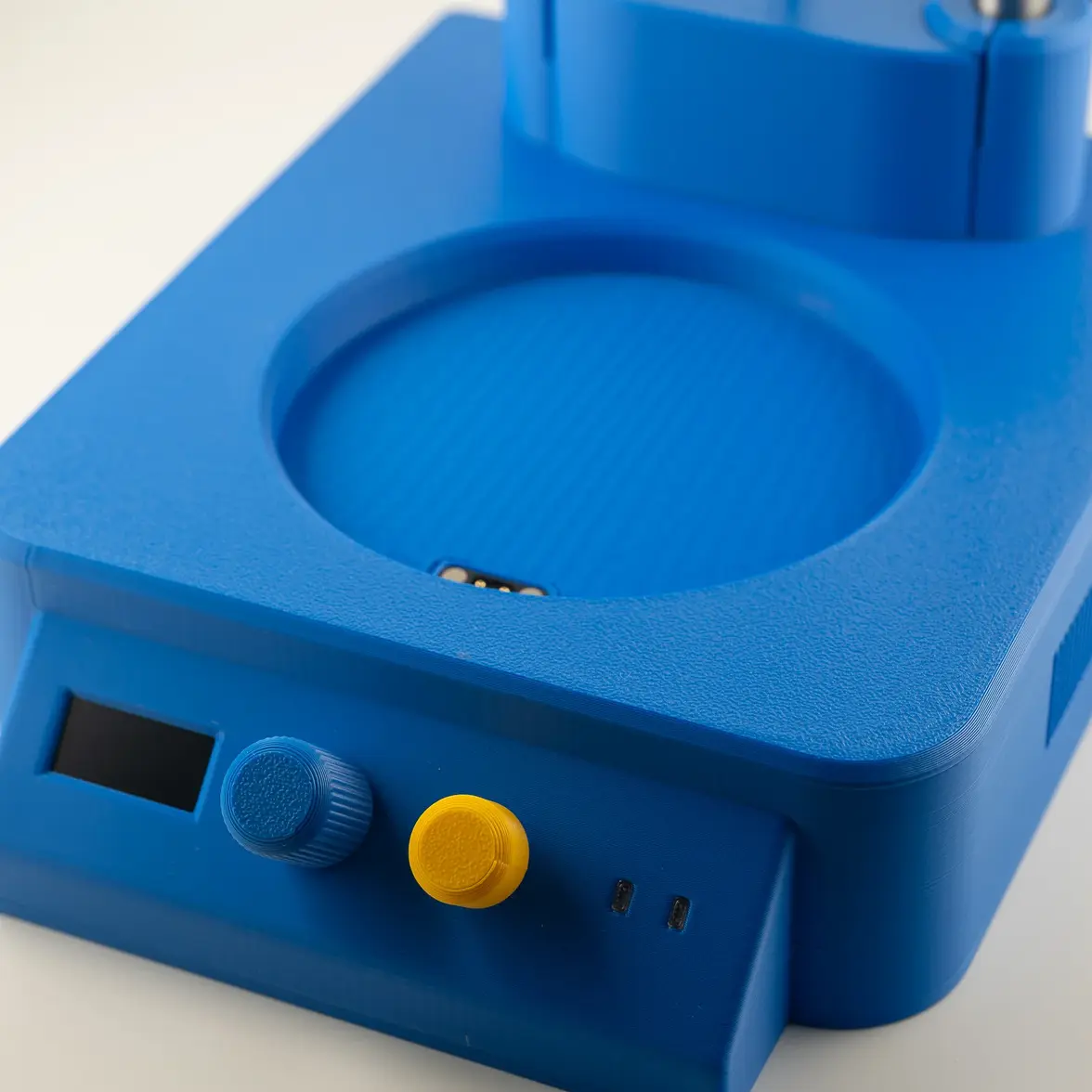
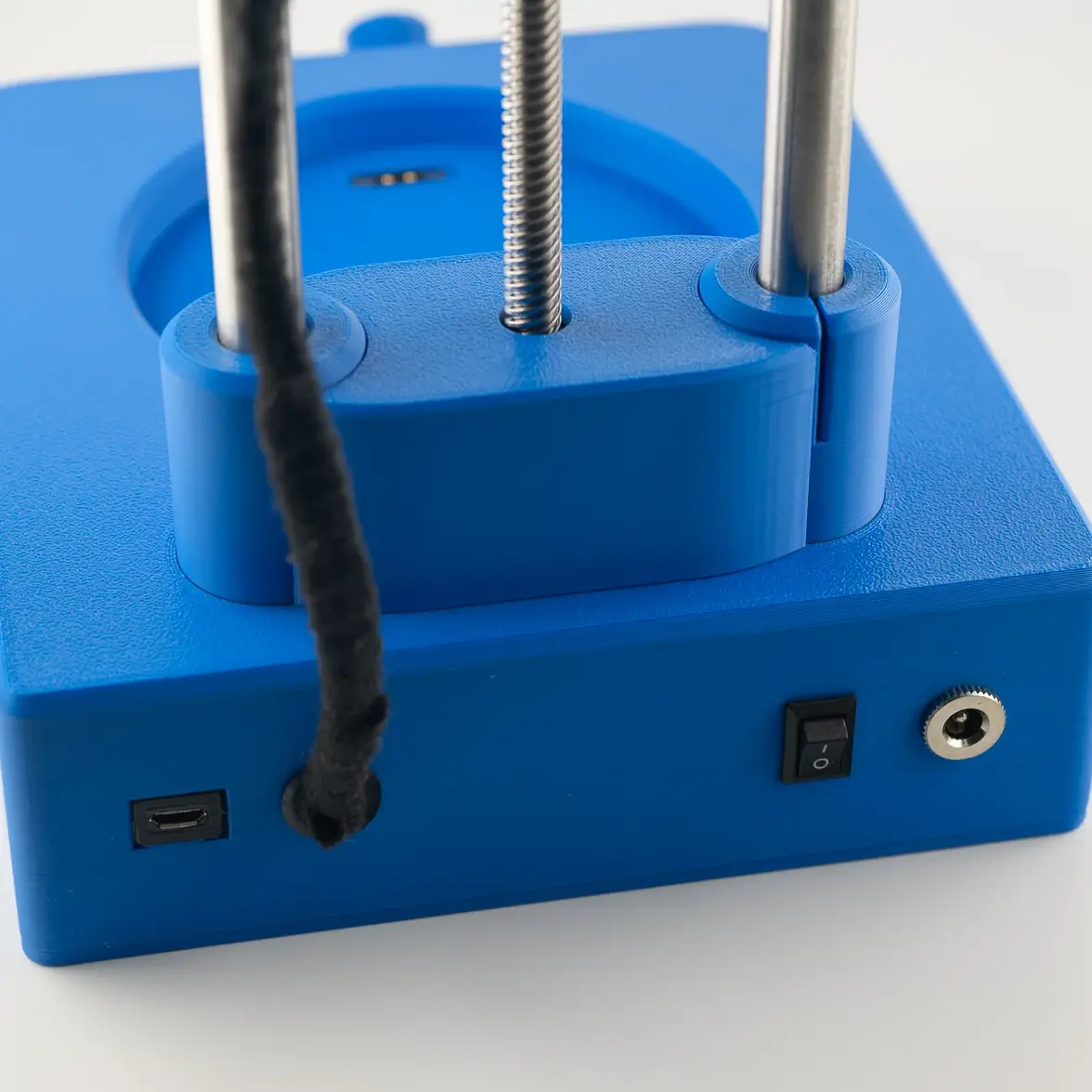
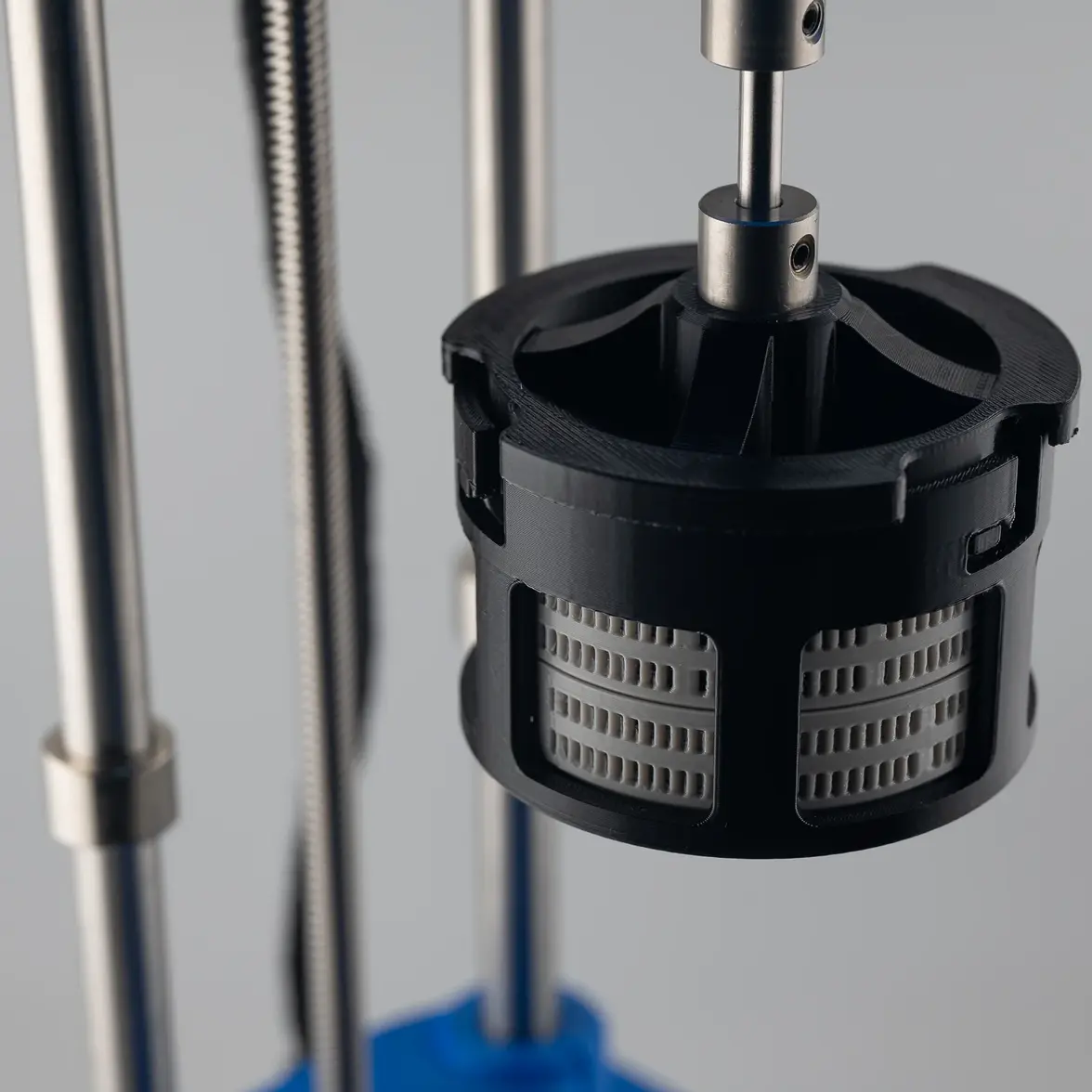
The 3D-printed parts are its core, consisting of about 500 grams of PLA and about 150 grams of PETG for the basket holder and the baskets themselves. Logic is handled by a Raspberry Pi Pico, a couple of TMC2209 to control the stepper motors, and a few components like a button, screen, buzzer, and encoder. The Nema 17 stepper motors handle the carriage movement and spinning, with 2x 12mm linear shafts on linear bearings on the head unit and an 8mm lead screw. The total cost to build, at least as an approximation since I haven't done a detailed BOM yet, should be around $150.
As a single-jar machine, it handles the washing and spin-drying phases automatically. Once done, it beeps and waits for you to change the jar and start the next step. On the final step, it expects the dryer unit, which currently is simply a powerful server fan. Before starting each step, you can update the run time via the rotary encoder.
I have a bunch of improvements for the electronics and software on my list: a custom PCB, PTC heater with a small fan, a larger screen (128x128 instead of 128x64), a redesigned menu system, and an EEPROM chip for saving custom programs and telemetry. These will probably be completed in the following months.
I'll let you watch a video of the machine in action and a few photos. Tell me what you think!
Edited: