Turbulator - DIY Watch Parts Cleaning Machine

Posts
18,293
Likes
38,179
Wow, this is building into an Elma Solvex RM.

Firstly, I think we all need to be aware of the constraints GG faces.
• He's located in a country with very limited access to this type of equipment and associated parts.
• He resides in an apartment without a dedicated workshop/garage/mancave.
• He can't jump into his car and pop down to Harbourfreight et al for a quick fix thingy.
• He faces Customs challenges importing anything unusual or restricted (fluids etc).

The fact that he's overcome some of these obstacles has impressed me.

On to the Turbulator, I'll just do some comments off the top of my head based on suggestions above.

• Jars - I think the jars he has are suitable for fluid storage but only time will tell if they suffer degradation from fluids.

• Baskets - As Erich noted, mesh baskets may be better that printed ones. I've tested Elma mesh baskets in the GG 3D designed adapter and they fit well (see pic below). As to two or three baskets, I rarely use the open basket unless I'm cleaning a mainspring and can comfortably fit a movement into two divider baskets.

• 3D Print Parts - I'll get some spare PET-G parts I have and soak them for a week or so in cleaning fluid to see if there's any degradation. On an aside, I've been using GG designed PET-G baskets/adapters in cleaning fluid and rinse fluid and haven't noticed any issues.

• Ultrasonics - I agree it's a nice to have, but not essential. For really cruddy parts, a small dish, a few mils of cleaner and a soft artist brush/pegwood to do a pre-clean removes most of the crud a U/S would. I have a US bath and treat components before transferring them to my Elma. If GG does see a need for a US cleaner I think a basic one litre tank model would be sufficient to support the single jar cleaning machine concept.

• The splash cover on the Turbulator - The Elma has a cover that rests under it's own weight and there's no watertight seal. If GG is to adapt a cover (a good idea) it needen't be complex and must allow for travel rotation etc. I'll no doubt be discussing options with his as Turbulator matures.

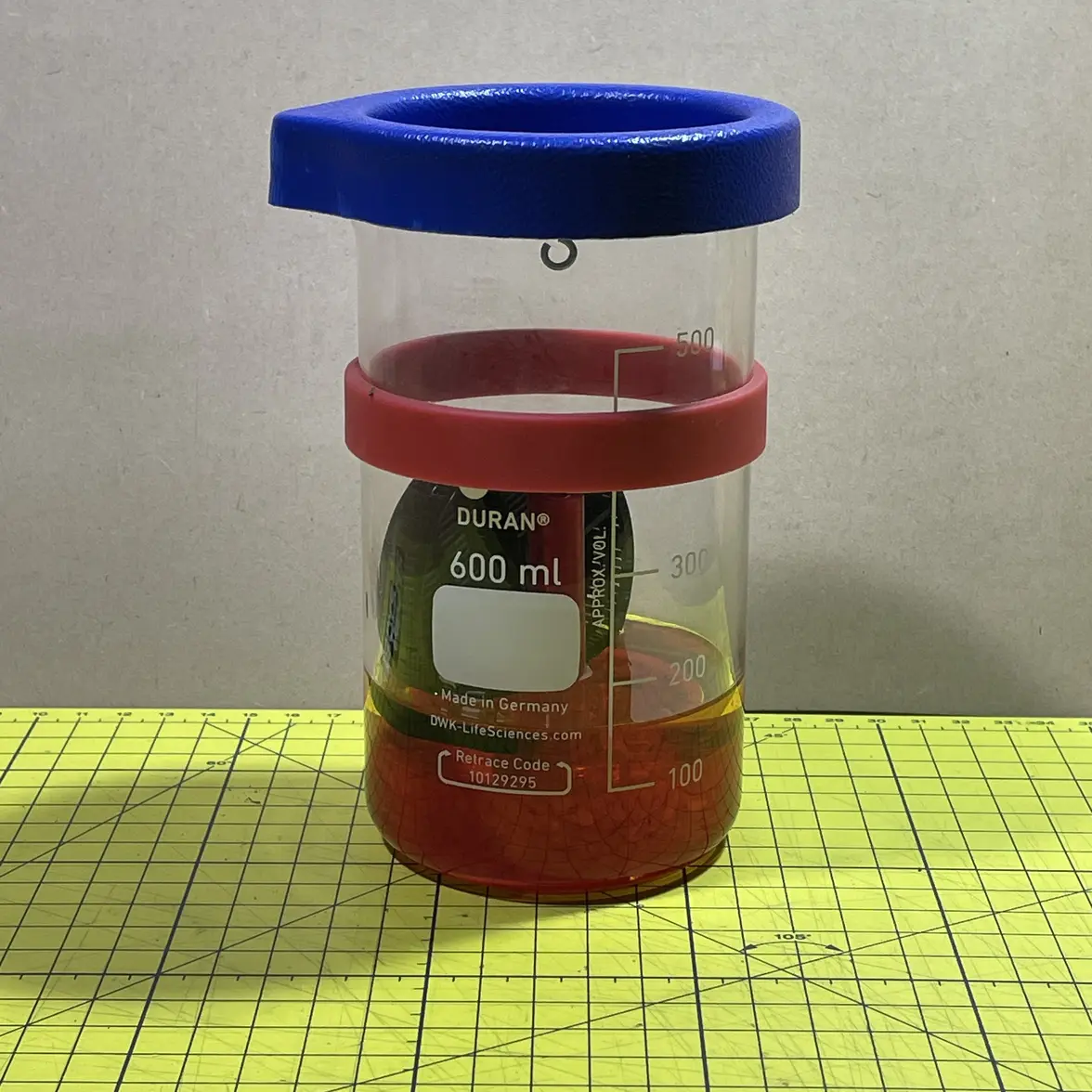
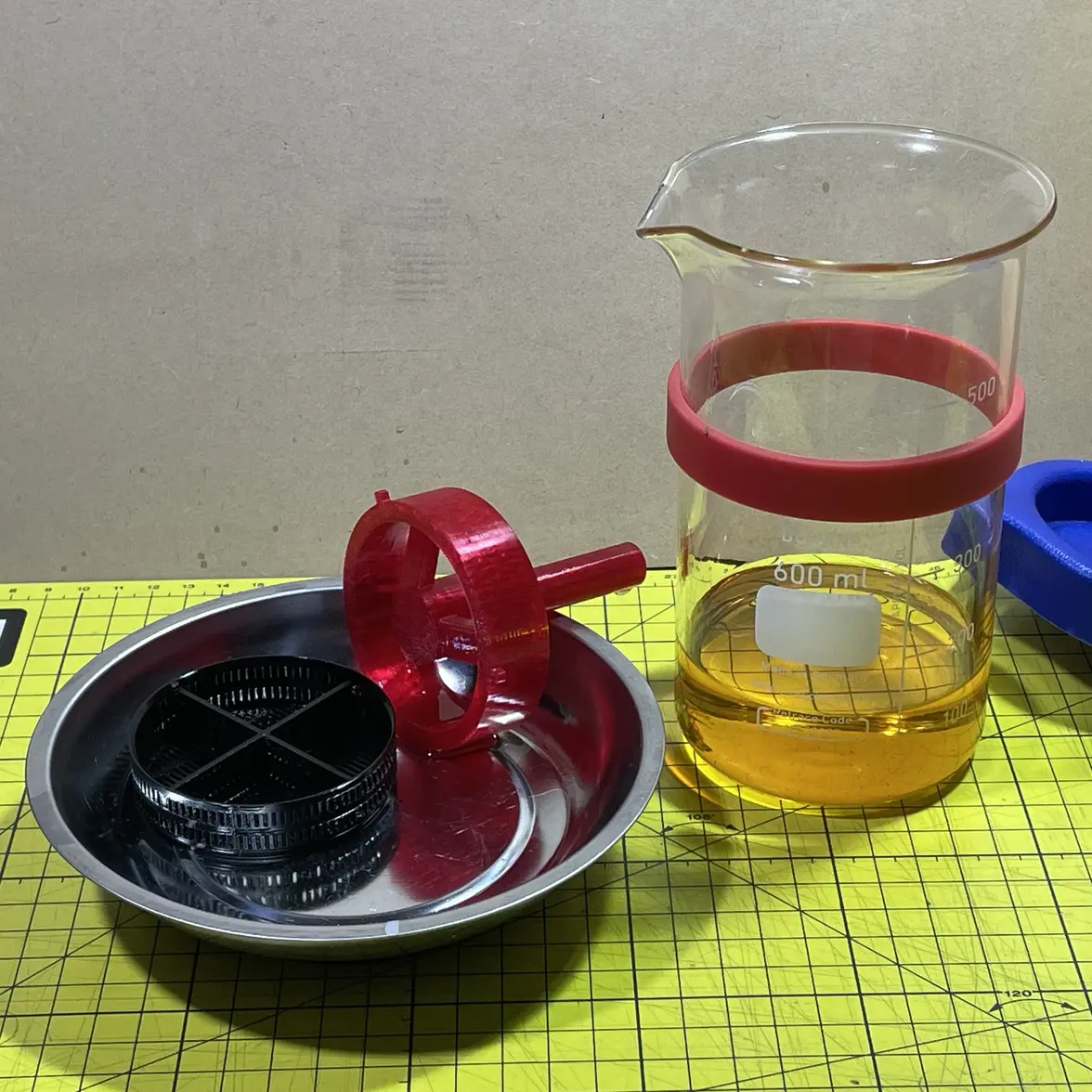
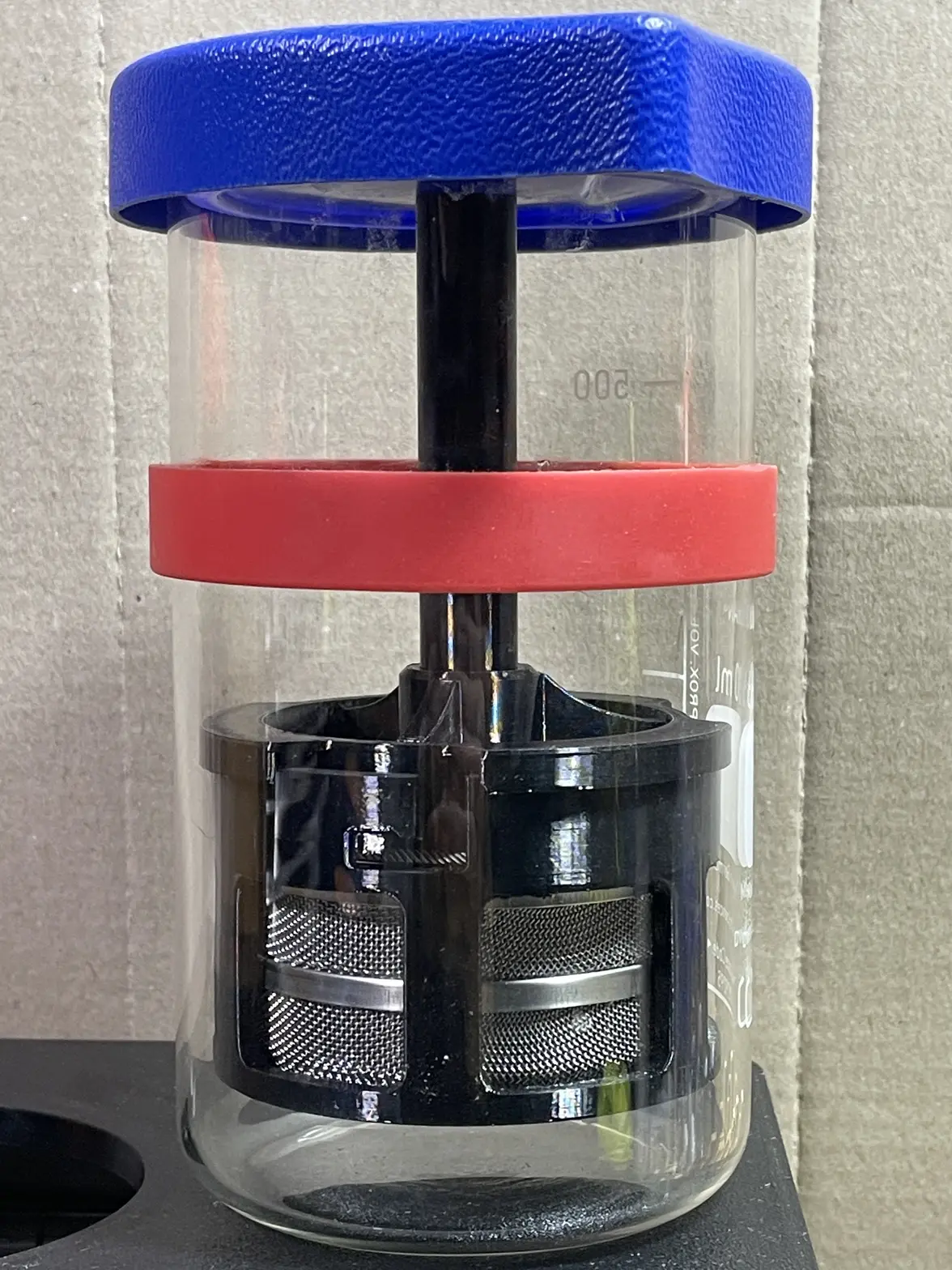
Regarding US cleaning. This is my setup. Shown here with a two basket adapter and 600ml beaker with a silicone ring height restrictor. Cleaning fluid is filled to the bottom of the silicone ring. I also have a short shaft adapter so I can fit an Elma basket if I'm cleaning a mainspring/large object.


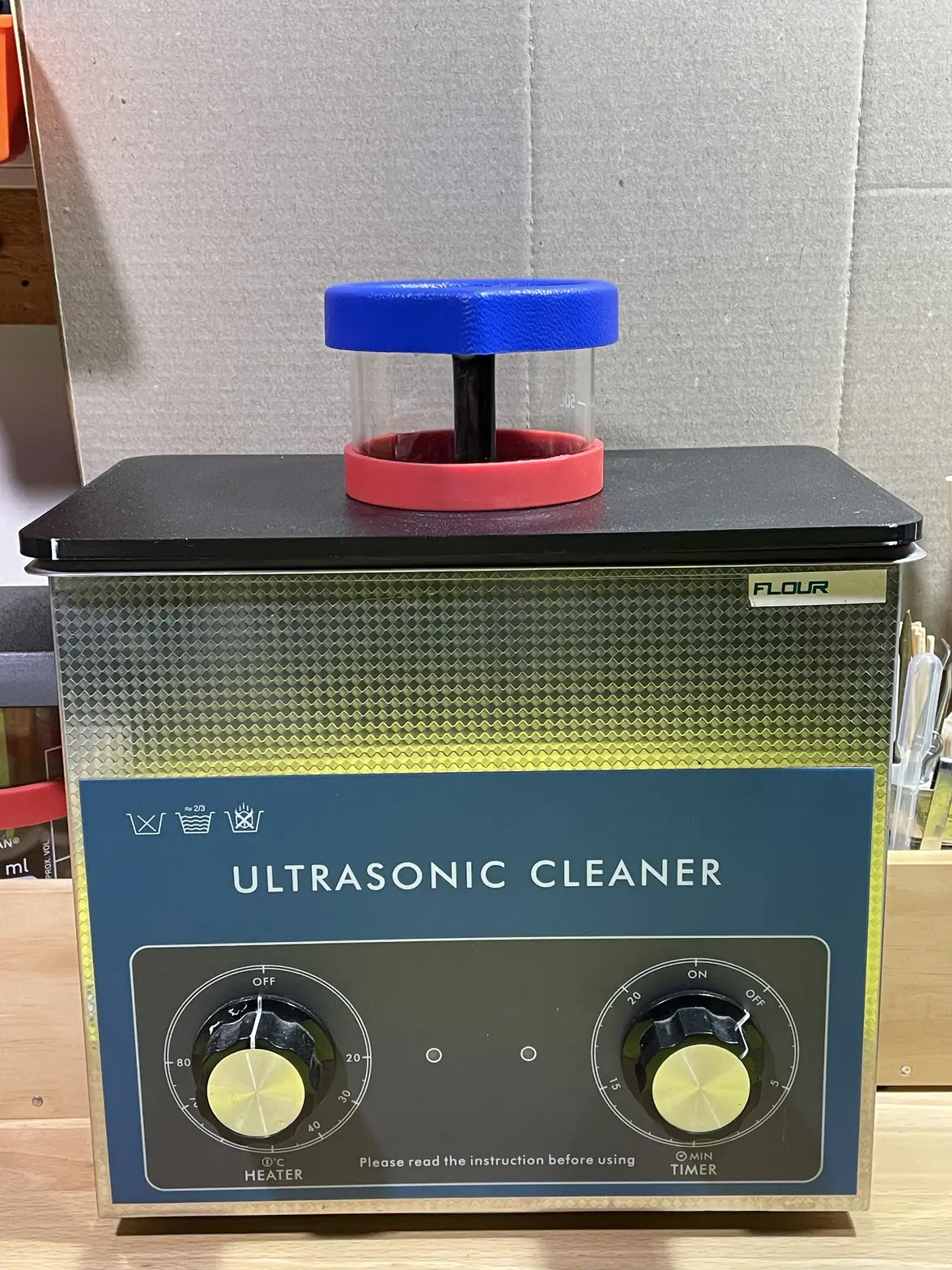
Here it in in operation configuration. When the US finishes I just lift the basket and tilt it to drain, then fit the basket to the Elma for normal cleaning.

Designing an item is often an incremental process based on a concept.
Too many times with aircraft/ship design I've seen "specification creep" happen when somebody in the chain says "wouldn't it be better if we had XXXXX etc".

I think the "Single jar, simple watch cleaning machine for amateur watchmakers" concept is sound, and what's been achieved so far is way beyond our original plans/thoughts/ideas from when we started (mostly due to GG, I just did the simple stuff).

 
Posts
705
Likes
2,070
A bit of a major upgrade regarding the software. Posting this as a "changelog" for who's interested and following the progress. A 2 minute video at the bottom going around in the menu. Watching it in 2x will cut it to a minute 😀

  • Upgraded to a 128x128 OLED (SH1107) to replace the 128x64 (SSD1306). Double the screen estate, which allowed me to do a more complex UI and interactions. In the video the screen is taped to the machine, since I've yet to print a new base.
  • Program times and wash/spin RPM are now editable in each step, and steps can be skipped. Changes persist in flash memory.
  • Times can be adjusted on the fly while the machine is running. These values are for the current cycle only and don't persist.
  • Wash cycle can be paused or stopped completely.
  • Telemetry to keep track of total wash and rinse times, which can help in fluid management. Times can be reset individually.
  • Settings to disable the LED, buzzer, set agitation period, screen brightness, etc.
  • Settings to set the end position of the carriage motor during Wash, Spin Dry, and Dry. This is a cool feature, as the motor does a homing routine and stops at the exact position. Changing the value (shown in millimeters) moves the motor in the new position in real time.
  • Dim the screen after 60s and sleep (off) after a configurable 10 minutes. OLEDs need some babying.
  • Self diagnostics routine on boot to check motor driver communication.

Ideas are welcome of course.

 
Posts
18,293
Likes
38,179
- Have you tested PETG's durability when exposed to strong cleaning solutions? It would be easy to reprint a new basket, but I'm wondering if a steel basket inside a PETG frame would also perform better for the drying cycle.

That's a very valid concern. PETG is relatively inert, but harsh solvents will make it brittle. Even long exposure to IPA. The alternative is Polypropylene, which is indestructible, but that thing is a pain in the a$$ to print. I can do some tests with what I have, but if @JimInOz can help here in putting some PETG cubes of various sizes in a couple of cleaning solutions, that'd be really great.

Regarding the concerns raised.

I've had two PETG items sitting in L&R cleaning solution for two weeks and I can report no evidence of structural integrity being compromised.
Both items appear to be totally unaffected by the cleaner.

 
Posts
2,263
Likes
2,466
I will note that the link above of baskets did NOT fit in my blue elma-clone basket holder, as the baskets were 'too tall' by about 1mm each. I might have to turn them down a little. But some information for you, if you opt on that option, you might wish to add an extra little bit to your spring/basket holder size.
 
Posts
18,293
Likes
38,179
And regarding the cocerns about stink and fumes.

I often use open top beakers in my ultrasonic and haven't noticed any discomfort from fumes.
Yes, there is an odour, but nothing worse that some kitchen/bathroom cleaners.

If GG finds it to be a problem in his environment, I'd suggest using a water based cleaner, distilled water rinse and a final rinse with IPA.
It's probably easier for him to get hold of some Elma Red 1:9 solution too (non-hazardous material).

https://www.labanda.com.au/sites/default/files/msds/elma/Elma-1.9-ProductInfo.pdf
 
Posts
715
Likes
1,694
I just want to chime in and say this was a great read, it's an awesome project, and the amount of constructive and friendly back and forth is great to see. This is a great forum, kudos all around.
 
Posts
705
Likes
2,070
Installed a new adapter for the motor shaft. It's a 75mm long, 5mm ID, and 8mm OD stainless steel tube. I had to drill a hole on one side, so the coupler could screw into the flat side of the motor shaft through it. On the basket adapter side I ground flat (5 second work with a Dremel) a portion of about 5mm where it's grabbed by another coupler. You'll see in the video that it's a bit wobbly, and I'm pretty positive it's from the single grub screw coupler. I've order some new ones with two screws at 90 degrees, which should in theory straighten it up.

The lid is plain plastic, has an oversized 10mm hole against the 8mm shaft, and sits over the lip of the jar. My first test was a tapered lid with a bearing against the shaft, none of which worked that well. This one has such tolerances that it always finds its place. It's a splash lid, not a waterproof one. I think I can add some soft flat gaskets at the bottom (both where it touches the jar and basket adapter) so it can gravity seal fumes better.

All in all, quite happy with the result.

 
Posts
18,293
Likes
38,179
I think that's an excellent outcome.
Most of the wobble seems to be from the basket.
Maybe when you fit the new coupler it will decrease.
Regarding "fumes", I don't think it's worth trying to get a hermetic seal to stop smell.
If it is actual "fumes", you need to vacate the area and grab an extinguisher 😉.

The smell will be more noticeable in the drying chamber anyway, so I think the splash cover is more than adequate.
 
Posts
138
Likes
577
Now this is looking very interesting. As a weekend warrior watchmaker a single jar, simple watch cleaning machine is right up my alley. I'd love to have a full fat version but they look too big and heavy to drag out once a fortnight and far too ugly to keep on the kitchen counter (the missus would not be happy), the ultimate would be a machine that could be collapsed flat to be stowed away.
ATM I use Elma red in a ultrasonic but this would be very handy for the final wash, rinses and spin dry. I'll be keeping a interested eye on this, excellent work.
 
Posts
705
Likes
2,070
the ultimate would be a machine that could be collapsed flat to be stowed away.
Why did you have to say that? Now I'll have to wonder about it for the next 2 weeks...
 
Posts
705
Likes
2,070
Regarding "fumes", I don't think it's worth trying to get a hermetic seal to stop smell.
You're probably right as always. I don't think it hurts though to cut a 2mm thick silicone sheet into a 10cm disc with a 10mm hole in the center, and glue it in the underside of the lid. It maybe helps or it doesn't. Worth a short I think.
 
Posts
2,263
Likes
2,466
You're probably right as always. I don't think it hurts though to cut a 2mm thick silicone sheet into a 10cm disc with a 10mm hole in the center, and glue it in the underside of the lid. It maybe helps or it doesn't. Worth a short I think.
I DEFINITELY notice with my L&R fluid in my office if I leave a cap off. The ammoniated stuff is very stinky.
 
Posts
705
Likes
2,070
the ultimate would be a machine that could be collapsed flat to be stowed away.
Doesn't hurt considering... The point of the 2x 12mm linear shafts is rigidity. Couple that with the thick plastic standoffs and some decent webbing within the base. At 800rpm dry spin, anything less and the whole thing will shake.

Introducing hinges is a can of worms. Hinge the assembly for both linear shafts, right. But what about the lead screw that's coupled straight to the motor?! A nightmare of design.

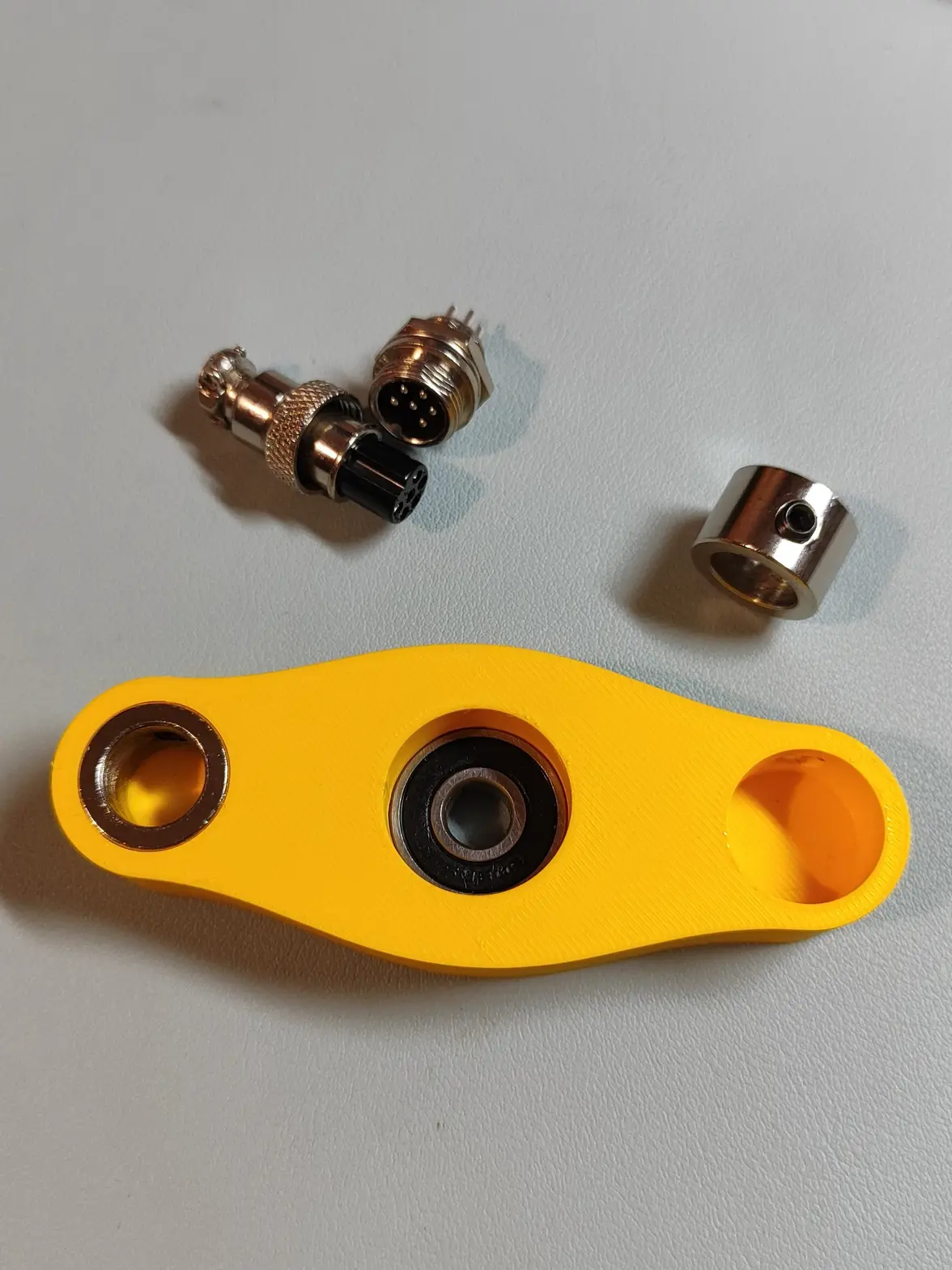
The most realistic approach with minimal design changes, is to use steel collars at the base to hold the shafts instead of the slotted plastic. In fact I'm doing the same thing for the bridge. These collars can sit into the plastic standoffs in a clearance fit, and screwed in place by a single grub screw. I'm planning to also add GX12 connectors for the base to head unit connection. Removing the whole carriage (shafts, lead screw, head unit) means disconnecting the connector, remove 2 grub screws from the shaft collars, and 2 screws from the lead screw coupler. Literally a minute of work. You can place the whole thing on top of the base and store it somewhere.

 
Posts
2,263
Likes
2,466
IMO, the folding nature of it isn't particularly valuable for it. You have to store a jar ANYWAY, and this doesn't take up much more room than a jar. I think you'd get more 'storage efficiency' from a 'storage mode' where it drops the head into the jar that it is 'holding' in order to minimize space. An additional idea is some sort of printed 'ridge' along the edge to hold a jar on top of it, so you could have 2 jars stored in the X/Y space of the machine.
 
Posts
705
Likes
2,070
I think you'd get more 'storage efficiency' from a 'storage mode' where it drops the head into the jar that it is 'holding' in order to minimize space.
Jinx! I was thinking the same exact thing today.
 
Posts
138
Likes
577
Doesn't hurt considering...
Oh bugger this is that "specification creep" @JimInOz was warning about. I think you've got an excellent machine as is, it does exactly what you set out to achieve (and more) and I wouldn't mess about with it and make it any more complicated than it needs to be as it would defeat its purpose.
My "ultimate" remark was an off the cuff thought. Now I know why nobody should listen to me! :whipped:
 
Posts
705
Likes
2,070
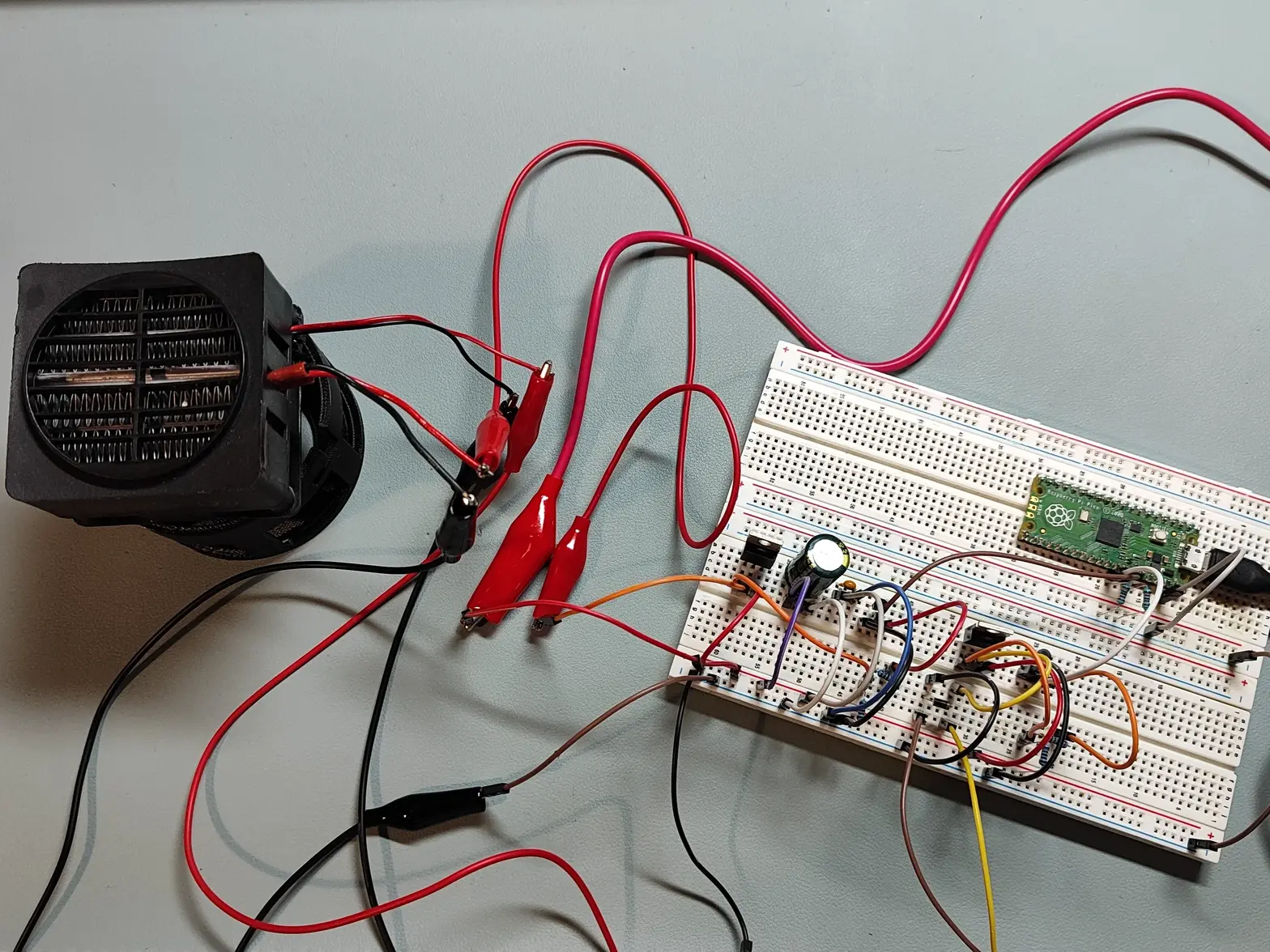
Prototype for the heater worked great. You probably can't tell that from the mess of wires...

My original issue was that even though it's a 80w ptc heater, cold inrush current may still succeed 10 amps, tripping my 6a power supply.

Solution is to send 20khz pwm and ramping up the duty cycle slowly over 10-15 seconds. That way current pull is kept under control. The mosfet handles the switching, controlled by the pico through a transistor. There's 2 sets of mosfets because the fan is controlled separately, so that it runs after the initial ramp up of the heater. Next is to wire in a thermistor to monitor chamber temperature.

I'm hyped because finalizing this prototype let's me wrap up the pcb design ::stirthepot::

 
Posts
18,293
Likes
38,179
You need to get rid of the alligator clips and use proper connectors, and that breadboard will never fit in the base of the machine, you need to make a new power supply box.
😉

Have you thought about having a tune play while the cleaner is running, something simple like Greensleeves?

(I love triggering ideas that people grab on to and think, "I'll have to see if I can do that").
😅
 
Posts
705
Likes
2,070
Have you thought about having a tune play while the cleaner is running, something simple like Greensleeves?
Think a simple monophonic tune will work, or should I invest in a proper amp + speaker? 😂
 
Posts
705
Likes
2,070
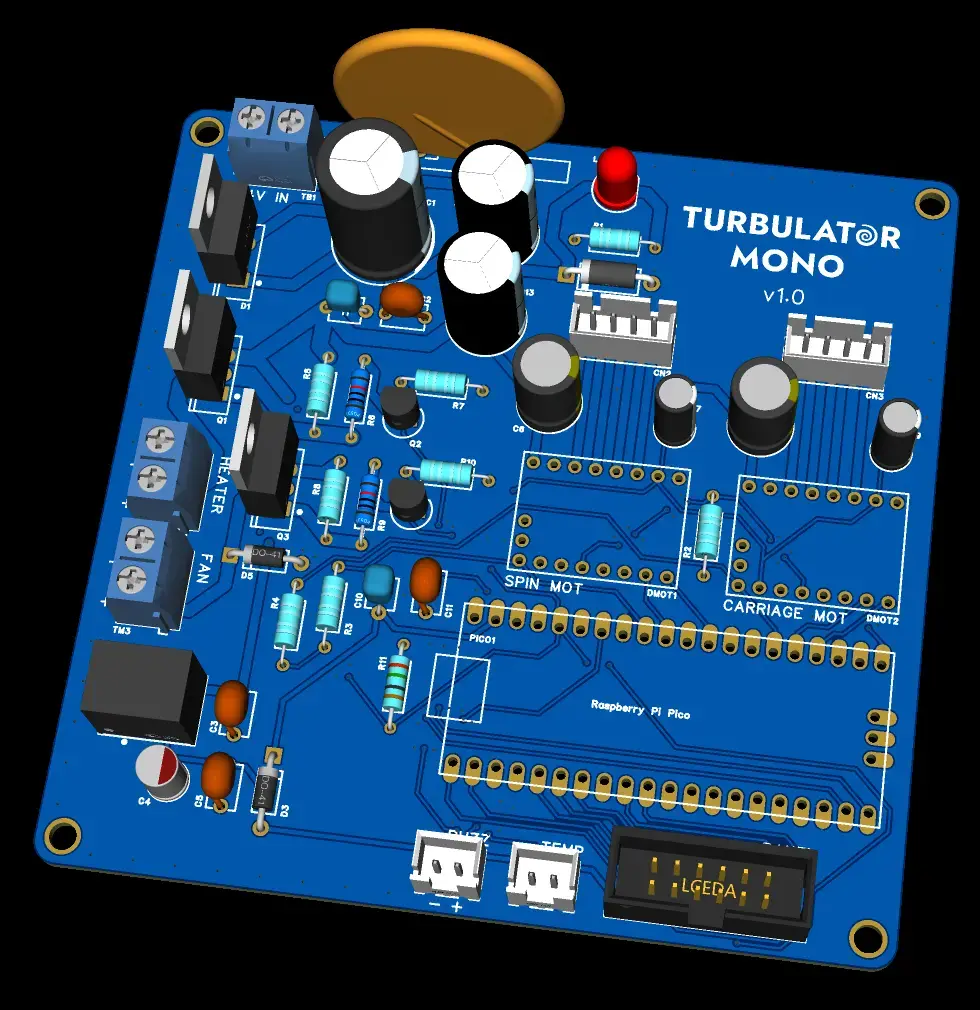
A bit of a milestone. The main PCB is done. As absolutely-not-an-expert, it meant a lot of reading and exploring around to manage a safe schematic and a decent looking board. Some of the features:

  • PTC fuse for over current protection.
  • Reverse polarity protection.
  • Transient/surge voltage suppression (spikes from the supply and motor switching).
  • Bulk and filter caps all around: front end, heater control, motor drivers, buck converter.
  • Heater and heater fan control with FETs. Safely tuned to ramp up slowly to prevent cold inrush overcurrent.
  • Fail-safe power up. Motor drivers and heater/fan combo are not energized at boot.
  • Thermistor connection for the heater module to monitor chamber temperature.
  • Motor drivers communicating with the Pico via bidirectional UART.
  • Back-feed protection on the Pico's 5v feed (VSYS). The Pico can be safely flashed with the machine turned on.
  • High current connections with terminal blocks. Motors, buzzer, and thermistor with JST connectors. Control panel with a 12 pin IDC connector.
  • 24v, 5v, and 3.3v rails.
  • All through-hole components. This was a conscious choice to keep the board easy to solder even for the inexperienced. There are 36 simple components, 8 connectors, and 3 boards (Pico + 2 TMC2209 Stepsticks). About 180 solder joints in total, which should be 2-3 hours for a first-timer, and probably under an hour for the experienced.


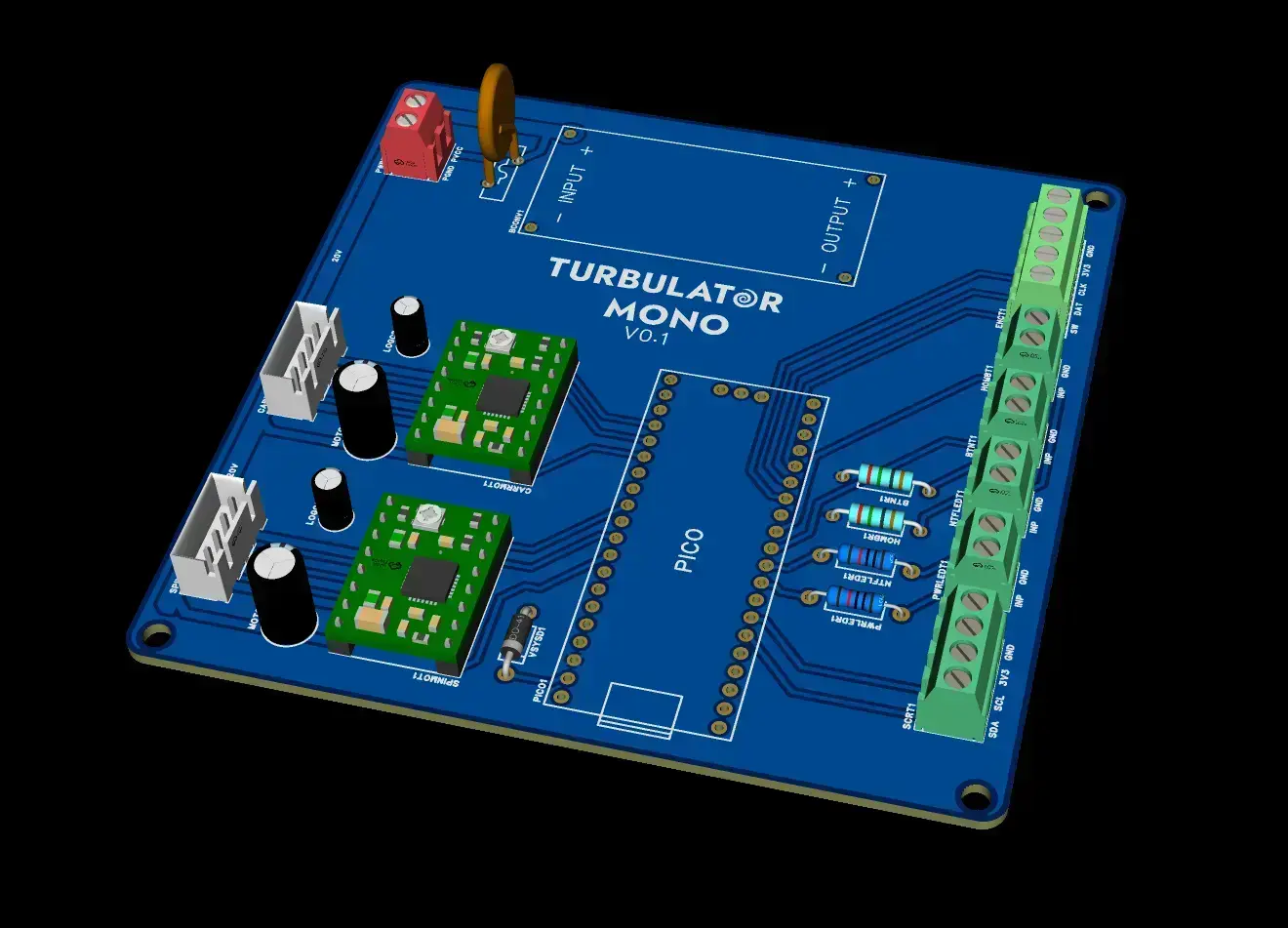
A year ago for my first prototype, I designed the following board. A naive attempt, but it got me here.


Next is the control panel daughterboard. I'll share that when I have something to show.
Edited: