- Posts
- 7
- Likes
- 0
Please consider donating to help offset our high running costs.
Happens quite often on bracelets worn regularly.
Dust gets into the bracelet nooks and crannies, and if you also have perspiration/moisture you have a nice grinding compound.
That, coupled with pressure and movement when the watch is worn can wear the steel away over time.
Depending on where it's worn, sandy/dusty versus a benign environment could affect the rate of wear.
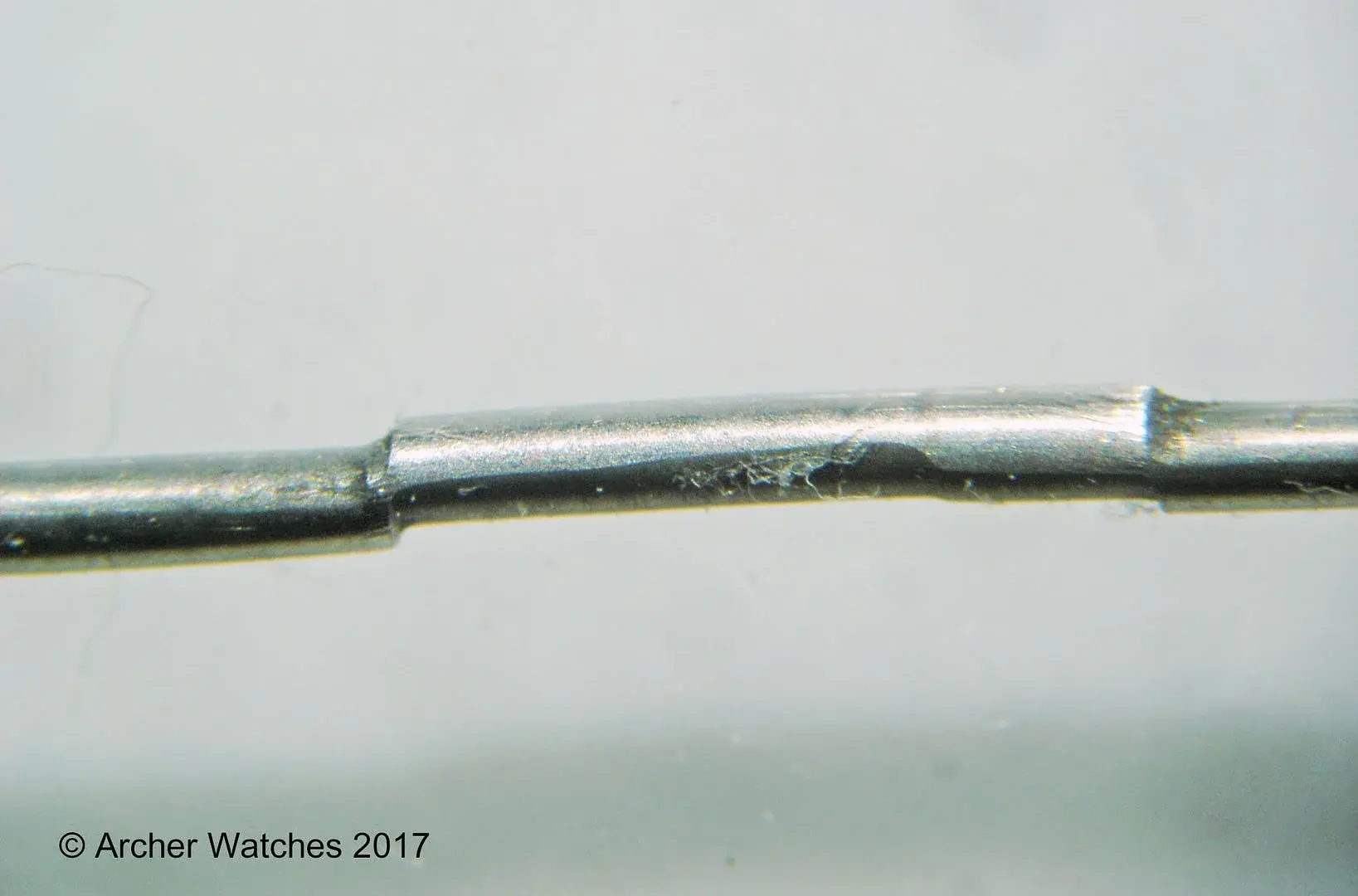
There are some examples of Rolex bracelets with a wild amount of wear on the pins. The pic below is a section of jubilee bracelet. The pin was a cylinder at one time. Now it looks like a beaver gnawed on it. That's years of grit getting between the pins and links and grinding away at the pin like sandpaper.
Stretch in a watch bracelet (for the most part) isn't from being pulled apart, it's from internal friction wearing down the pins.
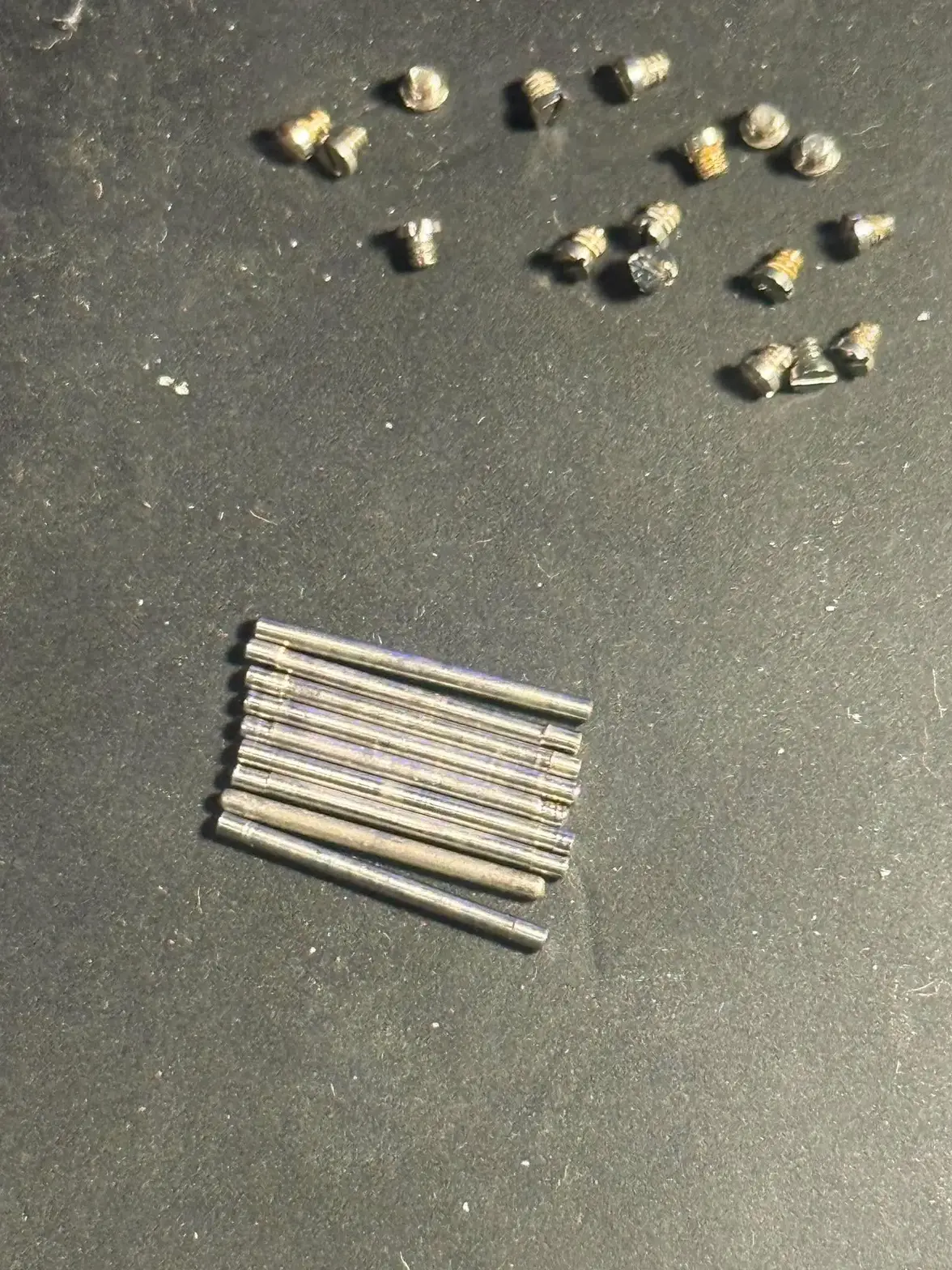
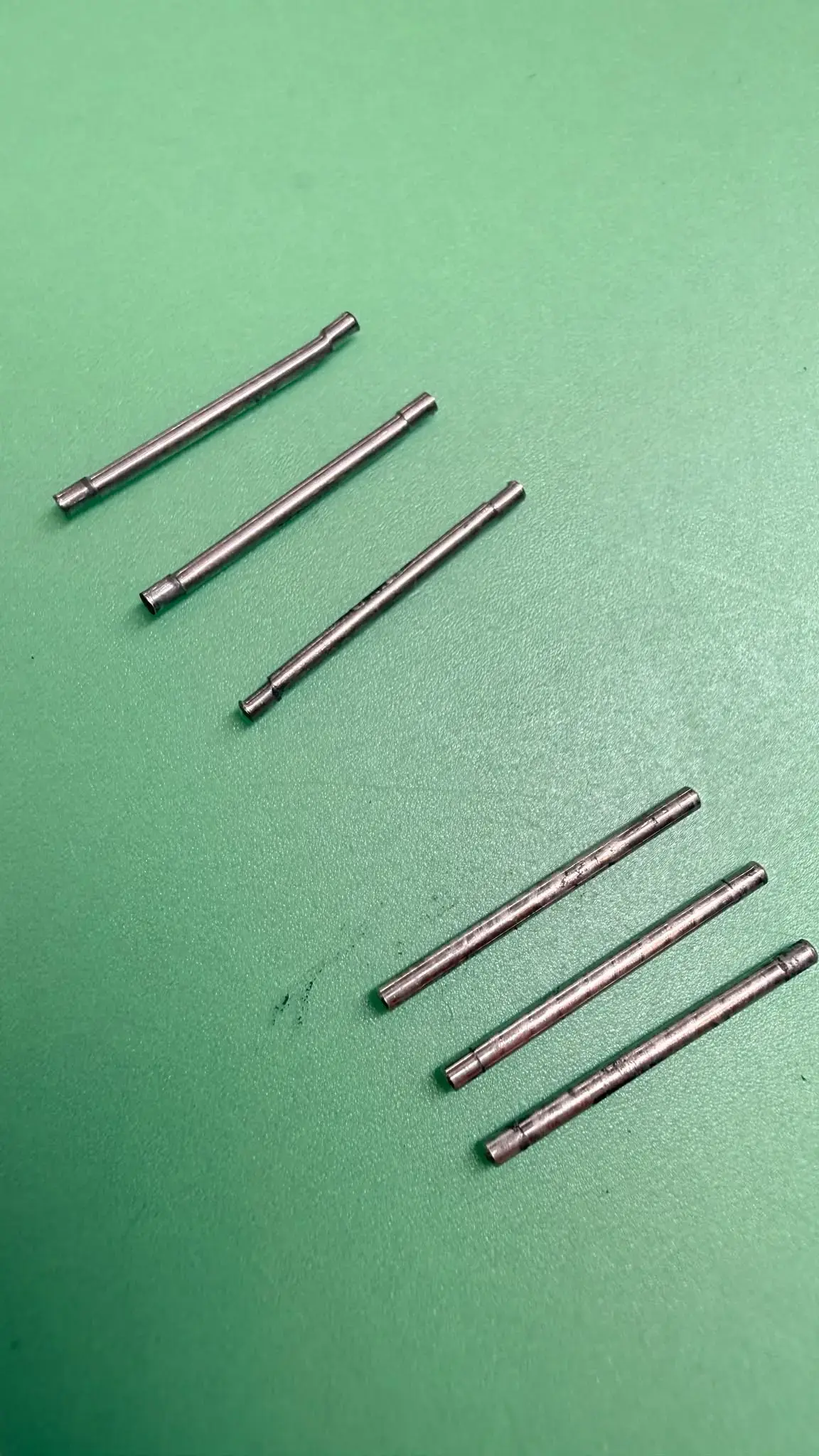
Thankfully with an Omega bracelet such as yours the pins can be easily replaced.
There are some examples of Rolex bracelets with a wild amount of wear on the pins. The pic below is a section of jubilee bracelet. The pin was a cylinder at one time. Now it looks like a beaver gnawed on it. That's years of grit getting between the pins and links and grinding away at the pin like sandpaper.
Stretch in a watch bracelet (for the most part) isn't from being pulled apart, it's from internal friction wearing down the pins.
Thankfully with an Omega bracelet such as yours the pins can be easily replaced.