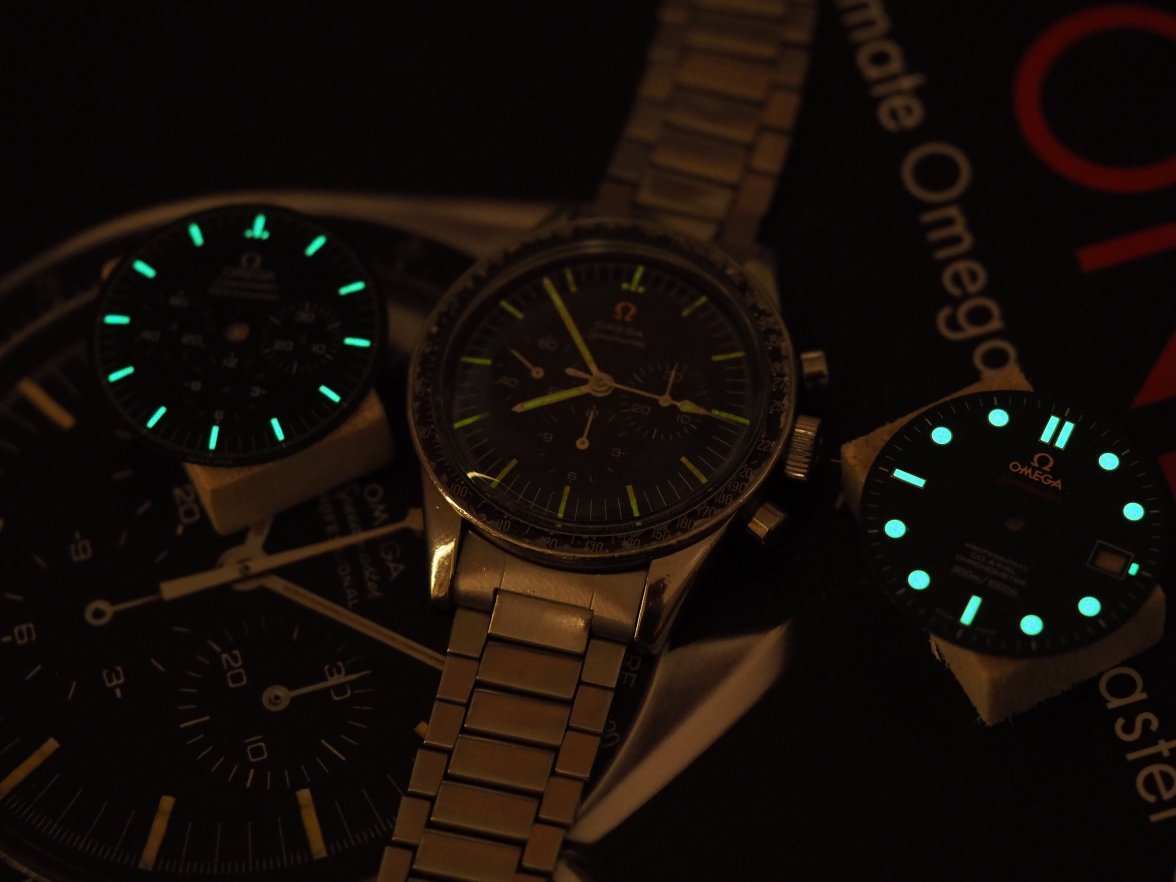
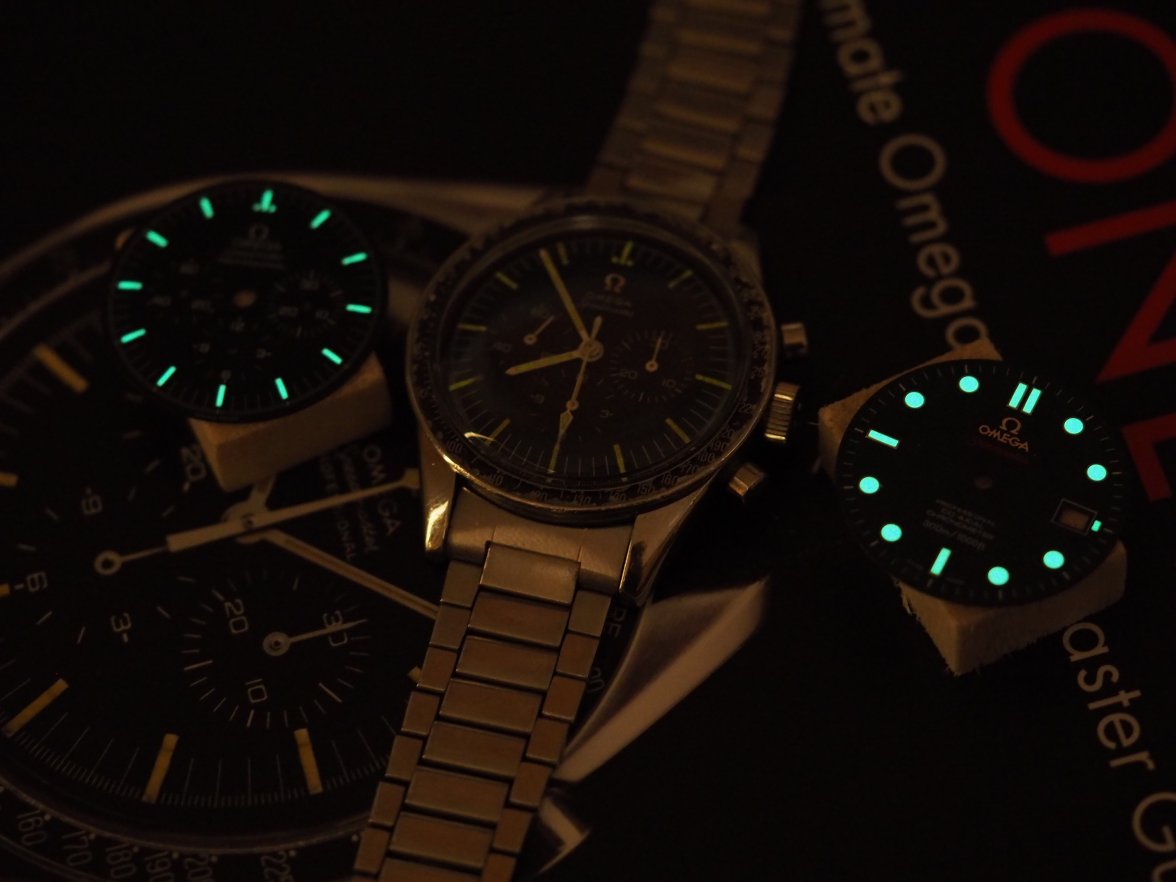
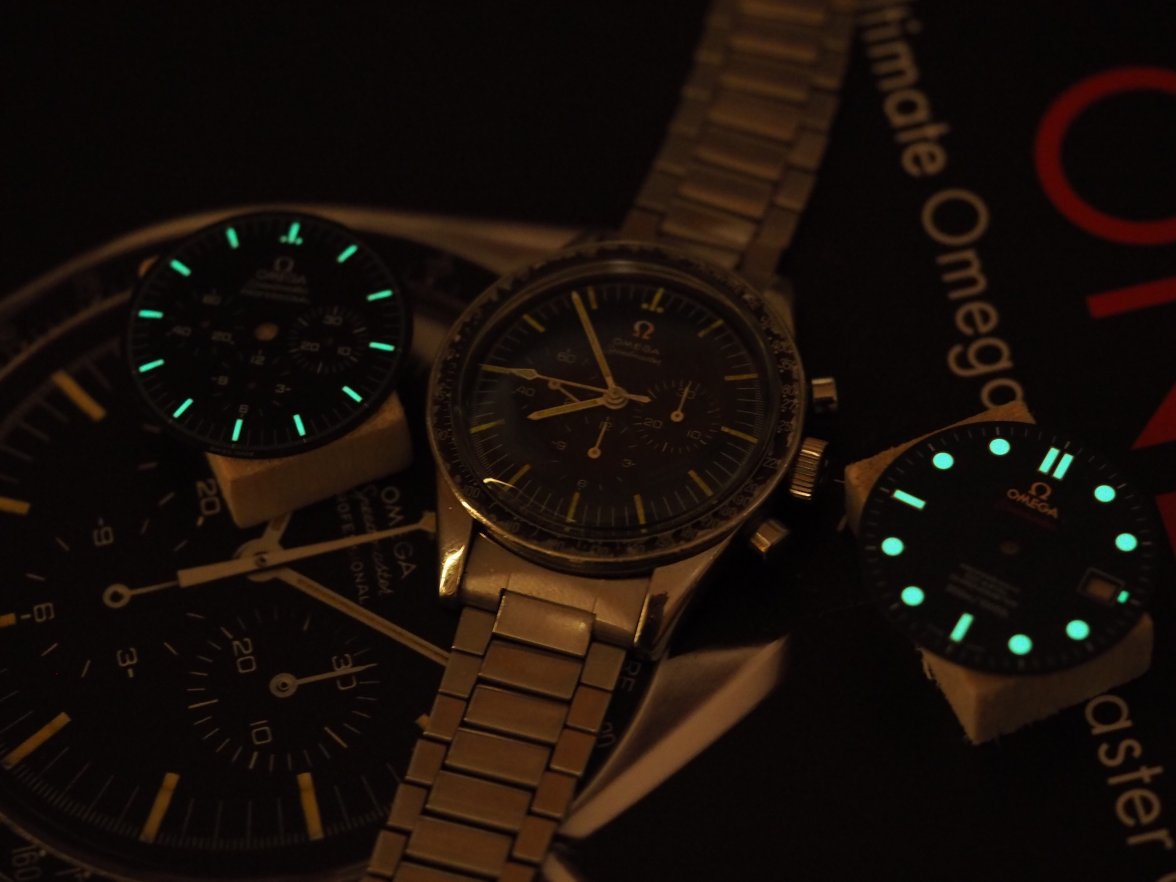
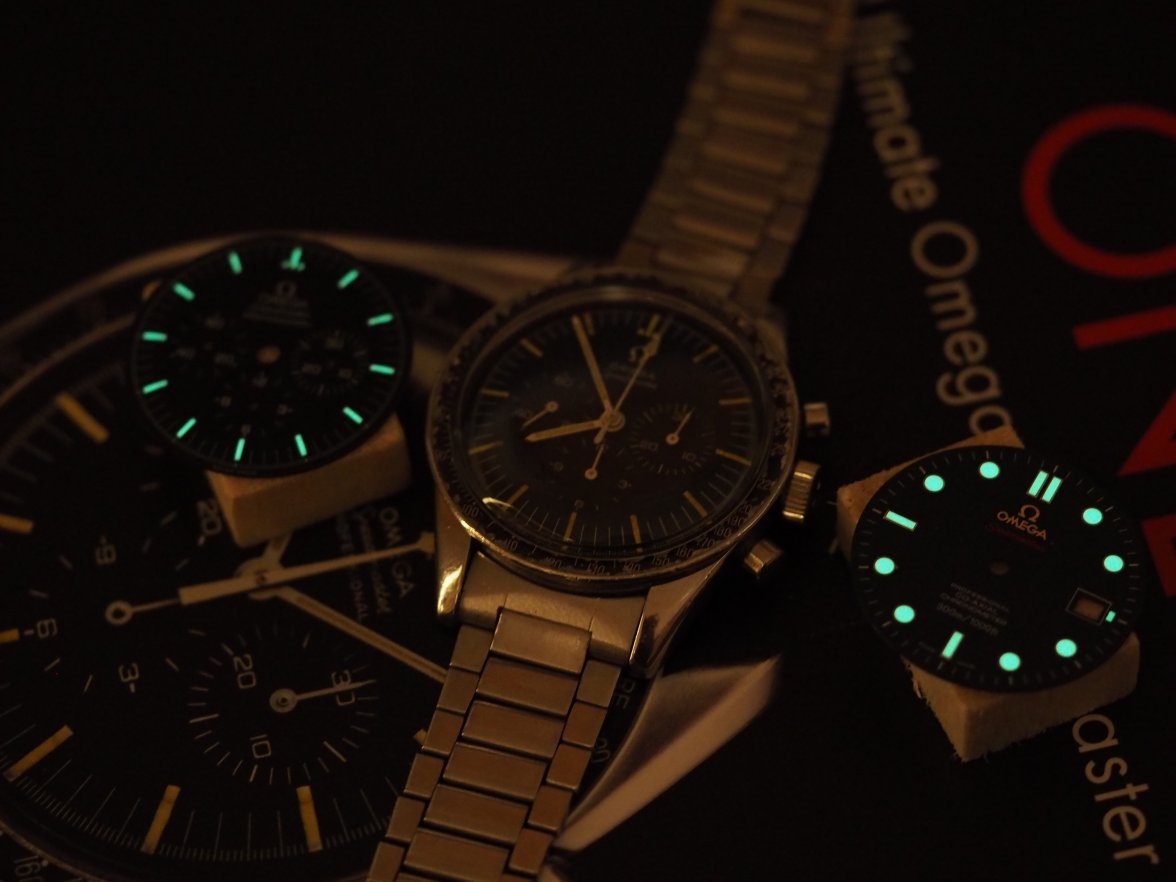
You may well ask what the first sin is. That's easy, case refinishing...
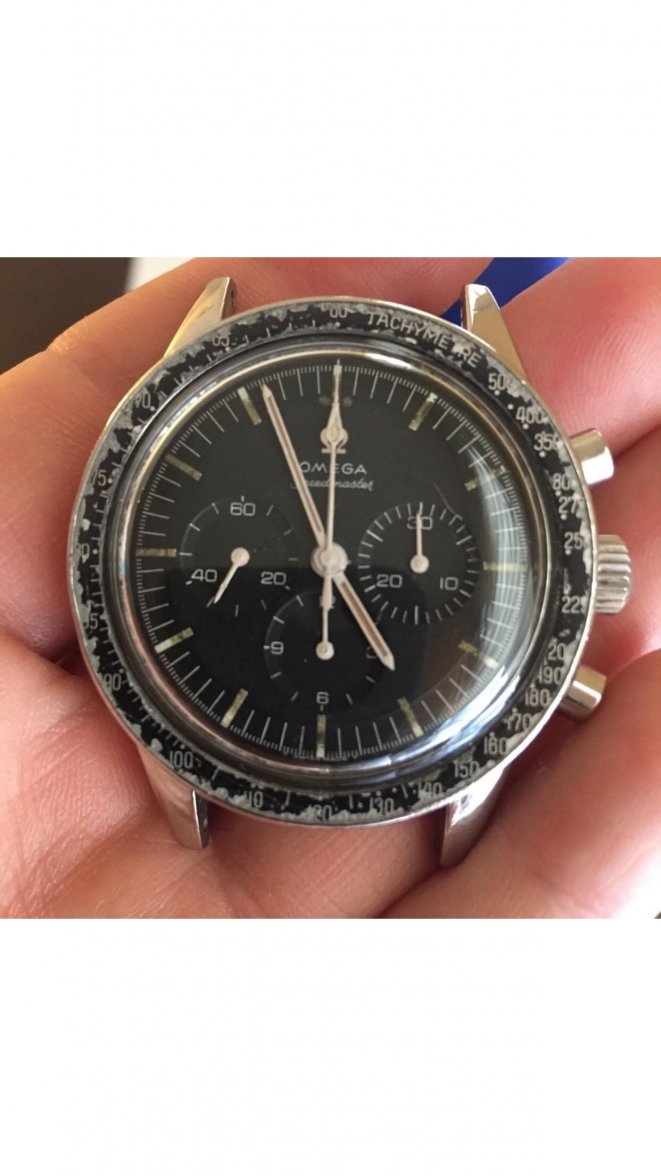
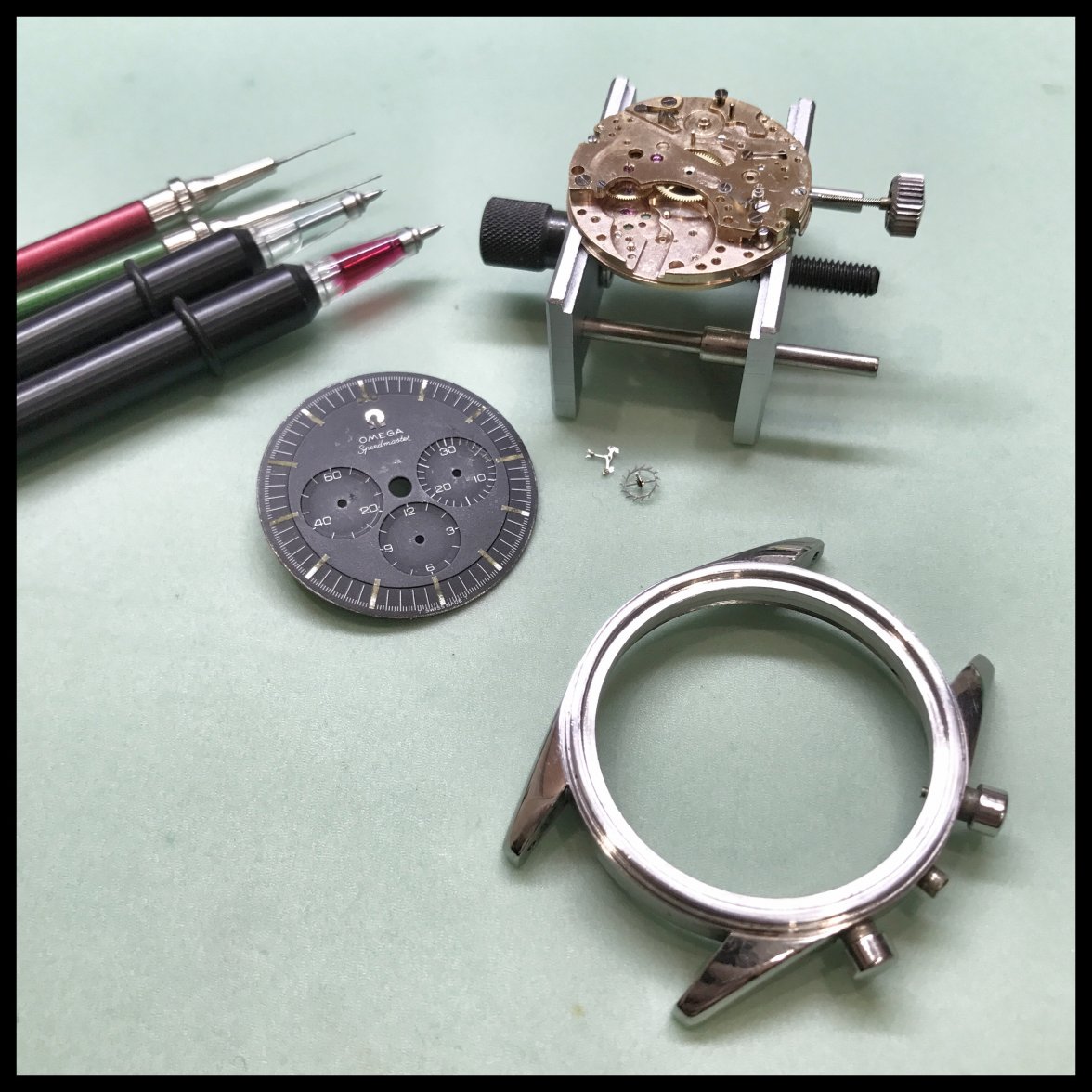
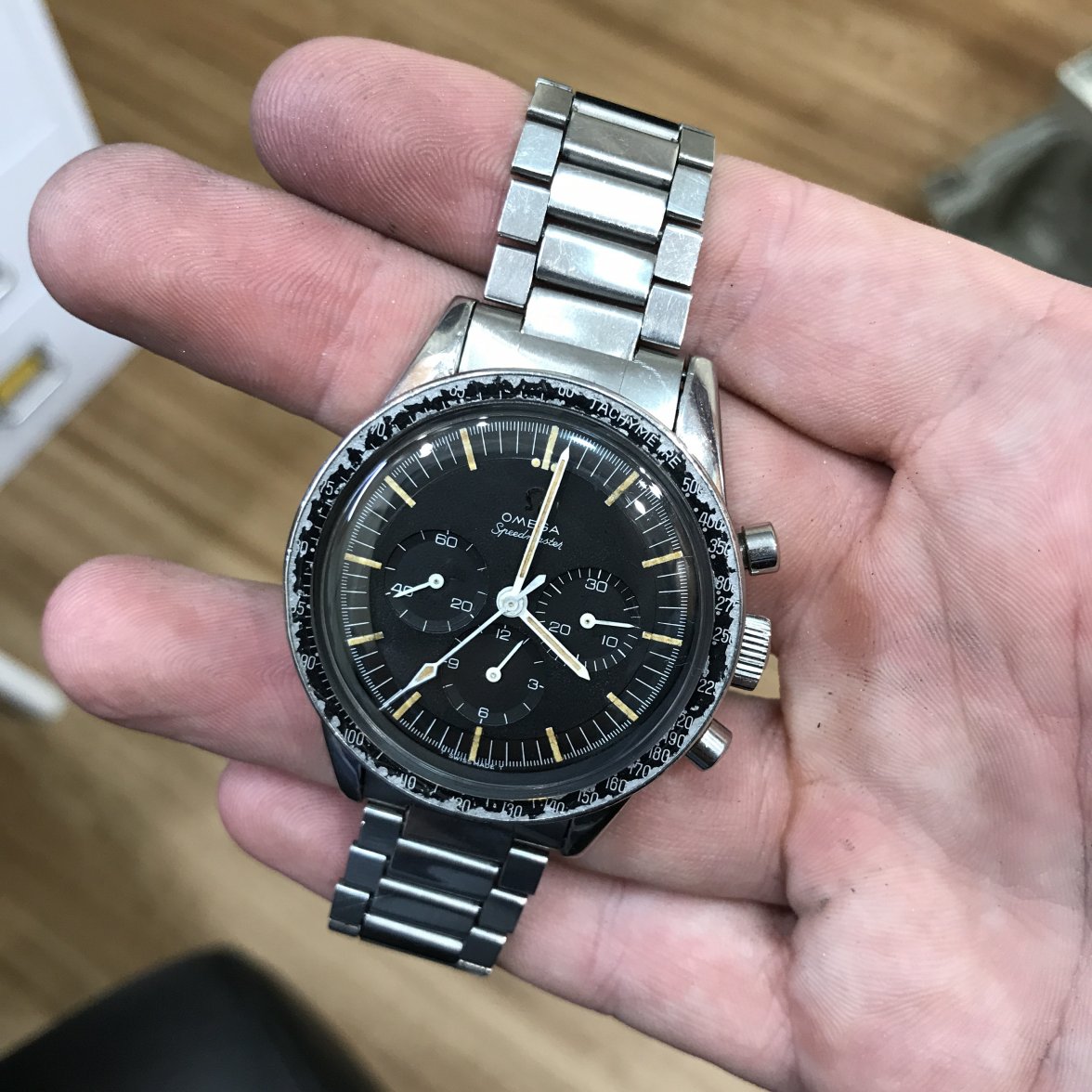
I've just had the pleasure of acquiring an Ed White Speedy in need of some work. Just the usual issues with a lazy 12 hour counter reset and poor positional time keeping -;is general grubbiness. It had been serviced in October 2016 somewhere in New York but I doubt much time or effort was invested. It seems that particular watchmaker was a fan of graphite grease as it was liberally smeared pretty much everywhere.
Anyway, the servicing went fairly well as expected and then came the issue of what to do with the hands which had been repainted in gloss / satin white with brown paint instead of lume. I stripped them of their paint and put them to one side.
The dial had a reasonable amount of lume intact but it was of the green black variety which to me signals contamination with oils at some point.
Some time ago I got obsessed with researching the type of paint used on these and other tritium dials and managed to actually find some. The main aim of the research was to find out why the colour changed over time. I was also curious why some old dials still glow a bit and others are totally dead.
As a very quick summary it appears to be because of moisture in the air rather than keeping the watch in a dark place. Also the variability of the amount of tritium actually used in the paint appears to be a factor. Tritium can only be made in useful quantities in a nuclear reactor, it is therefore horrifically expensive.
Old dials do sometimes glow and sometimes they do not. It is not a definitive answer to whether or not a dial has been relumed with non glowing paint. Using a black light will tell you if the paint is the correct type.
So I decided to relume this Ed White..... Reluming with superluminova has never had any appeal to me. If I'm going to do something I want to do it the way the factory did or at least get the result they got.
The paint I used is essentially identical to what the watch companies used and is made from Zinc Sulphide. Or in other words Zinc and Sulphur powder set alight which performs a chemical reaction. It is often 'doped' with copper to increase the glow.
On its own this paint glows feebly compared to superluminova but in its day this way pretty good stuff and obviously safer than radium. The downside is that the glow does not last very long after exposure to light and so the tritium was added. Again on its own tritium does not glow but in the paint mix it bombards the ZnS crystal structure causing a kind of phosphorescence which glows until the tritium becomes exhausted or it degrades the crystal structure to a point where it no longer works.
Tritium has a very short half life and in watches this old it is debatable whether it can even be detected. It is certainly not active in making phosphorescence within the ZnS.
So if your old watch still glows a bit then goes dim all that's happening is the light is exciting what's left of the ZnS crystal structure - the Tritium is gone, long gone.
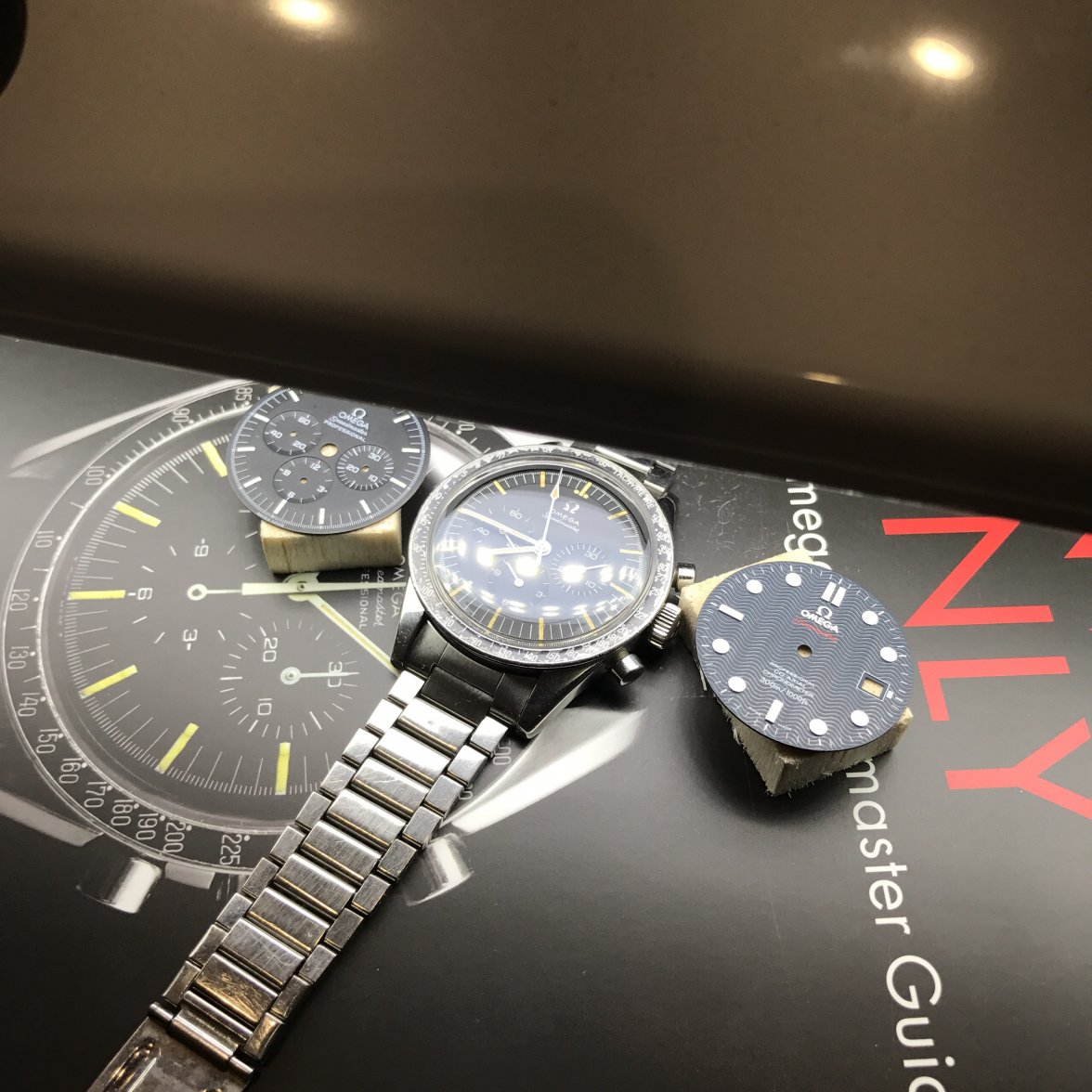
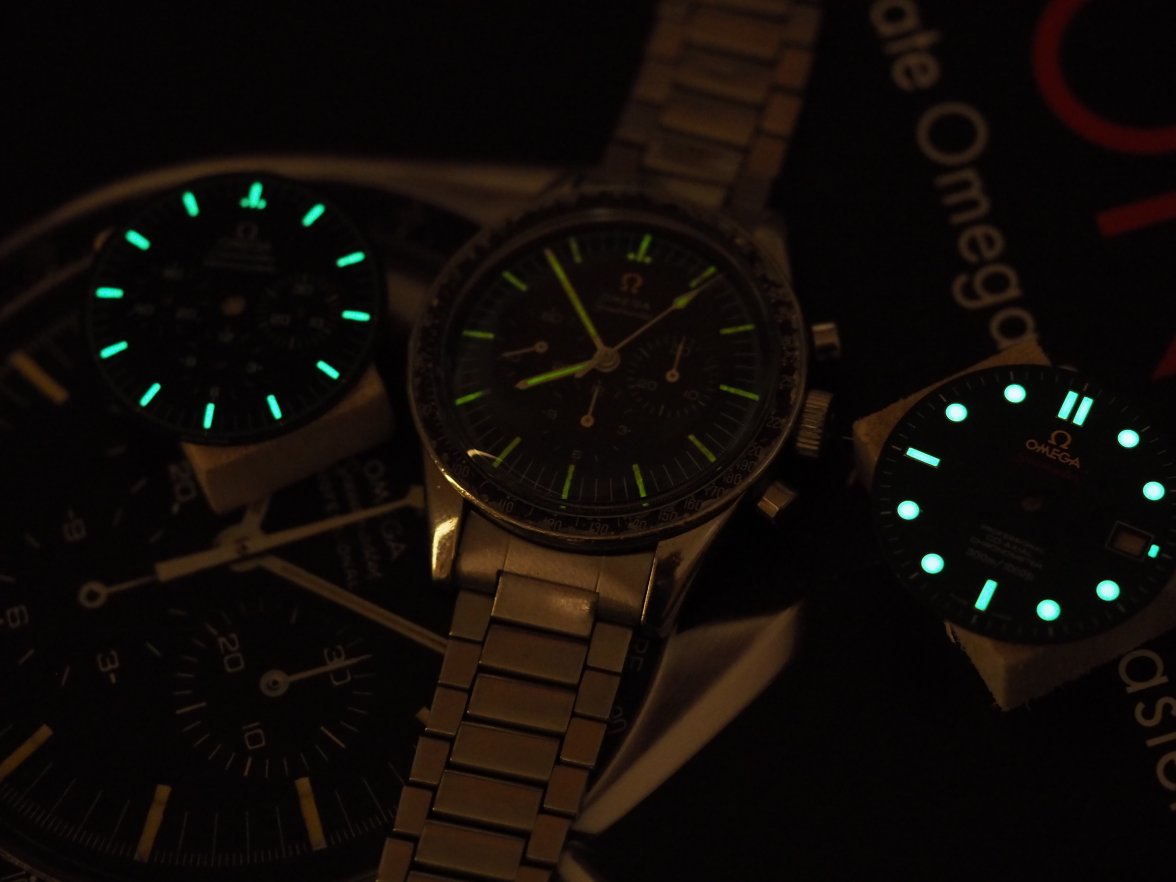
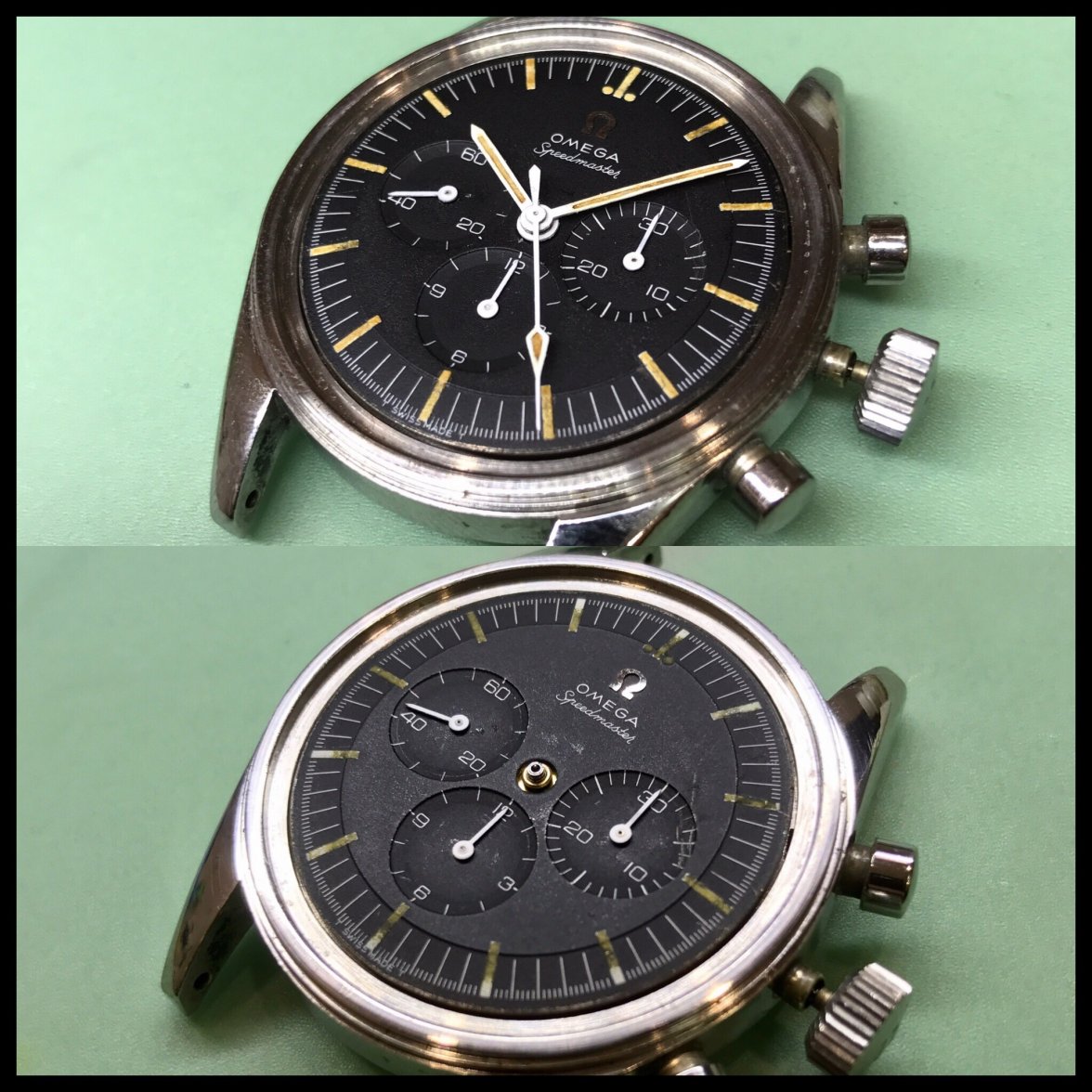
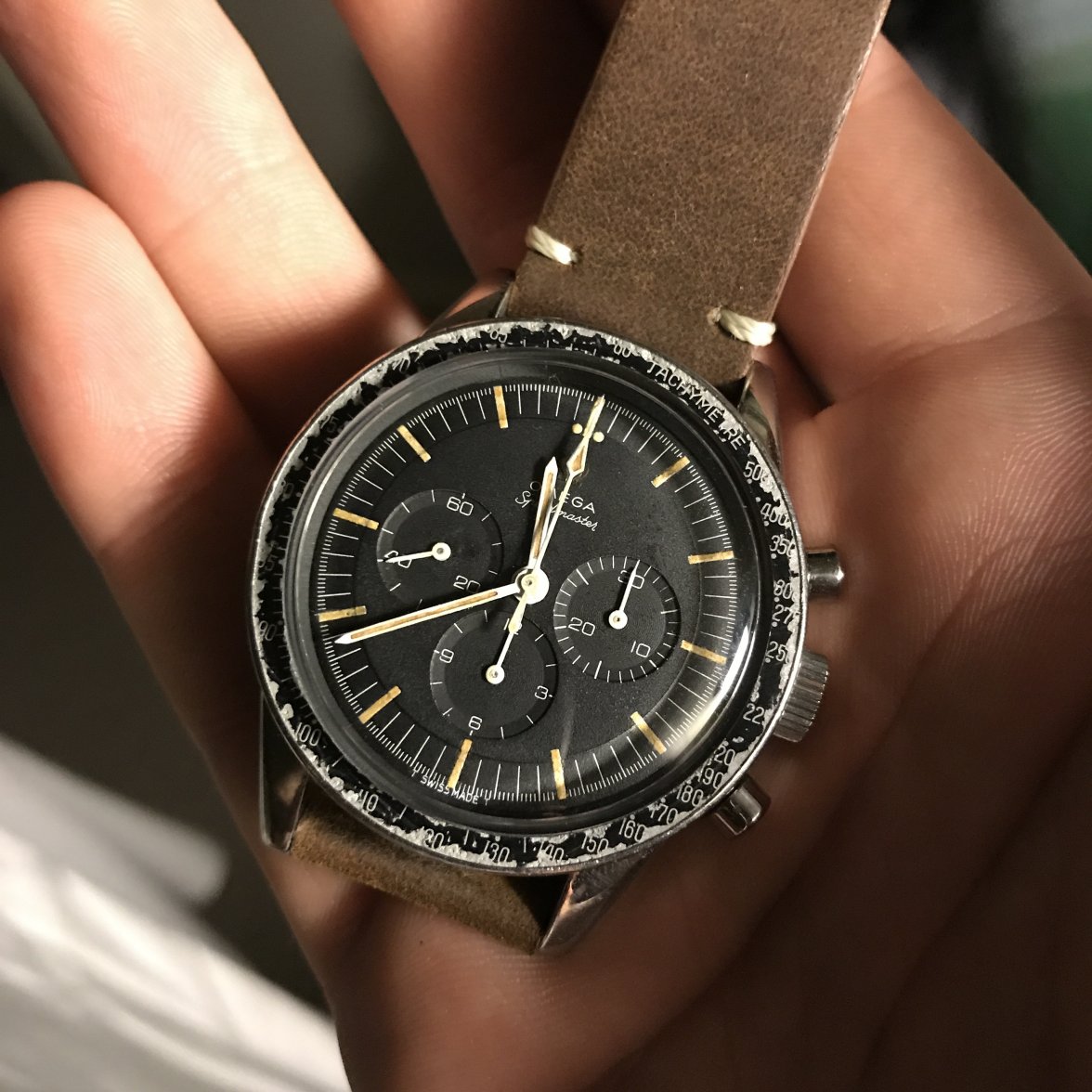
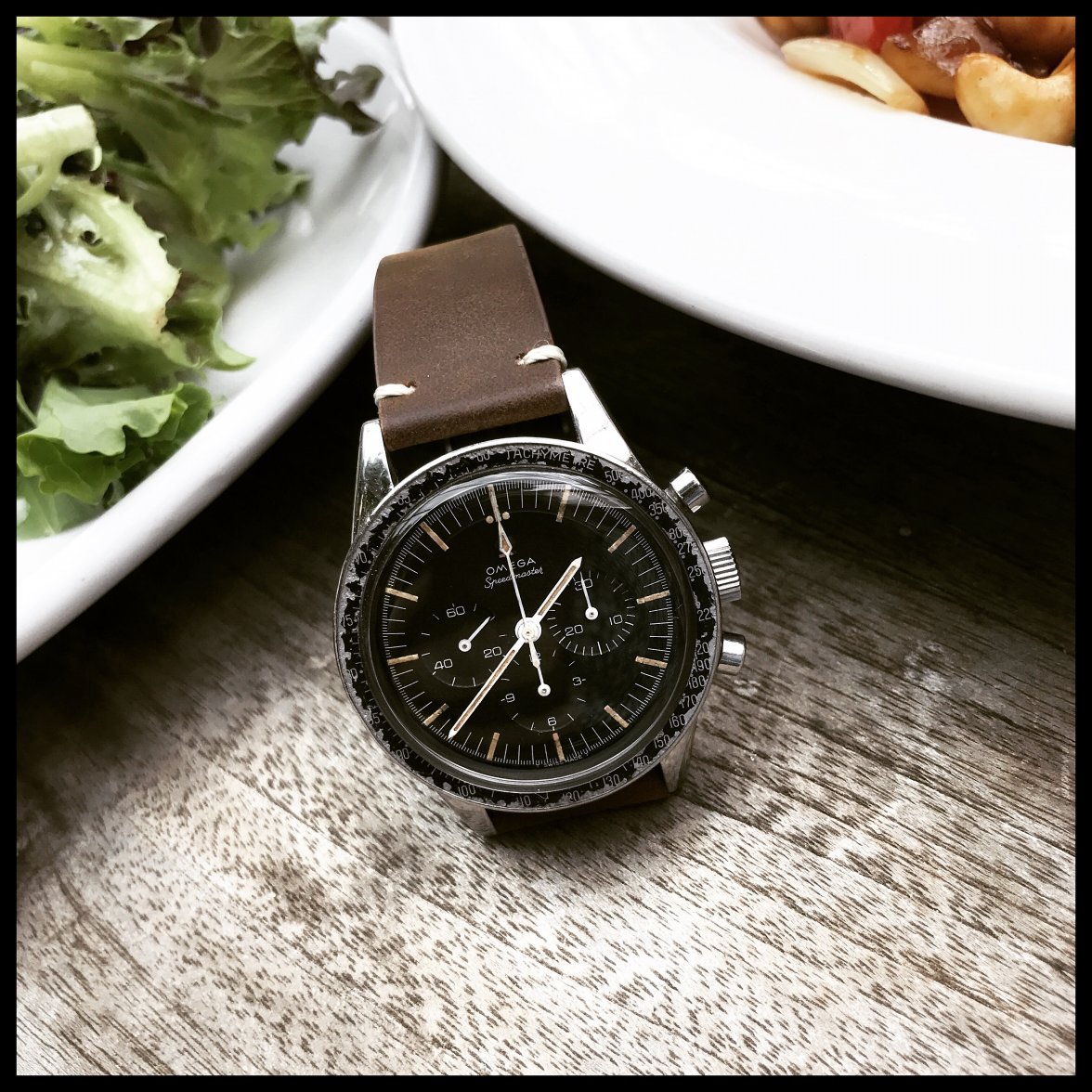
Anyway, the results are below. I have aged the new paint and mixed it partly with what was left on the dial.
Under black light this will behave like the original paint, because it is the original paint. Over time it will age like the original paint too, it has the same granular structure and opacity.
As with refinishing, my opinion is that a relume can be done in keeping with the character of the watch. I've proved time and again that a carefully and properly refinished watch sells for often much more than the beat up original one. I believe that a relume done with the original materials can also add value, not detract.
Gee I must like to be controversial huh. Actually no, I'm just trying to do things properly. It's taken a lot of research, time and effort to get to this stage.
In the pics I did redo the centre seconds hand a bit so you may see some differences there.
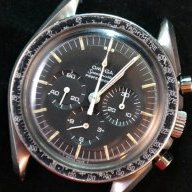
As delivered;
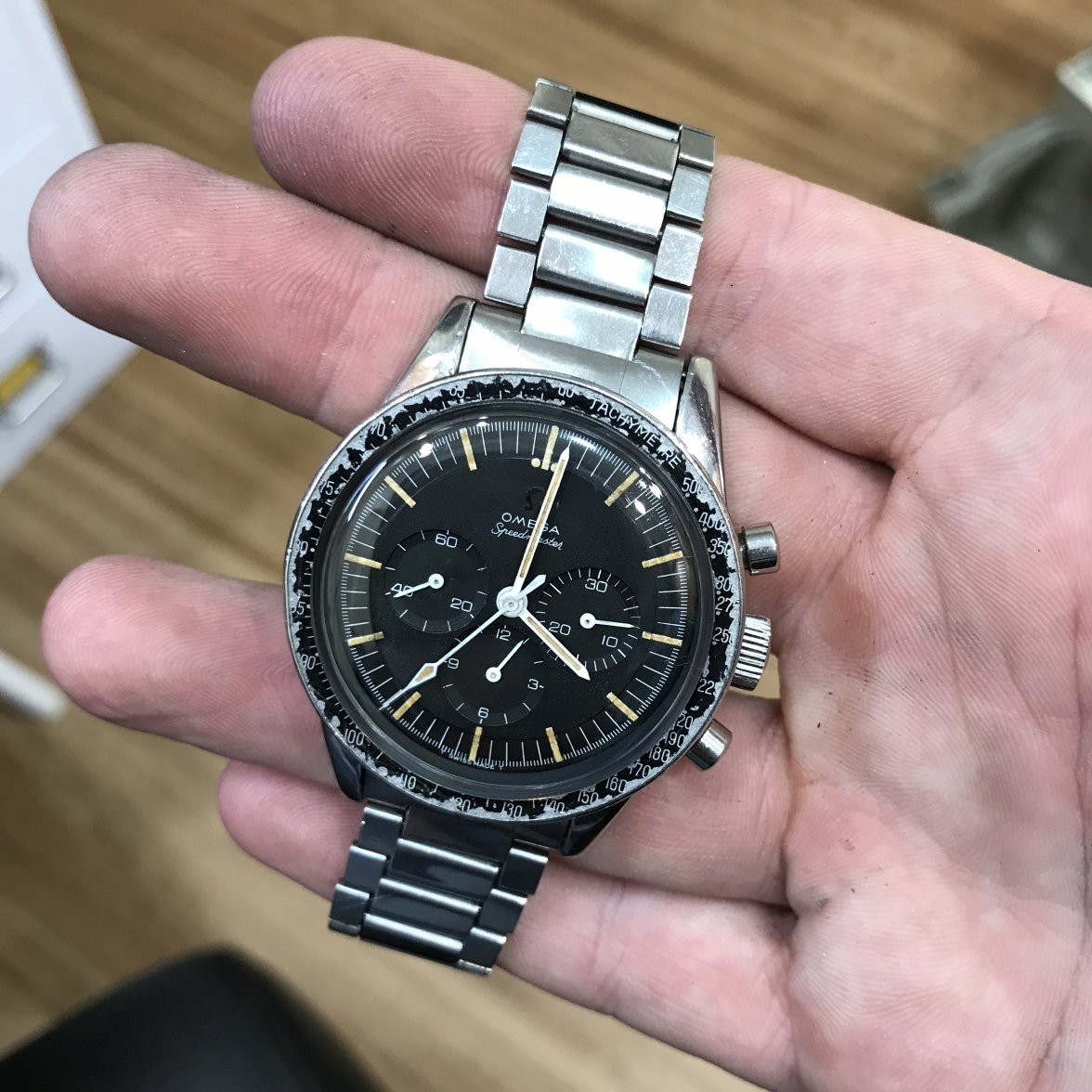
During and after servicing;