Subtleties in pulling out a Speedmaster crown...

Posts
29,675
Likes
76,836
If you have time ...

Since people are often starting posts to ask how to remove the stem, this would be a great opportunity to show how the setting lever screw (detent) works to release the stem.

Okay here is the setting lever screw for the 6497/6498:
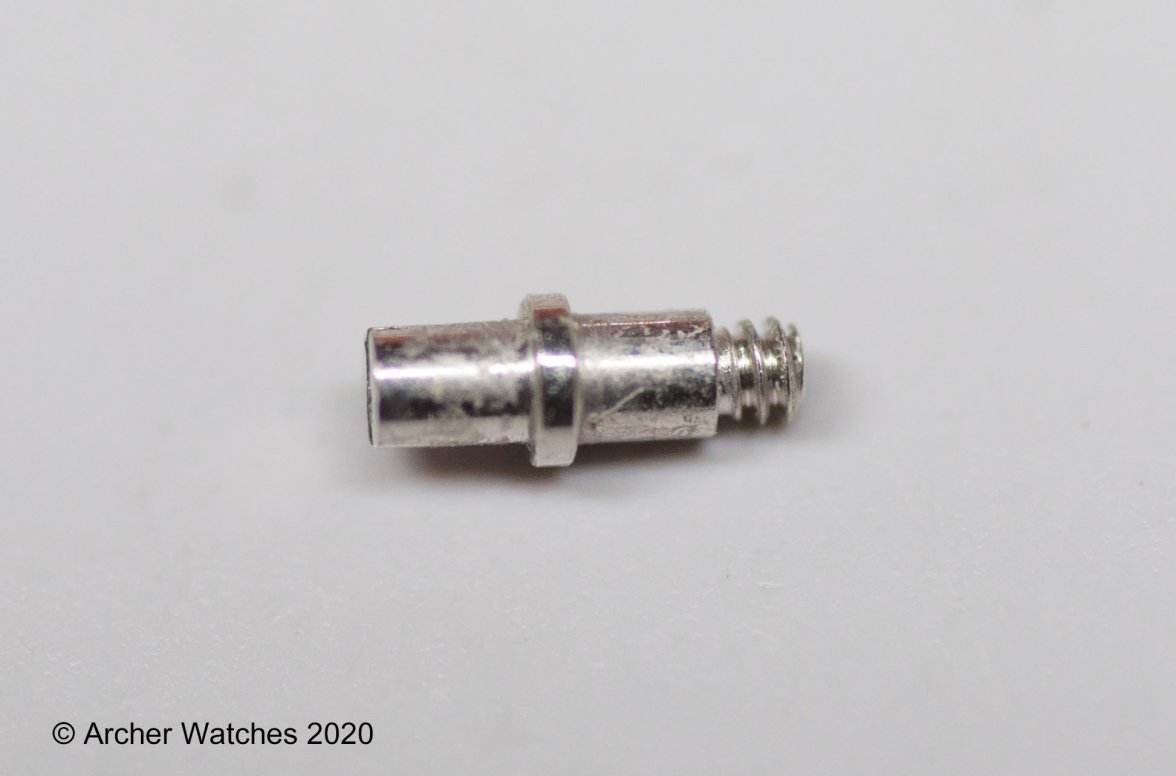


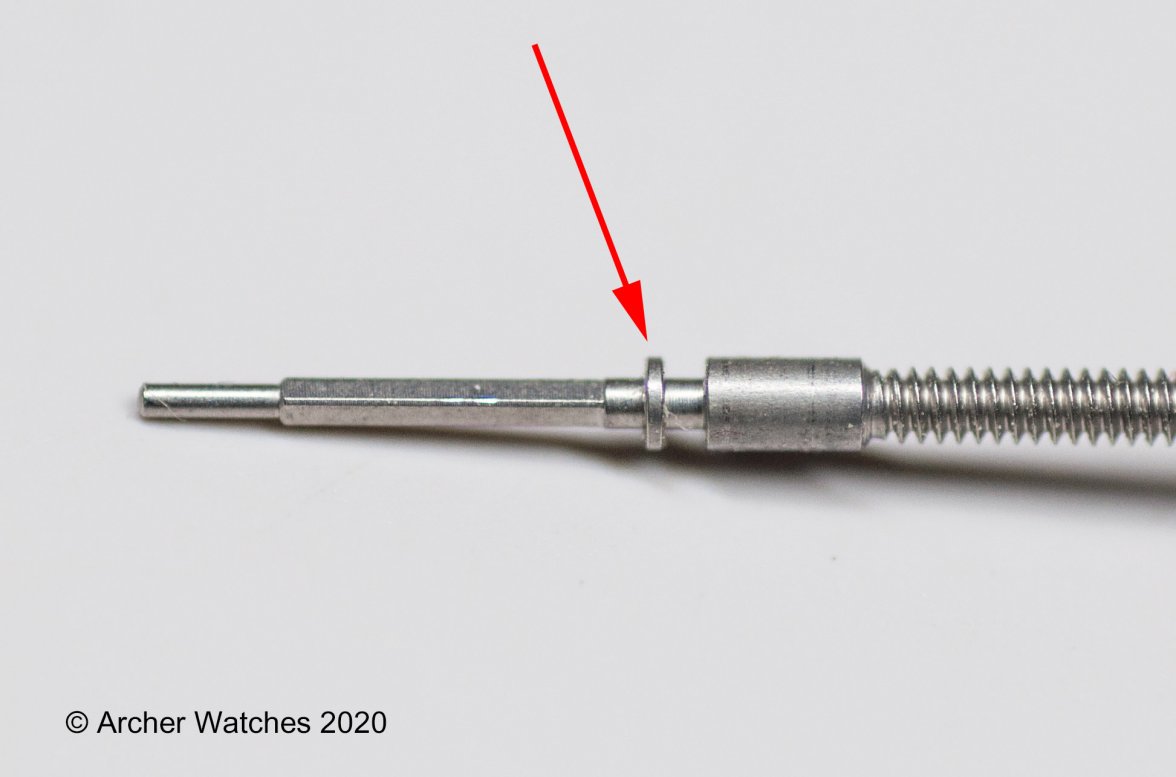
You will note is has a flange part way up the body of the screw. Here it is installed into the main plate:
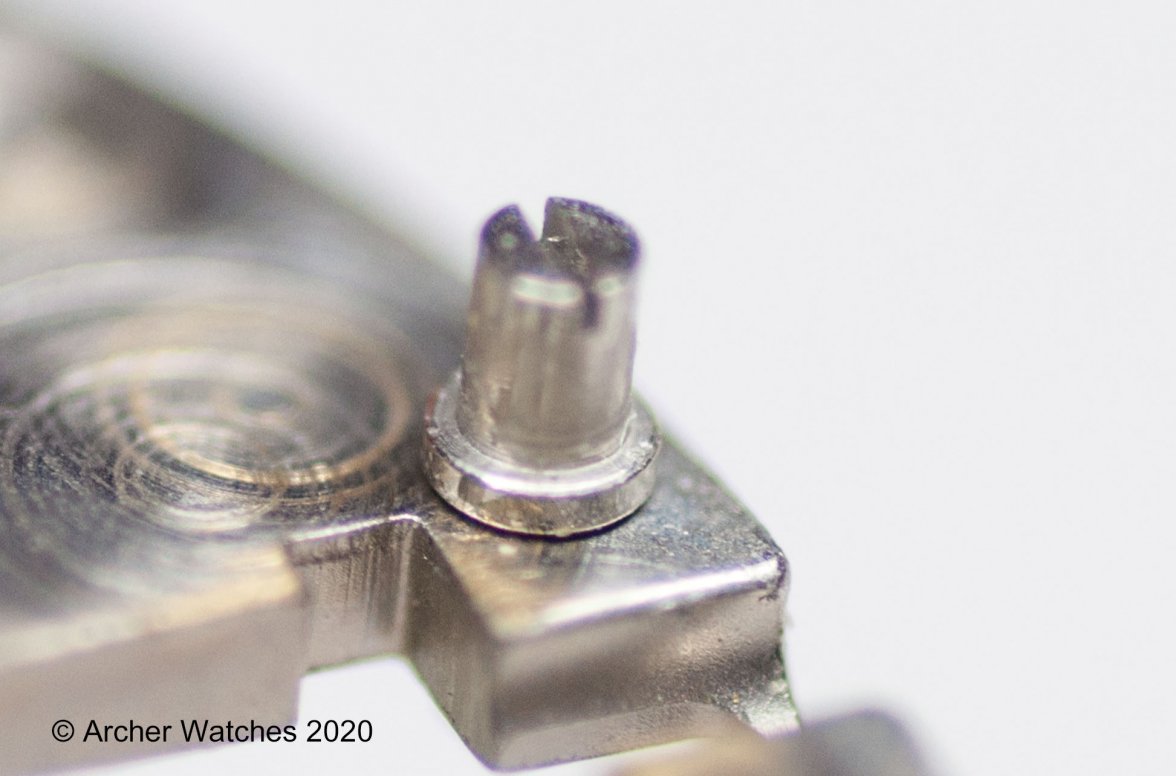


Now with the barrel bridge installed:
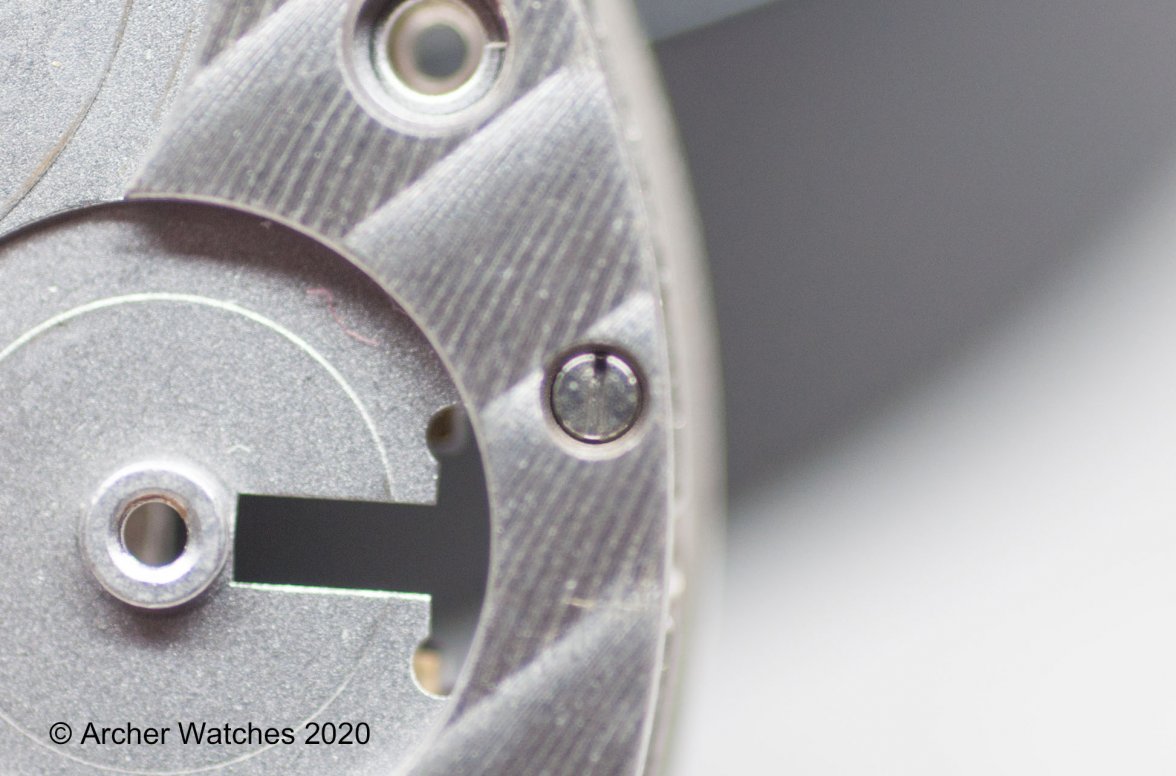


Here is the setting lever and the setting lever screw assembled together:
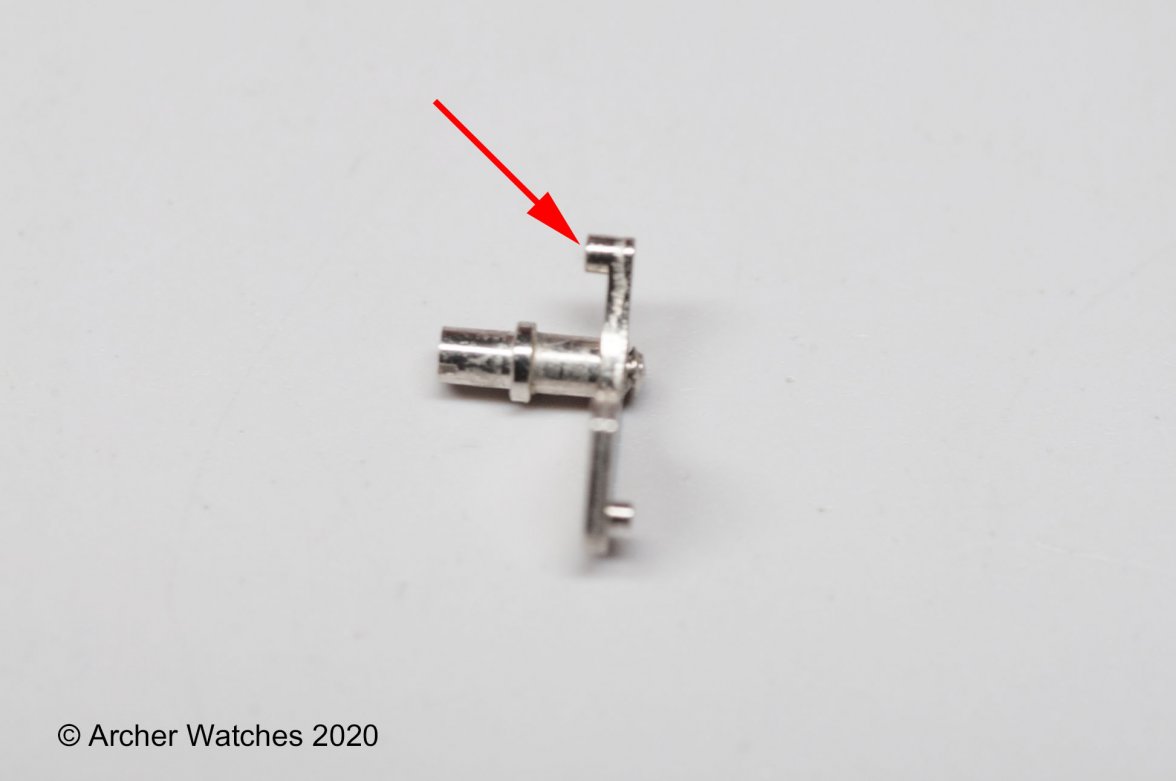


The red arrow points to the post that is the one that rides in the notch in the stem, and with the screw fully tightened down, this post will not allow the stem to be pulled from the movement. Here the screw is partially unscrewed:
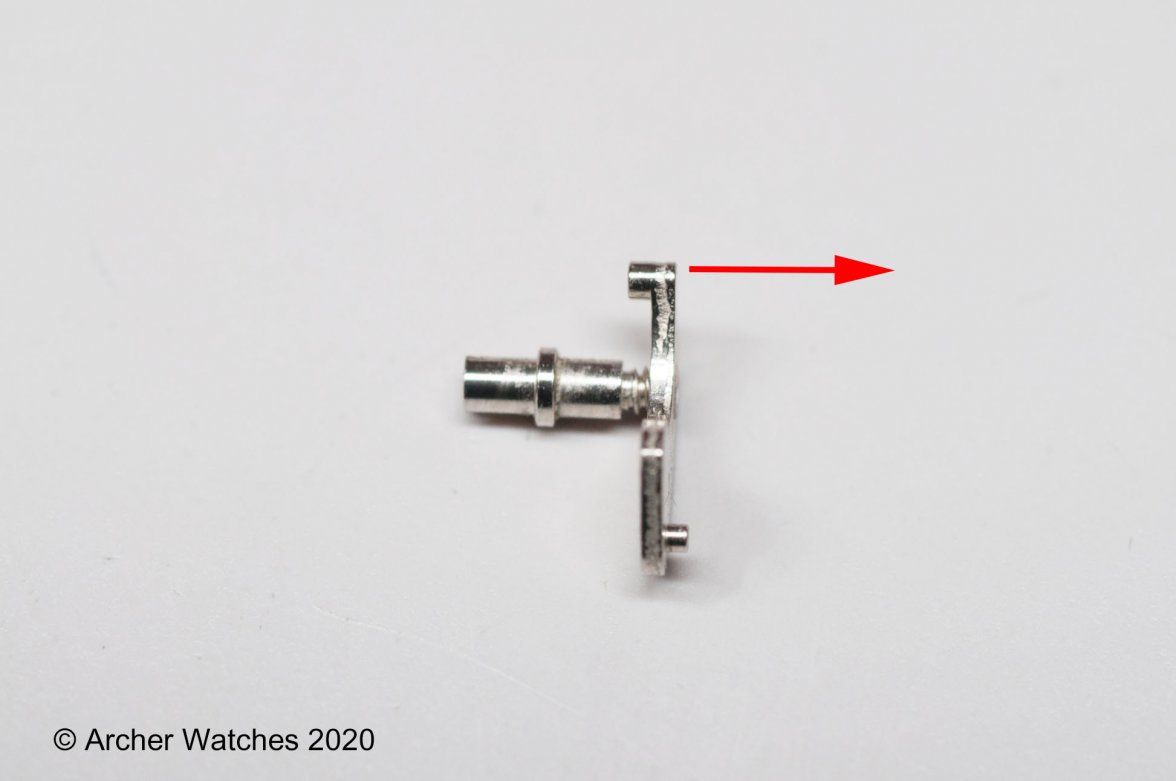


The flange on the screw shown in the first photo above prevents this screw from moving in or out when the screw is turned. So when you turn the screw CCW to unscrew it, the only thing that can happen is that the setting lever moves away from the screw in the direction of the read arrow. This causes the post that is engaged with the stem to move out of the slot in the stem, and the stem can be removed.

You don't want to unscrew this all the way, but just enough to allow the stem to be removed. If you unscrew it too far, the screw will come completely out of the setting lever and you will have to remove the movement from the case, removed the hands and dial, and whatever else is involved to get down to the lever needed to thread the screw back into the setting lever.

Now if you look at the Cal. 321 setting lever screw on the first page of this thread that I posted, even though it's rusted you will see it has no flange on it like this one does, and this means that when you unscrew this screw, it will back out slightly. This is why on many watches when I give advice how to remove the stem, I suggest unscrewing the screw slightly, then using the screwdriver to press down on the screw, and gently pull on the stem while pressing down. On many watches if you unscrew this screw far enough to remove the stem without pressing on the screw, the screw will come completely out of the setting lever.

Most modern watches I work on (there are some exceptions) don't use a setting lever screw at all. The setting lever looks like this:
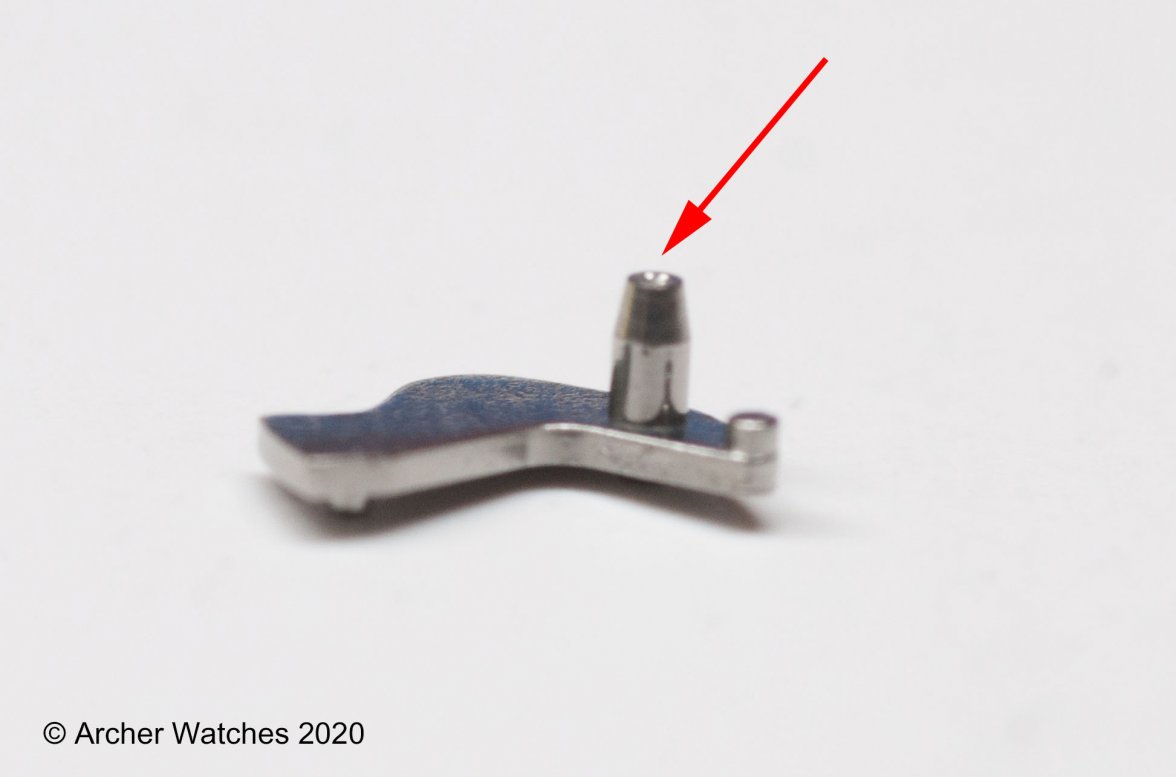


There is often some type of spring on the dial side that holds this part in place, rather than using a screw. In this style, you use a tool to press where I have the read arrow in the small indent top push the setting lever away, so the post that secures the stem in place clears the stem.

Hope this helps.

Cheers, Al
Edited:
 
Posts
29,675
Likes
76,836
We should also explain why 2 solid collide instead of passing through each other then 馃槈

Hey, knock yourself out! 馃榾
 
Posts
24,263
Likes
54,033
Okay here is the setting lever screw for the 6497/6498 ...

...

Hope this helps.
Cheers, Al

I think that is super helpful. Thanks! 馃憤
 
Posts
24,263
Likes
54,033
We should also explain why 2 solid collide instead of passing through each other then 馃槈

As you explain this, don't forget to include the fact that 99.9999999999999% of the solid is basically empty space with negligible mass. 馃榿
 
Posts
7,177
Likes
23,253
We should also explain why 2 solid collide instead of passing through each other then 馃槈


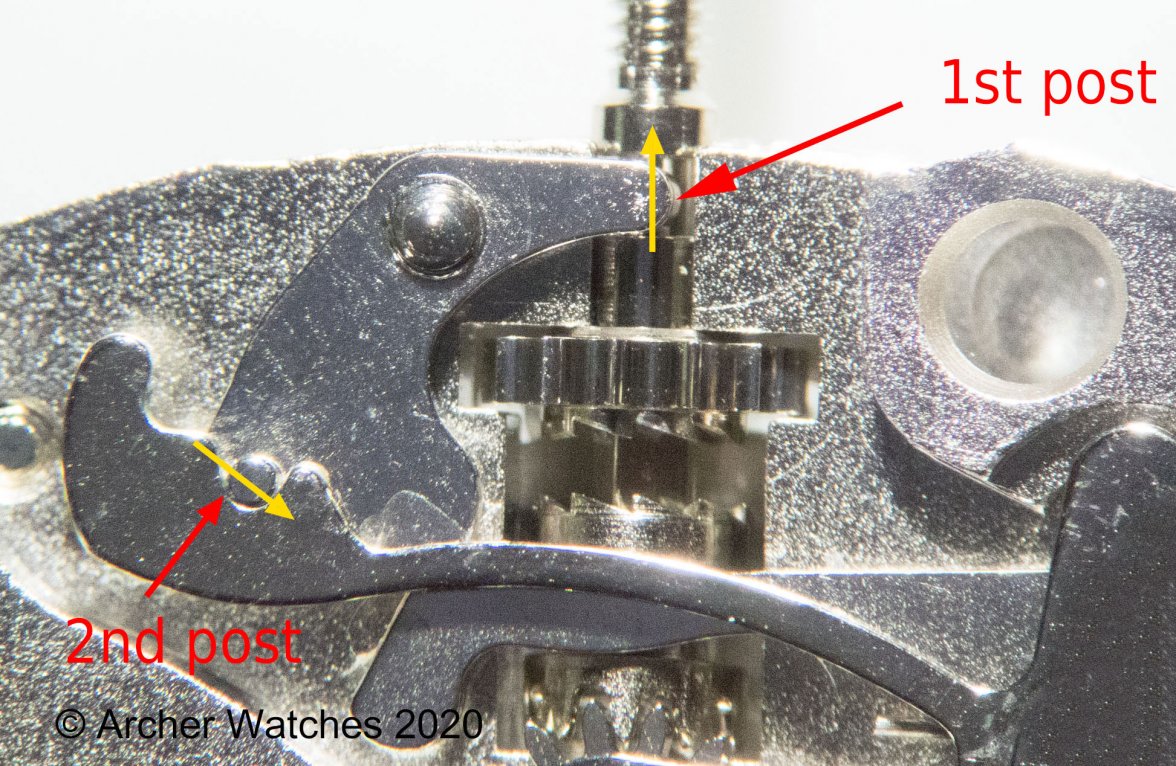
About the forces and the 2 posts you are talking about, was it what you mean?

In that case yes, the 1st post prevents the stem to get out, the 2nd post prevents the lever to continue to rotate

Yes, that is exactly what I was referring to. Thanks.
 
Posts
7,177
Likes
23,253
By the way: I spoke to a number of watch collectors in the interim, and when I asked them how they pulled out their crowns, I was genuinely surprised how many used just one finger.
 
Posts
1,036
Likes
2,563
I almost always turn the watch over and use the thumbnail on my left hand from the back of the watch.
 
Posts
16,307
Likes
44,994
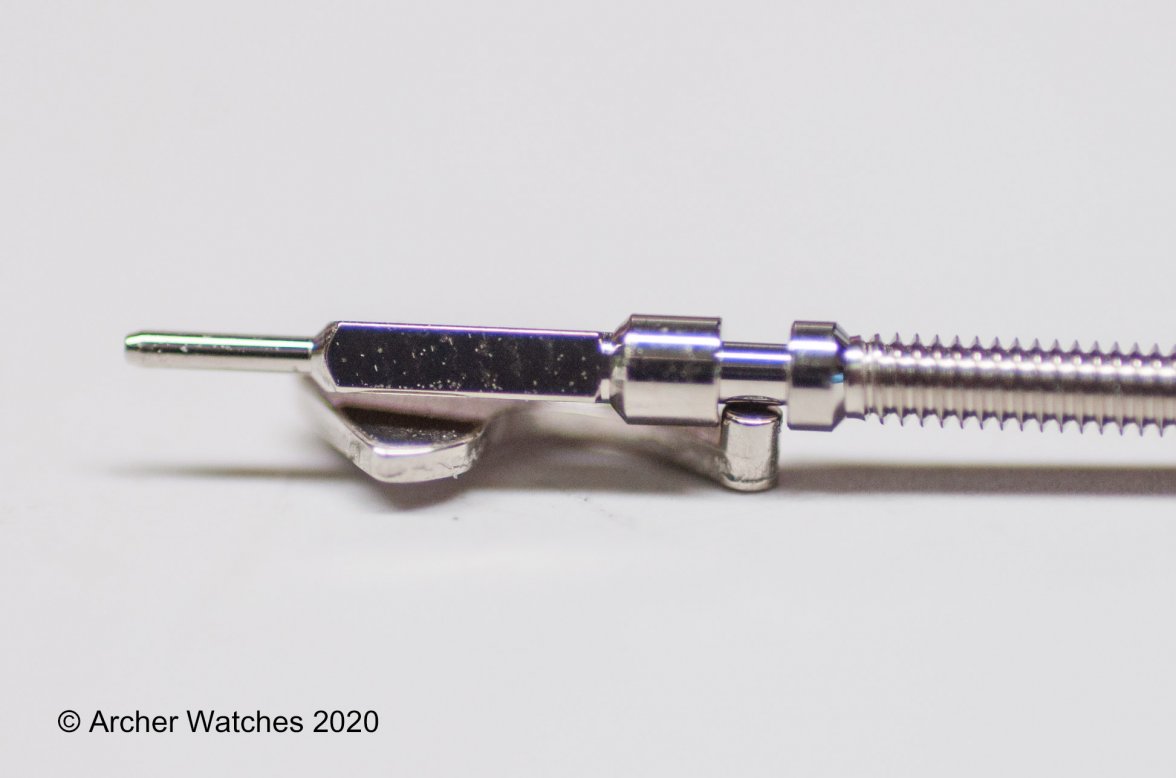
This might help - took this photo for you to illustrate how the stem is retained in the watch:


The part laying on the bench is called the setting lever. It has a small post on it that fits into a slot in the stem that you can see. This is what keeps the stem from pulling completely out. This is a macro photo, and these parts are from an ETA 6497, so a large wrist watch or medium pocket watch movement. So these are quite large in comparison to what you would find inside something like a Speedmaster, or a smaller movement. The post is 0.78 mm in diameter to give you an idea of the actual size.

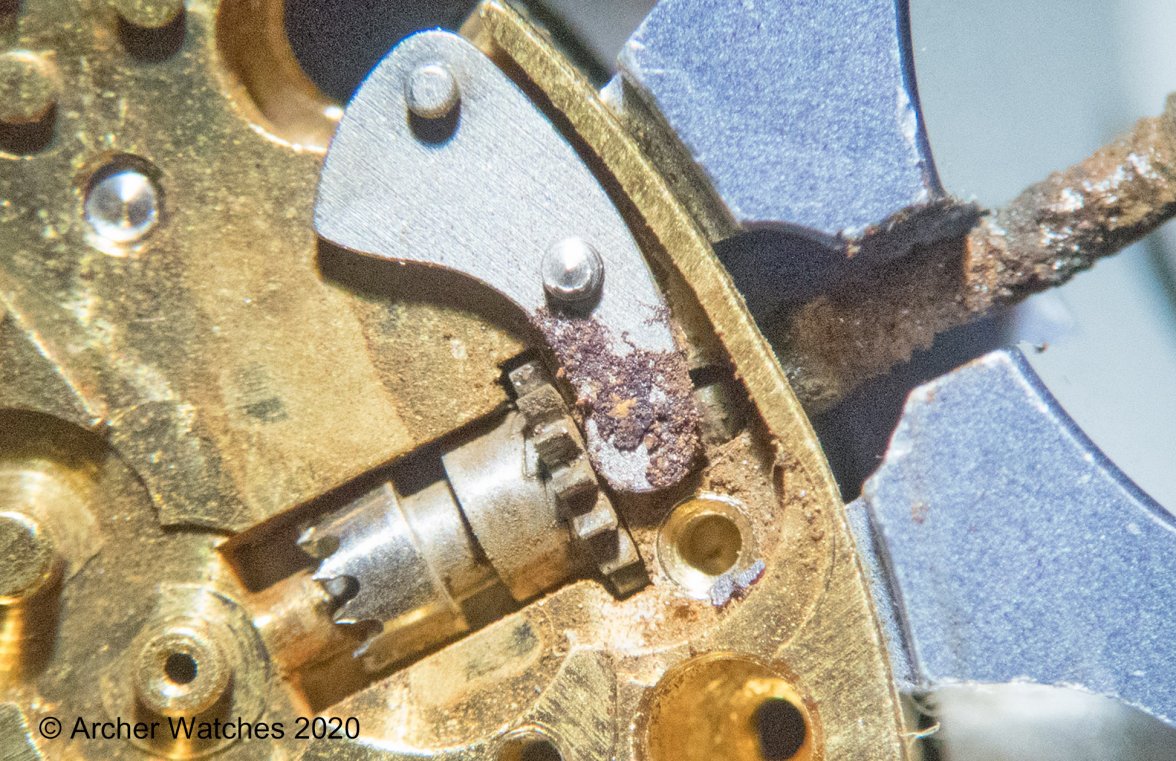
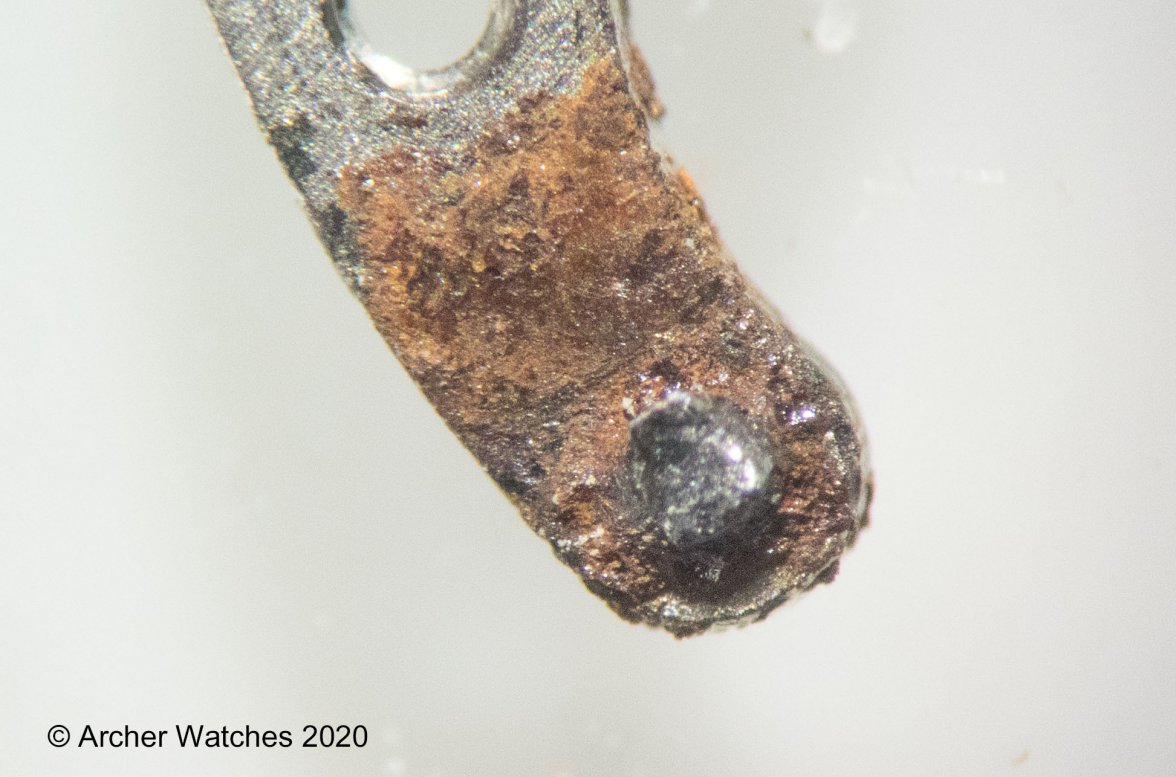
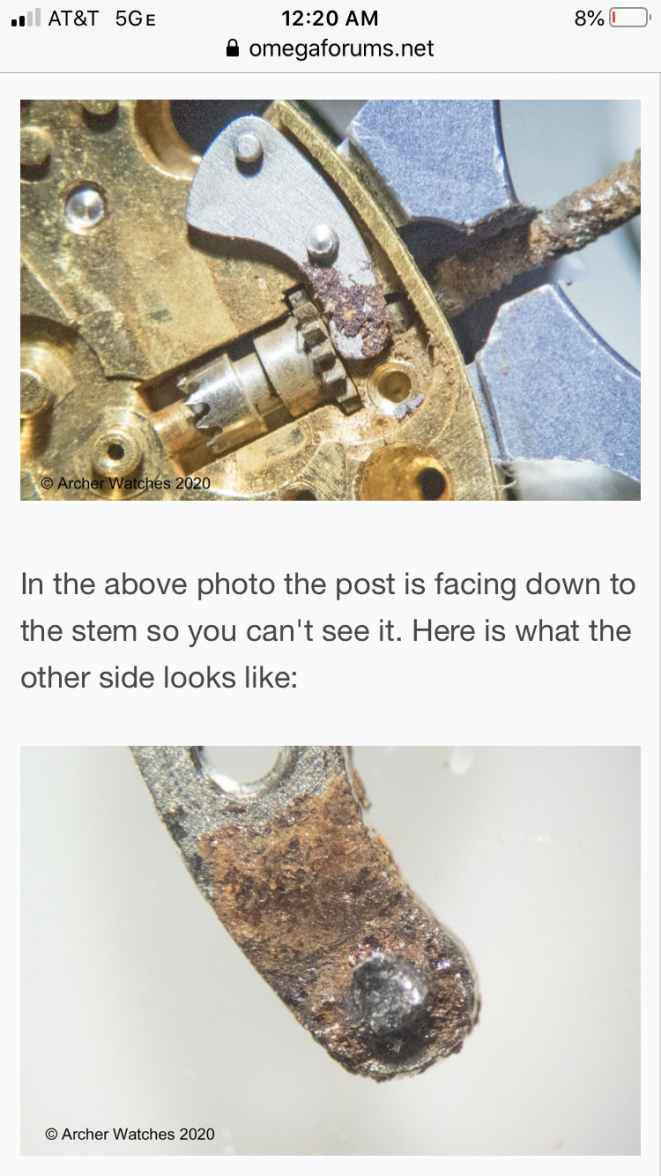
If either the post or slot in the stem is damaged, the stem can pull out of the watch more easily. In many vintage watches the post can get damaged by someone inserting the stem back into the movement, and screwing down the setting lever screw without first making sure the post is in the slot. Also, for those who like to keep original crowns that no longer seal, if you happen to get the watch wet when moisture enters this area it often leads to this:


In the above photo the post is facing down to the stem so you can't see it. Here is what the other side looks like:


Not all stems look like the one I show above, and some the portion of the stem that resists the stem pulling out is very thin. In the above example there is a long section of full diameter stem just to the left of the post, so you can't really break this off. In this example, the stem only has a thin ring of material:


I have come across watches where the ring has snapped off in one spot, so if the stem is rotated to that position, it will slide right out. So being careful with the crown is a good idea, but if the watch is kept in good condition this usually isn't a problem.


The crown itself doesn't have a whole lot to do with the actual force required to pull the stem out, as this is more a function of the setting mechanism inside the movement. The geometry of the setting parts and how they move (the leverage available) the strength of the yoke spring and of the setting lever jumper, and state of the lubrication in this area will all have more impact on the forces required that the crown will.

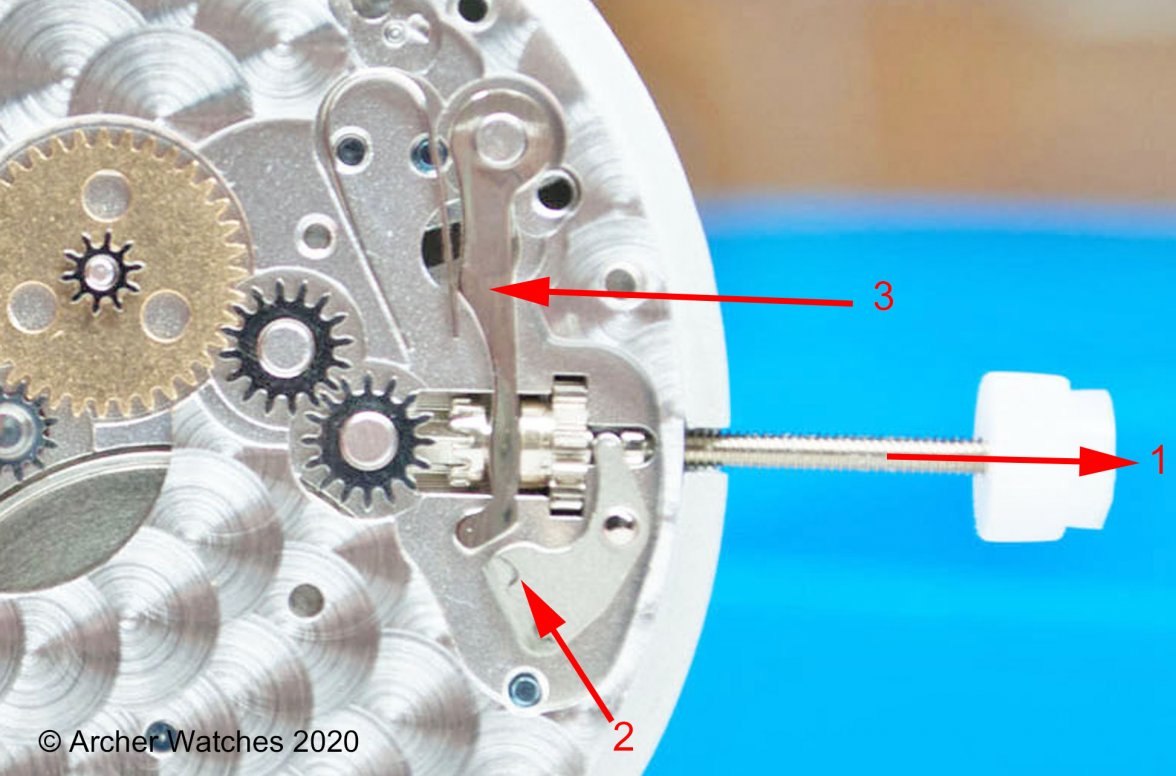
This is a Panerai I worked on this year, in the process of being disassembled. The movement is the same ETA 6497 in my first photo above:


When the crown is pulled out at 1, the post on the setting lever that keeps the stem in the movement is pivoted, and it moves at 2. This moves the yoke at 3, which has to compress the yoke spring - the U-shaped spring, which is quite a heavy spring in this watch. In watches with a lighter spring, this will not require as much force.

Ideally you would not really want to pull on the crown with a lot of force, and I would suggest that if pulling the crown out requires enough force that you are concerned about it pulling the stem right out of the watch, the setting area may need some lubrication or other attention.

Hope this helps.

Cheers, Al
Can we post this picture every time someone spouts off about how a watch is crap because it doesn鈥檛 have the original crown?
 
Posts
7,177
Likes
23,253
Can we post this picture every time someone spouts off about how a watch is crap because it doesn鈥檛 have the original crown?

Hey JW,

Not really sure what you鈥檙e driving at here. Clearly, if water gets inside a watch, it鈥檚 never good, and a variable amount of corrosion will ensue.

But there鈥檚 nothing wrong with collectors looking for original parts on a collector piece, including the crown. But they do have to be aware that, on crowns that have gaskets, they could be worn, and the watch may never have the requisite water-resistance.
 
Posts
29,675
Likes
76,836
Can we post this picture every time someone spouts off about how a watch is crap because it doesn鈥檛 have the original crown?

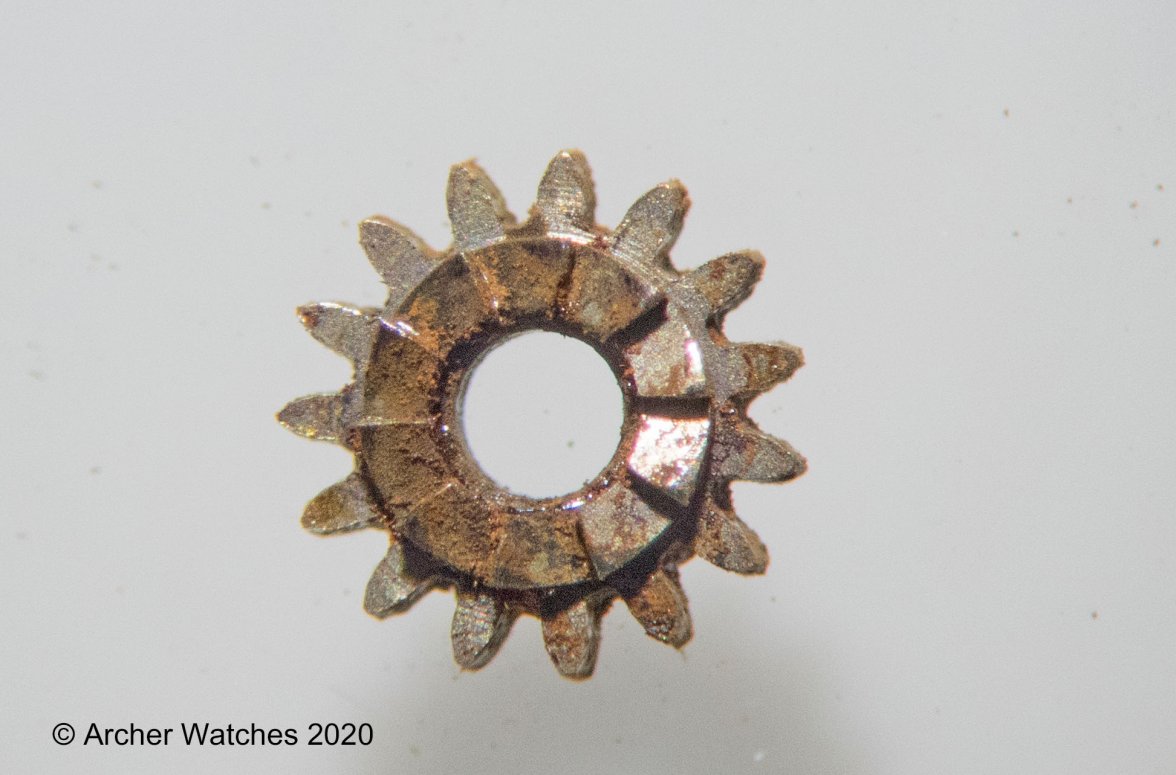
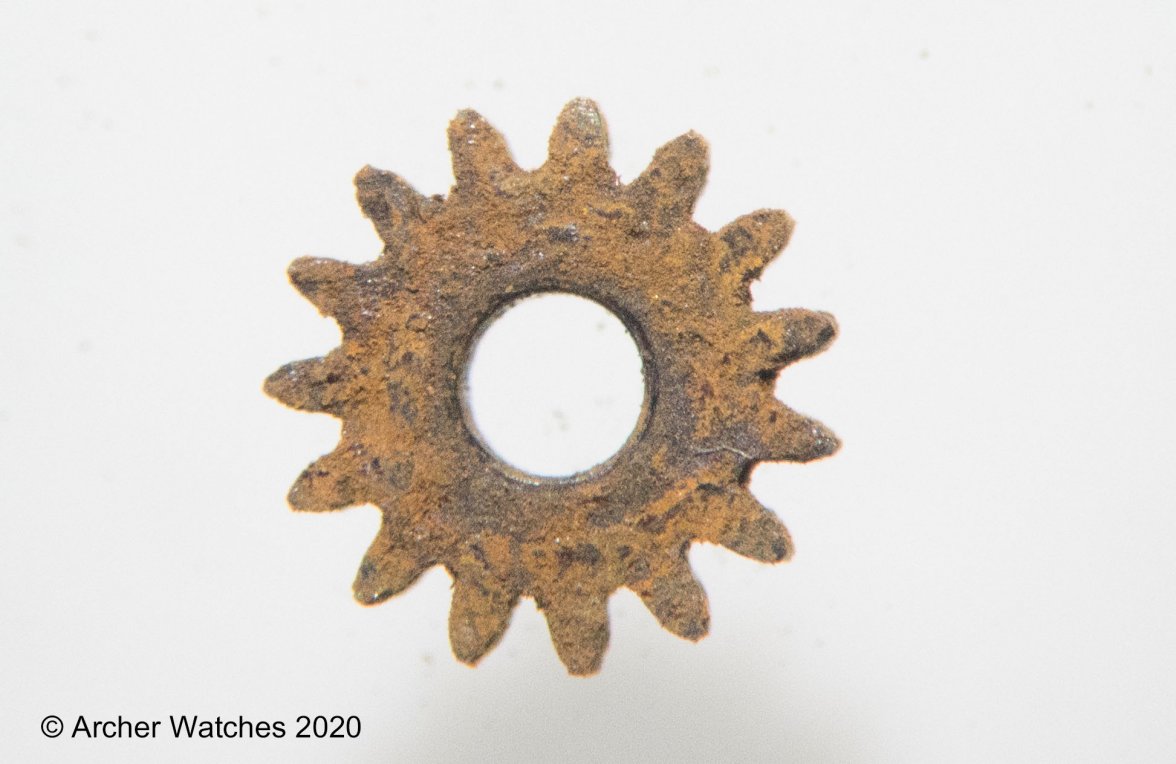
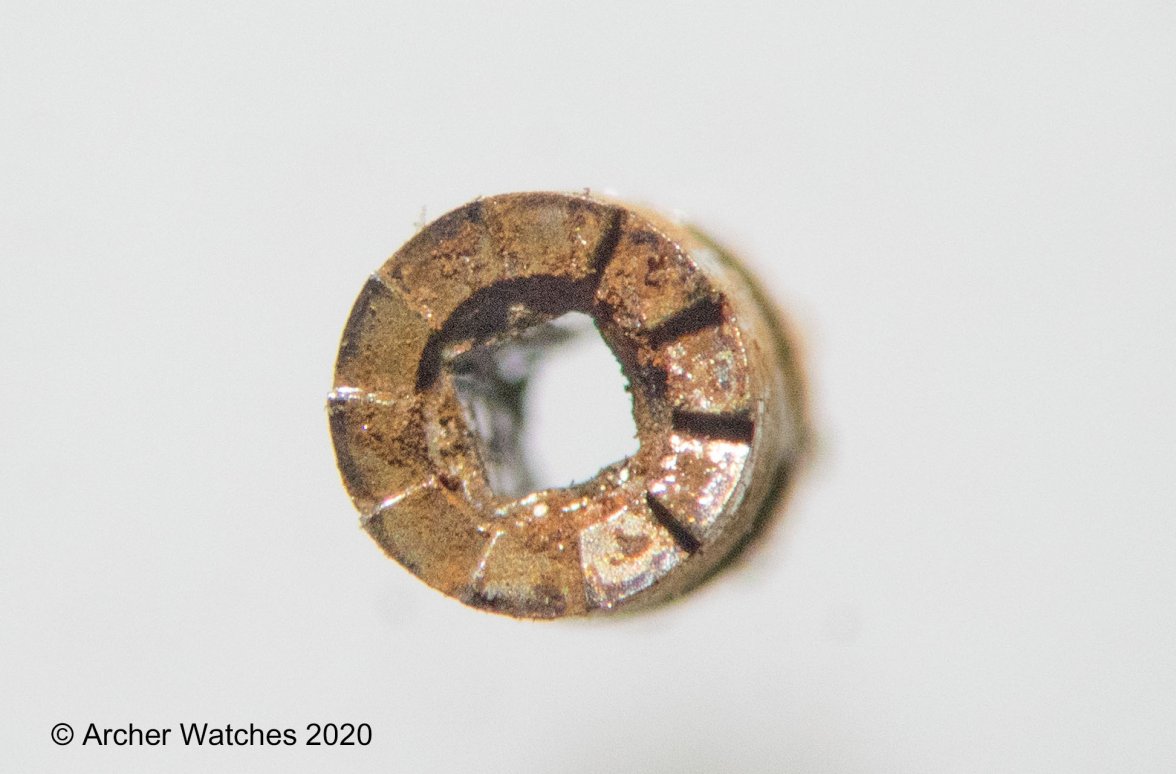
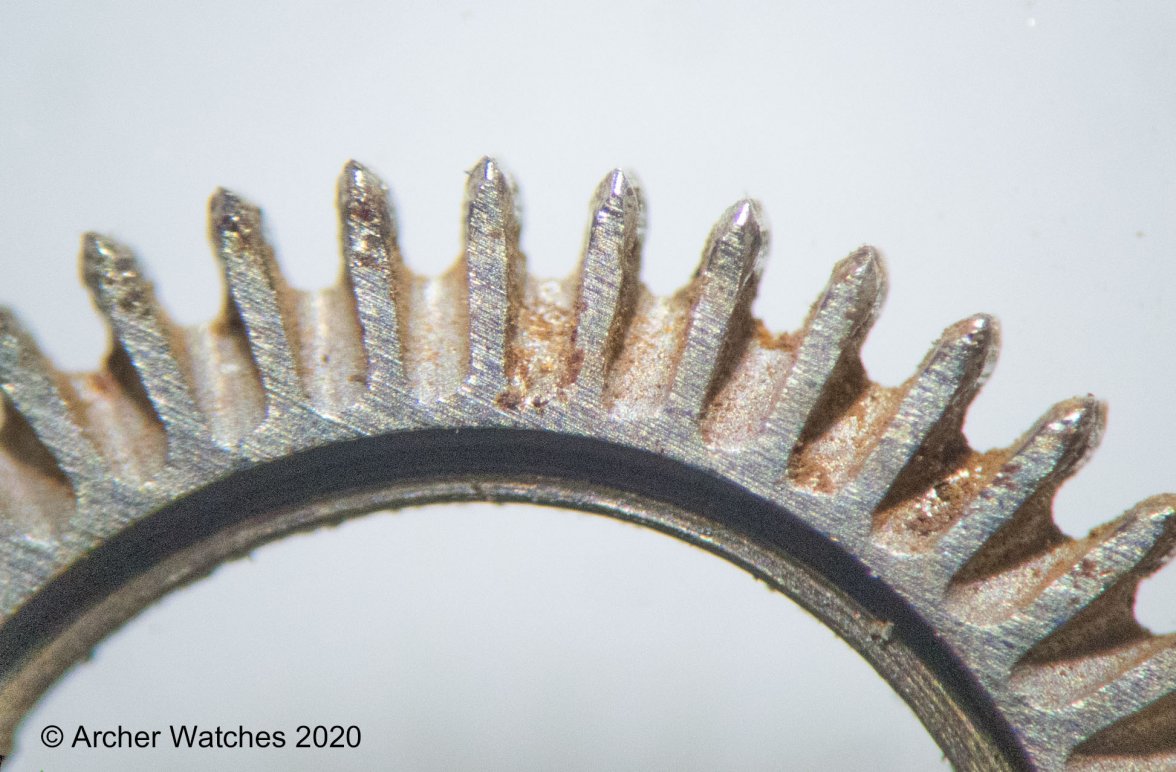
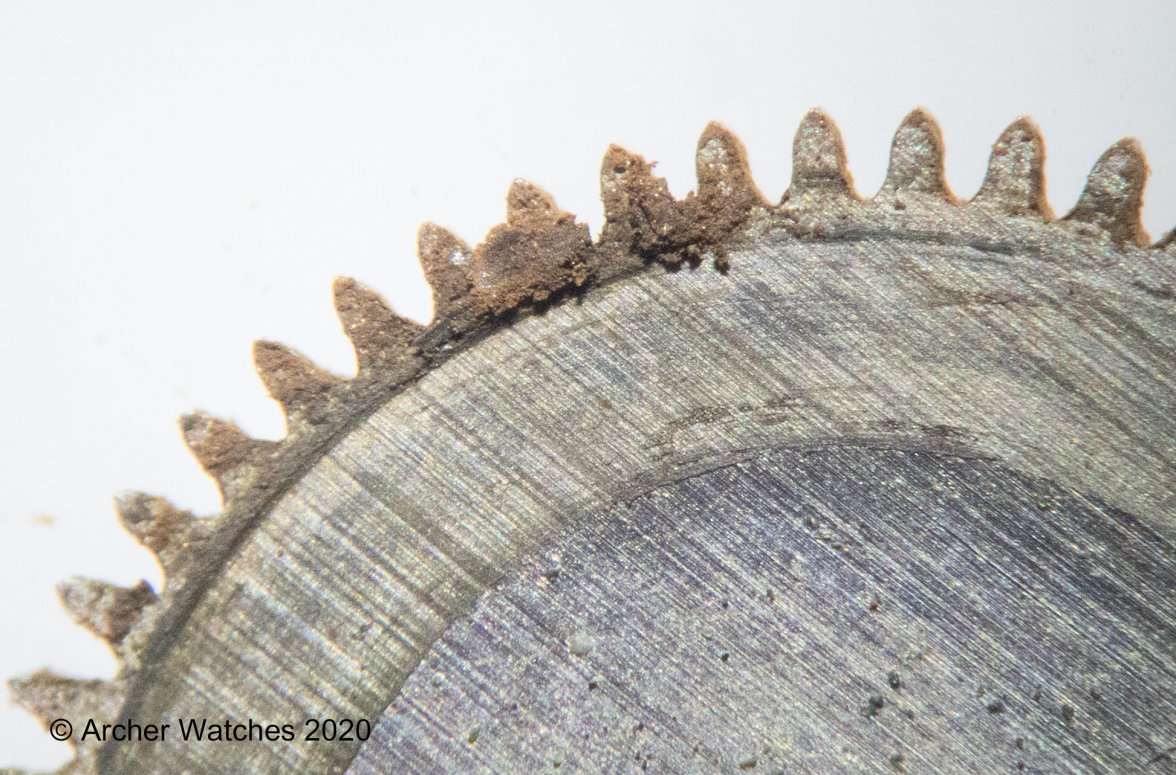
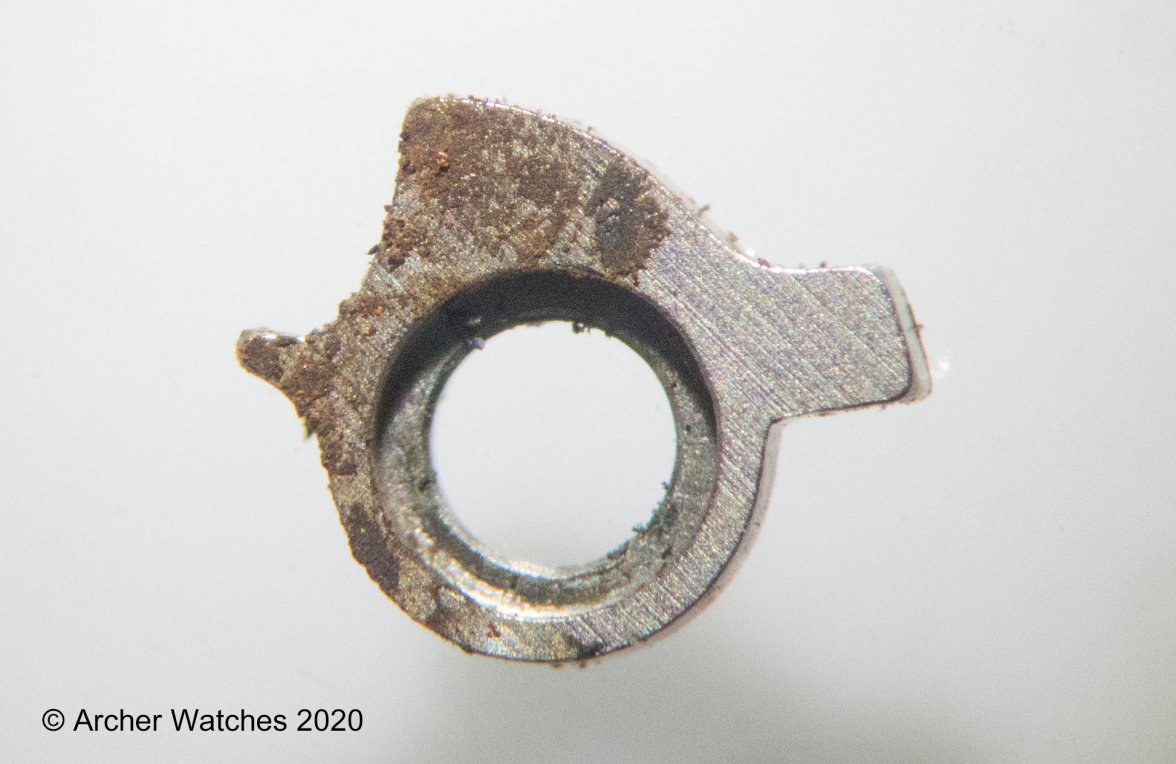
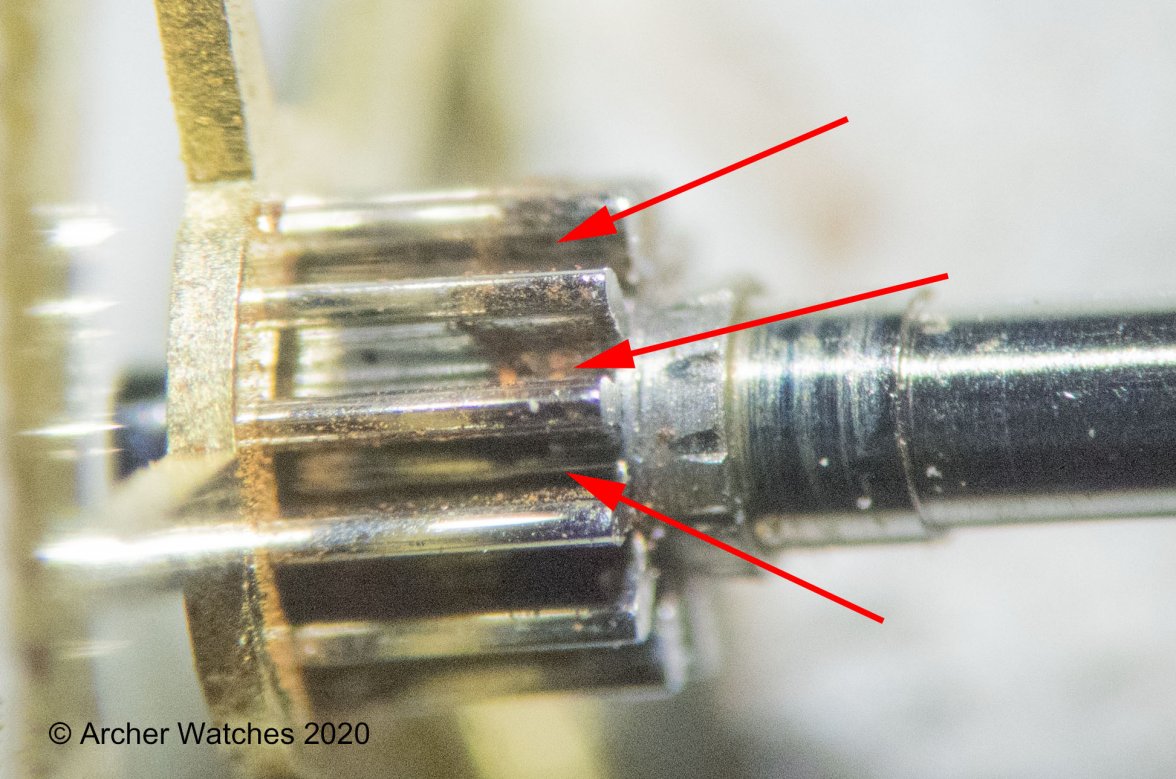
Well if we are dong that, we should show some of the rest of the damage too...here's the rusted winding pinion:


The sliding pinion:


The rust carried on to the crown wheel:


The ratchet wheel:


The click:


And to the pinion leaves on the center wheel:


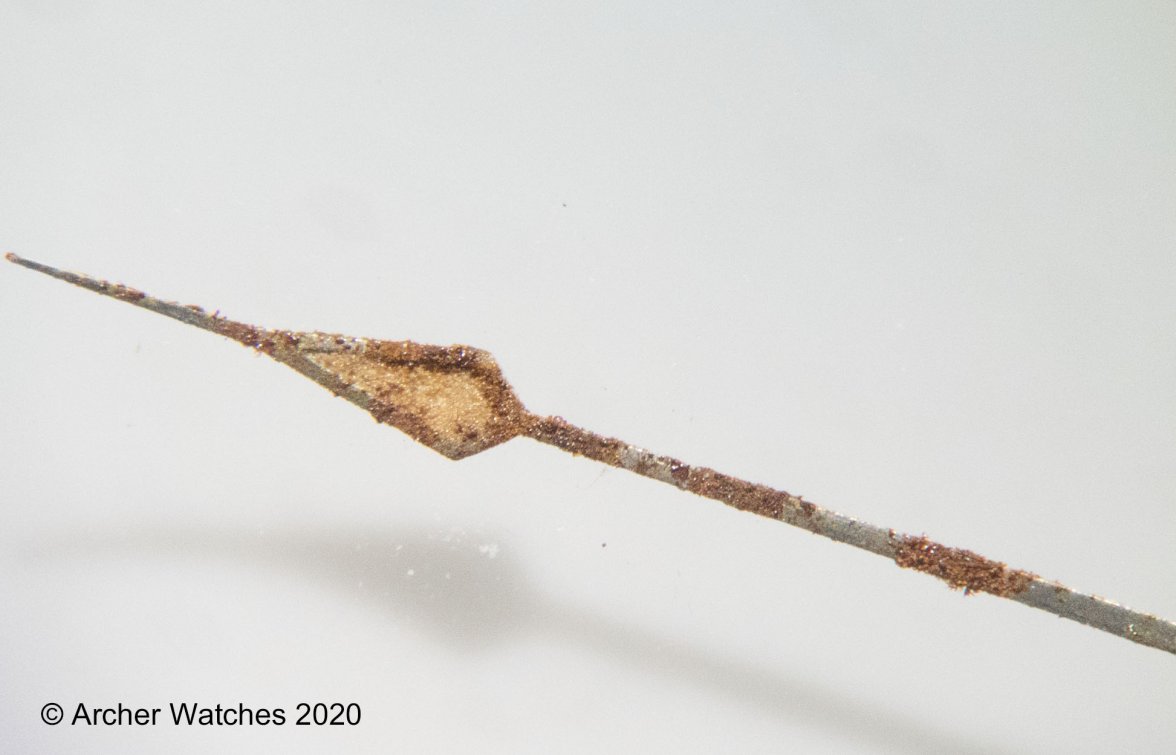
And for the parts you see, here is the chronograph hand:


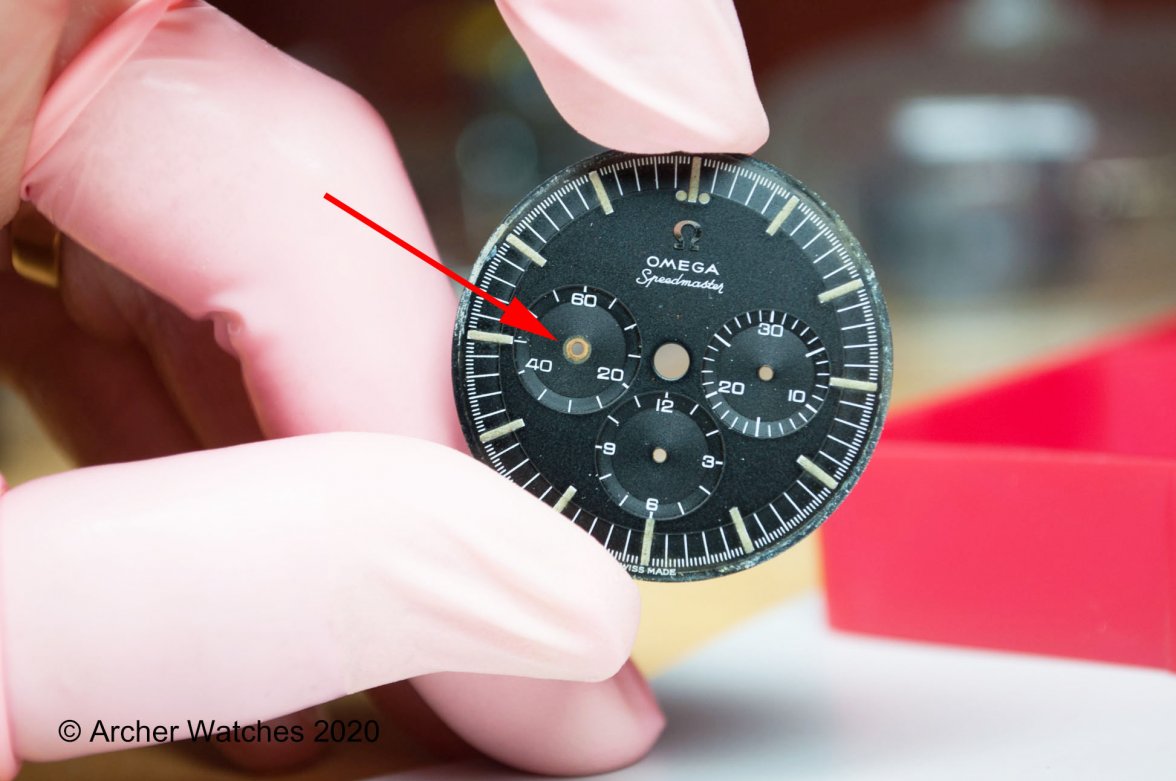
The small seconds hand was rusted as well, along with this stain on the dial:


Fortunately, I was able to remove that stain:


There's a reason these crowns are replaced at every service...

Cheers, Al
 
Posts
7,177
Likes
23,253
Interesting that it didn鈥檛 affect the lume. Is it Radium or Tritium?
 
Posts
16,307
Likes
44,994
Well if we are dong that, we should show some of the rest of the damage too...here's the rusted winding pinion:


The sliding pinion:


The rust carried on to the crown wheel:


The ratchet wheel:


The click:


And to the pinion leaves on the center wheel:


And for the parts you see, here is the chronograph hand:


The small seconds hand was rusted as well, along with this stain on the dial:


Fortunately, I was able to remove that stain:


There's a reason these crowns are replaced at every service...

Cheers, Al
Lemme guess, this was shallower than 50m ::stirthepot::
 
Posts
29,675
Likes
76,836
Lemme guess, this was shallower than 50m ::stirthepot::

Yes because as I've said countless times, most watches leak because of lack of maintenance, not because they are taken past their depth rating.
 
Posts
66
Likes
122
Yes because as I've said countless times, most watches leak because of lack of maintenance, not because they are taken past their depth rating.
Aww, is that what you鈥檙e selling?
 
Posts
29,675
Likes
76,836
Aww, is that what you鈥檙e selling?

Not selling anything mate.
 
Posts
29,675
Likes
76,836
Thank God

Keep posting like this and you will be at 200 very soon.
 
Posts
66
Likes
122
Keep posting like this and you will be at 200 very soon.
You mean, only you could post but I shouldn鈥檛?
 
Posts
29,675
Likes
76,836
You mean, only you could post but I shouldn鈥檛?

I'll give you credit for being creative. Start a trolling thread about Rolex owners that is sure to get a lot of posts that you can respond to, then post a few lame jokes, and start some arguments to have some back and forth. Much smarter than the average post farmer here...
 
Posts
66
Likes
122
I'll give you credit for being creative. Start a trolling thread about Rolex owners that is sure to get a lot of posts that you can respond to, then post a few lame jokes, and start some arguments to have some back and forth. Much smarter than the average post farmer here...
You got me! I give up. Mercy -- Tapping out.
Your sharp intelligence sees right through my motives. It must be because I want to sell something... Genius