Strange sound when winding

Posts
15,230
Likes
44,722
Equivalent part numbers such as may exist between the two calibres should tell whether the manual wind version was "beefed up" compared to the automatic.
 
Posts
2,219
Likes
4,946
OK, so I'm a fluid dynamicist, not an engineer.
I did some aerodynamics models as part of my Aerospace course a long time ago but it's such a specialised area that I never really use it. Anyway, that's just one small part of fluid dynamics.

As I say, some people see things in one way and others don't get it that way around but see it easily with a different description. I'll try my gear loading one other way and see if it makes sense to anyone who's flogging through this (the freewheeling power drill is still probably the best example).

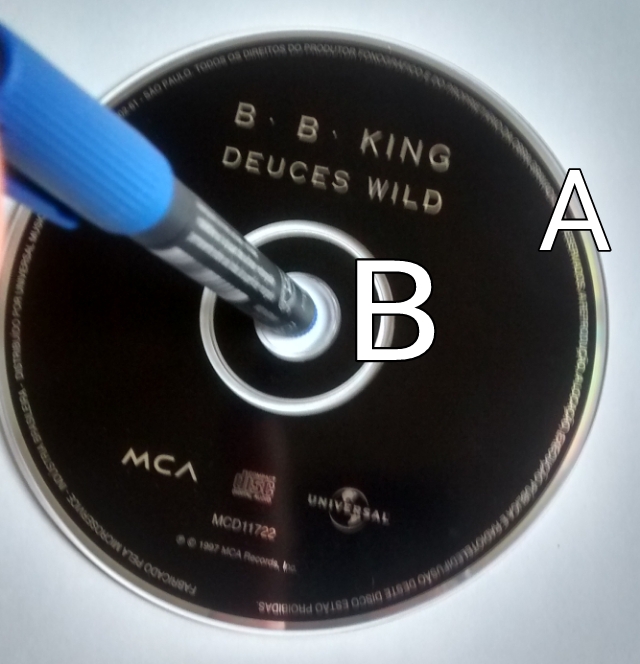
For this, I'm using a CD and a pen where the pen is as shown.


If I turn the CD at its outer edge (point A above) then there's virtually no force needed to hold the pen still. This is freewheeling as the wheel is just turning without resistance.

If I put a finger at the inner white ring (point B above) to resist me turning it then the CD comes hard up against the pen and the pen moves sideways. So, by resisting the rotation torque at the inner gear (B), I generate a side load on the pen (shaft). This is what causes the bearings to wear when we transmit torque (and not when we freewheel).

I promise, no more of this stuff!

Out of interest, as most of us have a few watches, I suspect our autos are always stopped. I just wind mine ten or twenty turns and wear them. The only part that made me concerned was the wear on the crown seal as its not designed for regular winding in an auto. Mind you, that may only be once a month so, I'm not that worried. For the old watches, I think the replacement crowns are the same for manual or auto so, it's probably not worth thinking about.

Regards, Chris
 
Posts
2,219
Likes
4,946
This is slightly irrelevant to the current discussion but from memory the Calibre 601 is more or less a Calibre 550 with the auto winder removed, so a manual wind version of the 550.

Looking at this sheet, half the parts in the 601 actually even have the 550, 470 or 330 part prefix from the automatic versions:

image54.jpg

Is there any actual "re-enforcement" that went into making the 601 stronger or more robust than the 550/470/330 or did they just change the mainspring and barrel (I'm guessing just to non-slipping versions so it stops when fully wound) and the main plates (as the auto winding mechanism no longer needed to bolt onto the top)?

The 601 incidentally has a reputation for being one of the most solid and trouble free hand wound Omega movements ever made.
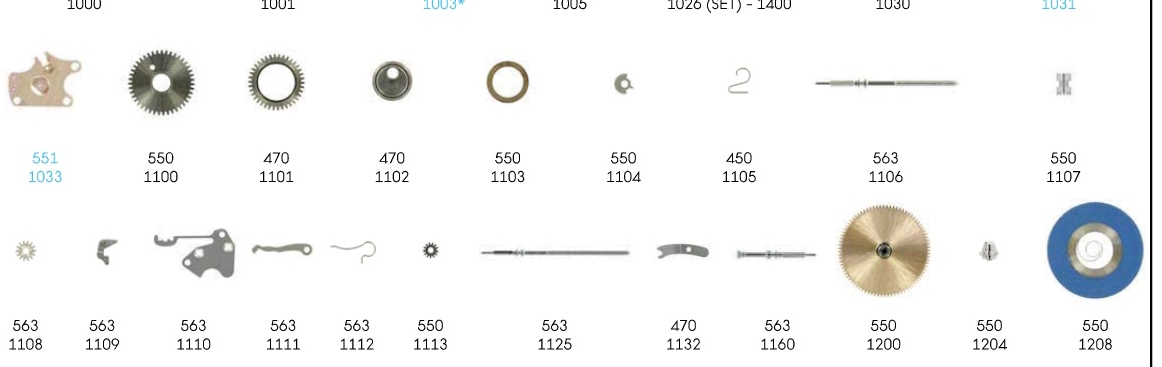

Most of the winding train appears to be the same as a 565, with two exceptions:

Ratchet wheel is different but, you'd expect that because of the way the auto works. On the 565, it's 550-1100 and the 601 is 600-1100.

The bigger difference is in the crown wheel retention. The crown wheel 479-1101 and the seat 550-1103 are the same but, the plate holding the crown wheel to the movement on the 565 has only one screw (479-1102) and the 601 has two screws (600-1102). I would say they did this on purpose because of the manual wind requirements. Two screws will give a better support to the crown wheel.

They have a good numbering system as well. For example, xxx-1106 is usually the stem.

By the way, the only differences between a 561 chronometer calibre and a 565 non chronometer, if I remember correctly, are the bridge with the calibre number and the auto bridge that has the 5 position writing. So, it should be possible to get the non chronometer calibres into chronometer spec if the parts aren't too worn. This wouldn't be true of the modern calibres as they use better hairsprings for a chronometer and so on.

Here are the 565 parts:

 
Posts
306
Likes
523
Wow, I went away to the French Seaside for the weekend and I come back to 4 pages of commentary, that's great, excellent discussions all round.

First, my apologies for my error in the number of escape wheel turns in a year, in my haste to head out Saturday morning I transcribed the wrong number. In a year the escape does 5,256,000 rotations (not 14,400 as I quoted).

Second, my wife is very happy that I found this forum, because now I have an outlet for my need to discuss things related to horology... I also get the glazed deer-in-the-headlights look when I bring up technical horological topics. So this is great fun.

Rotor energy/force/torque.
I consider the rotor energy low for the reason that it needs a gear train at a 110-180:1 ratio for it to be capable of winding the mainspring. If the rotor was directly connected to the ratchet wheel and was able to directly wind the mainspring, without a reduction gear train - I would consider it a high torque device.

Depthing.
You haven't explained how the rotor is capable of overcoming the increasing friction in the reduction gearing resulting from depthing alteration as the pivots wear. Not only does the rotor have to overcome this increase in gearing friction, it still has to overcome the force needed to wind the mainspring as well, all the while continuing to grind away at a hardened carbon steel pivot till it's either gone all together, or a huge grove is cut in the side. This is especially a concern when the worn pivots are on the reversers which are directly driven by the rotor without the benifit of the reduction train increasing the weak rotor force.

De-coupling.
The WOSTEP manual shows decoupling at the ratchet wheel, uncoupling the whole autowinder reduction gear train from the handwinding forces. Reversers slip during hand winding, they don't decouple anything but the actual rotor, and more importantly the whole reduction and automatic winding train is turning during the handwinding which according to WOSTEP "...keep it from rotating too quickly, which would cause excessive wear or even breakage...". You don't have to agree with my "slow winding" suggestion, but it's clearly not only my suggestion as WOSTEP states clearly that it's a concern. As I stated earlier, remove a rotor, hand wind and watch the wheels spin round really fast, i.e. "rotating too quickly".

Wear it till it grinds to a halt...
Unfortunatley that is the habit of many watch owners and the biggest cause of wear and damage.

Middle ground.
I do have a middle ground to this topic, the extremes of course are:
don't hand wind an automatic ever, and
wind at any rate you like and even if you feel high resistance

My middle ground is not the same as others and that's perfectly ok, my middle ground is simple, wind slowly - if only for the reason that you are turning a gear train with over 110:1 reduction gearing in the reverse direction, and if you have to apply a lot of force to the winding, something is probably wrong, get it checked out.

There is no "normal" when it comes to handwinding, I have seen customers wind like there is no tomorrow, and that is their definition of "Normal", so when I say "slow" they understand what I am referring to and slow down.

 
Posts
7,104
Likes
23,064
There is no "normal" when it comes to handwinding, I have seen customers wind like there is no tomorrow, and that is their definition of "Normal", so when I say "slow" they understand what I am referring to and slow down.

I doubt this is true. I am certain that, along with other biomechanical efforts, if one cared to, they could chart a bell-curved crown winding speed.

Further, your assertion that the wear comes from winding too fast assumes there is valid data that the watches that came in worn, were from the "rapid winder" group. Did you correlate the wear by charting your customers' winding speeds? Were all other variables that could cause wear eliminated? Hmmm....

 
Posts
514
Likes
560

That's one of my favourite CDs Chris. 😀

The King is dead..............Long live the King!
 
Posts
306
Likes
523
I doubt this is true. I am certain that, along with other biomechanical efforts, if one cared to, they could chart a bell-curved crown winding speed.

Further, your assertion that the wear comes from winding too fast assumes there is valid data that the watches that came in worn, were from the "rapid winder" group. Did you correlate the wear by charting your customers' winding speeds? Were all other variables that could cause wear eliminated? Hmmm....

This discussion started because I said that handwinding an automatic should be done "slowly" and "gently", which was misinterpreted and so I clarified and re-ran through my French-English translator to read "low/not a lot of force", which seemed to clarify my statement.

I made that statement for a number of reasons as I have explained, including my observations at the bench when I have had watches sent in that exibited excessive wear and damage in the autowinder, and queried the owners who all said that they handwound their watches. I had also observed that the autowinder gears spin round really fast when you handwind. So logically I put the two observations together, and as a Best Practice for my customers I recommend that they hand wind slowly and if they note increased resistance (force) to stop and have the watch looked at before they damage something.

I didn't make any assumptions on the autowinder wear/damage issue from handwinding, it was based on personal experience, but I did come across an important point from watchmaking authorities, much more qualified that I am.

WOSTEP (not me) clearly states "...(hand) winds his...self-winding watch using the winding stem...to keep it from rotating too quickly, which would cause excessive wear or even breakage..." I would expect that most readers know what WOSTEP is and on what authority they speak when it comes to watchmaking, I would not expect that many readers know of Mr Derek Pratt FBHI who was a watchmaker and technical advisor to this manual. Derek was one of the most gifted and talented watchmakers of our lifetime but is sadly not well known outside of the BHI.

I my last post I have asked for further clarification on a number of points that I can't explain or understand.

I don't expect anyone reading this to follow my advise, suggestions, or even believe what I say, but I would expect that WOSTEP should have some credibility to some of you.

Going forward I will continue to advise my customers on the proper care and upkeep of their watches, but once the watch leaves the shop, they are free to do whatever they want, it's their property after all, not mine...same for the readers of this forum...make of the discussion what you will, it's all good...

This is really all I have to offer on the subject, time to focus on the bench as the work is backing up...
Edited:
 
Posts
29,208
Likes
75,476
Hi Rob,

Hope your weekend at the beach was good.

You seem to be contradicting your stances here a bit. Your paragraph "Rotor energy/force/torque" talks about how low energy the rotor is, but then your next "Depthing" talks about how it can overcome all the alignment issues and fictional losses. I'll be honest, I'm not sure what difference all this discussion about force makes - we all know in practical terms the rotor is sufficient to keep the watch powered, even when parts inside are worn. To me this illustrates that it is "significant" enough in the forces it applies to cause wear, and I think your original argument down this line of reasoning was saying it wasn't.

Personally I am satisfied that it if it has enough force to overcome all the issues you mention, and keep the mainspring wound, it has enough force to cause wear. I will prove this shortly...

I'm not usually one to "appeal to authority" as it often leads to logical fallacies, but I admit I've done it in this thread as well, mentioning the Theory Of Horology. But if you are going to quote them, quoting all the relevant context would be helpful...

"When the wearer winds his self winding watch using the winding stem, it is important that there is a system which uncouples the reduction gear train in order to keep it from rotating too quickly, which would cause excessive wear or even breakage of one or several parts."

This is the whole quote, and if read in context, it is saying that you need a system of decoupling - in other words you need reversing wheels or something to perform this decoupling function. That is the job they do, so if you have this system in your watch, and it is working properly, the winding train is decoupled...the concern is handled by the fact the decoupling system is there and working properly.

De-coupling.
The WOSTEP manual shows decoupling at the ratchet wheel, uncoupling the whole autowinder reduction gear train from the handwinding forces. Reversers slip during hand winding, they don't decouple anything but the actual rotor, and more importantly the whole reduction and automatic winding train is turning during the handwinding which according to WOSTEP "...keep it from rotating too quickly, which would cause excessive wear or even breakage...". You don't have to agree with my "slow winding" suggestion, but it's clearly not only my suggestion as WOSTEP states clearly that it's a concern. As I stated earlier, remove a rotor, hand wind and watch the wheels spin round really fast, i.e. "rotating too quickly".

There are contradictions in what you wrote, saying at first that the book says the whole reduction train is decoupled, then you say only the rotor is decoupled. Not all these systems work the same, so let's look at the one that is relevant to the OP's watch as that I where all this started:


Going back to one of your earlier statements you said this:

"When I see a deep grove cut into a large diameter pivot as shown in Al's photo's, that deep grove tells me one of two things, the pivot was subjected to either high velocity, or high pressures, or maybe both. To form a grove that deep on that pivot, something has to be forcing the wheel sidewards in in it's jewel. Could it possibly be the gentle rotation of the rotor forcing the wheel sideways with that much force to grind a grove that deep in a high carbon steel burnished pivot? or even grind away the pivot completely? and even considering the million or more reversings of the wheel during a year, does that in itself have the ability to cause the damage?"

Again to show you the heaviest pivot that I had pictures of in my post, it is this one:


This is from one of the 2 smaller satellite winding pinions in the photo I show above and are the same in the 55X, 56X, and 75X automatic winding assemblies. These are often worn when I get one of these models in for service.

So let's look at a real world example - a Seamsater came in running, winding, but not keeping great time, and the owner knew it had not been serviced in some time. Here is one of those satellite winding wheels under the microscope, and both pivots are quite worn:


I encourage you to go back and read the post made by Chris on page 3, and study it carefully. These two small satellite pinions DO NOT TURN except when the watch is wound via the rotor. They do not turn during manual winding, therefore they can't be worn due to winding too fast or too forcefully.

If this does not prove that the automatic winding causes wear, well then there isn't much more I can say.

This discussion started because I said that handwinding an automatic should be done "slowly" and "gently", which was misinterpreted and so I clarified and re-ran through my French-English translator to read "low/not a lot of force", which seemed to clarify my statement.

Your initial post said "Although the provisions are there for handwinding, you should only do so very slowly and carefully."

My response (to novina actually, who said he "cringed" when he saw his watchmaker hand winding his watch, and said it was just not right) was this:

"In a properly serviced watch, hand winding the movement is not a problem. It does not have to be done particularly carefully or slowly - these watches are designed to be wound using the crown after all, and don't have to be treated with kid gloves. Certainly excessive hand winding can cause additional wear, and is worse for some watches than for others, but honestly the issue is being overblown here a bit IMO."

Nothing was misinterpreted, at least by me.

Cheers, Al
 
Posts
514
Likes
560
You couldn't have made that any clearer Al. Thanks!
 
Posts
350
Likes
168
This has been a most interesting post. It is diffinetly educational at the least. My back ground is in the automotive industry. Was a technician to start, was sidelined from that due to carpual tunnel issues (now resolved, kind of) but have been in this business one way or another for the past 25 years. I understand the therories, perhaps not the math totally, but have been enriched by this discussion. Thank you for a great thread.

And yes, I have read every word and post here and was not in the least bored. 👍
Edited:
 
Posts
2,219
Likes
4,946
I started writing something to put here about how torque is multiplied/distance moved reduced or vice versa and was going to touch on why bearings are bigger at high torque low speed wheels. It would have been too detailed, I suspect and Al's example has shown what is happening here quite simply.

My point was going to be "Trust your designer". He will have considered all the things discussed here and as these 550 series calibres have a good long term reputation, he got it right. He'll have considered bearing and staff sizes for good longevity with the lowest resistance and unless he specifically asks for slow winding you don't need to do it.

As has been shown, parts do wear out but not because he did his job badly. I leave that to the sort of TV designers who put 10V rated caps in the 12V 'cold' side of a power board to give planned obsolescence - they know who they are (search Google for "tv clicking sound" and the company name appears in the first hit).

I'm afraid, Rob, that you did yourself no favours in trying to win a discussion by partially quoting an industry respected source to make it sound that your opinion was valid. I never even got around to looking that up but, it's clear that what is being quoted doesn't validate your point. Obviously, you will keep advising your clients in this way and it won't do any harm as you're being conservative in your views and that's up to you.

Generally an interesting discussion, thanks.

Chris
 
Posts
306
Likes
523
I'm afraid, Rob, that you did yourself no favours in trying to win a discussion by partially quoting an industry respected source to make it sound that your opinion was valid. I never even got around to looking that up but, it's clear that what is being quoted doesn't validate your point. s

Chris

It never crossed my mind that the outcome of this discussion would result in any winner or looser? I thought the reason we were having this discussion back and forth was for the sharing of differing opinions and view points, and that it would be a benefit to all the readers. Although I have to say by now I feel as if I am re-hashing the same stuff over and over and going in circles...I have said enough and my head is spinning...so final clarification:

WOSTEP

I never partially quoted the WOSTEP reference at all, I quoted all of it, and if you go back to page 2, you will see that the first reference I made to WOSTEP includes all the relevant text. Follow on references to WOSTEP didn't include all of the text, in order to save space and having to repeat it over and over again.

What I have said in reference to the WOSTEP guidance and that keeps being misinterpreted is the following:

WOSTEP recommends that the handwinding must be UNCOUPLED from the autowinding reduction gear train. A "Reverser" does NOT accomplish this task (see photo below from WOSTEP), a Reverser in installed between the Rotor and the Reduction Gear Train and it allows winding by the Rotor in either direction.

Stating that by having a Reverser somehow de-couples the autowinder is incorrect.

To avoid any misinterpretation here is the whole page from WOSTEP (hopefully it's legible). Note that item - 4 is the mainspring ratchet wheel, and 6 is the Uncoupling wheel/spring, directly attached to the mainspring. During handwinding gears 7,8, and 9 - which make up the autowinder reduction gear train - are stationary and uncoupled - they are stationary during handwinding as shown in figure 8-46.

This is not the case in the example you provided, during handwinding your reduction gears are spinning round.

Here is the WOSTEP section on uncoupling:


Here is the WOSTEP info on a reverser:


Mr de Carle

And finally, I leave you with this item. You can dismiss it, agree or disagree with it, no matter, your choice. Despite a good search through my library, there is very little written about automatic winders. However, while browsing my horological library, I came across this item by Mr de Carle FBHI. Sadly Mr de Carle along with Mr Pratt are both dead so your going to have a difficult time getting feedback if you disagree with what he says. And there you have it, I have nothing else to offer on this subject.

General notes on Automatics


Edited:
 
Posts
514
Likes
560
All interesting stuff, my brain is starting to hurt though.

You mentioned Derek Pratt, he is one of my horological heroes. He was a friend of George Daniels and helped him with his development of the co-axial escapement, but Daniels would not admit this or give him any credit publicly for the work he did.
 
Posts
2,219
Likes
4,946
Hi Rob


Perhaps ‘win’ is not the correct word but, you do seem to be determined to make a point and justify it in any way that you can. Even in the extract from De Carle, you need to read the last sentence of the paragraph which says “ Some movements are so designed that the train of wheels is not interfered with when winding the button”. This is essentially true of the movement in question and is what I pointed out in my first post. OK, to try and keep things simple, I referred to the “reverser wheels” as providing this decoupling. Now I see it would have been better to be more precise. This is strictly called “ the winding gear (550-1464)” by Omega and is a seven piece assembly. It serves two purposes:

It takes the drive from the small wheels shown and converts either rotational direction to output only in one direction. In this sense it is the reverser.

It decouples the spoked wheel when it is being driven by an external force (in this case the ratchet wheel).


Anyway, I said that before as did Al. You can see this the next time you have one on the bench. I just assumed that you would be familiar with this caliber but, I realise that you probably work on a great many different makes and calibers so perhaps that was not a fair assumption. My apologies as if I'd used the more technical term, we might have avoided any confusion.

I would entirely agree with you that if the auto mechanism was not decoupled as I indicated, then you would be spinning the rotor and transmitting torque, causing wear. But, that is why the Designer included the “winding gear (550-1464)” and this is following the thoughts of De Carle (or WOSTEP or whatever). It would have been better if he had decoupled at the ratchet but his compromise seems to have worked well for many years. He is left with very small forces on the spoked wheel and 1/3 of the “winding gear (550-1464)” when the movement is manually wound but, he accepted that and derived pivot and bearing sizes accordingly. Time has shown that he did a fair job.

His rotor bush is another matter and might be seen as a weak point. I say “might” as I’m not convinced that these suffer for any other reason than lack of lubrication.

Of course, you may disagree with my point that it is the transmission of torque, leading to the generated side load on the pivots that causes wear but, as this is fairly basic gear train design and analysis, that seems unlikely.

I’m not a Watchmaker so don’t feel inclined to try and get into discussions on the correct oils/endshake/draw etc but, I do understand how things work, stresses, strains and so on as that is my job. I like to work on different watches as I suppose my main interest is in seeing the various ways that were used to achieve the same end. I can see how this caliber works and that’s why I joined in, hoping that it would be of some interest.

Like I said it was generally interesting

Regards, Chris
 
Posts
29,208
Likes
75,476
Rob,

WOSTEP does not cover every design out there, and as I said clearly in my last post, not all these systems work the same, so you saying that the reversing wheels do not uncouple the train (implying this is true for all watches) is incorrect. In fact off the top of my head I know of no automatic that I regularly work on that looks like the example shown in the WOSTEP book, with the uncoupling device attached directly to the ratchet wheel. In the watch this thread is about, the winding wheel (a.k.a. reversing wheel part 550.1464) does this as Chris has explained. Certainly the ratchet wheel driving wheel turns as it's directly connected to the ratchet wheel (no spring there), and the reversing wheel pinion spins, but the reversing wheels and those 2 satellite winding pinions that often have wear do not turn during manual winding - if you don't believe me look at the next 55X, 56X, or 75X Omega that comes across your bench. You can simply view the satellite winding pinion through the jewel using your microscope and see that they don't move when you wind using the crown. They are plentiful so should be a common movement you see.

This is the problem with relying on these books too much - they don't always reflect what is in front of you on the bench, so you need to study what you have on the bench to determine how it works and where the weak spots are. That's why they call this book the "Theory" of Horology.

Once again I have never said that manual winding cannot cause damage. I have never said you could wind the watch as fast, as hard, and as often as you want without consequences. In my first post on this subject I even cautioned that some watches are more prone to damage from manual winding than others.

One last time...

"In a properly serviced watch, hand winding the movement is not a problem. It does not have to be done particularly carefully or slowly - these watches are designed to be wound using the crown after all, and don't have to be treated with kid gloves. Certainly excessive hand winding can cause additional wear, and is worse for some watches than for others, but honestly the issue is being overblown here a bit IMO."

Cheers, Al
 
Posts
29,208
Likes
75,476
Looks like Chris and I were writing at the same time...sorry seem to have doubled up on his points.
 
Posts
29,208
Likes
75,476
I referred to the “reverser wheels” as providing this decoupling. Now I see it would have been better to be more precise. This is strictly called “ the winding gear (550-1464)” by Omega and is a seven piece assembly.

Just for those who have not seen this before...this is the winding gear assembly...


Here disassembled...


And Chris I agree that the rotor bushing is a high wear item. Every design is a series of compromises and I actually prefer this hardened steel axle with soft bronze bushing design to what Rolex has done. They use a jewel and hardened steel axle.

In the Omega, the bushing wears, but it easily replaced - just takes literally a few minutes. In the Rolex, the axle is staked to the rotor and must be punched out - each time this is done it enlarges the hole slightly. Then punches are used to stake the new axle in place. But I have come across a few where the staking between the axle and rotor is quite loose, and the axle/rotor move with respect to each other, causing the hole in the rotor to wear large. Here is one I caught in time on a ladies Rolex...


In the clip you can hear the rotor rattling, and I thought it was a worn axle. When I opened it up the rotor had a lot of play, but the still photo of the axle shows the debris around the point where the two are supposed to be staked - it was very loose. Staked it back and it worked perfectly, but if it had been left it could wear enough that a whole new rotor assembly is needed, and that is not cheap.

Cheers, Al
 
Posts
306
Likes
523
Good morning Chris and Al,

My goal was not to win the discussion, but simply to put out there all the available printed information (of which there is little I have discovered) and share my experiences and thoughts on the subject. That my theories and experiences are different than Al and Chris's is healthy to the discussion and from the number of "hits" that this thread has generated, it seems as if the general membership agree. Everyone wins in my mind because information and idea's are being shared.

Along with Al's comment, I have also never seen the WOSTEP shown system of decoupling at the mainspring ratchet wheel, I understand the concept, but have never come across anything even close to that. You have to wonder what the writers were thinking showing a design that doesn't seem to exist in the real world. I agree with the principle and like the idea since it isolated the auto-hand winding trains, but no manufacturer seems to have adopted it.

Despite having a number of Horological books, I rarely if ever refer to them, mostly because a number of them are written a long time ago and the english is so wordy and pompus that I struggle to understand what they are saying, and secondly because there isn't really any book that covers the information that I am looking for. Other than Watchmaking by Daniels, which I find is excellent and well written, the rest are mostly dust collectors. I like the WOSTEP but find it lacking in necessary details and to mathamatical formula oriented. I use my experience from many years ago (too many now) when I worked beside my late uncle at his bench, and of course my experience of working on my own since then. Watchmaking is a solidary trade, and sadly the majority of watchmakers with a lifetime of experience, refuse to share their expertise or idea's, preferring instead to bring that knowledge to the grave. It's sad really...

With regards to the Omega with the worn pinions that are directly mated with the rotor, I am still amazed that the rotor alone could be responsible for that much damage. I imagine that lack of proper service was the major contributor, and given the wear I would almost be inclined to believe that fresh oil was added to gummed up contaminated oil which created a grinding paste. No matter the cause, the root cause has to be lack of regular service. I do come across movement wear all the time but it tends to be limited to the high torque pivots, mainspring, center wheel, etc, and always a result of lack of regular servicing.

The sad part of course is that spares for older movements are getting harder to source, more incentive to convince owner to use preventative maintenance vs the "wear it till it stops" mantra.

I am also not a big fan of the Rolex rotor design, especially if the rotor jewel cracks and goes unnoticed, the cracked jewel makes short work of the rotor axle. Also, even in a healthy Rolex movement there almost always is wear on the mainplate and bridges from the rotor flexing and rubbing against these components, not a good design in my opinion.

I hope Al and I don't always agree and can put across our idea's and thoughts, for the benifit of everyone. I have really enjoyed this discussion and especially the back and forth, I have picked up some new insight I didn't have before.
Edited:
 
Posts
514
Likes
560
I have picked up some new insight I didn't have before.
I'll second that!

I thoroughly enjoy reading technical opinions and would like to thank all participants for theIr excellent input into this discussion. 😀
 
Posts
2,219
Likes
4,946
Hi Guys

Yes, I’ve also learnt some new stuff here and it was interesting to see that Rolex rotor bearing.

So, I knew I had seen the sort of design that Rob is talking about somewhere - decoupling at the ratchet wheel. This is more or less what I saw in a BRAC 1038 and I just remembered which caliber it was this morning. As I have some pictures on my phone, thought it might be nice to show how this one works (as I remember it). I know that this is aimed a bit lower than the real Watchmakers but, bear with me.

I covered the build of this cheap watch here and all these pictures are from the teardown - it was pretty dirty….
https://omegaforums.net/threads/tinkering-with-a-one-beer-watch.25880/

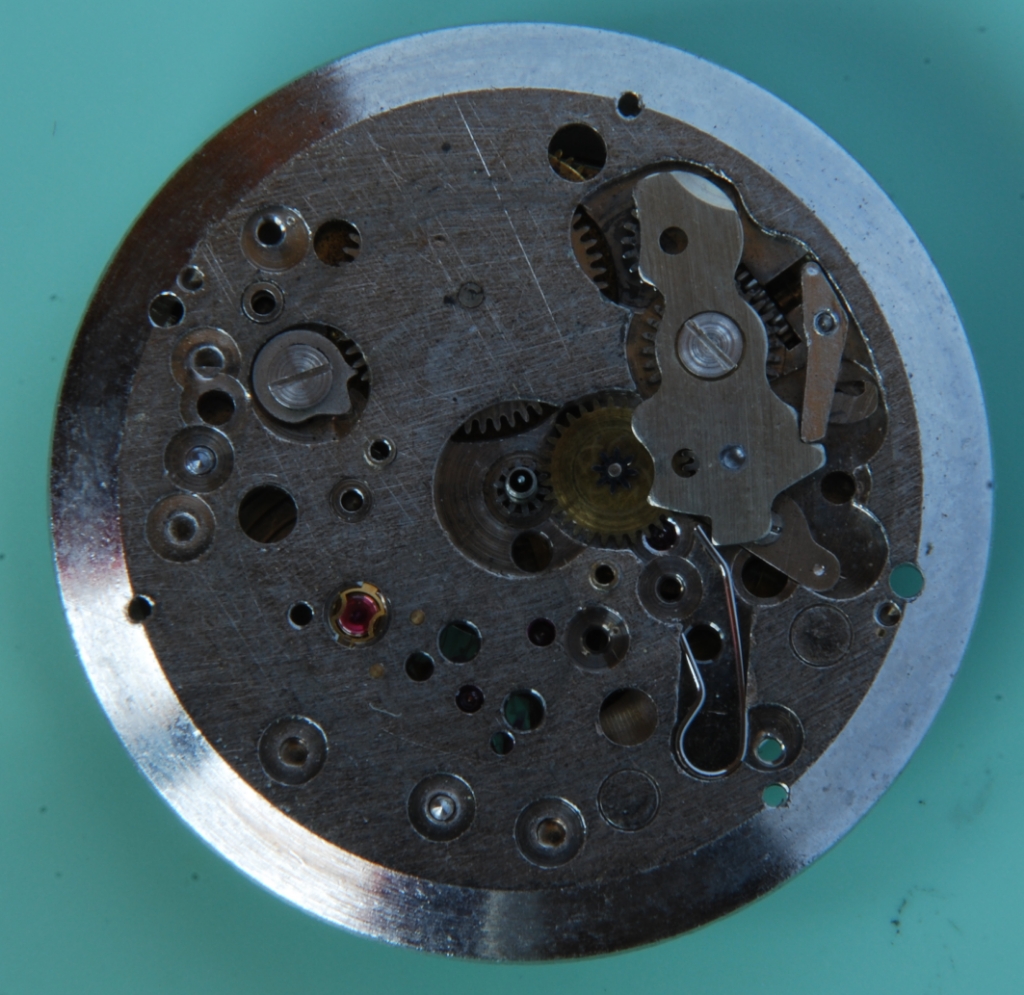
Here’s the dial side and you can see the barrel/ratchet wheel at 12 O’clock and the click at 10 O’clock. The keyless works here has one of those swinging plates to move the correct wheels into contact when the crown is in or out. It pivots about the big screw at 2 O’clock and swings anticlockwise when the crown is in (wind position). Bit annoying having to remove the dial to let the watch down as that’s the only way to access the click.


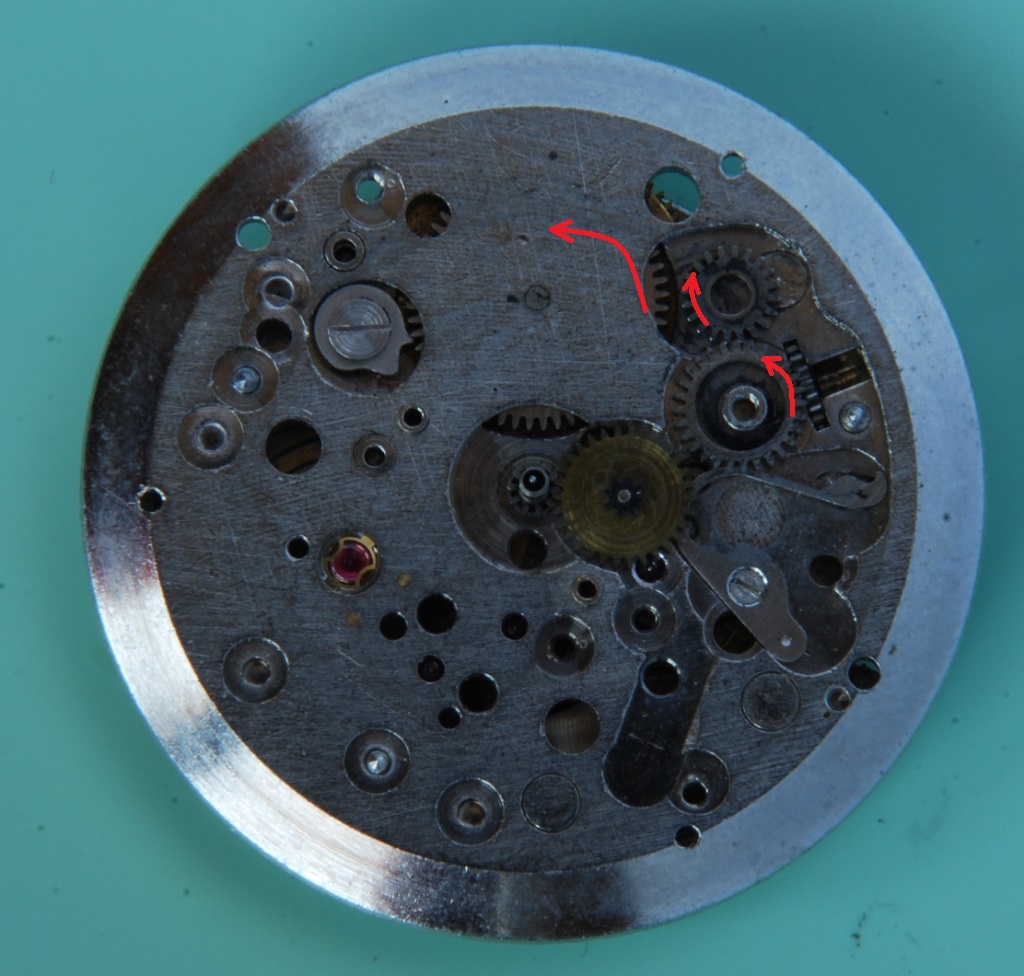
Here with the plate removed to show the keyless works wheels (the time setting wheel must have come off with the plate) and I put the rotations on them when winding the crown clockwise so, it’s clear that the ratchet wheel turns anti-clockwise when viewed from the dial side to wind the watch. Anyway, there’s nothing new here but for anyone with little experience it might be interesting.


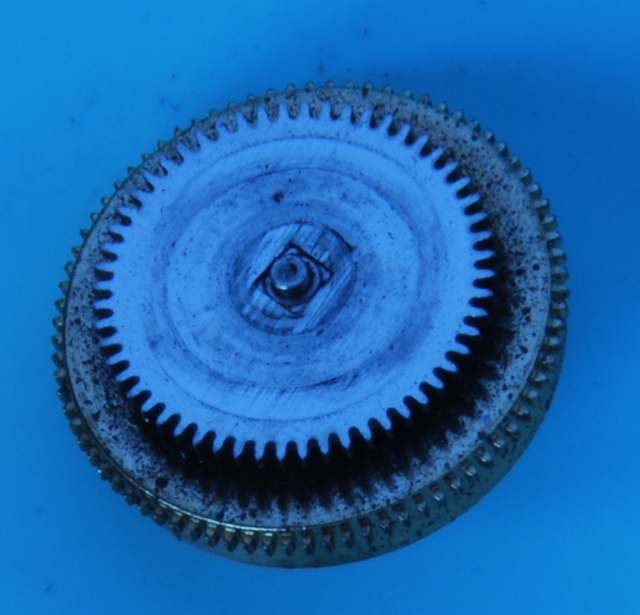
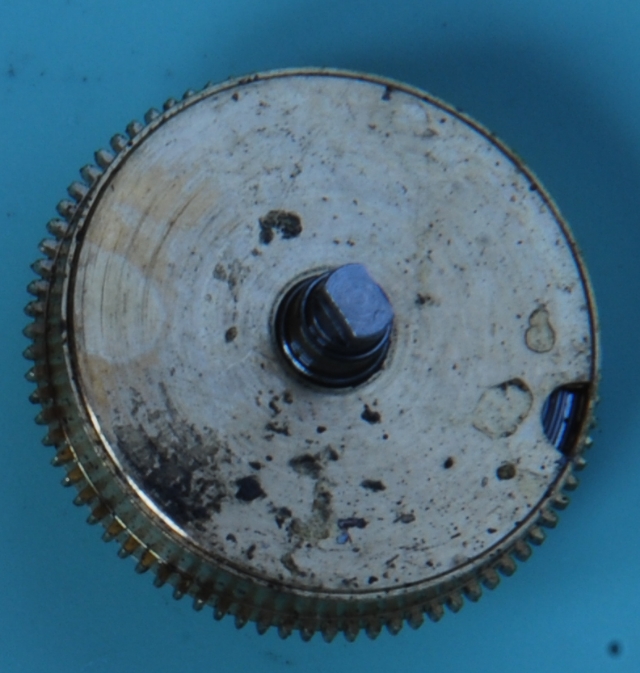
The barrel arbor is double ended (it can be wound from either side). This is quite cunning as it allows them to mount another ratchet wheel (not strictly the correct name) on the other side. I’m going to call this the “auto ratchet wheel”. Anyway, here a picture showing the real ratchet wheel still on the arbor.


And turned over to show another rectangular drive on the arbor.


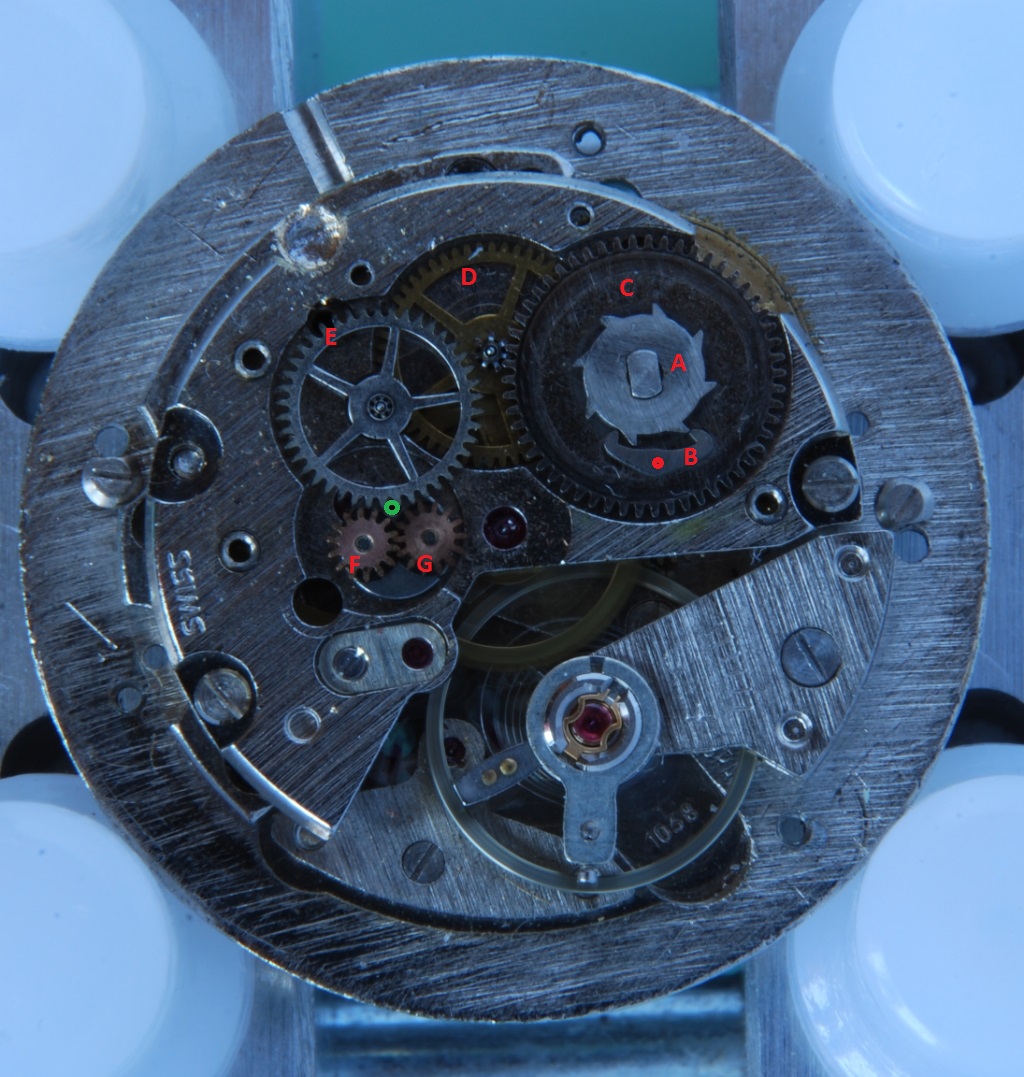
Now viewed from the back of the watch showing the auto mechanism. When winding manually, the arbor turns clockwise (as we’re looking from the other side) in this view and drives the auto ratchet steel wheel, ‘A’. The “hook”, which I’ve labeled ‘B’ pivots in the wheel ‘C’ at the red dot and so just gets pushed out of the way due to the shape of the teeth on ‘A’. This disengages completely the rest of the auto mechanism as wheel C does not turn. That wheel ‘C’ is not driven by the arbor, it has a circular hole in it and just rotates freely on the arbor.

When the rotor turns to auto wind the watch, it drives ‘G’. ‘F’ is permanently meshed with ‘G’ and so turns the opposite way. So, whichever way the rotor turns, one of them will be turning anti-clockwise. They’re both mounted on a little circular steel plate which pivots about the green circle and swings so that either ‘F’ or ‘G’ (whichever is turning anticlockwise) is in contact with ‘E’. This is about the simplest reverser I have seen and is also used on the Omega 501.

So, ‘E’ always turns clockwise, ‘D’ anticlockwise and ‘C’ is being driven clockwise. Because of the tooth shape on A, the hook catches and turns the arbor so, auto winding the watch. The real ratchet wheel (dial side) turns as well, which it needs to in order that the click works.

Pretty cool for what was, I suspect, a cheap movement. Obviously, with having two ratchet wheels, the movement will be thicker than other systems. Different ways of doing things though.


Cheers, Chris
Edited: