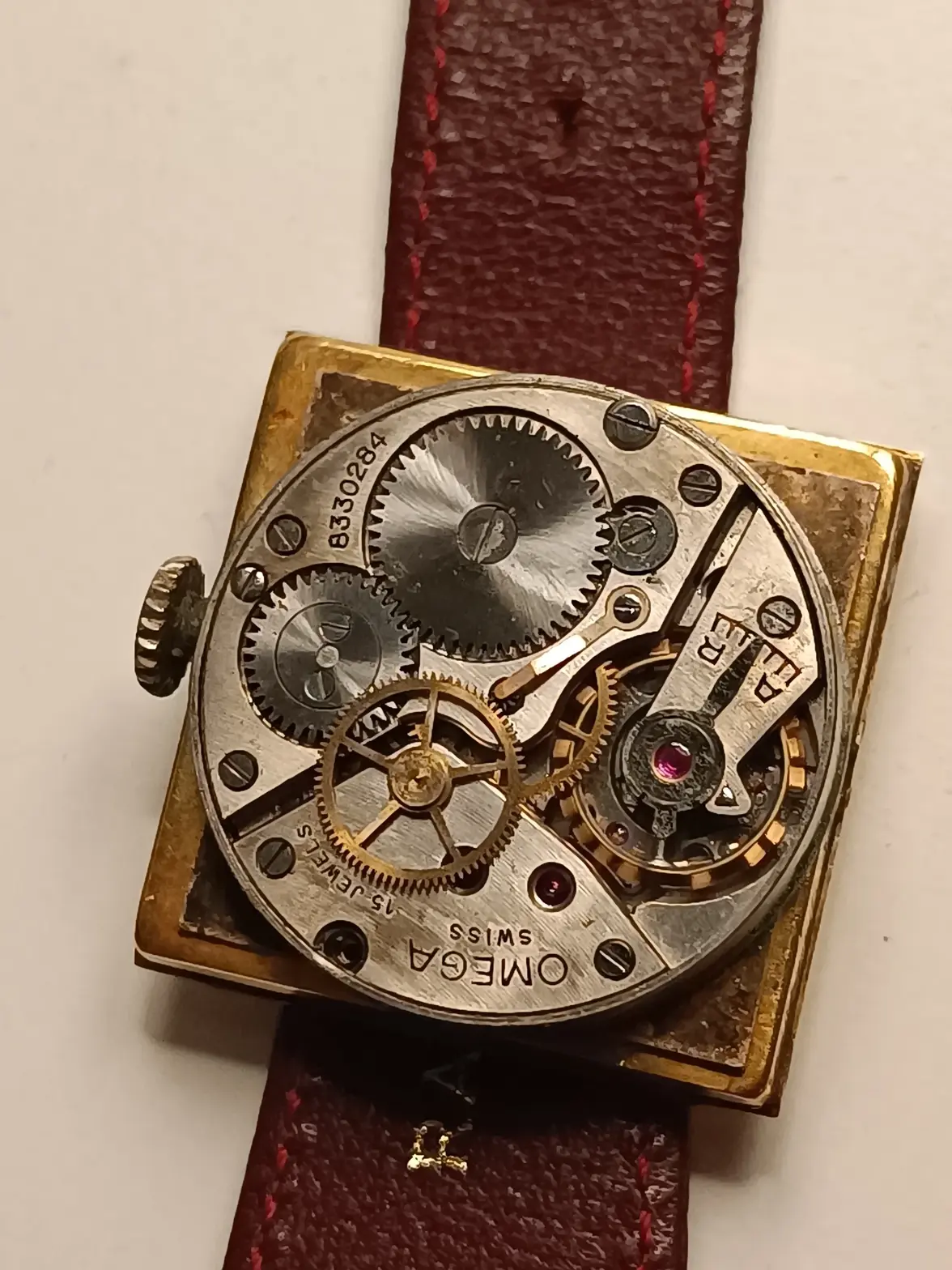
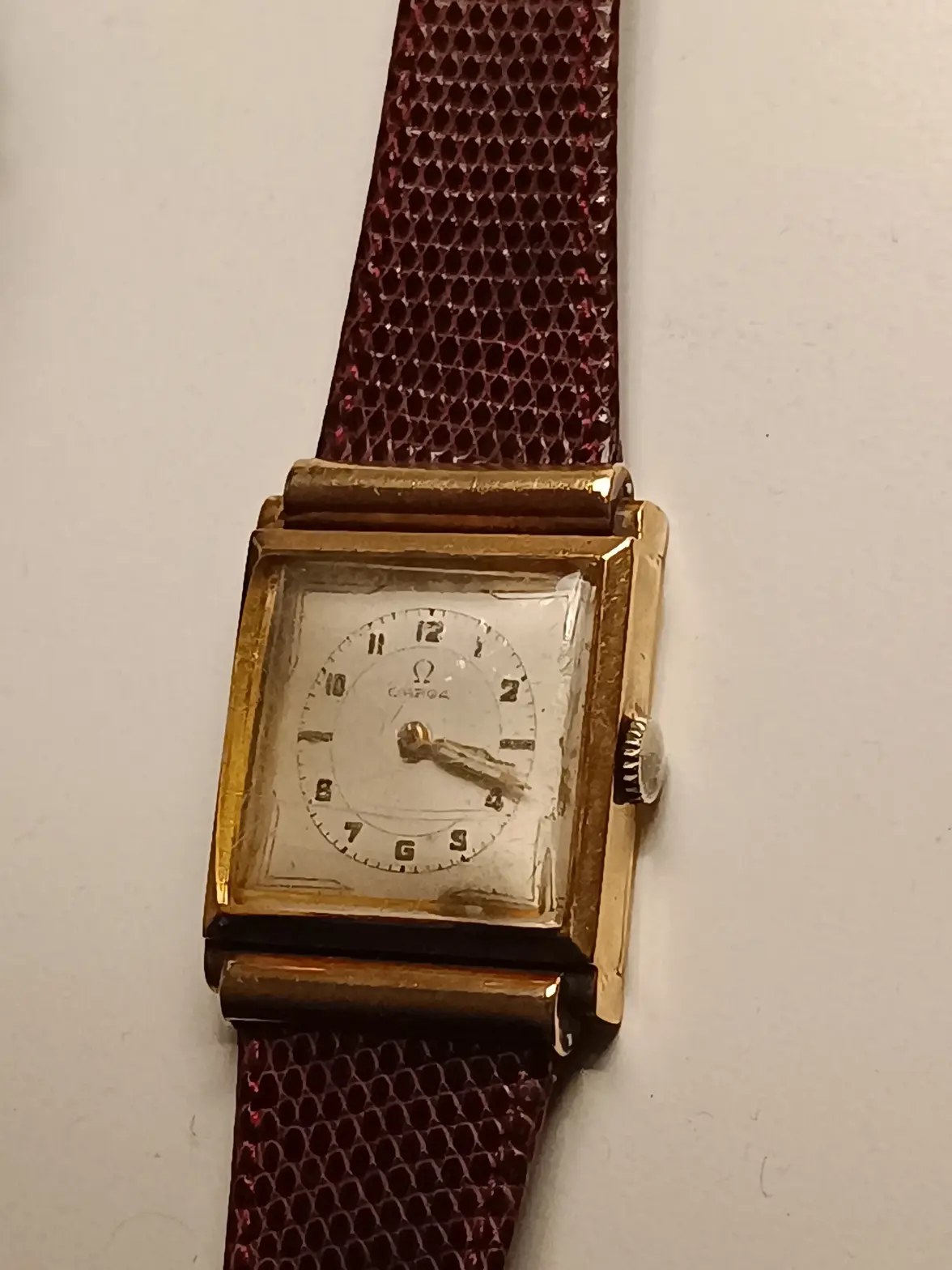
Square Case Medicus CK 651 - Original Dial or Redial?

Posts
141
Likes
155
Dear Respectable Members

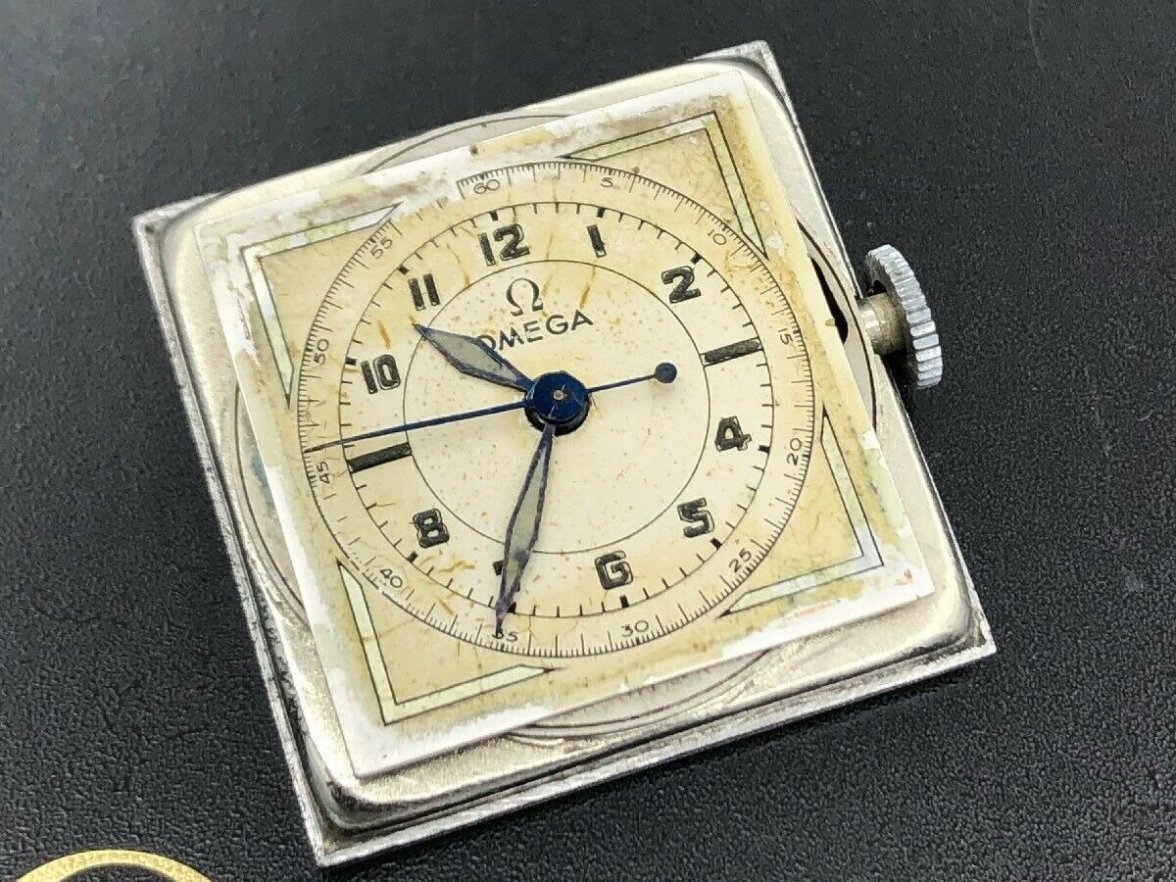
Am attaching some pics of a square case Medicus CK 651. I have not seen a dial like this before. Typically the dials I've have a "boxed" centre but this one is a little different. I'm sure dial variations existed.

Would be grateful if anyone can tell me if the dial is original or if anyone has a similar dial to this one. Photos below. Many thanks.

 
Posts
2,086
Likes
2,897
I think the "OMEGA" font doesn't look correct for the time period.
 
Posts
1,794
Likes
9,128
The notch at 12 is original; I think that the "Omega" has been added
 
Posts
52
Likes
63
Signature seems like a redial. Couls of been redone over the old signature. But like the previous members noted, the signature is not from the same period as the watch.
 
Posts
561
Likes
1,442


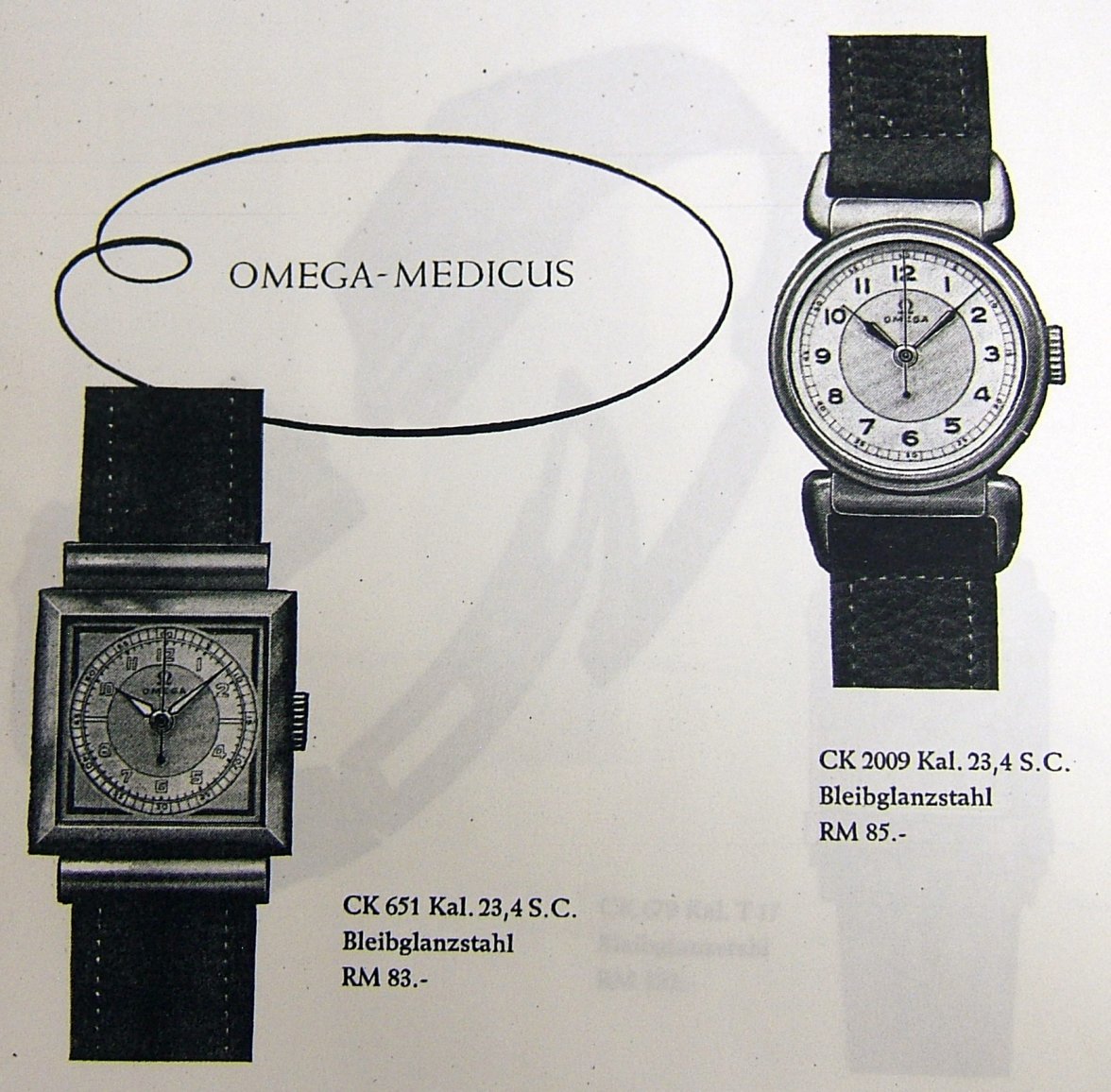
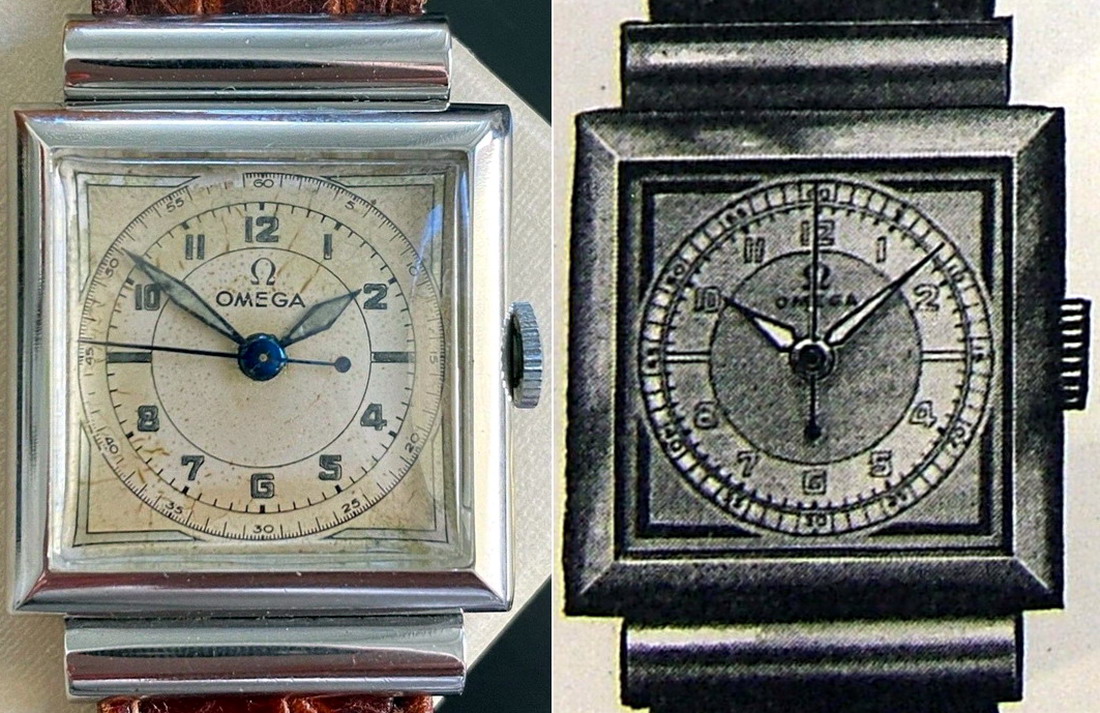
This page is from a 1937 catalogue - in German so presumably for marketing in Germany, Austria or Switzerland.
The hands are different - but correct for the period and I would guess are original.

I think this shows that the OP dial is original (including the font/Omega signature) - and more than that, it is a beautiful example of this very unusual watch (even rare!).

 
Posts
3,564
Likes
7,597
Sorry to be late to the party....

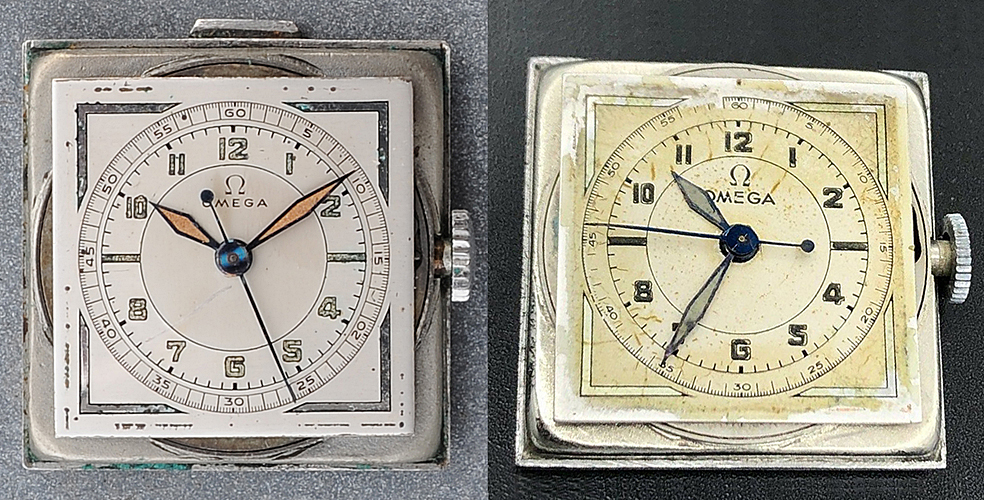
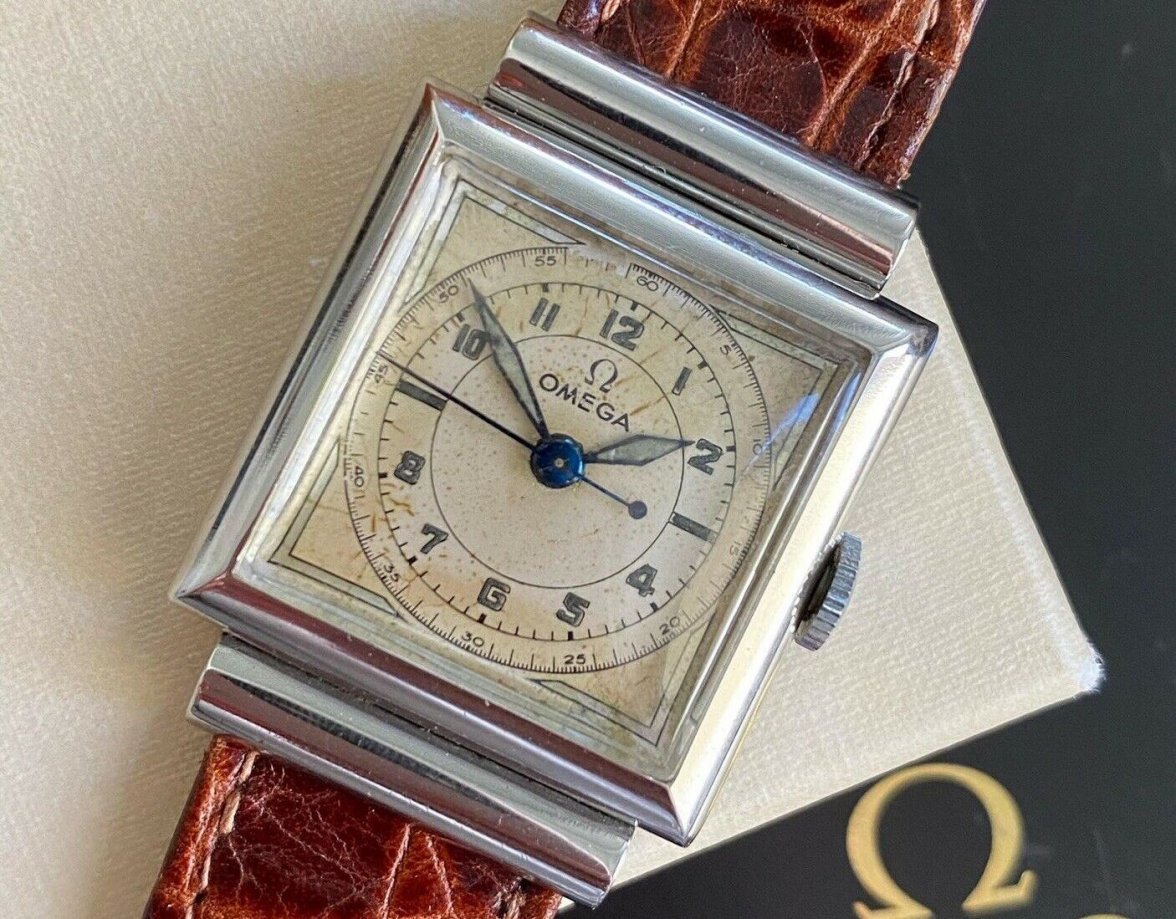
Here is mine for comparison


It is very similar but a bit different (gap between the scales) - and the logo is much finer...
 
Posts
561
Likes
1,442
How lovely! DIBS on them both.
And the hands are the same. So now there should be no question of originality.
It seems they’re not (quite) so rare!
 
Posts
5,082
Likes
15,706
So, no notches at 12 and 3 on @mac_omega ’s watch. I’m not familiar with the purpose of those notches.
 
Posts
3,564
Likes
7,597
So, no notches at 12 and 3 on @mac_omega ’s watch. I’m not familiar with the purpose of those notches.

One notch is common on dials with complicated print - it helps the dial manufacturer with adjusting the plate for multi-tone executions and/or multi-scales (i.e. chronograph dials). It is no reason for concerns.
But if there are 2 notches it always makes me think twice - most of the time it is because of a re-print.

The presence of 2 notches and the pretty large and fat print of logo and wording makes me think of a partial reprint - maybe logo and Omega script has been re-applied.
But it is also possible that there have been several different logo/script versions during the short time the Medicus has been produced - maybe different dial manufacturers/contractors?
Just food for a second thought...
 
Posts
141
Likes
155
Many thanks to members for chiming in. A big thank you to Tom for his inputs and also taking the trouble to research and source the print from the German catalogue which indisputably validates and confirms the existence of this dial style/variation. Also, thank you to Erich for his additional comments and also for the image of his dial for comparison.

Regarding the chance of a re-dial, as pointed out, I cannot imagine anybody achieving this amount of fine detail - and what would be the point of such a massive effort to achieve that?

But Erich makes two interesting suggestions:

Firstly “… a partial reprint - maybe logo and Omega script has been re-applied.” But I cannot understand why that would have been done - and there are no signs at all of any original logo/script.

Then moving on to Erich’s second point: “… it is also possible that there have been several different versions during the short time the Medicus has been produced - maybe different dial manufacturers/contractors.” I think this is VERY possible. If one wanted to find out, it would be interesting to see the underside of the dials - probably different manufacturers’ markings. Again as Erich points out, there are slight variations/differences - not just the finer logo/script but also the gap between the scales.

These dials were meticulously done by hand so it makes sense that dial makers would have applied their own personal touches with subtle variations of the logo/script from the different makers. Dial making back then was a laborious, meticulous and painstaking process. I feel a dial refinisher would find it very difficult to achieve the same results and/or level of detail and consistency (i.e., notably the fine printing and detail of the scales, the positioning and spacing of the lettering, the precise length and equidistance between each minute marker, the defined thickness and size of each of the circular rings, etc.).

As Erich pointed out, the notch at 12 was common on dials with complicated prints and this was a practice dial makers employed. Dial makers did also apply a notch at 3 o'clock for more complex dial work. Hence, it would be safe to assume that not all notches you see at 3 are indicative of a redial.

Finally, the degradation, blemishes and patina you see on dial including the OMEGA script, is consistent with the time period of production.

Many thanks again to OF members, especially Tom and Erich for sharing their views, insights and experiences.
 
Posts
1
Likes
0
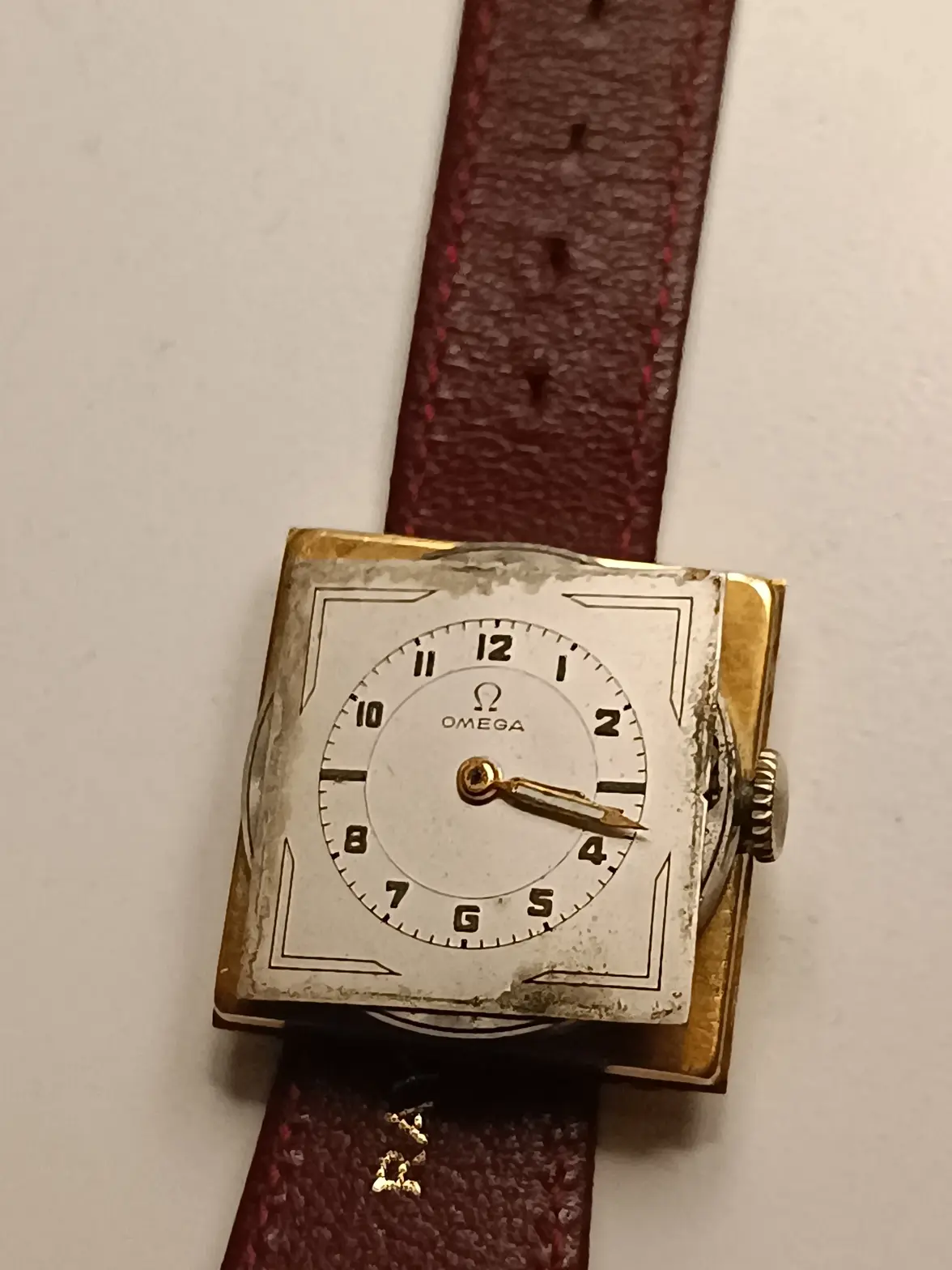
Hello everyone, I have a 14ct gold Omega Medicus very similar to yours, with the same dial, can you help me find out the year of the watch? Do you think it is a ck651? In your opinion, if restored it could have a good value for sale? What range for example? Thanks !!!

 
Posts
5,599
Likes
9,428
Hello everyone, I have a 14ct gold Omega Medicus very similar to yours, with the same dial, can you help me find out the year of the watch? Do you think it is a ck651? In your opinion, if restored it could have a good value for sale? What range for example? Thanks !!!


Your Dial is not original . Unfortunately a bad redial. That will cut your value around 50% .
 
Posts
18,066
Likes
37,710
As noted above, it's a redial and not a very good one.
The wtatch is also missing the seconds hand aind I can't see if the seconds hand shaft is still there, although the pivot with pinion is still at the rear of the movement.
I'd date production of the movement to 1936, so the watch would be from that time.

Due to its condition and issues, the cost of restoration would outweigh the final sale value.