Single Or Double Ts?

Posts
843
Likes
878
I'm sure your English skills are superlative!

In reading the conversation, there seems to be two issue being discussed here. The T issue and the fact that some Omegas were produced with only luminescent hands and not markers and bore the mark T Swiss Made

The ISO standard when the document was published by FHH seems to differ from earlier publications that I recall, and I referenced that to demonstrate there was a standard,. I believe the Tritium content was reduced over time and ISO 3157 was probably the last determination. One point that I would offer is that all luminescent material is created in a stabilising 'ground' and then applied, and so, arguably, it depends on the strength of the mix as to whether we see one or two Ts. I would expect the mix strength to be much more concentrated, for example, on the thin tritium inserts on the dauphine hands of some Omegas of the sixties for example.

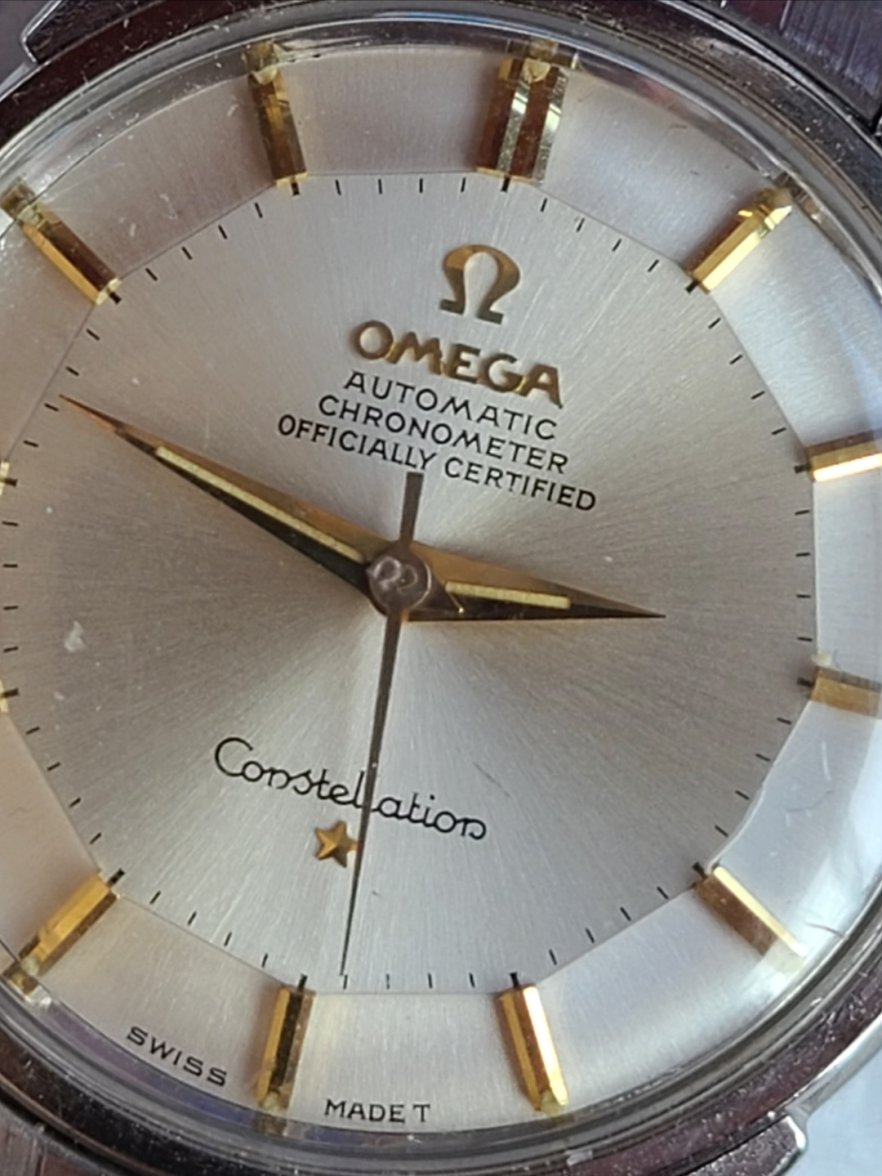
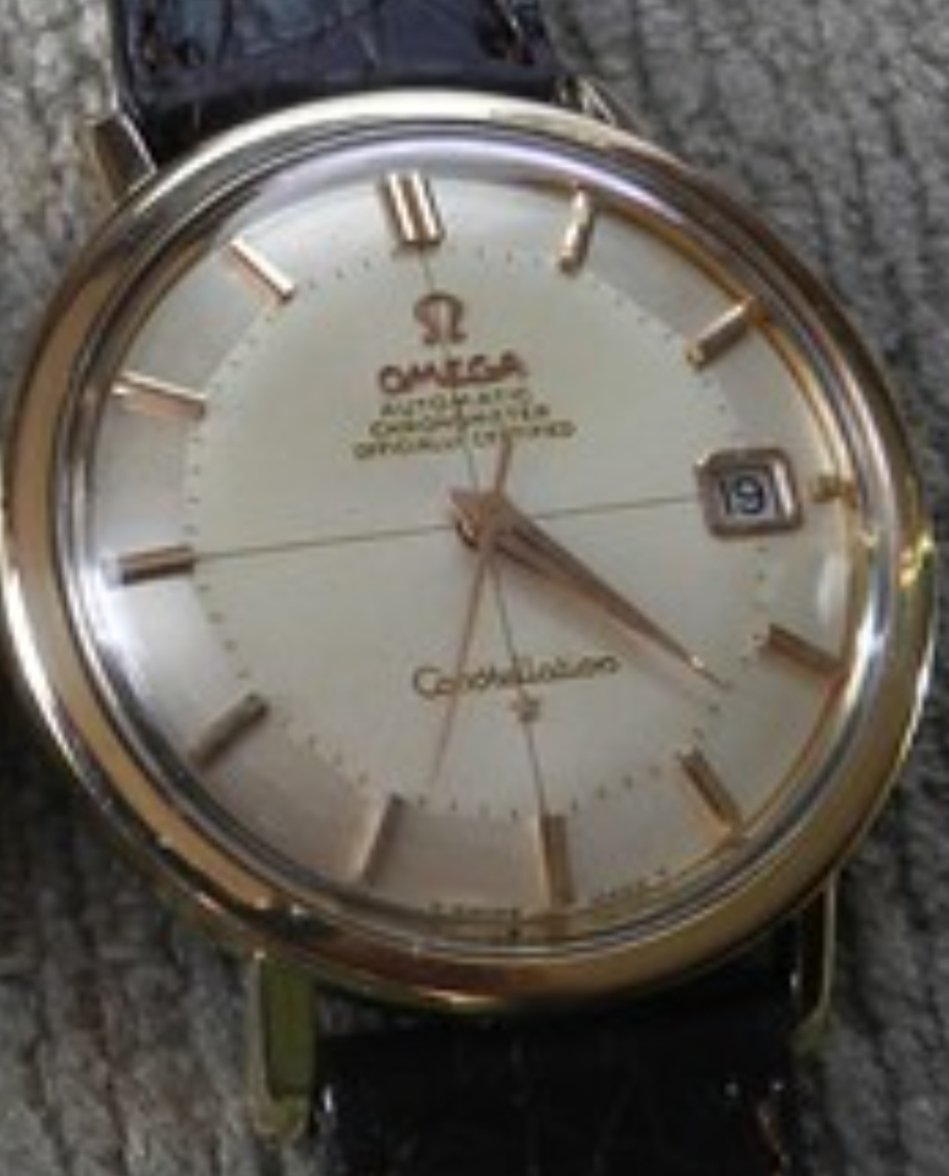
In terms of Constellations I've seen over the years that I judged to be factory original at the time, I've often seen the one T with models that only have luminescent hands, and explained it to myself as above. I'm simply relying on memory, but some enterprising individual with too much time on their hands could, over time, build up a collection of examples to come to a reasonable determination.

To muddy the waters even further, in the US where the 'glow in the dark' craze first took off with non tool watches, I know Norman Morris often swapped hands on order from various retail outlets, and so there could be many examples sold in the US where there is no T but with what appear original hands.

The last ISO standard as mentioned for T Swiss Made T was 7 millicuries.

 
Posts
7,106
Likes
23,079
I'm sure your English skills are superlative!

In reading the conversation, there seems to be two issue being discussed here. The T issue and the fact that some Omegas were produced with only luminescent hands and not markers and bore the mark T Swiss Made

The ISO standard when the document was published by FHH seems to differ from earlier publications that I recall, and I referenced that to demonstrate there was a standard,. I believe the Tritium content was reduced over time and ISO 3157 was probably the last determination. One point that I would offer is that all luminescent material is created in a stabilising 'ground' and then applied, and so, arguably, it depends on the strength of the mix as to whether we see one or two Ts. I would expect the mix strength to be much more concentrated, for example, on the thin tritium inserts on the dauphine hands of some Omegas of the sixties for example.

In terms of Constellations I've seen over the years that I judged to be factory original at the time, I've often seen the one T with models that only have luminescent hands, and explained it to myself as above. I'm simply relying on memory, but some enterprising individual with too much time on their hands could, over time, build up a collection of examples to come to a reasonable determination.

To muddy the waters even further, in the US where the 'glow in the dark' craze first took off with non tool watches, I know Norman Morris often swapped hands on order from various retail outlets, and so there could be many examples sold in the US where there is no T but with what appear original hands.

The last ISO standard as mentioned for T Swiss Made T was 7 millicuries.

A public thanks for your fabulous, well-researched, authoritative, clear, Constellation-collectors dream-come-true website.
 
Posts
18,104
Likes
27,413
Before you start blowing it out of your fundamental orifice do your own research.

See here for tritium regs https://www.hautehorlogerie.org/en/...y-of-watchmaking/s/swiss-t-25-t-swiss-made-1/
Nowhere does that state that a single T denotes less tritium, which is the point I am discussing.

I am fully aware of the regulations stating T and .25 T on the dial.

I have not seen any documents regarding a difference in Single T vs double T which was a stated. Hence I feel that claim you made about the difference of single vs double T is bollucks unless you have the regulation that states that. Otherwise it’s just an assumption.
 
Posts
18,104
Likes
27,413
@mondodec The bollucks was not calling you out for not knowing anything. It's just the Single T issue is still not explained, and I've dug through the swiss laws to find an explanation.
 
Posts
3,728
Likes
6,328
Hello! hello?
Anybody digged out a photo or a reference yet?
Lumed hands going with non lume dial or something?
 
Posts
12,950
Likes
22,416
T dial with non lumed hands.

However, after a quick search there were less examples than I expected so perhaps not as common as I thought.

 
Posts
3,728
Likes
6,328
I think it is really hard for us to find a vintage Omega that had lumed hands and non lumed dial.
If you find one then you check the reference then you google it, you will see all the others don't have hands and non lumed dial that way. And that "special rare watch" soon becomes a frankened black sheep.
 
Posts
2,606
Likes
3,044
There are 1000's of variations of a single model number, so I don't agree with googling the model number as a reference

I think most special watches could've been custom orders, like someone insists on a black dial and crosshair, they made it happen on a model that didn't come with them, so my theory is, if at the time a big spender asked for a lumed dial model and a non-lumed hand model he fancied, it'd be a valid "factory" combination, so it should be theoretically possible, it'd be extremely rare if there's a provable model though (this is assuming Omega didn't have an unbreakable design code at the time)
 
Posts
10,305
Likes
16,126
There are 1000's of variations of a single model number, so I don't agree with googling the model number as a reference

I think most special watches could've been custom orders, like someone insists on a black dial and crosshair, they made it happen on a model that didn't come with them, so my theory is, if at the time a big spender asked for a lumed dial model and a non-lumed hand model he fancied, it'd be a valid "factory" combination, so it should be theoretically possible, it'd be extremely rare if there's a provable model though (this is assuming Omega didn't have an unbreakable design code at the time)
As I noted earlier, there is no utility at all in that combination as you cant actually see the hands in the dark to tell the time so seeing the dial alone is worthless. Find me a believable example and I will relent. That said, there is always the never say never factor with Omega, often if you say something is impossible you end up with egg on your face, but in this case, it makes so little sense I can't see either a customer or the factory the going for it. A bodged hand replacement at a service later down the line however, I can understand.
Edited:
 
Posts
3,728
Likes
6,328
Now, back to one T and two T's from a 005 and 004.


It is the way Omega printed the dials, not related to the amount of tritium applied on dials.
 
Posts
23,436
Likes
52,078
Remarkable all the dial-printing variations that Omega did, possibly to specify minor differences in lume application (and even the hands?). At the same time, Rolex was so lazy that they frequently used the same T SWISS T dials for everything, even no-lume dials.