Show us your Stop Watches

Posts
4,508
Likes
45,189
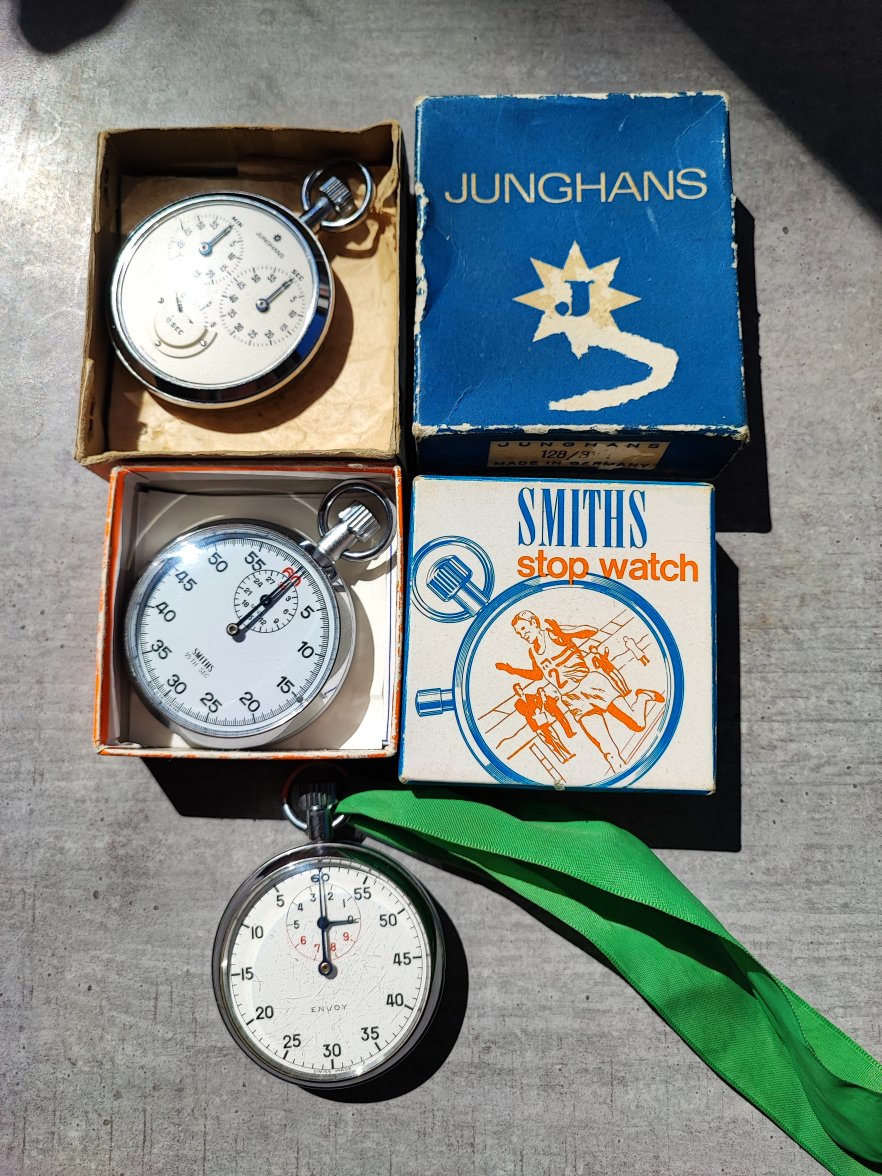
I don't have too many but to kick the thread off here are mine.

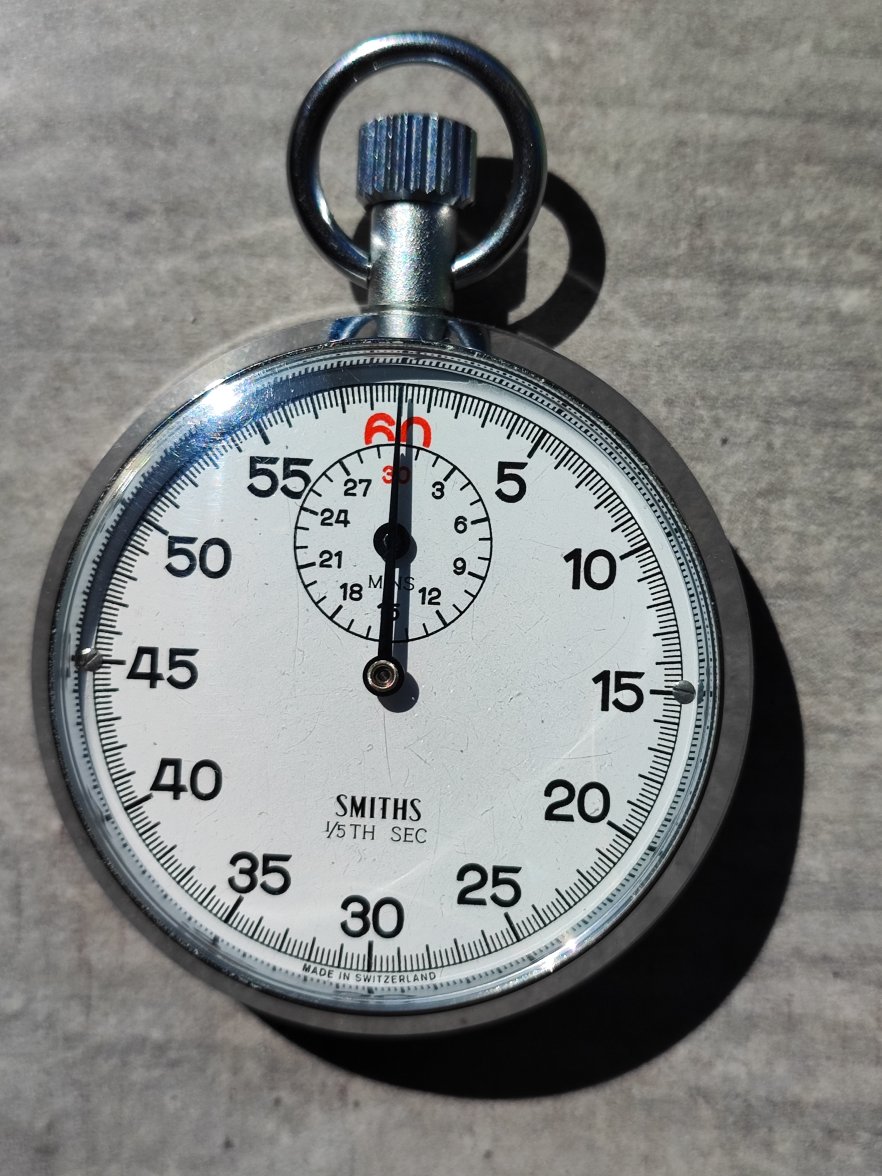
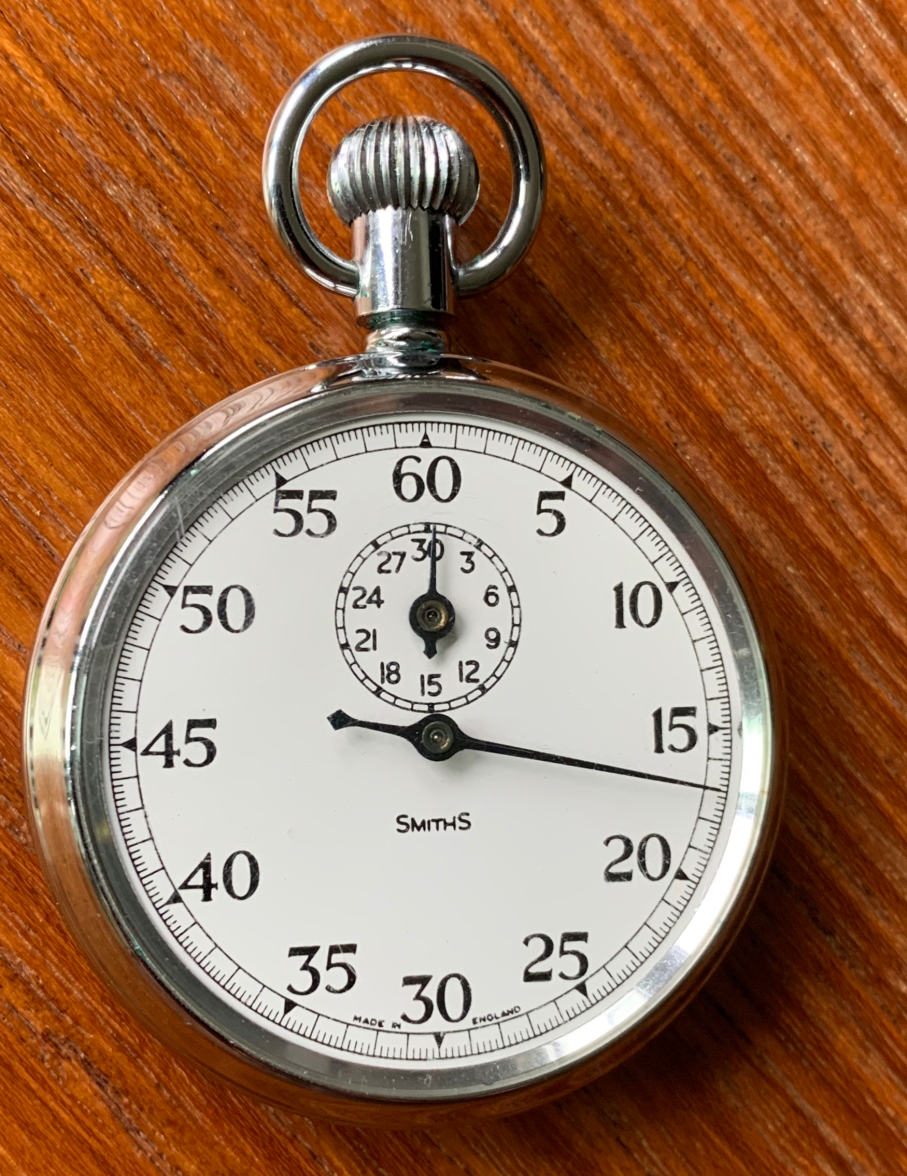
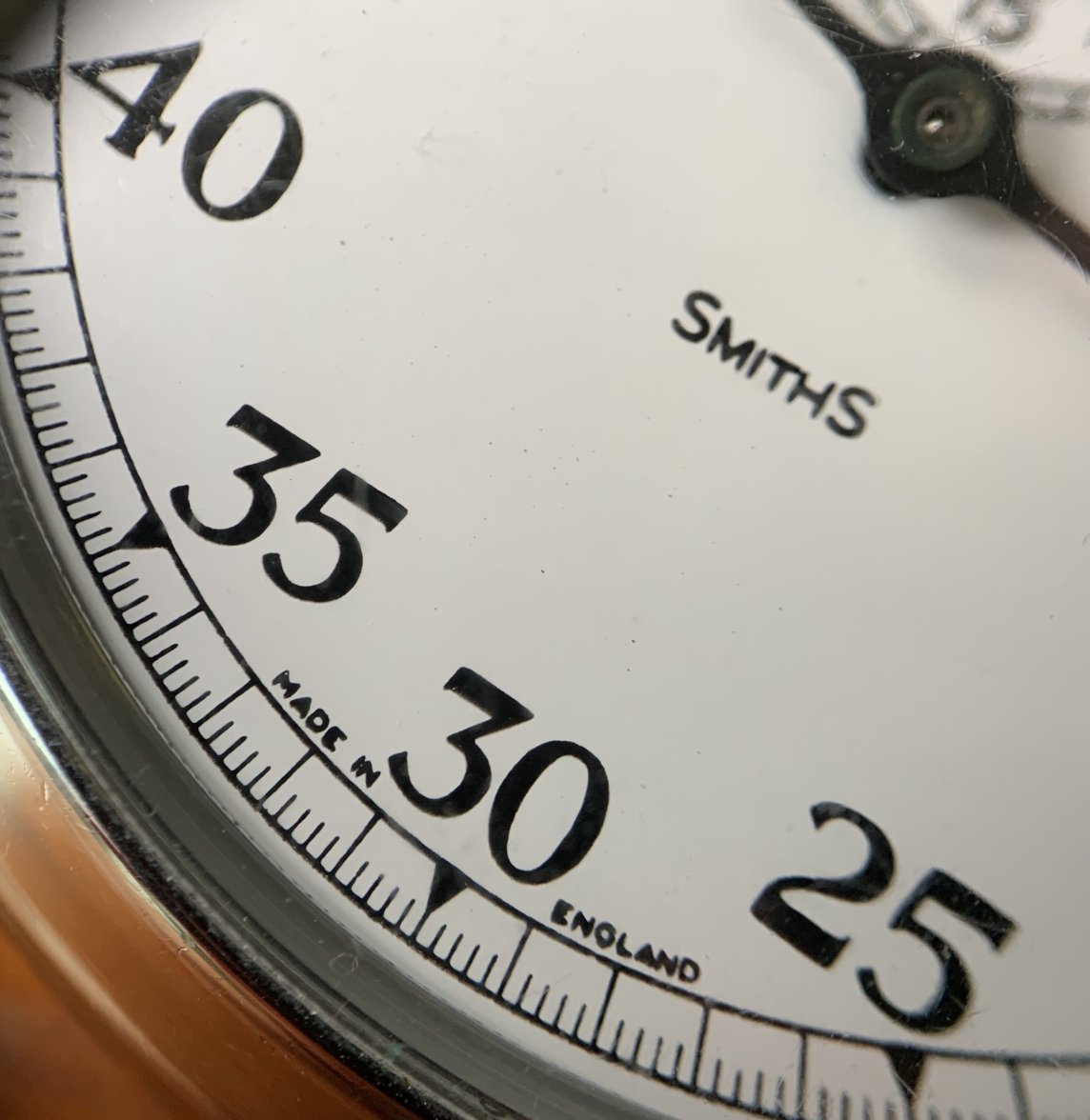
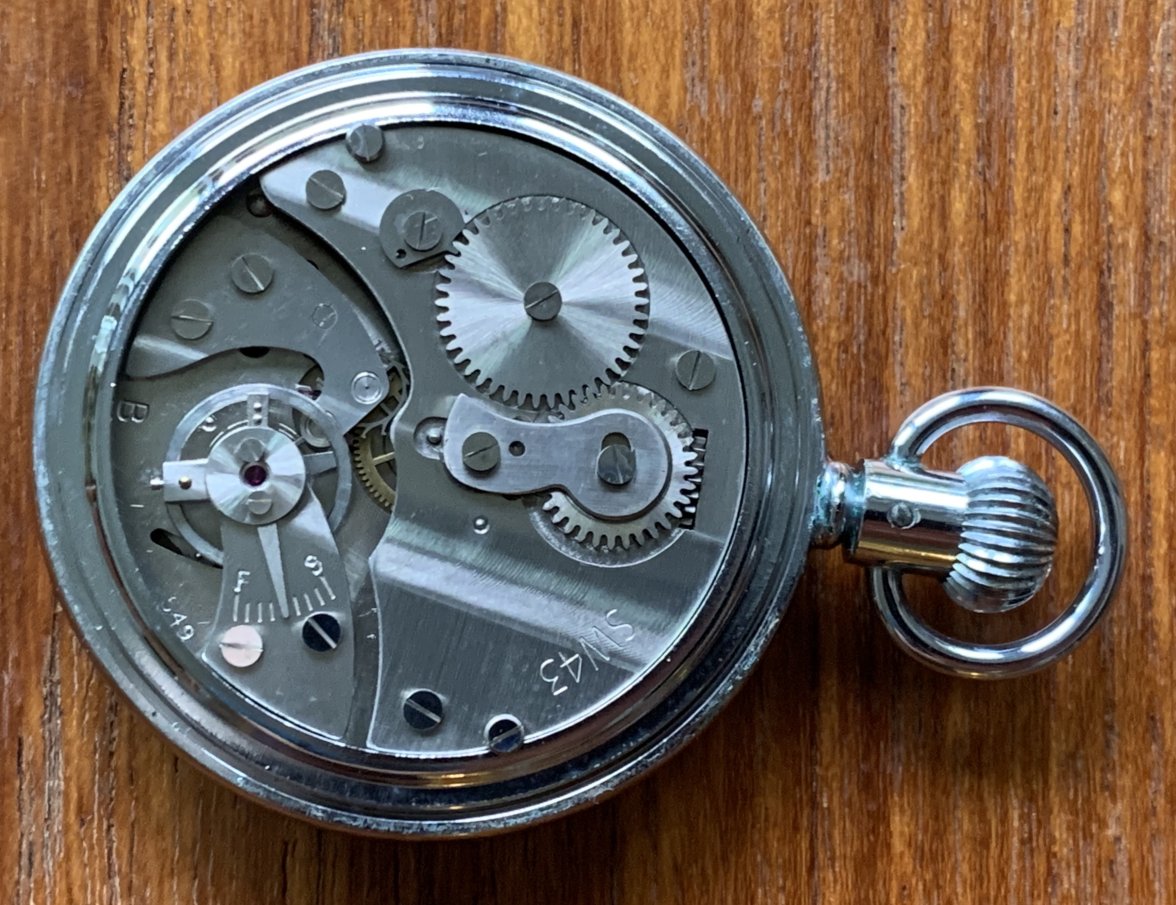
The Smiths I got just yesterday, I think it's probably new old stock as it has zero marks or dirt with all the paper work warranty and instructions in perfect clean order.

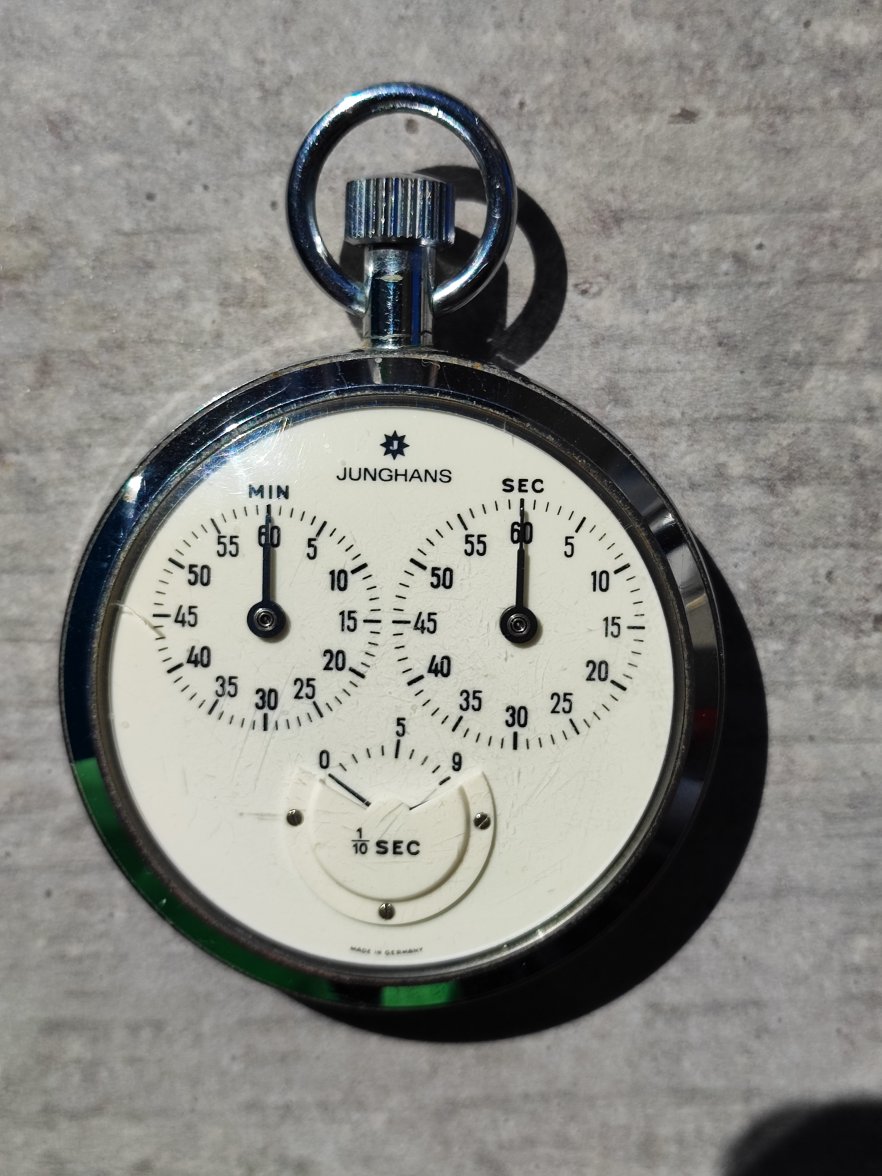
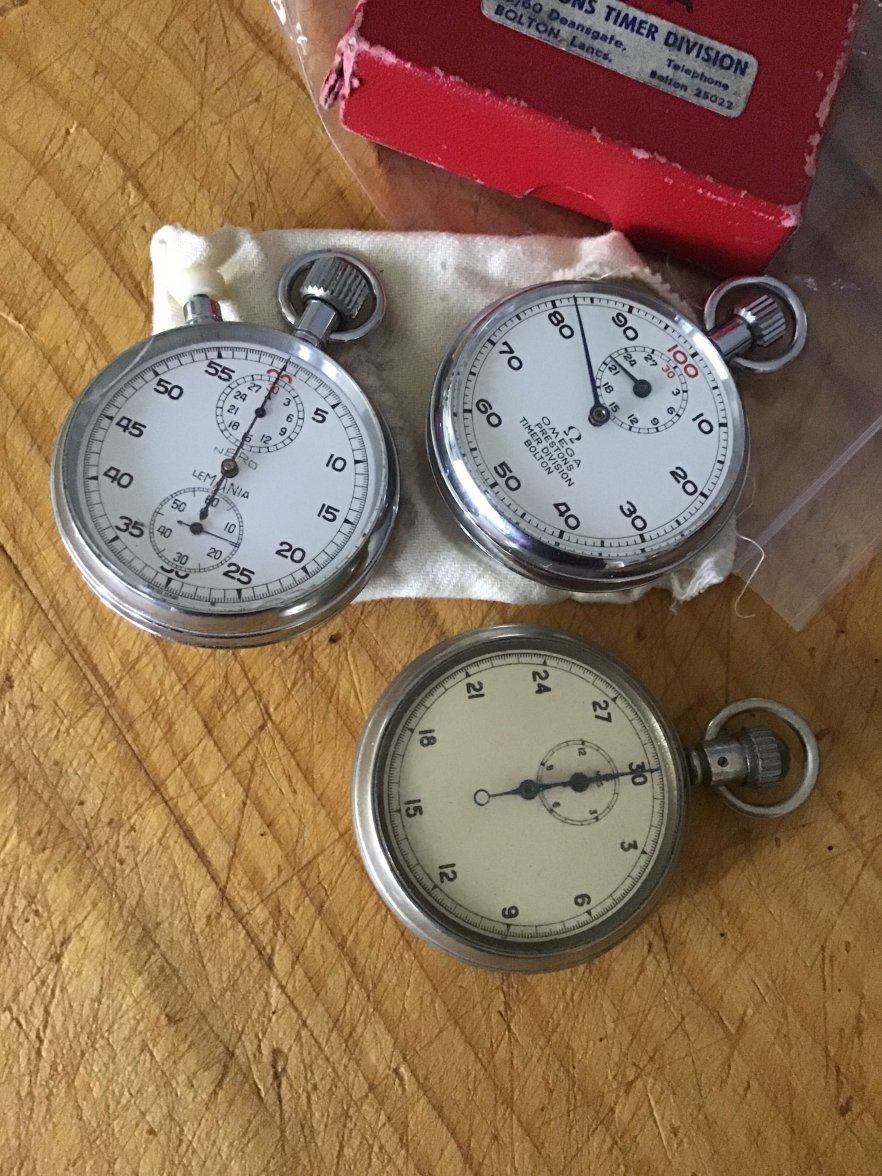
The Junghans I bought about 35 years ago and I use it in my Electronics business for process timings, it gets a fair amount of use.

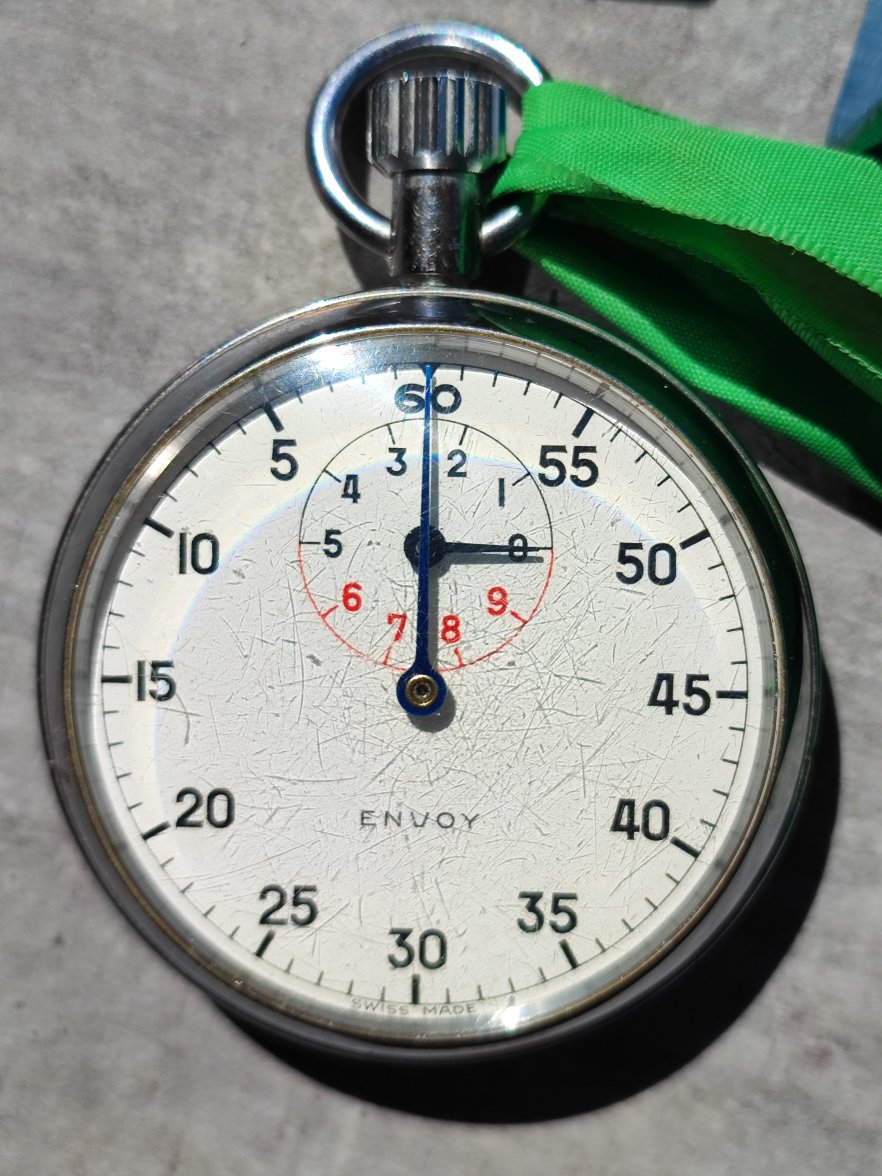
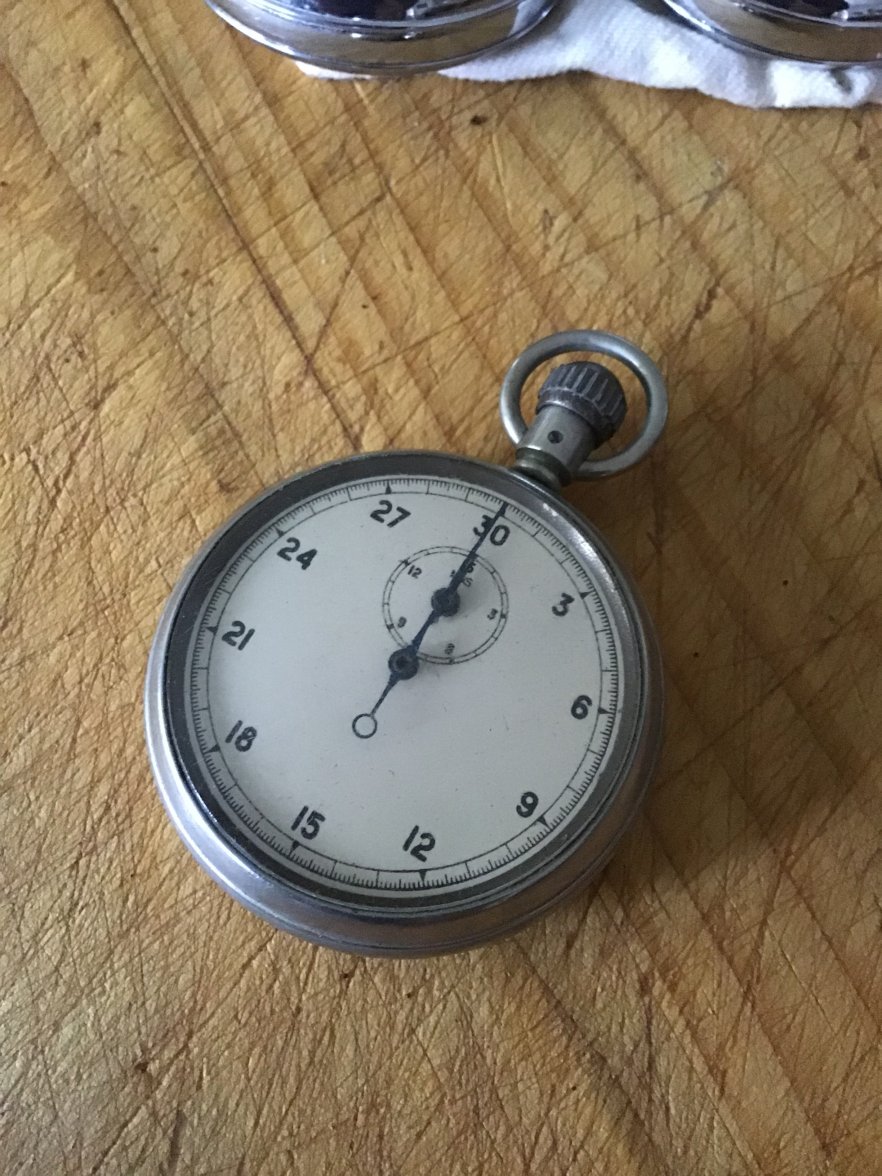
The Envoy was bought about a year ago and probably of little use to me other than curiosity as it is a count down timer.

Show us yours.
Edited:

 
Posts
16,856
Likes
47,859


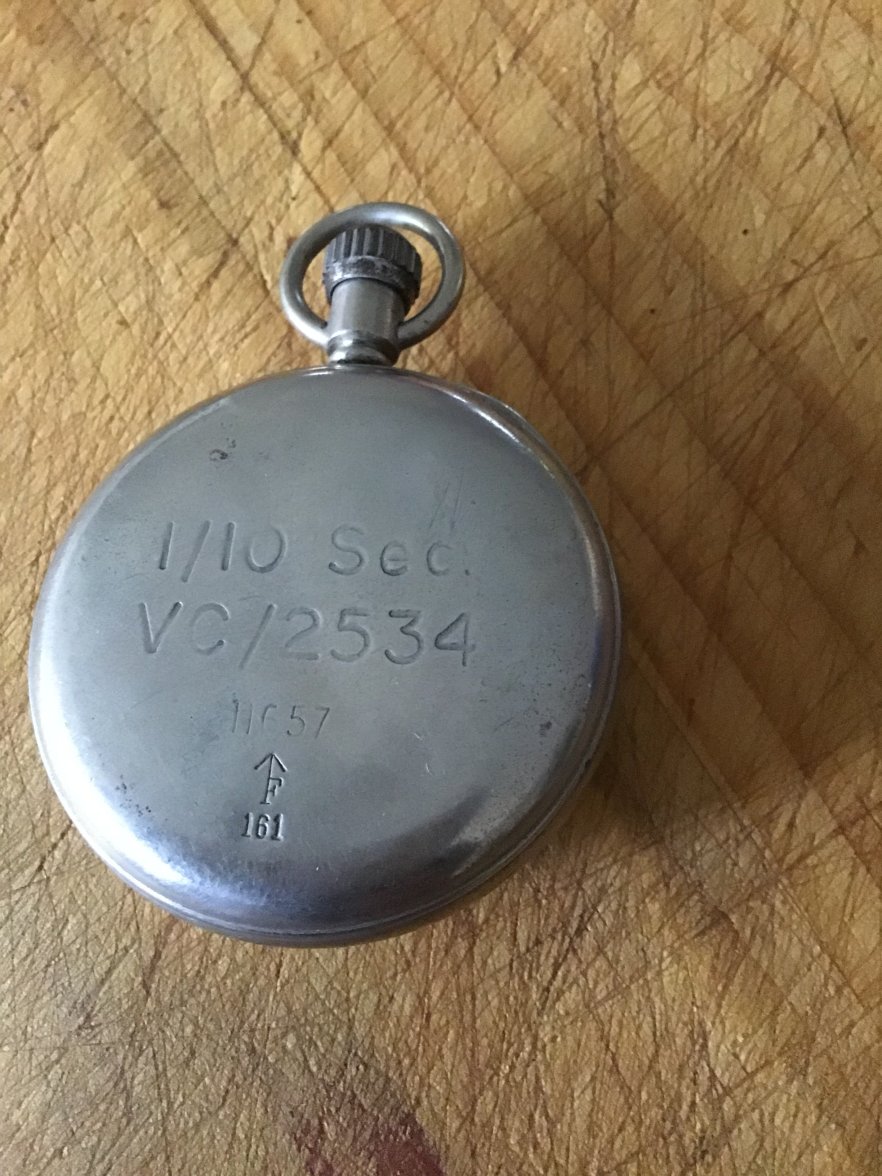
This one looks special I think…….
 
Posts
2,726
Likes
5,498
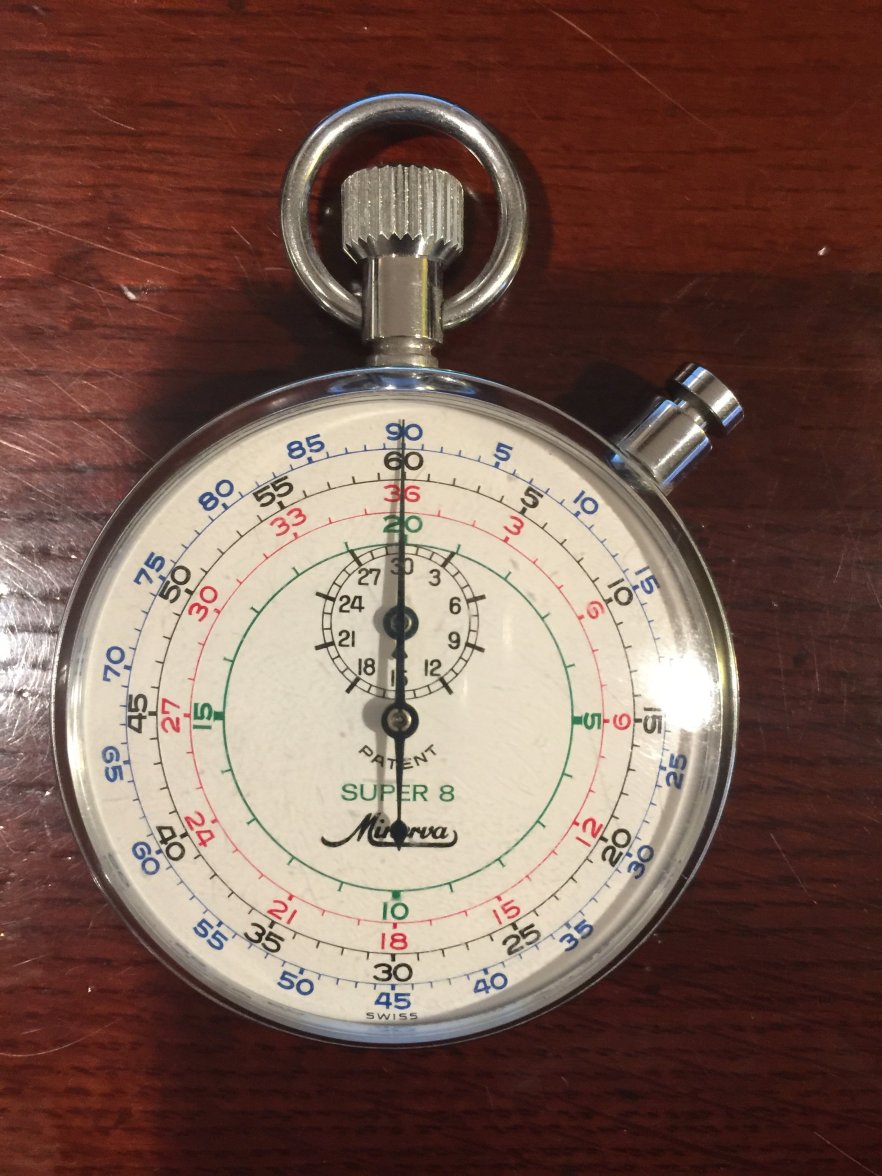
Minerva Super 8. From my father. Started it all. This kicked off 2 years of pocket watch obsession followed by Seiko and Omega vintage.
 
Posts
15,236
Likes
44,750
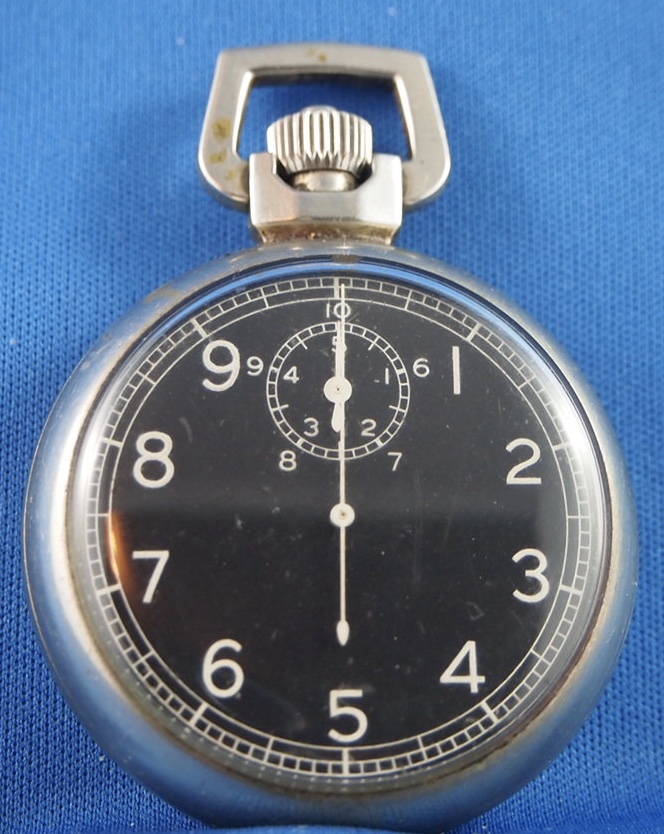
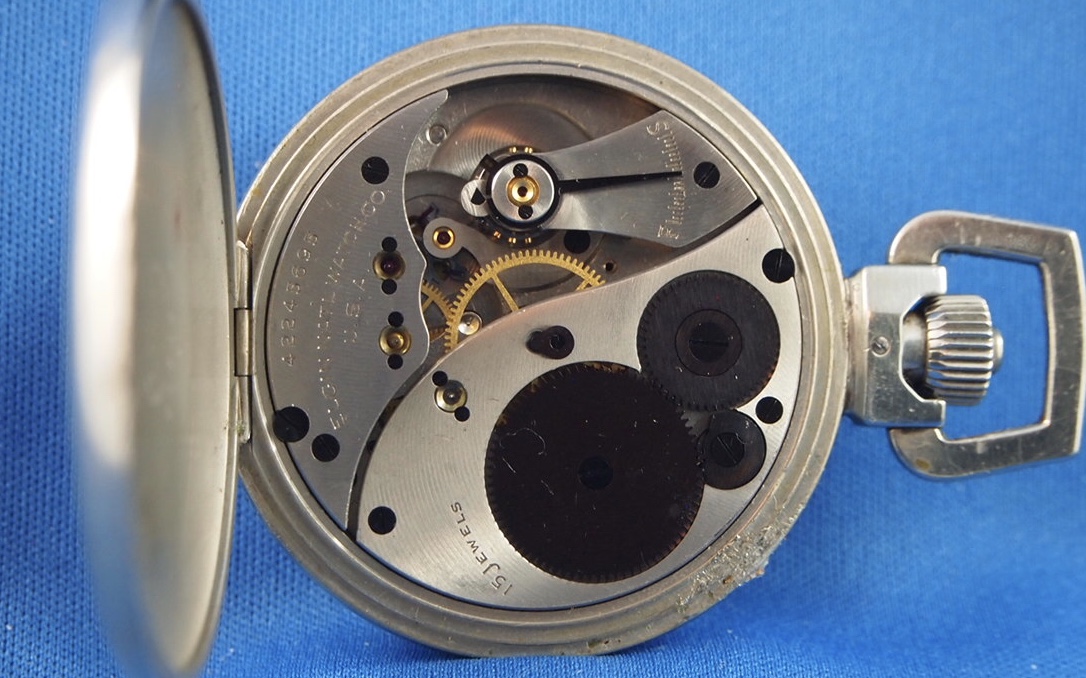
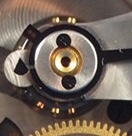
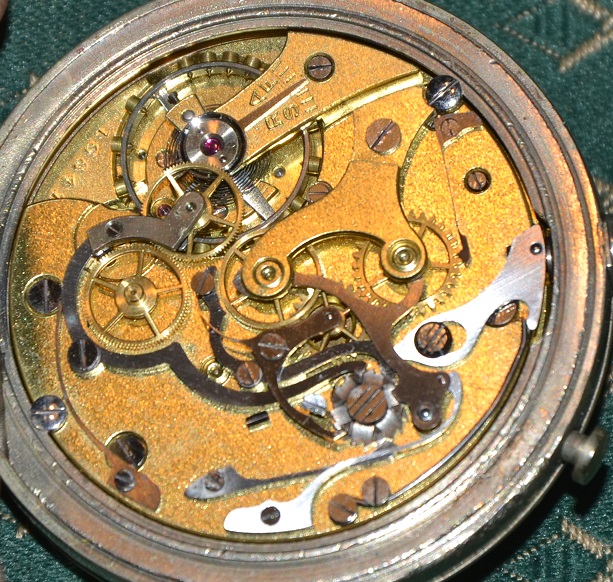
I have only one. A WWII Elgin”jitterbug” stop watch. It ticks at about 36,000 bph. The seconds hand traverses the dial in ten seconds. The minutes totalizer advance one division (minute) with each revolution of the seconds hand. I hear it variously reported it was used for navigation, artillery, etc. etc., but really don’t know. I find it very useful for rating 400-day clocks after fitting a new suspension spring. It is very easy to time the 8 or 10 revolutions per minute of the clock pendulum. The bottom picture shows the teeny wee balance wheel.

 
Posts
17,608
Likes
36,827
I have only one. A WWII Elgin”jitterbug” stop watch. It ticks at about 36,000 bph. The seconds hand traverses the dial in ten seconds. The minutes totalizer advance one division (minute) with each revolution of the seconds hand. I hear it variously reported it was used for navigation, artillery, etc. etc., but really don’t know. I find it very useful for rating 400-day clocks after fitting a new suspension spring. It is very easy to time the 8 or 10 revolutions per minute of the clock pendulum. The bottom picture shows the teeny wee balance wheel.


If it's an A-8 then I've seen the beat rate quoted at 144,000 beats/hour.
Their primary use was as a navigation timer to calculate airspeed using terrestrial waypoints or celestial sightings.

It'd be interesting to see yours on a Timegrapher to see what the actual beat rate is.

PS: The minute totaliser only advances one increment (10 seconds) per sweep hand revolution, so six revolutions = 1 minute.
 
Posts
15,236
Likes
44,750
@JimInOz ,

I’ve never had this on on my Timegrapher. Are these instruments calibrated to record results on such odd timepieces? I’ll give it a try. I suppose if the Timegrapher was set to read 36,000 (times 4 = 144,000), it might give a result.
 
Posts
17,608
Likes
36,827
@JimInOz ,

I’ve never had this on on my Timegrapher. Are these instruments calibrated to record results on such odd timepieces? I’ll give it a try. I suppose if the Timegrapher was set to read 36,000 (times 4 = 144,000), it might give a result.

I just checked my two timergraphers, the max beat rate is 42,500/vph, so I think the jitterbug is well above what a standard machine can measure.
Even the Witschi Watch Expert G4 only goes as high as 86,400.
 
Posts
15,236
Likes
44,750
I just checked my two timergraphers, the max beat rate is 42,500/vph, so I think the jitterbug is well above what a standard machine can measure.
Even the Witschi Watch Expert G4 only goes as high as 86,400.

@JimInOz ,

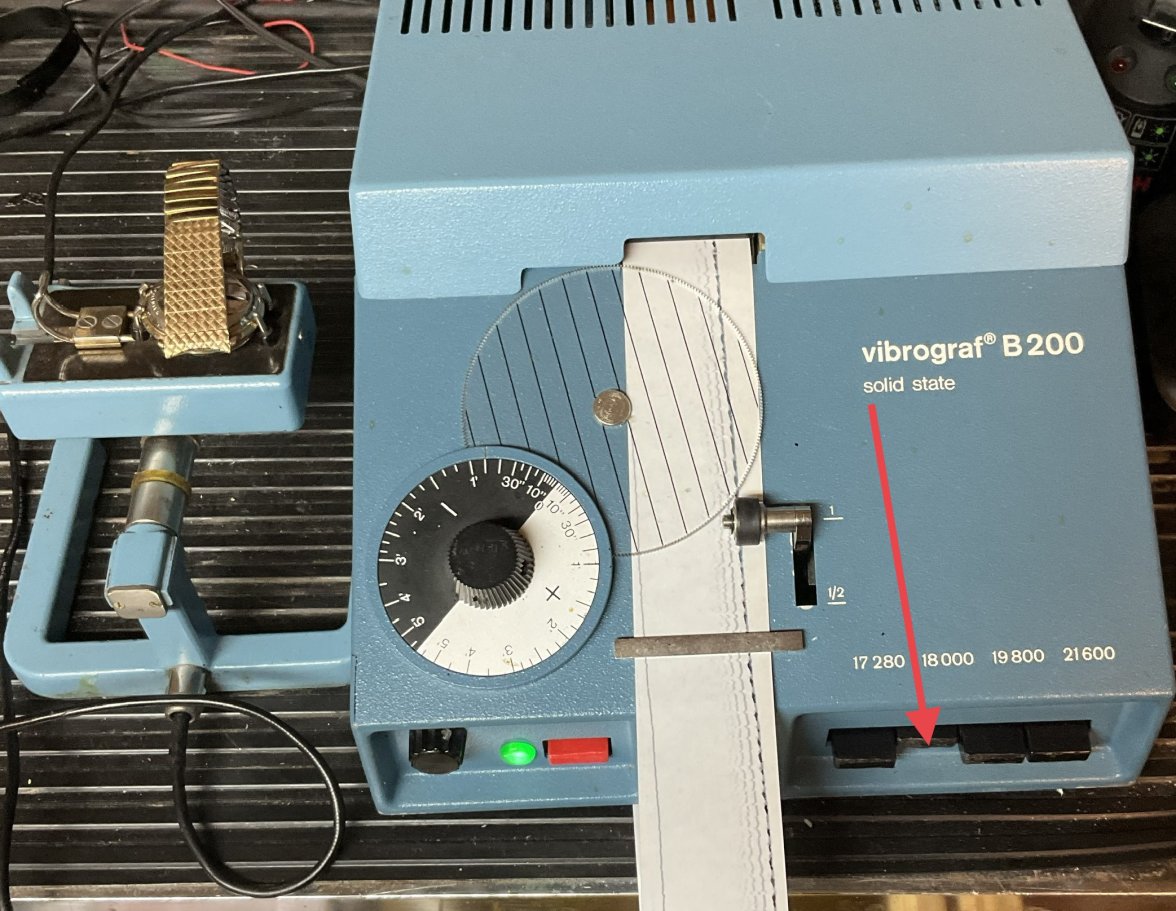
The Vibrograph B200 can be used to read a Bulova Accutron which beats at 360 vibrations per second. It has been a while since I’ve had an Accutron on the machine. But IIRC, with the Vibrograph set at 21,600 bph, you can time an Accutron.
 
Posts
17,608
Likes
36,827
I've never had a chance to use one, but looking at them on the internet I can see a Bulova Accutron symbol at the 21,600 setting, so I wonder if it's an internal setting for the Accutron @ 21,600, or is it "mathematics" based on the reading.
 
Posts
15,236
Likes
44,750
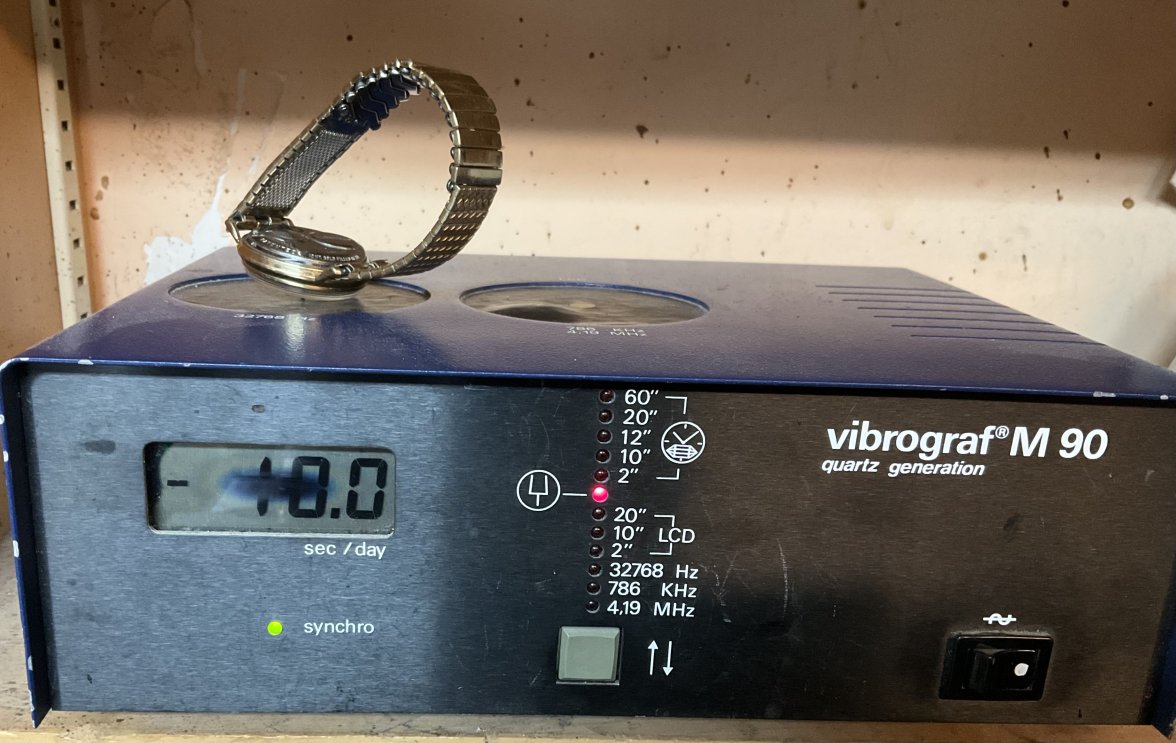
The setting on the Vibrograph B200 timer for Accutron 214 and 218 is 18,000 bph as shown. In the image, the B200 is showing a losing rate, when the watch actually gains a bit. On the Vibrograph M90 electronic timer which is used only for transistorized watches (including quartz), there is a setting for Accutron (shown by the red light), as well as Accuquartz (with tuning fork, but higher frequency). The M90 shows the same losing rate that the B200 does.

 
Posts
448
Likes
2,000
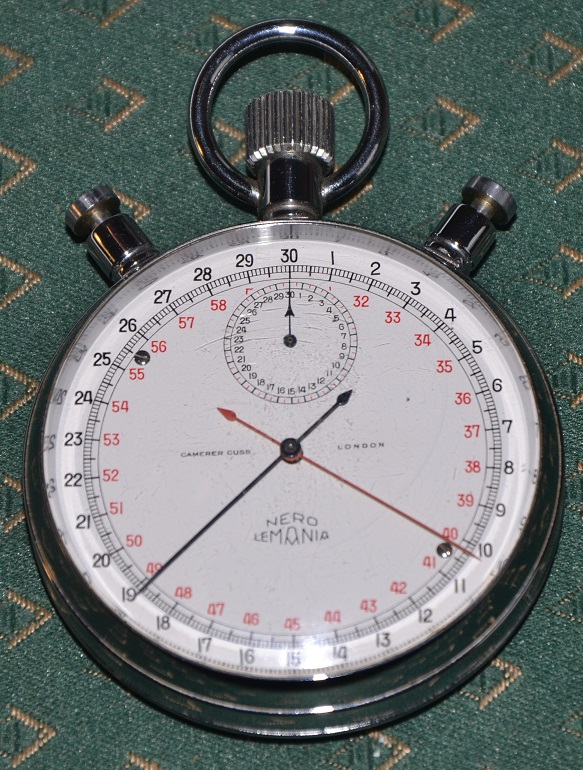
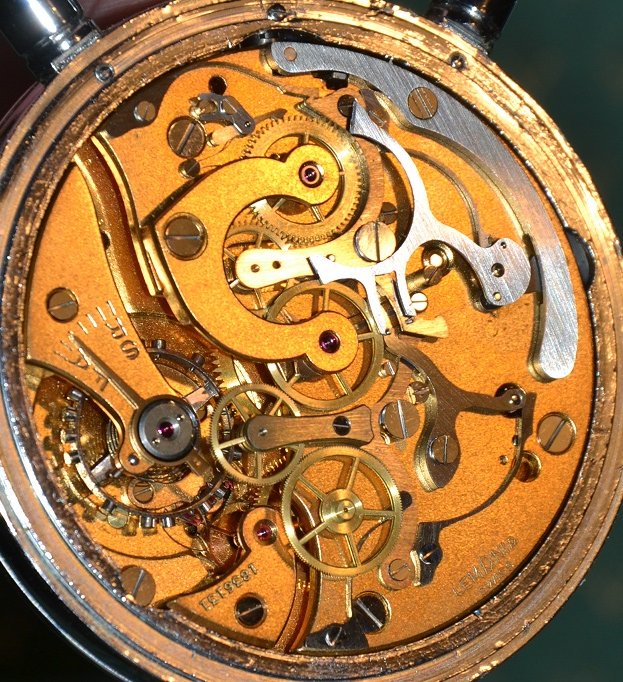
My first ever stopwatch was an impulse buy back in 2006. It's an ex Royal Navy Patt. 4 split second Lemania with a lovely calibre 1900.
lemaniastopwatch.jpg
lemaniastopmov.jpg

I managed to spare it from the great cull of my collection between 2012 and 2014, and it was my only one until this year. But, as I was saving to bring my Omega Speedmaster home (long story), the itch to get something Lemania-branded became hard to manage. So when I stumbled upon this little stopwatch for sale at €40 on a classifieds website, I just couldn't help pulling the trigger.
IMG_2221C8P.jpg
It houses a calibre 5000.
IMG_2210C8P.jpg

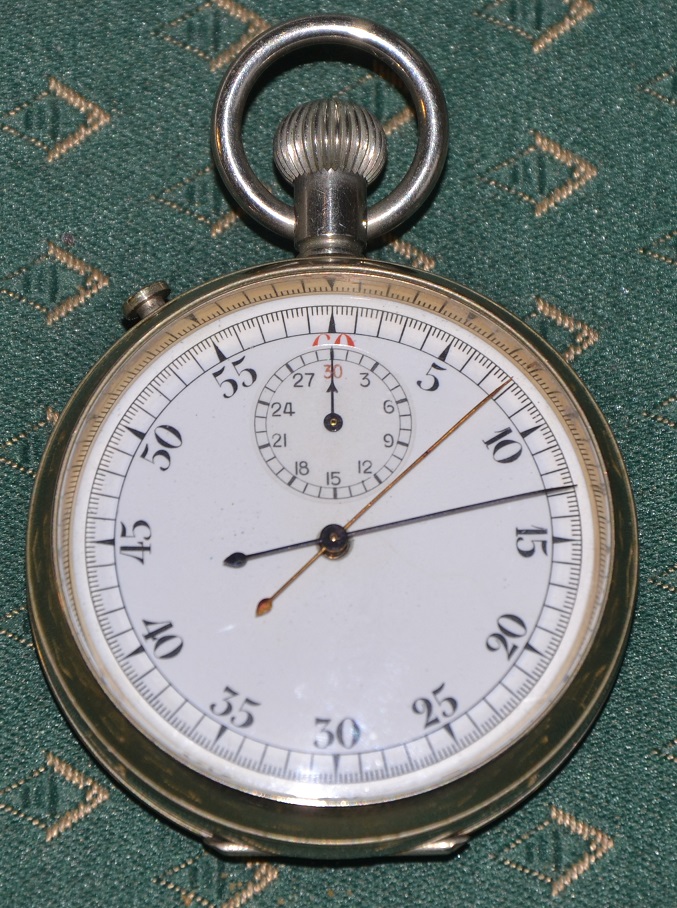
Then, a couple of weeks ago, I stumbled upon an eBay auction featuring another Lemania stopwatch. With a starting bid at £25, I thought that I might as well try my luck, and lo and behold I got it for £28!
IMG_2620C16-P.jpg
I haven't opened it yet, so I don't know what calibre is inside, but this stopwatch almost looks like new (unlike its sleeve!) and I'm delighted with this acquisition.

Will I buy more? I honestly don't know. I don't consider myself as a genuine collector, but their appeal is strong, especially at this kind of bargain price.