
- Posts
- 2,239
- Likes
- 32,565
bristnj
·Very rare and early - Ca. 1960 Ardath Denis Reefguard Skin Diver - Ref. 14693D - Felsa 4007 movement - Featuring earliest gilt dial with iconic “Scuba Dude” montif at bottom.
Ardath Watch Co. (Dreyfuss & Co.) introduced its first skin divers in late 1959 with the launch of the Reefguard models. These included the Denis “Reefguard” Diver(shown here) and the World Time “Reefguard” Diver.
The Denis Reefguard divers—housed in classic skin-diver style cases—were the first to feature the now-iconic “Scuba Dude” graphic, as he’s affectionately known to collectors, positioned at the bottom of the dial. Slightly later versions saw him “swim” to the top of the dial. The diver graphic was eventually adopted by other manufacturers, though none achieved the desirability or charm of the original Denis Reefguard. These dials are quite rare, and the most desirable in the series.
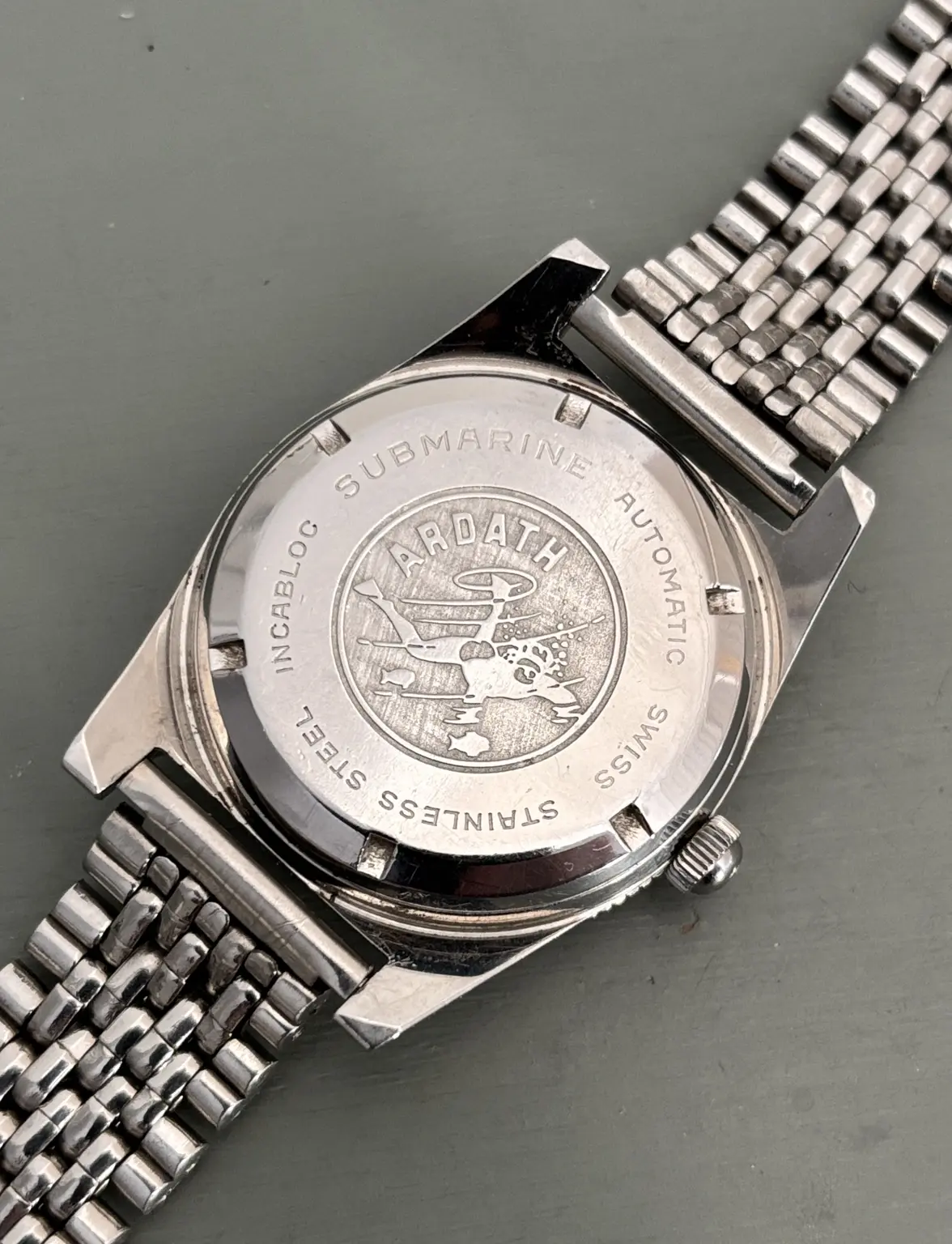
As the line evolved, both the “Scuba Dude” and the Reefguard name were dropped, with dials simply marked Denis Diver with "660 FEET" added to reflect the newly increased depth rating. Throughout Ardath’s Denis Diver roughly fifteen-year lifespan (late 1950s to early 1970s), dials were produced in both black and white variants. Casebacks on certain versions carried engraved Scuba Dude motifs, which today add significantly to appeal.
The diver line itself extended far beyond the classic Reefguard and Denis Diver configurations. Ardath introduced several related models over the years, including the Reef-Diver, the later D-Diver, the Denis Diver Universel (World Time), and even a ladies’ dive model known as the Stell-Diver—demonstrating how broad and creative the brand’s dive-watch portfolio became.
Early models were powered by Felsa 4004 (no date - Ref. 14692D) and 4007 (date - Ref. 14693D) movements, with later generations transitioning to ETA calibers. Early examples were rated to 100M, while subsequent models increased water resistance to 200M with the "660 FEET" designation appearing on these dials.
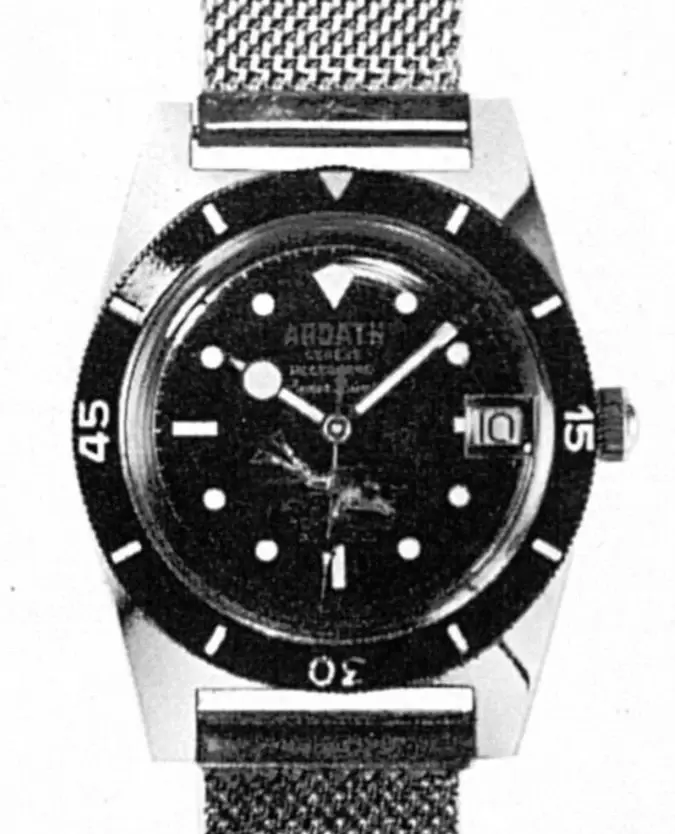
Across the entire line, dial, lume & bezel variations ranged from radium to tritium lume, gilt vs. printed dials, gloss vs. matte finishes, and multiple bezel configurations. This range of subtle differences makes provenance and originality especially important when evaluating surviving examples.
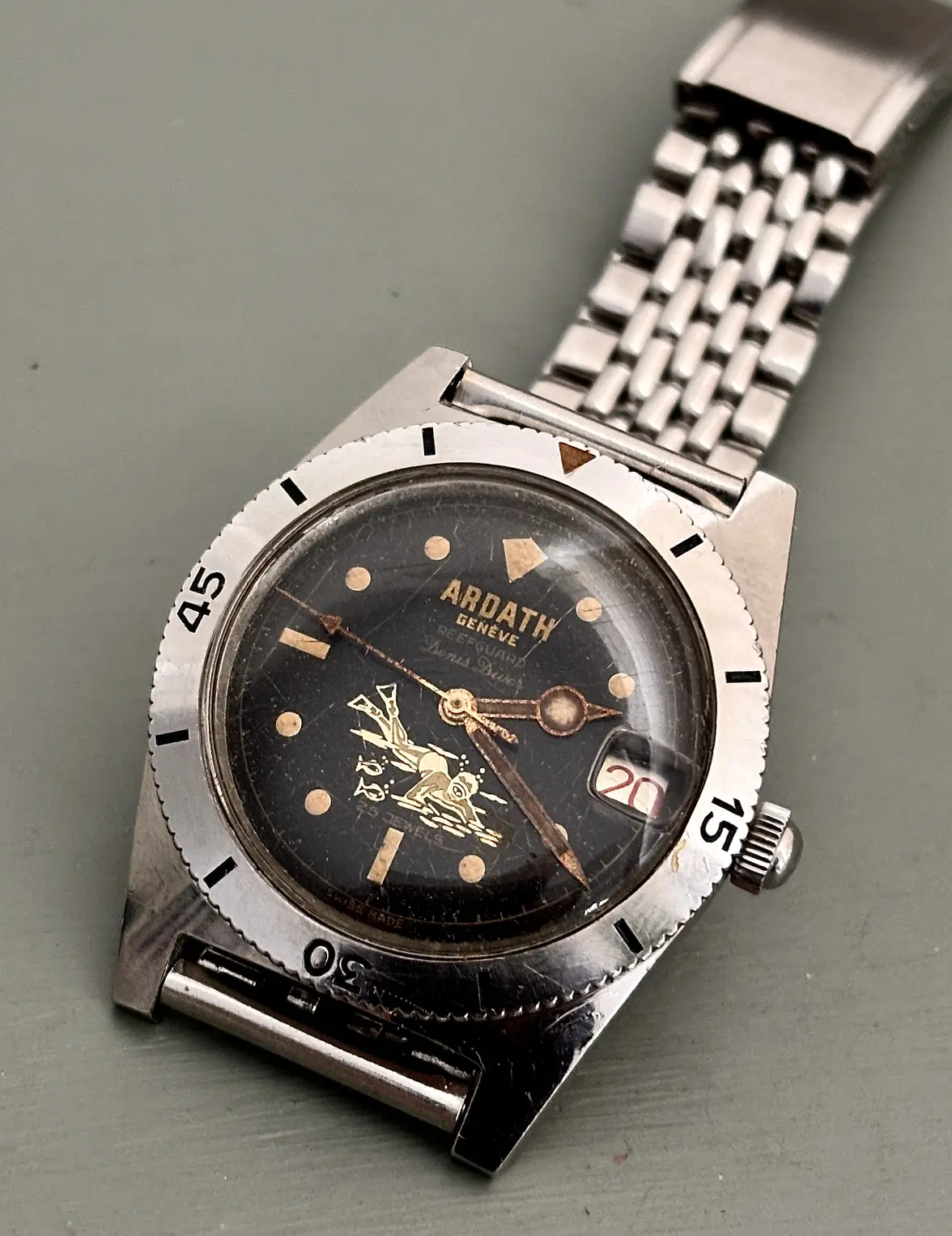
Ardath Watch Co. (Dreyfuss & Co.) introduced its first skin divers in late 1959 with the launch of the Reefguard models. These included the Denis “Reefguard” Diver(shown here) and the World Time “Reefguard” Diver.
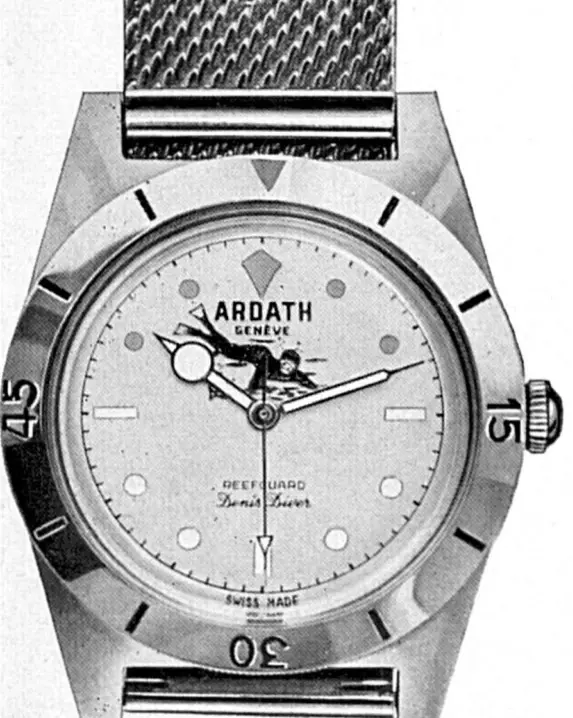
The Denis Reefguard divers—housed in classic skin-diver style cases—were the first to feature the now-iconic “Scuba Dude” graphic, as he’s affectionately known to collectors, positioned at the bottom of the dial. Slightly later versions saw him “swim” to the top of the dial. The diver graphic was eventually adopted by other manufacturers, though none achieved the desirability or charm of the original Denis Reefguard. These dials are quite rare, and the most desirable in the series.
As the line evolved, both the “Scuba Dude” and the Reefguard name were dropped, with dials simply marked Denis Diver with "660 FEET" added to reflect the newly increased depth rating. Throughout Ardath’s Denis Diver roughly fifteen-year lifespan (late 1950s to early 1970s), dials were produced in both black and white variants. Casebacks on certain versions carried engraved Scuba Dude motifs, which today add significantly to appeal.
The diver line itself extended far beyond the classic Reefguard and Denis Diver configurations. Ardath introduced several related models over the years, including the Reef-Diver, the later D-Diver, the Denis Diver Universel (World Time), and even a ladies’ dive model known as the Stell-Diver—demonstrating how broad and creative the brand’s dive-watch portfolio became.
Early models were powered by Felsa 4004 (no date - Ref. 14692D) and 4007 (date - Ref. 14693D) movements, with later generations transitioning to ETA calibers. Early examples were rated to 100M, while subsequent models increased water resistance to 200M with the "660 FEET" designation appearing on these dials.
Across the entire line, dial, lume & bezel variations ranged from radium to tritium lume, gilt vs. printed dials, gloss vs. matte finishes, and multiple bezel configurations. This range of subtle differences makes provenance and originality especially important when evaluating surviving examples.
Edited: